Military Factory
Military Pay Chart
Global Firepower
Military Industrial Complex
Second World War
Home
Military Pay Scale
Military Ranks
Small Arms
Aircraft
Land Systems
Navy
Education
Military Factory Facebook Logo
flag of United States

Consolidated PBY Catalina Long-Range Maritime Patrol Flying Boat (1936)

Authored By Staff Writer | Last Updated: 12/5/2011

The PBY Catalina was the most crucial flying boat for the Allies in World War Two.

Maritime aircraft play an understated role, especially in that of war time. Fly boats came to pass, first in peace-time development as early as 1901, and ultimately in the First World War. Their development, with experience garnered in peace time between the two world wars, led to some impressive designs - most notably at the hands of British aviation engineers. With the arrival of the Second World War, the role of the flying boat extended to that of patrol, reconnaissance, search and rescue and anti-shipping with armaments as varied as bombs, torpedoes and mines.

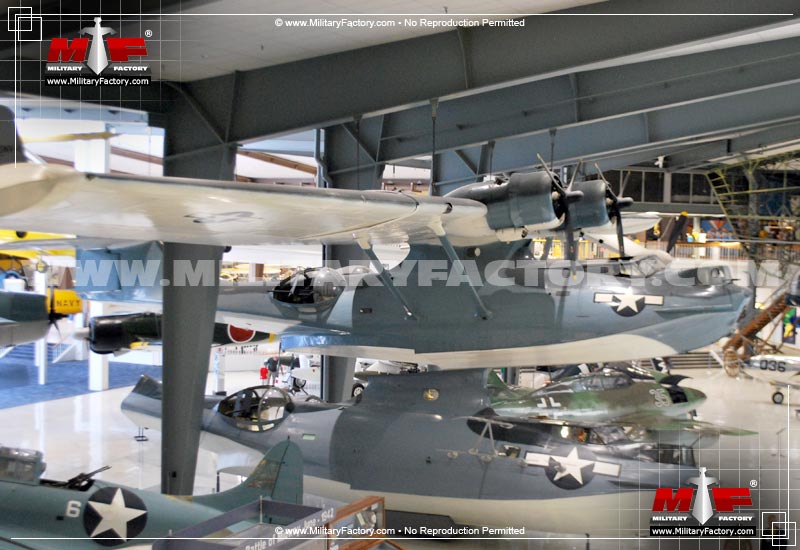
The PBY Catalina series ("Catalina" would later become the generic term for all PBY derivatives) was an exceptional American-produced aircraft in the Second World War. Produced by the Consolidated Aircraft Company in the United States (and under license and through Lend-Lease in other countries) the PBY Catalina series would etch its identity into the page of aviation history.

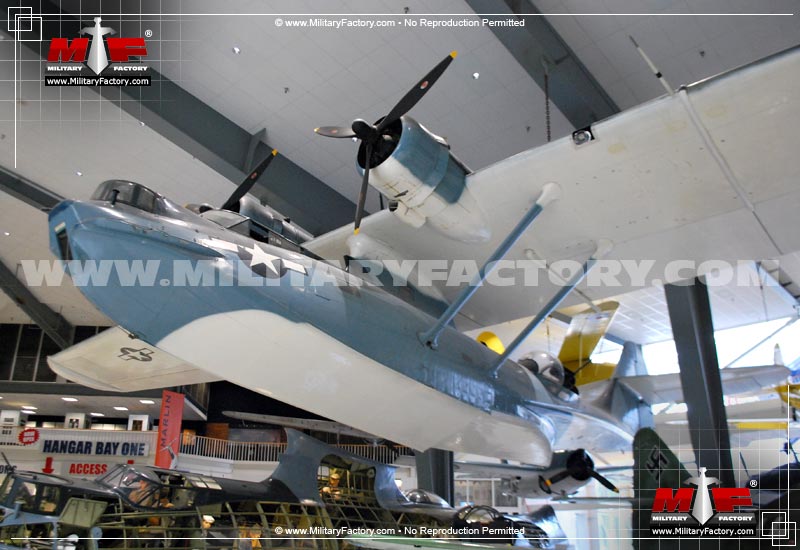
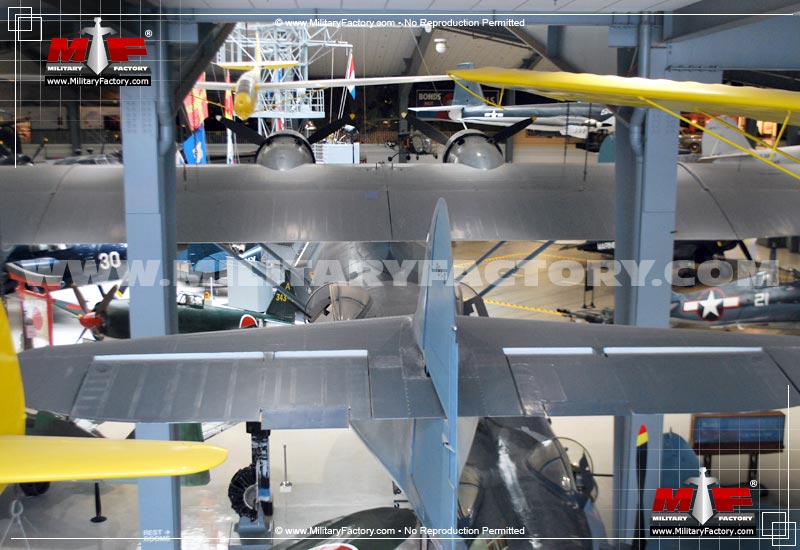
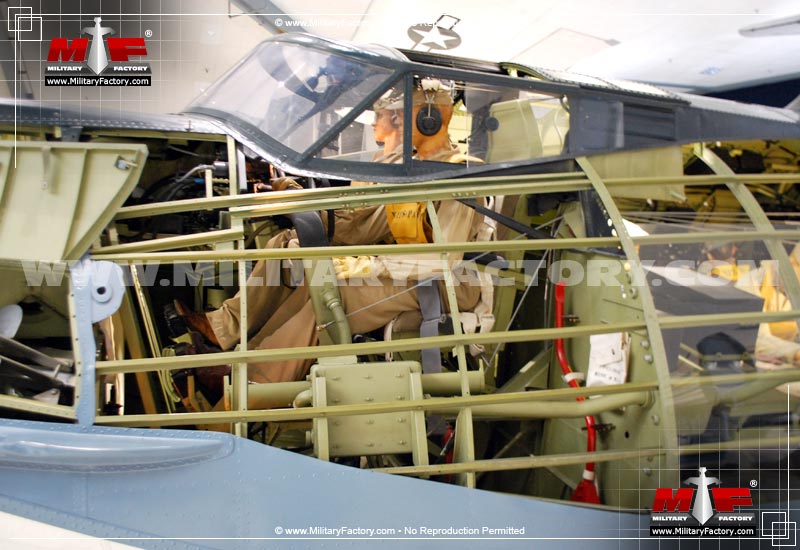
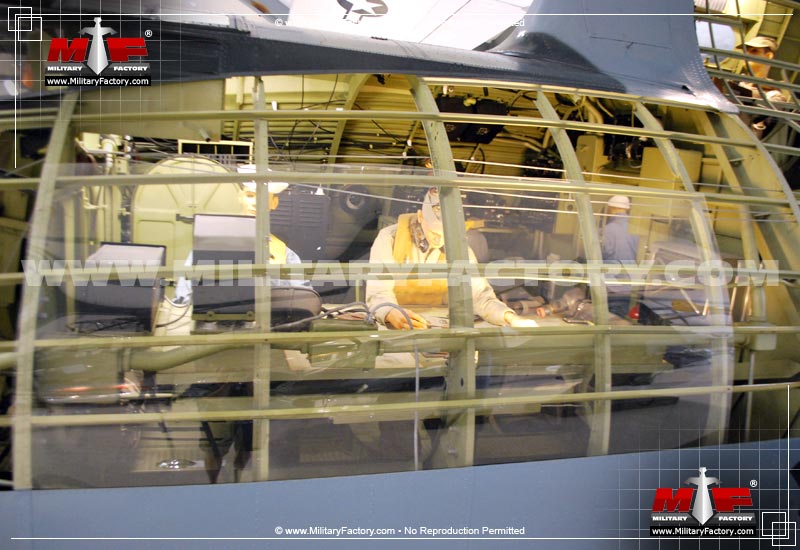
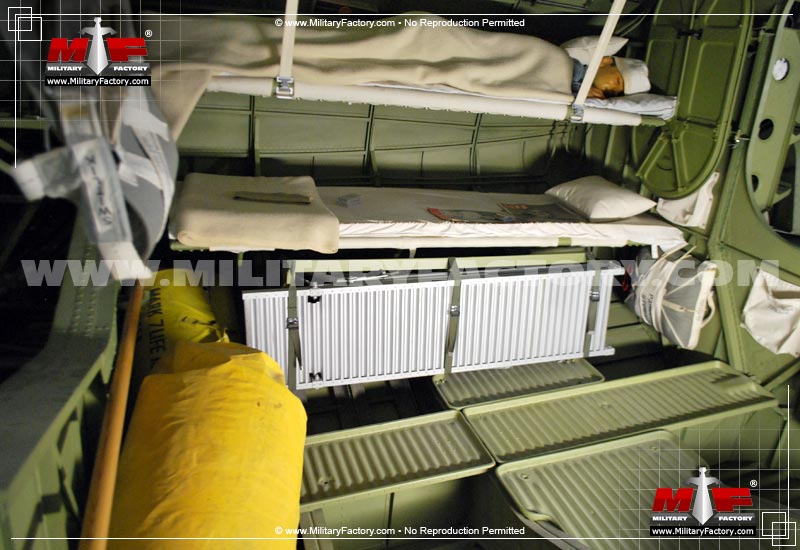
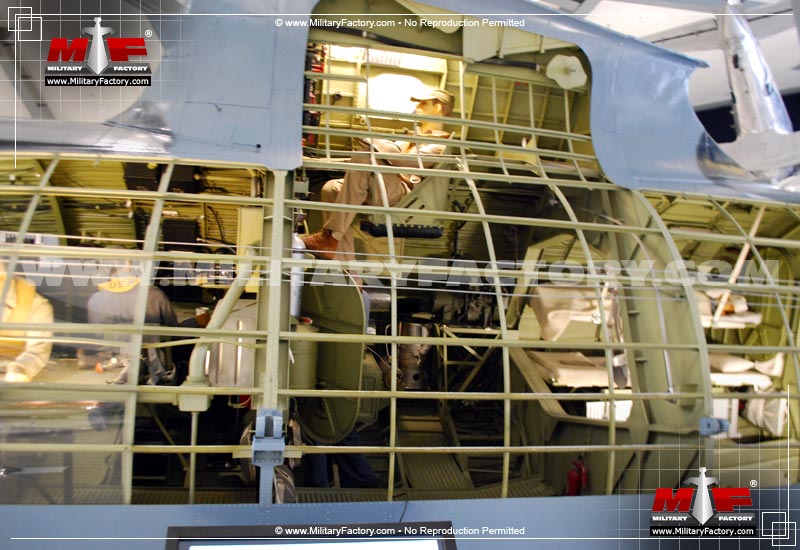
The PBY Catalina was a twin engine aircraft capable of land and / or sea landings. The system was crewed from 7 to 9 members depending on the model type and could run the gamut of missions as utilized primarily by the United States Navy. The system first flew in 1935 as a prototype in which Consolidated beat out the Douglas aircraft company in trials for the USN. Production models would begin as the PBY-1 in 1936.

War time would see an increase in various powered-powerplants, defensive and offensive armaments and expanding of roles for the system. Tricycle landing gear tests on late PBY-4 systems would yield the truly amphibious PBY-5 and PBY-5A series models. Production of the PBY series would be undertaken by Consolidated in the United States, Canadian Vickers and Boeing of Canada in Canada, the Naval Aircraft Factory in Britain and state factories in the Soviet Union under the Lend-Lease Act. In all, 2,398 PBY Catalina-based systems would be produced (the Soviet Union produced the system under the designation of GST, whilst Britain went with their tell-tale "Mark" Mk I series).

In all, flying boats would go on to serve a most pivotal role, particularly in a war that was not only fought in the skies and on land, but on the water and under it as well. Flying boats would see service up until the 1960's where more land-based maritime patrol aircraft would take its place.
Text ©2003-2013 www.MilitaryFactory.com • All Rights Reserved • No Reproduction Permitted
MilitaryFactory.com does NOT sell equipment/weaponry. Material presented throughout this website is for historical and entertainment value and should not to be construed as usable for hardware restoration, maintenance or general operation. Please consult manufacturers for such information. Our disclaimer. Email corrections / Comments to MilitaryFactory at Gmail dot com.
Picture of Consolidated PBY Catalina
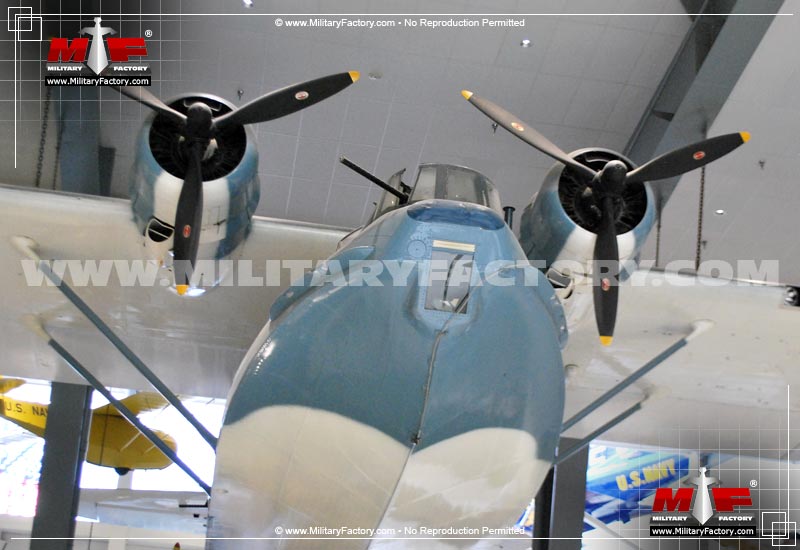
Pic of the Consolidated PBY Catalina
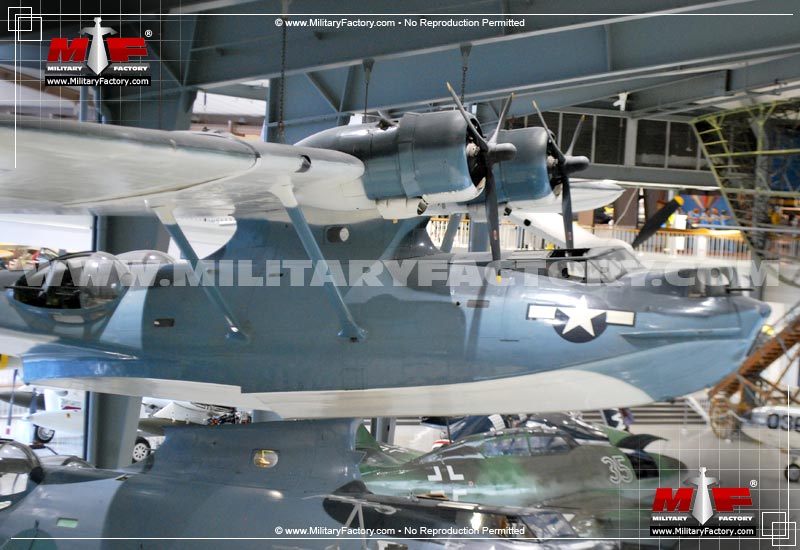
Image of the Consolidated PBY Catalina
View All Images (10)

Specifications for the
Consolidated PBY Catalina
Long-Range Maritime Patrol Flying Boat


Country of Origin: United States
Manufacturer: Consolidated, Boeing - USA / GST - USSR / Royal Aircraft - UK / Can. Vickers - CAN
Initial Year of Service: 1936
Production: 4,051


Focus Model: Consolidated PBY-5A Catalina
Crew: 9


Length: 63.81ft (19.45m)
Width: 104.00ft (31.70m)
Height: 20.18ft (6.15m)
Weight (Empty): 20,911lbs (9,485kg)
Weight (MTOW): 35,422lbs (16,067kg)


Powerplant: 2 x Pratt & Whitney R-1830-92 14-cylinder Twin Wasp air-cooled radial engines generating 1,200hp.


Maximum Speed: 179mph (288kmh; 156kts)
Maximum Range: 2,545miles (4,095km)
Service Ceiling: 14,698ft (4,480m; 2.8miles)
Rate-of-Climb: 526 feet per minute (160m/min)


Hardpoints: 2
Armament Suite:
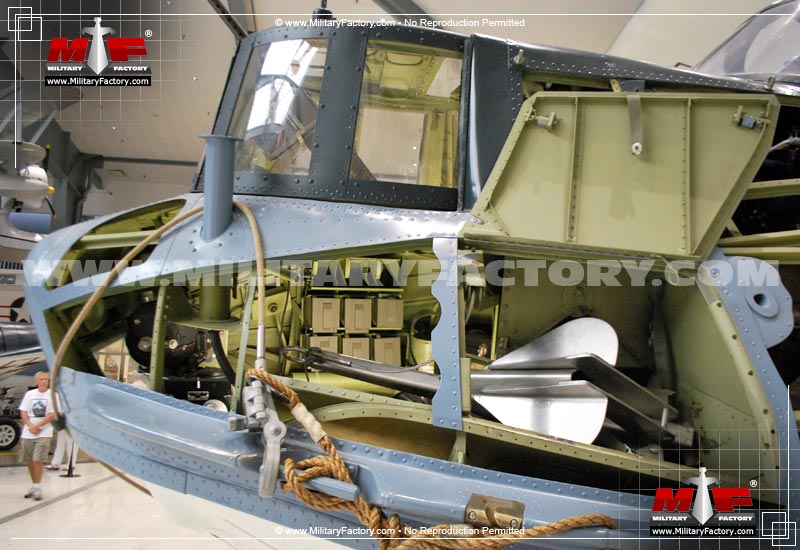
2 x 12.7mm machine guns in bow turret
2 x 12.7mm machine guns in fuselage blisters (one each side).
1 x 7.62mm machine gun in ventral tunnel section.

Bombload of up to 4,000lbs that includes 2 x torpedoes, bombs, depth charges or anti-ship mines.


Variants:
Model 28 - Base Prototype Model Designation


XP3Y-1 - Prototype Model Designation

PBY-1 - Initial Production Model featuring improved and more powerful R-1830-64 900hp engines; 60 produced.

PBY-2 - Modified United States Navy Model of which 50 were produced.

PBY-3 - Fitted with R-1830-66 1,000hp engines of which 66 were produced.

PBY-4 - Integrated the recognizable fuselage "blister" gun positions; name "Catalina" is utilized for the series; fitted with R-1830-72 1,050hp radial engines of which 33 produced.

PBY-5 - R-1830-82 or R-1830-92 radial engines capable of 1,200hp; export version for UK, Dutch East Indies, Australia and Canada; Tricycle landing gear testing implemented and integrated to final PBY-5 production models making the system completely amphibious; general improvements throughout.

PBY-5A - Full Amphibious Variant of which 761 were produced.

PBY-5B - Improved Amphibious Model

Mk I - RAF Coastal Command Designation of the PBY-5 model series.

Canso - Canadian designation of the PBY-5 model series as produced by Canadian Vickers and Boeing of Canada.

PBN-1 "Nomad" - Naval Aircraft Factory production model with taller fin and rudder systems; model supplied to the USSR; aerodynamic and hydrodynamic improvements to airframe.

PBY-6A - "Amphibians" with search radar installed.

OA-10B - United States Air Force Designation of the PBY-6A Catalina amphibians.

GST - Model Designation of PBY series as produced by the USSR; unknown production numbers.


Operators:
Canada; United kingdom; Soviet Union (GST); United States

ALL AIRCRAFT CATEGORIES

BY DECADE:


1900 to 1909
1910 to 1919
1920 to 1929
1930 to 1939
1940 to 1949
1950 to 1959
1960 to 1969
1970 to 1979
1980 to 1989
1990 to 1999
2000 to 2009
2010 to 2019
2020 to 2029
VIEW ALL
Compare Aircraft


BY TYPE:


Anti-Submarine Warfare (ASW)
Attack Helicopters
Bomber Aircraft
Medium Bombers
Heavy Bombers
Close-Air Support (CAS)
Commercial Aircraft
Dive Bombers
Electronic Warfare Aircraft (EWA)
Experimental / X-Planes
Fighter Aircraft
Floatplane Aircraft
Flying Boat Aircraft
Aerial Refueling Tankers
Helicopters (ALL)
Interceptor Aircraft
Multi-Role Aircraft
Navy Carrier Aircraft
Night Fighters
Reconnaissance / Scout
Search & Rescue (SAR)
Scout Helicopters
Special Purpose
Torpedo Bombers
Trainer Aircraft
Transport Aircraft
Transport Helicopters
Unmanned Aerial Vehicles (UAVs)
Unmanned Combat Air Vehicles (UCAVs)


COLLECTIONS:


4th Generation Fighter Aircraft
5th Generation Fighter Aircraft
US X-Planes
Classic US Warbirds
French Military Helicopters
Grumman "Cats"
Howard Hughes Aircraft
Indian Air Force
Israeli Air Force
Libyan Aircraft
Modern Chinese Aircraft
Modern Chinese Fighters
Modern Military Aircraft
Modern North Korean Aircraft
Modern Trainer Aircraft
Modern US Aircraft
Mikoyan Aircraft
Sukhoi Aircraft
Syrian Aircraft
Top 10 Fighter Aircraft of All Time


AIRCRAFT BY CONFLICT:


Arab-Israeli War (1948)
Cuban Missile Crisis (1959-1962)
Falklands War (1982)
Indo-Pak War (1965, 1971)
Iran-Iraq War (1980-1988)
Lebanon War (1982)
Operation Allied Force (1999)
Operation Desert Storm (1991)
Six Day War (1967)
Spanish Civil War (1936)
Soviet-Afghan War (1979-1989)
Yom Kippur War (1973)


MISCELLANEOUS:


Aircraft Cockpits
Aircraft Manufacturers List
Aircraft Production
Aircraft Timeline

WORLD WAR 2:


1939 Aircraft
1940 Aircraft
1941 Aircraft
1942 Aircraft
1943 Aircraft
1944 Aircraft
1945 Aircraft
1946 Aircraft
Australian Aircraft
Battle of Britain Aircraft
Bombers
Four-Engine Bombers
British Aircraft
British Bombers
British Transports
Dive Bombers
Canadian Aircraft
Fighters
Chinese Aircraft
French Aircraft
German Aircraft
German Fighters
German Flying Boats
German Jets
Secret Weapons of the Luftwaffe
Italian Aircraft
Imperial Japanese Aircraft
Imperial Japanese Fighters
Mitsubishi Bombers
Navy Aircraft
Pearl Harbor
Polish Aircraft
Romanian Aircraft
US Aircraft
US Bombers
US Navy Aircraft
Soviet Aircraft
Torpedo Bombers
Trainer Aircraft
Transport Aircraft
Tuskegee Airmen Aircraft
W.A.S.P. Aircraft
WW2 Aircraft Ranked by Speed
VIEW ALL


WORLD WAR 1:


1914 Aircraft
1915 Aircraft
1916 Aircraft
1917 Aircraft
1918 Aircraft
Aircraft Timeline
Austro-Hungarian Aircraft
Bomber Aircraft
British Aircraft
Fighters
Flying Boats
French Aircraft
Imperial German Aircraft
Italian Aircraft
Scout Aircraft
Russian Empire Aircraft
US Aircraft
WW1 Aircraft Ranked by Speed
VIEW ALL


KOREAN WAR:


Australian Aircraft
Korean War Aces
Korean War Jets
North Korean Aircraft
US Military Aircraft
VIEW ALL


VIETNAM WAR:


Helicopters (ALL)
Transport Helicopters
North Vietnam Air Force
US Airpower
VIEW ALL


COLD WAR:


1950s French Aircraft
British V-Bombers
Cold War Bombers
Soviet Aircraft
Soviet Bombers
Soviet Interceptors
Soviet Helicopters
Strategic Air Command
US Aircraft
US Bombers
US Interceptors
VIEW ALL

Site Disclaimer | Privacy Policy | Site Map | MF Origins


©2013 www.MilitaryFactory.com • Content ©2003-2013 MilitaryFactory.com • All Rights Reserved • Site Contact Email: militaryfactory at gmail dot com. The "Military Factory" name and MilitaryFactory.com logo are registered ® trademarks and protected by all applicable domestic and international intellectual property laws.


Top MF Stuff: 2013 Military Pay Scale | Military Ranks | WW2 Weapons | Sniper Rifles | Kts to Mph | WW1 Aircraft | Automatic Rifles | Aircraft Cockpits | Vietnam War Weapons | Main Battle Tanks | Submachine Guns | Shotguns | French Military Victories


Most photographic images appearing on this site are courtesy of the United States Department of Defense and are approved for public use. Other images acquired through the public domain. Digital art work courtesy of Dan Alex. Business Consulting by Kyle Williams. Material presented throughout this website is for historical and entertainment value and should not to be construed as usable for hardware restoration, maintenance or general operation. Please consult manufacturers for such information.


eXTReMe Tracker