Global Firepower | Military Industrial Complex | Second World War History
Home | Military Pay Scale Chart | Aircraft | Infantry Weapons | Military Vehicles | Navy Ships | Military Education | French Military Victories | Military Ranks | WW2 Weapons
Military Factory Latest from Military Factory
Thumbnail picture of the Dardo infantry fighting vehicle
Dardo IFV
Thumbnail picture of the Supermarine Scimitar fighter
Supermarine Scimitar
Thumbnail picture of the Centauro B1 8x8 tank killer
Centauro 8x8
Thumbnail picture of the Novi Avion fighter
Novi Avion
Thumbnail picture of the FR F2 bolt-action sniper rifle
FR F2
Thumbnail picture of the Lebel Model 1886 bolt-action rifle
Lebel Model 1886
2009 Military Pay Scale Chart - for Army, Navy, Air Force and Marines
  BY DECADE
    · 1900 to 1909
    · 1910 to 1919
    · 1920 to 1929
    · 1930 to 1939
    · 1940 to 1949
    · 1950 to 1959
    · 1960 to 1969
    · 1970 to 1979
    · 1980 to 1989
    · 1990 to 1999
    · 2000 to 2009
    · 2010 to 2019
    · View All Aircraft
  BY TYPE
    · Attack Helicopters
    · Bombers
    · Close-Support
    · Commercial
    · Dive Bombers
    · Experimental
    · Fighters
    · Floatplanes
    · Flying Boats
    · Fuel Tankers
    · Helicopters
    · Interceptors
    · Multi-Role
    · Navy Aircraft
    · Night-Fighters
    · Recon Aircraft
    · Recon Helos
    · Special Purpose
    · Torpedo Bombers
    · Trainer Aircraft
    · Transport Aircraft
    · Transport Helos
    · UAVs
  WORLD WAR 2
    · Full List
    · 1939
    · 1940
    · 1941
    · 1942
    · 1943
    · 1944
    · 1945
    · Australia
    · Battle of Britain
    · Bombers
    · Britain
    · Dive Bombers
    · Canada
    · Fighters
    · China
    · France
    · Germany
    · German Fighters
    · German Jets
    · Italy
    · Japan
    · Mitsubishi Bombers
    · Poland
    · USA Aircraft
    · USA Bombers
    · Soviet Union
    · Torpedo Bombers
  WORLD WAR 1
    · Full List
    · 1914
    · 1915
    · 1916
    · 1917
    · 1918
    · Aces
    · Austria-Hungary
    · Bombers
    · Britain
    · Fighters
    · France
    · Germany
    · Italy
    · Recon Aircraft
    · Russia
    · USA
  KOREAN WAR
    · Full List
    · Aces
    · Australia
    · USA
    · North Korea
  VIETNAM WAR
    · Full List
    · United States
    · North Vietnam

Military Factory > Military Aircraft > Armstrong Whitworth Whitley
 
 
More Pictures Cockpit View 3 View Plan QuickGraphs StatsCentral

Armstrong Whitworth Whitley

The unattractive Whitley was nonetheless a workhorse performer for the RAF from 1937 to 1942.
By Staff Writer

Bookmark and Share

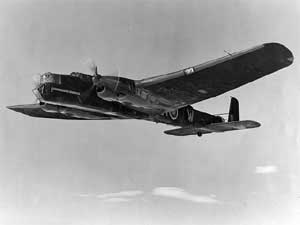
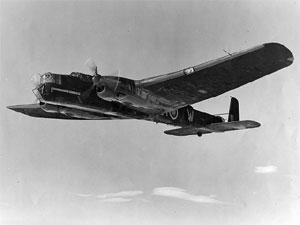
Continuing in the tradition of ugly yet robust and reliable heavy bombers, the British Armstrong Whitworth Whitley was the heavy bomber of choice during the early war years and up through 1942. The massive unappealing design offered the Royal Air Force a versatile heavy hitter to damage the internal workings of the German war machine. Though obsolete by the war's mid-years, the Whitley would never the less fulfill the projected role it was designed for and provide the RAF with a much-needed offensive punch.

The Whitley began as a derivative of the A.W.23 transport/bomber design, with the first prototype Whitley flying in 1936. Operational models would follow by 1937 in the form of the first two marks - Mk I and Mk II - split between an initial order of 80 aircraft (34 and 46 respectively). Minor differences distinguished the two but more prominent was the use of varying powerplants - Tiger IX radial engines in the Mk I and Tiger VIII radial engines in the Mk II. The Mk I would nearly be removed from service in its entirety by the time aggression had broken out over Europe. The Mk III would appear shortly after the initial batch, introducing a ventral gun position that was retractable. The Mk IV would come along with differing radial powerplants of the Rolls-Royce brand. A subvariant of the Mk IV would appear with a newly-configured powered tail turret housing quad 7.7mm machine guns. The definitive bomber variant of the Whitley series would have to wait until the appearance of the Mk V model, to which the system would take on the brunt of high-level deep-strike bombing missions in enemy-held territory.

The Armstrong Whitworth Whitley design was a basic twin engine aircraft with a heavy bomber classification. One of the most identifiable features of the series lay in the interesting angled-down format of the nose and cockpit section, which in itself contained a very obvious protruding "chin" fixture. Crew accommodations amounted to five personnel positioned in various parts of the aircraft, manning systems or defensive weaponry. Standard armament of the Mk V model consisted of a single 7.7mm machine gun in a nose gunner position complimented by a 4 x 7.7mm machine gun array in a powered-turret assembly at the tail of the plane. The addition of this Nash & Thompson product offered up the removal of a retractable ventral gun position seen in earlier models. Internal bombload was limited to 7,000lbs of varying ordnance.

Whitley's, though becoming obviously outperformed and vulnerable to ever-improving enemy attack at day or night, plodded along as required in a frontline operational capacity up until early to mid 1942 - though production continue up until 1943. In the end, the Whitley would be replaced by the next generation of British and American-made bombers, designed to take on more in the way of long-range heavy strike and designed with better defensive capabilities in mind. Nevertheless, the Armstrong Whitworth Whitley would go down as a capable performer.

Text ©2003-2009 www.MilitaryFactory.com • All Rights Reserved • No Reproduction Without Permission • Corrections / Comments to MilitaryFactory at Gmail dot com


  Specifications for the Armstrong Whitworth Whitley Mk V
arrow downDimensions:
Length: 69.26ft (21.11m)
Width:83.99ft (25.60m)
Height: 14.99ft (4.57m)

arrow downPerformance: About MACH
Max Speed: 230mph (370kmh; 200kts)
Max Range: 1,501miles (2,415km)
Rate-of-Climb: 938ft/min (286m/min)
Service Ceiling: 26,001ft (7,925m; 4.9miles)

arrow downStructure:
Accommodation: 5
Hardpoints: 0
Empty Weight: 19,350lbs (8,777kg)
MTOW: 33,501lbs (15,196kg)

arrow downPowerplant:
Engine(s): 2 x Rolls-Royce Merlin X V-12 piston engines generating 1,145hp each.
arrow downArmament Suite:
1 x 7.7mm machine gun in nose turret
4 x 7.7mm machine guns in tail turret

Up to 7,000lbs of bombsheld internally.

CompareX2 CompareX4 Conversions Dictionary Acronyms

Compare and Contrast Military Aircraft Specifications

  Special Aircraft Collections
Aircraft by Conflict:
Falklands War
Indo-Pak War
Operation Allied Force
Operation Desert Storm
Six Day War
Yom Kippur War

Special Collections:
American X-Planes
Classic US Warbirds
Grumman "Cats"
Indian Air Force
Israeli Air Force
Mikoyan-Gurevich
V-Bombers


Korean Air War:
Korean War Aircraft
Aces
Australia
United States
North Korea

Vietnam Air War:
Vietnam War Aircraft

Cold War
Cold War Aircraft
United States
Soviet Union
Soviet Bombers of the Cold War

Modern Aircraft
Modern Military Aircraft
United States

Miscellaneous
MiG-15 Versus Sabre
Top 10 Fighters of All Time


  Recent Military Aircraft Additions
Thumbnail picture of the Supermarine Scimitar fighter
Supermarine Scimitar
Thumbnail picture of the Novi Avion fighter
Novi Avion
Thumbnail picture of the Arado Ar TEW 16/43-23 jet-powered fighter
Arado TEW 16/43

  Contacting MilitaryFactory.com
We can only get better if you tell us how. You can contact MilitaryFactory.com at MilitaryFactory at gmail dot com (replace "at" with "@" and "dot with ".") with any questions, comments or corrections. We also accept related military imagery that you approve for us to use on our website. Keep in mind, however, that due to volume, we may not directly respond to your inquiry. Please add us to your list of non-blocked recipients!
Flying Boats

  Aircraft Quick Profile


Picture of the Armstrong Whitworth Whitley
Image courtesy of the Royal Air Force.

flag of United Kingdom
1937

Designation: Armstrong Whitworth Whitley
Classification Type: Heavy Bomber
Contractor: Armstrong Whitworth - UK

Country of Origin: United Kingdom
Production Total: 1,656

Operators: the United Kingdom


  Variants
A.W.23 - Armstrong Whitworth bomber/transport design on which the Whitley is based on.

Mk I - Initial Production Version; powered by two Armstrong Siddeley Tiger IX radials generating 920hp each; 34 examples produced.

Mk II - Fitted with Tiger VIII radial engines; 46 such produced.

Mk III - Fitted with Tiger VIII radials; fitted with retractable ventral gun position; 60 produced.

Mk IV - Powered by 2 x Rolls-Royce Merlin IV V-12 radial engines.

Mk IVA - Fitted with Merlin X engines generating 1,145hp; featured Nash and Thompson power-operated four gun rear tail turret negating the need for the earlier retractable ventral gun position; 40 examples produced.

Mk V - Main and Final Production Model; extended fuselage with straight leading wing edges; powered by Merlin X engines.

  Collections
  • Sons of Empire - WW2 Aircraft of Japan
  • Aircraft of the Battle of Britain
  • X-Planes Throughout History
  • French Aircraft of the Great War
  • The German Luftwaffe in World War 2
  • Nightfighters - In a Class All Themselves
  • The Top Ten Fighters of All Time
  • Carrier "Born" Aircraft - Navy Mounts
  • If Boats Could Fly - Flying Boat Aircraft


Free GI Bill Guide

Top MF Stuff: Military Pay Scale Chart | Military Ranks | World War 2 Weapons | Sniper Rifles | Conversion Calculators


©2009 www.MilitaryFactory.com • Content ©2003-2009 MilitaryFactory.com • All Rights Reserved • Disclaimer Privacy Policy Site Map Origins
Most photographic images appearing on this site are courtesy of the United States Department of Defense and are approved for public use.
Other images acquired through the public domain. Digital art work courtesy of Dan Alex.
Business Consulting by Kyle Williams

Material presented throughout this website is for historical and entertainment value and should not to be construed as usable for
hardware restoration, maintenance or general operation. Please consult manufacturers for such information.

Site Contact: militaryfactory at gmail dot com (replace "at" with "@" and "dot" with ".") eXTReMe Tracker