Military Factory
Military Pay Chart
Global Firepower
Military Industrial Complex
Second World War
Home
Military Pay Scale
Military Ranks
Small Arms
Aircraft
Land Systems
Navy
Education
Military Factory Facebook Logo
flag of United States

Grumman TBF Avenger Carrier-Borne Torpedo Bomber (1942)

Authored By Staff Writer | Last Updated: 10/18/2011

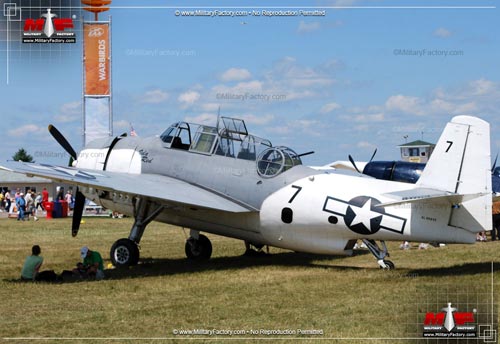
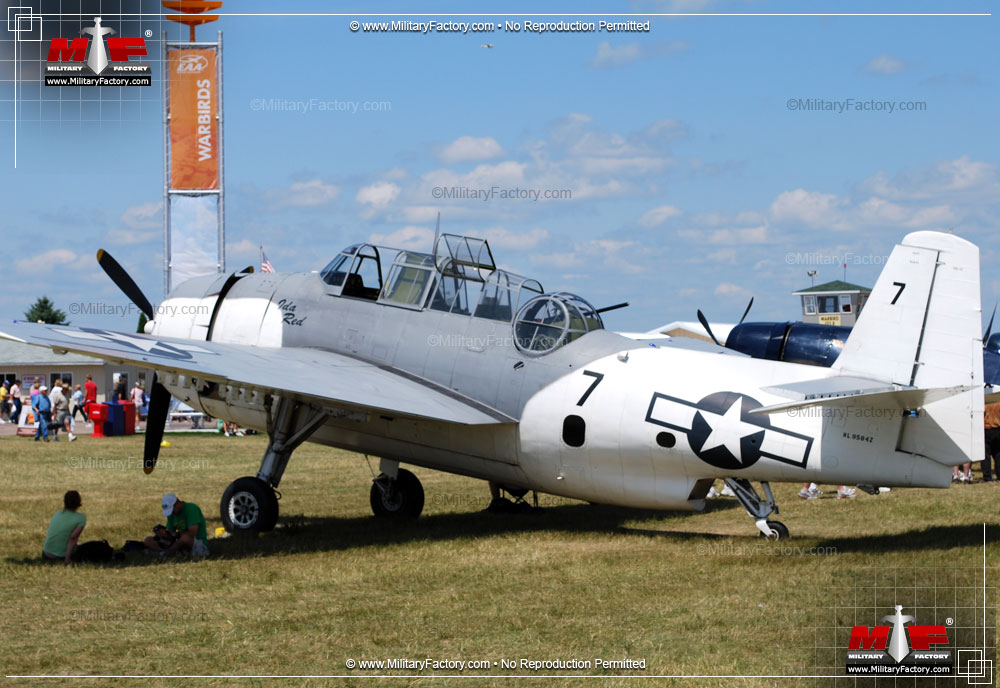
The Grumman TBF Avenger series of bomber aircraft saw nearly 10,000 produced during World War 2.

Find a School Near You
Follow Military Factory on Facebook:
Trending on Military Factory:
Recent Articles:
Destined never to win beauty contests, the Grumman TBF Avenger series of aircraft would go down as one of the most potent torpedo bombers of World War 2. Its design was characterized by its portly fuselage, three-man crew and multi-faceted capabilities than endeared her to many-an-airmen throughout the war. The success of the Avenger stemmed beyond its use by the United States Navy for the aircraft saw extensive service with British and Commonwealth forces as well as becoming a staple of aircraft inventories around the world in the Cold War years. Amazingly, Avengers managed a frontline existence well into the 1950s despite the arrival of the jet age and newer, more modern mounts becoming available - such were the inherent strengths of the might Pearl Harbor "Avenger".

The TBF Avenger was born from a 1939 US Navy requirement intending to replace the already outclassed Douglas TBD Devastator series of carrierborne torpedo dive bomber aircraft. Despite its rather advanced features when it was introduced in 1937 - these including a fully-enclosed cockpit, retractable undercarriage and stressed metal skin construction - global technology quickly superseded the Douglas design to the point that it was made obsolete at the time of the Japanese attack on Pearl Harbor in December of 1941. Thrust into war, the United States military feverishly attempted to stock its inventory with more adaptable and modern types, ultimately leaving the Devastator out of its plans. The aircraft was withdrawn from frontline duties as soon as 1942 and was officially retired from the USN inventory in 1944, with only 130 having been procured since inception.

Looking to take advantage of the latest in available engines from top manufacturers such as Pratt & Whitney and Wright, the USN fleshed out their latest requirement and the need was responded to by aircraft concerns Vought and Grumman. Vought delivered their XTBU-1 prototype which the US Navy purchased in two evaluation examples. Similarly, two of the XTBF-1 Grumman prototype were ordered and this became the company's first foray into the world of carrier-based torpedo bombers. The Grumman offering consisted of a conventional monoplane design featuring multiple crew and all-metal construction, designed in a mere five weeks under the direction of Grumman engineer Bob Hall. R. Koch contributed the addition of an internal weapons bay to aid in aerodynamics while keeping a ventral machine gun position in place for defense. Oscar Olsen, having worked for General Electric prior, developed an electrically-powered dorsal turret with "Amplidyne" control where the turret's motor could react to the violent changes in loads during flight maneuvers resulting in excellent reaction time for the gunner. The ungainly design earned the aircraft the in-house nicknames of "Turkey" and "Pregnant Beast" for obvious reasons. Primary armament included a fixed, forward-firing 7.62mm gun along the right side of the nose (to be operated by the pilot), a 7.62mm machine gun in a rear-facing ventral position (for the bombardier) and a 12.7mm heavy machine gun in the dorsal powered turret for a dedicated machine gunner.

The US Navy selected the Grumman design as the winner of the competition and placed an order for 286 aircraft on April 8th, 1940 - this before the prototype had even flown. It was not until August 1st, 1941 that the XTBF-1 achieved first flight with chief engineer Bob Hall at the controls and the aircraft powered by a single Wright R-2600-8 14-cylinder Cyclone radial piston engine of 1,700 horsepower. So promising was the design and so dire a need for viable military aircraft for the USN that the initial procurement order was eventually edited to become "open-ended" in nature.

The Grumman program hit a slight speed bump on November 28th, 1941 when one of the XTBF-1 prototypes was lost to accident with the crew - Bob Hall and Gordon Israel - parachuting to safety. The cause was determined to be electrical in nature with a fire spawning from the bomb bay area. Nevertheless, the USN interest still drove the program further towards completion and the XTBF-1 prototype was used to finalize the design. During the opening ceremony of Grumman's new production facility intended to manufacture the new XTBF-1, word came down that the Japanese had attacked Pearl Harbor. From that moment on, the TBF would become known as the "Avenger".

The first production-quality TBF-1 Avenger was flown on January 3rd, 1942 to the delight of the eagerly waiting USN. Early operational service found the aircraft to be truly satisfactory, requiring little in the way of changes to the finalized design - a rarity in aircraft engineering. By July of 1942, Grumman factories had delivered over 100 more aircraft to the USN. Some were completed with the then-national USN aircraft insignias consisting of a white, five-pointed star within a blue circle. In June of 1943, this gave way a similar insignia though now modified with white stripes surrounded by a red border.

USN group VT-8 ("Torpedo Eight") became the first recipient of the Avenger as first deliveries commenced in January of 1942. As their Pacific steamer - the carrier USS Hornet - had already departed, these freshly-minted TBF-1 Avengers were forced to fly from the east coast of the United States and over the vast expanse of the Pacific to Midway Island. 1942 also would see the introduction of USN radar that would play a profound role in the Avenger lineage - as well as that of US naval warships.

As production continued, thought was eventually given to increase the forward-facing armament of the aircraft from the single 7.62mm machine gun to the side of the nose to 2 x 12.7mm heavy machine guns in the wings (one per wing) with 1,200 rounds of ammunition (2 x 600). Revised Avengers fitting this armament were modified along the assembly lines (as TBF-1C) already outputting Avenger TBF-1s so as the pace for USN needs needed to be kept up. The TBF-1 production model took on the "TBF-1B" designation for aircraft intended as Lend-Lease with the British Fleet Air Arm. These variants were designated in the British inventory initially as "Tarpon Mk I" and differed only by the inclusion of British-required equipment. The British eventually dropped the Tarpon name, electing for the simpler "Avenger Mk I" instead.

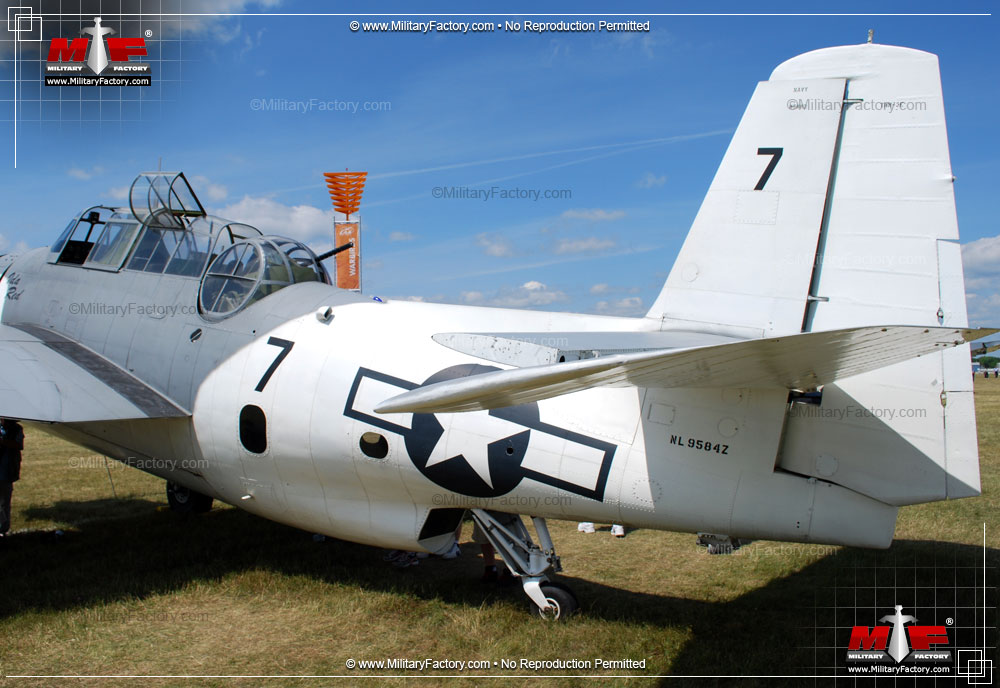
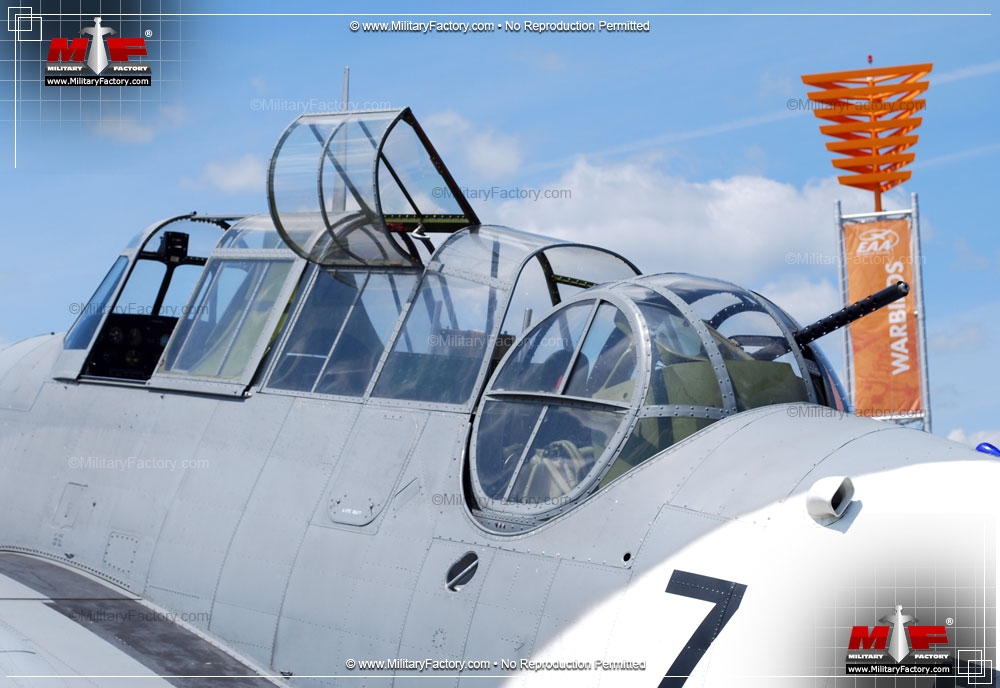
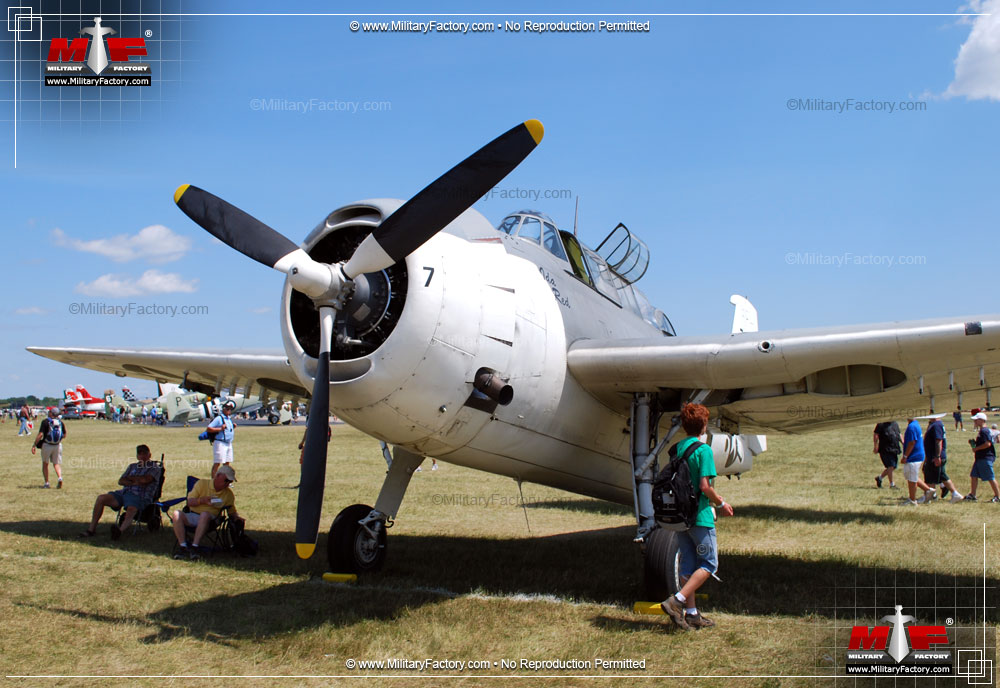
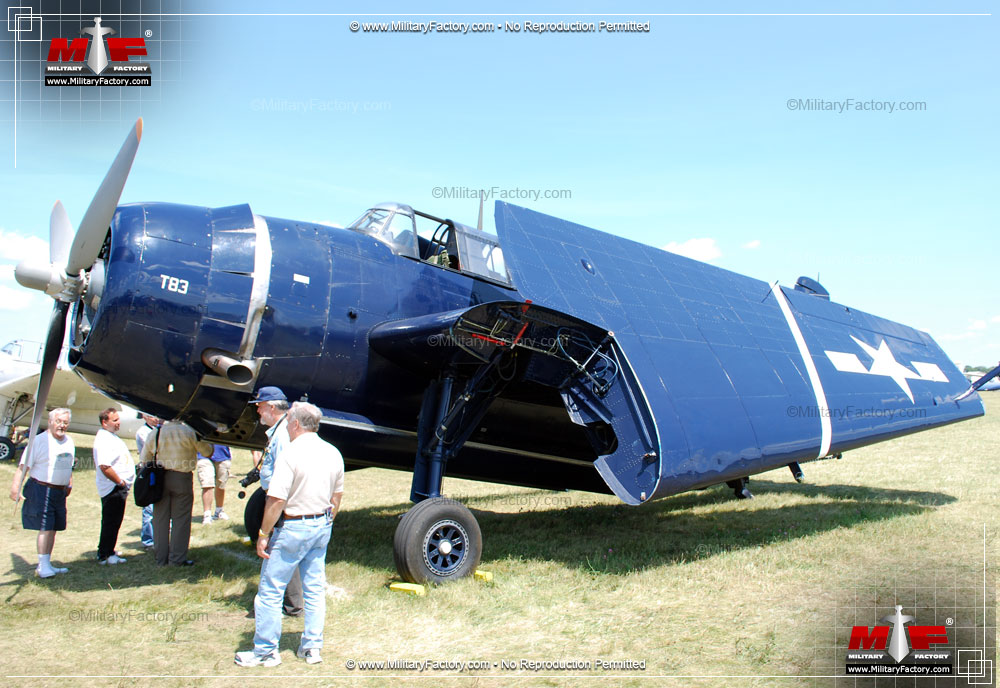
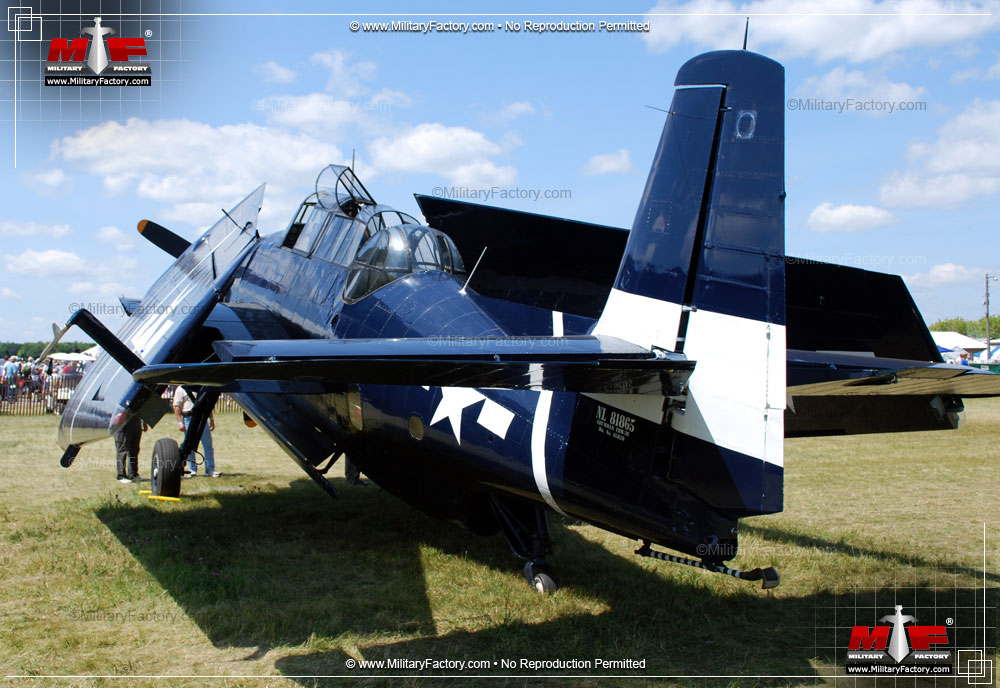
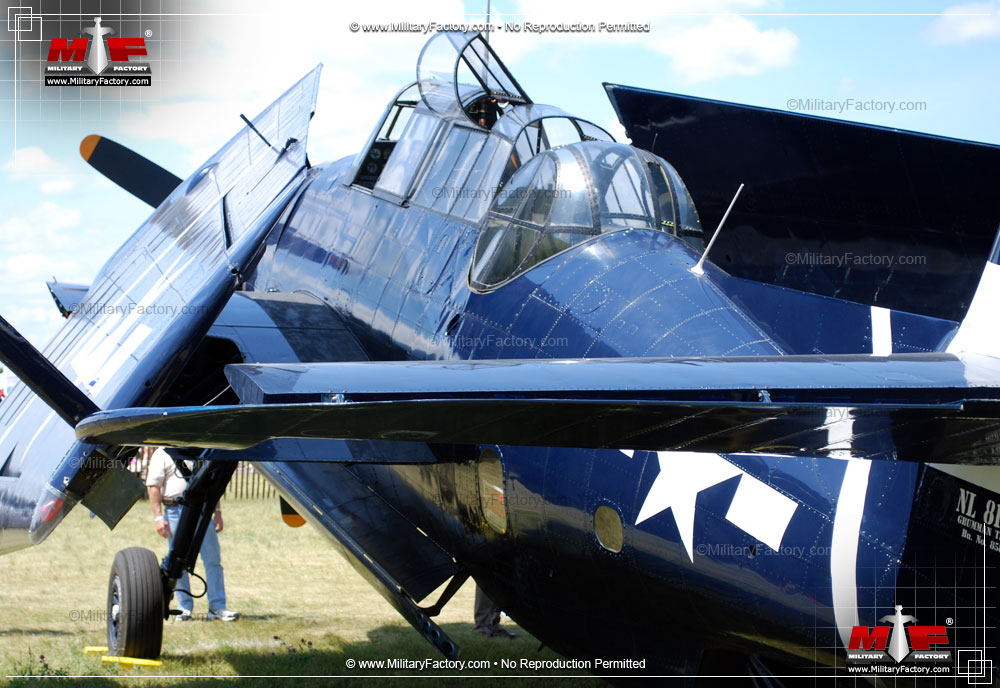
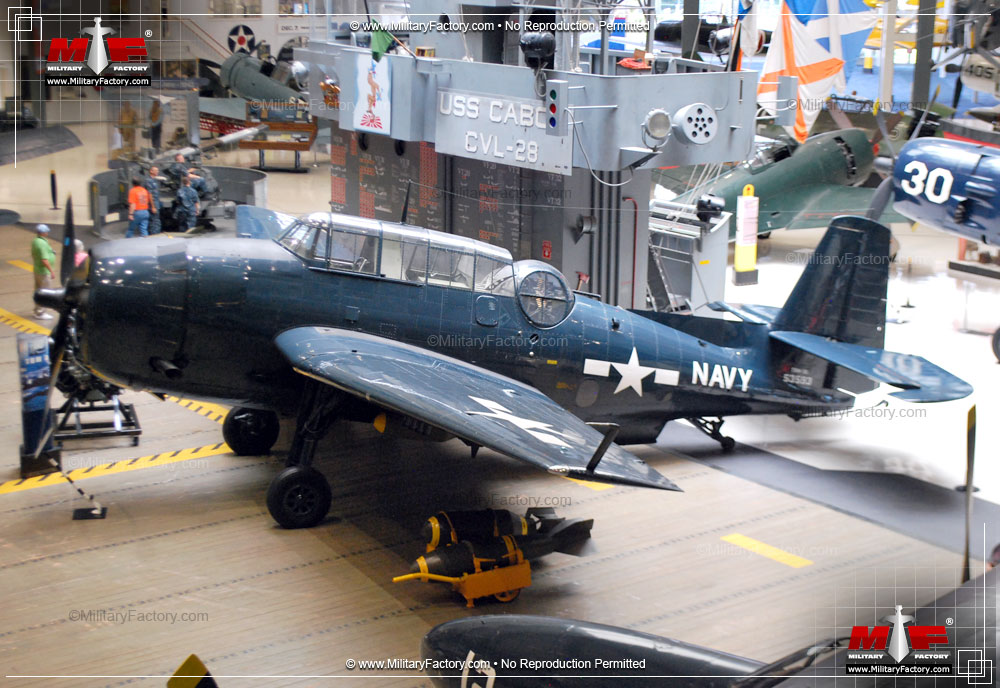
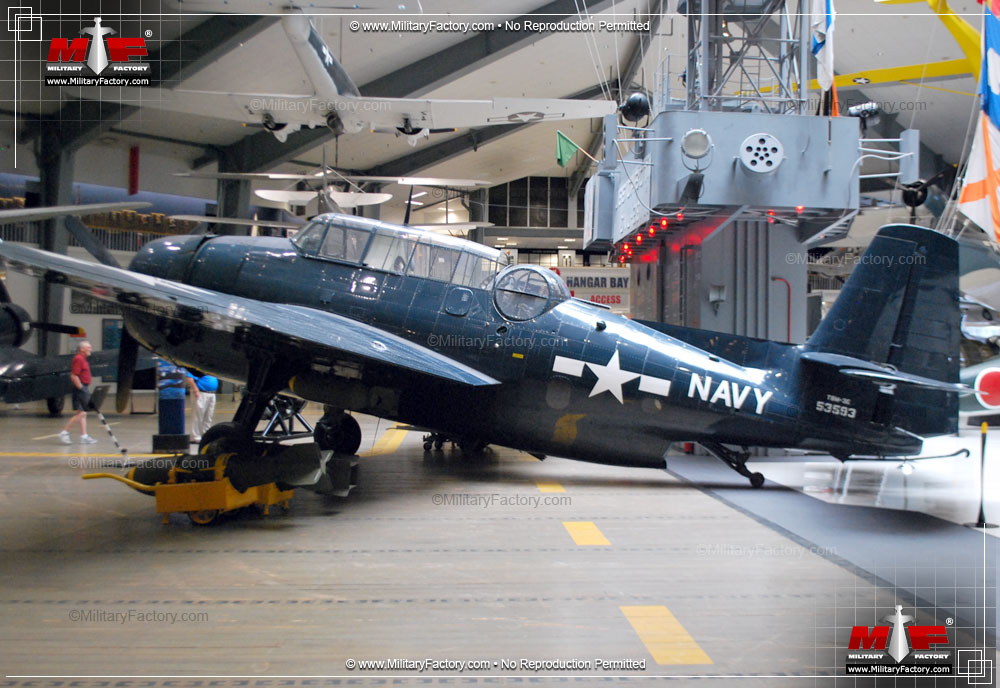
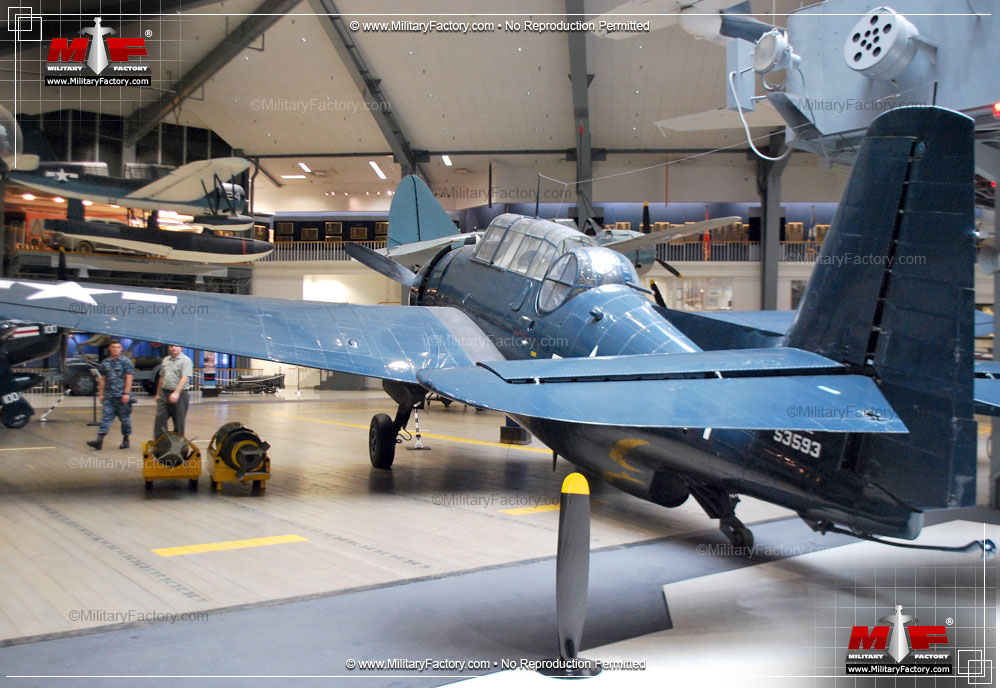
Design of the Grumman TBF Avenger was conventional and followed the lessons learned with previous Grumman aircraft attempts including the wide-area wings. The fuselage was stout, oval in general shape and constructed with a semi-monocoque approach which was covered over in metal skin. The forward compartment housed the powerful radial piston engine rotating a three-bladed propeller assembly. The cockpit was held high atop the deep fuselage with typical "greenhouse" framing for the crew compartment running over much of the fuselage length. The cockpit housed positions for the three crew (seated inline) to include the pilot, the bombardier and the rear gunner. The pilot took the forward-most position with the bombardier in the middle (with special access to the lower section of the fuselage) and the tail gunner at the rear. Vision out of the forward seat was excellent as it was high up on in the design and situated ahead of the wing leading edges. The bombardier was given a folding seat in the lower fuselage from which he could manage the bombing functions of the torpedo to the front section or manage a defensive machine gun to the rear, this just under the tail section. The tail gunner was seated under a rounded framed enclosure mounting a single defensive machine gun (as dive bombers were traditionally bombers first and fighters a distant second, the rear quadrant of the aircraft was its most vulnerable position, particularly during an attack run and, thusly, the machine guns were needed for point defense against engaging enemy aircraft). The lower-rear portion of the fuselage exhibited various vision ports for observation by the bombardier and housed various mission-related equipment and survival gear (the latter to include a lifeboat and flares should the aircraft be downed over water). Entry to the fuselage was via a starboard side hinged door. The empennage was rather distinct in appearance - extending as a boom straight to the rear with the tail section added to its top. The tail was of conventional layout with a single vertical tail fin and a pair of horizontal tailplanes. All of these tail surfaces were clipped at their edges. The main wing assemblies were low-to-mid mounted appendages and straight, showcasing some dihedral in their design outboard of the landing gear wells. The wings were power-folding and could set flat up against the sides of the fuselage for improved stowage aboard the space-strapped carriers of the day. The undercarriage consisted of two main landing gear legs (retracting under each wing away from the fuselage centerline) and a retractable tail wheel. The undercarriage was reinforced enough that they could double as an airbrakes in the dive bombing role. An electrically-powered arrestor hook was lowered when landing on carrier, this used to latch only cables strewn across the flight deck and shorten an aircraft's landing distance. Later production versions introduced an external hook.

Standard armament of nearly all production Avengers included 2 x 12.7mm M2 Browning heavy machine guns in the wings and 1 x 12.7mm M2 Browning machine gun in the powered dorsal turret as well as 1 x 7.62mm M1919 Browning machine gun in a trainable ventral fuselage position. Despite the large-scale use of hydraulics throughout the design of the Avenger, the turret was electrically-powered and developed by Grumman engineers in-house. The forward-facing machine guns were offensive in nature and could be used to strafe targets of opportunity as needed while the rear machine guns were utilized to defend the critical rear facings of the aircraft. Expert Avenger pilots could push their mounts to the point that she could be handled as an adequate fighter platform - much to the surprise of trailing enemy fighter pilots.

However, the true heart and soul of Avenger armament was its ordnance delivery which consisted of the internal bomb bay and provisions for external stores. One Mk XIII-2 torpedo could be housed in the bomb bay to which the aircraft would approach a surface target at low or medium altitudes, open the hydraulically-powered bay doors and drop the torpedo into the water. The torpedo would then stream just under the waterline towards its intended target, presumably detonating by timed fuse or on contact. For medium-altitude level bombing, the bombardier handled the torpedo responsibility though, for low-level runs, the pilot utilized an illuminated sight in the cockpit and took over the bombardier's role. In lieu of a torpedo, the Avenger could stock up to 2,000lbs (4 x 500lbs or 12 x 100lbs) of conventional drop bombs for use against surface targets. Support for 5" air-launched, unguided, high-explosive rockets were added later and this allowed Avenger crews the capability to strike at surface targets with devastating results to the enemy (both physically and psychologically). Operational ranges could be extended by the use of 3 x 335 US gallon external fuel drop tanks.

Avengers were primarily completed with the Wright R-2600 Cyclone 14-cylinder radial piston engine series outputting 1,700 to 1,900 horsepower with many forms including a supercharger. Top speed was in the vicinity of 275 miles per hour with an operational range out to 1,000 miles. The aircraft could hit service ceilings of 30,000 feet with a 2,000 feet per minute rate-of-climb.

Initial combat actions for the TBF Avenger were recorded during the famous "Battle of Midway" occurring on June 4th, 1942. Of the six aircraft launched into battle with VT-8, only one returned home and this with a wounded bombardier, dead tail gunner and little flight support for the airframe - a rather troubling start for the aircraft line. Nevertheless, production ramped to help swell the required USN numbers. Avengers delivered torpedoes and (primarily) drop ordnance against both naval and surface targets across the Pacific and over the Japanese mainland throughout the course of the war. Additionally, the deep belly of the Avenger could serve as a basic cargo transport and many were used to airdrop supplies to cut-off Marine and Army units in the Pacific Campaign. Water, food and ammunition was dropped via Avengers to the 1st Marine Regiment at Shuri Castle on Okinawa. Avengers were also used to attack the Japanese mainland directly once air superiority was firmly in the hands of the Allies in the theater.

Overall, total production of the TBF Avenger series ranged between 9,836 and 9,839 aircraft (sources vary on the exact count). Up to 921 Avengers were delivered to the Royal Navy via Lend-Lease and, in all, 33 British Navy squadrons equipped the type and operated them from various naval warships and land bases across the Empire. New Zealand received 63 Avengers. Post-war operators included Brazil, France, Japan, Netherlands and Uruguay.

Variants abounded along the production line and went beyond the XTBF-1 prototypes. The TBF-1 was the initial production model based on the second XTBF-1 prototype and 1,526 examples were produced. The TBF-1C added 12.7mm heavy machine guns to the wings and improved operational ranges with a larger internal fuel tank. 765 of the model were produced. The TBF-1B became the British Tarpon Mk I/Avenger Mk I Lend-Lease mounts. The TBF-1D added the RT-5/APS-4 search radar in a pod under their starboard side wings. Similarly, the TBF-1D were based on the C-models with the RT-5/APS-4 search radar added. The TBF-1E featured additional equipment while the TBF-1J was designed for poor weather. The TBF-1L mounted a powerful searchlight in its bomb bay while TBF-P and TBF-CP were dedicated photo-reconnaissance platforms converted from existing TBF-1 and TBF-1C mounts respectively. The XTFB-2 was a prototype fitting the Wright XR-2600-10 series radial piston engine of 1,900 horsepower. Similarly, the XTBF-3 was fitted with a Wright R-2600-20 series radial piston engine of 1,900 horsepower. The XTBF-3 would have become the canceled TBF-3 production model. Total TBF-1 production was 2,290.

As the US Navy required more and more viable military weapons in the Pacific, General Motors was tabbed to help with production of the Grumman aircraft. Five of their factories along the East coast sat under-worked and were, therefore, formed into a collective powerhouse known as "Eastern Aircraft Division" for the new US government task of outputting TBF Avengers (as well as F4F Wildcats as the "FM Wildcat") in number. These facilities essentially manufactured Avenger platforms under the "TBM" designation.

The initial GM version was the base TBF-1 as the TBM-1 of which 550 were produced. This was followed by the TBM-1C of which 2,336 were produced. Added radar produced the TBM-1D. The TBM-E was completed with additional electrical equipment while the TBM-1J was the all-weather version. The TBM-1L was the GM version housing the bomb bay search light while the TBM-1P and TBM-1CP were the photo-reconnaissance variants. The TBM-2 featured the Wright XR-2600-10 series engine of 1,900 horsepower while the XTBM-3 housed the Wright 2600-20 series engine of 1,900 horsepower. Four of the latter were produced. The TBM-3 sported double cooling intakes, a more powerful engine and external arrestor hook. 4,011 of the type were completed. The TBM-3D saw radar fitted under the starboard side wing. The TBM-3E dropped the ventral machine gun and added search radar in a reinforced airframe. 646 of the type were delivered. The TBM-3H was fitted with specialized surface search radar while the TBM-3J was finished for all-weather operation. The TBM-3L fitted a searchlight in the bomb bay. The TBM-3M was modified to fire missiles while the TBM-3N was modified as a night attack platform. The TBM-3P was a photo-reconnaissance variant. An electric countermeasures version existed under the TBM-3Q designation and identified by its large radome along the belly. A passenger transport was developed as the TBM-3R. An anti-submarine warfare mount became the TBM-3S while the TBM-3U was a multi-role platform and target tow vehicle. The TBM-3W was fitted with APS-20 radar in a belly radome for anti-submarine work. The XTBM-4 was a prototype form based on the TBM-3E of which three were produced to prove a revised wing folding concept and strengthened structure. The TBM-4 designation would have covered XTBM-4 prototypes on production lines but these were canceled.

British Avengers included the initial TBF-1s as the Avenger Mk I of which 400 were delivered. This was followed by the Avenger Mk II (TBM-1/TBM-1C) of which 334 were received. The Avenger Mk III was based on the TBM-3 and appeared in 222 examples. The Avenger Mk IV was born from the TBM-3S and the 70 on order were cancelled. 98 Avenger AS3s were used as anti-submarine warfare platforms. The Avenger AS3M were outfitted with a magnetic anomaly detector in a boom protruding from the fuselage at the rear. 100 Avenger AS4 models based on the TBM-3S were later delivered after the war.

In the latter part of the war - and in the years beyond - the TBF Avenger was evolved into a myriad of other useful roles including that of dedicated reconnaissance platform, target towing, airborne early warning (AEW), anti-submarine warfare (ASW) and light carrier-based transport. The TBM-3W "Project Cadillac" was used in 1946 to install and test the APS-20 surveillance radar. Most Avengers were out of military circulation by the early part of the 1960s.
Text ©2003-2013 www.MilitaryFactory.com • All Rights Reserved • No Reproduction Permitted
MilitaryFactory.com does NOT sell equipment/weaponry. Material presented throughout this website is for historical and entertainment value and should not to be construed as usable for hardware restoration, maintenance or general operation. Please consult manufacturers for such information. Our disclaimer. Email corrections / Comments to MilitaryFactory at Gmail dot com.
Picture of Grumman TBF Avenger
Pic of the Grumman TBF Avenger
Image of the Grumman TBF Avenger
View All Images (19)

Specifications for the
Grumman TBF Avenger
Carrier-Borne Torpedo Bomber


Country of Origin: United States
Manufacturer: Grumman; General Motors - USA
Initial Year of Service: 1942
Production: 9,835


Focus Model: Grumman TBF-1 Avenger
Crew: 3


Length: 40.12ft (12.23m)
Width: 54.17ft (16.51m)
Height: 15.42ft (4.70m)
Weight (Empty): 10,080lbs (4,572kg)
Weight (MTOW): 15,904lbs (7,214kg)


Powerplant: 1 x Wright R-2600-8 Double-Cyclone air-cooled radial engines generating 1,700hp.


Maximum Speed: 271mph (436kmh; 235kts)
Maximum Range: 1,215miles (1,955km)
Service Ceiling: 22,402ft (6,828m; 4.2miles)
Rate-of-Climb: 2,060 feet per minute (628m/min)


Hardpoints: 12
Armament Suite:
ORIGINAL:
1 x 7.62mm M1919 Browning machine gun in fixed, forward-firing nose mount.
1 x 7.62mm M1919 Browning machine gun in rear-facing ventral gun position.
1 x 12.7mm M2 Browning machine gun in rear-facing powered dorsal turret.

STANDARD:
2 x 12.7mm M2 Browning machine guns in wings (1 per wing).
1 x 7.62mm M1919 Browning machine gun in rear-facing ventral gun position.
1 x 12.7mm M2 Browning machine gun in rear-facing powered dorsal turret.

Up to 2,000lbs of internal and external ordnance.

1 x Mk XIII Torpedo in internal bomb bay
4 x 500lb bombs OR 12 x 100lb conventional drop bombs.
5" unguided rockets in various mountings.


Variants:
XTBF-1 - Prototype Model Designation; fitted with Wright R-2600-8 Cyclone radial piston engine generating 1,700hp; 2 examples produced.


TBF-1 - Initial Production Model Designation; 1,526 examples produced.

TBF-1C - Revised armament to include 2 x 12.7mm heavy machine guns in wings (sans 7.62mm machine gun in nose); increased fuel capacity; 765 examples produced.

TBF-1B - Lend-Lease Designation for British Tarpon Mk I/Avenger Mk I

TBF-1D - Added radar in pod under right wing

TBF-1CD - TBF-1C models with radar pod under right wing

TBF-1E - Additional electronics

TBF-1J - All-Weather Variant

TBF-1L - Searchlight fitted to bomb bay

TBF-1P - TBF-1 models converted to photo-reconnaissance platforms.

TBF-1CP - TBF-1C models converted to photo-reconnaissance platforms.

XTBF-2 - Prototype fitting Wright XR-2600-10 series engine

XTBF-3 - Prototype fitting Wright R-2600-20 series engine

TBF-3 - Proposed XTBF-3 production models; canceled.

TBM-1 - General Motors Production; based on initial TBF-1 models; 550 examples produced.

TBM-1C - General Motors Production; based on TBF-1C models; 2,336 examples produced.

TBM-1D - General Motors Production; TBM-1 with underwing radar installation

TBM-1E - General Motors Production; Additional electronics

TBM-1J - General Motors Production ; All-Weather Variant

TBM-1L - General Motors Production; Searchlight fitted to bomb bay

TBM-1P - General Motors Production; TBM-1 models converted for photo-reconnaissance.

TBM-1CP - General Motors Production; TBM-1C models converted for photo-reconnaissance.

TBM-2 - General Motors Production; One-off TBM-1 fitted with Wright XR-2600-10 series engine of 1,900 horsepower.

XTBM-3 - General Motors Production; TBM-1C fitted with Wright R-2600-20 series engine of 1,900 horsepower; four examples completed.

TBM-3 - General Motors Production - based on XTBM-3 prototypes; 4,011 examples produced.

TBM-3D - General Motors Production; added radar under right wing

TBM-3E - General Motors Production; sans ventral gun position; added radar facilities; reinforced airframe.

TBM-3H - General Motors Production; added surface search radar suite.

TBM-3J - General Motors Production; all-weather variant

TBM-3L - General Motors Production; searchlight in bomb bay

TBM-3M - General Motors Production; airborne missile launching platform.

TBM-3N - General Motors Production; night attack variant

TBM-3Q - General Motors Production; electronic warfare variant

TBM-3R - General Motors Production; cargo/passenger transport

TBM-3S - General Motors Production; anti-submarine warfare variant

TBM-3U - General Motors Production; utility variant

TBM-3W - General Motors Production; anti-submarine warfare variant

XTBM-4 - General Motors Production; prototype with new wing folding and stronger airframe; based on TBM-3E production model.

TBM-4 - General Motors Production; proposed model based on the XTBM-4 prototype; never produced.

Tarpon Mk I - Initial British Navy Designation of TBF-1 Avenger.

Avenger Mk I - British Navy; based on TBF-1; 400 examples received.

Avenger Mk II - British Navy; based on TBM-1/TBM-1C mounts; 334 examples received.

Avenger Mk III - British Navy; based on TBM-3; 222 examples produced.

Avenger Mk IV - British Navy; based on TBM-3S; order for 70 examples eventually cancelled.

Avenger AS3 - British Navy; anti-submarine warfare variant; sans dorsal machine gun; 98 examples produced.

Avenger AS3M - British Navy; fuselage boom added with magnetic anomaly detector.

Avenger AS4 - Based on TBM-3S; 100 examples delivered.


Operators: Brazil; Canada; France; Japan; Netherlands; New Zealand; United Kingdom; United States; Uruguay

ALL AIRCRAFT CATEGORIES

BY DECADE:


1900 to 1909
1910 to 1919
1920 to 1929
1930 to 1939
1940 to 1949
1950 to 1959
1960 to 1969
1970 to 1979
1980 to 1989
1990 to 1999
2000 to 2009
2010 to 2019
2020 to 2029
VIEW ALL
Compare Aircraft


BY TYPE:


Anti-Submarine Warfare (ASW)
Attack Helicopters
Bomber Aircraft
Medium Bombers
Heavy Bombers
Close-Air Support (CAS)
Commercial Aircraft
Dive Bombers
Electronic Warfare Aircraft (EWA)
Experimental / X-Planes
Fighter Aircraft
Floatplane Aircraft
Flying Boat Aircraft
Aerial Refueling Tankers
Helicopters (ALL)
Interceptor Aircraft
Multi-Role Aircraft
Navy Carrier Aircraft
Night Fighters
Reconnaissance / Scout
Search & Rescue (SAR)
Scout Helicopters
Special Purpose
Torpedo Bombers
Trainer Aircraft
Transport Aircraft
Transport Helicopters
Unmanned Aerial Vehicles (UAVs)
Unmanned Combat Air Vehicles (UCAVs)


COLLECTIONS:


4th Generation Fighter Aircraft
5th Generation Fighter Aircraft
US X-Planes
Classic US Warbirds
French Military Helicopters
Grumman "Cats"
Howard Hughes Aircraft
Indian Air Force
Israeli Air Force
Libyan Aircraft
Modern Chinese Aircraft
Modern Chinese Fighters
Modern Military Aircraft
Modern North Korean Aircraft
Modern Trainer Aircraft
Modern US Aircraft
Mikoyan Aircraft
Sukhoi Aircraft
Syrian Aircraft
Top 10 Fighter Aircraft of All Time


AIRCRAFT BY CONFLICT:


Arab-Israeli War (1948)
Cuban Missile Crisis (1959-1962)
Falklands War (1982)
Indo-Pak War (1965, 1971)
Iran-Iraq War (1980-1988)
Lebanon War (1982)
Operation Allied Force (1999)
Operation Desert Storm (1991)
Six Day War (1967)
Spanish Civil War (1936)
Soviet-Afghan War (1979-1989)
Yom Kippur War (1973)


MISCELLANEOUS:


Aircraft Cockpits
Aircraft Manufacturers List
Aircraft Timeline

WORLD WAR 2:


1939 Aircraft
1940 Aircraft
1941 Aircraft
1942 Aircraft
1943 Aircraft
1944 Aircraft
1945 Aircraft
1946 Aircraft
Australian Aircraft
Battle of Britain Aircraft
Bombers
Four-Engine Bombers
British Aircraft
British Bombers
British Transports
Dive Bombers
Canadian Aircraft
Fighters
Chinese Aircraft
French Aircraft
German Aircraft
German Fighters
German Flying Boats
German Jets
Secret Weapons of the Luftwaffe
Italian Aircraft
Imperial Japanese Aircraft
Imperial Japanese Fighters
Mitsubishi Bombers
Navy Aircraft
Pearl Harbor
Polish Aircraft
Romanian Aircraft
US Aircraft
US Bombers
US Navy Aircraft
Soviet Aircraft
Torpedo Bombers
Transport Aircraft
Tuskegee Airmen Aircraft
W.A.S.P. Aircraft
WW2 Aircraft Ranked by Speed
VIEW ALL


WORLD WAR 1:


1914 Aircraft
1915 Aircraft
1916 Aircraft
1917 Aircraft
1918 Aircraft
Aircraft Timeline
Austro-Hungarian Aircraft
Bomber Aircraft
British Aircraft
Fighters
Flying Boats
French Aircraft
Imperial German Aircraft
Italian Aircraft
Scout Aircraft
Russian Empire Aircraft
US Aircraft
WW1 Aircraft Ranked by Speed
VIEW ALL


KOREAN WAR:


Australian Aircraft
Korean War Aces
Korean War Jets
North Korean Aircraft
US Military Aircraft
VIEW ALL


VIETNAM WAR:


Helicopters
North Vietnam Air Force
US Airpower
VIEW ALL


COLD WAR:


1950s French Aircraft
British V-Bombers
Cold War Bombers
Soviet Aircraft
Soviet Bombers
Soviet Interceptors
Soviet Helicopters
Strategic Air Command
US Aircraft
US Bombers
US Interceptors
VIEW ALL

Site Disclaimer | Privacy Policy | Site Map | MF Origins


©2013 www.MilitaryFactory.com • Content ©2003-2013 MilitaryFactory.com • All Rights Reserved • Site Contact Email: militaryfactory at gmail dot com. The "Military Factory" name and MilitaryFactory.com logo are registered ® trademarks and protected by all applicable domestic and international intellectual property laws.


Top MF Stuff: 2013 Military Pay Scale | Military Ranks | WW2 Weapons | Sniper Rifles | Kts to Mph | WW1 Aircraft | Automatic Rifles | Aircraft Cockpits | Vietnam War Weapons | Main Battle Tanks | Submachine Guns | Shotguns | French Military Victories


Most photographic images appearing on this site are courtesy of the United States Department of Defense and are approved for public use. Other images acquired through the public domain. Digital art work courtesy of Dan Alex. Business Consulting by Kyle Williams. Material presented throughout this website is for historical and entertainment value and should not to be construed as usable for hardware restoration, maintenance or general operation. Please consult manufacturers for such information.


eXTReMe Tracker