Military Factory
Military Pay Chart
Global Firepower
Military Industrial Complex
Second World War
Home
Military Pay Scale
Military Ranks
Small Arms
Aircraft
Land Systems
Navy
Education
Military Factory Facebook Logo
flag of United States

Martin B-26 Marauder Medium Bomber (1941)

Authored By Staff Writer | Last Updated: 11/24/2010

After a few early setbacks, the B-26 Marauder became a USAAF stalwart and operated with distinction as a medium bomber.

Find a School Near You
Follow Military Factory on Facebook:
Trending on Military Factory:
Recent Articles:
The Martin B-26 Marauder overcame a rocky start to become one of the finest medium bombers of World War 2. The aircraft was designed with speed from the outset and, as such, a few problems emerged from that approach. The Marauder went on to amount an impressive service record and faded from service almost as soon as it had arrived. Nevertheless, the B-26 proved a capable aircraft in the hands of a trained pilot - and a trained pilot would be required to fly the type to its fullest potential considering the amount of knowledge needed to keep the needy bird airborne.

Development
January of 1939 saw the United States Army Air Corps (USAAC) issue a new requirement for a long-range light-to-medium bomber of considerable speed with the capability to mount at least 2,000lbs of ordnance. The Glen L. Martin Company entered the competition with their B-26 Marauder (then known as the Glen L. Martin 179) design and successfully obtained an initial order for 200 B-26's without so much as a single prototype let alone pre-production aircraft. The considerably deteriorating situation in Europe and in the Pacific necessitated the need for speed in production of such a design and thusly the B-26 was put to the assembly lines in little time (covering just two years from paper to working model). Within 12 months, the first B-26 was ready and made her first flight on November 25th, 1940 while 1,131 B-26A and B-26B models were already delivered.

The B-26 design was driven by the simple factor of pure speed. This was accomplished by selecting rather large, powerful engines and incorporating a small wing area with high wing loading. This produced an airframe that surpassed the USAAC requirements and then some, but provided for an aircraft with deadly-fast take-off and landing speeds and generally poor handling at lower speeds. In fact, landing speeds were between 120 and 135 miles per hour increasing the chances of damage to the airframe or injuries and fatalities to the crew substantially. Speeds became such a concern that the aircraft soon earned the nickname of "Widowmaker" due to at least one speed-related accident early on. As such, special military boards met to decide the fate of the Marauder project as a whole, grounding the aircraft in April of 1941 and instituting a few modifications in an effort to keep the type flying. This resulted in a B-26 with an increased wing area and redesigned taller vertical tail fin. Additionally, the Martin-produced powered dorsal turret had yet to be installed on previous models, leading to an imbalance of weight across the airframe, adding to the instability of the aircraft at lower speeds (effectively producing a stall on arrival).

Initial B-26's were fitted with the Pratt & Whitney R-2800-5 radial engine of 1,850 horsepower and produced in a batch of 201 examples. These were followed by the B-26A model series featuring the Pratt & Whitney R-2800-9 or R-2800-39 series engines. A-models were also the first to offer provision for a single internally-held torpedo. In addition to other subtle changes, the B-26A also increased its fuel capacity and therefore endurance. B-26A model production totaled about 139 examples.

The B-26B fitted the Pratt & Whitney R-2800-41 and R-2800-43 radial engines of 2,000 horsepower. These appeared in May of 1942 as a generally improved B-26A. Featured included better armoring and armament with a widened wingspan (642nd production model onwards) and propellers sans the spinners found on A-models. Production of the type numbered some 1,883 examples. The B-model series was in fact broken down into subvariants categorizing various subtle differences in construction. The base B-26B featured twin tail guns instead of one with a ventral gun added. The B-26B-1 was a slightly more improved B-26B model. The B-26B-2 featured the Pratt & Whitney R-2800-41 radial engines. The B-26B-3 was fitted with larger carburetors intakes and Pratt & Whitney R-2800-43 radial engines. The B-26B-4 was nothing more than a slightly improved B-26B-3 model. B-26B-10 throuh B-26B-55 included a myriad of changes covering the wingspan increase, addition of outboard flaps, taller vertical tail fin, a power-operated tail gun, cockpit armor protection and an increase to defensive armament.

The B-26C model was fitted with the Pratt & Whitney R-2800-41 series 2,000 horsepower engines. Like the B-26B before it, the C-model had their wingspan increased by exactly six feet. This was intended to reduced the issue of wing load common in the early B-26 design but was generally negated due to the increase in the wing's weight overall. B-26C's, for all intents and purposes, were generally similar to the B-26B models though constructed at Martin's Omaha subsidiary plant. Production totaled 1,210 examples.

The B-26F was brought online with a new angled wing in an effort to improve performance, particularly during take-off. These were completed in a batch of 300 examples. The B-26G were generally similar to the F-models and produced between 893 and 950 examples (sources differ on the exact total), becoming the last production models of the B-26 Marauder.

Some Marauders were converted as target tugs for gunnery trainer and designated as the AT-23A and AT-23B models. There were later updated with designations of TB-26B and TB-26C respectively. TB-26B conversions totaled 208 while 375 TB-26Cs were known to exist. TB-26C's were later granted for use by the United States Navy as JM-1 models with these totaling 225 on loan.

The Marauder airframe was also designed as an new-build crew trainer in the form of 57 TB-26G's. Like the TB-26C trainers loaned to the USN, the TB-26G was also loaned out as 47 JM-2's.

Marauder's were also sent via Lend-Lease to Britain (as Marauder Mk I, Mk IA, Mk II and Mk III marks) while others made their way into the inventories of Free French Forces and the South African Air Force. Other operators included Australia and Canada.

Design
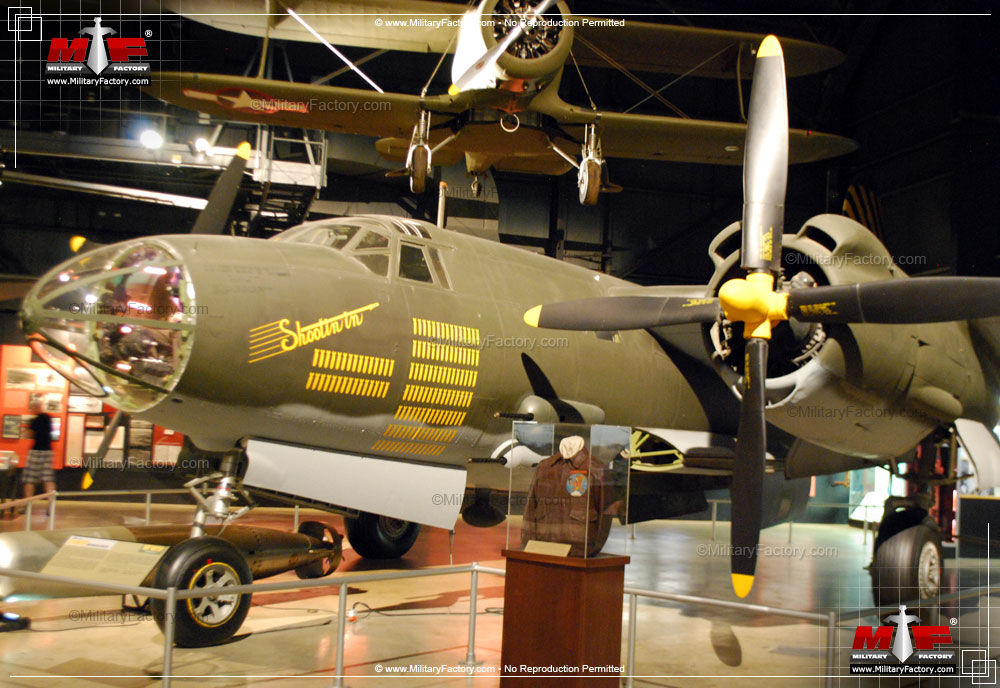
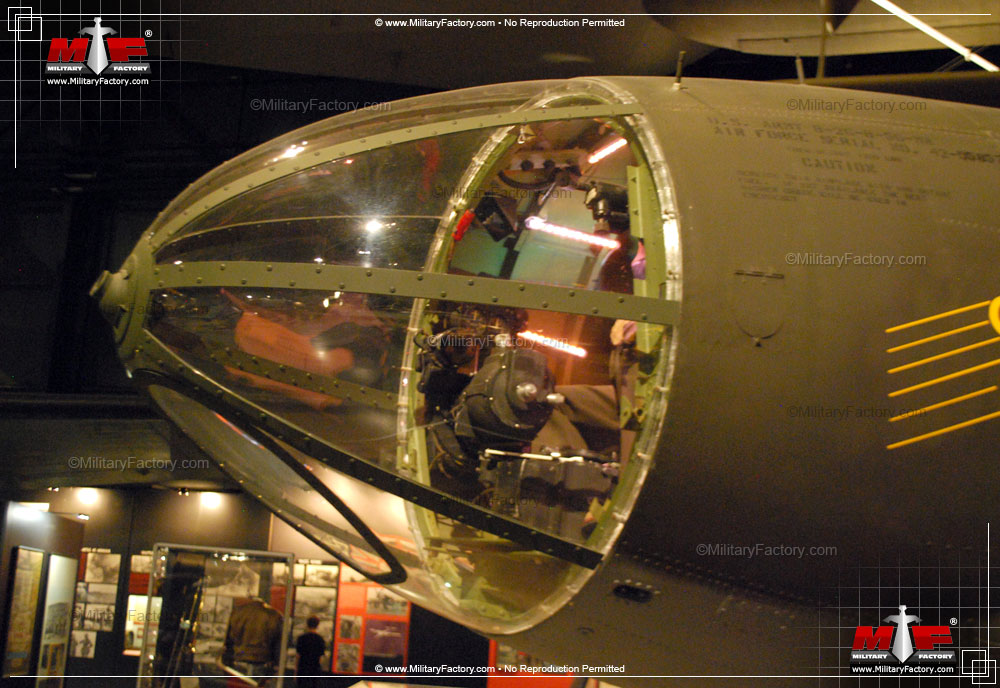
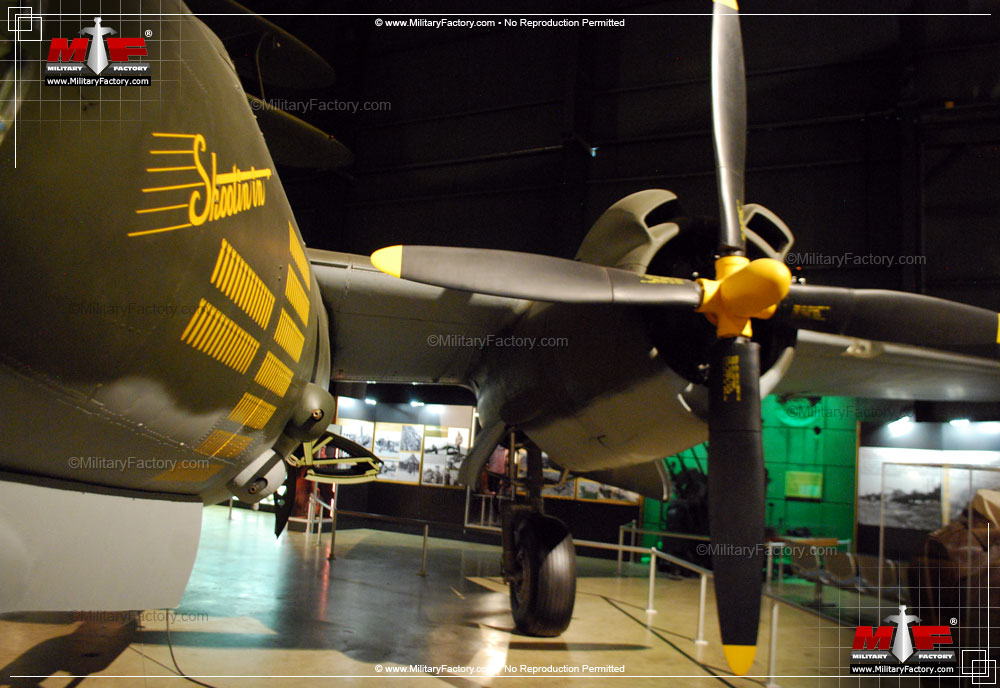
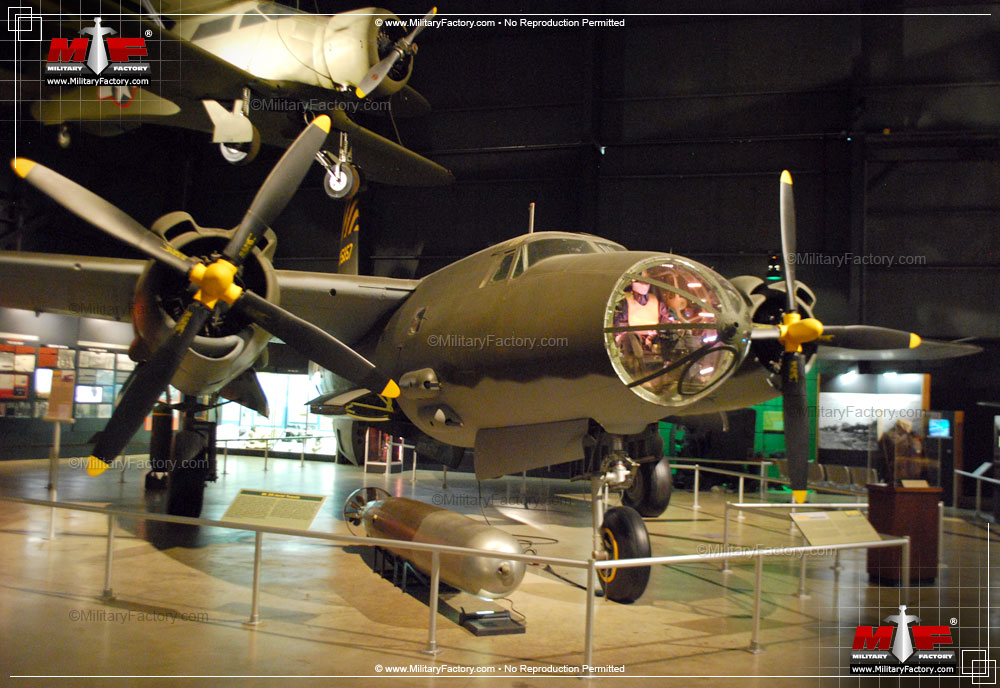
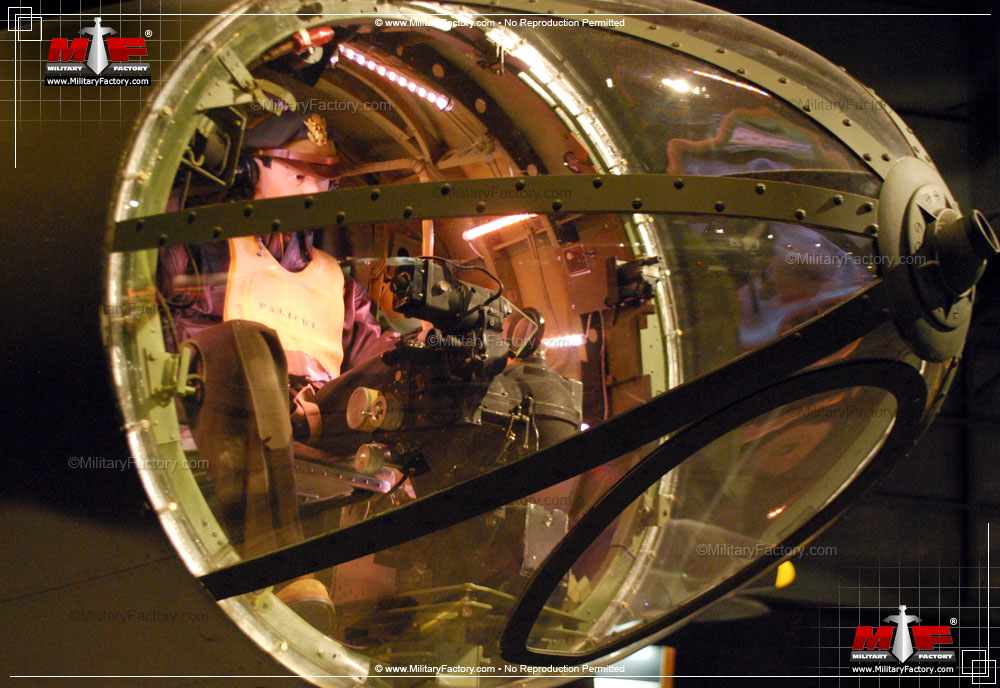
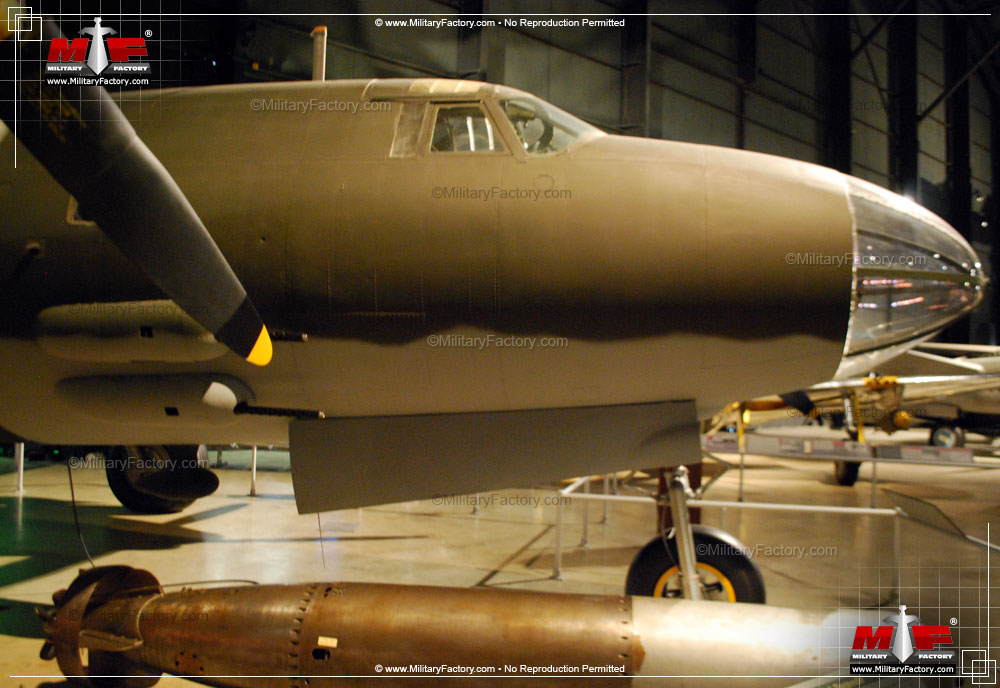
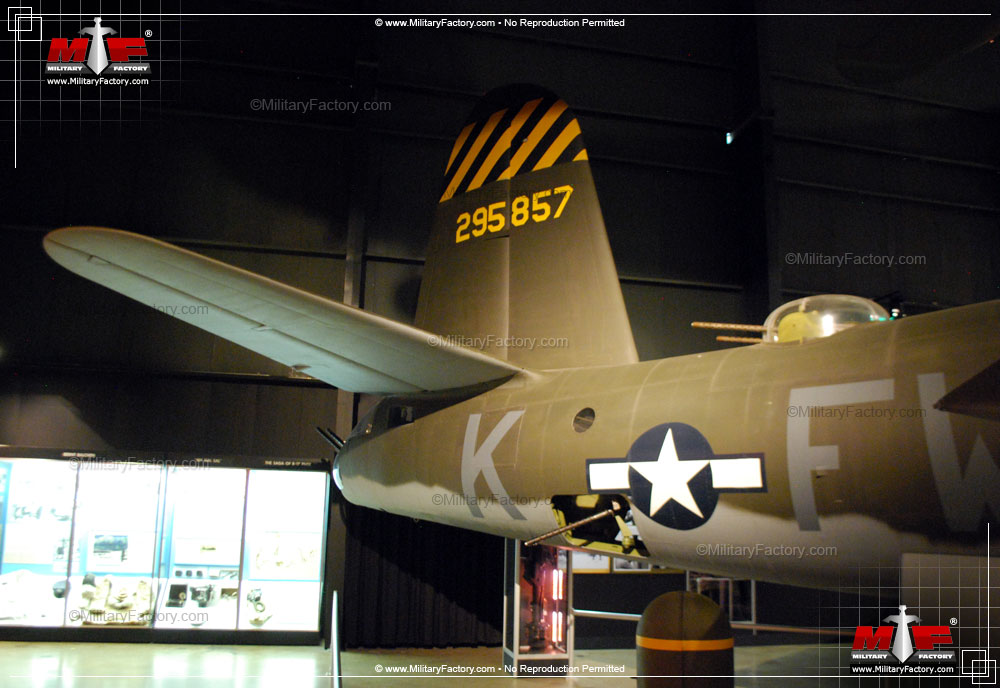
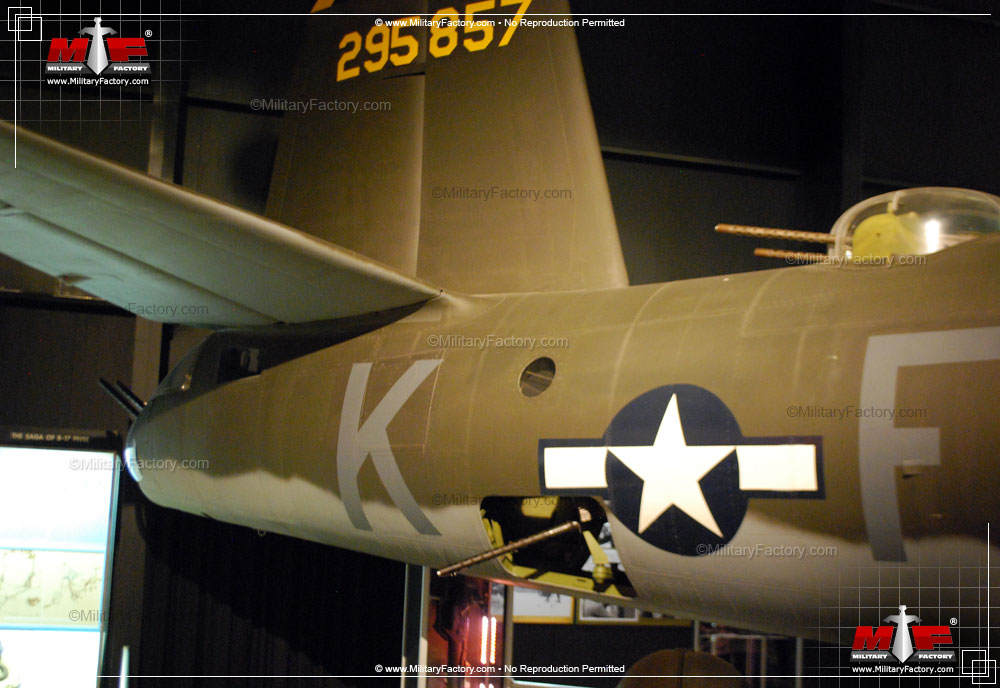
The B-26 was noted for its tubular rounded fuselage, earning the press nickname of "Flying Torpedo" in the process. The pilot and co-pilot were positioned in the cockpit with windowed views to the front, sides and above. Engines could easily be kept a watchful eye on thanks to their forward placement on the wings. The nose assembly also contained a glazed windowed position for a single crew member acting as bombardier. Other positions included a dorsal turret gunner whose position was held near the tail vertical fin. The tail gunner occupied the aft-most position. Some Marauders fitted a ventral gun station while still others were seen with gun mounts on the fuselage sides, just behind and underneath the cockpit. Wings were shoulder-mounted monoplanes containing each engine nacelle. The nacelles extended beyond the leading edge and continued past the tailing edge to a point, adding to the types sleek look. The empennage was completed with a rounded vertical tail fin and high-mounted and rounded horizontal planes. The undercarriage was a unique tricycle type with main landing gears and a nose wheel - a departure from traditional main landing gears and a tail wheel. In all, the Marauder appeared every bit the impressive design with only years of war ahead of it to put the machine through its paces.

Armament
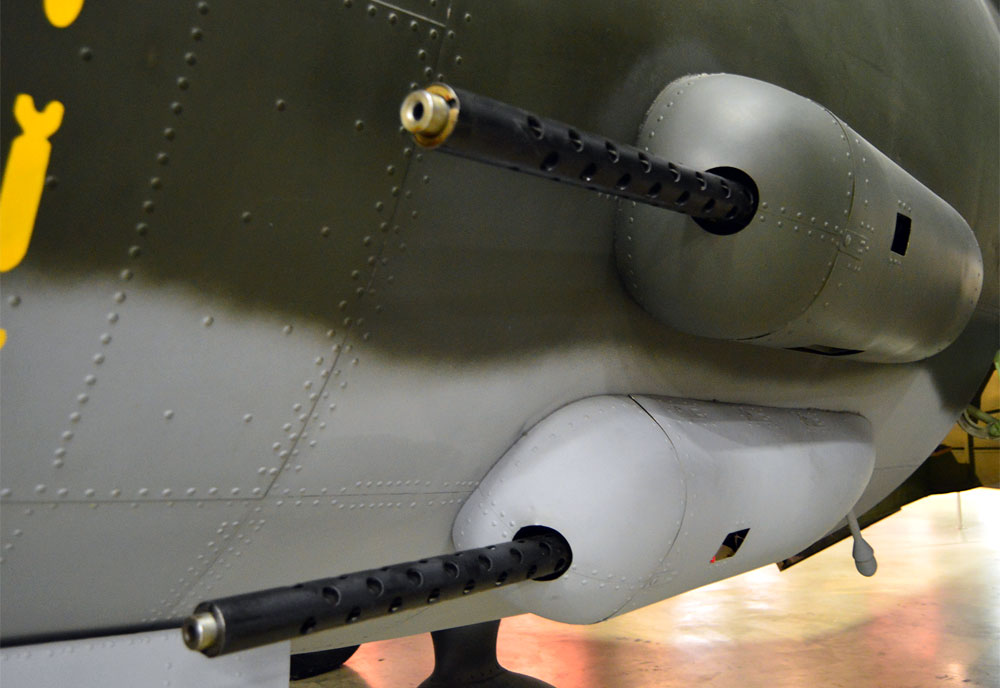
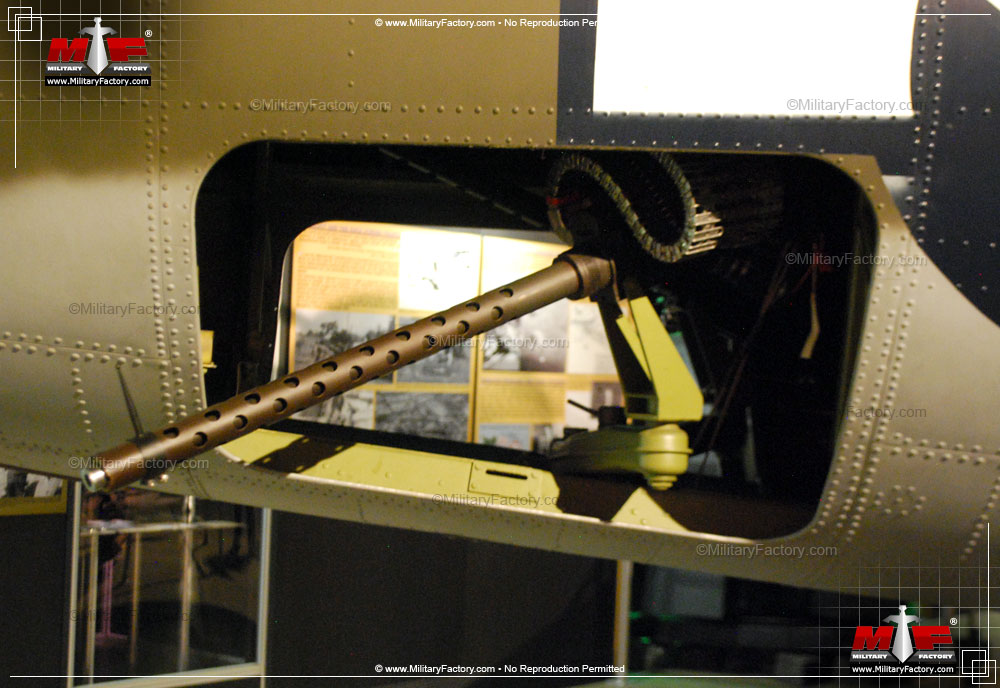
Typical armament for the Marauder consisted of well-placed defensive machine gun positions throughout the fuselage. No fewer than twelve heavy caliber 12.7mm (.50 caliber) machine guns could defend the aircraft from nose to tail. The rear-mounted dorsal turret contained a pair of 12.7mm machine guns as did the tail gun position - the former position possibly offering up the best view of the action above while the latter position charged with the very important task of fending off rear attackers. A ventral gun position - fitting a 7.7mm or 12.7mm machine gun - was found on some models while, traditionally, this was replaced by twin beam gun pod positions located on either side of the lower front fuselage, a move that would bring the gun total to 12 and allow for lethal strafing runs. A nose gun position was also commonplace and could fit either a 7.7mm or 12.7mm machine gun as needed. Internally, the Marauder could carry upwards of 4,000 to 5,000lbs of ordnance in the form of drop bombs or traditional strike sorties or a single torpedo for anti-shipping duty.

Cockpit
The cockpit was noted as having a utilitarian look and feel - sparse in contrast to other American bombers - consisting of all the necessary controls and gauges in a neatly organized arrangement. The pilot sat in an armored-plated position with access to all controls while the instrument panel ran about three quarters of the width of the cockpit, stopping at about the co-pilot's left knee. As may be expected, both pilot positions had control columns situated before them. A center console held the throttle, propeller and mixture controls within easy reach of both pilot and co-pilot. Landing gear and flap controls were positioned to the rear of the console.

Operational Service
The 22nd Bomb Group was the first American air group to receive the B-26, this at Langley Field in February of 1941. This initial group consisted of B-26 and B-26A models. After the Japanese attack on Pearl Harbor and the official declaration of war on the Empire by America, the 22nd was the only group with B-26's in stock and were expectedly pressed into service in the South West Pacific. The 22nd BG arrived in Brisbane, Australia after a short stop in Muroc, California, becoming part of the US Fifth Air Force, and was soon put to task with engaging Japanese targets beginning with Rabaul on April 5th, 1942. Other attacks followed and a flight of four B-26A's took part in the Battle of Midway, providing an offensive punch via torpedo strikes on enemy vessels. Despite its usefulness, the North American B-25 Mitchell - a similar twin-engine medium bomber - was finding more success and therefore more use in the theater than the B-26's. The 22nd BG was eventually upgraded with B-26B models by May of 1942. These improved Marauders allowed for continued use of the type that even included actions in along the Aleutian Island chain in 1942. During its first year of action, B-26's were generally restricted to the Pacific Theater but eventually saw extended use - and better results - in Europe and the Mediterranean.

Marauders were used in anger during the Operation Torch landings in North Africa. In this action, Marauders proved their worth, flying with bomb group elements of the 12th Air Force. The B-26 under the RAF Middle East Command in North Africa were noted by their designation of Marauder Mk I (B-26A), Marauder Mk IA (B-26B), Marauder Mk II (B-26C/B-26F) and Marauder Mk III (B-26G). The RAF, which fielded no more than two complete squadrons of Marauders (No. 14 and No. 39) received a batch of 52 Mk I and Mk IA models while totals of Mk II's and Mk III's topped 250 and 150 respectively.

American B-26 units arrived in England by March of 1943, Though results were initially poor with low-level bombing runs, the type saw new life in medium- and high-altitude attacks. In one such case, the complete 322nd Bomber Group flying at low-level was eliminated by ground and aircraft fire in an attempted strike on Ijmuiden, forcing the hand of Allied warplanners to make changes in their approach when utilizing the potent B-26. After adoption of higher-flying bombing techniques, the B-26 was repositioned as a proven and valued stalwart of the Allied bombing campaigns throughout the rest of the war in Europe though phasing out of the type began in 1945.

In the end, the B-26 proved to be a fitting addition to the Allied air arsenal, posting an impeccable service record. B-26's went on to have the lowest combat loss rate of any American aircraft in the conflict, owing something to its stellar design but more to the crews who flew her through her 110,000 sorties.

Conclusion
The B-26 was produced to the tune of some 4,708 to 5,288 total examples when production ceased in 1945. Despite its rough origins, the Marauder was otherwise an excellent medium bomber on par with the North American B-25 Mitchells which starred in the Pacific. The B-26 was undoubtedly fast, adequately armed and could carried an excellent bombload for an aircraft of this type. Marauders and their fighting men served well in their limited role in the Pacific but more than made up for their presence in the volatile fronts of Europe and North Africa, truly becoming one of America's finest warbirds of the conflict.
Text ©2003-2013 www.MilitaryFactory.com • All Rights Reserved • No Reproduction Permitted
MilitaryFactory.com does NOT sell equipment/weaponry. Material presented throughout this website is for historical and entertainment value and should not to be construed as usable for hardware restoration, maintenance or general operation. Please consult manufacturers for such information. Our disclaimer. Email corrections / Comments to MilitaryFactory at Gmail dot com.
Picture of Martin B-26 Marauder
Pic of the Martin B-26 Marauder
Image of the Martin B-26 Marauder
View All Images (5)

Specifications for the
Martin B-26 Marauder
Medium Bomber


Country of Origin: United States
Manufacturer: Glenn L Martin Company - USA
Initial Year of Service: 1941
Production: 4,708


Focus Model: Martin B-26 Marauder
Crew: 7


Length: 58.23ft (17.75m)
Width: 64.99ft (19.81m)
Height: 19.82ft (6.04m)
Weight (Empty): 22,381lbs (10,152kg)
Weight (MTOW): 34,200lbs (15,513kg)


Powerplant: 2 x Pratt & Whitney R-2800-41 Double-Wasp air-cooled radial-piston engines generating 2,000hp each.


Maximum Speed: 282mph (454kmh; 245kts)
Maximum Range: 675miles (1,086km)
Service Ceiling: 23,507ft (7,165m; 4.5miles)
Rate-of-Climb: 1,250 feet per minute (381m/min)


Hardpoints: 0
Armament Suite:
1 x 7.7mm machine gun OR 1 x 12.7mm machine gun in nose.
1 x 7.7mm machine gun in ventral position OR 2 x 12.7mm machine guns in side fuselage position.
2 x 12.7mm machine guns in dorsal turret
2 x 12.7mm machine guns in tail position

Internal Bombload Capacity of up to 5,200lbs (2,359kg).


Variants:
B-26 - Initial Designation and base production model of which 201 were produced.


B-26A - Initial Production Model; Featured 1,850hp R-2800-9 or R-2800-39 radial piston engines; increased fuel capacity; provision for a single under-fuselage torpedo; 139 produced.

B-26B - R-2800-41 radial piston engines; Wingspan increase of 6 feet; increased overall combat weight.

B-26C - Similar in many respects to the B-26B model with the exception that it was produced at the Martin Omaha subsidiary plant.

B-26F - Featured higher-wing incidence angling for improved field performance.

B-26G - Similar to the B-26F model.

AT-23A - Target Tug-Gunnery Trainers (later redesignated as the TB-26B).

AT-23B - Target Tug-Gunnery Trainer (later redesignated as the TB-26C).

TB-26A - Redesignation for the AT-23A

TB-26B - Redesignation for the AT-23B

TB-26G - Crew Trainer Model

JM-1 - Navy acquisition and redesignation of the TB-26C Target Tug-Gunnery Trainer.

JM-2 - Navy acquisition and redesignation of the TB-26G Crew Trainer Model.


Operators: Australia, Canada, France (Free French Air Force), South Africa, the United Kingdom and the United States of America.

ALL AIRCRAFT CATEGORIES

BY DECADE:


1900 to 1909
1910 to 1919
1920 to 1929
1930 to 1939
1940 to 1949
1950 to 1959
1960 to 1969
1970 to 1979
1980 to 1989
1990 to 1999
2000 to 2009
2010 to 2019
2020 to 2029
VIEW ALL
Compare Aircraft


BY TYPE:


Anti-Submarine Warfare (ASW)
Attack Helicopters
Bomber Aircraft
Medium Bombers
Heavy Bombers
Close-Air Support (CAS)
Commercial Aircraft
Dive Bombers
Electronic Warfare Aircraft (EWA)
Experimental / X-Planes
Fighter Aircraft
Floatplane Aircraft
Flying Boat Aircraft
Aerial Refueling Tankers
Helicopters (ALL)
Interceptor Aircraft
Multi-Role Aircraft
Navy Carrier Aircraft
Night Fighters
Reconnaissance / Scout
Search & Rescue (SAR)
Scout Helicopters
Special Purpose
Torpedo Bombers
Trainer Aircraft
Transport Aircraft
Transport Helicopters
Unmanned Aerial Vehicles (UAVs)
Unmanned Combat Air Vehicles (UCAVs)


COLLECTIONS:


4th Generation Fighter Aircraft
5th Generation Fighter Aircraft
US X-Planes
Classic US Warbirds
French Military Helicopters
Grumman "Cats"
Howard Hughes Aircraft
Indian Air Force
Israeli Air Force
Libyan Aircraft
Modern Chinese Aircraft
Modern Chinese Fighters
Modern Military Aircraft
Modern North Korean Aircraft
Modern Trainer Aircraft
Modern US Aircraft
Mikoyan Aircraft
Sukhoi Aircraft
Syrian Aircraft
Top 10 Fighter Aircraft of All Time


AIRCRAFT BY CONFLICT:


Arab-Israeli War (1948)
Cuban Missile Crisis (1959-1962)
Falklands War (1982)
Indo-Pak War (1965, 1971)
Iran-Iraq War (1980-1988)
Lebanon War (1982)
Operation Allied Force (1999)
Operation Desert Storm (1991)
Six Day War (1967)
Spanish Civil War (1936)
Soviet-Afghan War (1979-1989)
Yom Kippur War (1973)


MISCELLANEOUS:


Aircraft Cockpits
Aircraft Manufacturers List
Aircraft Timeline

WORLD WAR 2:


1939 Aircraft
1940 Aircraft
1941 Aircraft
1942 Aircraft
1943 Aircraft
1944 Aircraft
1945 Aircraft
1946 Aircraft
Australian Aircraft
Battle of Britain Aircraft
Bombers
Four-Engine Bombers
British Aircraft
British Bombers
British Transports
Dive Bombers
Canadian Aircraft
Fighters
Chinese Aircraft
French Aircraft
German Aircraft
German Fighters
German Flying Boats
German Jets
Secret Weapons of the Luftwaffe
Italian Aircraft
Imperial Japanese Aircraft
Imperial Japanese Fighters
Mitsubishi Bombers
Navy Aircraft
Pearl Harbor
Polish Aircraft
Romanian Aircraft
US Aircraft
US Bombers
US Navy Aircraft
Soviet Aircraft
Torpedo Bombers
Transport Aircraft
Tuskegee Airmen Aircraft
W.A.S.P. Aircraft
WW2 Aircraft Ranked by Speed
VIEW ALL


WORLD WAR 1:


1914 Aircraft
1915 Aircraft
1916 Aircraft
1917 Aircraft
1918 Aircraft
Aircraft Timeline
Austro-Hungarian Aircraft
Bomber Aircraft
British Aircraft
Fighters
Flying Boats
French Aircraft
Imperial German Aircraft
Italian Aircraft
Scout Aircraft
Russian Empire Aircraft
US Aircraft
WW1 Aircraft Ranked by Speed
VIEW ALL


KOREAN WAR:


Australian Aircraft
Korean War Aces
Korean War Jets
North Korean Aircraft
US Military Aircraft
VIEW ALL


VIETNAM WAR:


Helicopters
North Vietnam Air Force
US Airpower
VIEW ALL


COLD WAR:


1950s French Aircraft
British V-Bombers
Cold War Bombers
Soviet Aircraft
Soviet Bombers
Soviet Interceptors
Soviet Helicopters
Strategic Air Command
US Aircraft
US Bombers
US Interceptors
VIEW ALL

Site Disclaimer | Privacy Policy | Site Map | MF Origins


©2013 www.MilitaryFactory.com • Content ©2003-2013 MilitaryFactory.com • All Rights Reserved • Site Contact Email: militaryfactory at gmail dot com. The "Military Factory" name and MilitaryFactory.com logo are registered ® trademarks and protected by all applicable domestic and international intellectual property laws.


Top MF Stuff: 2013 Military Pay Scale | Military Ranks | WW2 Weapons | Sniper Rifles | Kts to Mph | WW1 Aircraft | Automatic Rifles | Aircraft Cockpits | Vietnam War Weapons | Main Battle Tanks | Submachine Guns | Shotguns | French Military Victories


Most photographic images appearing on this site are courtesy of the United States Department of Defense and are approved for public use. Other images acquired through the public domain. Digital art work courtesy of Dan Alex. Business Consulting by Kyle Williams. Material presented throughout this website is for historical and entertainment value and should not to be construed as usable for hardware restoration, maintenance or general operation. Please consult manufacturers for such information.


eXTReMe Tracker