Global Firepower | Military Industrial Complex | Second World War History
Home | Military Pay Scale Chart | Aircraft | Infantry Weapons | Military Vehicles | Navy Ships | Military Education | French Military Victories | Military Ranks | WW2 Weapons
Military Factory Latest from Military Factory
Thumbnail picture of the Dardo infantry fighting vehicle
Dardo IFV
Thumbnail picture of the Supermarine Scimitar fighter
Supermarine Scimitar
Thumbnail picture of the Centauro B1 8x8 tank killer
Centauro 8x8
Thumbnail picture of the Novi Avion fighter
Novi Avion
Thumbnail picture of the FR F2 bolt-action sniper rifle
FR F2
Thumbnail picture of the Lebel Model 1886 bolt-action rifle
Lebel Model 1886
2009 Military Pay Scale Chart - for Army, Navy, Air Force and Marines
  BY DECADE
    · 1900 to 1909
    · 1910 to 1919
    · 1920 to 1929
    · 1930 to 1939
    · 1940 to 1949
    · 1950 to 1959
    · 1960 to 1969
    · 1970 to 1979
    · 1980 to 1989
    · 1990 to 1999
    · 2000 to 2009
    · 2010 to 2019
    · View All Aircraft
  BY TYPE
    · Attack Helicopters
    · Bombers
    · Close-Support
    · Commercial
    · Dive Bombers
    · Experimental
    · Fighters
    · Floatplanes
    · Flying Boats
    · Fuel Tankers
    · Helicopters
    · Interceptors
    · Multi-Role
    · Navy Aircraft
    · Night-Fighters
    · Recon Aircraft
    · Recon Helos
    · Special Purpose
    · Torpedo Bombers
    · Trainer Aircraft
    · Transport Aircraft
    · Transport Helos
    · UAVs
  WORLD WAR 2
    · Full List
    · 1939
    · 1940
    · 1941
    · 1942
    · 1943
    · 1944
    · 1945
    · Australia
    · Battle of Britain
    · Bombers
    · Britain
    · Dive Bombers
    · Canada
    · Fighters
    · China
    · France
    · Germany
    · German Fighters
    · German Jets
    · Italy
    · Japan
    · Mitsubishi Bombers
    · Poland
    · USA Aircraft
    · USA Bombers
    · Soviet Union
    · Torpedo Bombers
  WORLD WAR 1
    · Full List
    · 1914
    · 1915
    · 1916
    · 1917
    · 1918
    · Aces
    · Austria-Hungary
    · Bombers
    · Britain
    · Fighters
    · France
    · Germany
    · Italy
    · Recon Aircraft
    · Russia
    · USA
  KOREAN WAR
    · Full List
    · Aces
    · Australia
    · USA
    · North Korea
  VIETNAM WAR
    · Full List
    · United States
    · North Vietnam

Military Factory > Military Aircraft > Douglas SBD Dauntless
 
 
More Pictures Cockpit View 3 View Plan QuickGraphs StatsCentral

Douglas SBD Dauntless

The SBD Dauntless bomber was the principle Allied dive bomber in the Pacific Theater of Operations.
By Staff Writer

Bookmark and Share

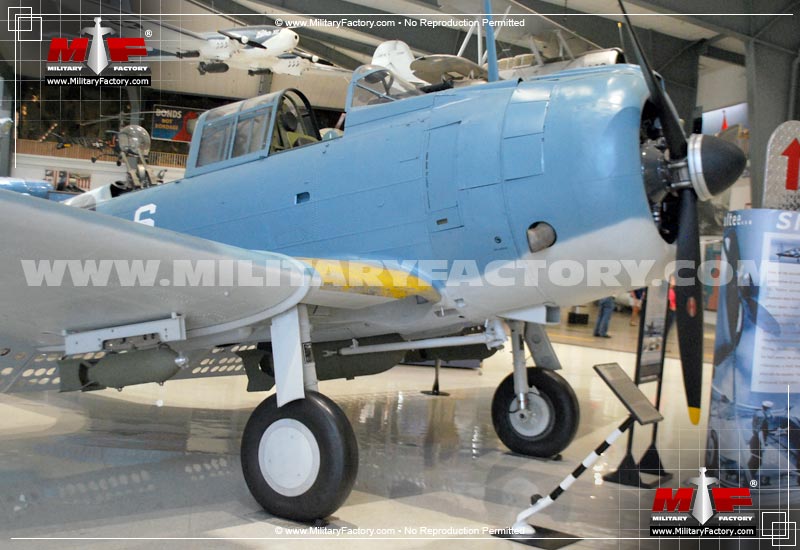
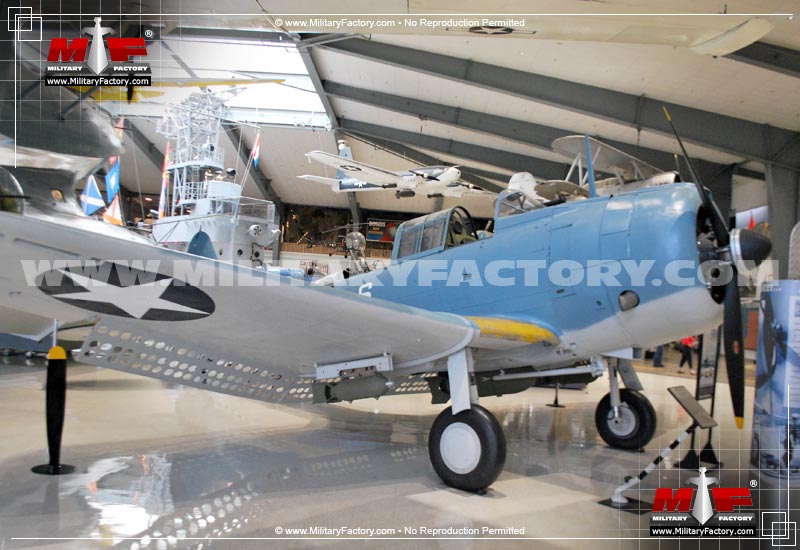
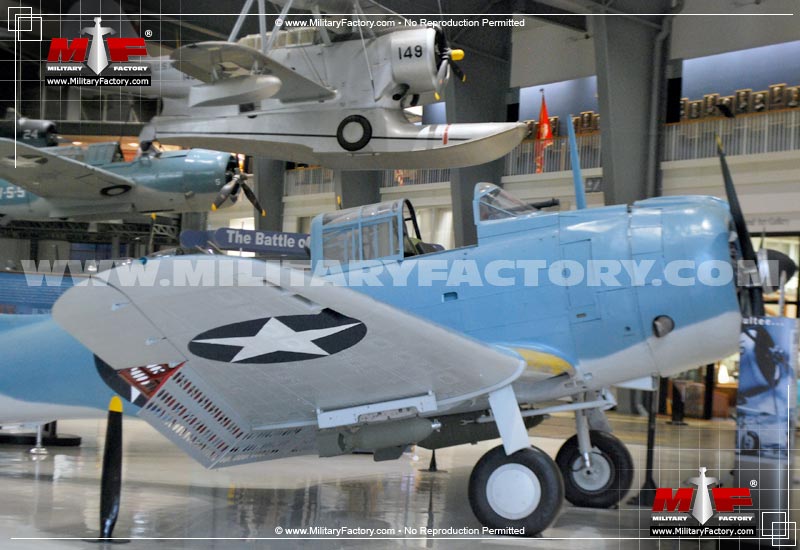
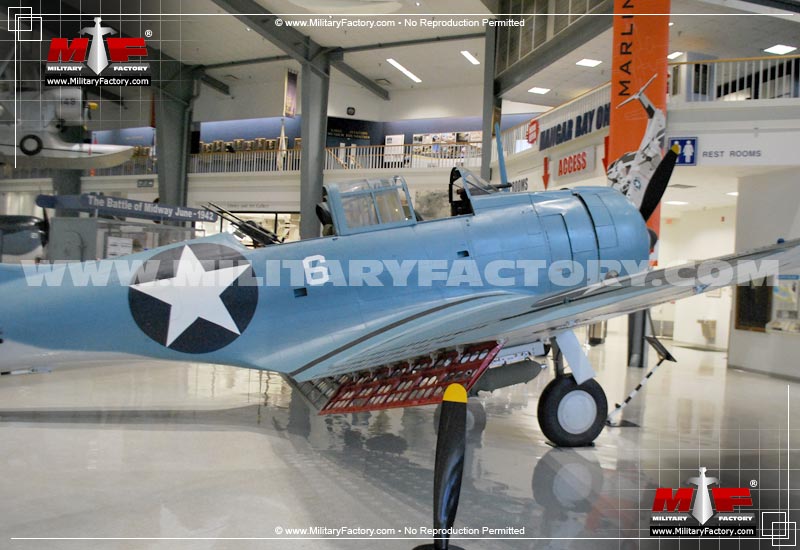
The Douglas DBS Dauntless dive bomber was a key cog in the America Navy war effort throughout the Pacific during World War 2. Though a product of the middle-to-late 1930's, the type continued to soldier on even as more advanced warplanes were appearing out of American factories as the war progressed. Despite its classification and appearance, the SBD Dauntless could more than handle its own against the lightly armored Japanese fighters in the Theater. The Douglas SBD would build for itself a history of resilience despite its inherent limitations in design - a history that very few other aircraft of the war would be able to match - and be responsible for the sinking of thousands of tons of Japanese shipping.

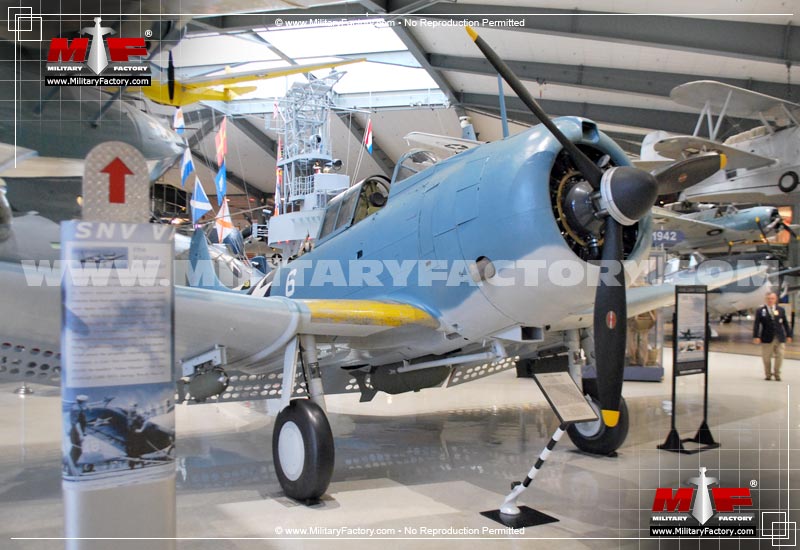
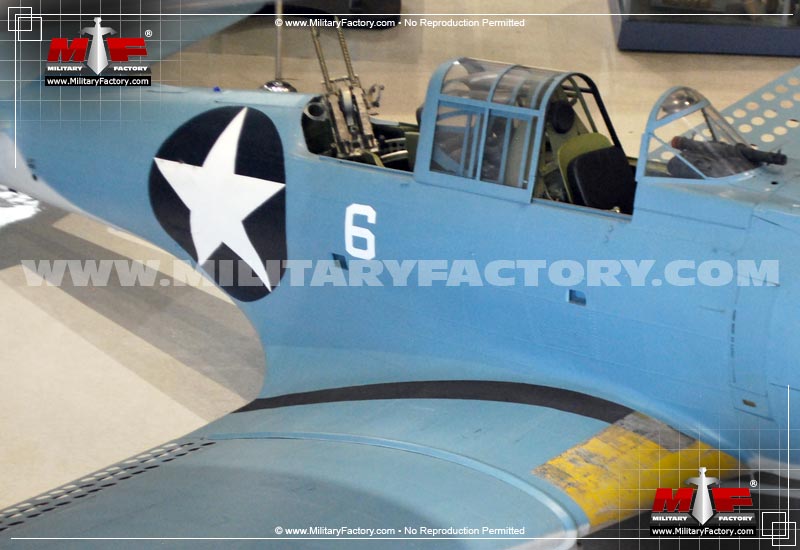
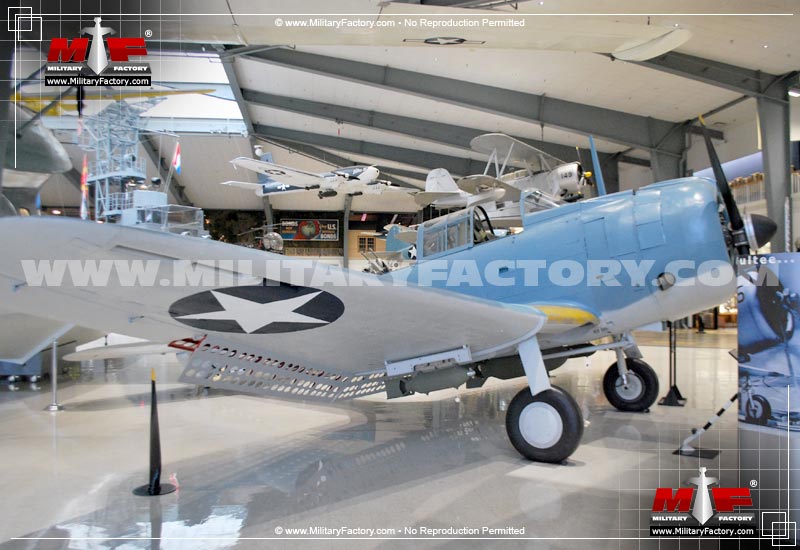
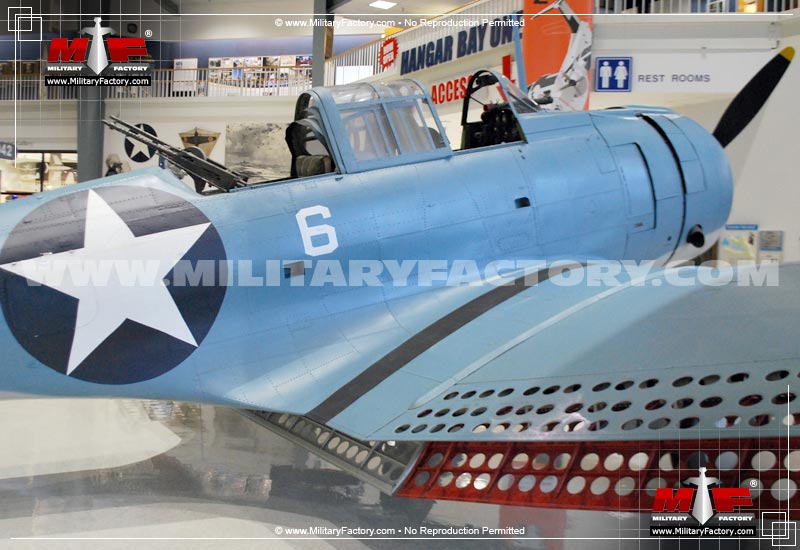
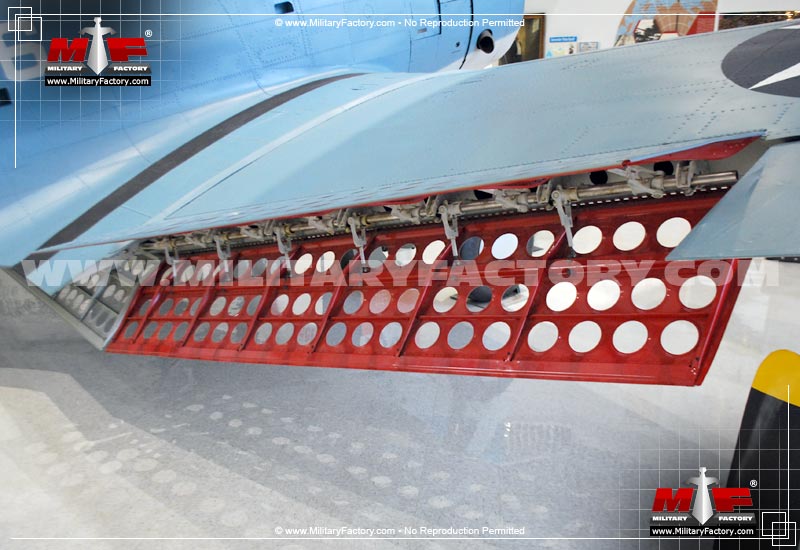
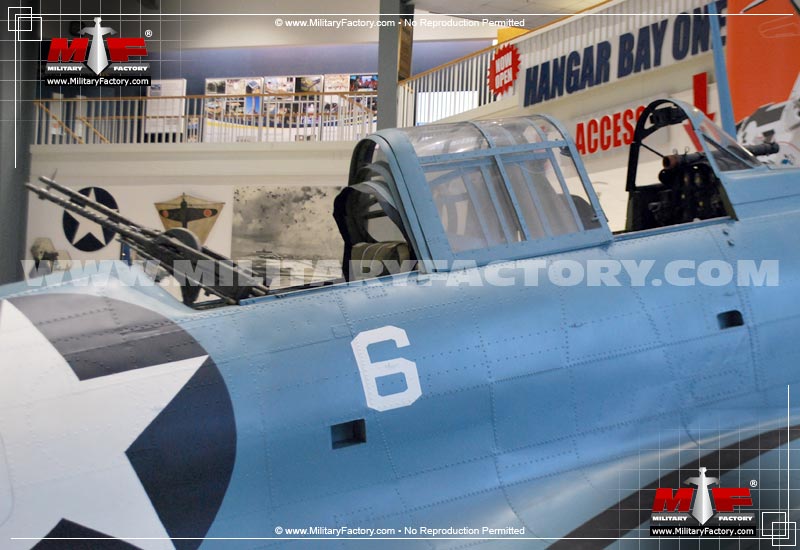
Design was conventional with the large radial engine mounted in the extreme forward portion of the fuselage, just forward of the cockpit. The glazed cockpit could accommodate two personnel - the pilot in a forward area and the gunner in a rear cockpit, seated back-to-back. The rear cockpit contained a trainable gun position (7.62mm type machine guns) and played a major defensive role in the survival of many an SBD system and crew. The pilot doubled as the bombardier and also manned fixed-forward gun systems which (eventually) would feature two 12.7mm (.50 caliber) heavy machine guns. Wings were of low-wing monoplane types situated under the fuselage and featured the noticeably large perforated dive flaps so consistent with the series. The empennage was a traditional assembly with a single vertical tail surface. The real meat and potatoes for the SBD was in her ability to carried a substantial bomb load that could be supplanted by depth charges if need be. A total of 2,250lbs of external ordnance was capable.

Capabilities for the SBD were adequate considering the type, with power derived from the single Wright-brand R-1820 series air-cooled engine rated at over 1,000 horsepower (and achieving progressively better returns as new engines were introduced throughout her production life). Top speeds of 250 miles per hour could be reached along with a ceiling of just around 25,500 feet with a range of well over 1,000 miles. At first glance, the performance specs might have left a little to be desired of in the SBD design but it was soon proven to be a steady performer even when called upon to battle the fabled Japanese fighters. Japanese fighters, though agile and mounting powerful weaponry, were relatively lightly armored (if at all) and offered up a fair fight to the equally-powerful SBD series. The Dauntless would earn itself many an air kill before the end of the war thanks to the know-how and bravery of her crews and deficiencies in the design of her adversary aircraft.

The SBD came online as a development from the Douglas company (after their absorption of the Northrop Corporation) and was designed in request to a new US Navy dive bomber proposal. The XBT-1 was the product of this development and led to limited production of BT-1's. This was followed by a now re-designated XSBD-1 series featuring improvements to flying surfaces and the landing gear and entered official production with the more identifiable "SBD" designation in the initial SBD-1 models. Early versions featured a relatively weak setup of forward-fixed 7.62mm machine guns (x2) and a single trainable gun of equal caliber to cover the rear. The SBD-2 appeared soon after and offered up an increase to fuel capacity. The SBD-3 gave crew members reason to celebrate as a bulletproof windscreen was finally introduced along with self-sealing fuel tanks and improved armor protection. Armament was also revised and improved to the series standard of 2 x 12.7mm machine guns (forward-fixed) and 2 x 7.62mm guns at rear. The SBD-3 also introduced the Wright R-1820-52 powerplant and even better fuel capacity. The definitive SBD model arrived in the SBD-5 which sported the more powerful R-1820-60 series radial with an increase to total ammunition and produced to the tune of some 3,000 examples.

Along with the base SBD models, the Dauntless was also featured as a photographic reconnaissance platform and designated with the appropriate "P" as in SBD-1P, SBD-2P and SBD-3P models. The naval and marine SBD-3, SBD-4 and SBD-5 also formed the basis of the US Army's acquisition of the type in the A-24 "Banshee" guise though these proved far less successful than her Navy sisters. The British Fleet Air Arm took delivery of at least nine SBD-5 models and designated them as the Dauntless DB.Mk I series though these reportedly would never see combat action.

The Dauntless was pressed into service immediately after official hostilities with the Empire of Japan began following Pearl Harbor. They served primarily off of the American carriers (Yorktown, Hornet and Enterprise among the notable) still in operation in the Pacific and led to some early , albeit limited, successes. In any case, their strategic usage allowed for an offensive air arm to be established against the might of the Japanese reach in the region. The Dauntless would soon be in action in the Battle of Coral Sea and the Battle of Midway (sinking four Japanese aircraft carriers), working side-by-side with TBD Devastator torpedo elements to form a deadly one-two punch - with cover provided by the effective F4F Wildcat fighters - against Japanese vessels and shore-line positions. The decisive Battle of Guadalcanal followed along with the Battle of Philippine Sea soon after. American dive bombing techniques improved with the results to show for it. Despite being nearly ten years old with better and newer designs overtaking the role, the SBD continued on with units through to the end of the war.

The SBD Dauntless truly earned her mythical status and became the symbol of American resurgence after the Pearl Harbor attack. The aircraft garnered the affectionate nickname of "Slow But Deadly" to signify her designation and was a favored aircraft by those who understood and respected her capabilities. While the vulnerable "glide bombing" was still considered the route for fighter-bomber hybrids like the SBD, trained Dauntless crews made the most of their "dive bombing" - literally taking the aircraft into a steep angled dive over the target - forays to sink more enemy shipping than any other aircraft in the Pacific Theater. The legendary status of the SBD Dauntless and her crews was indeed earned. An aircraft - whose visual appearance might have done little to the enemy's psyche at first glance - was a sure wake up call to those Japanese sailors manning the flight decks onboard Empire aircraft carriers. A true classical warbird in every sense of the word.

As an interesting side note, the Douglas SBD Dauntless did not feature folding wings, a common feature among carrier aircraft even to this day. Folding wings make for an economical way to maximize storage space aboard space-strapped aircraft carriers. The reasoning behind this design decision on the Dauntless was to provide for a stronger internal wing support structure seeing it that the aircraft - being a dive bomber and all - would be exposed to a tremendous amount of stress in its attacks (made up of high-force combat dives and climbs). The Dauntless would be one of the last US Navy aircraft to not utilize folding wings.

Text ©2003-2009 www.MilitaryFactory.com • All Rights Reserved • No Reproduction Without Permission • Corrections / Comments to MilitaryFactory at Gmail dot com

Last Revision: 9/18/2009 • Special Thanks to K. Knight; Geoffrey H.


  Specifications for the Douglas SBD-5 Dauntless
arrow downDimensions:
Length: 33.10ft (10.09m)
Width:41.54ft (12.66m)
Height: 13.58ft (4.14m)

arrow downPerformance: About MACH
Max Speed: 255mph (410kmh; 221kts)
Max Range: 1,115miles (1,795km)
Rate-of-Climb: 1,700ft/min (518m/min)
Service Ceiling: 25,525ft (7,780m; 4.8miles)

arrow downStructure:
Accommodation: 2
Hardpoints: 2
Empty Weight: 6,404lbs (2,905kg)
MTOW: 10,699lbs (4,853kg)

arrow downPowerplant:
Engine(s): 1 x Wright R-1820-60 Cyclone air-cooled radial piston engine generating 1,200hp.
arrow downArmament Suite:
2 x 12.7mm machine guns fixed in wings
2 x 7.62mm machine guns trainable in rear cockpit position.

Up to 2,250lbs of bombs or depth charges held externally.

  Pictures of the Douglas SBD Dauntless
     
Picture of Douglas SBD Dauntless
Picture of the Douglas SBD Dauntless
Image of the Douglas SBD Dauntless
     
arrow upView All 3 Images

CompareX2 CompareX4 Conversions Dictionary Acronyms

Compare and Contrast Military Aircraft Specifications

  Special Aircraft Collections
Aircraft by Conflict:
Falklands War
Indo-Pak War
Operation Allied Force
Operation Desert Storm
Six Day War
Yom Kippur War

Special Collections:
American X-Planes
Classic US Warbirds
Grumman "Cats"
Indian Air Force
Israeli Air Force
Mikoyan-Gurevich
V-Bombers


Korean Air War:
Korean War Aircraft
Aces
Australia
United States
North Korea

Vietnam Air War:
Vietnam War Aircraft

Cold War
Cold War Aircraft
United States
Soviet Union
Soviet Bombers of the Cold War

Modern Aircraft
Modern Military Aircraft
United States

Miscellaneous
MiG-15 Versus Sabre
Top 10 Fighters of All Time


  Recent Military Aircraft Additions
Thumbnail picture of the Supermarine Scimitar fighter
Supermarine Scimitar
Thumbnail picture of the Novi Avion fighter
Novi Avion
Thumbnail picture of the Arado Ar TEW 16/43-23 jet-powered fighter
Arado TEW 16/43

  Contacting MilitaryFactory.com
We can only get better if you tell us how. You can contact MilitaryFactory.com at MilitaryFactory at gmail dot com (replace "at" with "@" and "dot with ".") with any questions, comments or corrections. We also accept related military imagery that you approve for us to use on our website. Keep in mind, however, that due to volume, we may not directly respond to your inquiry. Please add us to your list of non-blocked recipients!
Flying Boats

  Aircraft Quick Profile


Picture of the Douglas SBD Dauntless
Image courtesy of the United States Department of Defense.

flag of United States
1938

Designation: Douglas SBD Dauntless
Classification Type: Carrier-Borne Dive Bomber
Contractor: Douglas Aircraft Corporation - USA

Country of Origin: United States
Production Total: 5,936

Operators: Chile, France, Mexico, Morocco, New Zealand, the United Kingdom and the United States of America.


  Variants
XBT-1 - Initial Prototype

XBT-2 - Single Example Prototype fitted with 1,000hp Wright R-1820-32 Cyclone engine.

XSBD-1 - 1937 Redesignation of XBT series models; improved landing gear systems and vertical tail fin.

BT-1 - Initial Northrop Prototype Model Designation on which the SBD was based on.

SBD-1 - Armed with 2 x fixed 7.62mm machine guns and 1 x trainable 7.62mm machine gun; 57 produced.

SBD-2 - Increased fuel capacity; revised weaponry; 87 produced.

SBD-3 - Fitted with Wright R-1820-52 powerplant; 584 produced; bulletproof windscreen; self-sealing fuel tanks; increased armor protection for crew; increased fuel capacity; fitted with 2 x 12.7mm machine guns and 2 x trainable 7.62mm machine guns.

SBD-4 - Improved electronics; 780 produced.

SBD-5 - Fitted with 1,200hp Wright R-1820-60 powerplant; increased ammunition capacity; 3,025 produced.

SBD-6 - Fitted with Wright R-1820-66 powerplant; increased fuel capacity; improved throughout; final main SBD production version.

SBD-1P - Photographic reconnaissance model.

SBD-2P - Photographic reconnaissance model.

SBD-3P - Photographic reconnaissance model.

A-24 "Banshee" - USAAF version of the SBD-3

A-24A "Banshee" - USAAF Army version of the SBD-4

A-24B "Banshee" - USAAF Army version of the SBD-5

DB.Mk I - Fleet Air Arm (FAA - Britain) variant based on the SBD-5.

  Collections
  • Sons of Empire - WW2 Aircraft of Japan
  • Aircraft of the Battle of Britain
  • X-Planes Throughout History
  • French Aircraft of the Great War
  • The German Luftwaffe in World War 2
  • Nightfighters - In a Class All Themselves
  • The Top Ten Fighters of All Time
  • Carrier "Born" Aircraft - Navy Mounts
  • If Boats Could Fly - Flying Boat Aircraft


Free GI Bill Guide

Top MF Stuff: Military Pay Scale Chart | Military Ranks | World War 2 Weapons | Sniper Rifles | Conversion Calculators


©2009 www.MilitaryFactory.com • Content ©2003-2009 MilitaryFactory.com • All Rights Reserved • Disclaimer Privacy Policy Site Map Origins
Most photographic images appearing on this site are courtesy of the United States Department of Defense and are approved for public use.
Other images acquired through the public domain. Digital art work courtesy of Dan Alex.
Business Consulting by Kyle Williams

Material presented throughout this website is for historical and entertainment value and should not to be construed as usable for
hardware restoration, maintenance or general operation. Please consult manufacturers for such information.

Site Contact: militaryfactory at gmail dot com (replace "at" with "@" and "dot" with ".") eXTReMe Tracker