Global Firepower | Military Industrial Complex | Second World War History
Home | Military Pay Scale Chart | Aircraft | Infantry Weapons | Military Vehicles | Navy Ships | Military Education | French Military Victories | Military Ranks | WW2 Weapons
Military Factory Latest from Military Factory
Thumbnail picture of the Dardo infantry fighting vehicle
Dardo IFV
Thumbnail picture of the Supermarine Scimitar fighter
Supermarine Scimitar
Thumbnail picture of the Centauro B1 8x8 tank killer
Centauro 8x8
Thumbnail picture of the Novi Avion fighter
Novi Avion
Thumbnail picture of the FR F2 bolt-action sniper rifle
FR F2
Thumbnail picture of the Lebel Model 1886 bolt-action rifle
Lebel Model 1886
2009 Military Pay Scale Chart - for Army, Navy, Air Force and Marines
  BY DECADE
    · 1900 to 1909
    · 1910 to 1919
    · 1920 to 1929
    · 1930 to 1939
    · 1940 to 1949
    · 1950 to 1959
    · 1960 to 1969
    · 1970 to 1979
    · 1980 to 1989
    · 1990 to 1999
    · 2000 to 2009
    · 2010 to 2019
    · View All Aircraft
  BY TYPE
    · Attack Helicopters
    · Bombers
    · Close-Support
    · Commercial
    · Dive Bombers
    · Experimental
    · Fighters
    · Floatplanes
    · Flying Boats
    · Fuel Tankers
    · Helicopters
    · Interceptors
    · Multi-Role
    · Navy Aircraft
    · Night-Fighters
    · Recon Aircraft
    · Recon Helos
    · Special Purpose
    · Torpedo Bombers
    · Trainer Aircraft
    · Transport Aircraft
    · Transport Helos
    · UAVs
  WORLD WAR 2
    · Full List
    · 1939
    · 1940
    · 1941
    · 1942
    · 1943
    · 1944
    · 1945
    · Australia
    · Battle of Britain
    · Bombers
    · Britain
    · Dive Bombers
    · Canada
    · Fighters
    · China
    · France
    · Germany
    · German Fighters
    · German Jets
    · Italy
    · Japan
    · Mitsubishi Bombers
    · Poland
    · USA Aircraft
    · USA Bombers
    · Soviet Union
    · Torpedo Bombers
  WORLD WAR 1
    · Full List
    · 1914
    · 1915
    · 1916
    · 1917
    · 1918
    · Aces
    · Austria-Hungary
    · Bombers
    · Britain
    · Fighters
    · France
    · Germany
    · Italy
    · Recon Aircraft
    · Russia
    · USA
  KOREAN WAR
    · Full List
    · Aces
    · Australia
    · USA
    · North Korea
  VIETNAM WAR
    · Full List
    · United States
    · North Vietnam

Military Factory > Military Aircraft > Bell P-63 Kingcobra
 
 
More Pictures Cockpit View 3 View Plan QuickGraphs StatsCentral

Bell P-63 Kingcobra

The P-63 saw more success abroad than at home, being utilized heavily by the Soviet Union through the Lend-Lease Act of WW2.
By Staff Writer

Bookmark and Share

At its core, the Bell P-63 Kingcobra proved a modest improvement over the relative failure that was the P-39 Airacobra. Though the P-39 developed into a useable platform, she never lived up to the original specifications thanks to meddling on the part of the USAAF. As such, the P-63 was designed with the intention of improving upon the poor high-altitude performance of the P-39, though performance of this system itself would never come close to matching the excellent fighters already in service. As such, the P-63 led an "under-the-radar" existence and was fielded primarily by air forces other than the United States.

The P-39 Airacobra was already in production for the USAAF (United States Army Air Force). This unique little aircraft sported a rear-mounted engine turning a three-bladed propeller system via a shaft running under the cockpit floor. With the engine mounted in the rear of the fuselage, the nose assembly was free to fit armament - this coming in the form of a 37mm Oldsmobile M4 cannon firing unobstructed through the propeller hub. Additionally 2 x 12.7mm heavy machine guns were fitted into the engine cowl and synchronized for firing through the spinning propeller blades. This armament was supplemented by the addition of four .30 caliber machine guns - two to a wing. Power was supplied by an Allison-brand V-1710-85 liquid-cooled V-12 engine supplying up to 1,200 horsepower.

Though initially unveiled as a dedicated interceptor, the uniqueness of the aircraft proved much more expensive than the USAAF was interested in and, as such, it provided "suggestions" in an attempt to cut down on costs. One of the biggest changes was in dropping the turbocharger - effectively the backbone of the P-39's performance as an interceptor. This was replaced by a mechanically-based supercharger which didn't provide much in the way of high-altitude performance and the P-39 was doomed as a fighter. As it stood, the P-39 went on to more action in the low-altitude attack aircraft, with most of its success coming from the hands of Soviet pilots utilizing the type through Lend-Lease deliveries. Despite its inherent deficiencies, the P-39 became Bell's most successful production endeavor.

While the P-39 design essentially foundered for what it was intended to be, Bell sought solutions to the design while USAAF interest was still in their favor. The same basic fuselage design and engine (with two superchargers) arrangement was taken and fitted into an enlarged airframe - essentially based on the XP-39E with a laminar flow wing planform, improved supercharger and new Continental I-1430 engine. Three prototypes were ordered with two fitting the base Allison V-1710-47 series engine and one fitting a version of the Rolls-Royce Merlin engine built by Packard as the V-1650 series (Merlins were used in the excellent Supermarine Spitfires and North American P-51 Mustangs). The Packard-engined XP-63 was never to be for these Merlins were earmarked for Mustangs, leaving this prototype to eventually be powered by an Allison V-1710-93 engine. These engines powered a new large four-bladed propeller system. Armament remained faithful to the P-39Q model design with its 37mm nose cannons, 12.7mm heavy machine guns in the engine cowl and an additional 2 x 12.7mm heavy machine guns slung under the wings in pods. The developmental designation was set as XP-63.

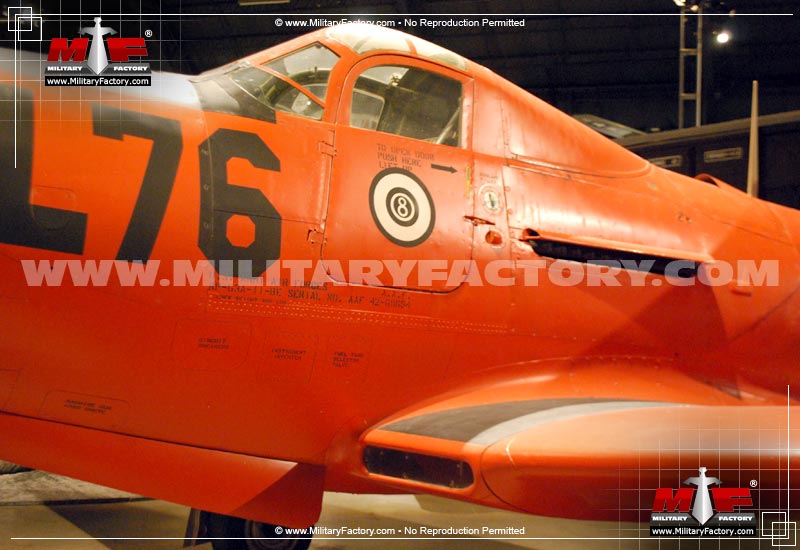
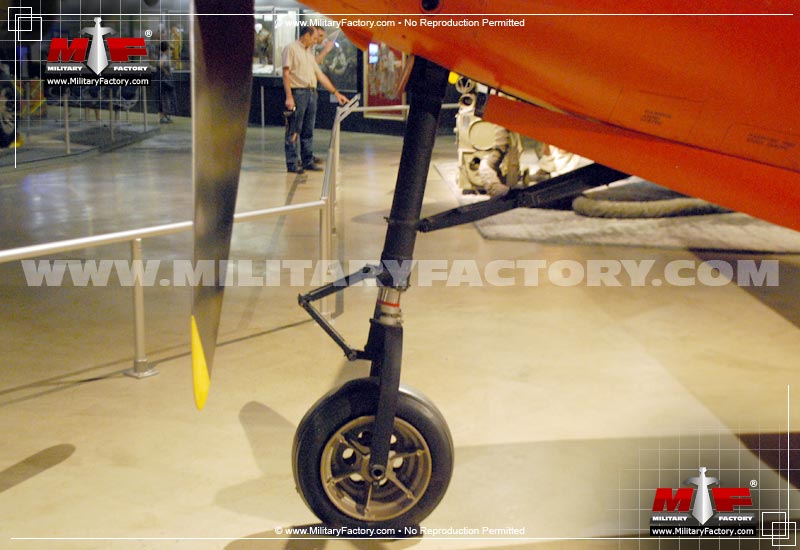
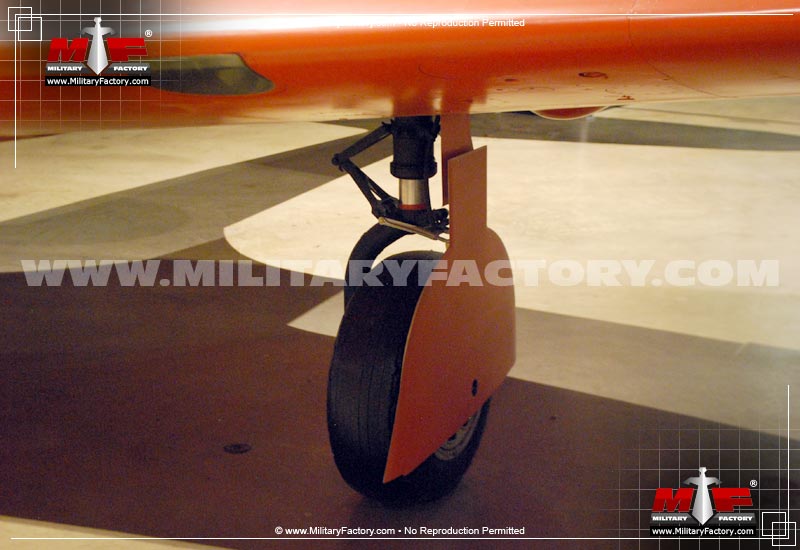
Externally, the P-63 remained faithful to the P-39 Airacobra design before it with the exception of its larger overall dimensions. The pilot sat relatively forward along the contoured fuselage in a glazed cockpit featuring the identifiable automobile-style doors of the P39 design. The cockpit was situated just forward of the wing leading edge. Wings were rounded monoplanes with noticeable dihedral. The front of the fuselage was dominated by the large four-bladed propeller system. The propeller was controlled via a shaft running under the cockpit floor and into the rear-mounted Allison engine, this being situated about midway through the fuselage. The empennage was of a standard configuration with a single vertical tail fin and a conventional horizontal plane. The undercarriage was a more-modern tricycle arrangement featuring two main single-wheeled landing gears and a single-wheeled nose gear. The nose gear retracted rearwards under the cockpit floor whilst the main gears retracted inwards towards the fuselage centerline, each system fitted under each wing. When at rest, the P-63 took on a pronounced "front-up" look thanks to its tall nose gear. Overall, she was a fine-looking - albeit unique - aircraft with much of her P-39 pedigree still in place. As mentioned, armament was carried over from the P-39Q model series with some slight alterations in placement and ammunition supply in the P-63.

Despite the XP-63 prototypes not even flying yet - let alone completing any type of worthy evaluation - the USAAF decided to go ahead and order the new P-63 "Kingcobra" fighter line. Deliveries began in October of 1943 and it soon became apparent that the P-63A was still not up to par with the P-51 Mustang series. The USAAF therefore had little use for the aircraft as it stood, leaving the product open for use by allied forces in the fight against Japan and Germany.

The Soviet Union was in dire need of capable fighter aircraft and were already a prime operator of the P-39 series. The P-63 seemed like another good match for the Red arsenal and, with input from Soviet test pilot Andrey G. Kochetkov, the P-63 Kingcobra was modified for the better and ultimately shipped to the Soviet Union from Nome, Alaska, to be used solely against Japanese forces in the East. Despite this "agreement" on the part of the Soviets, P-63 air groups were set up in the West to battle the Germans. The P-63 excelled in the ground attack role, providing for adequate low-flying characteristics and a concentrated dose of lethal armament making them ideal tank busters. Engaging and downing enemy fighters also something of a rarity but still possible. Soviet use of the P-63 amounted to over 72% of all Kingcobras produced, making them the primary operator of the aircraft.

The P-63 survived wartime to be used by a handful of operators. France received at least 300 models at the close of the war and utilized these through the rest of the decade. Honduras became another primary operator while the United Kingdom received just two examples. The United States Army Air Corps and the United States Army Air Force were the two local operators of the Kingcobra platform though the United States never used the platform in anger.

While the Airacobra was spawned into a large number of ever-improving variants, the Kingcobra saw a more restricted production life. The XP-63 represented the first two prototypes with serial numbers 41-19511 and 41-19512 and featured a laminar air flow wing. The XP-63A were two examples intended to fit the Rolls-Royce Merlin and sporting bomb racks. The initial production models became the P-63A of which some 1,725 examples were delivered in blocks 1 through 10.

The XP-63B was a proposed model based on the Merlin-powered XP-63A prototypes. While this arrangement might have proved promising on paper, American Merlin engines were already earmarked for use in production North American P-51 Mustangs. As such, the XP-63B fell to naught.

The P-63C series became the second production Kingcobras. They fitted the Allison V-1710-117 water-injected engine with up to 1,800 horsepower output. Some 1,777 examples were produced of this type.

The P-63D was a one-off design fitting the Allison V-1710-109 (E22) series engine of 1,425 horsepower. A bubble canopy (as opposed to the automotive-style doors) was part of the changes that also included the lengthening of the wings. This model never entered quantitative deliveries for production of all Kingcobras was stopped by this time.

The P-63E was similar to the D-model but sported the original automotive-style doors of the P-39 Airacobra and P-63A and P-63C Kingcobras. The underside fin was extended some and anew propeller were fitted though only 13 examples of this Kingcobra made it out the door. The E-model exhibited a top speed of 408 miles per hour, a cruising speed of 280 miles per hour, a range of 450 miles and a service ceiling of 43,000 feet.

Similarly, only two of the P-63F models were produced, these fitting the Allison V-1710-135 engine and a larger-area vertical fin. the XP-63H was a single conversion attempt based on a modified P-63E and featuring a new engine.

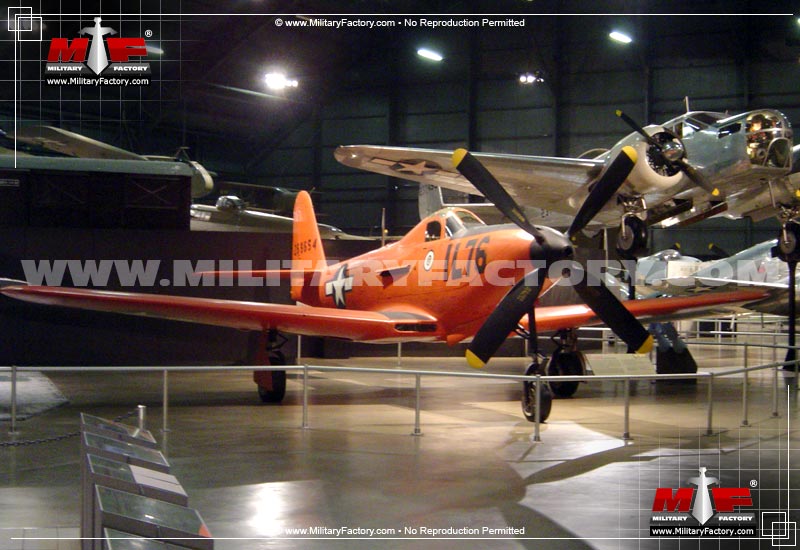
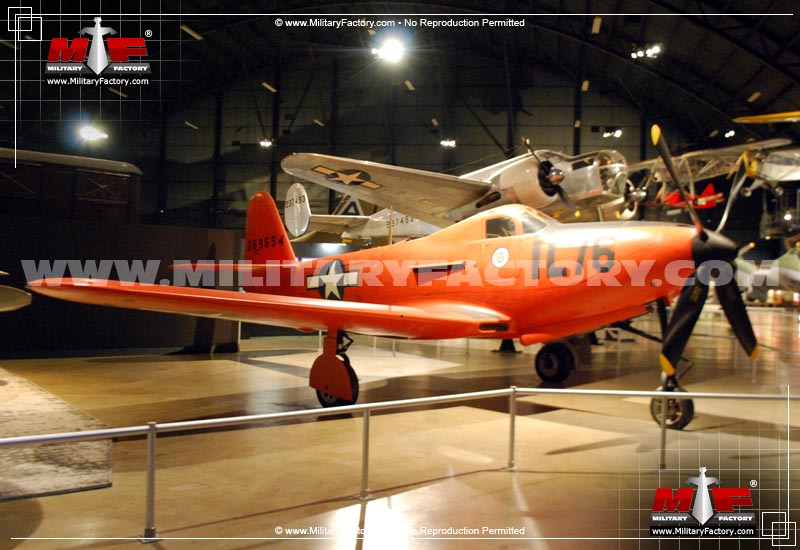
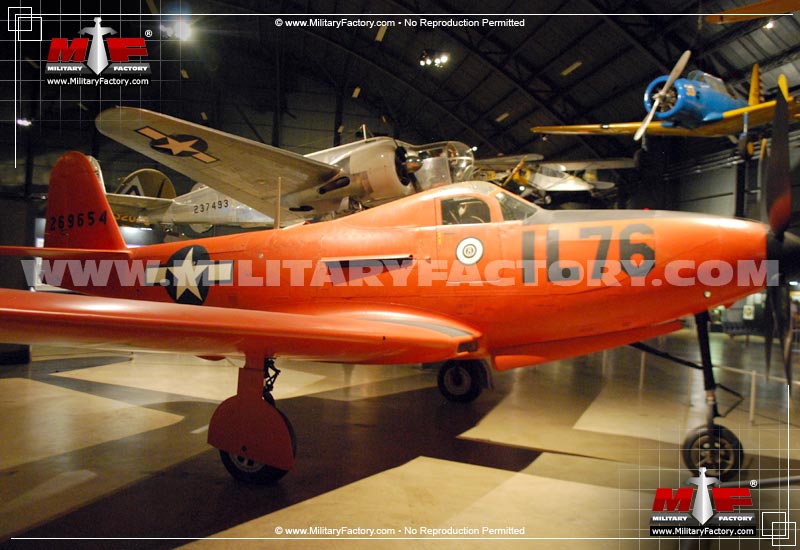
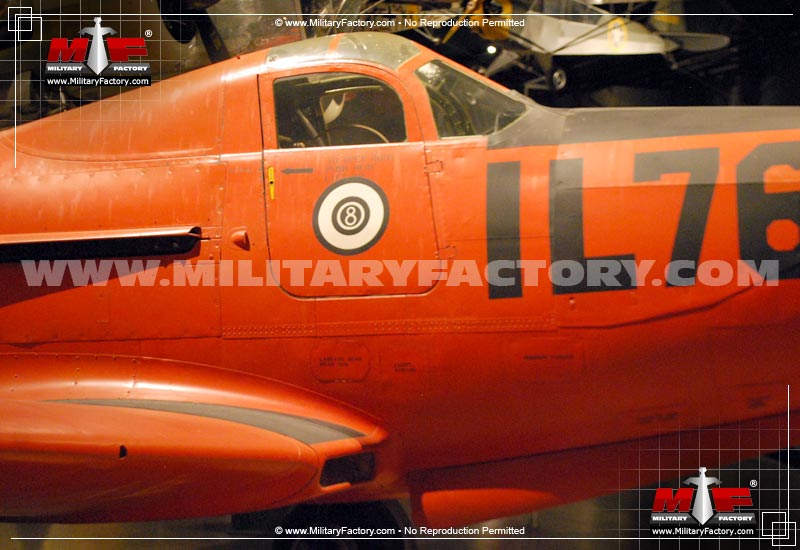
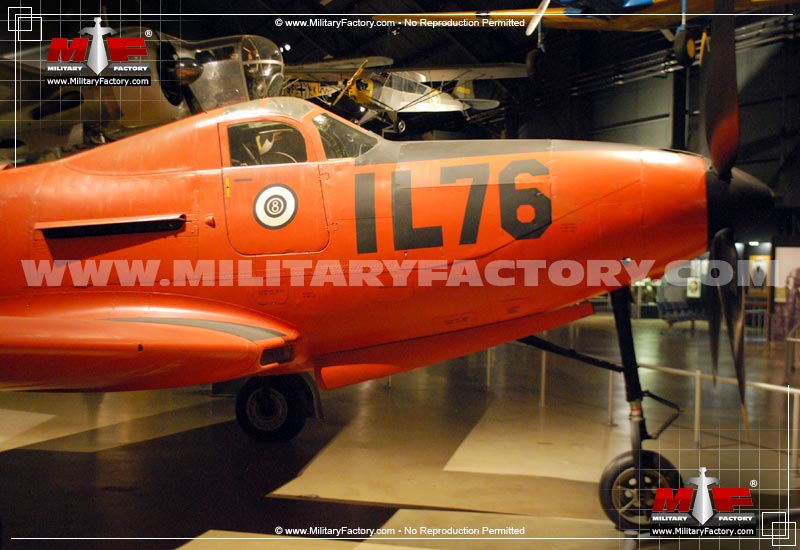
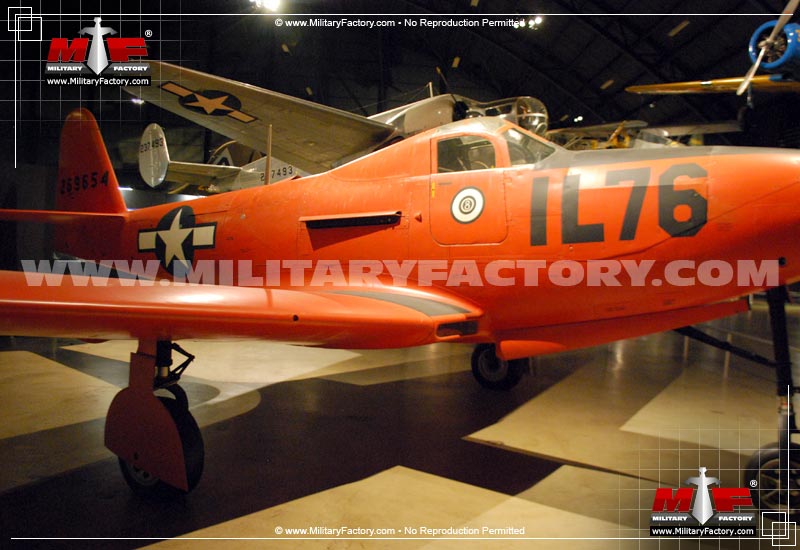
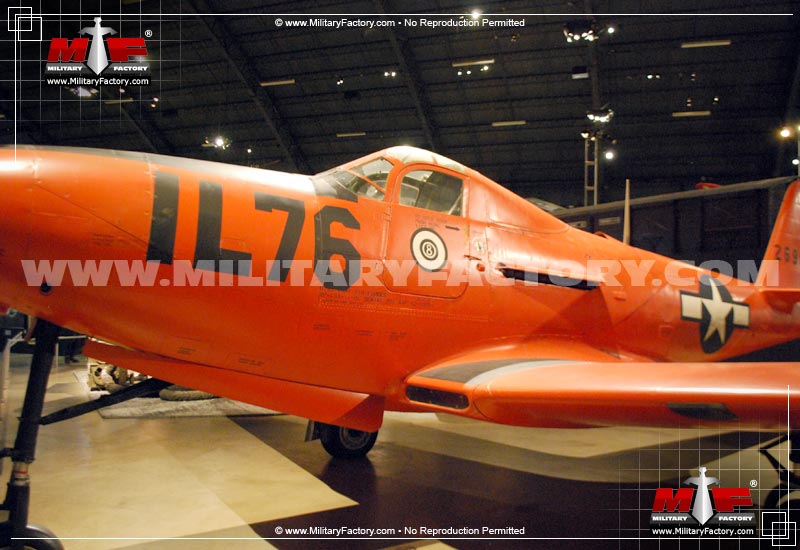
As the case with most of the unwanted airframes seeing service past their worthy lifespans, the P-63 was covered in an overall bright orange paint scheme to be used as manned target aircraft (complete with "kill" lights) and target tugs. These encompassed the RP-63A (100 examples) and RP-63C (200 examples) and RP-63G "Pinball" models (32 examples). RP-63A/C's were based on five P-63A completed production models modified for the role while at least 95 other A-models were modified as such while still on the production lines. These later became known as QF-63As. The RP-63G Pinballs were more dedicated to the flying target role and modified as such. These later became the QF-63G.

Two P-63C production models were converted into L-39 test aircraft for swept wing and wind tunnel evaluation.

At the time of their production, a single P-63 cost American tax payers $48,000 to produce. Over 3,300 Kingcobras were produced - a far cry from the successful venture P-39 Airacobra, that series producing over 9,000 examples.

Despite not making it as the improved Airacobra it was intended to be, the Kingcobra still found a home taking on ground targets. It proved a sound concept in the realm of ground attack and her airframe proved as reliable as her armament proved lethal. The Soviets enjoyed many-a-success with the type as they did with the P-39 series as a whole. In all, the larger Kingcobra proved, at the very least, to be a slight improvement over her predecessor.

Text ©2003-2009 www.MilitaryFactory.com • All Rights Reserved • No Reproduction Without Permission • Corrections / Comments to MilitaryFactory at Gmail dot com

Last Revision: 5/29/2009


  Specifications for the Bell P-63C Kingcobra
arrow downDimensions:
Length: 32.81ft (10.00m)
Width:38.39ft (11.70m)
Height: 12.47ft (3.80m)

arrow downPerformance: About MACH
Max Speed: 410mph (660kmh; 356kts)
Max Range: 450miles (725km)
Rate-of-Climb: 2,500ft/min (762m/min)
Service Ceiling: 42,979ft (13,100m; 8.1miles)

arrow downStructure:
Accommodation: 1
Hardpoints: 3
Empty Weight: 6,834lbs (3,100kg)
MTOW: 8,818lbs (4,000kg)

arrow downPowerplant:
Engine(s): 1 x Allison V-1710-117 liguid-cooled V-12 piston engine generating 1,800hp.
arrow downArmament Suite:
1 x 37mm cannon in propeller hub
4 x 12.7mm machine guns (2 x in nose; 2 x in wing assembly).

Bomb racks under wing and fuselage centerline.

  Pictures of the Bell P-63 Kingcobra
     
Picture of Bell P-63 Kingcobra
Picture of the Bell P-63 Kingcobra
Image of the Bell P-63 Kingcobra
     
arrow upView All 5 Images

CompareX2 CompareX4 Conversions Dictionary Acronyms

Compare and Contrast Military Aircraft Specifications

  Special Aircraft Collections
Aircraft by Conflict:
Falklands War
Indo-Pak War
Operation Allied Force
Operation Desert Storm
Six Day War
Yom Kippur War

Special Collections:
American X-Planes
Classic US Warbirds
Grumman "Cats"
Indian Air Force
Israeli Air Force
Mikoyan-Gurevich
V-Bombers


Korean Air War:
Korean War Aircraft
Aces
Australia
United States
North Korea

Vietnam Air War:
Vietnam War Aircraft

Cold War
Cold War Aircraft
United States
Soviet Union
Soviet Bombers of the Cold War

Modern Aircraft
Modern Military Aircraft
United States

Miscellaneous
MiG-15 Versus Sabre
Top 10 Fighters of All Time


  Recent Military Aircraft Additions
Thumbnail picture of the Supermarine Scimitar fighter
Supermarine Scimitar
Thumbnail picture of the Novi Avion fighter
Novi Avion
Thumbnail picture of the Arado Ar TEW 16/43-23 jet-powered fighter
Arado TEW 16/43

  Contacting MilitaryFactory.com
We can only get better if you tell us how. You can contact MilitaryFactory.com at MilitaryFactory at gmail dot com (replace "at" with "@" and "dot with ".") with any questions, comments or corrections. We also accept related military imagery that you approve for us to use on our website. Keep in mind, however, that due to volume, we may not directly respond to your inquiry. Please add us to your list of non-blocked recipients!
Flying Boats

  Aircraft Quick Profile


Picture of the Bell P-63 Kingcobra
Image courtesy of the United States Department of Defense.

flag of United States
1943

Designation: Bell P-63 Kingcobra
Classification Type: Fighter
Contractor: Bell Aircraft Corporation - USA

Country of Origin: United States
Production Total: 3,303

Operators: Honduras; United Kingdom; France; Soviet Union; United States


  Variants
XP-63 - Initial Prototypes based on XP-39E Airacobra; 2 examples produced; laminar flow wing

XP-63A - Improved XP-63 Prototypes; 2 examples produced; fitted with bomb racks.

XP-63B - Proposed "improved" XP-63A prototype; cancelled.

XP-63H - Modified P-63E model with a new engine selection.

P-63A - Initial production models produced in 1 - 10 blocks; 1,726 examples produced.

P-63C - Improved P-63A models; fitted with Allison V-1710-117 engine of 1,500 horsepower with 1,800 horsepower capable through water-injection; decreased wingspan; 1,227 examples produced.

P-63D - Improved P-63; fitted with Allison V-1710-109 engine of 1,425 horsepower; increased wingspan; rear-sliding bubble canopy; 1 example produced; never entered quantitative production.

P-63E - Improved P-63D model with new propeller system and ventral fin extension; 13 examples produced.

P-63F - Improved P-63E with enlarged vertical tail; fitted with Allison V-1710-135 series engine; only 2 examples produced.

RP-63A "Pinball" - Aerial Target Aircraft; 100 examples produced/modified; sans armor and armament; bright orange paint scheme.

RP-63C "Pinball" - Improved RP-63A aerial target models; 200 examples produced/modified; sans armor and armament; bright orange paint scheme.

RP-63G "Pinball" - Aerial Target Aircraft; 32 examples delivered; a further 420 were cancelled; sans armor and armament; bright orange paint scheme.

  Collections
  • Sons of Empire - WW2 Aircraft of Japan
  • Aircraft of the Battle of Britain
  • X-Planes Throughout History
  • French Aircraft of the Great War
  • The German Luftwaffe in World War 2
  • Nightfighters - In a Class All Themselves
  • The Top Ten Fighters of All Time
  • Carrier "Born" Aircraft - Navy Mounts
  • If Boats Could Fly - Flying Boat Aircraft


Free GI Bill Guide

Top MF Stuff: Military Pay Scale Chart | Military Ranks | World War 2 Weapons | Sniper Rifles | Conversion Calculators


©2009 www.MilitaryFactory.com • Content ©2003-2009 MilitaryFactory.com • All Rights Reserved • Disclaimer Privacy Policy Site Map Origins
Most photographic images appearing on this site are courtesy of the United States Department of Defense and are approved for public use.
Other images acquired through the public domain. Digital art work courtesy of Dan Alex.
Business Consulting by Kyle Williams

Material presented throughout this website is for historical and entertainment value and should not to be construed as usable for
hardware restoration, maintenance or general operation. Please consult manufacturers for such information.

Site Contact: militaryfactory at gmail dot com (replace "at" with "@" and "dot" with ".") eXTReMe Tracker