Military Factory
Military Pay Chart
Global Firepower
Military Industrial Complex
Second World War
Home
Military Pay Scale
Military Ranks
Small Arms
Aircraft
Land Systems
Navy
Education
Military Factory Facebook Logo
flag of United States

Lockheed AC-130H Spectre / AC-130U Spooky Close Air-Support, Air Interdiction and Force Protection Gunship (1972)

Authored By Staff Writer | Last Updated: 2/3/2011

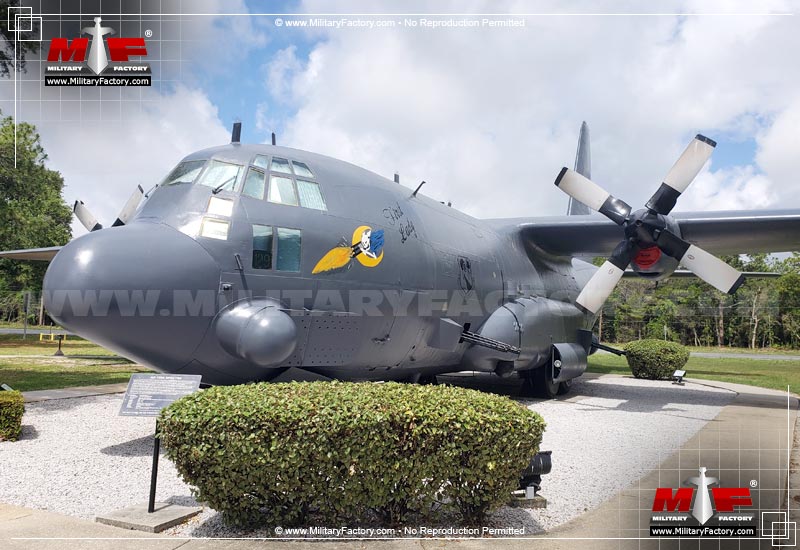
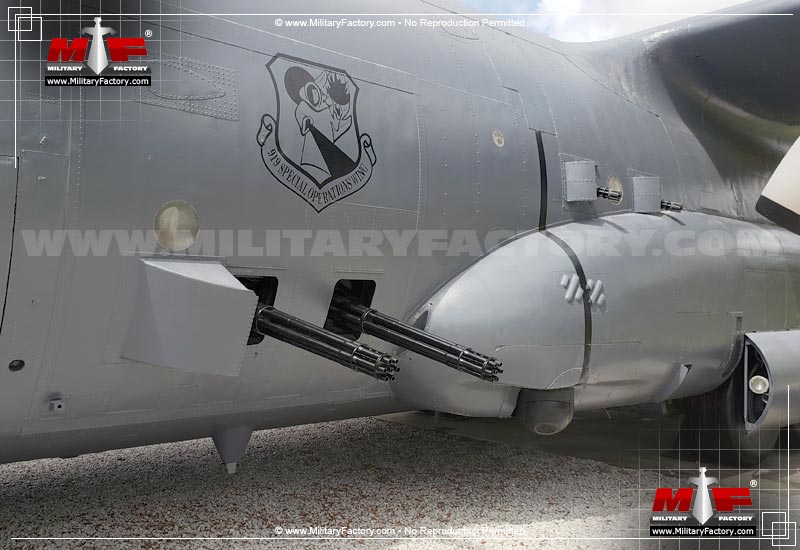
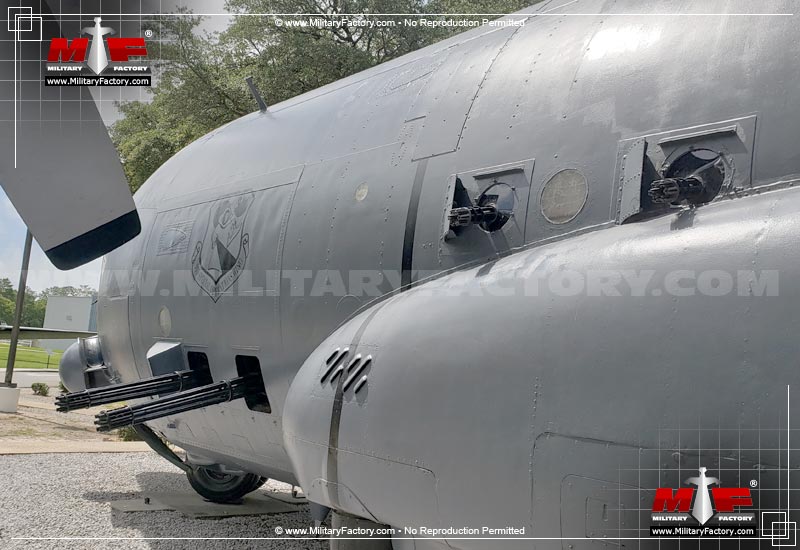
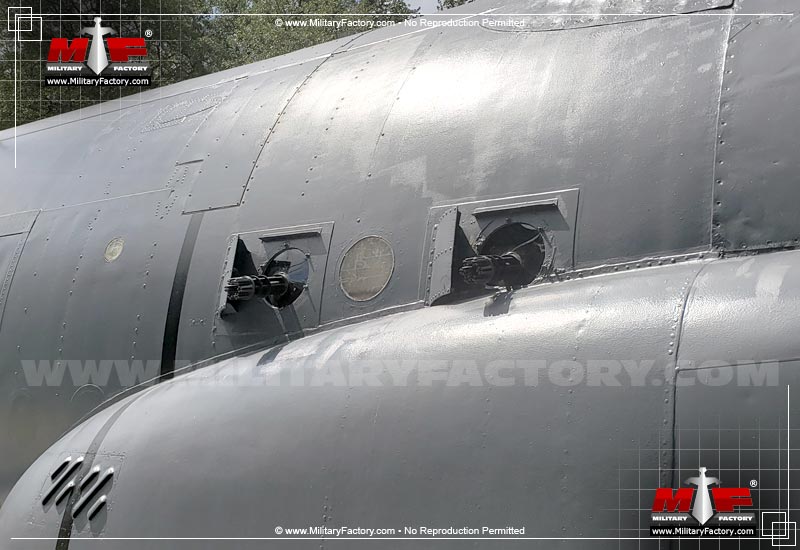
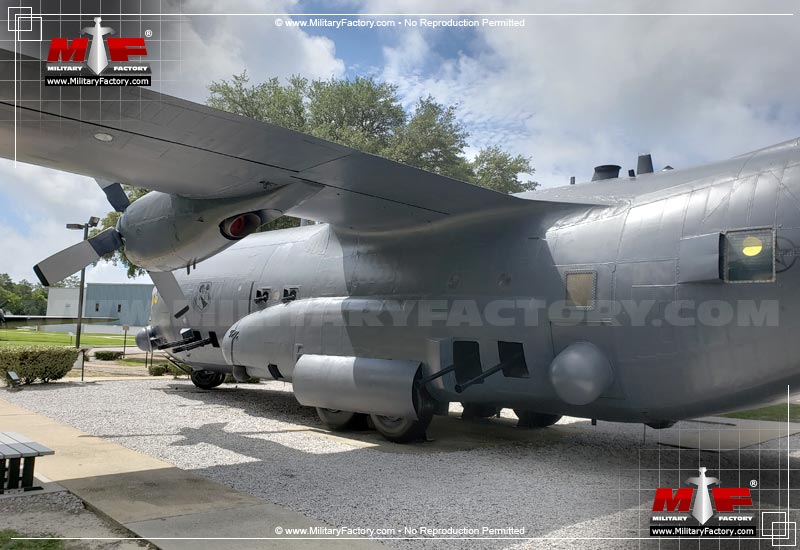
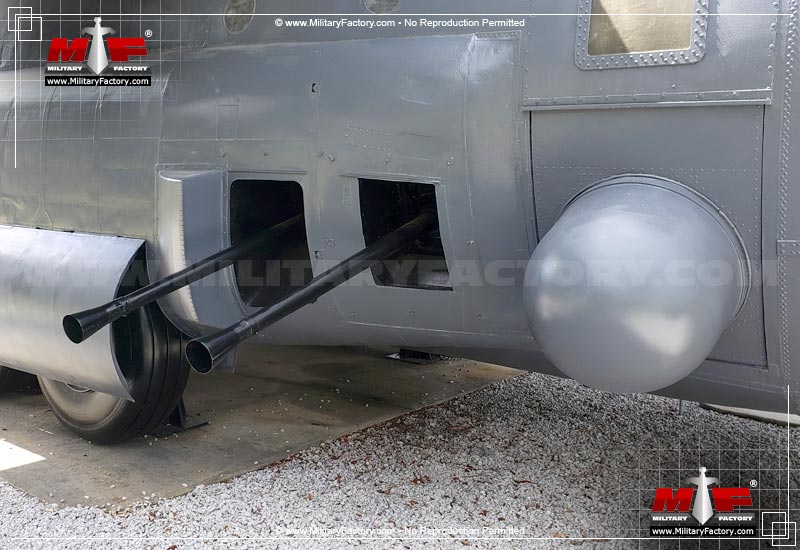
The AC-130 Gunship bristles with miniguns, cannons and an on-board 105mm howitzer.

Find a School Near You
Follow Military Factory on Facebook:
Trending on Military Factory:
Recent Articles:
Since the advent of the airplane as an instrument of war, warplanners have relied on the power of mobile aerial attacks to keep an enemy on its toes. From the simple dropping of flechettes on entrenched enemy positions in World War One, to the direct contact assaults prevalent in World War Two, this is no more truer than with the converted C-130 series of gunships (known respectively per models as the AC-130H "Spectre" and AC-130U "Spooky"). The Spectre and Spooky systems have evolved to become an important part of the ever-changing battlefield, where contact with enemy forces is likely, and the need for precision yet powerful aerial artillery is evermore important.

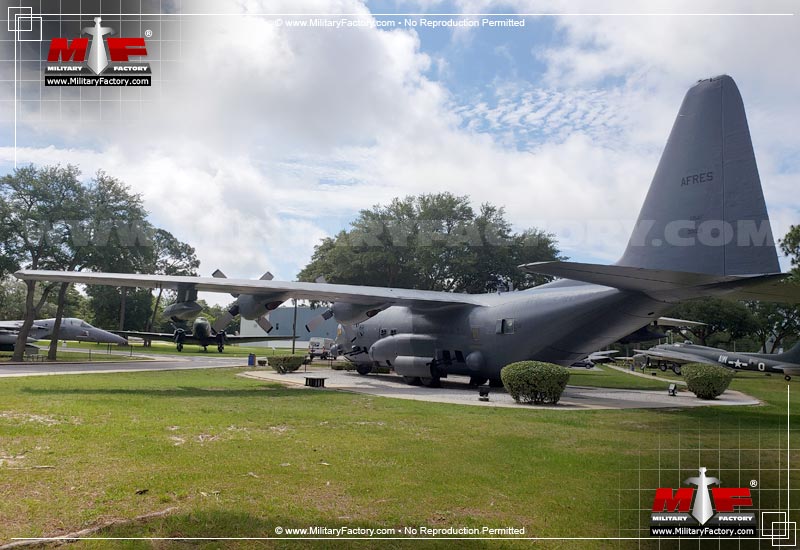
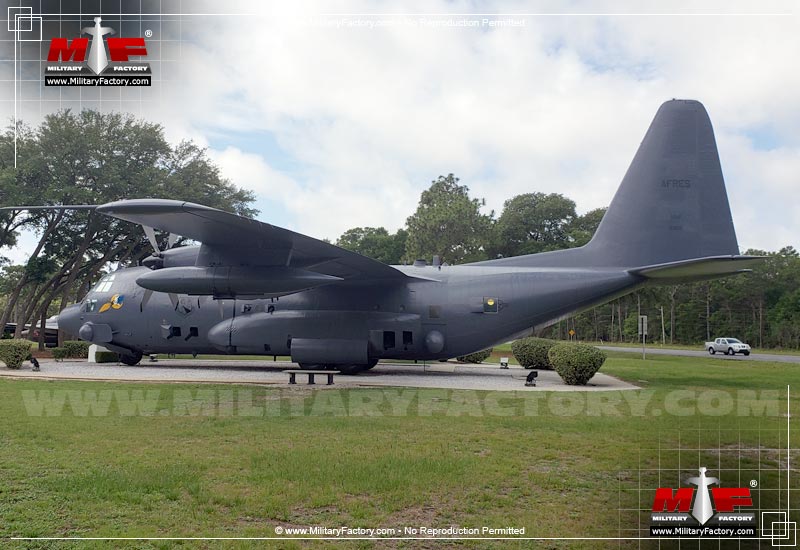
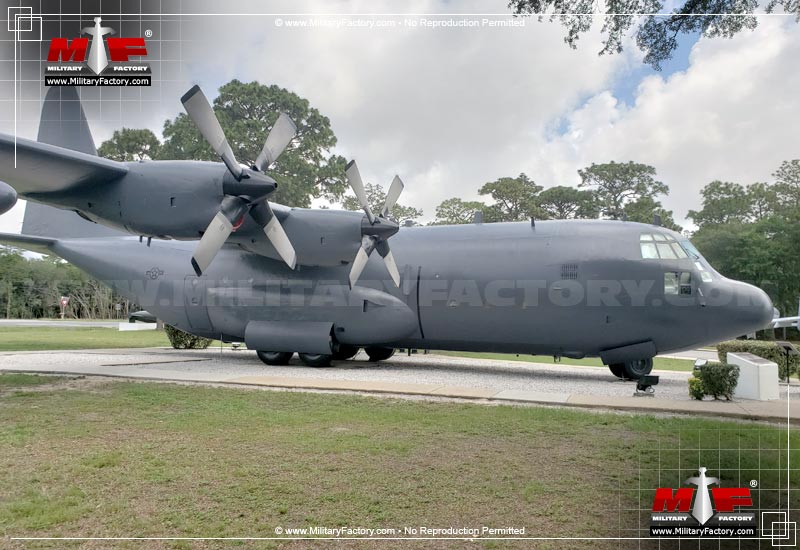
The AC-130, having been derived from the armed AC-47 gunship series, saw extensive and successful action against enemy forces in the Vietnam War. Appearing very much like the base C-130 transport model - a system that already came into its own as one of the most successful transport designs ever made - but were armed with a lethal array of miniguns, cannons and howitzers. From a basic design perspective, the AC-130 is a shoulder-mounted straight wing system with a single large rudder aft. Four Allison turboprops are mounted underwing, with two per wing. The spacious cargo bay of the base C130 allows for the carrying of the powerful 105mm cannon along with additional weaponry, ammunition and necessary systems.

AC-130's gain their lethality through support of troops in contact, often referred to in the short form as "TIC". AC-130 systems are charged with loitering above combat zones, often working in the darkness of night or inclement weather, using advanced targeting and fire control systems to assist ground troops in need. Though mounting an impressive array of armament, the AC-130's are not up to the task of defeating enemy heavy armor or bunkers but can target concrete structures and light armored vehicles with penetrator rounds. Due to the close proximity of engagement to friendly forces, AC-130's often bore sight with live-fire prior to arriving in the target zone. Firing is accomplished from one side of the aircraft only and requires the aircraft to be in a deliberate turn to engage. As a low-flying system, the AC-130 requires air defense threats to be neutralized before entering enemy airspace, though radar jamming and countermeasures are offered the system.

The current breed of AC-130 systems break down into two variants designated as the AC-130H and the AC-130U. Different avionics and subsystems aside, the two aircraft share many similarities. In terms of armament however, the AC-130U incorporated a 25mm gun to compliment the standard 40mm cannon and 105mm howitzer. The accepted callsign for the AC-130H series is the threatening "Spectre" while the AC-130U series enjoys the mysterious "Spooky" callsign.

Cost estimates per unit in 2001 were slated at $132,400,000 for the AC-130H system and $190,000,000 for the AC-130U system. The AC-130U also employs more crew to function and consists of a pilot, co-pilot, fire control officer, flight engineer, navigator, TV operator, four aerial gunners, a loadmaster, infrared detection set operator and an electronic warfare officer. The AC-130H maintains a crew of just 8 personnel.

Seeing action in Vietnam, the AC-130 crews went on to prove the value of the system time and again in Operation Just Cause to retake the tiny island nation of Panama in 1989. From there, Operation Desert Storm threw the AC-130's into action once more, warming crews up for the inevitable action over Bosnia Herzegovina. Currently seeing action in Operation Enduring Freedom, the AC-130 has solidified its place in the US military inventory - for both wartime and even through emergency evacuation of American non-combatants overseas. The AC-130 is kept in limited supply of just eight AC-130H models and thirteen AC-130U models.
Text ©2003-2013 www.MilitaryFactory.com • All Rights Reserved • No Reproduction Permitted
MilitaryFactory.com does NOT sell equipment/weaponry. Material presented throughout this website is for historical and entertainment value and should not to be construed as usable for hardware restoration, maintenance or general operation. Please consult manufacturers for such information. Our disclaimer. Email corrections / Comments to MilitaryFactory at Gmail dot com.
Picture of Lockheed AC-130H Spectre / AC-130U Spooky
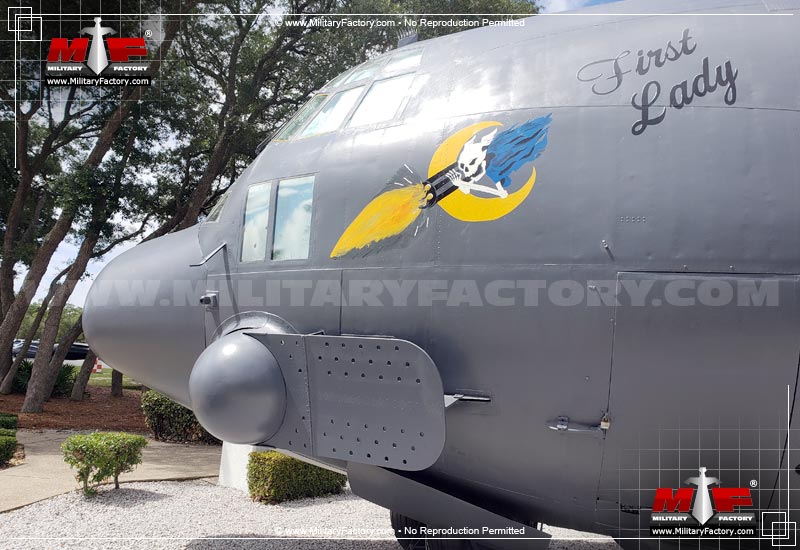
Pic of the Lockheed AC-130H Spectre / AC-130U Spooky
Image of the Lockheed AC-130H Spectre / AC-130U Spooky
View All Images (5)

Specifications for the
Lockheed AC-130H Spectre / AC-130U Spooky
Close Air-Support, Air Interdiction and Force Protection Gunship


Country of Origin: United States
Manufacturer: Lockheed Aircraft Corporation / The Boeing Company - USA
Initial Year of Service: 1972
Production: 21


Focus Model: Lockheed AC-130H Spectre
Crew: AC-130H: 8 / AC-130U: 13


Length: 97.77ft (29.8m)
Width: 132.55ft (40.40m)
Height: 38.39ft (11.70m)
Weight (Empty): 72,891lbs (33,063kg)
Weight (MTOW): 155,003lbs (70,308kg)


Powerplant: 4 x Rolls-Royce Allison T56-A-15 turboprop engines generating 4,910hp each.


Maximum Speed: 300mph (482kmh; 260kts)
Maximum Range: 2,200miles (3,540km)
Service Ceiling: 24,856ft (7,576m; 4.7miles)
Rate-of-Climb: 0 feet per minute (0m/min)


Hardpoints: 0
Armament Suite:
AC-130H Spectre armament:

2 x 20mm cannons
1 x 40mm cannon
1 x 105mm cannon

AC-130U Spooky armament:

1 x 25mm gun
1 x 40mm cannon
1 x 105mm cannon


Variants:
C-130 - Base transport model


AC-130H - Callsign of 'Spectre'; 8 crewmen; Dual 20mm Vulcan, 40mm and 105mm cannons.

AC-130U - Callsign of 'Spooky'; 13 crewmen; Varying avionics and sub-systems; Third generation AC-130 gunship variant; Addition of 25mm gun to 40mm and 105mm standard armament.


Operators: United States

ALL AIRCRAFT CATEGORIES

BY DECADE:


1900 to 1909
1910 to 1919
1920 to 1929
1930 to 1939
1940 to 1949
1950 to 1959
1960 to 1969
1970 to 1979
1980 to 1989
1990 to 1999
2000 to 2009
2010 to 2019
2020 to 2029
VIEW ALL
Compare Aircraft


BY TYPE:


Anti-Submarine Warfare (ASW)
Attack Helicopters
Bomber Aircraft
Medium Bombers
Heavy Bombers
Close-Air Support (CAS)
Commercial Aircraft
Dive Bombers
Electronic Warfare Aircraft (EWA)
Experimental / X-Planes
Fighter Aircraft
Floatplane Aircraft
Flying Boat Aircraft
Aerial Refueling Tankers
Helicopters (ALL)
Interceptor Aircraft
Multi-Role Aircraft
Navy Carrier Aircraft
Night Fighters
Reconnaissance / Scout
Search & Rescue (SAR)
Scout Helicopters
Special Purpose
Torpedo Bombers
Trainer Aircraft
Transport Aircraft
Transport Helicopters
Unmanned Aerial Vehicles (UAVs)
Unmanned Combat Air Vehicles (UCAVs)


COLLECTIONS:


4th Generation Fighter Aircraft
5th Generation Fighter Aircraft
US X-Planes
Classic US Warbirds
French Military Helicopters
Grumman "Cats"
Howard Hughes Aircraft
Indian Air Force
Israeli Air Force
Libyan Aircraft
Modern Chinese Aircraft
Modern Chinese Fighters
Modern Military Aircraft
Modern North Korean Aircraft
Modern Trainer Aircraft
Modern US Aircraft
Mikoyan Aircraft
Sukhoi Aircraft
Syrian Aircraft
Top 10 Fighter Aircraft of All Time


AIRCRAFT BY CONFLICT:


Arab-Israeli War (1948)
Cuban Missile Crisis (1959-1962)
Falklands War (1982)
Indo-Pak War (1965, 1971)
Iran-Iraq War (1980-1988)
Lebanon War (1982)
Operation Allied Force (1999)
Operation Desert Storm (1991)
Six Day War (1967)
Spanish Civil War (1936)
Soviet-Afghan War (1979-1989)
Yom Kippur War (1973)


MISCELLANEOUS:


Aircraft Cockpits
Aircraft Manufacturers List
Aircraft Timeline

WORLD WAR 2:


1939 Aircraft
1940 Aircraft
1941 Aircraft
1942 Aircraft
1943 Aircraft
1944 Aircraft
1945 Aircraft
1946 Aircraft
Australian Aircraft
Battle of Britain Aircraft
Bombers
Four-Engine Bombers
British Aircraft
British Bombers
British Transports
Dive Bombers
Canadian Aircraft
Fighters
Chinese Aircraft
French Aircraft
German Aircraft
German Fighters
German Flying Boats
German Jets
Secret Weapons of the Luftwaffe
Italian Aircraft
Imperial Japanese Aircraft
Imperial Japanese Fighters
Mitsubishi Bombers
Navy Aircraft
Pearl Harbor
Polish Aircraft
Romanian Aircraft
US Aircraft
US Bombers
US Navy Aircraft
Soviet Aircraft
Torpedo Bombers
Trainer Aircraft
Transport Aircraft
Tuskegee Airmen Aircraft
W.A.S.P. Aircraft
WW2 Aircraft Ranked by Speed
VIEW ALL


WORLD WAR 1:


1914 Aircraft
1915 Aircraft
1916 Aircraft
1917 Aircraft
1918 Aircraft
Aircraft Timeline
Austro-Hungarian Aircraft
Bomber Aircraft
British Aircraft
Fighters
Flying Boats
French Aircraft
Imperial German Aircraft
Italian Aircraft
Scout Aircraft
Russian Empire Aircraft
US Aircraft
WW1 Aircraft Ranked by Speed
VIEW ALL


KOREAN WAR:


Australian Aircraft
Korean War Aces
Korean War Jets
North Korean Aircraft
US Military Aircraft
VIEW ALL


VIETNAM WAR:


Helicopters
North Vietnam Air Force
US Airpower
VIEW ALL


COLD WAR:


1950s French Aircraft
British V-Bombers
Cold War Bombers
Soviet Aircraft
Soviet Bombers
Soviet Interceptors
Soviet Helicopters
Strategic Air Command
US Aircraft
US Bombers
US Interceptors
VIEW ALL

Site Disclaimer | Privacy Policy | Site Map | MF Origins


©2013 www.MilitaryFactory.com • Content ©2003-2013 MilitaryFactory.com • All Rights Reserved • Site Contact Email: militaryfactory at gmail dot com. The "Military Factory" name and MilitaryFactory.com logo are registered ® trademarks and protected by all applicable domestic and international intellectual property laws.


Top MF Stuff: 2013 Military Pay Scale | Military Ranks | WW2 Weapons | Sniper Rifles | Kts to Mph | WW1 Aircraft | Automatic Rifles | Aircraft Cockpits | Vietnam War Weapons | Main Battle Tanks | Submachine Guns | Shotguns | French Military Victories


Most photographic images appearing on this site are courtesy of the United States Department of Defense and are approved for public use. Other images acquired through the public domain. Digital art work courtesy of Dan Alex. Business Consulting by Kyle Williams. Material presented throughout this website is for historical and entertainment value and should not to be construed as usable for hardware restoration, maintenance or general operation. Please consult manufacturers for such information.


eXTReMe Tracker