The Breguet 14 represented the single-most important aircraft flying for French forces in World War One. By Staff Writer
French aviation design triumphed with the arrival of the Breguet Bre.14 series (sometimes written as Breguet Br.XIV). The aircraft proved to be of the utmost reliability and lethality upon entering the war front in 1916 and would go on to become the single-most important aircraft of the French flying forces during the whole course of the war. The Breguet's successes continued in the post-war years as total production rang up an astounding 7,800 examples, with more than 2,500 appearing after the war ended in 1918.
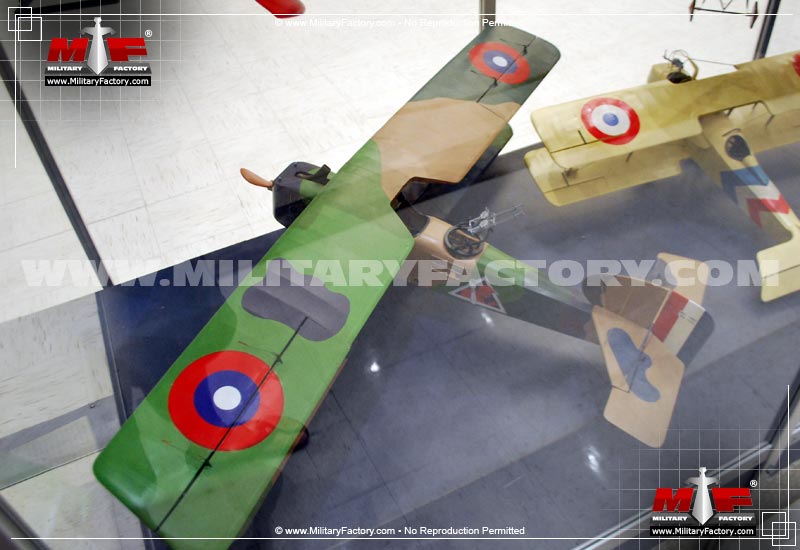
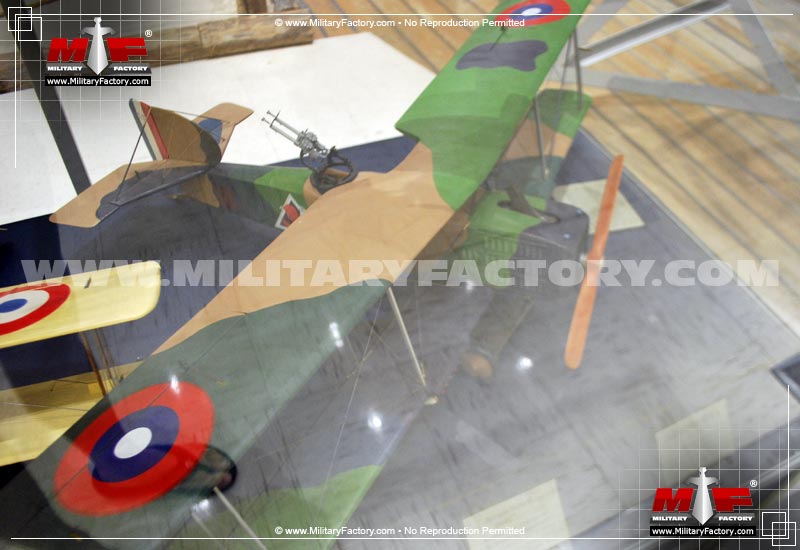
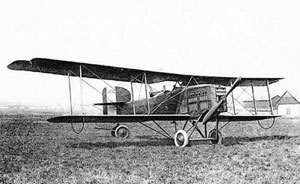
From a visual perspective, the Bre.14 was very utilitarian in appearance. The system was fielded with a powerful Renault 12 Fcy water-cooled inline engine that generated an impressive 300hp. Crew accommodations amounted to a pilot seated in front and behind the Renault engine with the gunner/observer directly behind him. This seating array was optimal in that it provided a clear line of communications between both parties along with excellent visibility particularly from the rear cockpit position. The aircraft was armed with a single 7.7mm forward-fixed Lewis machine gun and an additional defensive set of 7.7mm Lewis machine guns on a mounting in the rear cockpit. External stores could be carried when in the full bomber role.
Designed in the summer of 1916 by the aviation firm led by Louis Breguet, the Breguet 14 was all set to fly operationally by the following year. Construction allowed the aircraft to absorb a lot of punishment from both performance and enemy fire. The structure was comprised mainly of duralumin and steel with wood along with a fabric covering. Light alloy panels were used in the design as additional landing gear supports allowing the Breguet 14 a sense of rugged durability. Initial orders came in the form of a two-seat artillery observer and a two-seat dedicated bomber. The bomber variant featured some notable changes over the artillery observer including an increased wing span.
Beyond that, the Bre.14 could be found in various other forms including a single-seat pilot derivative and the all-important air ambulance. The system was fielded throughout the war since it's inception and would also see operational service along France's colonial lines. The system as a whole would continually see service in frontline French forces up until 1932, a testament to the durability and capabilities of this fine machine.
We can only get better if you tell us how. You can contact MilitaryFactory.com at MilitaryFactory at gmail dot com (replace "at" with "@" and "dot with ".") with any questions, comments or corrections. We also accept related military imagery that you approve for us to use on our website. Keep in mind, however, that due to volume, we may not directly respond to your inquiry. Please add us to your list of non-blocked recipients!
Aircraft Quick Profile
1917
Designation:Breguet Bre.14 Classification Type:Biplane Reconnaissance / Fighter / Bomber Aircraft Contractor:Breguet - France Country of Origin: France Production Total: 7,800
Operators: France
Variants
AV Type XIV - Initial Model Designation
Type 14
Bre.14 - Main Series Designation
Bre.14A2 - Two-Seat Artillery Observation Variant.
Bre.14B2 - Two-Seat Bomber Variant; increased wingspan; flaps positioned on trailing edges of wings lower wing element.
Bre.14B.1 - Single-Seat Bomber
Bre.14S - Ambulance Variant
Bre.14 TOE - Post-War Model used mainly on colonial fronts.
Most photographic images appearing on this site are courtesy of the United States Department of Defense and are approved for public use.
Other images acquired through the public domain.
Digital art work courtesy of Dan Alex. Business Consulting by Kyle Williams
Material presented throughout this website is for historical and entertainment value and should not to be construed as usable for
hardware restoration, maintenance or general operation. Please consult manufacturers for such information.