Military Factory
Military Pay Chart
Global Firepower
Military Industrial Complex
Second World War
Home
Military Pay Scale
Military Ranks
Small Arms
Aircraft
Land Systems
Navy
Education
Military Factory Facebook Logo
flag of United Kingdom

Avro Lancaster Heavy Bomber / Reconnaissance (1942)

Authored By Staff Writer | Last Updated: 5/16/2013

The Avro Lancaster was the definitive heavy bomber of the British cause during World War 2 - considered by many to be the best of the entire conflict.

Find a School Near You
Follow Military Factory on Facebook:
Trending on Military Factory:
Recent Articles:
The Avro Lancaster went on to become the most important British heavy bomber or World War 2. Interestingly, its success was born from the failure of the Avro Manchester bomber - a twin-engined heavy bomber first flown in July of 1939 and adopted in November of 1940. The type was hampered by unreliable engines that led to only 202 examples being produced in all. The Lancaster was born from this failed design to include different engines set along a revised wing. The prototype version was nothing more than a revised Manchester complete with its triple vertical finned tail unit - the key difference lay in the selection of the Rolls-Royce Merlin X series inline piston engines of 1,145 horsepower each. Within time, the triple-finned tail unit was given up in favor of the standard twin rudder arrangement common to the Lancaster history.

In its prototype form, the Lancaster went airborne for the first time on January 9th, 1941. With World War 2 in full swing and the British commitment extensive, the prototype was quickly handed to Boscombe Down for formal evaluations. Development was so speedy that a production-quality form was airborne as early as October 1941 and the series, upon passing its requisite trials, was adopted for operational service in February of 1942, quantitative orders forthcoming. Early production versions were born for Manchester airframes still on Avro lines and inducted into RAF service as the Lancaster B.Mk I.

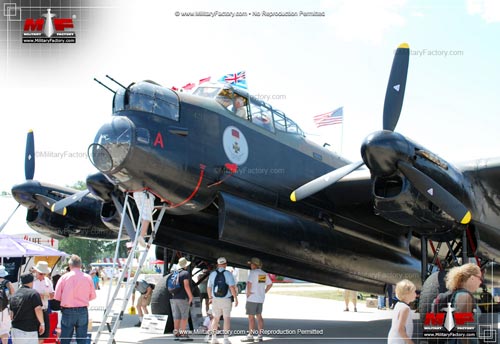
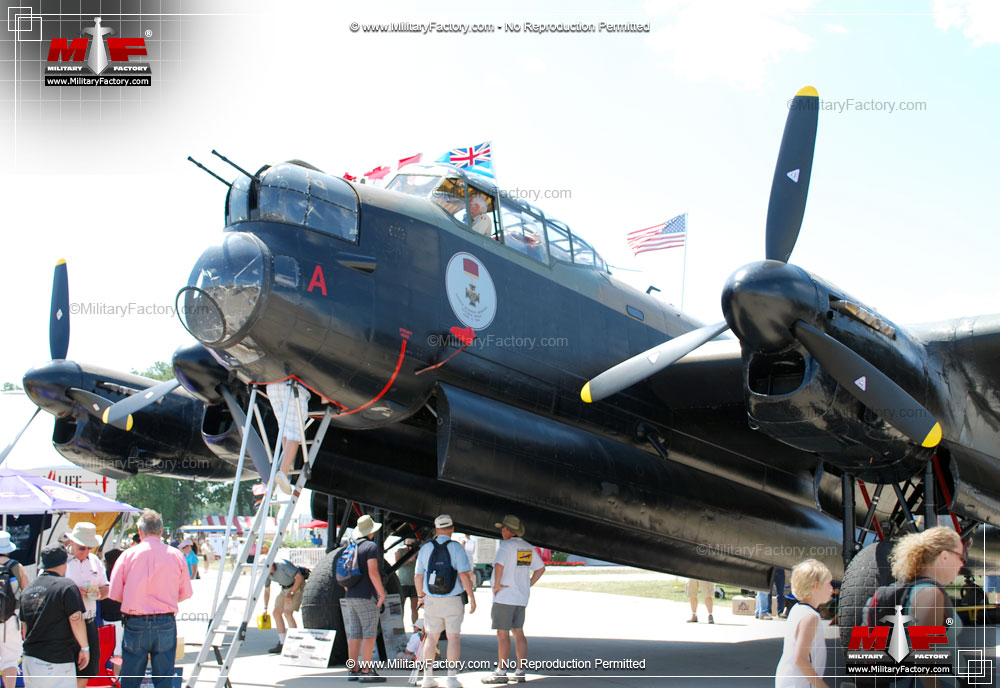
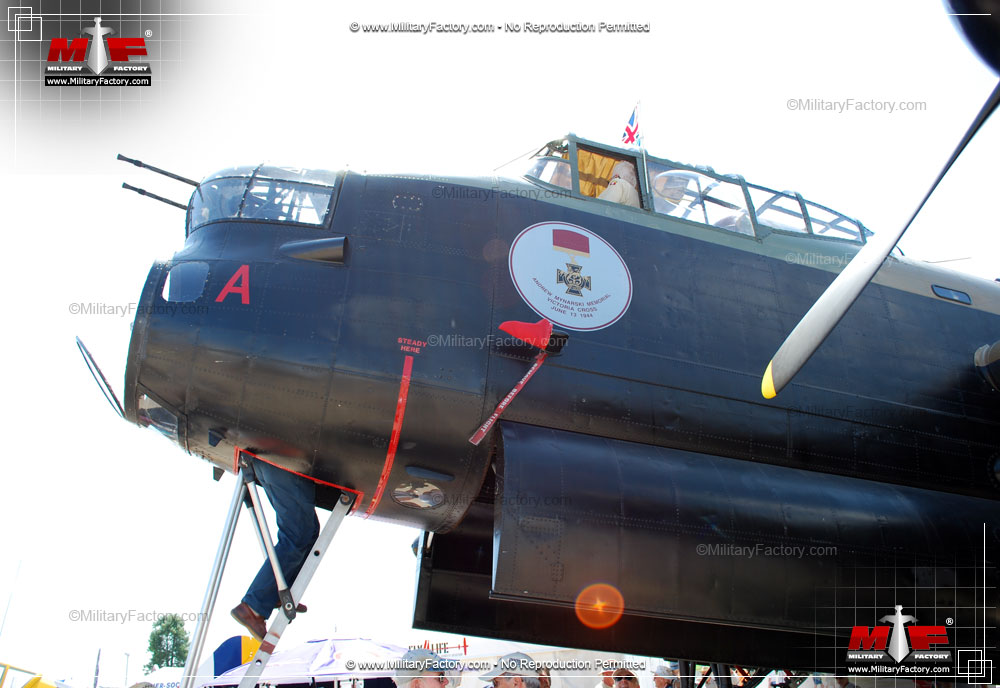
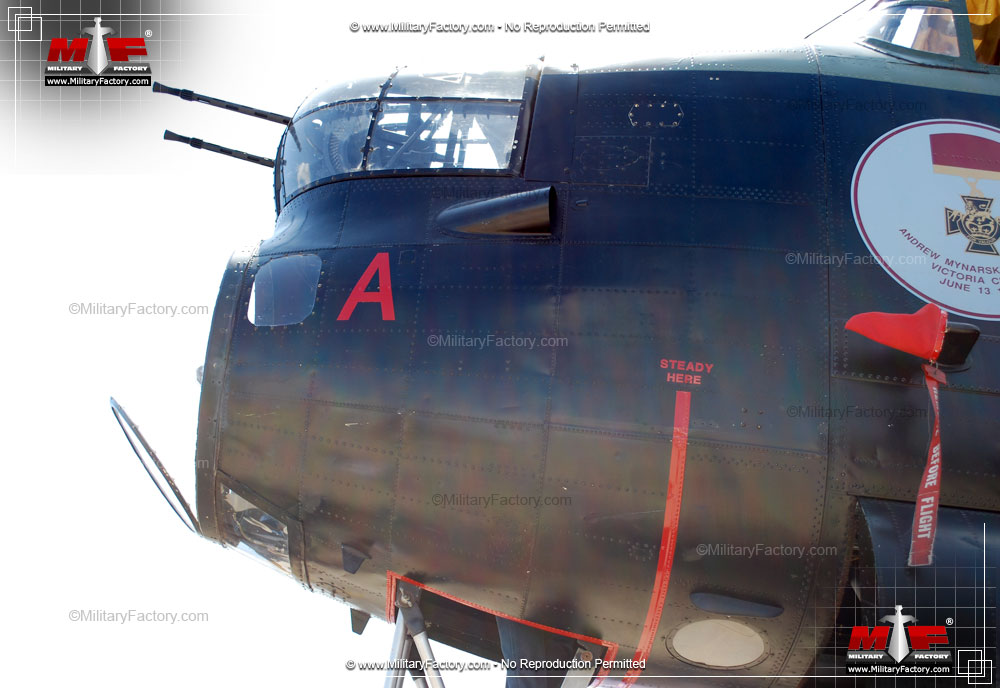
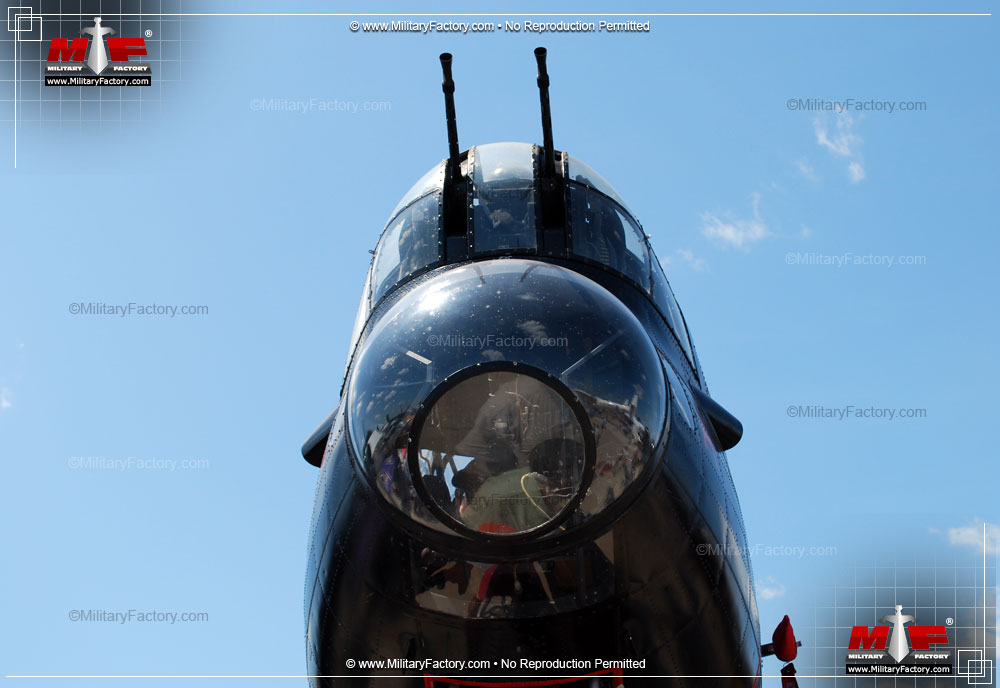
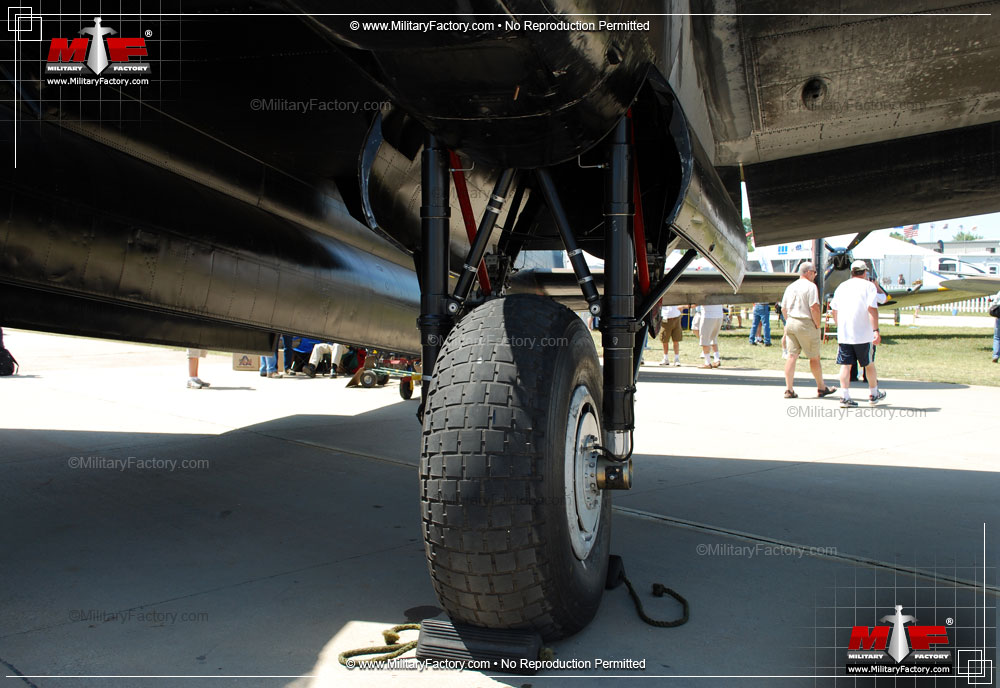
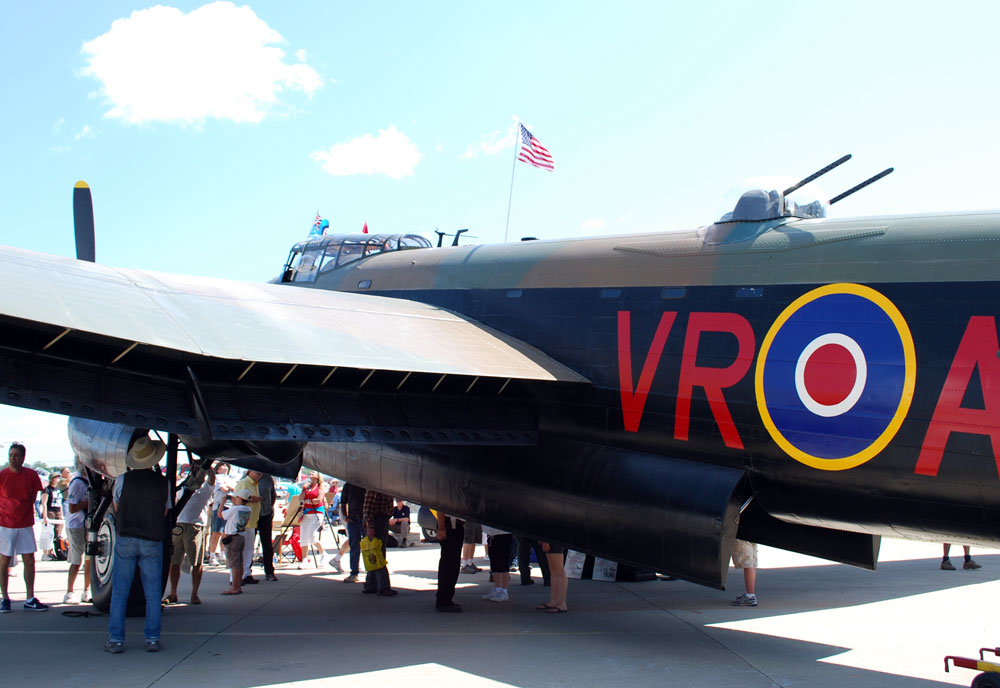
With production in full swing, the Lancaster was immediately placed into frontline action. Each aircraft required a standard operating crew of seven to include the pilot, bombardier, navigator, flight engineer, radio operator, dorsal gunner and rear gunner. Each man was specifically trained for their respective positions about the craft that ranged from the nose to the tail. The bomb bay was given much of the central internal volume. The flight deck consisted of a heavily glazed canopy with conventional seating and controls. The nose was equally glazed over to provide the bombardier and his equipment unfettered views of the action ahead and below. The undercarriage incorporated two main landing gear legs (single wheeled) with a tail wheel at rear. Outwardly, the Lancaster followed the same design style of other British bomber aircraft of the war, nothing beautiful but full of business. Original Lancasters showcased a bomb bay initially intended to carry up to 4,000lbs of ordnance. During the height of the war, a typical Lancaster set off with approximately 14,000lbs of conventional drop bombs and eventually even fielded the massive 22,000lb "Grand Slam" bombs (their size forced the bomb bay doors to be removed altogether).

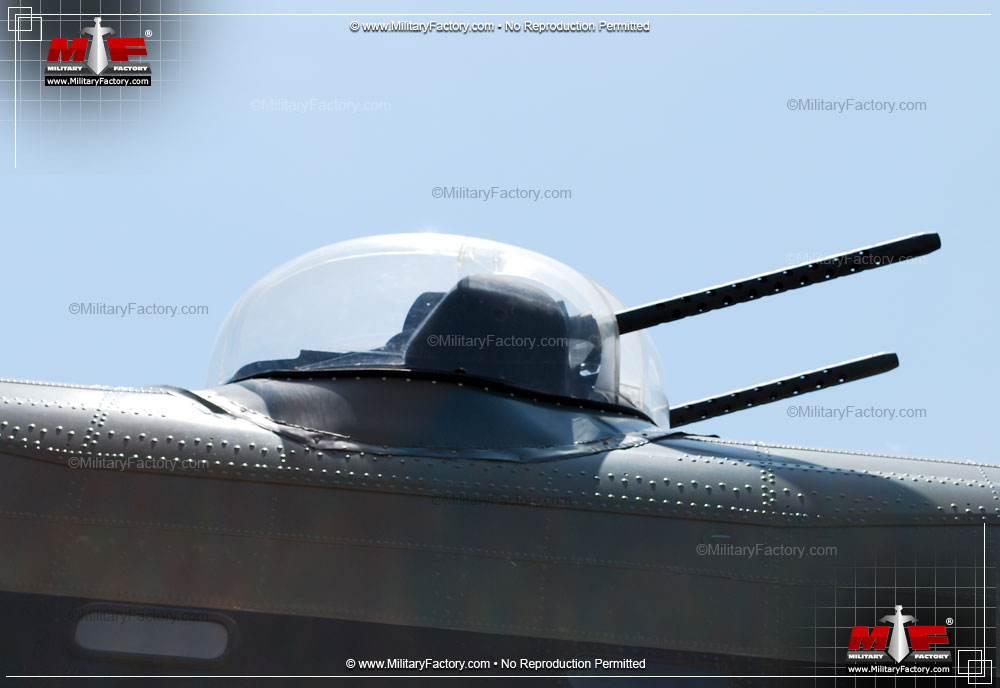
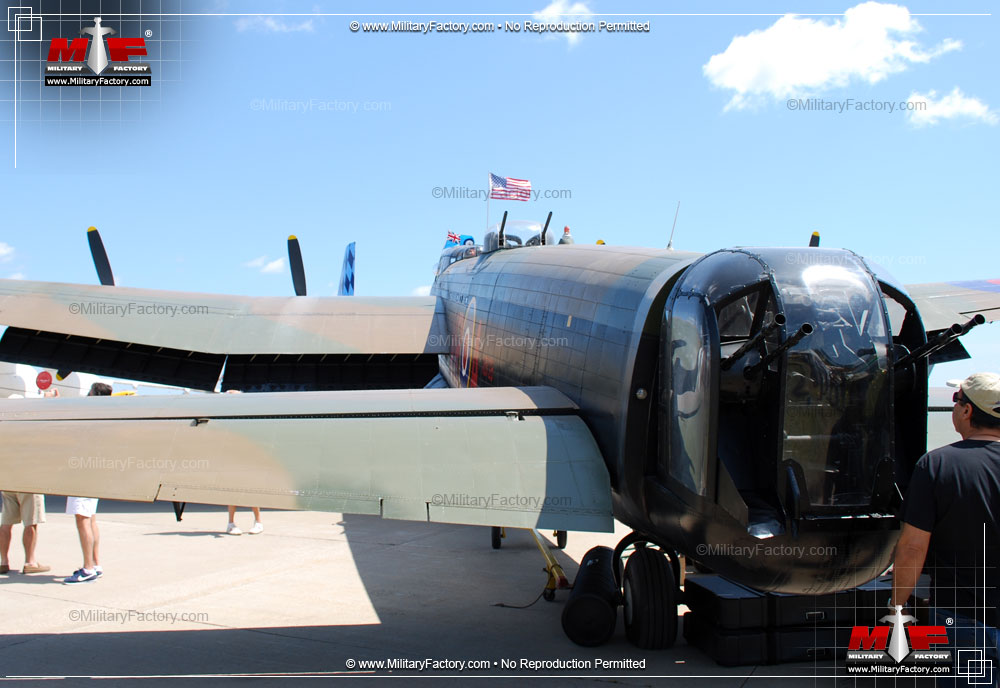
Beyond its bomb load out for its offensive armament, the Lancaster was outfitted with no fewer than 8 x 7.7mm Browning machine guns for self-defense across three Frazer-Nash hydraulically-powered turrets at the nose, dorsal spine and tail. Two were installed in a nose/chin turret and operated by the bombardier. Two were fitted to the dorsal turret at amidships along the fuselage spine. Four were installed in a powered tail turret at the extreme aft of the aircraft. Unlike its American brethren, the Lancaster lacked a belly turret and beam waist gunners for additional defense and utilized a smaller-caliber machine gun type (as opposed to 0.50 caliber). At one point, the thought of adding a belly turret was entertained but never followed-up.

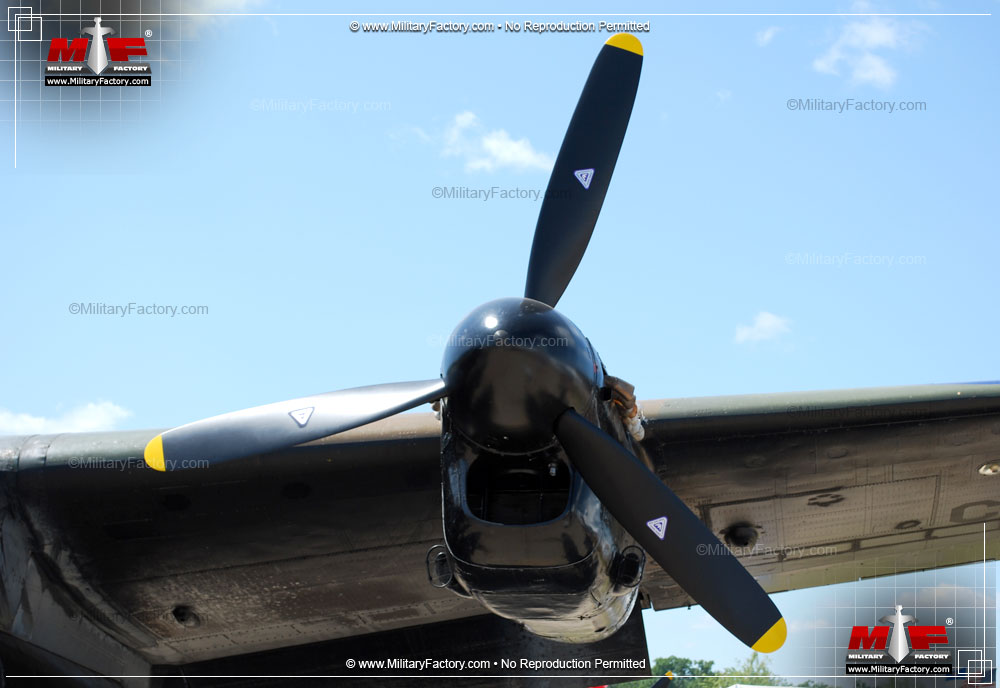
The need for capable Lancasters was such that its production was tied to other much-needed aircraft meaning that there proved a near-shortage of available Merlin engines threatening manufacture. To supplement stocks of Rolls-Royce Merlins, the American concern of Packard was brought into the fold to produce the same powerplant in the United States (under license). In extreme circumstances, the RAF took on Lancasters fitted with Bristol Hercules VI/XVI radial piston engines of 1,735 horsepower. As Melin engines themselves evolved so too did the various Lancasters coming off the assembly lines - new mounts included the Merlin XX, 22 and 24 series.

Lancasters began their operational careers under rather mixed results. Daylight raids without escort fighters in tow guaranteed ruin for bomber crews as enemy fighter patrols and interceptors coupled with ground-based FlaK fire could cut through Lancaster formations with relative impunity. On one early such raid, Lancasters managed to find their mark on German targets in Augsburg but lost seven of its twelve aircraft in the process. This forced Bomber Command to take the fight to the night skies to which Lancaster crews showcased their mettle. Daylight raids were now protected by escorting fighter groups which allowed for higher success rates in terms of returning crews.

Lancasters were credited with the sinking of the German KMS Tirpitz battleship when, on November 12th, 1944, two Lancaster groups engaged the vessel at Tromso Fjord in Norway with special 12,000lb "Tallboy" bombs designed specifically for armored targets. The battleship was appropriately sunk and a total loss for the shrinking German Navy. In similar-minded sorties, the "Grand Slam" mega-bomb came into play and targeted fortified underground positions, the 22,000lb creation sufficient in cutting through and disrupting the integrity of the concrete structures. The "Upkeep" series was a 9,250lb design intended for the destruction of dams.

Lancaster bombers formed some 59 Bomber Command flight groups and were credited with 156,000 bombing sorties in the whole course of the war, dropping some 681,600 tons (short) of ordnance.

The Lancaster served beyond the British and their RAF, seeing operational service (some during World War 2 and others in the post-war years) with Argentina, Australia, Canada, Egypt, France, Poland, the Soviet Union (via Lend-Lease) and Sweden. Production netted 7,377 units by February 2nd, 1946 when the last airframe was handed over to the RAF from Armstrong Whitworth. The final operational Lancaster was retired from Canadian service in 1963, some two decades since its introduction. Canada produced Lancasters under the B.Mk X (Lancaster B.Mk III) and B.Mk XV (Lincoln B.Mk I) designations.

The Lancaster series was produced in a few notable variants though the original Merlin XX-equipped B.Mk I models (later with Merlin 22 and 24 engines) survived through to the end of the war in 1945. The PR.Mk 1 was a photographic reconnaissance platform sans its guns and turrets and bomb-carrying capability. The B. Mk I (FE) was a tropicalized form intended for Far East actions against the Japanese. The B.Mk II incorporated the Bristol Hercules engines with 300 examples completed by Armstrong Whitworth. B.Mk III was used to signify B.MK I models completed with American Packard engines. The ASR.Mk III was a B.Mk III bomber model appropriately modified with lifeboat and detection antenna for the Air-Sea Rescue (ASR) role. The GR.Mk 3 was a maritime reconnaissance platform version of the B.Mk III series. The B.IV was given a lengthened fuselage with widened wings ad Boulton Paul powered turret with 2 x 12.7mm Browning heavy machine guns with power served through concurrent Merlin 85/68 engines. Such a difference was this mark that it became the Lincoln B.Mk I and this was followed by the B.Mk V becoming the Lincoln B.Mk II with widened wings and an even longer fuselage with Merlin 85 engines. Final production Lancasters became the B.Mk VII with revised armament.

Performance specifications for the definitive B.Mk I model included a top speed of 282 miles per hour, cruise speed of 200 miles per hour, range of 2,530 miles, service ceiling of 21,400 feet and a rate-of-climb nearing 720 feet per minute.
Text ©2003-2013 www.MilitaryFactory.com • All Rights Reserved • No Reproduction Permitted
MilitaryFactory.com does NOT sell equipment/weaponry. Material presented throughout this website is for historical and entertainment value and should not to be construed as usable for hardware restoration, maintenance or general operation. Please consult manufacturers for such information. Our disclaimer. Email corrections / Comments to MilitaryFactory at Gmail dot com.
Picture of Avro Lancaster
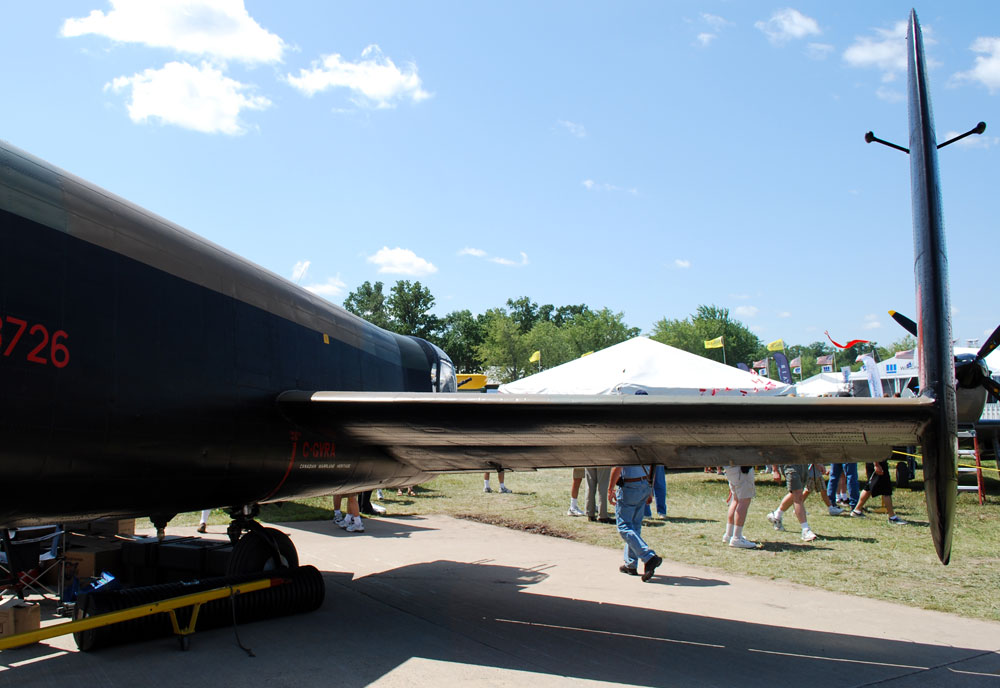
Pic of the Avro Lancaster
Image of the Avro Lancaster
View All Images (13)

Specifications for the
Avro Lancaster
Heavy Bomber / Reconnaissance


Country of Origin: United Kingdom
Manufacturer: Avro(AV Roe) / Armstrong Whitworth - UK
Initial Year of Service: 1942
Production: 7,377


Focus Model: Avro Lancaster B.Mk I
Crew: 7


Length: 69.49ft (21.18m)
Width: 102.00ft (31.09m)
Height: 20.01ft (6.10m)
Weight (Empty): 36,901lbs (16,738kg)
Weight (MTOW): 69,999lbs (31,751kg)


Powerplant: 4 x Rolls-Royce Merlin XX V12 water-cooled, inline piston engines generating 1,280 horsepower each.


Maximum Speed: 287mph (462kmh; 249kts)
Maximum Range: 2,529miles (4,070km)
Service Ceiling: 24,508ft (7,470m; 4.6miles)
Rate-of-Climb: 0 feet per minute (0m/min)


Hardpoints: 0
Armament Suite:
STANDARD:
2 x 7.7mm Browning machine guns in nose turret
2 x 7.7mm Browning machine guns in dorsal turret
4 x 7.7mm Browning machine guns in tail turret

OPTIONAL:
4,000lbs to 22,000lbs of internal ordnance or specialized mission equipment (22,000lb Grand Slam, 12,000lb Tallboy or 9,250lb Upkeep bombs).


Variants:
Type 683 - Initial Avro Model Designation


Mk I - Initial Prototype and Production Model Designation (1941); two prototypes completed.

B.Mk I - Redesignated from 1942 onwards; definitive production model; 3,425 examples completed.

PR.Mk I - Photo-reconnaissance variant based on the Mk I sans armament.

B.Mk I (FE) - Tropicalized Far East variant of the Mk I

B.Mk II - Fitted with Bristol Hercules VI/XVI radial engines; 300 produced by Armstrong Whitworth.

B.Mk III - B.Mk Is fitted with American Packard Merlin engines; 3,039 produced.

ASR.Mk I - Air-Sea Rescue Platform

GR.Mk III / MR.Mk III - Maritime Reconnaissance Platform

B.Mk IV - Lengthened fuselage with increased wingspan; fitted with Bouton Paul turret and 2 x 0.50 caliber Browning machine guns; mixed Merlin 85 and 68 engine configuration; redesigned nose; becoming the Lincoln B.Mk I.

B.Mk V - Lengthened fuselage with increased wingspan; Merlin 85 engines; becoming the Lincoln B.Mk II.

B.Mk VI - B.III conversions with Merlin 85/87 supercharged engines.

B.Mk VII - Final production Lancaster variant; Martin dorsal turret with 2 x 05.0cal Browning machine guns moved forward along spine; 2 x 0.50cal Browning heavy machine guns at tail turret.

B.VII (FE) - Far East Variant

B.VII (Western Union) - French-bound Mk VIIs

B.Mk X - Canadian-produced Lancaster B.III

B.Mk XV - Canadian-produced Lancaster B.IV (Lincoln B.Mk I).


Operators: United Kingdom

ALL AIRCRAFT CATEGORIES

BY DECADE:


1900 to 1909
1910 to 1919
1920 to 1929
1930 to 1939
1940 to 1949
1950 to 1959
1960 to 1969
1970 to 1979
1980 to 1989
1990 to 1999
2000 to 2009
2010 to 2019
2020 to 2029
VIEW ALL
Compare Aircraft


BY TYPE:


Anti-Submarine Warfare (ASW)
Attack Helicopters
Bomber Aircraft
Medium Bombers
Heavy Bombers
Close-Air Support (CAS)
Commercial Aircraft
Dive Bombers
Electronic Warfare Aircraft (EWA)
Experimental / X-Planes
Fighter Aircraft
Floatplane Aircraft
Flying Boat Aircraft
Aerial Refueling Tankers
Helicopters (ALL)
Interceptor Aircraft
Multi-Role Aircraft
Navy Carrier Aircraft
Night Fighters
Reconnaissance / Scout
Search & Rescue (SAR)
Scout Helicopters
Special Purpose
Torpedo Bombers
Trainer Aircraft
Transport Aircraft
Transport Helicopters
Unmanned Aerial Vehicles (UAVs)
Unmanned Combat Air Vehicles (UCAVs)


COLLECTIONS:


4th Generation Fighter Aircraft
5th Generation Fighter Aircraft
US X-Planes
Classic US Warbirds
French Military Helicopters
Grumman "Cats"
Howard Hughes Aircraft
Indian Air Force
Israeli Air Force
Libyan Aircraft
Modern Chinese Aircraft
Modern Chinese Fighters
Modern Military Aircraft
Modern North Korean Aircraft
Modern Trainer Aircraft
Modern US Aircraft
Mikoyan Aircraft
Sukhoi Aircraft
Syrian Aircraft
Top 10 Fighter Aircraft of All Time


AIRCRAFT BY CONFLICT:


Arab-Israeli War (1948)
Cuban Missile Crisis (1959-1962)
Falklands War (1982)
Indo-Pak War (1965, 1971)
Iran-Iraq War (1980-1988)
Lebanon War (1982)
Operation Allied Force (1999)
Operation Desert Storm (1991)
Six Day War (1967)
Spanish Civil War (1936)
Soviet-Afghan War (1979-1989)
Yom Kippur War (1973)


MISCELLANEOUS:


Aircraft Cockpits
Aircraft Manufacturers List
Aircraft Timeline

WORLD WAR 2:


1939 Aircraft
1940 Aircraft
1941 Aircraft
1942 Aircraft
1943 Aircraft
1944 Aircraft
1945 Aircraft
1946 Aircraft
Australian Aircraft
Battle of Britain Aircraft
Bombers
Four-Engine Bombers
British Aircraft
British Bombers
British Transports
Dive Bombers
Canadian Aircraft
Fighters
Chinese Aircraft
French Aircraft
German Aircraft
German Fighters
German Flying Boats
German Jets
Secret Weapons of the Luftwaffe
Italian Aircraft
Imperial Japanese Aircraft
Imperial Japanese Fighters
Mitsubishi Bombers
Navy Aircraft
Pearl Harbor
Polish Aircraft
Romanian Aircraft
US Aircraft
US Bombers
US Navy Aircraft
Soviet Aircraft
Torpedo Bombers
Transport Aircraft
Tuskegee Airmen Aircraft
W.A.S.P. Aircraft
WW2 Aircraft Ranked by Speed
VIEW ALL


WORLD WAR 1:


1914 Aircraft
1915 Aircraft
1916 Aircraft
1917 Aircraft
1918 Aircraft
Aircraft Timeline
Austro-Hungarian Aircraft
Bomber Aircraft
British Aircraft
Fighters
Flying Boats
French Aircraft
Imperial German Aircraft
Italian Aircraft
Scout Aircraft
Russian Empire Aircraft
US Aircraft
WW1 Aircraft Ranked by Speed
VIEW ALL


KOREAN WAR:


Australian Aircraft
Korean War Aces
Korean War Jets
North Korean Aircraft
US Military Aircraft
VIEW ALL


VIETNAM WAR:


Helicopters
North Vietnam Air Force
US Airpower
VIEW ALL


COLD WAR:


1950s French Aircraft
British V-Bombers
Cold War Bombers
Soviet Aircraft
Soviet Bombers
Soviet Interceptors
Soviet Helicopters
Strategic Air Command
US Aircraft
US Bombers
US Interceptors
VIEW ALL

Site Disclaimer | Privacy Policy | Site Map | MF Origins


©2013 www.MilitaryFactory.com • Content ©2003-2013 MilitaryFactory.com • All Rights Reserved • Site Contact Email: militaryfactory at gmail dot com. The "Military Factory" name and MilitaryFactory.com logo are registered ® trademarks and protected by all applicable domestic and international intellectual property laws.


Top MF Stuff: 2013 Military Pay Scale | Military Ranks | WW2 Weapons | Sniper Rifles | Kts to Mph | WW1 Aircraft | Automatic Rifles | Aircraft Cockpits | Vietnam War Weapons | Main Battle Tanks | Submachine Guns | Shotguns | French Military Victories


Most photographic images appearing on this site are courtesy of the United States Department of Defense and are approved for public use. Other images acquired through the public domain. Digital art work courtesy of Dan Alex. Business Consulting by Kyle Williams. Material presented throughout this website is for historical and entertainment value and should not to be construed as usable for hardware restoration, maintenance or general operation. Please consult manufacturers for such information.


eXTReMe Tracker