Military Factory
Military Pay Chart
Global Firepower
Military Industrial Complex
Second World War
Home
Military Pay Scale
Military Ranks
Small Arms
Aircraft
Land Systems
Navy
Education
Military Factory Facebook Logo
flag of United States

McDonnell Douglas F-4G Wild Weasel Electronic Warfare Systems Platform (1963)

Authored By Staff Writer | Last Updated: 2/11/2011

The F-4G represents the Wild Weasel conversion variant of the successful F-4 Phantom II aircraft line.

Find a School Near You
Follow Military Factory on Facebook:
Trending on Military Factory:
Recent Articles:
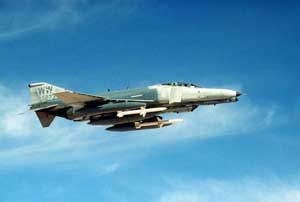
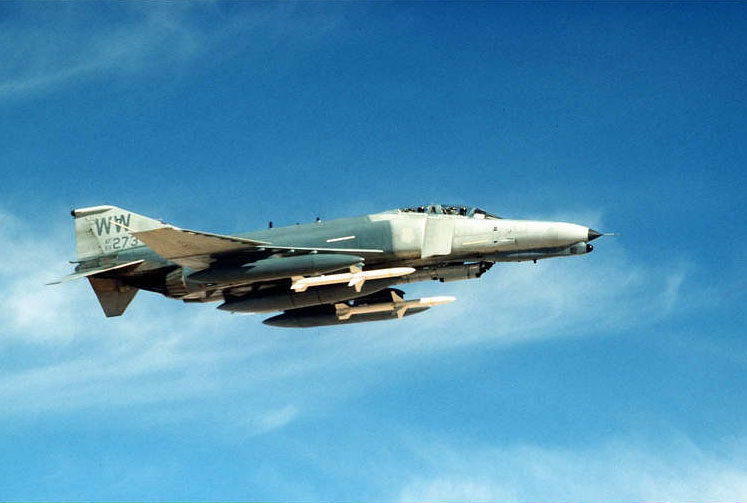
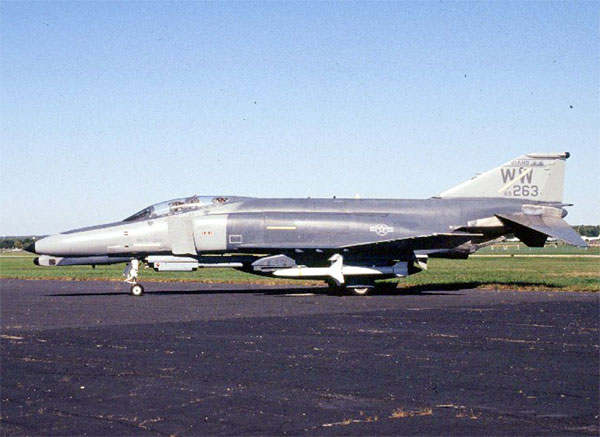
The F-4G represented the "Wild Weasel" off-shoot of the successful F-4 Phantom II line. Wild Weasel aircraft represented (and continue to do so) specially modified platforms utilized to hunt enemy air defense systems such as surface-to-air missile radar emplacements via anti-radiation/anti-radar missiles and electronic warfare equipment. Though outwardly similar to their combat-oriented Phantom II's, F-4G Wild Weasels had their standard cannon armament removed in favor of mounting the AN/APR-47 in its place. F-4G Phantoms came about as conversion models from the F-4E aircraft and achieved their maiden flight on December 6th, 1975.

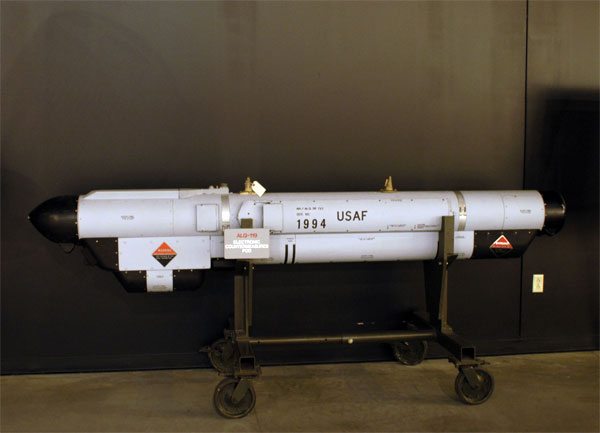
F-4 Phantoms in their Wild Weasel guise originally came about from thirty-six F-4C models converted to the new "Wild Weasel IV" standard by the USAF. These aircraft utilized two AGM-45 "Shrike" anti-radiation missiles along underwing hardpoints in conjunction with the ER-142/ALR-53 receiver and AN/ALQ-119 ECM pod to combat and track enemy radar signals. These aircraft were therefore designated as EF-4C's to designate their electronic warfare role. EF-4C models were put to the test in live combat during the Vietnam War by 1969 with mixed results.

Later, four F-4D models were utilized for the Wild Weasel IV/V program featuring the APS-38 warning and attack system and the AN/ANS-107 RHWS (Radar Homing and Warning System). By 1976, 116 F-4E models were picked for conversion to the Wild Weasel V standard followed by a further 18 in 1987, becoming the RF-4E. 116 total F-4G's were converted from the 993 existing F-4E models. F-4E models were billed as "improved" F-4D models, which themselves built upon the C-model successes.

The F-4G utilized two personnel in a tandem seat cockpit. The forward position was taken by the pilot while the rearward position housed the Electronic Warfare Officer. Since their cannon armament was removed in favor of applicable equipment, the Wild Weasel was complimented fairly with maintaining the ordnance capabilities of the base Phantom II. Along with the ability to carry air-to-air missiles, air-to-ground missiles, rockets and bombs or various makes, the true bread and butter of the Wild Weasel Phantom II lay in the utilization of AGM-88A, B- and C-model ant-radar/anti-radiation HARM (High Speed Anti-Radiation Missile) missiles.

With its origins in the F-4 Phantom II fighter-bomber, the F-4G Wild Weasel retained the excellent capabilities of the warfighter, including top performance specs and the need for a second crewmember to lighten the mission workload. Like their combat brethren, F-4G Wild Weasels were also fitted with two General Electric-brand J79-GE-17 series engines producing 17,900lbs of thrust with afterburner capability. Performance specs included a top speed of 1,245 knots and a range of 1,401 nautical miles along with a ceiling of 58,750 feet.

When deployed, the F-4G was used to directly combat enemy radar and missile threats on the ground. Additionally, the F-4G Wild Weasel could utilize its sensitive tracking and targeting equipment to direct another fighter-bomber aircraft (such as an anti-radar laden F-16C Fighting Falcon) to a target in a "hunter-killer" type arrangement. F-4G Wild Weasels were utilized to great success against Iraqi air defenses in Operation Desert Storm. As with most other aircraft selected for the dangerous Wild Weasel role, the F-4 Phantom II series inevitably reached its limit and was replaced by the more capable General Dynamics / Lockheed F-16 Fighting Falcon. It is expected that the F-35 Lightning II will eventually replace this Cold War-era aircraft in that role within the decade.
Text ©2003-2013 www.MilitaryFactory.com • All Rights Reserved • No Reproduction Permitted
MilitaryFactory.com does NOT sell equipment/weaponry. Material presented throughout this website is for historical and entertainment value and should not to be construed as usable for hardware restoration, maintenance or general operation. Please consult manufacturers for such information. Our disclaimer. Email corrections / Comments to MilitaryFactory at Gmail dot com.
Picture of McDonnell Douglas F-4G Wild Weasel
Pic of the McDonnell Douglas F-4G Wild Weasel
Image of the McDonnell Douglas F-4G Wild Weasel
View All Images (3)

Specifications for the
McDonnell Douglas F-4G Wild Weasel
Electronic Warfare Systems Platform


Country of Origin: United States
Manufacturer: McDonnell Douglas - USA
Initial Year of Service: 1963
Production: 116


Focus Model: McDonnell Douglas F-4G Wild Weasel
Crew: 2


Length: 62.99ft (19.2m)
Width: 38.58ft (11.76m)
Height: 16.70ft (5.09m)
Weight (Empty): 28,274lbs (12,825kg)
Weight (MTOW): 61,793lbs (28,029kg)


Powerplant: 2 x General Electric J79-GE-17 turbojet engines generating 17,900lbs of thrust with afterburning.


Maximum Speed: 1,432mph (2,305kmh; 1,245kts)
Maximum Range: 1,612miles (2,594km)
Service Ceiling: 58,750ft (17,907m; 11.1miles)
Rate-of-Climb: 48,000 feet per minute (14,630m/min)


Hardpoints: 5
Armament Suite:
2 x AGM-88 HARM anti-radiation missiles
2 OR 4 x AIM-9 Sidewinder air-to-air missiles

Other mission-specific weaponry can include AIM-65 Maverick air-to-surface missiles, conventional bombs, cluster bombs, rocket pods and ALQ-131/ALQ-184 countermeasures pods. Fuel tanks may take up any external hardpoint space.


Variants:
XF4H-1 - Prototype Model Designation of which two produced.


F4H-1F - Preproduction models fitted with General Electric J79-GE-2/2A engines generating 16,150 lbs; series would later become the F-4A model designation of which 45 produced.

F4H-1 - Production Model Designation fitted with J79-GE-8 engines generating 17,000lbs standard thrust; series would later be redesignated as the F-4B model series.

F-110A - Initial Production Designation for United States Air Force strike variant; redesignated as the F-4C model series.

F-4A - Production Model Designation of redesignated F4H-1F preproduction model variant.

F-4B - Redesignation of the F4H-1 model series; 649 produced.

F-4C - Redesignation of F-110A for strike fighter role in the United States Air Force; fitted with J79-GE-15 powerplants; 635 produced.

F-4D - USAF version of the United States Navy base F-4C model.

F-4E - USAF model fitted with J79-GE-17 powerplants of which 1,405 models produced; featured improved radar systems, internal 20mm cannon and leading edge slats.

F-4F - Air Superiority Model for West German export.

F-4G - USAF "Wild Weasel" Radar-Suppression Role Model.

F-4J - United States Navy Model fitted with J79-GE-10 engine series generating 17,900lbs of thrust; featured revised wing element and tail section assembly; 512 produced.

F-4K - Royal Navy (United Kingdom) Export Model based on the F-4J but fitted with Rolls-Royce Spey turbofan engines of which 52 were produced.

F-4M - Royal Air Force Export Model based on the F-4K model.

F-4N - Modernization Conversion Model fitted with updated avionics and similar features based on the F-4B base model.

F-4S - Modernization Conversion Model fitted with updated avionics and similar features based on the F-4J base model.

RF-4B - United States Marine Corps Designation for Reconnaissance Variant.

RF-4C - USAF Tactical Reconnaissance Variant of which 499 produced.

Phantom 2000 - "Super Phantom" model produced by the Israel Aircraft Industries (IAI) based on the F-4E base model.

FG.1 - British designation of the F-4K base model.

FGR.2 - British designation of the F-4M model.


Operators: Australia; West Germany; Greece; Japan; Iran; Israel; South Korea; Spain; Turkey; United Kingdom; United States

ALL AIRCRAFT CATEGORIES

BY DECADE:


1900 to 1909
1910 to 1919
1920 to 1929
1930 to 1939
1940 to 1949
1950 to 1959
1960 to 1969
1970 to 1979
1980 to 1989
1990 to 1999
2000 to 2009
2010 to 2019
2020 to 2029
VIEW ALL
Compare Aircraft


BY TYPE:


Anti-Submarine Warfare (ASW)
Attack Helicopters
Bomber Aircraft
Medium Bombers
Heavy Bombers
Close-Air Support (CAS)
Commercial Aircraft
Dive Bombers
Electronic Warfare Aircraft (EWA)
Experimental / X-Planes
Fighter Aircraft
Floatplane Aircraft
Flying Boat Aircraft
Aerial Refueling Tankers
Helicopters (ALL)
Interceptor Aircraft
Multi-Role Aircraft
Navy Carrier Aircraft
Night Fighters
Reconnaissance / Scout
Search & Rescue (SAR)
Scout Helicopters
Special Purpose
Torpedo Bombers
Trainer Aircraft
Transport Aircraft
Transport Helicopters
Unmanned Aerial Vehicles (UAVs)
Unmanned Combat Air Vehicles (UCAVs)


COLLECTIONS:


4th Generation Fighter Aircraft
5th Generation Fighter Aircraft
US X-Planes
Classic US Warbirds
French Military Helicopters
Grumman "Cats"
Howard Hughes Aircraft
Indian Air Force
Israeli Air Force
Libyan Aircraft
Modern Chinese Aircraft
Modern Chinese Fighters
Modern Military Aircraft
Modern North Korean Aircraft
Modern Trainer Aircraft
Modern US Aircraft
Mikoyan Aircraft
Sukhoi Aircraft
Syrian Aircraft
Top 10 Fighter Aircraft of All Time


AIRCRAFT BY CONFLICT:


Arab-Israeli War (1948)
Cuban Missile Crisis (1959-1962)
Falklands War (1982)
Indo-Pak War (1965, 1971)
Iran-Iraq War (1980-1988)
Lebanon War (1982)
Operation Allied Force (1999)
Operation Desert Storm (1991)
Six Day War (1967)
Spanish Civil War (1936)
Soviet-Afghan War (1979-1989)
Yom Kippur War (1973)


MISCELLANEOUS:


Aircraft Cockpits
Aircraft Manufacturers List
Aircraft Timeline

WORLD WAR 2:


1939 Aircraft
1940 Aircraft
1941 Aircraft
1942 Aircraft
1943 Aircraft
1944 Aircraft
1945 Aircraft
1946 Aircraft
Australian Aircraft
Battle of Britain Aircraft
Bombers
Four-Engine Bombers
British Aircraft
British Bombers
British Transports
Dive Bombers
Canadian Aircraft
Fighters
Chinese Aircraft
French Aircraft
German Aircraft
German Fighters
German Flying Boats
German Jets
Secret Weapons of the Luftwaffe
Italian Aircraft
Imperial Japanese Aircraft
Imperial Japanese Fighters
Mitsubishi Bombers
Navy Aircraft
Pearl Harbor
Polish Aircraft
Romanian Aircraft
US Aircraft
US Bombers
US Navy Aircraft
Soviet Aircraft
Torpedo Bombers
Trainer Aircraft
Transport Aircraft
Tuskegee Airmen Aircraft
W.A.S.P. Aircraft
WW2 Aircraft Ranked by Speed
VIEW ALL


WORLD WAR 1:


1914 Aircraft
1915 Aircraft
1916 Aircraft
1917 Aircraft
1918 Aircraft
Aircraft Timeline
Austro-Hungarian Aircraft
Bomber Aircraft
British Aircraft
Fighters
Flying Boats
French Aircraft
Imperial German Aircraft
Italian Aircraft
Scout Aircraft
Russian Empire Aircraft
US Aircraft
WW1 Aircraft Ranked by Speed
VIEW ALL


KOREAN WAR:


Australian Aircraft
Korean War Aces
Korean War Jets
North Korean Aircraft
US Military Aircraft
VIEW ALL


VIETNAM WAR:


Helicopters
North Vietnam Air Force
US Airpower
VIEW ALL


COLD WAR:


1950s French Aircraft
British V-Bombers
Cold War Bombers
Soviet Aircraft
Soviet Bombers
Soviet Interceptors
Soviet Helicopters
Strategic Air Command
US Aircraft
US Bombers
US Interceptors
VIEW ALL

Site Disclaimer | Privacy Policy | Site Map | MF Origins


©2013 www.MilitaryFactory.com • Content ©2003-2013 MilitaryFactory.com • All Rights Reserved • Site Contact Email: militaryfactory at gmail dot com. The "Military Factory" name and MilitaryFactory.com logo are registered ® trademarks and protected by all applicable domestic and international intellectual property laws.


Top MF Stuff: 2013 Military Pay Scale | Military Ranks | WW2 Weapons | Sniper Rifles | Kts to Mph | WW1 Aircraft | Automatic Rifles | Aircraft Cockpits | Vietnam War Weapons | Main Battle Tanks | Submachine Guns | Shotguns | French Military Victories


Most photographic images appearing on this site are courtesy of the United States Department of Defense and are approved for public use. Other images acquired through the public domain. Digital art work courtesy of Dan Alex. Business Consulting by Kyle Williams. Material presented throughout this website is for historical and entertainment value and should not to be construed as usable for hardware restoration, maintenance or general operation. Please consult manufacturers for such information.


eXTReMe Tracker