Military Factory
Military Pay Chart
Global Firepower
Military Industrial Complex
Second World War
Home
Military Pay Scale
Military Ranks
Small Arms
Aircraft
Land Systems
Navy
Education
Military Factory Facebook Logo
flag of United States

Northrop F-5 Freedom Fighter / Tiger / Tiger II Multirole Aircraft (1962)

Authored By Staff Writer | Last Updated: 2/14/2011

The F-5 Freedom Fighter grew into the F-5 Tiger II, which sprouted the ill-fated F-20 Tigershark.

Find a School Near You
Follow Military Factory on Facebook:
Trending on Military Factory:
Recent Articles:
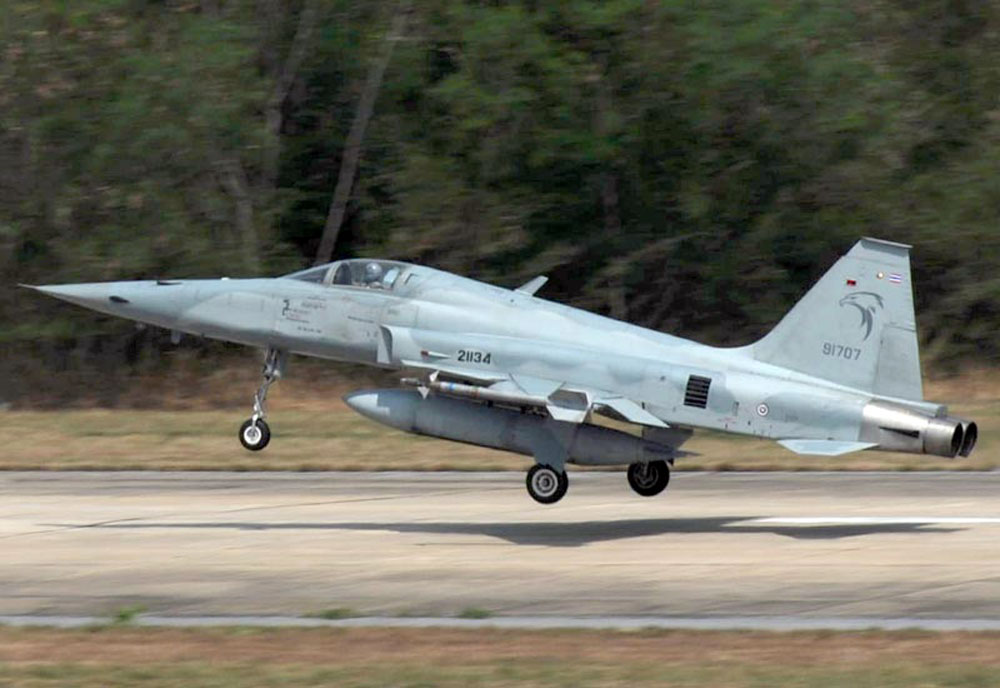
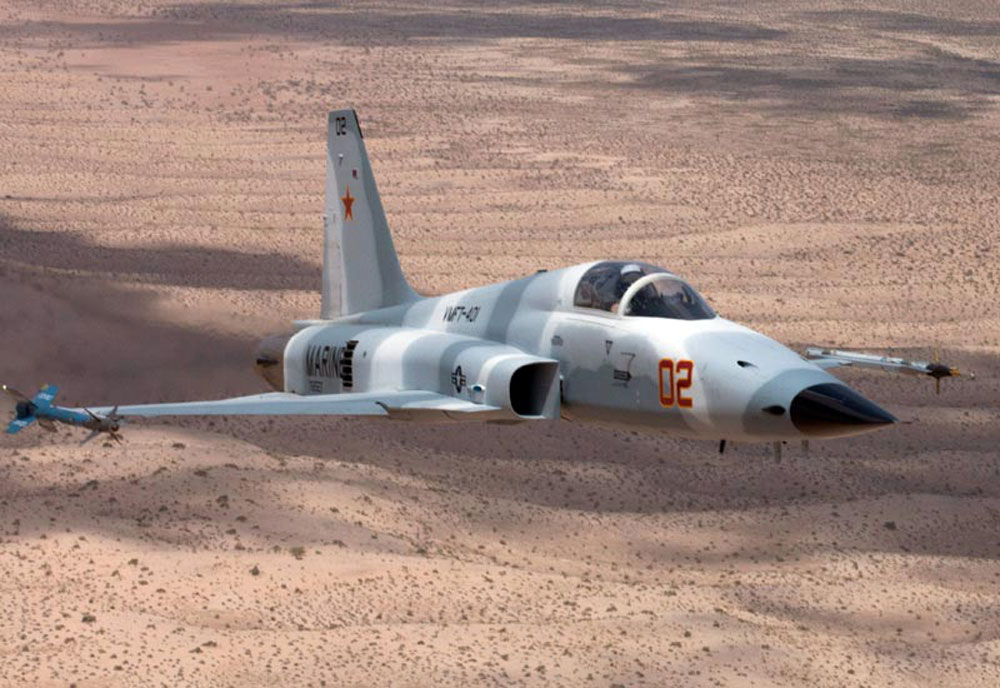
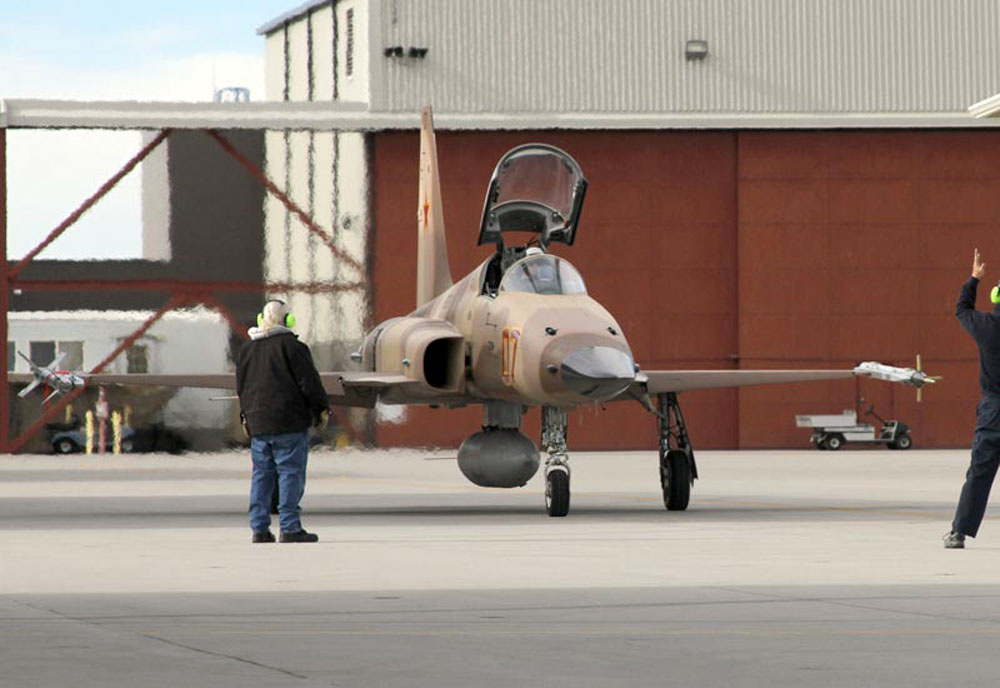
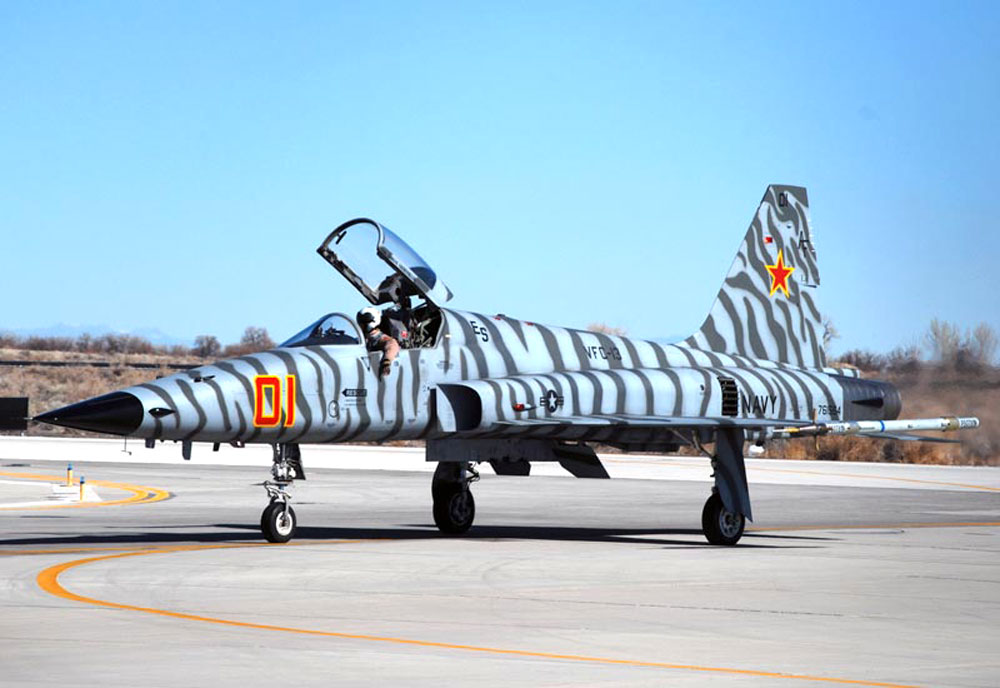
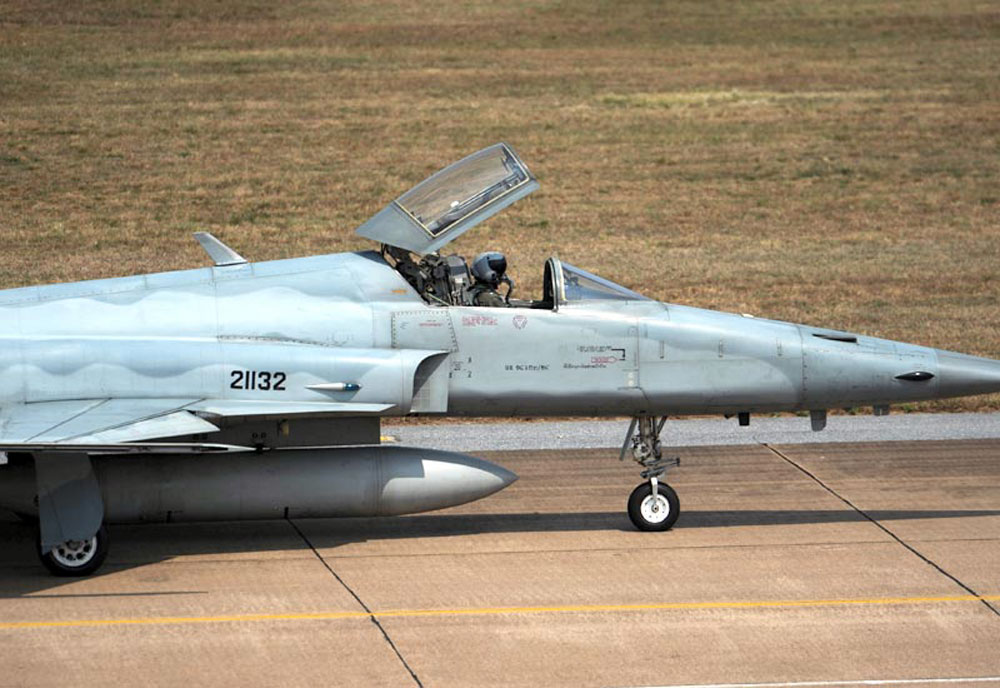
The Northrop F-5 "Freedom Fighter" / "Tiger" / "Tiger II" series was designed from the outset as a low-cost, lightweight, multi-role Mach 1-capable combat platform. While developed within the United States by the Northrop firm, the fighter went on to find quantitative success outside of the country with over half of the 2,246 completed aircraft serving in foreign militaries worldwide. In all, at least 30 US-allied nations operated the type with many in service even today. Despite lacking the true "all-weather" capabilities of more accomplished fighters of her time, the F-5 made up for her inherent limitations through its excellent agility, ease of maintenance and low-cost functionality - all benefits to the budget-strapped military buyer.

F-5 Origins

The F-5 was born out of a 1950s US Navy requirement calling for a small, lightweight, jet-powered fighter to operate from the decks of its Escort Carriers. Escort Carriers received their own birth in ocean-going fighting during World War 2. However, Escort Carriers were not designed for the newer, larger types of fighters then entering USN service. Northrop, therefore, responded with their in-house "N-156" lightweight, twin-engine jet fighter proposal. The project was to make use of the General Electric J85 turbojet engine - the same powerplant as used in the Boeing B-52 Stratofortress-launched McDonnell ADM-20 "Quail" subsonic decoy cruise missile - and this installation proved ideal for use in such a small airframe design for the engine outputted a strong thrust-to-weight ratio for its size. However, US Navy interest soon waned after the retirement of her Escort Carrier classes, leaving the future of the N-156 in doubt. Regardless, Northrop engineers forged ahead and spawned the N-156 into two distinct aircraft forms - the single-seat "N-156F" fighter and the two-seat "N-156T" combat trainer.

The USAF took notice of the N-156T twin-seat design. While not looking directly to purchase a new frontline fighter at the time, it did seek a direct replacement for its aging line of Lockheed T-33 "Shooting Star" jet trainers whose own origins traced as far back as the 1940s. The USAF formally selected the N-156T to become the basis of its next -generation jet trainer and the design eventually evolved to become the YT-38 "Talon" and, ultimately, becoming the well-known Northrop T-38 "Talon" production model. This aircraft was built in 1,187 examples and began USAF service in 1961.

While the government-funded two-seat N-156T was now finding a respectable existence in the inventory of the USAF, the single-seat N-156F was not an entirely forgotten endeavor for Northrop. Instead, she was moved along in development at a slower pace as a privately funded venture by Northrop. Fate ultimately came to knock on the door of the N-156F during the height of the Cold War. In an effort to keep pace with the Soviet military reach across the world, the "Military Assistance Program" (MAP) was enacted by the United States to help those budget conscious American-allies field capable military hardware. The promising low-cost, easy-to-use nature of the N-156F seem to fit the proverbial bill and Northrop received a government contract to produce three working prototypes for official USAF evaluation. The first of these achieved initial flight on July 30th, 1959 out of Edwards AFB. Of note during this first run was the prototype exceeding the sound barrier without issue - proving the design inherently sound and efficient. The N-156F prototypes furthermore showcased strong qualities that would be pertinent to the air-to-air and ground attack roles making her a truly multi-role platform.

The New Northrop Fighter Gets Named

Despite the promising early showing, the USAF exerted a lackadaisical response in pushing the N-156F program further into 1960. It was not until 1961 that the project gained some slight interest from the US Army looking for close-support and reconnaissance platform but the move was derailed to keep the USAF as the only "true" fixed-wing, air combat arm in the US military. The N-156F was once again in limbo for a time longer until an initiative by then-President John F. Kennedy brought about a new requirement for a budget export fighter under the "F-X" program to serve American allies worldwide.

On April 23rd, 1962, the N-156F was formally declared the winner of F-X and, on August 9th, 1962, she was removed of her N-156F prototype designation and officially labeled as the "F-5" in accordance with the revamped USAF designation system of September 1962 (the old system ended with the General Dynamics F-111 Aardvark, so the new Northrop fighter was christened with the smaller-value "F-5" designator). As such, her first production models were known as "F-5A". To go along with her export-minded existence, the F-5A was nicknamed the "Freedom Fighter" and production was slated to begin in October of 1962 with the first flight of a production-quality F-5A example was recorded in May of 1963. Production of F-5A models ran to 1972.

The F-5A "Freedom Fighter" and the Two-Seat F-5B

The F-5A was a basic aircraft design that was optimized for air-to-ground operations with limited air-to-air serviceability. This was mostly due to the lack of any onboard fire control radar system to help identify, track and engage aerial targets with guided/homing missiles all her own. The F-5A was powered by a pair of General Electric J85-GE-13 turbojet engines featuring 2,720lbs of standard thrust and 4,080lbs of thrust with afterburning (raw fuel pumped into the engine to produce a short burst of power and, therefore, heightened speed and performance). Maximum speed was Mach 1.4 / 925mph (36,000 feet) with a service ceiling up to 50,500 feet. Maximum range on internal fuel was around 1,387 miles. Standard armament included 2 x M39 20mm cannons on either side of the nose assembly. Two AIM-9 Sidewinders were exclusively fitted to the wingtips. There were four underwing and a single underfuselage hardpoint for the carrying of bombs, rocket pods and missiles - up to 6,200lbs of ordnance. External fuel stores could replace some of the weapons stations.

The F-5B development stemmed from the F-5A before it and was nothing more than two-seat "combat trainer" with the purpose of training future F-5 pilots while also retaining some of her inherent combat value. With the addition of the second instructor's cockpit came the loss of one of the M39 cannons and some internal space while introducing a new, revised longer nose assembly.

F-5 Production

Northrop produced 636 F-5A models and 200 F-5B examples. Both were purchased in quantity by US allies through MAP. The F-5A single-seat production model was further branched out into a dedicated reconnaissance mount in the RF-5A "Tigereye", these fitting up to four KS-92A series photographic cameras in a slightly redesigned nose assembly of which 86 examples were produced. Additionally, Canadair of Canada locally-produced the types under license as the CF-5A and the CF-5B from 1965 to 1970. These were differentiated from their American sisters by the addition of an in-flight refueling probe and more powerful Orenda J85-CAN0-15 series engines to suit Canadian requirements. Canadair also supplied these mounts to the air force of the Netherlands and these were further designated as NF-5A and NF-5B respectively. Canadair produced at least 240 F-5 examples. Spain took to license-producing the fighter as well, with CASA handling the local program and 70 airframes were ultimately delivered.

F-5s in Vietnam - the "Skoshi Tigers"

With the United States embroiled in the Vietnam War, a single squadron of F-5A was selected by the USAF for combat evaluation in October of 1965. The evaluation lasted from October of 1966 to March of 1967 with the name of "Skoshi Tiger" (Little Tiger) assigned to these program F-5s. At least 12 initial airframes were enlisted for action and served with the 4503rd Tactical Fighter Squadron and a handful more soon joined the effort. Modifications to these "Tigers" included the installation of better in-cockpit instrumentation, increased armor protection and support for "probe and drogue" in-flight refueling. The changes necessitated a new designation which gave birth to the F-5C mark. These F-5Cs operated under the banner of the 3rd Tactical Fighter Wing out of Bien Hoa and Da Nang Air Base and covered some 2,600 missions over Vietnam and Laos with only one airframe was lost to action.

Despite the solid showing (in both air-to-air and air-to-ground actions) during the conflict, the USAF still shown no interest in procuring the Northrop product. However, the combat evaluation did serve a political motive as it showcased the viability of the F-5 as a multi-role platform to interested nations "still on the fence". After the USAF program in Vietnam was completed, the modified F-5Cs were delivered to the South Vietnam Air Force. With the fall of the city of Bien Hoa in South Vietnam, some of these F-5Cs were reconstituted back into service with the Communist North and examples were further shipped to the Soviet Union for intense study.

Of note during this period of the F-5s tenure was that the Vietnam "Skoshi Tigers" gave rise to the F-5 nickname of "Tiger" as in "F-5 Tiger".

The International Fighter Aircraft (IFA) Program

By 1970, the United States was looking for a replacement for the export-minded F-5A to keep pace with advancing Soviet fighter developments and penciled requirements to fit the new "International Fighter Aircraft (IFA) program. The goal behind the program was to field a capable air-to-air fighter to compete against the ubiquitous Mikoyan-Gurevich MiG-21 "Fishbed" series being fielded en mass to Warsaw Pact nations and interested Soviet allies. Northrop threw its hat into the ring once again and developed a variation of the single-seat F-5A to become the new-model "F-5A-21". Northrop was awarded the defense contract for the new fighter and the design evolved to become the definitive "F-5E" production variant.

The Northrop F-5E "Tiger II"

The F-5E model retained much of the qualities that had made the previous F-5A a global market success. Special attention was applied to improve performance by fitting a pair of General Electric J85-21/21A series engines, each rated for 5,000 thrust output. The service ceiling was slightly raised to 51,800 feet and range was improved to 1,543 miles. The fuselage was therefore enlarged and lengthened to accommodate the new powerplants as well as extra stores of internal fuel to help increase operational range. Avionics were upgraded with the Emerson Electric AN/APQ-153 series radar and various other customer-required systems could further be installed as needed - in a way making the F-5E something of a modular platform. Maneuverability was enhanced by the addition of leading edge extensions along the wings which produced a larger wing surface area as a result. The twin M39 cannons were retained but upgraded to the M39A2 series and ordnance load was increased to 7,000lbs. First flight of the F-5E variant occurred on August 11th, 1972 and the type was formally designated as the F-5E "Tiger II".

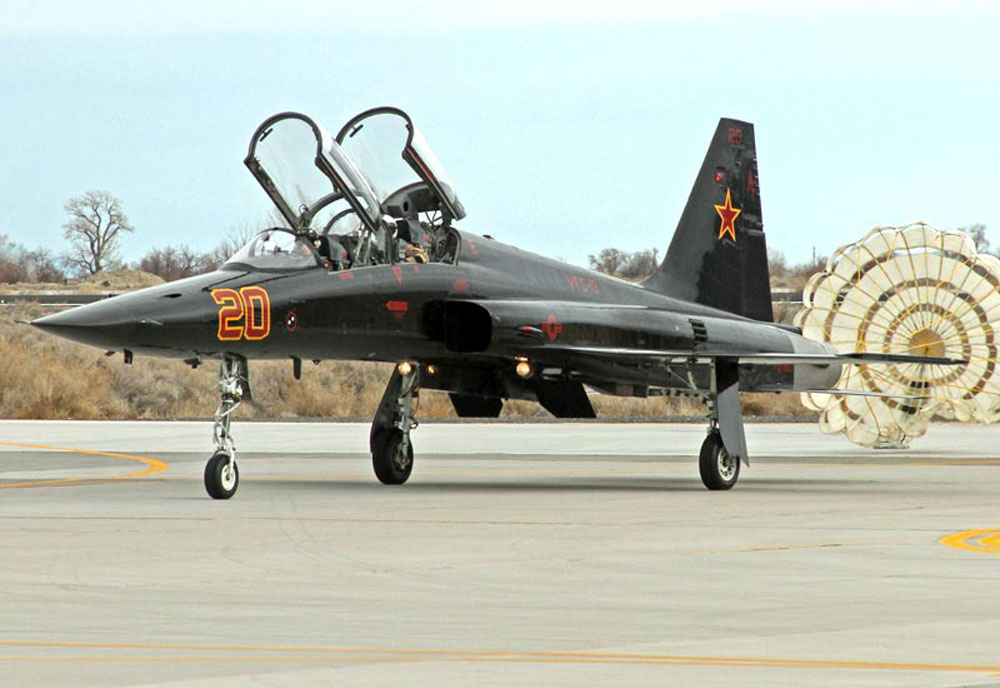
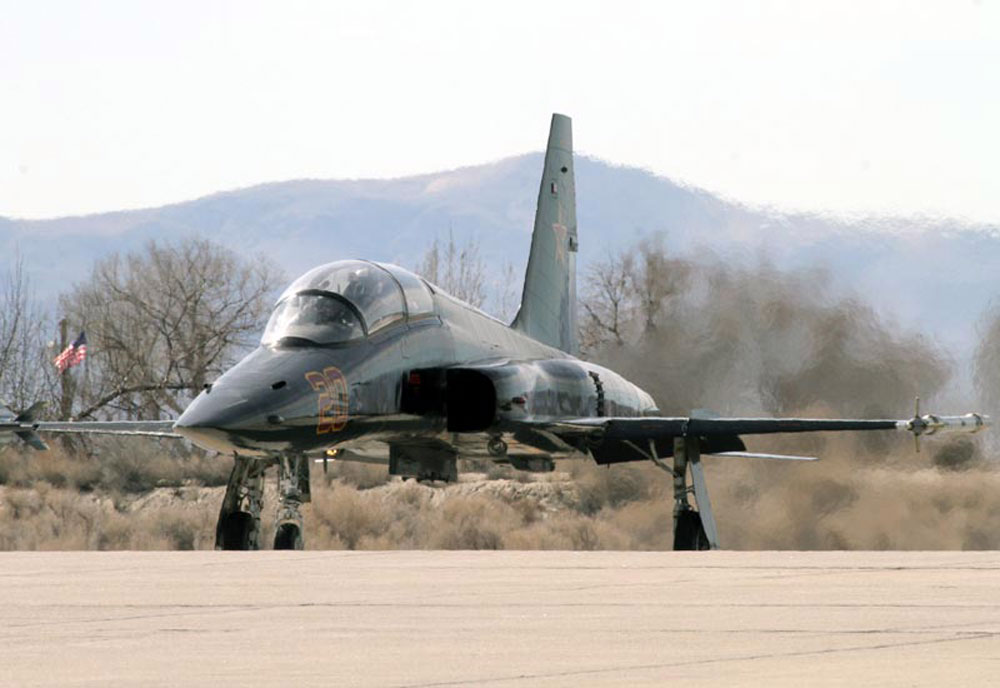
As in the F-5A development before it, the F-5E was also branched out into a two-seat version designated as the "F-5F". With the addition of the second (instructor's) cockpit, one of the M39A2 internal cannons was deleted and the nose was lengthened. The Emerson Electric AN/APQ-157 radar (based on the aforementioned AN/APQ-153 series) was a standard fixture. Later versions were offered with the upgraded Emerson Electric AN/APG-69 series radar system but this modernization proved cost-prohibitive to all customers except the USAF. Like the F-5A earlier, the F-5E was also developed into the single-seat RF-5E "Tigereye" photographic reconnaissance variant.

The USAF received their first F-5E models with the 425th Tactical Fighter Squadron though it was mostly foreign parties that took an interest in Tiger II procurement with some 20 air forces around the world went on to field the type. The 425th TFS utilized their new F-5Es to train foreign forces.

In all, 792 F-5E models were produced by Northrop facilities. Northrop also added manufacture of 140 F-5F two-seat combat trainers and a further 12 RF-5E Tigereyes. Taiwan produced the F-5E/F-5F in quantity, totaling some 308 aircraft deliveries in all. Switzerland also undertook local-license production of these new versions and produced 91 F-5E and F-5F models. South Korea added 68 local examples.

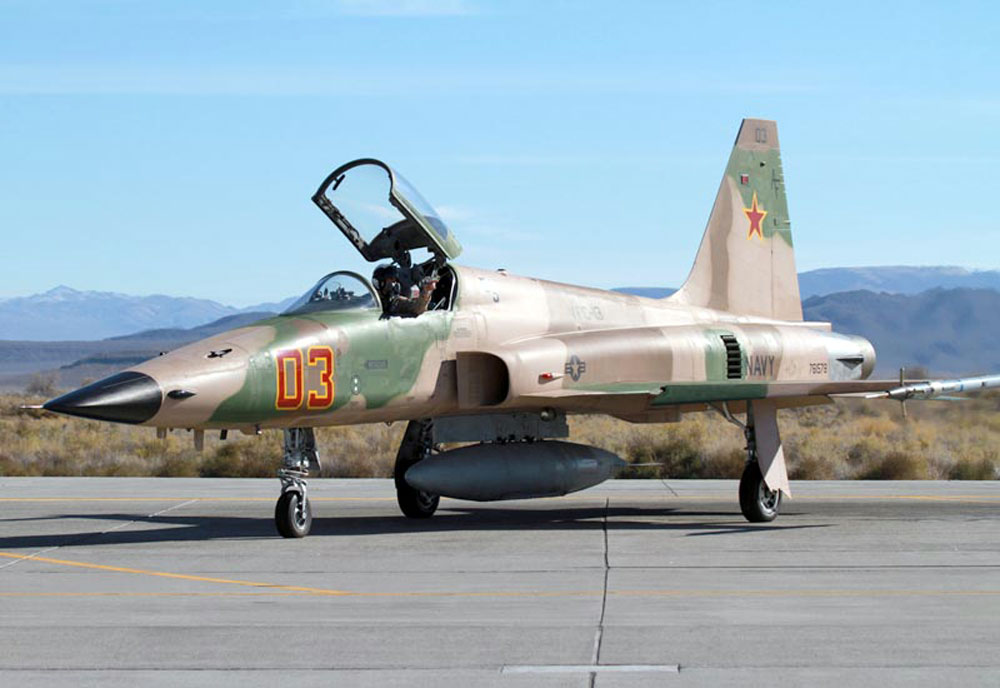
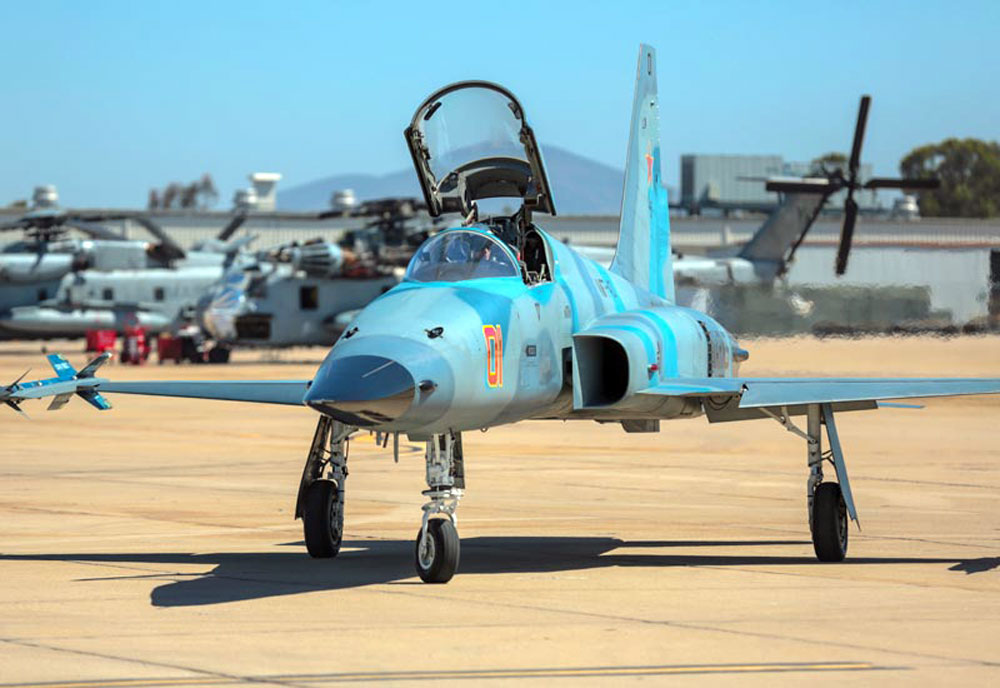
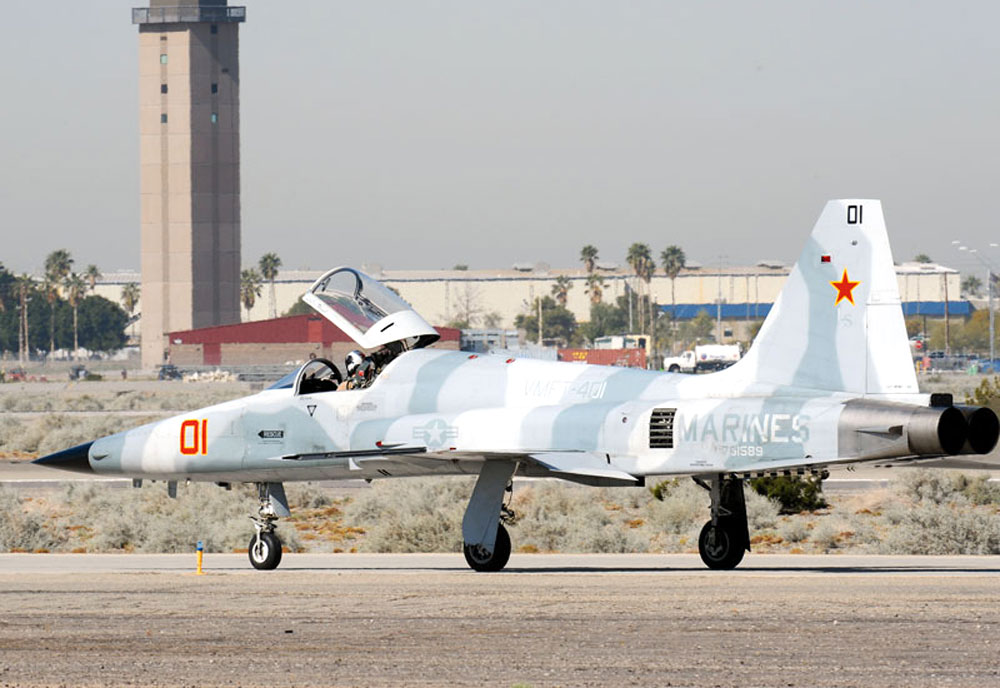
The F-5E served with the USAF from 1975 to 1990 as part of the 26th, 64th, 65th and 627th aggressor squadrons in the US and worldwide (UK-527th and Philippines-26th) . The F-5E was also notably used by the United States Navy as aggressor training aircraft for its "Top Gun" pilot school at Miramar, California. The USMC purchased some ex-USAF F-5 models in 1989 to replace their F-21 (Israeli Kfir) aggressors.

The Ill-fated F-20 Tigershark

The global success of the F-5 series prompted a newer, single-engine, single-seat model to appear. This was a modified F-5E initially designated as the F-5G. Engine output was increased by as much as 80 percent from the original design and other revisions made for a more potent adversary. Ultimately, the program grew apart from her F-5 origins enough that she received the all-new F-20 "Tigershark" designation. However, the F-20 was up against stiff competition with the arrival of the do-everything General Dynamics F-16 Fighter Falcon lightweight fighter of similar scope but broader capabilities. Additionally, the USAF's decision to pass on procurement of the Tigershark essentially doomed it for global sales - its local endorsement proved quite vital in the global market.

F-5 Modernization

Canada pushed their F-5 mounts into a comprehensive modernization program that brought about renewed airframes, updated avionics suites, Hands-on-Throttle-and-Stick (HOTAS) control and a Heads-Up Display (HUD). All served well to keep the fighter flying for a few decades longer. Other countries followed with localized upgrade programs all their own, though not to the Canadian extent, and many still field the F-5 series in one form or another. Singapore added AIM-120 AMRAAM and Rafael Python missile support to their F-5S and F-5T models (single and dual-seat forms respectively). Chile and Brazil, with help from the Israeli firm of Elbit, added Elbit radar systems and (Brazilian types) capability for the Python missile. Israel also helped to upgrade Thailand F-5 mounts with Python missile support.

The F-5 Legacy

Beyond her noted operational forms above, the Northrop F-5 airframe served as the basis for such designs as the YF-17 technology demonstrator (competing unsuccessfully against what would become the General Dynamics F-16 Fighting Falcon) and the F/A-18 Hornet - the American Navy's preeminent carrier-based multi-role fighter that replaced the venerable Grumman swing-wing F-14 Tomcats in service. NASA employed a single F-5E airframe with a revised, deeper fuselage for experimentation in DARPA's "Shaped Sonic Boom Demonstration" program. The airframe survived its testing and became a permanent fixture at the Valiant Air Command Museum in Florida.

Despite its 1962 introduction, the F-5 series still maintains an operational status worldwide.
Text ©2003-2013 www.MilitaryFactory.com • All Rights Reserved • No Reproduction Permitted
MilitaryFactory.com does NOT sell equipment/weaponry. Material presented throughout this website is for historical and entertainment value and should not to be construed as usable for hardware restoration, maintenance or general operation. Please consult manufacturers for such information. Our disclaimer. Email corrections / Comments to MilitaryFactory at Gmail dot com.
Picture of Northrop F-5 Freedom Fighter / Tiger / Tiger II
Pic of the Northrop F-5 Freedom Fighter / Tiger / Tiger II
Image of the Northrop F-5 Freedom Fighter / Tiger / Tiger II
View All Images (10)

Specifications for the
Northrop F-5 Freedom Fighter / Tiger / Tiger II
Multirole Aircraft


Country of Origin: United States
Manufacturer: Northrop Aircraft Corporation - USA
Initial Year of Service: 1962
Production: 2,246


Focus Model: Northrop F-5E Tiger II
Crew: 1


Length: 47.41ft (14.45m)
Width: 26.67ft (8.13m)
Height: 13.32ft (4.06m)
Weight (Empty): 9,722lbs (4,410kg)
Weight (MTOW): 24,723lbs (11,214kg)


Powerplant: 2 x General Electric J85-GE21 turbojet engines with afterburner generating 5,000lbs thrust each.


Maximum Speed: 1,077mph (1,734kmh; 936kts)
Maximum Range: 1,543miles (2,483km)
Service Ceiling: 51,804ft (15,790m; 9.8miles)
Rate-of-Climb: 28,700 feet per minute (8,748m/min)


Hardpoints: 7 (including wingtip mounts)
Armament Suite:
STANDARD:
2 x 20mm M39A2 internal cannons
2 x AIM-9 Sidewinder air-to-air missiles on wingtips.

OPTIONAL:
Mission-specific ordinance is limited up to a maximum of 7,000lbs across 4 x underwing and 1 x underfuselage hardpoints and can include:

2 x AIM-9 Sidewinder short-range air-to-air missiles.
4 x AIM-120 AMRAAM medium-range air-to-air missiles.
AGM-65 Maverick air-to-surface guided missiles
2 x LAU-61 19-shot 70mm rocket pods
2 x LAU-68 7-shot 70mm rocket pods
2 x LAU-10 4-shot 127mm rocket pods
2 x Matra SNEB 18-shot 68mm rocket pods
Conventional Drop Bombs
Cluster Bombs
Napalm Bombs
3 x 275 US gallon External Fuel Droptanks


Variants:
N-156 - Northrop Private Venture Lightweight Fighter Model.


N-156T - Supersonic Trainer Variant of the base N-156.

YT-38 - Prototype Model based on the N-156T trainer model; fitted with 2 x General Electric J85-GE-1 turbofan engines (non-afterburning) capable of 2,600lbs of thrust each; Further prototypes were fitted with J85-GE-5 capable of 3,600lbs of thrust.

N-156F - Fighter Model Designation

F-5A "Freedom Fighter" - Single Seat Fighter; 818 produced.

F-5B - Two-seat Variant; 290 produced.

CF-5 - Canadair-produced version

NF-5 - Netherlands-produced version

F-5G - Norwegian-produced version

SF-5 - CASA-produced version for Spain

RF-5A - Reconnaissance Model fitted with appropriate systems and components.

F-5E "Tiger II" - Tiger II designation is used; Single seat fighter version.

F-5F Tiger II - Two-seat fighter model; integrated fire-control system; fitted with J85-GE-21 powerplants capable of 5,000lbs of thrust; increased MTOW; aerodynamic refinements to airframe; improved avionics.

RF-5E "TigerEye" - Improved Reconnaissance Variant.

F-20 "Tigershark" - Abandoned Export Model of improved and redesigned F-5 Tiger II series.


Operators: Austria; Bahrain; Botswana; Brazil; Canada; Chile; Ethiopia; Greece; Honduras; Indonesia; Iran; Jordan; Kenya; Malaysia; Mexico; Morocco; Netherlands; Norway; Philippines; Saudi Arabia; Singapore; South Korea; Spain; Sudan; South Vietnam; Soviet Union; Switzerland; Taiwan; Thailand; Tunisia; Turkey; United States; Venezuela; Vietnam; Yemen

ALL AIRCRAFT CATEGORIES

BY DECADE:


1900 to 1909
1910 to 1919
1920 to 1929
1930 to 1939
1940 to 1949
1950 to 1959
1960 to 1969
1970 to 1979
1980 to 1989
1990 to 1999
2000 to 2009
2010 to 2019
2020 to 2029
VIEW ALL
Compare Aircraft


BY TYPE:


Anti-Submarine Warfare (ASW)
Attack Helicopters
Bomber Aircraft
Medium Bombers
Heavy Bombers
Close-Air Support (CAS)
Commercial Aircraft
Dive Bombers
Electronic Warfare Aircraft (EWA)
Experimental / X-Planes
Fighter Aircraft
Floatplane Aircraft
Flying Boat Aircraft
Aerial Refueling Tankers
Helicopters (ALL)
Interceptor Aircraft
Multi-Role Aircraft
Navy Carrier Aircraft
Night Fighters
Reconnaissance / Scout
Search & Rescue (SAR)
Scout Helicopters
Special Purpose
Torpedo Bombers
Trainer Aircraft
Transport Aircraft
Transport Helicopters
Unmanned Aerial Vehicles (UAVs)
Unmanned Combat Air Vehicles (UCAVs)


COLLECTIONS:


4th Generation Fighter Aircraft
5th Generation Fighter Aircraft
US X-Planes
Classic US Warbirds
French Military Helicopters
Grumman "Cats"
Howard Hughes Aircraft
Indian Air Force
Israeli Air Force
Libyan Aircraft
Modern Chinese Aircraft
Modern Chinese Fighters
Modern Military Aircraft
Modern North Korean Aircraft
Modern Trainer Aircraft
Modern US Aircraft
Mikoyan Aircraft
Sukhoi Aircraft
Syrian Aircraft
Top 10 Fighter Aircraft of All Time


AIRCRAFT BY CONFLICT:


Arab-Israeli War (1948)
Cuban Missile Crisis (1959-1962)
Falklands War (1982)
Indo-Pak War (1965, 1971)
Iran-Iraq War (1980-1988)
Lebanon War (1982)
Operation Allied Force (1999)
Operation Desert Storm (1991)
Six Day War (1967)
Spanish Civil War (1936)
Soviet-Afghan War (1979-1989)
Yom Kippur War (1973)


MISCELLANEOUS:


Aircraft Cockpits
Aircraft Manufacturers List
Aircraft Timeline

WORLD WAR 2:


1939 Aircraft
1940 Aircraft
1941 Aircraft
1942 Aircraft
1943 Aircraft
1944 Aircraft
1945 Aircraft
1946 Aircraft
Australian Aircraft
Battle of Britain Aircraft
Bombers
Four-Engine Bombers
British Aircraft
British Bombers
British Transports
Dive Bombers
Canadian Aircraft
Fighters
Chinese Aircraft
French Aircraft
German Aircraft
German Fighters
German Flying Boats
German Jets
Secret Weapons of the Luftwaffe
Italian Aircraft
Imperial Japanese Aircraft
Imperial Japanese Fighters
Mitsubishi Bombers
Navy Aircraft
Pearl Harbor
Polish Aircraft
Romanian Aircraft
US Aircraft
US Bombers
US Navy Aircraft
Soviet Aircraft
Torpedo Bombers
Transport Aircraft
Tuskegee Airmen Aircraft
W.A.S.P. Aircraft
WW2 Aircraft Ranked by Speed
VIEW ALL


WORLD WAR 1:


1914 Aircraft
1915 Aircraft
1916 Aircraft
1917 Aircraft
1918 Aircraft
Aircraft Timeline
Austro-Hungarian Aircraft
Bomber Aircraft
British Aircraft
Fighters
Flying Boats
French Aircraft
Imperial German Aircraft
Italian Aircraft
Scout Aircraft
Russian Empire Aircraft
US Aircraft
WW1 Aircraft Ranked by Speed
VIEW ALL


KOREAN WAR:


Australian Aircraft
Korean War Aces
Korean War Jets
North Korean Aircraft
US Military Aircraft
VIEW ALL


VIETNAM WAR:


Helicopters
North Vietnam Air Force
US Airpower
VIEW ALL


COLD WAR:


1950s French Aircraft
British V-Bombers
Cold War Bombers
Soviet Aircraft
Soviet Bombers
Soviet Interceptors
Soviet Helicopters
Strategic Air Command
US Aircraft
US Bombers
US Interceptors
VIEW ALL

Site Disclaimer | Privacy Policy | Site Map | MF Origins


©2013 www.MilitaryFactory.com • Content ©2003-2013 MilitaryFactory.com • All Rights Reserved • Site Contact Email: militaryfactory at gmail dot com. The "Military Factory" name and MilitaryFactory.com logo are registered ® trademarks and protected by all applicable domestic and international intellectual property laws.


Top MF Stuff: 2013 Military Pay Scale | Military Ranks | WW2 Weapons | Sniper Rifles | Kts to Mph | WW1 Aircraft | Automatic Rifles | Aircraft Cockpits | Vietnam War Weapons | Main Battle Tanks | Submachine Guns | Shotguns | French Military Victories


Most photographic images appearing on this site are courtesy of the United States Department of Defense and are approved for public use. Other images acquired through the public domain. Digital art work courtesy of Dan Alex. Business Consulting by Kyle Williams. Material presented throughout this website is for historical and entertainment value and should not to be construed as usable for hardware restoration, maintenance or general operation. Please consult manufacturers for such information.


eXTReMe Tracker