|
|
| |
|
Convair F-102 Delta Dagger
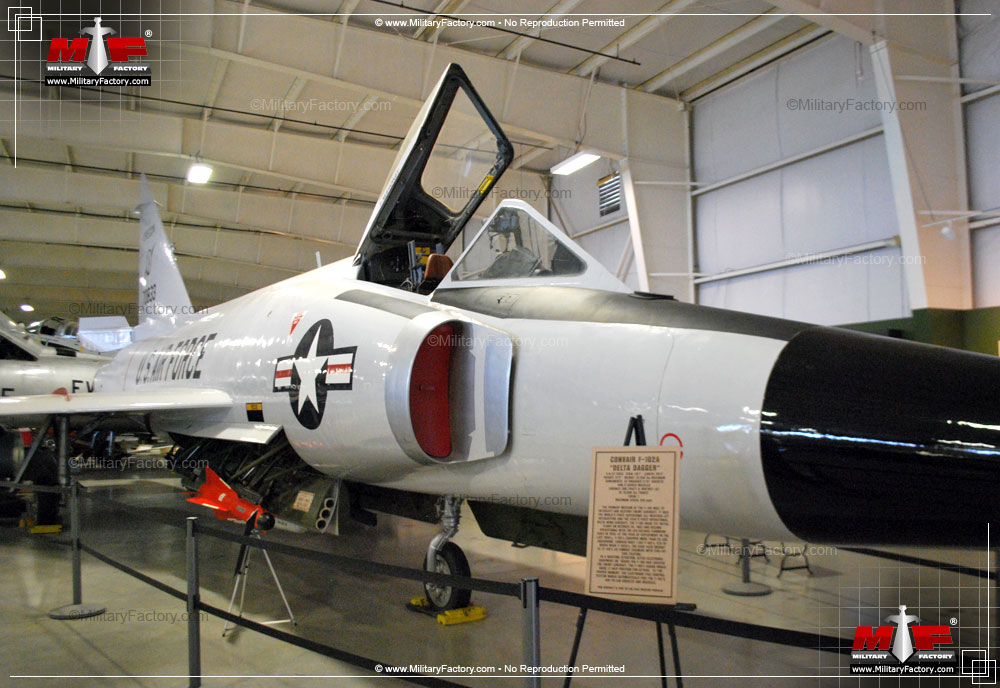
The F-102 was an effective delta-winged design that directly spawned the similar F-106 Delta Dart series.
By Staff Writer
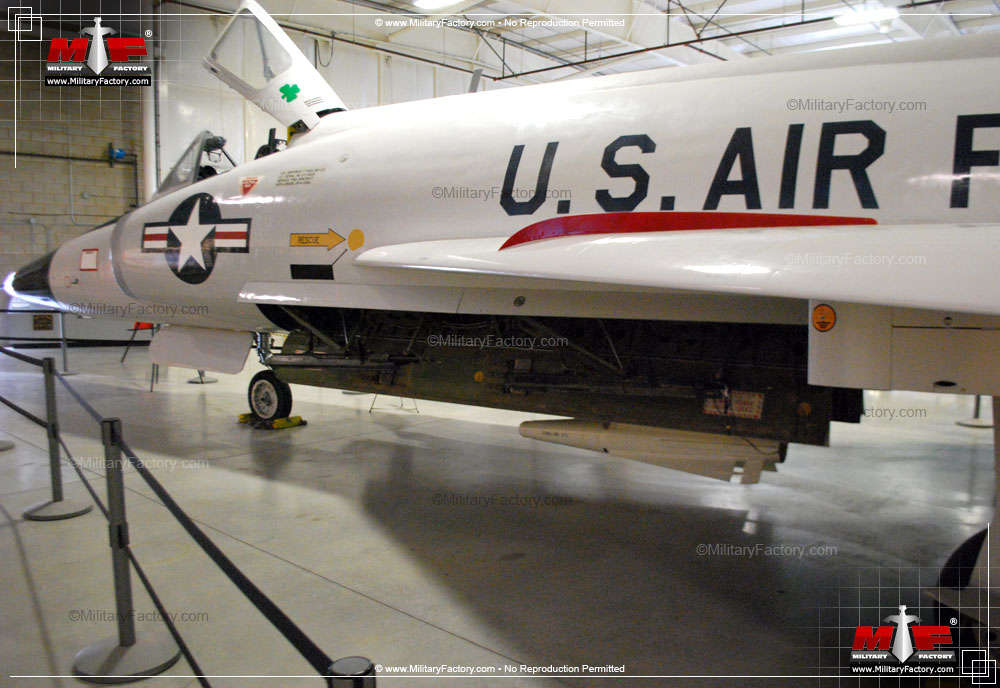
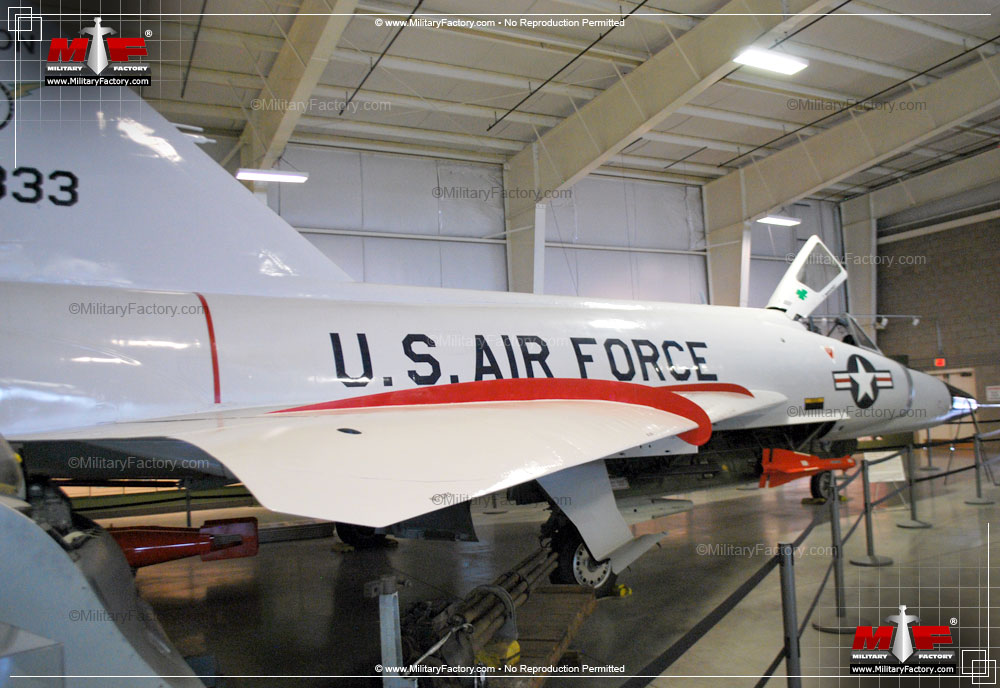
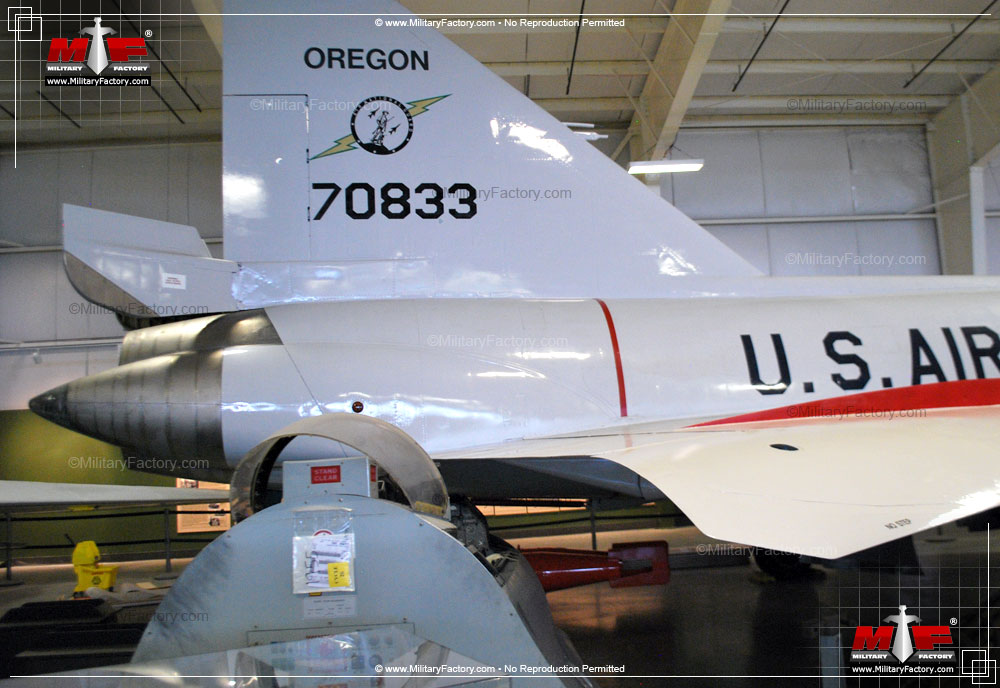
The F-102 Delta Dagger was a prototypical American aircraft design in the years following the Korean War, particularly doing away with the smooth lines and straight wing features commonplace in the years following World War Two. The new F-102 Delta Dagger was a sharp-angled single-engine aircraft built with speed in mind - from the powerful afterburning Pratt & Whitney engine to the delta wing design.
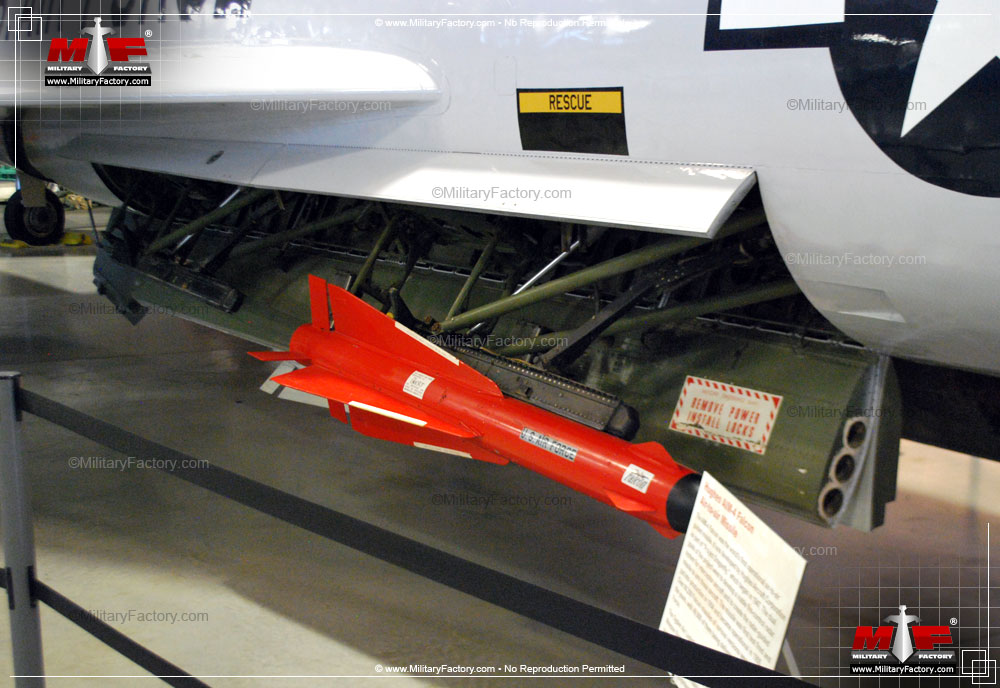
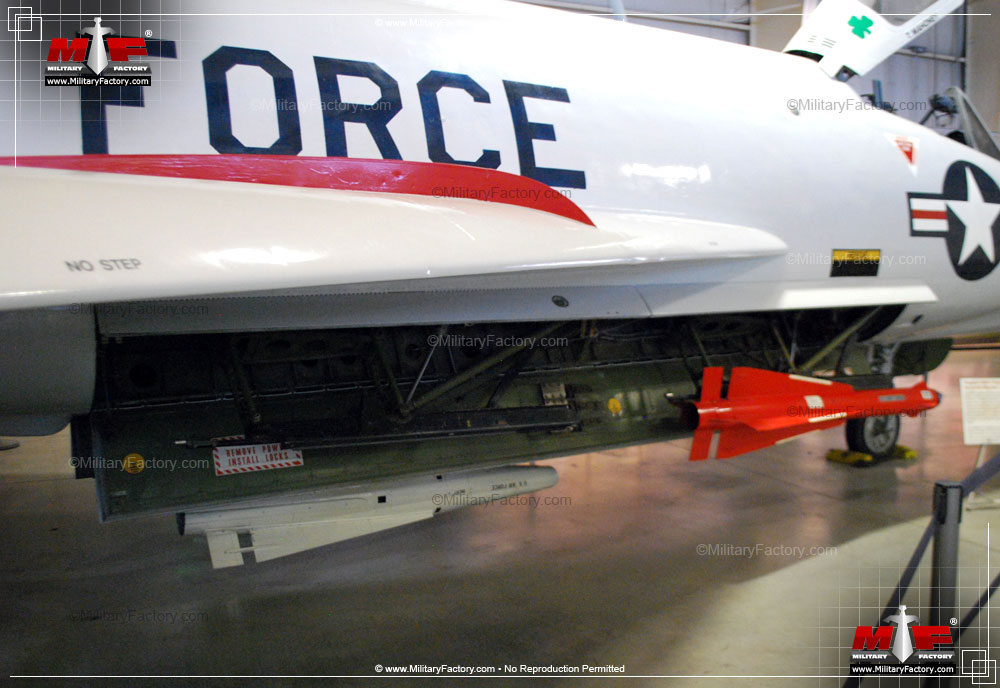
The F-102 stemmed from a USAF request of an "ultimate interceptor" capable of speeds in excess of Mach 2. The system would have to adhere to the strict specifications of the new and highly-touted MX-1179 Electronic Control System. Couple that with the ability for the system to fire off the latest in air-to-air missiles and nuclear weaponry and the line is drawn for all interested parties.
The Convair team developed the YF-102 prototypes from their studies derived in the research of the XF-92 - a German-inspired delta wing design. The initial F-102 was shown to be quite sub par in the speed department, not even capable of super sonic flight as was required of the military program. As such, the designers set to work on revising the existing airframe while taking into account the Pratt & Whitney powerplant size and capability.
The end result was a couple of prototype aircraft that would prove money well spent. The F-102 was designed as the F-102A, a single seat true interceptor, and the F-102B, a dual-seat aircraft maintaining many of the original's design elements. By 1956, the Delta Dagger would become America's very first frontline operational fighter built as a supersonic delta wing airframe.
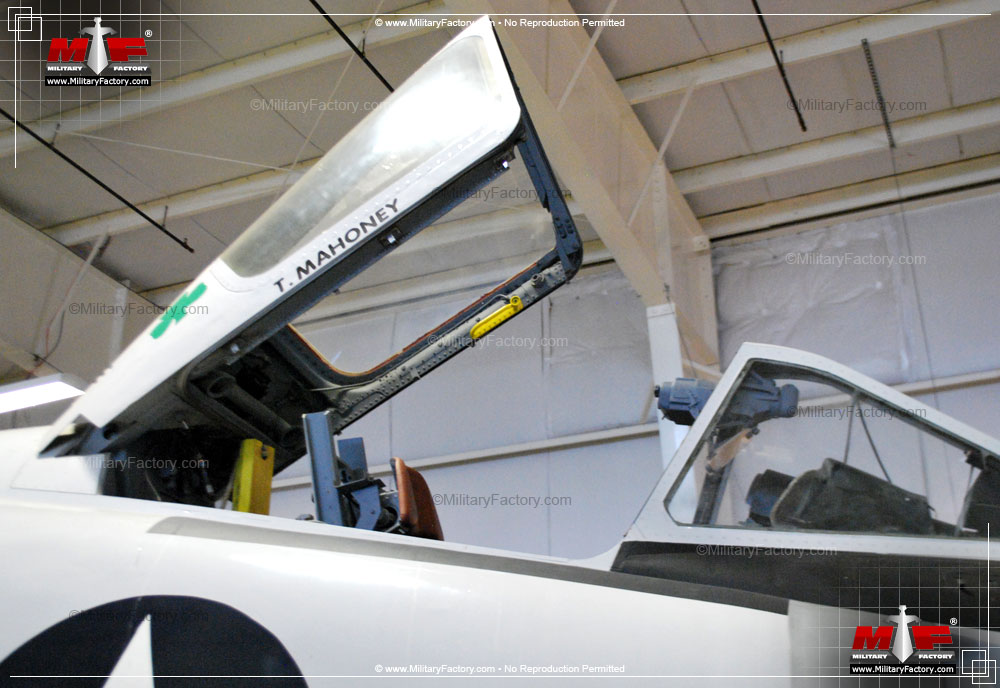
The complexity of the Hughes-produced radar proved too much for early versions of the F-102, as such, it would be later production models that would feature this new and powerful system. The F-102 would be designed with two control sticks - one that would allow for piloting the aircraft in general the other to control the complicated aspects of the onboard radar system. The system itself was capable of tracking an enemy aircraft, allowing the pilot to select the appropriate weapon to which the radar could then direct the pilot and aircraft directly to the target to engage.
The F-102 would fill that role until the more advanced and capable F-106 Delta Dart would take its place. Nevertheless, the F-102 would see frontline duty throughout the early years of the Cold War, particularly in Europe as a Soviet deterent, and become an export product for both Greece and Turkey air defense in similar deterent roles. In the later years of the aircraft's production run, many F-102's would serve as pilot-less target drones for the newly-formed students of the fabled "Top Gun" classes.
Text ©2003-2009 www.MilitaryFactory.com • All Rights Reserved •
No Reproduction Without Permission • Corrections / Comments to MilitaryFactory at Gmail dot com
Last Revision: 9/8/2009
|
| |
|
|
| |
| Specifications for the Convair F-102A Delta Dagger |
Dimensions: |
Length: 68.37ft (20.84m)
Width:38.12ft (11.62m)
Height: 21.19ft (6.46m)
|
Performance: |
About MACH |
Max Speed: 825mph (1,328kmh; 717kts)
Max Range: 1,350miles (2,173km)
Rate-of-Climb: 17,400ft/min (5,304m/min)
Service Ceiling: 54,003ft (16,460m; 10.2miles)
|
|
Structure: |
Accommodation: 1
Hardpoints: 6
Empty Weight: 19,026lbs (8,630kg)
MTOW: 31,500lbs (14,288kg)
|
Powerplant: |
| Engine(s): 1 x Pratt & Whitney J57-P-25 turbojet engine delivering 17,200 lbs of thrust. |
|
Armament Suite: |
6 x Air-to-Air Missiles
2 x 2.75" Rocket Pods (24-shot, unguided rockets)
Nuclear Capable munitions as needed.
|
|
|
| Pictures of the Convair F-102 Delta Dagger |
|
| Special Aircraft Collections |
|
|
| Recent Military Aircraft Additions |
|
| Contacting MilitaryFactory.com |
| We can only get better if you tell us how. You can contact MilitaryFactory.com at MilitaryFactory at gmail dot com (replace "at" with "@" and "dot with ".") with any questions, comments or corrections. We also accept related military imagery that you approve for us to use on our website. Keep in mind, however, that due to volume, we may not directly respond to your inquiry. Please add us to your list of non-blocked recipients! |
|
|

Aircraft Quick Profile |

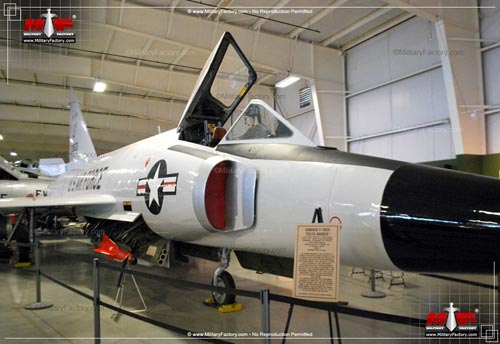
Image courtesy of the United States Air Force Museum.
|
 |
 |
| 1958 |
Designation: Convair F-102 Delta Dagger
Classification Type: Interceptor Aircraft
Contractor: Convair - USA
Country of Origin: United States
Production Total: 986 |
 |
|
Operators: Greece; Turkey; United States
|
|
|
|
| Variants |
XF-92A - Experimental Test Study Aircraft from which the YF-102 is derived from.
YF-102 - Prototype Model Designation (Model 8-80); fitted with 9,700lb Pratt & Whitney J57-P-11 turbojet engine.
YF-102A - Redesigned "Whitcomb Area Ruled" airframe.
F-102A - Initial Production Model Designation
TF-102A - Tandem Seat Trainer Conversion Models
F-102B - Improved Development on base F-102; redesignated and produced as the F-106 Delta Dart.
YF-106A - F-106 Prototype Model Designation of which two were produced.
F-106A - Single Seat Model Designation
F-106B - Two-Seat Model Designation
|
|
|