Global Firepower | Military Industrial Complex | Second World War History
Home | Military Pay Scale Chart | Aircraft | Infantry Weapons | Military Vehicles | Navy Ships | Military Education | French Military Victories | Military Ranks | WW2 Weapons
Military Factory Latest from Military Factory
Thumbnail picture of the Dardo infantry fighting vehicle
Dardo IFV
Thumbnail picture of the Supermarine Scimitar fighter
Supermarine Scimitar
Thumbnail picture of the Centauro B1 8x8 tank killer
Centauro 8x8
Thumbnail picture of the Novi Avion fighter
Novi Avion
Thumbnail picture of the FR F2 bolt-action sniper rifle
FR F2
Thumbnail picture of the Lebel Model 1886 bolt-action rifle
Lebel Model 1886
2009 Military Pay Scale Chart - for Army, Navy, Air Force and Marines
  BY DECADE
    · 1900 to 1909
    · 1910 to 1919
    · 1920 to 1929
    · 1930 to 1939
    · 1940 to 1949
    · 1950 to 1959
    · 1960 to 1969
    · 1970 to 1979
    · 1980 to 1989
    · 1990 to 1999
    · 2000 to 2009
    · 2010 to 2019
    · View All Aircraft
  BY TYPE
    · Attack Helicopters
    · Bombers
    · Close-Support
    · Commercial
    · Dive Bombers
    · Experimental
    · Fighters
    · Floatplanes
    · Flying Boats
    · Fuel Tankers
    · Helicopters
    · Interceptors
    · Multi-Role
    · Navy Aircraft
    · Night-Fighters
    · Recon Aircraft
    · Recon Helos
    · Special Purpose
    · Torpedo Bombers
    · Trainer Aircraft
    · Transport Aircraft
    · Transport Helos
    · UAVs
  WORLD WAR 2
    · Full List
    · 1939
    · 1940
    · 1941
    · 1942
    · 1943
    · 1944
    · 1945
    · Australia
    · Battle of Britain
    · Bombers
    · Britain
    · Dive Bombers
    · Canada
    · Fighters
    · China
    · France
    · Germany
    · German Fighters
    · German Jets
    · Italy
    · Japan
    · Mitsubishi Bombers
    · Poland
    · USA Aircraft
    · USA Bombers
    · Soviet Union
    · Torpedo Bombers
  WORLD WAR 1
    · Full List
    · 1914
    · 1915
    · 1916
    · 1917
    · 1918
    · Aces
    · Austria-Hungary
    · Bombers
    · Britain
    · Fighters
    · France
    · Germany
    · Italy
    · Recon Aircraft
    · Russia
    · USA
  KOREAN WAR
    · Full List
    · Aces
    · Australia
    · USA
    · North Korea
  VIETNAM WAR
    · Full List
    · United States
    · North Vietnam

Military Factory > Military Aircraft > Grumman F6F Hellcat
 
 
More Pictures Cockpit View 3 View Plan QuickGraphs StatsCentral

Grumman F6F Hellcat

The F6F Hellcat was known to make an Ace out of most pilots who flew it.
By Staff Writer

Bookmark and Share

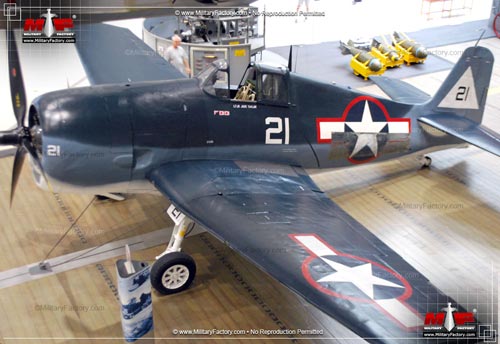
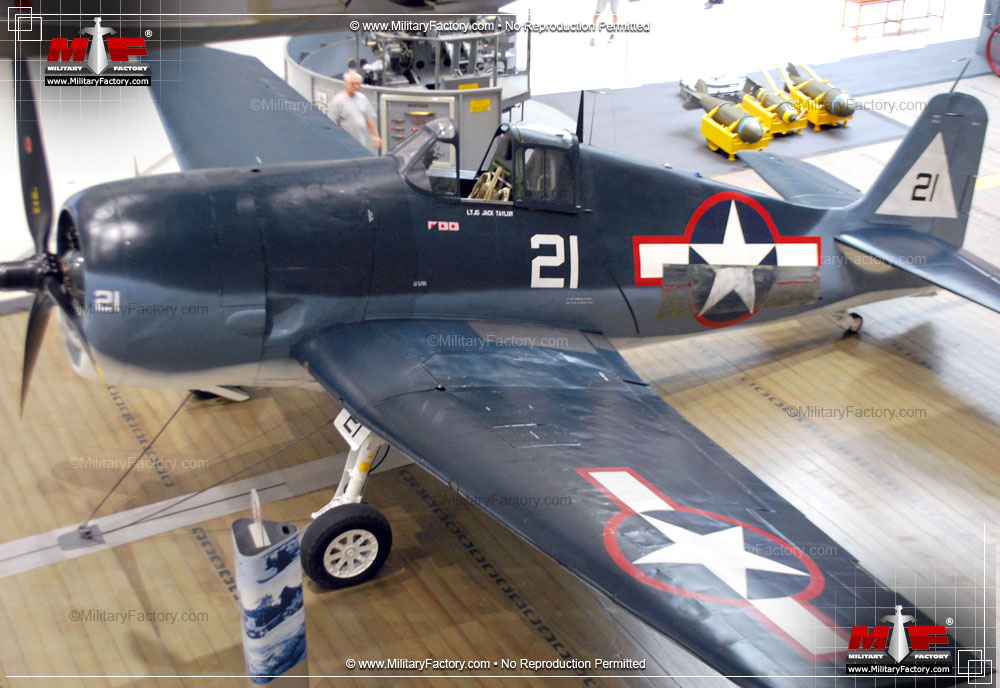
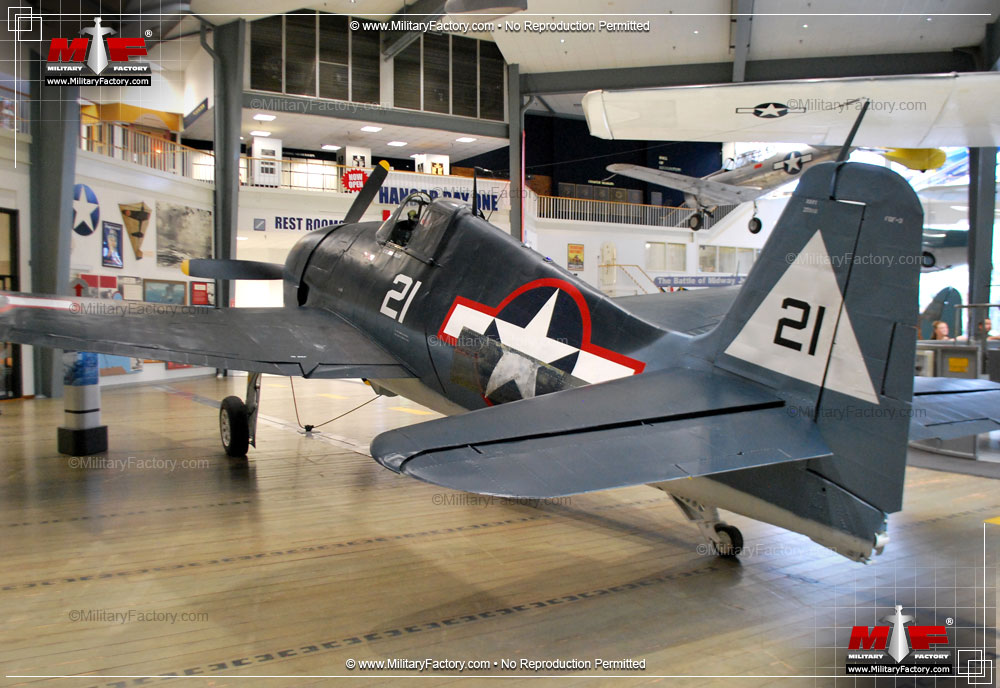
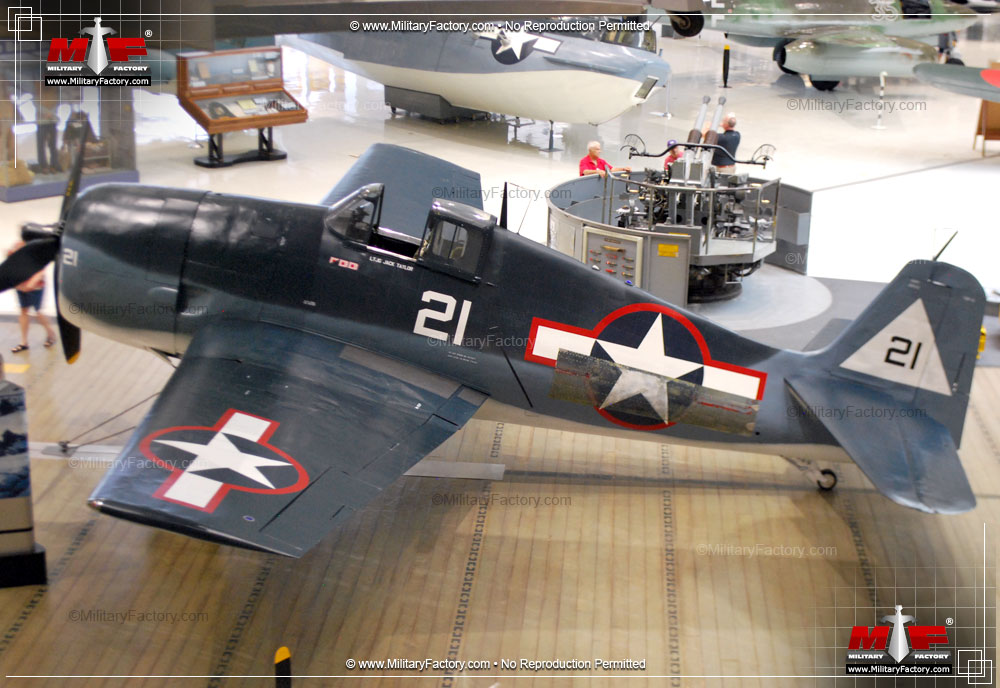
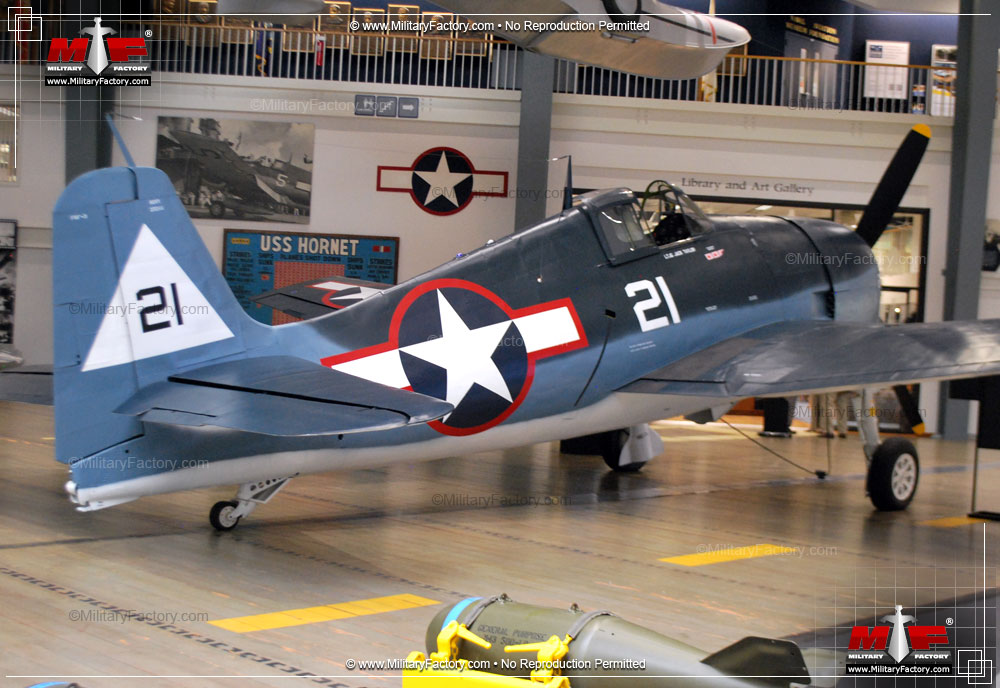
The F6F Hellcat was the successor to - and a logical evolution of – the capable F4F Wildcat series of carrier-borne aircraft fielded by the United States Navy in the Pacific Theater of World War 2. In the conflict, the Hellcat served under the banners of the USN, United States Marine Corp and Britain’s Fleet Air Arm and Royal Navy. The system featured a powerful Pratt & Whitney brand engine, multiple heavy caliber machine guns and the ability to carry conventional bombs and air-to-surface rockets all the while operating from the mobile flattops of the aircraft carriers. The aircraft was known to make aces of most pilots who flew her and total topped 12,275 examples of various models, 11,000 of those appearing in a short 24 months of production.

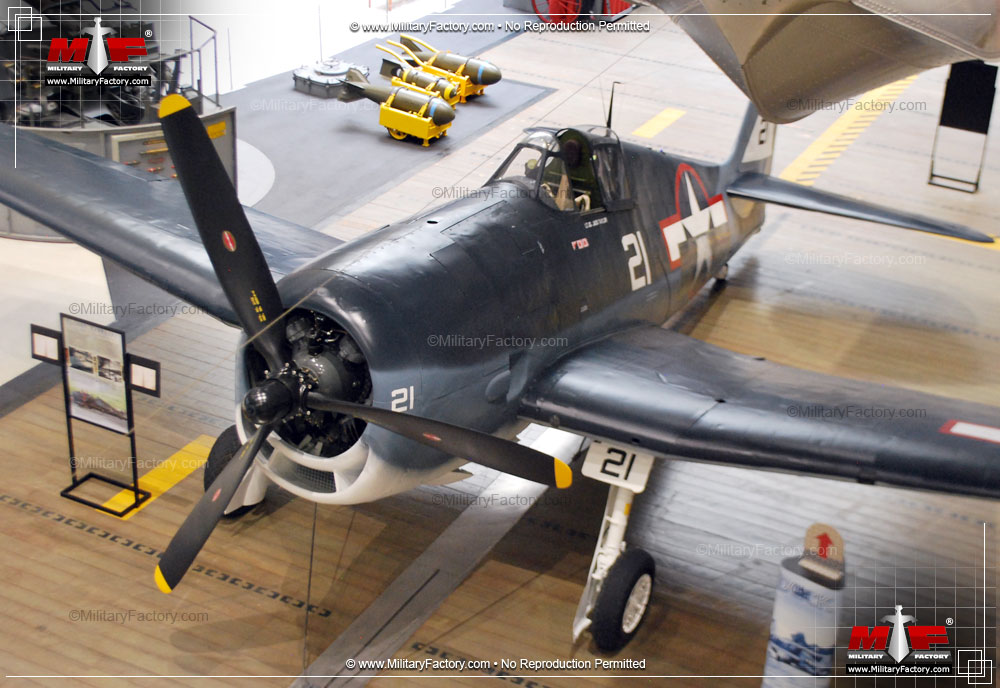
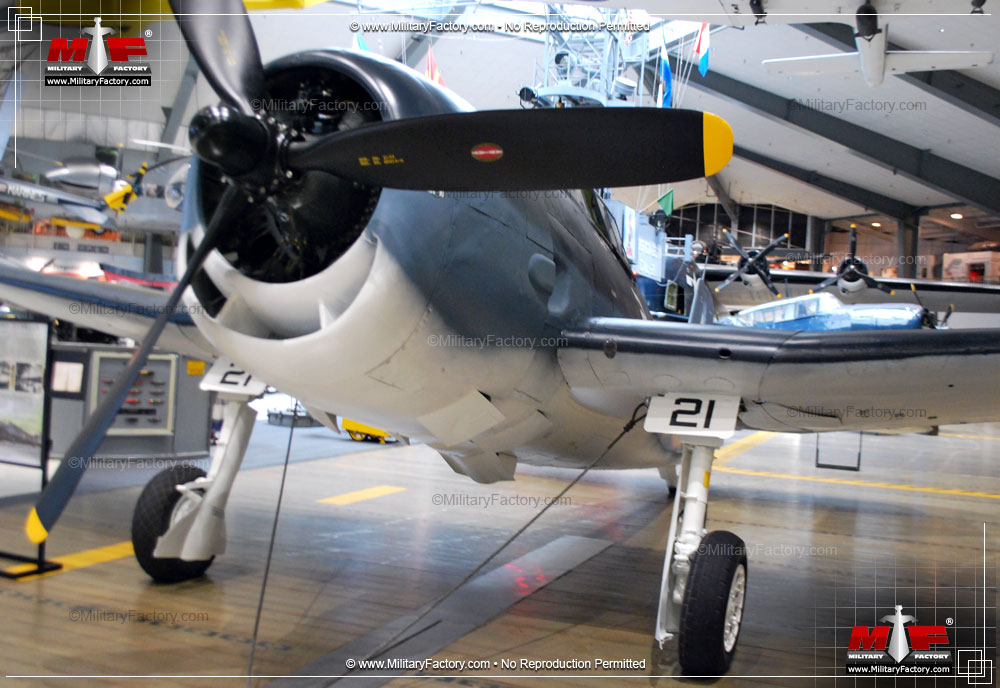
Design of the F6F followed closely the lines of the F4F. Where the F4F was originally intended as a biplane design - and therefore developed the stout look to the fuselage – the F6F was entirely a monoplane fighter from the start. The cockpit was situated just above the low-mounted large wings (as opposed to the mid-mounted ones found on the F4F) and forward in the design, though just aft of the engine placement, and offered up adequate visibility through a framed canopy. Power came from the mighty Pratt & Whitney R-2800 series radial piston engine delivering some 2,000 horsepower and providing speeds in excess of 375 miles per hour. The engine cowling dominated the front of the design while a conventional single-vertical tail surface rounded out the empennage. Landing gear were unique in that they retracted in a backwards fashion.

As with the F4F before it, the F6F featured 6 x 12.7mm (.50 caliber) heavy machine guns in pairs of threes to a wing with 400 rounds to a gun. Additional and optional armament came in the form of air-to-surface explosive rockets (a strike role which the Hellcat excelled at) and conventional drop bombs as needed. A fuel tank could be carried in the centerline fuselage position for improved range. The flexibility and firepower inherent in the system provided a one-two punch when paired with the equally devastating Vought F4F Corsair fighters. The success of the F6F was noted and a nightfighting variant appeared with radar by 1944 and identified by the use of “N” in their designations (as in F6F-3N).

The F6F first flew as the XF6F-1 prototype I June of 1942. The further-developed XF6F-3 prototype was selected to be the initial production model and featured the Pratt & Whitney R-2800-10 Double Wasp two-stage turbocharged engine. The initial production model became the F6F-3 and was available en force by January of 1944. Shortly thereafter, production was switched to the refined F6F-5 model with the new Pratt & Whitney R-2800-10W (“W” indicating “water-injection”) radial piston engine and other aerodynamic and structural refinements along with provisions for underwing munitions.

The Hellcat appeared operationally for the first time in August of 1943 with the Second World War in full swing. She proved her worth, taking part in some of the greatest airborne confrontations in the Pacific – from the Caroline Islands to the Battle of the Philippines (June 19-20, 1944) and beyond. The British received their 252 Hellcat F6F-3 and F6F-5 models under Lend-Lease. No fewer than 75 percent of all enemy aircraft in the entire conflict were at the hands of Hellcat pilots, credited with some 5,156 total kills in the war for a mind-boggling kill ratio of 19:1. 307 Hellcat pilots were made aces thanks to the fine machine. The aircraft were duly noted for their role in supporting Task Force 58 to which some 400 Japanese aircraft were destroyed in a single week.

The F6F series soldiered on in the post-war world, being fielded by French, Argentine and Uruguayan forces. The French used them in anger in their Indo-China conflict while the series as a whole would be used up until the early 1960’s. The last use of F6F’s for the Americans came in the Korean War when six remotely-controlled Hellcats were used as giant aerial bombs on targets in North Korea.

The appearance of the F6F most assuredly changed the tide of the war in the Pacific in favor of the Americans – and the rest of the free world for that matter. The system was noted for its toughness and responsiveness and the kill tally reflected the benefits of the platform. In the end, the F6F lived up to the name of legendary warbird and became one of the single most important reasons that the war in the Pacific turned out the way it did.

Text ©2003-2009 www.MilitaryFactory.com • All Rights Reserved • No Reproduction Without Permission • Corrections / Comments to MilitaryFactory at Gmail dot com

Last Revision: 10/8/2009


  Specifications for the Grumman F6F-5 Hellcat
arrow downDimensions:
Length: 33.79ft (10.30m)
Width:42.65ft (13.00m)
Height: 12.99ft (3.96m)

arrow downPerformance: About MACH
Max Speed: 380mph (611kmh; 330kts)
Max Range: 944miles (1,520km)
Rate-of-Climb: 3,410ft/min (1,039m/min)
Service Ceiling: 37,300ft (11,369m; 7.1miles)

arrow downStructure:
Accommodation: 1
Hardpoints: 2
Empty Weight: 9,059lbs (4,109kg)
MTOW: 12,597lbs (5,714kg)

arrow downPowerplant:
Engine(s): 1 x Pratt & Whitney R-2800-10W Double Wasp air-cooled radial engine generating 2,000hp.
arrow downArmament Suite:
2 x 20mm cannons
4 x .50 caliber machine guns
1 x torpedo
2,150lbs of ordnance

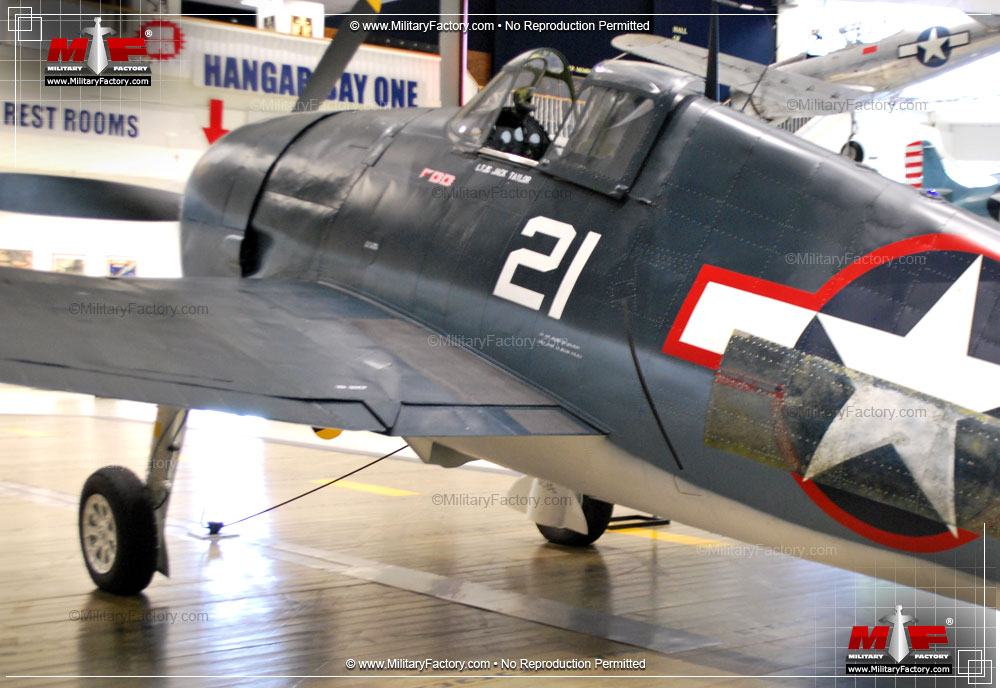
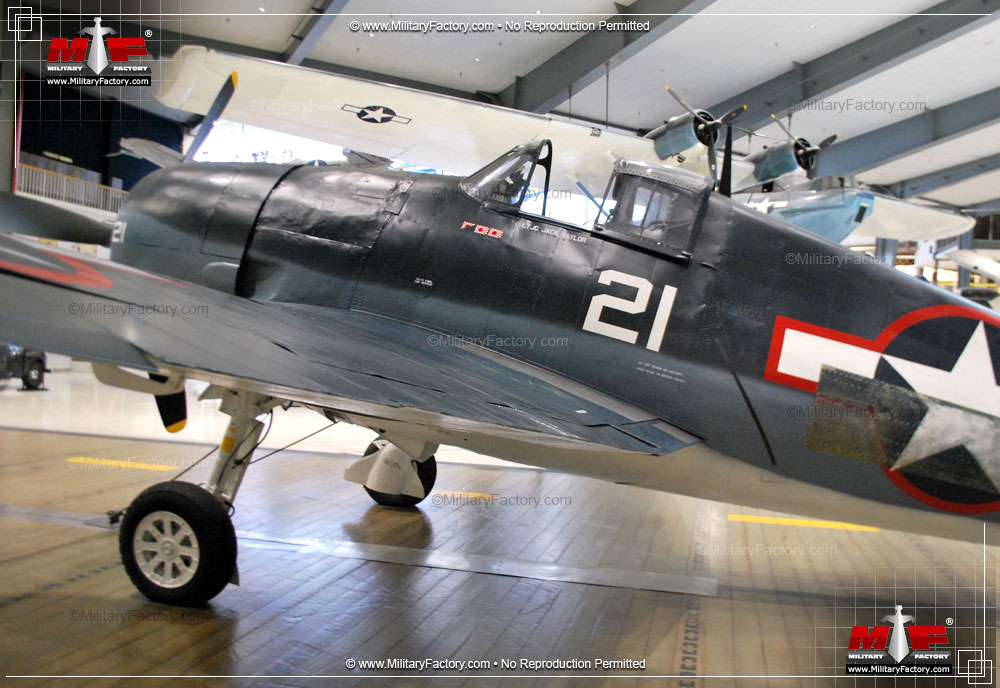
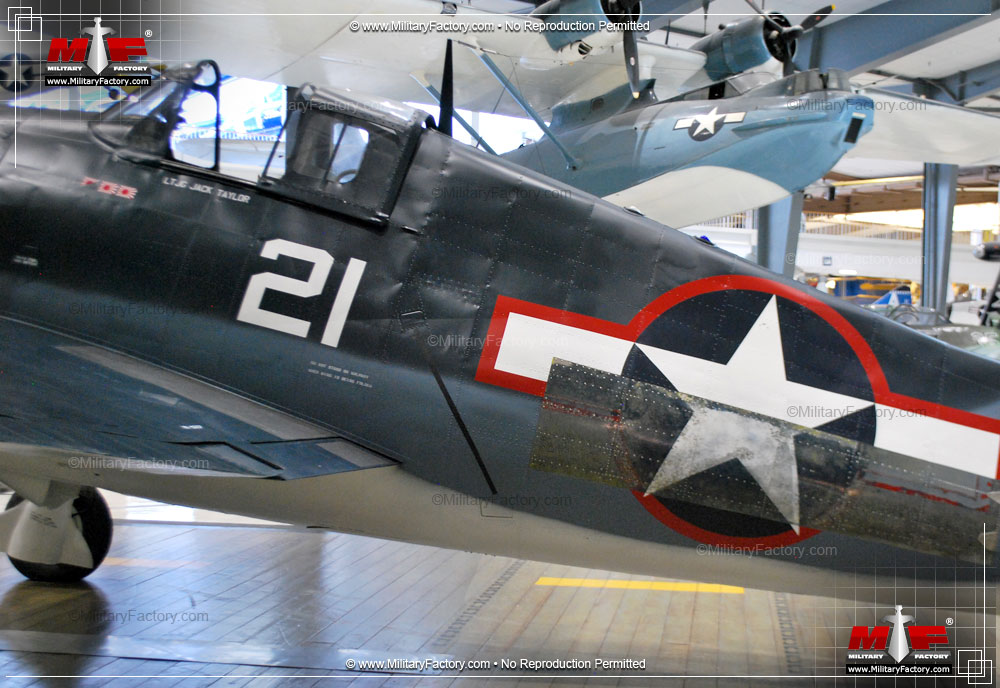
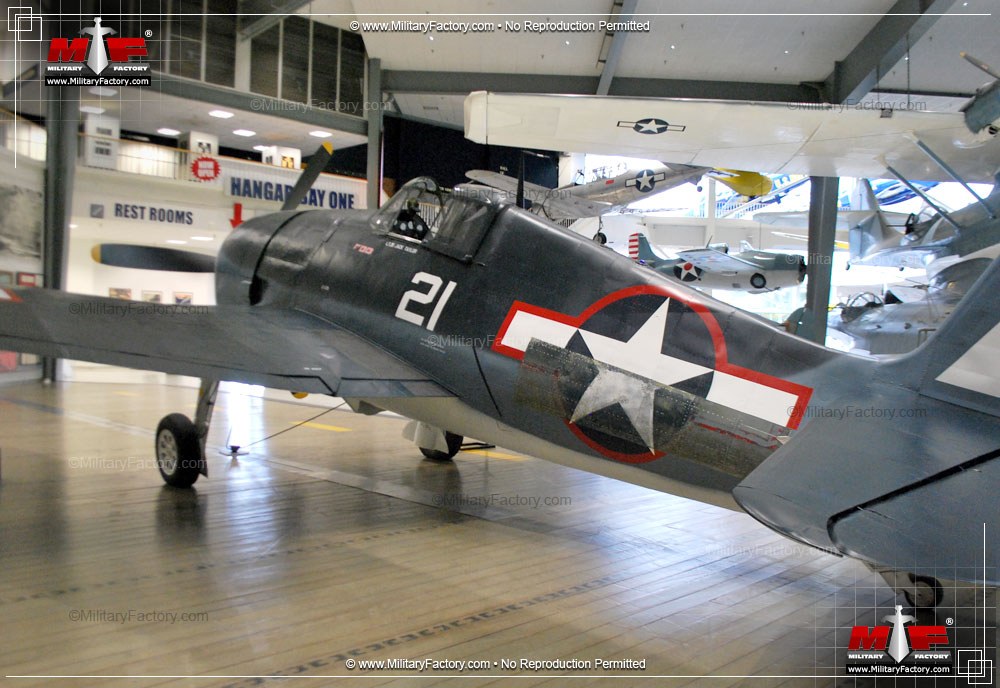
  Pictures of the Grumman F6F Hellcat
     
Picture of Grumman F6F Hellcat
Picture of the Grumman F6F Hellcat
Image of the Grumman F6F Hellcat
     
arrow upView All 13 Images

CompareX2 CompareX4 Conversions Dictionary Acronyms

Compare and Contrast Military Aircraft Specifications

  Special Aircraft Collections
Aircraft by Conflict:
Falklands War
Indo-Pak War
Operation Allied Force
Operation Desert Storm
Six Day War
Yom Kippur War

Special Collections:
American X-Planes
Classic US Warbirds
Grumman "Cats"
Indian Air Force
Israeli Air Force
Mikoyan-Gurevich
V-Bombers


Korean Air War:
Korean War Aircraft
Aces
Australia
United States
North Korea

Vietnam Air War:
Vietnam War Aircraft

Cold War
Cold War Aircraft
United States
Soviet Union
Soviet Bombers of the Cold War

Modern Aircraft
Modern Military Aircraft
United States

Miscellaneous
MiG-15 Versus Sabre
Top 10 Fighters of All Time


  Recent Military Aircraft Additions
Thumbnail picture of the Supermarine Scimitar fighter
Supermarine Scimitar
Thumbnail picture of the Novi Avion fighter
Novi Avion
Thumbnail picture of the Arado Ar TEW 16/43-23 jet-powered fighter
Arado TEW 16/43

  Contacting MilitaryFactory.com
We can only get better if you tell us how. You can contact MilitaryFactory.com at MilitaryFactory at gmail dot com (replace "at" with "@" and "dot with ".") with any questions, comments or corrections. We also accept related military imagery that you approve for us to use on our website. Keep in mind, however, that due to volume, we may not directly respond to your inquiry. Please add us to your list of non-blocked recipients!
Flying Boats

  Aircraft Quick Profile


Picture of the Grumman F6F Hellcat
Image courtesy of Dan Alex.

flag of United States
1943

Designation: Grumman F6F Hellcat
Classification Type: Carrier-Borne Fighter-Bomber
Contractor: Grumman Corporation - USA

Country of Origin: United States
Production Total: 12,272

Operators: Argentina; France; United Kingdom; South Vietnam; Uruguay; United States


  Variants
YF6F - Prototype Designation

YF6F-1 - First prototype to fly

YF6F-2

YF6F-3 - Third Developmental Prototype and selected as base production model.

F6F-3 - Official production designation based on YF6F-3 variant.

Gannet Mk 1 - Early British designation for F6F-3 (later redesignated as Hellcat Mk 1).

F6F-3E - Special radar equipment installed.

F6F-3N - Dedicated Nightfighter Variant

F6F-5 (Hellcat Mk III) - Refined airframe; Radial engine with water injection system for power-assisted takeoffs and combat.

F6F-5K - Explosive-laden remotely piloted attack drones used in the Korea War.

F6F-5N (Hellcat NF.Mk II) - Nightfighter variant.

F6F-5P - Photographic Reconnaissance Variant

Hellcat Mk II - British Designation for F6F-5.

Hellcat NF.Mk II - British Designation for F6F-5N nightfighter.

  Collections
  • Sons of Empire - WW2 Aircraft of Japan
  • Aircraft of the Battle of Britain
  • X-Planes Throughout History
  • French Aircraft of the Great War
  • The German Luftwaffe in World War 2
  • Nightfighters - In a Class All Themselves
  • The Top Ten Fighters of All Time
  • Carrier "Born" Aircraft - Navy Mounts
  • If Boats Could Fly - Flying Boat Aircraft


Free GI Bill Guide

Top MF Stuff: Military Pay Scale Chart | Military Ranks | World War 2 Weapons | Sniper Rifles | Conversion Calculators


©2009 www.MilitaryFactory.com • Content ©2003-2009 MilitaryFactory.com • All Rights Reserved • Disclaimer Privacy Policy Site Map Origins
Most photographic images appearing on this site are courtesy of the United States Department of Defense and are approved for public use.
Other images acquired through the public domain. Digital art work courtesy of Dan Alex.
Business Consulting by Kyle Williams

Material presented throughout this website is for historical and entertainment value and should not to be construed as usable for
hardware restoration, maintenance or general operation. Please consult manufacturers for such information.

Site Contact: militaryfactory at gmail dot com (replace "at" with "@" and "dot" with ".") eXTReMe Tracker