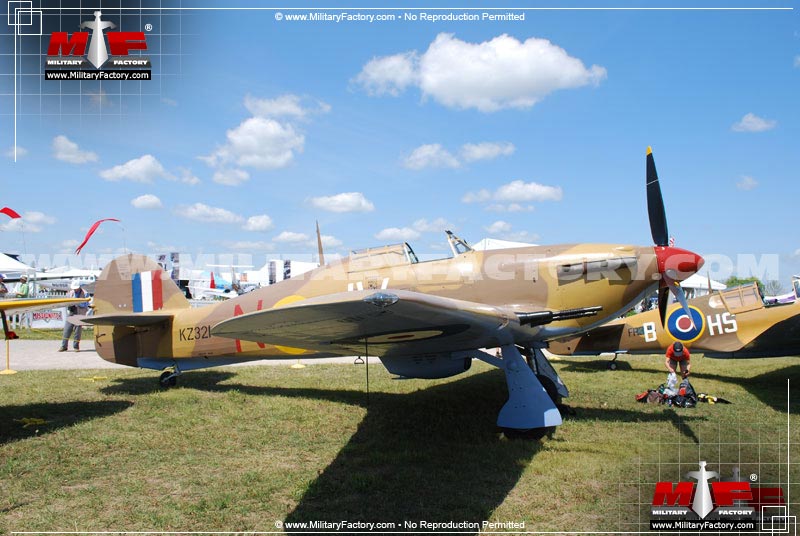
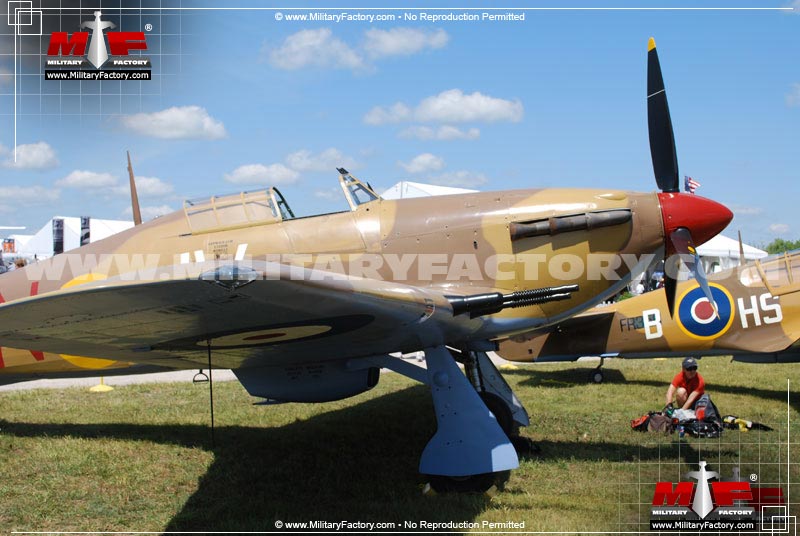
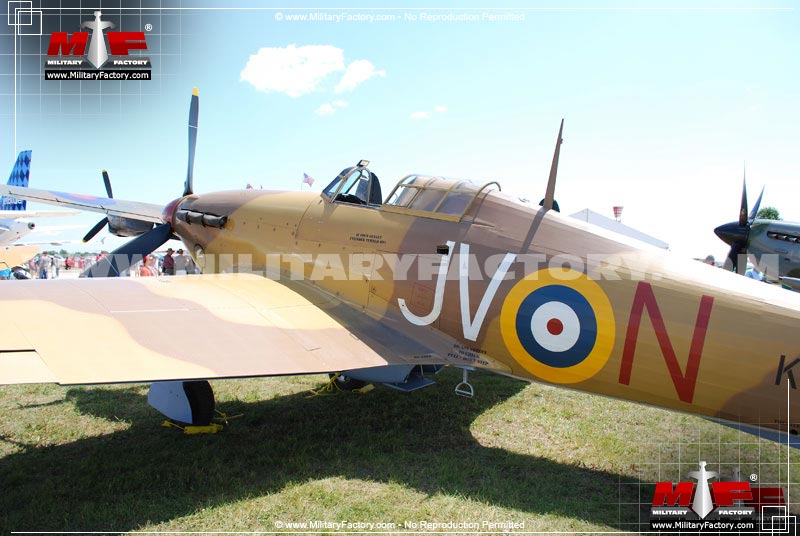
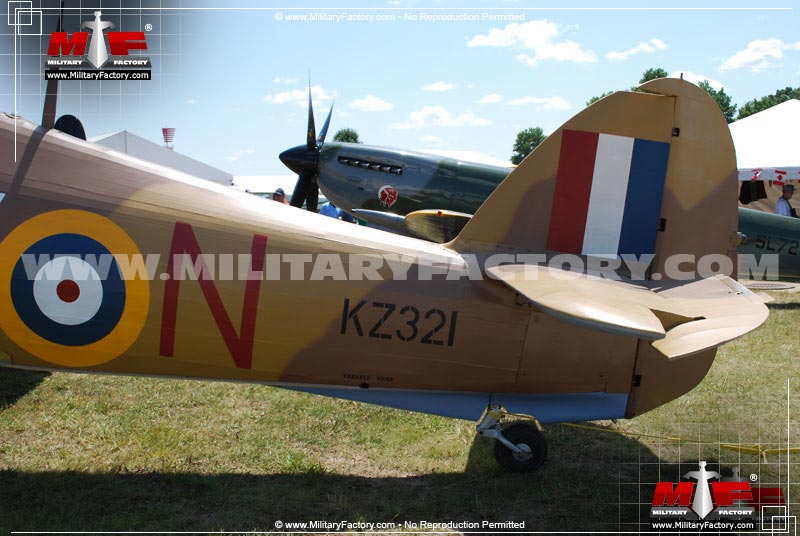
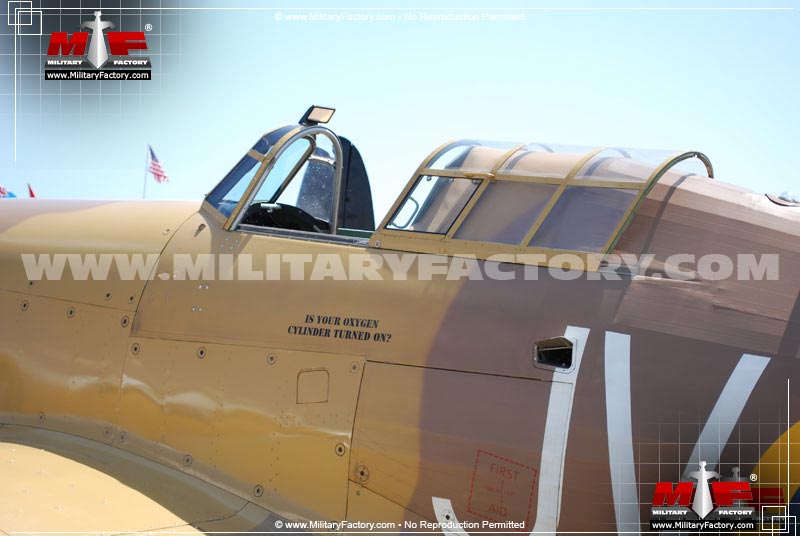
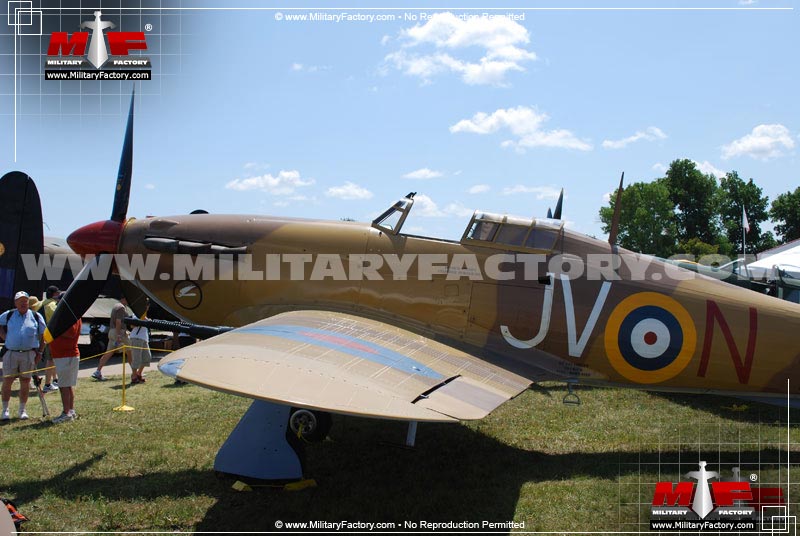
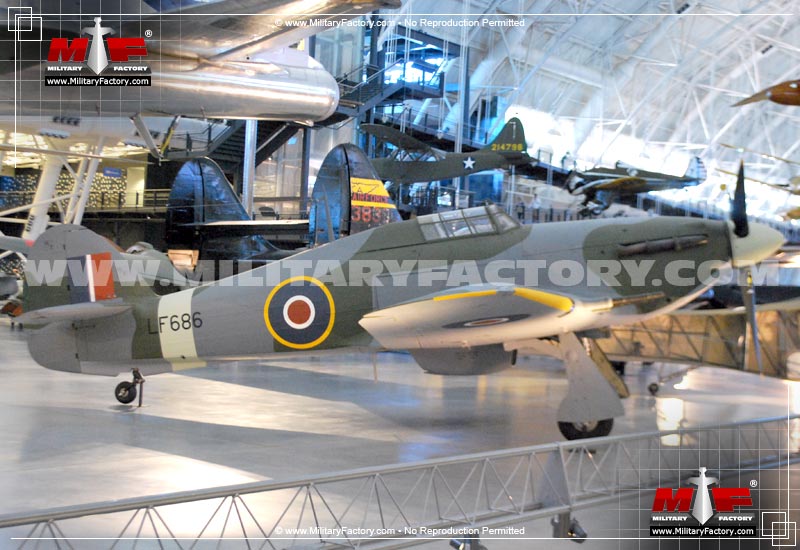
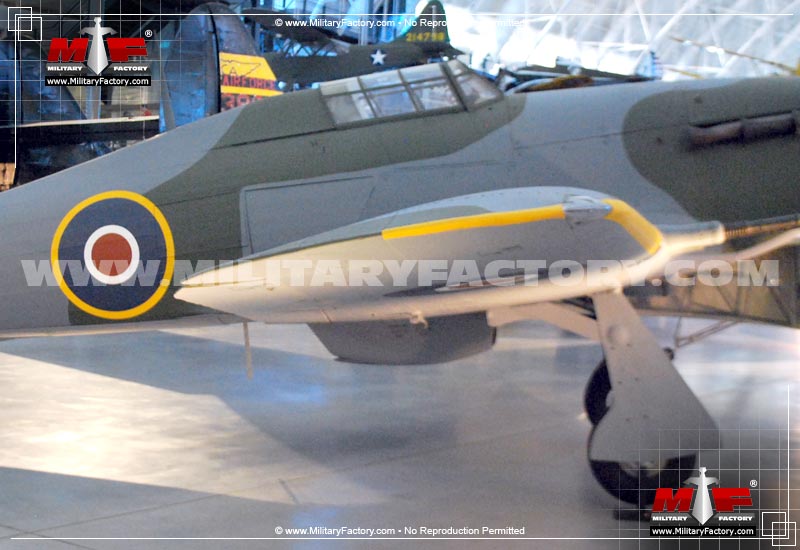
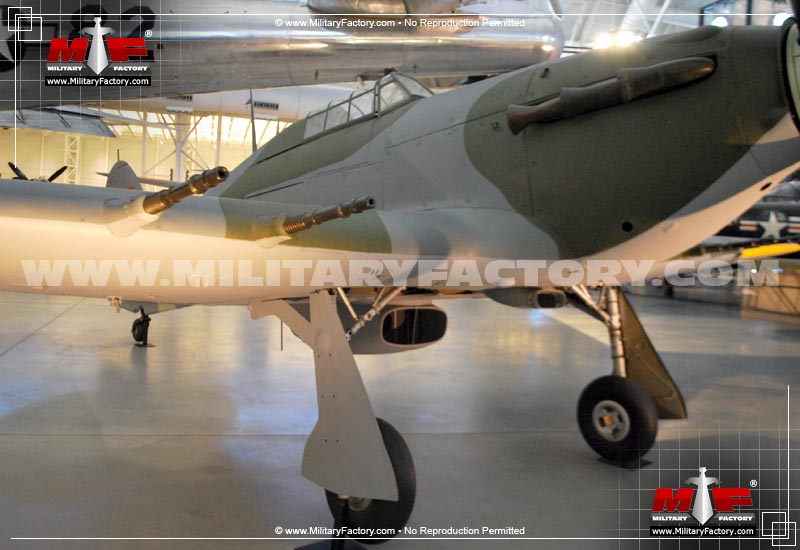
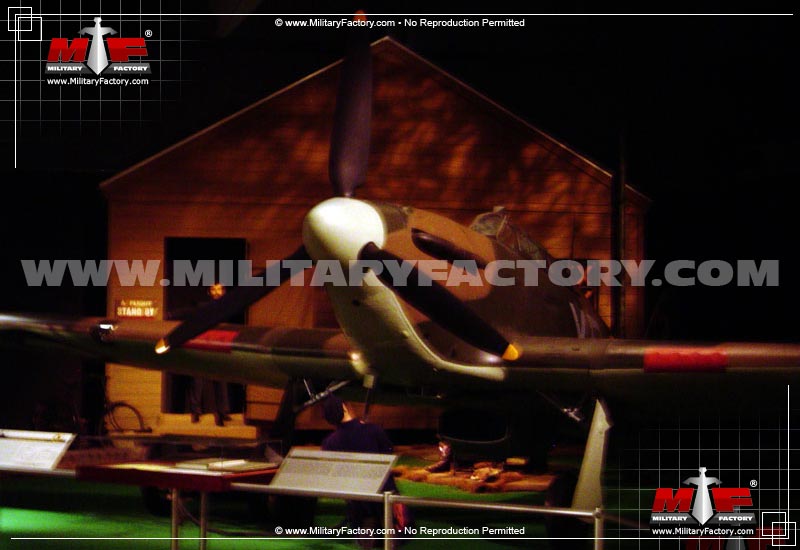
The Hawker Hurricane was indeed the true star of Britain's march against the Third Reich. Often overshadowed by the sleeker and sexier Supermarine Spitfire, the Hurricane system evolved from the Hawker "Fury Monoplane" as it was called. The Hawker Hurricane maintained the internal metal tubing and fabric covering found in earlier Hawker designs and was a stepping stone of aircraft design in the inter-war years up until the universal use of all-metal construction. In many ways, the Hurricane represent an evolved version of the Fury biplane in monoplane form.
Not known as the "Hurricane" officially until 1936, the first models of this new aircraft flew as early as 1935 and were placed into production almost immediately. From there, the Hawker Hurricane would become England's symbol of Britain’s resistance to German incursion in the Battle of Britain and see combat from Europe and North Africa to the Middle East and the Pacific. In fact, the Hurricane series of aircraft would account for more enemy aircraft kills than any other aircraft system in the Battle of Britain. Very much in the vein of the American-made Curtiss P-40 Warhawk, the outclassed Hurricanes would nevertheless make a name for themselves as a "do everything" fighter, relying moreso on the skill of her pilots than on the technology and capabilities presented by the limited system.
The Hurricane's development progressed alongside the necessities of war. From the original 8 x .303 caliber machine gun-carrying Hurricane spawned a myriad of variants that included a 12 x .303 caliber machine gun version, a 4 x 20mm cannon variant and a tank-busting model armed with two powerful 40mm cannons. The 20mm cannon derivative would be highly regarded by war’s end for the powerful “punch” that the single-engine aircraft could provide advancing fronts.
The Hurricane Mk IIB would be fitted with wing racks allowing for the carrying of drop bombs of various lethality and fuel tanks for increased range. Refinements in the production cycle of the aircraft would eventually produce a "universal wing" system (introduced with the arrival of the Hurricane Mk IV) that allowed the various newer Hurricane models to switch combat roles with minor battlefield modifications. This new wing element allowed for the carrying of external fuel drop tanks but more importantly paved the way for the use of air-to-surface high explosive rockets.
Though outclassed by its German and Japanese counterparts as a straight-line fighter, the adaptability and reliability of the system proved to be priceless in other roles - particularly in the hands of a pilot experienced in the limitations of the Hurricane system. Used throughout the war by a plethora of nations, the Hurricane would see combat throughout the end of the war in the Pacific with equal success, bringing an end to the resume of one of the greatest fighters ever produced.
We can only get better if you tell us how. You can contact MilitaryFactory.com at MilitaryFactory at gmail dot com (replace "at" with "@" and "dot with ".") with any questions, comments or corrections. We also accept related military imagery that you approve for us to use on our website. Keep in mind, however, that due to volume, we may not directly respond to your inquiry. Please add us to your list of non-blocked recipients!
Aircraft Quick Profile:
Image courtesy of Dan Alex.
1937
Designation:Hawker Hurricane Classification Type:Fighter / Ground Attack Aircraft Contractor:Hawker Industries - UK Country of Origin: United Kingdom Production Total: 14,231
Operators: United Kingdom; Turkey; Canada; Belgium; Yugoslavia
Variants
Mk I - Fitted with 8 x 7.7mm machine guns and Rolls-Royce Merlin II inline piston engine generating 1,030hp; two-blade propeller system; Later fitted with Merlin III at 1,029hp and three-blade propeller; 3,164 produced.
Mk II - Fitted with Merlin XX 1,280hp engine of which 6,656 were produced.
Mk IIA - 8 x 7.7mm machine guns.
Mk IIB - 12 x 7.7mm machine guns; provisions for underwing bombs.
Mk IIC - Based on Mk IIB model but fitted with 4 x 20mm cannons.
Mk IID - Anti-tank model fitted with 2 x 40mm cannons.
Mk IV - Final production version fitted with Merlin 24 or 27 1,620hp powerplants; featured "universal" wing assembly that could make use of any wing armament combinations.
Sea Hurricane Mk I - Base Hurricane conversions for naval use.
Sea Hurricane Mk II - Base Hurricane conversions for naval use.
Mk X - Canadian-produced sub-variant Hurricanes of which 140 made.
Mk XI - Canadian-produced sub-variant.
Mk XII - Canadian-produced sub-variant.
Most photographic images appearing on this site are courtesy of the United States Department of Defense and are approved for public use.
Other images acquired through the public domain.
Digital art work courtesy of Dan Alex. Business Consulting by Kyle Williams
Material presented throughout this website is for historical and entertainment value and should not to be construed as usable for
hardware restoration, maintenance or general operation. Please consult manufacturers for such information.