Military Factory
Military Pay Chart
Global Firepower
Military Industrial Complex
Second World War
Home
Military Pay Scale
Military Ranks
Small Arms
Aircraft
Land Systems
Navy
Education
Military Factory Facebook Logo
flag of United States

Douglas C-47 Skytrain / Dakota Transport (1940)

Authored By Staff Writer | Last Updated: 12/5/2011

The Douglas C-47 Skytrain was perhaps the most famous transport aircraft of the Second World War.

Find a School Near You
Follow Military Factory on Facebook:
Trending on Military Factory:
Recent Articles:
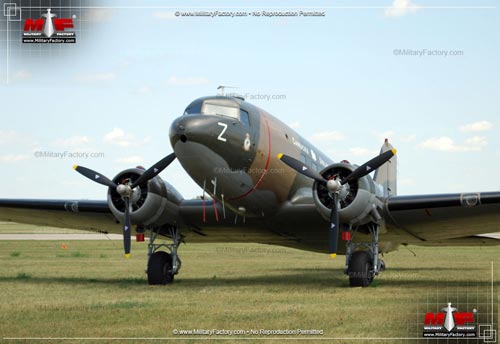
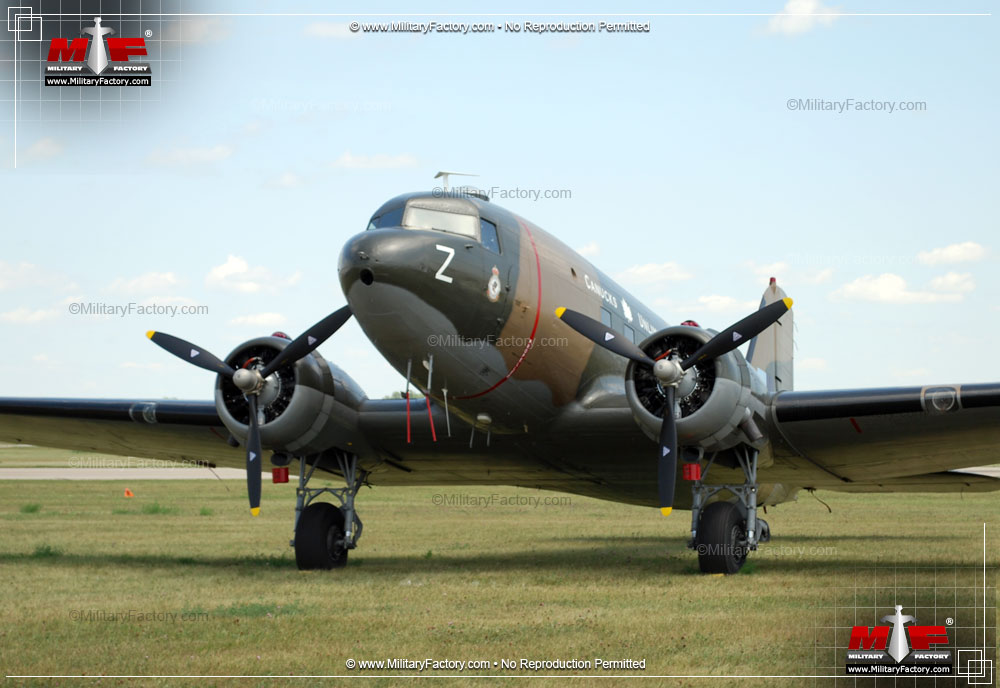
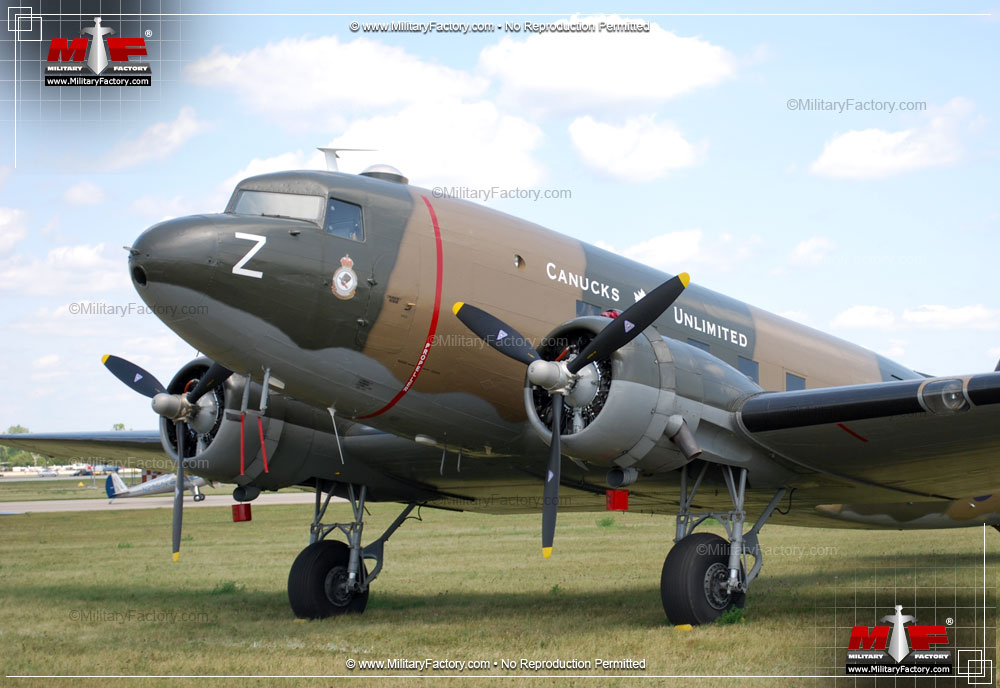
The C-47 Skytrain was a product of the Douglas Aircraft Company and is regarded as the best transport of World War 2. Interestingly enough, the Skytrain was first born as a civilian passenger airliner in the DC-3 model and began operations in the 1930s, setting new levels of performance for any commercial aircraft of the time. The system would become an instrumental component to the American war effort in the Second World War as the C-47 Skytrain platform with its eventual introduction into service by late 1940. From there, the system would continue to serve throughout the war and beyond, seeing service with a variety of nations and in a variety of combat and peace time roles.

With its introduction into war development, the DC-3 was modified from commercial airline to military transport. Chief among the changes were the revising of the passenger cabin to include seating for up to 27 combat-ready personnel. This accommodation was accomplished by the removing of the airliner-style seats and the implementation of utilitarian seating on either side of the cabin in the form of bucket seats. Other notable peacetime to wartime changes included the fitting of Pratt & Whitney radial-piston engines in place of the Wright Cyclones found in the DC-3. The initial production was delivered with the designation of C-47 and the appropriate identifier of "Skytrain". No sooner were 93 examples of the base C-47 produced before the line evolved to producing the C-47A, made notable by the improved electrical capacity for onboard systems. One of the more definitive production marks in the series was later born with the C-47B which featured improved performance engines and were earmarked for work in South East Asian theaters. This particular model featured high-altitude capabilities, making it ideal for the required flights to China from the US and was also developed into a trainer with the designation of TC-47B.

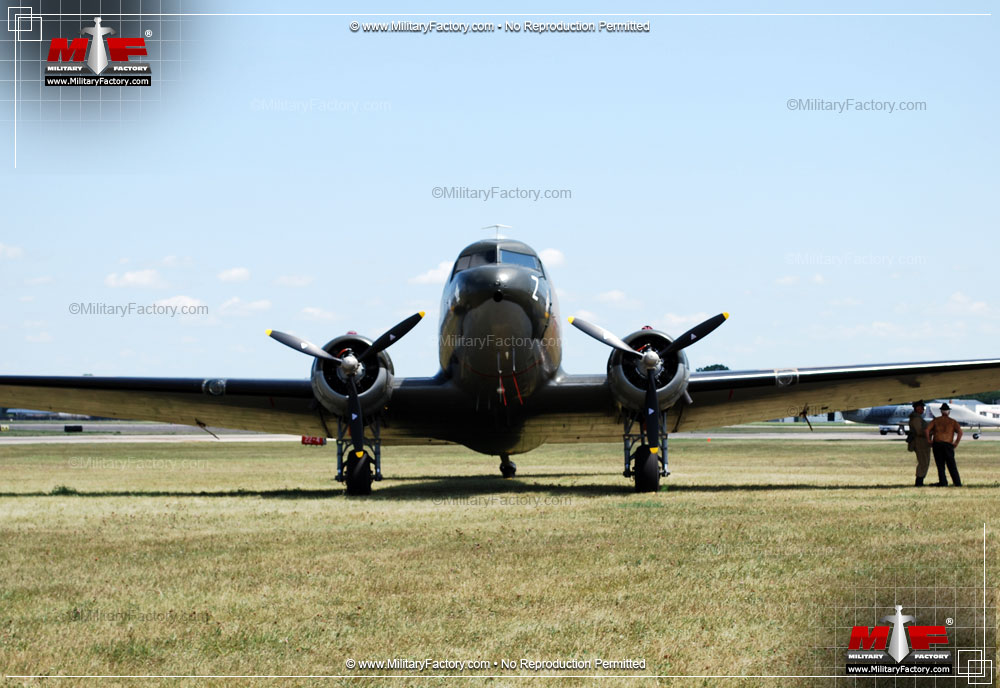
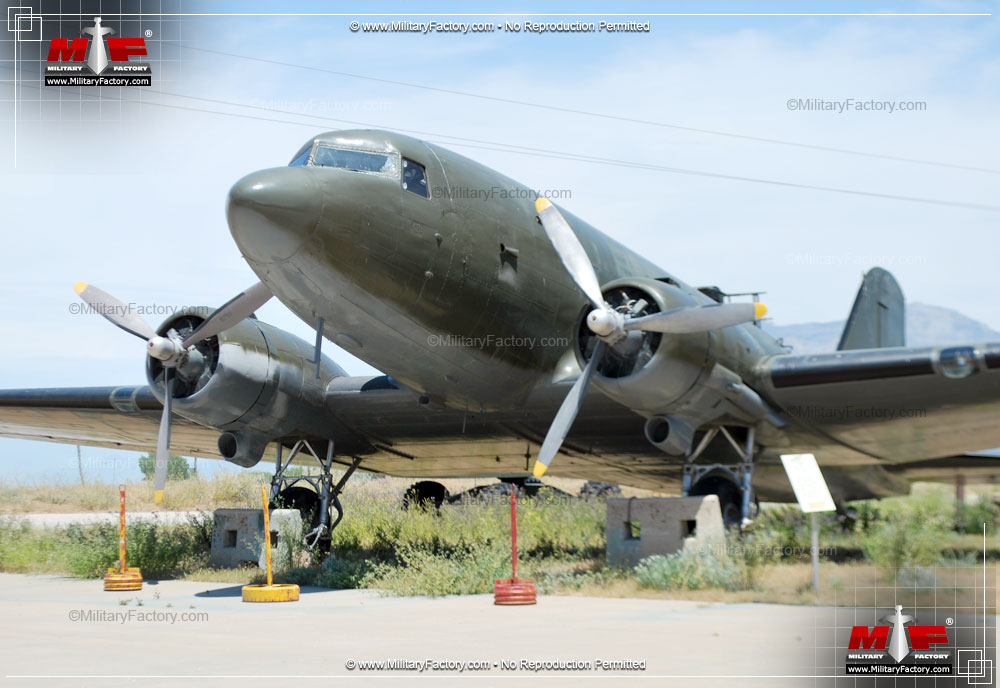
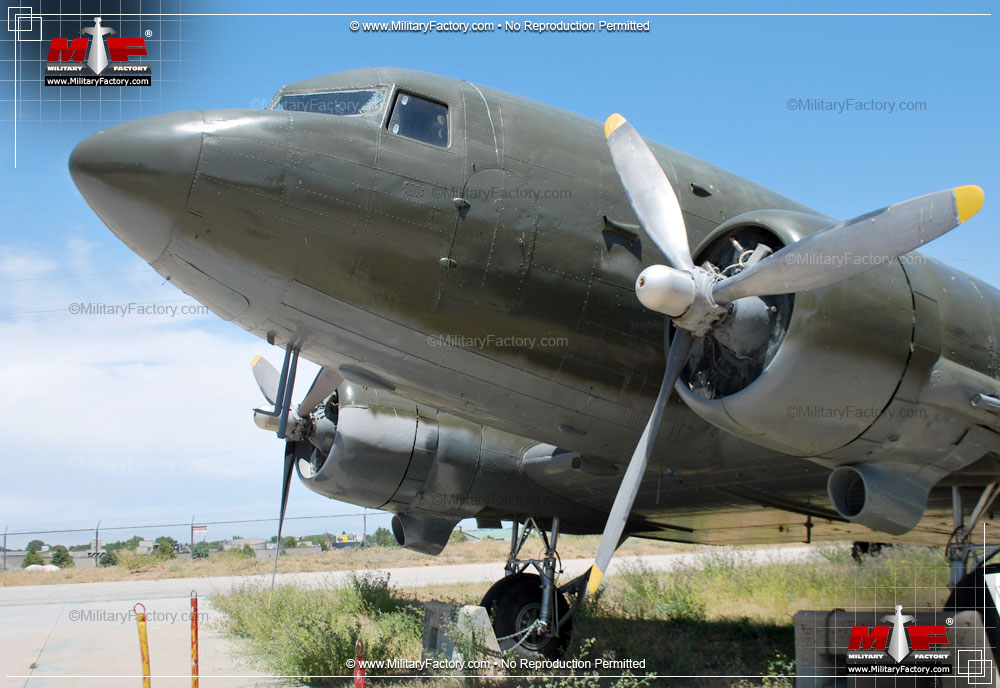
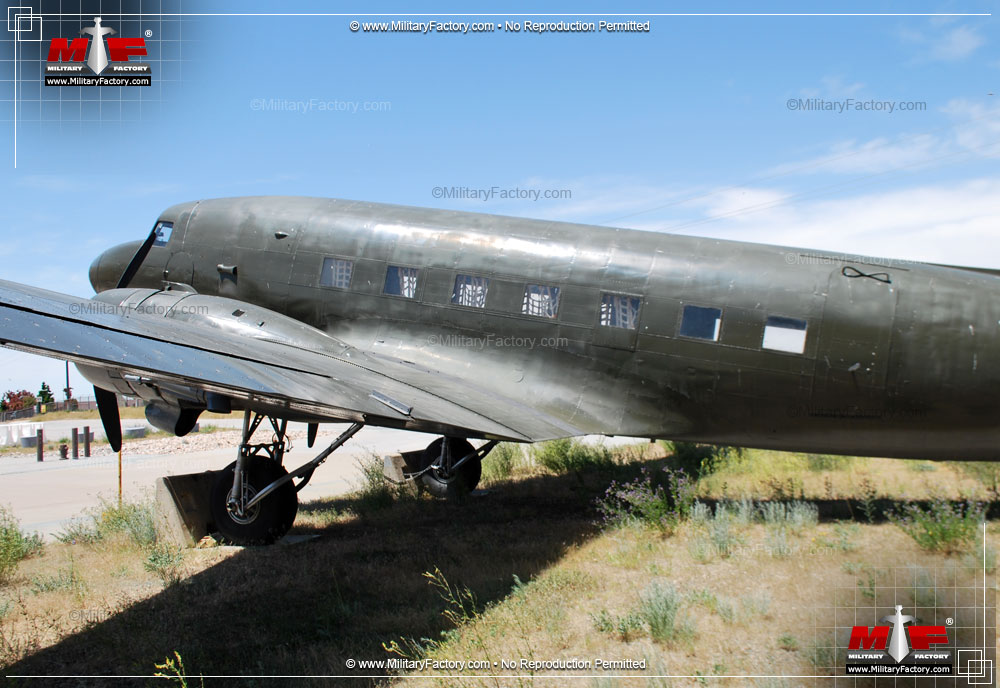
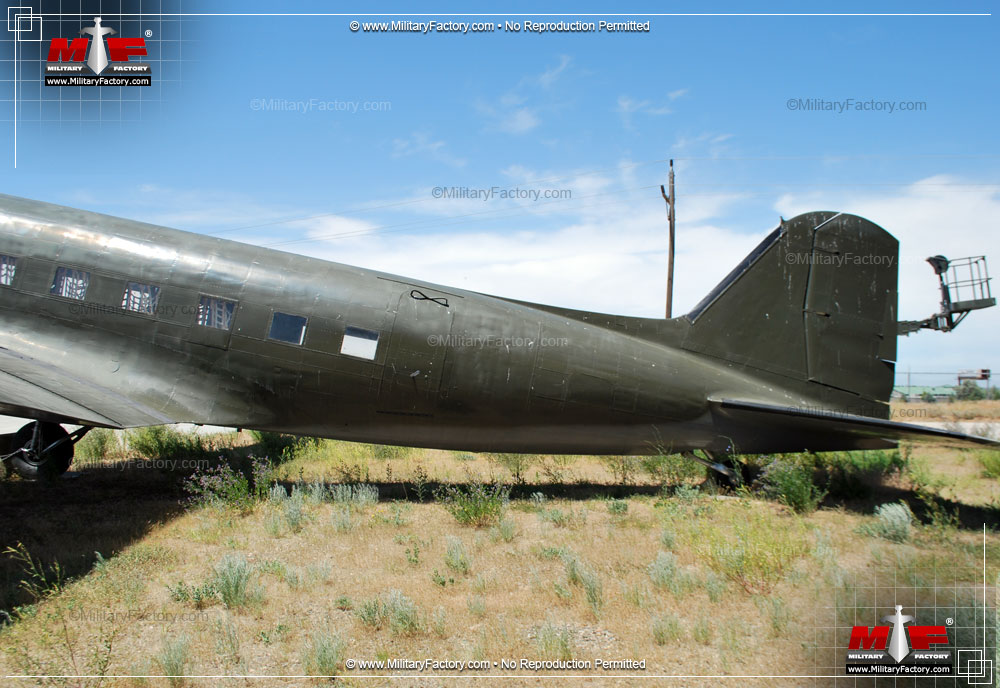
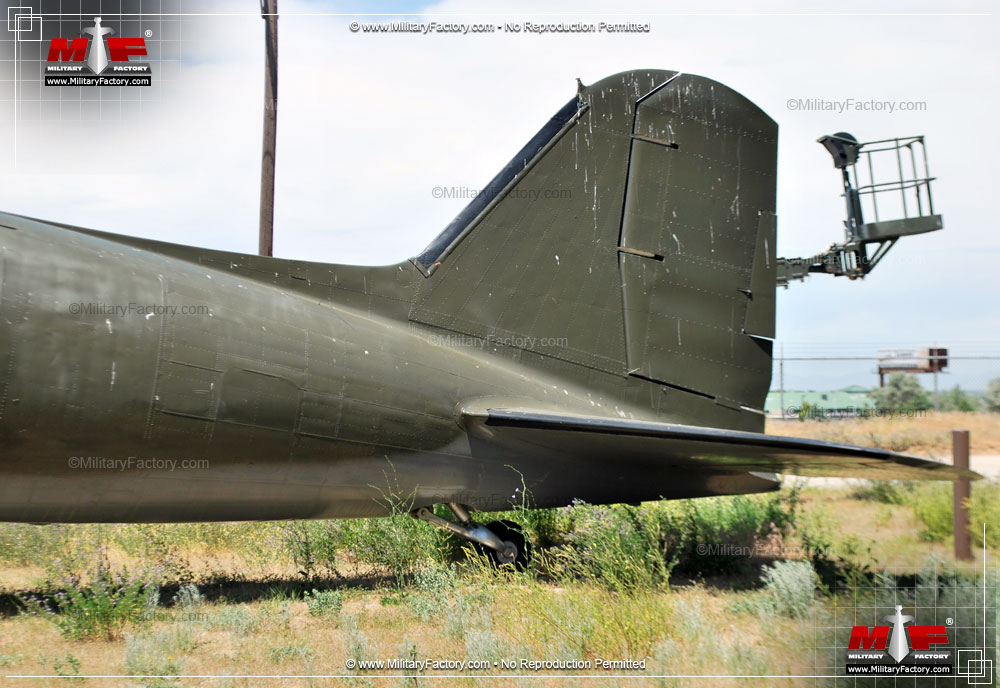
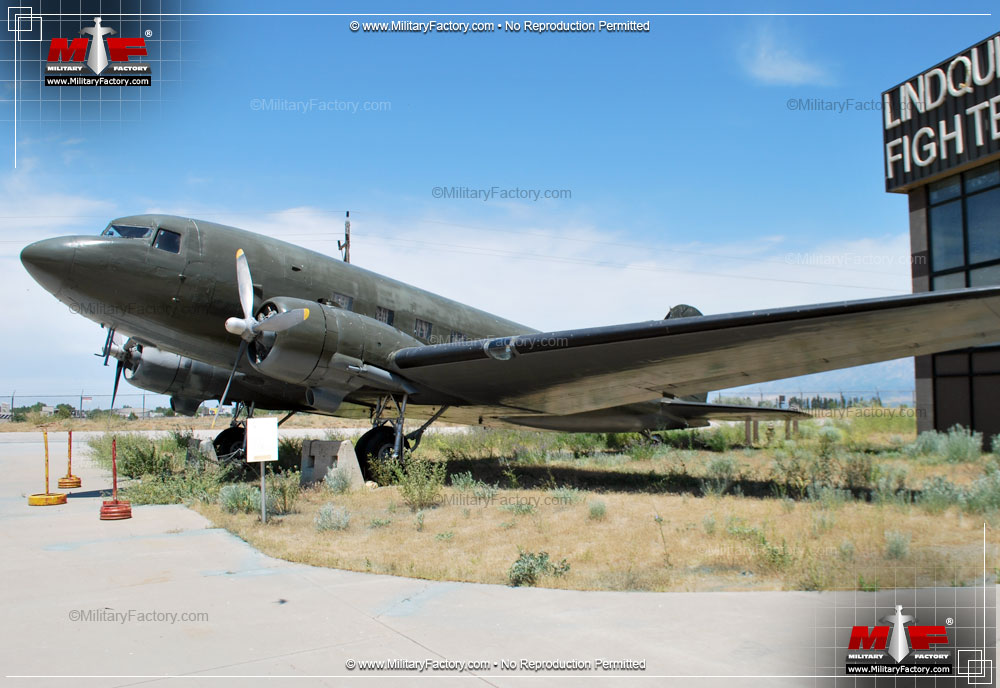
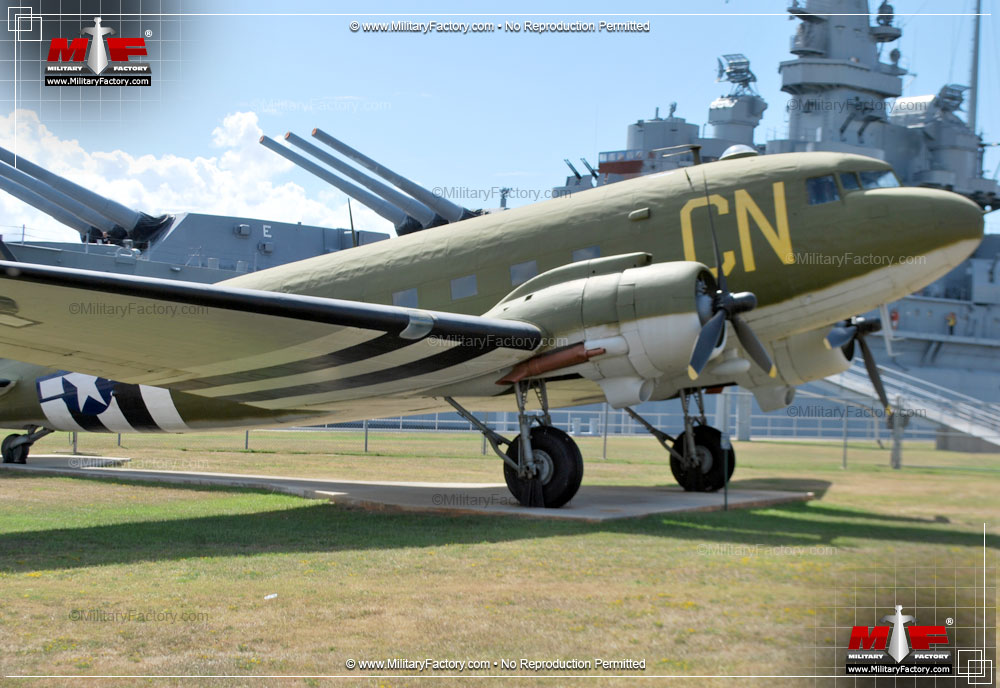
Externally, the C-47 was of a fundamental shape, featuring smooth rolling contours, a low-monoplane wing set, tubular cabin and a single vertical tail surface. Two engines were mounted at each wing leading edge and provided some 1,200 horsepower each. The pilot and co-pilot sat at the extreme front of the fuselage with an observation blister directly behind the cockpit. Entry/exit doors were situated at the forward and aft fuselage sides. The aircraft as a whole was duly noted for its ability to withstand extreme amounts of damage and still keep aloft.

The C-47 Skytrain appeared in similar and varied forms with the US Navy (as the R4D), the British Royal Air Force (as "Dakota" marks), the Soviet Air Force (produced by Lisunov as the Li-2 and with Japan as the L2D. In all, over 12,000 examples were produced with the series seeing use up into the 1960s. The Skytrain also earned the affectionate nicknames of "Gooney Bird" and "Old Bucket" during its heyday. In both civilian travel and military transport, the Skytrain airframe proved to be up to the task making it one of the more influential aircraft designs of all time and undoubtedly contributed immensely to the Allied war effort and its ultimate victory. The C-47 was also used in quantity during the Berlin Airlift of 1948 - 1949.
Text ©2003-2013 www.MilitaryFactory.com • All Rights Reserved • No Reproduction Permitted
MilitaryFactory.com does NOT sell equipment/weaponry. Material presented throughout this website is for historical and entertainment value and should not to be construed as usable for hardware restoration, maintenance or general operation. Please consult manufacturers for such information. Our disclaimer. Email corrections / Comments to MilitaryFactory at Gmail dot com.
Picture of Douglas C-47 Skytrain / Dakota
Pic of the Douglas C-47 Skytrain / Dakota
Image of the Douglas C-47 Skytrain / Dakota
View All Images (17)

Specifications for the
Douglas C-47 Skytrain / Dakota
Transport


Country of Origin: United States
Manufacturer: Douglas Aircraft Company - USA
Initial Year of Service: 1940
Production: 12,748


Focus Model: Douglas C-47 Skytrain / Dakota Mk I
Crew: 3 + 27


Length: 63.75ft (19.43m)
Width: 95.51ft (29.11m)
Height: 16.99ft (5.18m)
Weight (Empty): 18,199lbs (8,255kg)
Weight (MTOW): 25,999lbs (11,793kg)


Powerplant: 2 x Pratt & Whintey R-1830-92 14-cylinder radial piston engines delivering 1,200hp each.


Maximum Speed: 230mph (370kmh; 200kts)
Maximum Range: 1,600miles (2,575km)
Service Ceiling: 23,999ft (7,315m; 4.5miles)
Rate-of-Climb: 1,041 feet per minute (317m/min)


Hardpoints: None.
Armament Suite:
None.


Variants:
DC-3 - Civilian Airliner Passenger Transport on which the militarized C-47 is based on; entered commercial service in 1935; fitted with Wright Cyclone engines.


C-47 - Initial Production Model Designation for the US Army Air Corps; adopted for service in 1940; redesigned interior passenger compartment; fitted with Pratt & Whitney R-1830 radial piston engines; 93 examples produced.

C-47A - Revised electrical system; 4,931 examples produced.

C-47B - "Southeast Asia" models with improved supercharged engines of R-1830-90 type; improved high altitude performance; 3,241 examples produced.

TC-47B - Trainer Variant of the C-47B production model; some 133 examples produced.

C-53 "Skytrooper" - Multi-purpose Variant.

Lisunov Li-2 - Soviet Production Designation; 2,700 examples produced.

L2D - Japanese Production Designation

Dakota Mk I - British Model Designation for the C-47.

Dakota Mk II - British Model Designation for the C-53 "Skytrooper" multi-purpose variant.

Dakota Mk III - British Model Designation for the C-47A production models.

Dakota Mk IV - British Model Designation for the C-47B production models.

R4D - United States Navy Variant Designation


Operators: United Kingdom; Japan; Soviet Union; United States

ALL AIRCRAFT CATEGORIES

BY DECADE:


1900 to 1909
1910 to 1919
1920 to 1929
1930 to 1939
1940 to 1949
1950 to 1959
1960 to 1969
1970 to 1979
1980 to 1989
1990 to 1999
2000 to 2009
2010 to 2019
2020 to 2029
VIEW ALL
Compare Aircraft


BY TYPE:


Anti-Submarine Warfare (ASW)
Attack Helicopters
Bomber Aircraft
Medium Bombers
Heavy Bombers
Close-Air Support (CAS)
Commercial Aircraft
Dive Bombers
Electronic Warfare Aircraft (EWA)
Experimental / X-Planes
Fighter Aircraft
Floatplane Aircraft
Flying Boat Aircraft
Aerial Refueling Tankers
Helicopters (ALL)
Interceptor Aircraft
Multi-Role Aircraft
Navy Carrier Aircraft
Night Fighters
Reconnaissance / Scout
Search & Rescue (SAR)
Scout Helicopters
Special Purpose
Torpedo Bombers
Trainer Aircraft
Transport Aircraft
Transport Helicopters
Unmanned Aerial Vehicles (UAVs)
Unmanned Combat Air Vehicles (UCAVs)


COLLECTIONS:


4th Generation Fighter Aircraft
5th Generation Fighter Aircraft
US X-Planes
Classic US Warbirds
French Military Helicopters
Grumman "Cats"
Howard Hughes Aircraft
Indian Air Force
Israeli Air Force
Libyan Aircraft
Modern Chinese Aircraft
Modern Chinese Fighters
Modern Military Aircraft
Modern North Korean Aircraft
Modern Trainer Aircraft
Modern US Aircraft
Mikoyan Aircraft
Sukhoi Aircraft
Syrian Aircraft
Top 10 Fighter Aircraft of All Time


AIRCRAFT BY CONFLICT:


Arab-Israeli War (1948)
Cuban Missile Crisis (1959-1962)
Falklands War (1982)
Indo-Pak War (1965, 1971)
Iran-Iraq War (1980-1988)
Lebanon War (1982)
Operation Allied Force (1999)
Operation Desert Storm (1991)
Six Day War (1967)
Spanish Civil War (1936)
Soviet-Afghan War (1979-1989)
Yom Kippur War (1973)


MISCELLANEOUS:


Aircraft Cockpits
Aircraft Manufacturers List
Aircraft Timeline

WORLD WAR 2:


1939 Aircraft
1940 Aircraft
1941 Aircraft
1942 Aircraft
1943 Aircraft
1944 Aircraft
1945 Aircraft
1946 Aircraft
Australian Aircraft
Battle of Britain Aircraft
Bombers
Four-Engine Bombers
British Aircraft
British Bombers
British Transports
Dive Bombers
Canadian Aircraft
Fighters
Chinese Aircraft
French Aircraft
German Aircraft
German Fighters
German Flying Boats
German Jets
Secret Weapons of the Luftwaffe
Italian Aircraft
Imperial Japanese Aircraft
Imperial Japanese Fighters
Mitsubishi Bombers
Navy Aircraft
Pearl Harbor
Polish Aircraft
Romanian Aircraft
US Aircraft
US Bombers
US Navy Aircraft
Soviet Aircraft
Torpedo Bombers
Trainer Aircraft
Transport Aircraft
Tuskegee Airmen Aircraft
W.A.S.P. Aircraft
WW2 Aircraft Ranked by Speed
VIEW ALL


WORLD WAR 1:


1914 Aircraft
1915 Aircraft
1916 Aircraft
1917 Aircraft
1918 Aircraft
Aircraft Timeline
Austro-Hungarian Aircraft
Bomber Aircraft
British Aircraft
Fighters
Flying Boats
French Aircraft
Imperial German Aircraft
Italian Aircraft
Scout Aircraft
Russian Empire Aircraft
US Aircraft
WW1 Aircraft Ranked by Speed
VIEW ALL


KOREAN WAR:


Australian Aircraft
Korean War Aces
Korean War Jets
North Korean Aircraft
US Military Aircraft
VIEW ALL


VIETNAM WAR:


Helicopters
North Vietnam Air Force
US Airpower
VIEW ALL


COLD WAR:


1950s French Aircraft
British V-Bombers
Cold War Bombers
Soviet Aircraft
Soviet Bombers
Soviet Interceptors
Soviet Helicopters
Strategic Air Command
US Aircraft
US Bombers
US Interceptors
VIEW ALL

Site Disclaimer | Privacy Policy | Site Map | MF Origins


©2013 www.MilitaryFactory.com • Content ©2003-2013 MilitaryFactory.com • All Rights Reserved • Site Contact Email: militaryfactory at gmail dot com. The "Military Factory" name and MilitaryFactory.com logo are registered ® trademarks and protected by all applicable domestic and international intellectual property laws.


Top MF Stuff: 2013 Military Pay Scale | Military Ranks | WW2 Weapons | Sniper Rifles | Kts to Mph | WW1 Aircraft | Automatic Rifles | Aircraft Cockpits | Vietnam War Weapons | Main Battle Tanks | Submachine Guns | Shotguns | French Military Victories


Most photographic images appearing on this site are courtesy of the United States Department of Defense and are approved for public use. Other images acquired through the public domain. Digital art work courtesy of Dan Alex. Business Consulting by Kyle Williams. Material presented throughout this website is for historical and entertainment value and should not to be construed as usable for hardware restoration, maintenance or general operation. Please consult manufacturers for such information.


eXTReMe Tracker