Military Factory
Military Pay Chart
Global Firepower
Military Industrial Complex
Second World War
Home
Military Pay Scale
Military Ranks
Small Arms
Aircraft
Land Systems
Navy
Education
Military Factory Facebook Logo
flag of Nazi Germany

Messerschmitt Me 262 Schwalbe (Swallow) Fighter (1944)

Authored By Staff Writer | Last Updated: 3/28/2013

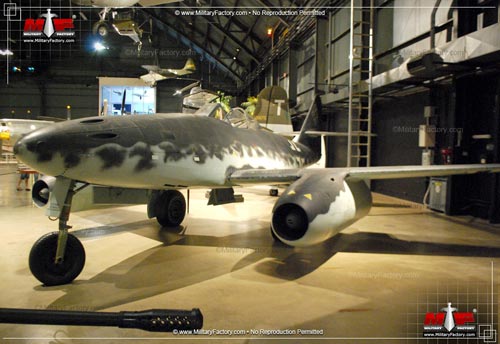
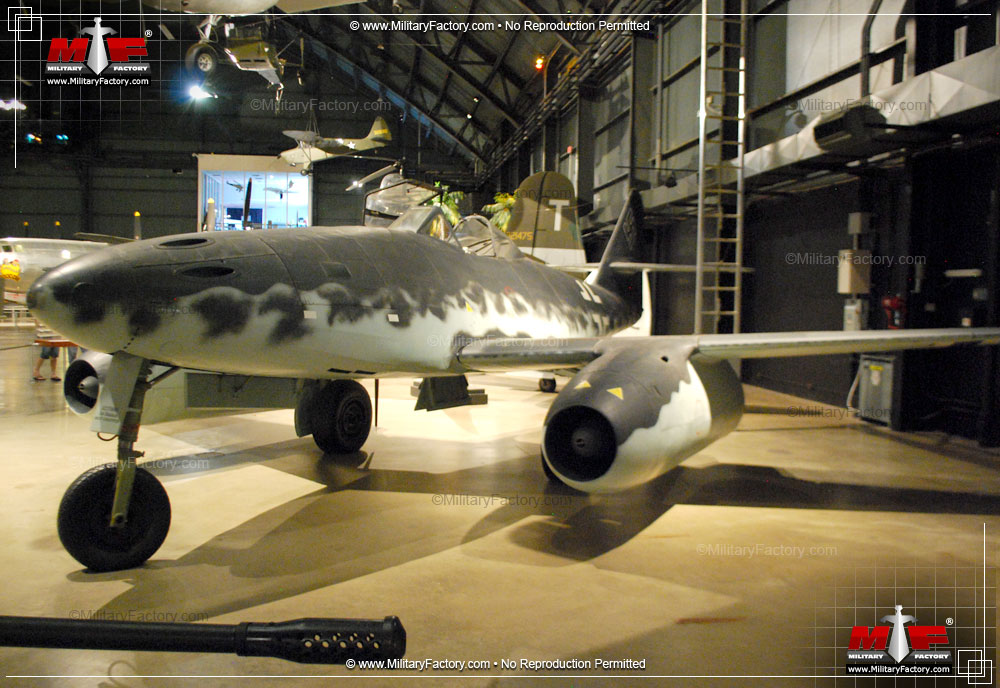
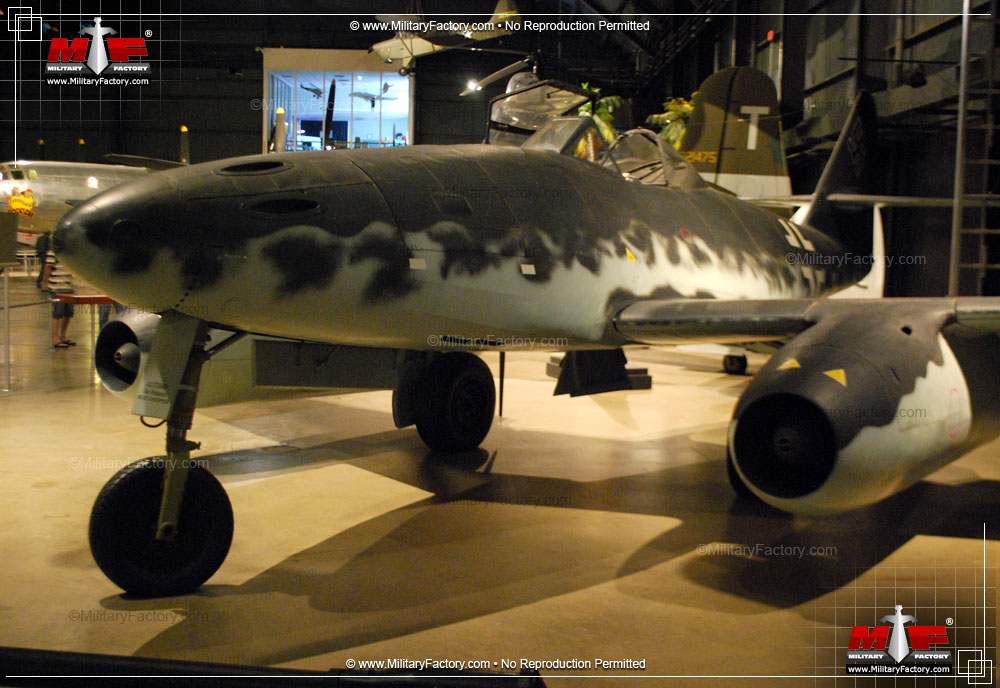
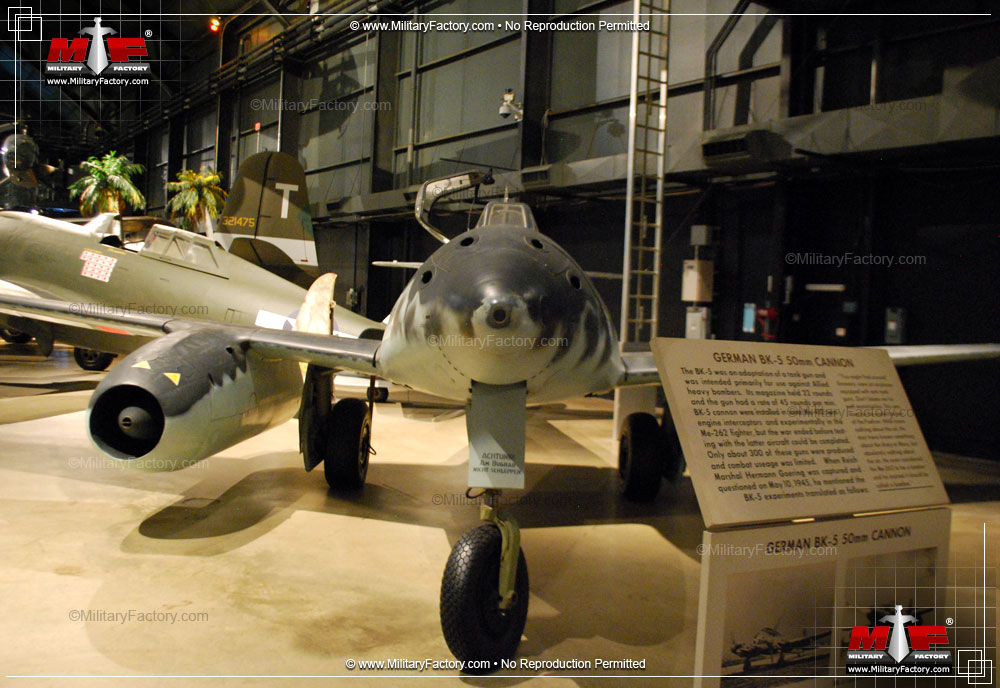
The Messerschmitt Me 262 Schwalbe became the world's first operational-level jet-powered fighter.

Find a School Near You
Follow Military Factory on Facebook:
Trending on Military Factory:
Recent Articles:
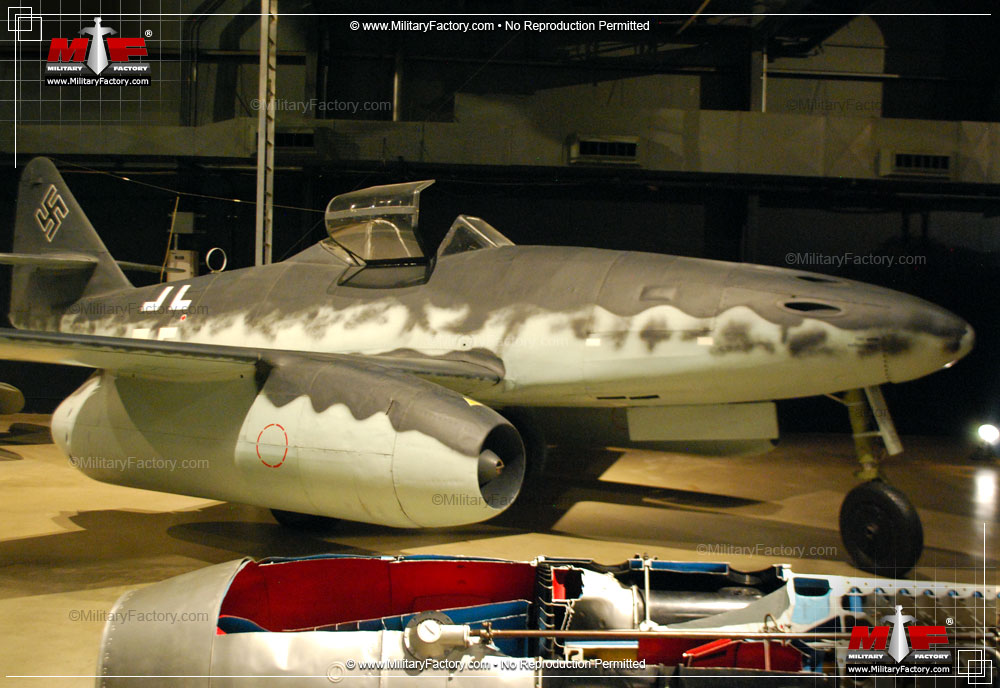
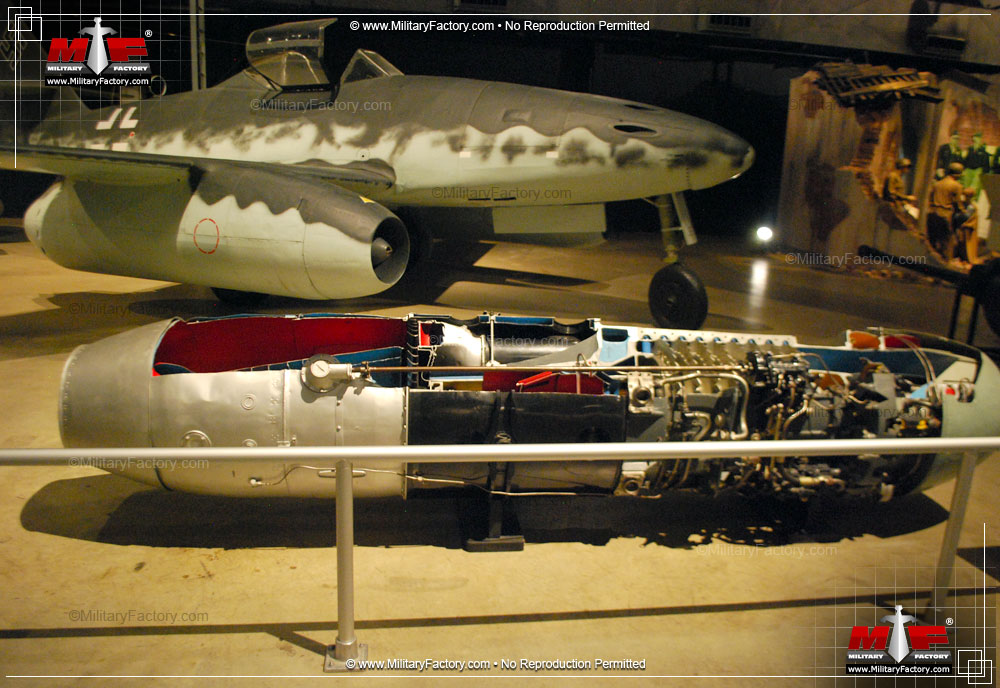
The Me 262 Schwalbe (or "Swallow") is a good case study in the "what if" category centering around poor production design and the bureaucracy inherent in a dictatorship like that of the Third Reich. With the unrealized capabilities of this most advanced aircraft, the German Luftwaffe allowed the Me 262 to fall into the category of unrealized potential. Such could have been the impact of becoming the world's first fighter powered by turbojet technology. It would, however, go on to hold the distinction of becoming the world's first jet-powered aircraft, though not necessarily the first operational fighter (that award would eventually be given to the British Gloster Meteor which beat out the Me 262 to operational service by a matter of weeks, if not days).

The Me 262 was a ground breaking design at a time when most every nation of power was considering the future of military aviation in terms of the turbojet. The Me 262 initially was fielded with a standard undercarriage formation but was later transformed into the more modern tricycle format. The first Schwalbe was produced with a piston engine in the nose until the jet engines could be made ready. When they were, the turbojet engines flared out on first flight, forcing the pilot to make an emergency landing under the power of the piston engine.

Once better engines became available, the system was being test flown by a variety of pilots including Adolph Galland, who voiced his suggestion that the fighter go into production as soon as possible - obviously realizing its potential. Allied bombing campaigns against Me 262 production facilities (unknowingly by the Allies) delayed full production. Hitler's insistence that the fighter be made into a fighter-bomber conversion also delayed final production models. A shortage of parts, skilled labor forces and trained pilots all contributed to the aircraft never materializing as a tide-turner.

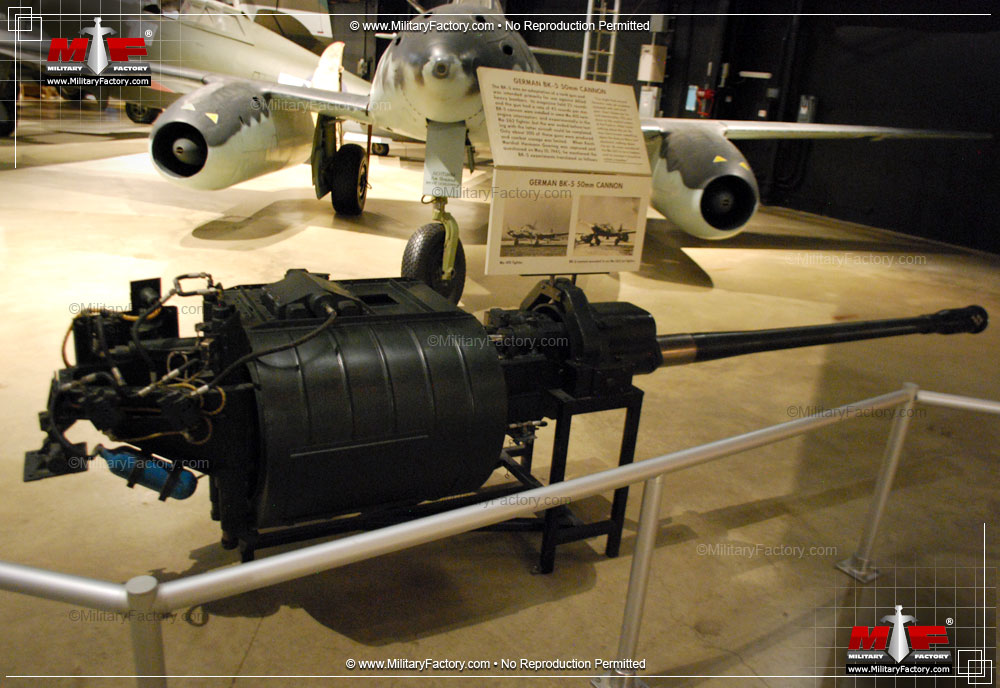
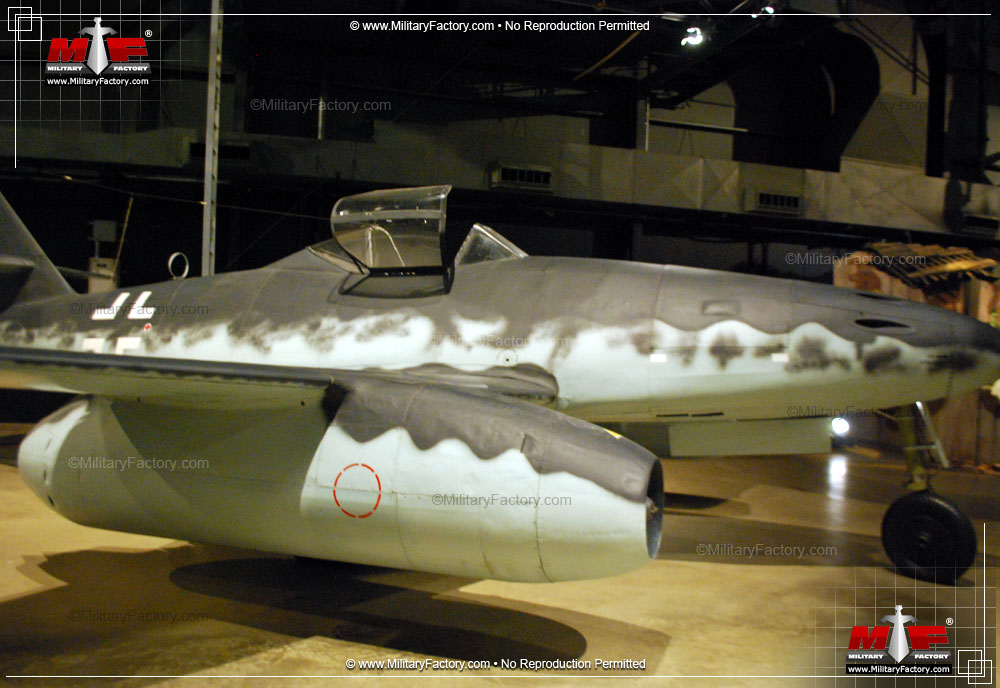
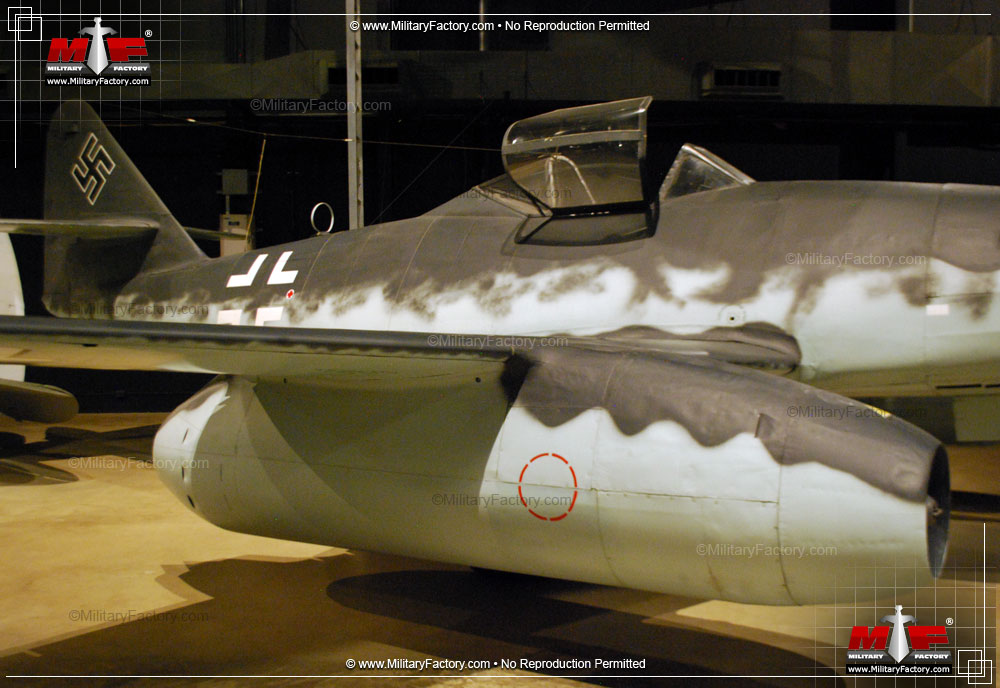
Overall, the Me 262 was a solid yet groundbreaking design, incorporated a swept-wing, low-monoplane look on a smooth fuselage. Engines were mounted under each wing and the system was armed with four 30mm cannons and could be complimented with additional air-to-air rockets. For the few units (about 300 were ever made operational) that made it to combat, the Me 262 showed its prowess particularly against Allied bomber formations. Against Allied fighters, it faired in average terms due to the some-what poor maneuverability when compared to the agile piston fighters. The 4 x 30mm cannon assembly was also prone to jamming at the most inopportune times. The Me 262 was soon found to be at its most vulnerable when still on the ground or during take off whereas its pure speed and power would enable it to be master of the skies otherwise.

Four days in March of 1945 signified the height of the Me 262 program, where up to forty sorties a day against Allied bombers was reached. Beyond that, the Me 262 never faced off against its British rival - the Gloster Meteor - jet-on-jet combat and the captured Me 262 designs would be picked apart and researched by Allied scientists at war's end. In the end, however, the research garnered from the Me 262 study would prove critical in establishing the new generation of jet-powered design. The Me 262 in any form still remains one of the most influential aircraft designs in the history of aviation and will forever be tied to the "what-if" scenarios that revolve around discussions covering the end of World War Two.
Text ©2003-2013 www.MilitaryFactory.com • All Rights Reserved • No Reproduction Permitted
MilitaryFactory.com does NOT sell equipment/weaponry. Material presented throughout this website is for historical and entertainment value and should not to be construed as usable for hardware restoration, maintenance or general operation. Please consult manufacturers for such information. Our disclaimer. Email corrections / Comments to MilitaryFactory at Gmail dot com.
Picture of Messerschmitt Me 262 Schwalbe (Swallow)
Pic of the Messerschmitt Me 262 Schwalbe (Swallow)
Image of the Messerschmitt Me 262 Schwalbe (Swallow)
View All Images (14)

Specifications for the
Messerschmitt Me 262 Schwalbe (Swallow)
Fighter


Country of Origin: Nazi Germany
Manufacturer: Messerschmitt - Germany
Initial Year of Service: 1944
Production: 1,400


Focus Model: Messerschmitt Me 262A-1
Crew: 1


Length: 34.78ft (10.6m)
Width: 41.01ft (12.50m)
Height: 12.47ft (3.80m)
Weight (Empty): 8,378lbs (3,800kg)
Weight (MTOW): 14,110lbs (6,400kg)


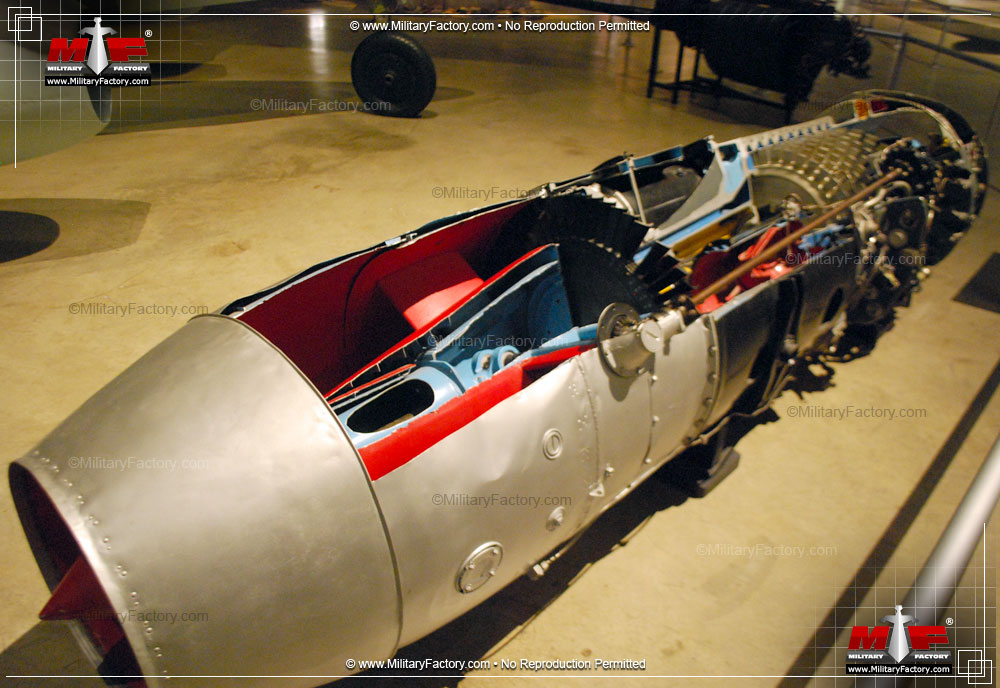
Powerplant: 2 x Junkers Jumo-004B Turbojet Engines delivering 1,984lbs of thrust.


Maximum Speed: 541mph (870kmh; 470kts)
Maximum Range: 652miles (1,050km)
Service Ceiling: 37,730ft (11,500m; 7.1miles)
Rate-of-Climb: 3,937 feet per minute (1,200m/min)


Hardpoints: 2
Armament Suite:
STANDARD:
4 x 30mm MK 108 Cannons

OPTIONAL:
External Bombload of up to 1,200lbs

Other armaments of later models included:
2 x 20mm Cannons (in addition to existing 4 x 30mm cannons)
24 x Air-to-Air Unguided High-Explosive Rockets


Variants:
Me 262 V1 - Prototype


Me 262 V2 - Prototype

Me 262 V3 - Protoype; Achieved first all-jet powered flight.

Me 262A-0 - 23 Pre-Production models built

Me 262A-1a - First Operational Status Model

Me 262A-1a/U1 - Additional 2 x 20mm cannons (in addition to the base 4 x 30mm assembly.

Me 262A-1a/U2 - "Bad Weather" Variant

Me 262A-1a/U3 - Unarmed Reconnaissance Model

Me 262A-1b - 24 x air-to-air unguided rockets added (12 under each wing).

Me 262A-2 Sturmvogel (Stormbird) - Fighter Bomber designation.

Me 262A-2a - Bomber variant capable of 1,102lb external bomb loadout.

Me 262A-2a/U2 - Two-seat bomber variant with bomber crewman fitted into prone bomb-aimer position.

Me 262A-5 - Reconnaissance Fighter

Me 262B-1a - Two-seat conversion trainer variant

Me 262B-2 - Night Fighter


Operators: Nazi Germany; Czechoslovakia

ALL AIRCRAFT CATEGORIES

BY DECADE:


1900 to 1909
1910 to 1919
1920 to 1929
1930 to 1939
1940 to 1949
1950 to 1959
1960 to 1969
1970 to 1979
1980 to 1989
1990 to 1999
2000 to 2009
2010 to 2019
2020 to 2029
VIEW ALL
Compare Aircraft


BY TYPE:


Anti-Submarine Warfare (ASW)
Attack Helicopters
Bomber Aircraft
Medium Bombers
Heavy Bombers
Close-Air Support (CAS)
Commercial Aircraft
Dive Bombers
Electronic Warfare Aircraft (EWA)
Experimental / X-Planes
Fighter Aircraft
Floatplane Aircraft
Flying Boat Aircraft
Aerial Refueling Tankers
Helicopters (ALL)
Interceptor Aircraft
Multi-Role Aircraft
Navy Carrier Aircraft
Night Fighters
Reconnaissance / Scout
Search & Rescue (SAR)
Scout Helicopters
Special Purpose
Torpedo Bombers
Trainer Aircraft
Transport Aircraft
Transport Helicopters
Unmanned Aerial Vehicles (UAVs)
Unmanned Combat Air Vehicles (UCAVs)


COLLECTIONS:


4th Generation Fighter Aircraft
5th Generation Fighter Aircraft
US X-Planes
Classic US Warbirds
French Military Helicopters
Grumman "Cats"
Howard Hughes Aircraft
Indian Air Force
Israeli Air Force
Libyan Aircraft
Modern Chinese Aircraft
Modern Chinese Fighters
Modern Military Aircraft
Modern North Korean Aircraft
Modern Trainer Aircraft
Modern US Aircraft
Mikoyan Aircraft
Sukhoi Aircraft
Syrian Aircraft
Top 10 Fighter Aircraft of All Time


AIRCRAFT BY CONFLICT:


Arab-Israeli War (1948)
Cuban Missile Crisis (1959-1962)
Falklands War (1982)
Indo-Pak War (1965, 1971)
Iran-Iraq War (1980-1988)
Lebanon War (1982)
Operation Allied Force (1999)
Operation Desert Storm (1991)
Six Day War (1967)
Spanish Civil War (1936)
Soviet-Afghan War (1979-1989)
Yom Kippur War (1973)


MISCELLANEOUS:


Aircraft Cockpits
Aircraft Manufacturers List
Aircraft Timeline

WORLD WAR 2:


1939 Aircraft
1940 Aircraft
1941 Aircraft
1942 Aircraft
1943 Aircraft
1944 Aircraft
1945 Aircraft
1946 Aircraft
Australian Aircraft
Battle of Britain Aircraft
Bombers
Four-Engine Bombers
British Aircraft
British Bombers
British Transports
Dive Bombers
Canadian Aircraft
Fighters
Chinese Aircraft
French Aircraft
German Aircraft
German Fighters
German Flying Boats
German Jets
Secret Weapons of the Luftwaffe
Italian Aircraft
Imperial Japanese Aircraft
Imperial Japanese Fighters
Mitsubishi Bombers
Navy Aircraft
Pearl Harbor
Polish Aircraft
Romanian Aircraft
US Aircraft
US Bombers
US Navy Aircraft
Soviet Aircraft
Torpedo Bombers
Trainer Aircraft
Transport Aircraft
Tuskegee Airmen Aircraft
W.A.S.P. Aircraft
WW2 Aircraft Ranked by Speed
VIEW ALL


WORLD WAR 1:


1914 Aircraft
1915 Aircraft
1916 Aircraft
1917 Aircraft
1918 Aircraft
Aircraft Timeline
Austro-Hungarian Aircraft
Bomber Aircraft
British Aircraft
Fighters
Flying Boats
French Aircraft
Imperial German Aircraft
Italian Aircraft
Scout Aircraft
Russian Empire Aircraft
US Aircraft
WW1 Aircraft Ranked by Speed
VIEW ALL


KOREAN WAR:


Australian Aircraft
Korean War Aces
Korean War Jets
North Korean Aircraft
US Military Aircraft
VIEW ALL


VIETNAM WAR:


Helicopters
North Vietnam Air Force
US Airpower
VIEW ALL


COLD WAR:


1950s French Aircraft
British V-Bombers
Cold War Bombers
Soviet Aircraft
Soviet Bombers
Soviet Interceptors
Soviet Helicopters
Strategic Air Command
US Aircraft
US Bombers
US Interceptors
VIEW ALL

Site Disclaimer | Privacy Policy | Site Map | MF Origins


©2013 www.MilitaryFactory.com • Content ©2003-2013 MilitaryFactory.com • All Rights Reserved • Site Contact Email: militaryfactory at gmail dot com. The "Military Factory" name and MilitaryFactory.com logo are registered ® trademarks and protected by all applicable domestic and international intellectual property laws.


Top MF Stuff: 2013 Military Pay Scale | Military Ranks | WW2 Weapons | Sniper Rifles | Kts to Mph | WW1 Aircraft | Automatic Rifles | Aircraft Cockpits | Vietnam War Weapons | Main Battle Tanks | Submachine Guns | Shotguns | French Military Victories


Most photographic images appearing on this site are courtesy of the United States Department of Defense and are approved for public use. Other images acquired through the public domain. Digital art work courtesy of Dan Alex. Business Consulting by Kyle Williams. Material presented throughout this website is for historical and entertainment value and should not to be construed as usable for hardware restoration, maintenance or general operation. Please consult manufacturers for such information.


eXTReMe Tracker