Military Factory
Military Pay Chart
Global Firepower
Military Industrial Complex
Second World War
Home
Military Pay Scale
Military Ranks
Small Arms
Aircraft
Land Systems
Navy
Education
Military Factory Facebook Logo
flag of Nazi Germany

Messerschmitt Me 163 Komet (Comet) Rocket-Powered Interceptor (1944)

Authored By Staff Writer | Last Updated: 2/14/2013

The explosive - literally and figuratively - Messerschmitt Me 163 Komet was the first operational combat aircraft design to incorporate swept wings.

Find a School Near You
Follow Military Factory on Facebook:
Trending on Military Factory:
Recent Articles:
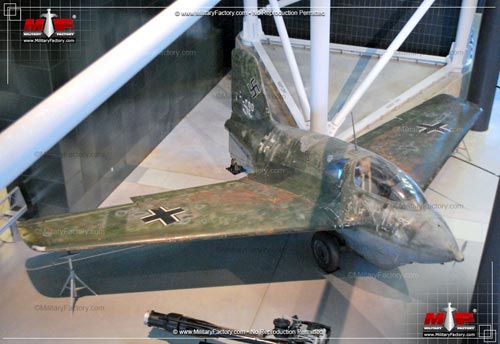
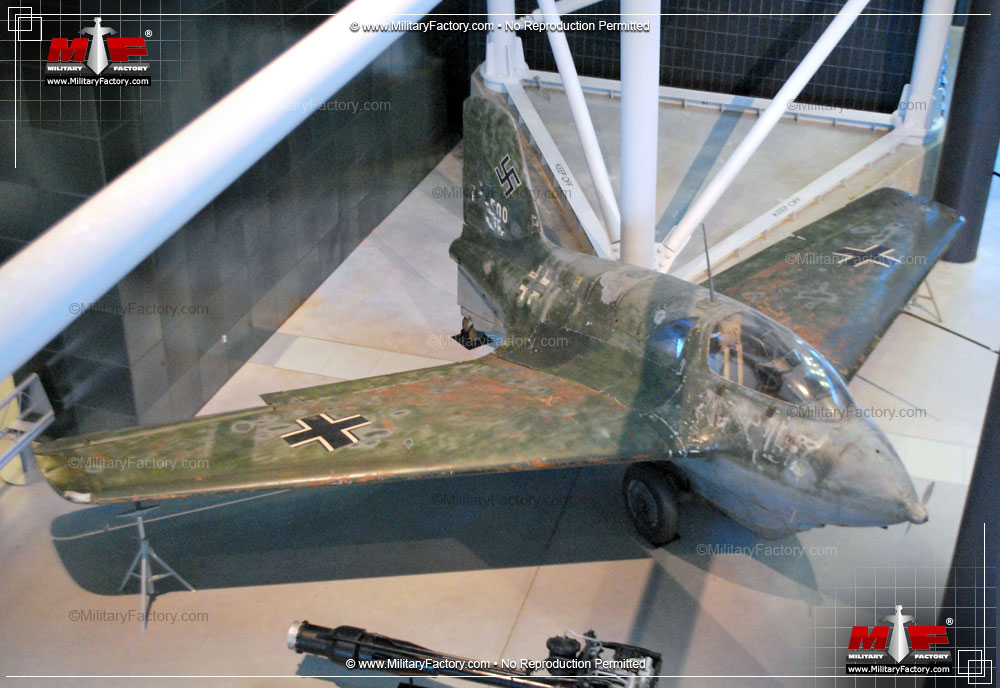
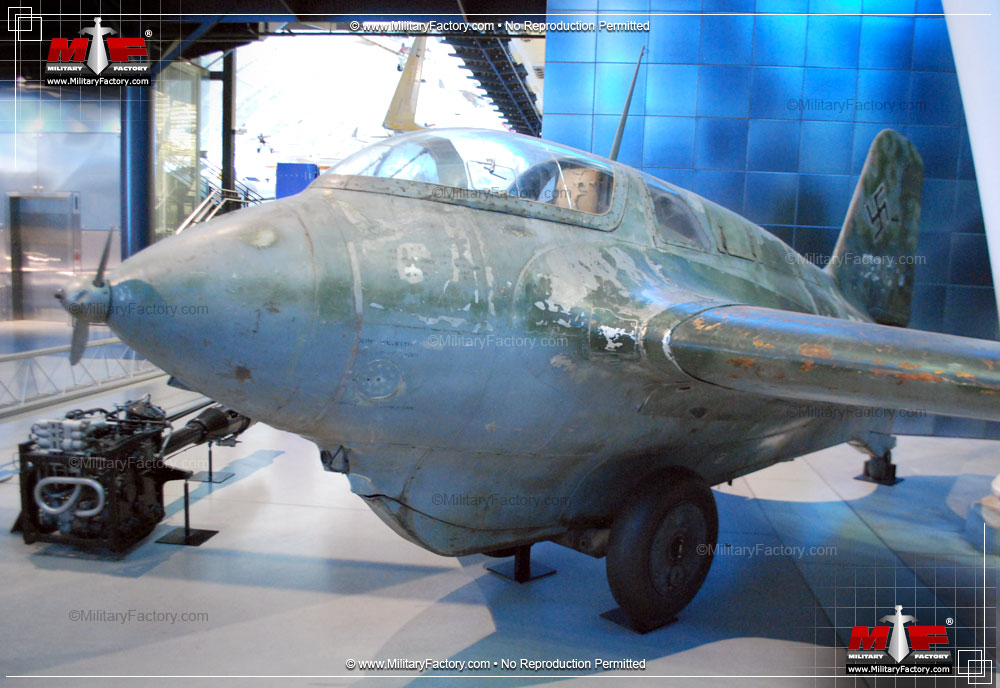
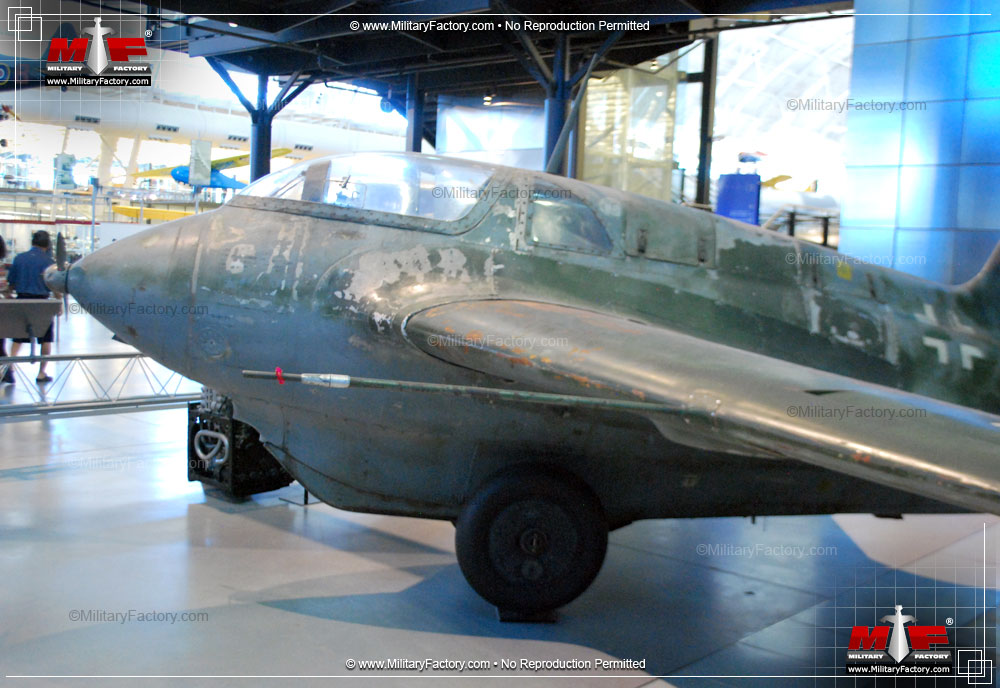
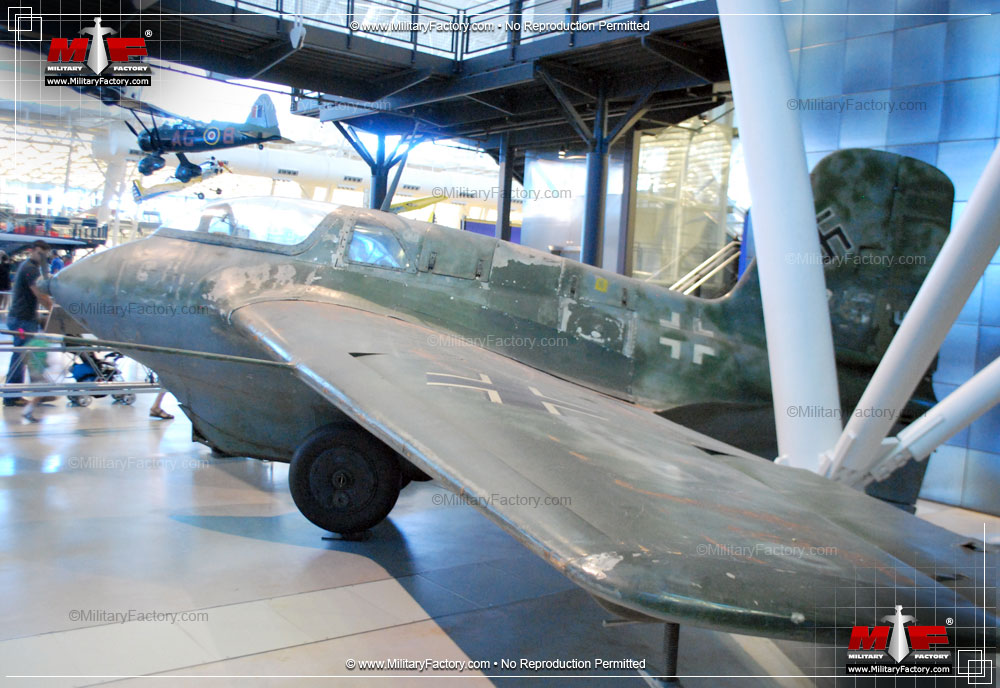
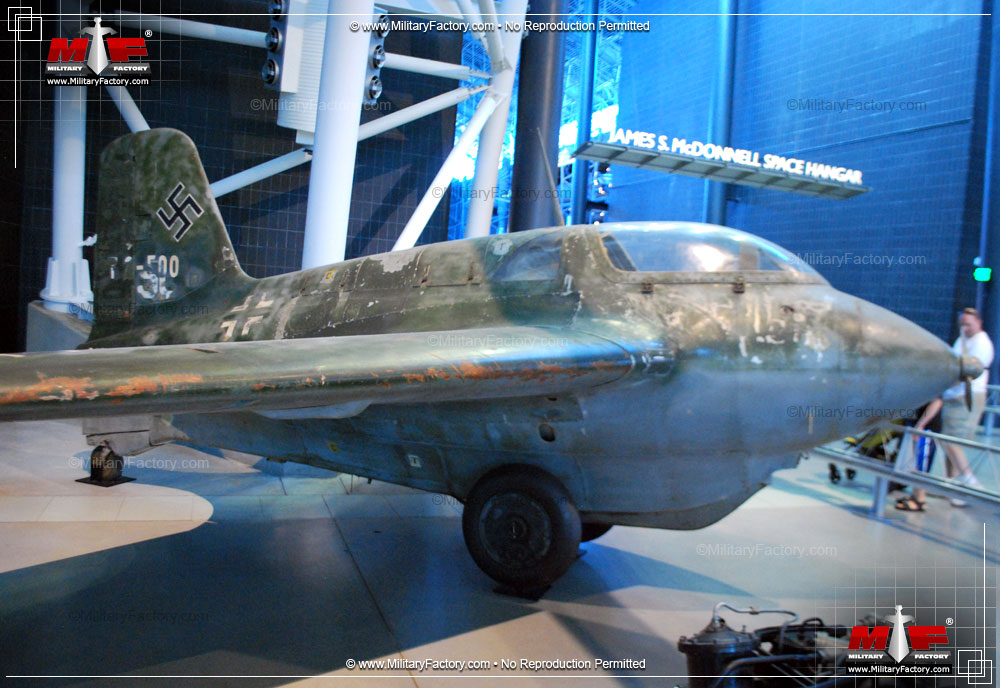
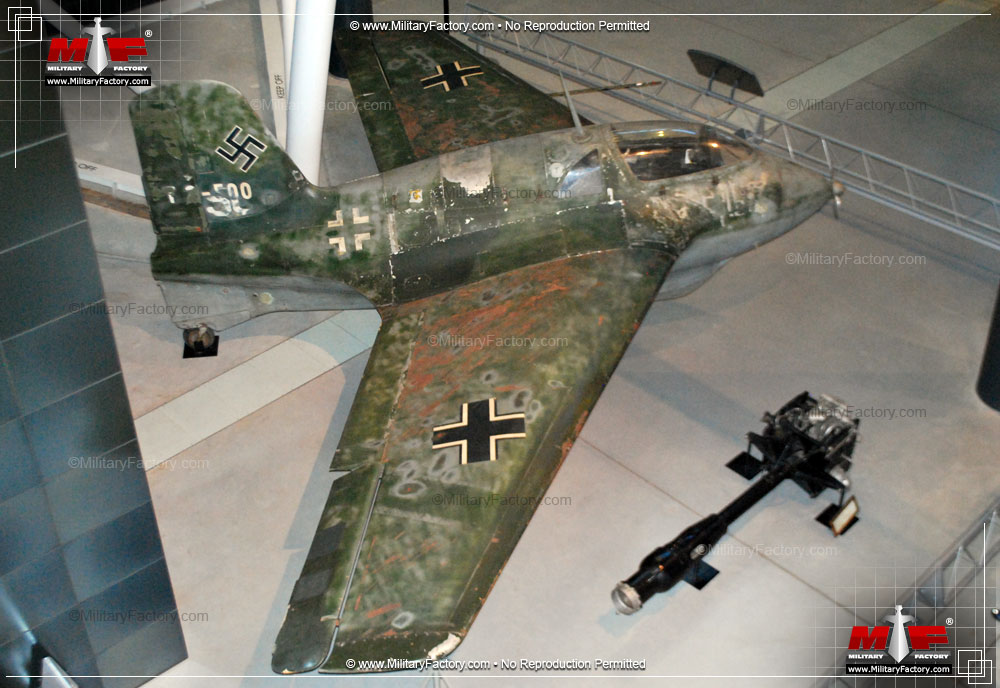
The German Messerschmitt Me 163 "Komet" was perhaps the most unique frontline, operational-level fighter design of World War 2. German engineers, seemingly always on the cutting edge of evolving war technology, developed the rocket-powered aircraft based on early testing completed with an engine-less glider. The resulting research produced the single-seat, swept-wing fighter that was equally dangerous to both enemy bomber crews and the Me 163 pilot alike. The Me 163 first flew on September 1st, 1941 and was formally introduced in the Luftwaffe inventory in 1944. Despite its impressive performance statistics, the Me 163 was something of a tactical failure and more or less a technological dead end with the rise of jet-powered flight soon to come. The idea of fast interceptors also soon gave way to ground-based homing/guided missile technologies.

The Me 163 was born from the mind of Dr. Alexander Lippisch who pioneered a great deal of data research of tailless glider designs dating back to the 1920s prior to joining the Messerschmitt concern in 1939. Work began on such a tailless design through the DFS 194 glider outfitted with a Walter rocket motor. The motor relied on a volatile, though potent combination, known as "C-Stoff" and "T-Stoff". The new Messerschmitt design would utilize the chemical explosion to power the small fighter at break-neck speeds - able to outfly any bomber formation escort fighters with ease. More importantly, the design could be aloft in seconds in response to incoming waves of Allied bombers appearing through both day and night campaigns, wreaking havoc on German industry and supply lines. By 1944, the German initiative that was once held early in the war was all but lost and it began to fight more a defensive war for its very survival.

Testing occurred at the covert Peenemunde facility in June of 1940 to help prove the concept sound. Despite the motor failing to impress due to reliability issues, the airframe itself handled well in the hands of test pilot Heini Dittmar. Serial production of several prototype forms was ordered under the "Me 163" designation in the early part of 1941. At least five "V" based prototypes emerged beginning with V1. Some eight preproduction forms then followed in the Me 163 "A-0" format. Early prototypes managed to reach an impressive 340 miles per hour in recorded test flights.

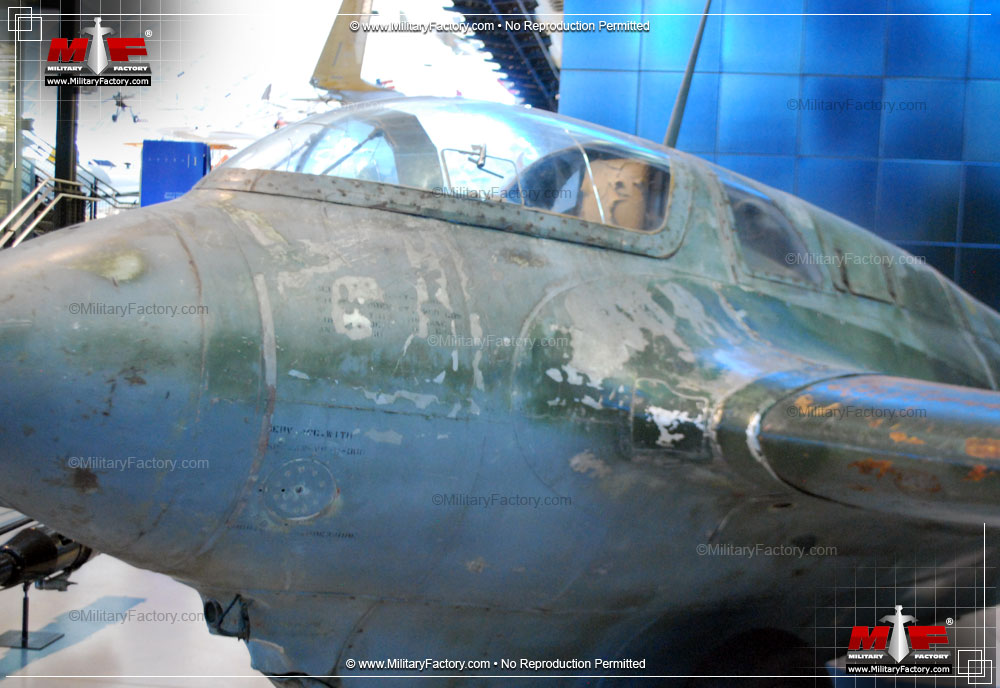
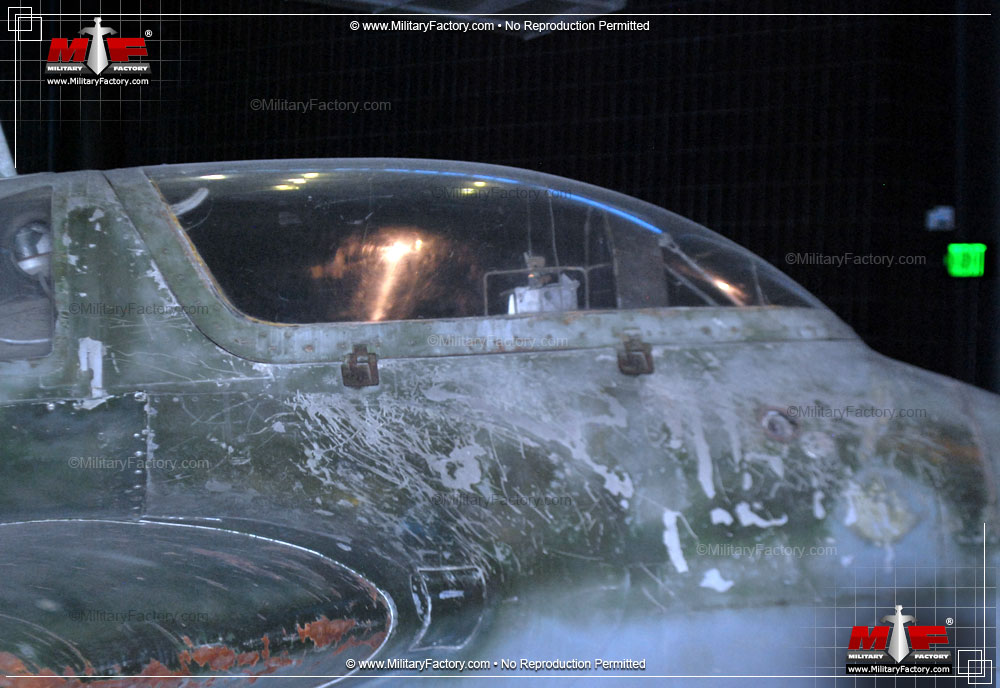
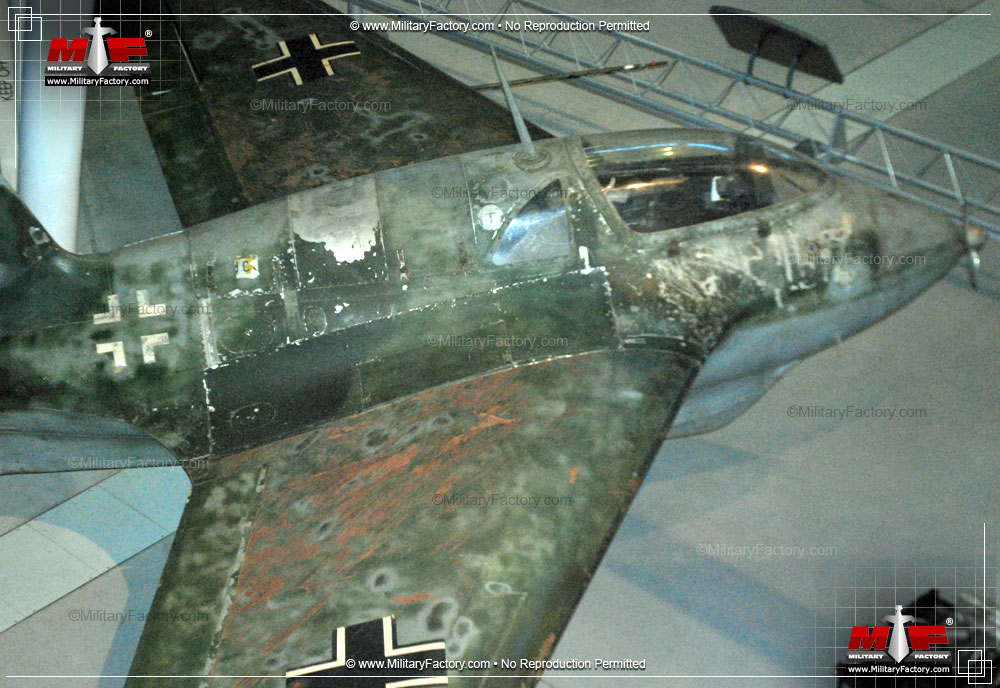
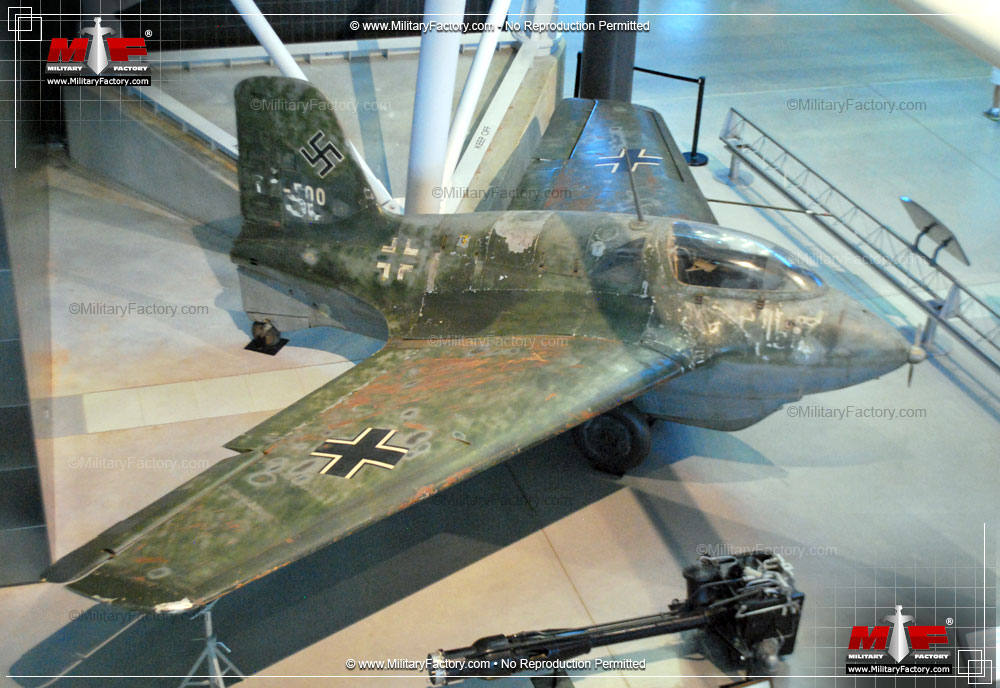
The diminutive Me 163 was piloted by a single crewman housed under a wide clear canopy. The design was given the then-revolutionary concept of swept-back wings mounted along each fuselage side. The fuselage was a stout, portly design intended to house the cockpit and necessary fuel stores. The empennage was capped by a simple vertical tail fin lacking any horizontal planes. Take-off for the Me 163 was achieved by way of a wheeled, unsprung "dolly" assembly with the rocket motor at full thrust. The dolly was then jettisoned immediately after take-off for it proved an unnecessary counter-aerodynamic element. The interceptor then climbed to the required attack altitude to meet the incoming enemy bomber formation, most likely expending all of its fuel supply by this time. From its lofty perch, the accepted tactic for the Me 163 became a high-speed swoop down into the bomber formation, engaging targets with cannon for as long as momentum allowed - usually two or three dives though each swipe at the target was managed through a quick three-second-or-less window of opportunity. Once spent of both fuel and ammunition, the Komet was then glided to the ground under basic physics, landing on a relatively smooth patch of earth atop the provided spring-loaded centerline skid.

The Me 163B design then emerged in December of 1941 as a simplified production-quality form intended for wartime mass production and outfitted with an improved form of rocket motor. Two V prototypes were generated and these were followed by at least thirty pre-production series aircraft. Initial models were designated as "Me 163 B-0" and fitted with 2 x 20mm MG 151/20 series cannons. These were followed by the Me 163 B-1 marks which incorporated 2 x 30mm Rheinmetall Borsig Mk 108 series cannons. The B-1 mark was powered by a Walter HWK 109-509A-2 liquid-fueled rocket motor providing 3,800lbs of continuous thrust. Its maximum speed was 596 miles per hour with a range of just 25 miles and service ceiling of 39,700 feet. The Me 163 B-1 held an amazing 31,500 feet-per-second rate-of-climb.

In theory, the idea of a small, one-man interceptor tearing holes in unsuspecting bomber formations was a sound one as defending Allied escort fighter aircraft could only hope to catch the Me 163, a target reaching speeds of nearly 600 miles per hour. However, the reality of the design provided an array of dangers for the pilot. The fuel mixture itself was known to self-combust as both elements were highly volatile, proven by the fact that such an event killed a test pilot - the aircraft had the possibility of exploding in the air or on the ground. The airframe could also become highly uncontrollable at the provided extreme speeds for swept wings were still an infant concept concerning high-speed flight. Powered flight was essentially limited to just 7.5 minutes through the available fuel stores and the freefall glide to the ground during landing placed the pilot and his aircraft in a precariously vulnerable position when Allied fighters were about. Unpowered landings also held its own share of inherent dangers as only a single attempt was essentially allowed. The operational range of the Me 163 also proved extremely limited and restricted the German response. Additionally, the armament array of 2 x cannons (mounted in the wing roots) was afforded up to 60 rounds of ammunition per weapon installation.

Initial combat sorties in July of 1944 attempted to showcase the Me 163 as a true fighter breed, able to fly twice as fast as any available Allied fighter type. However, it was found that the aircraft approached a flight of Boeing B-17 Flying Fortresses much too fast, thus not allowing the Me 163 pilots a chance to properly aim their guns and engage, consequently overshooting the targets and claiming no kills. It was only then discovered that the Me 163 could be used more effectively by conducting the aforementioned steep climb upon takeoff, achieving the desired attack altitude until the rocket motor fuel was expended and diving down to engage under control - relying on gravity and drag in the process.

Me 163 interceptors were credited with destroying just nine enemy aircraft (some sources state as many as sixteen kills) during the latter part of the war, this against the 370 Me 163s produced. Another Axis member nation, the Empire of Japan, also tried (somewhat successfully) to copy the Me 163 design. However, one of two submarines transferring the Me 163 design and associated plans from German hands to Japan was sunk by the Allies. The Japanese did manage to develop their own working variant of the Me 163 (as the Mitsubishi J8M "Shusui") with the surviving set of plans but the aircraft never went into operational service.

For the Germans, the base Me 163 design was also planned to be reworked into a two-seat trainer form known as the "Me 163S", these born from the streamlined Me 163B production model.

Despite their impressive performance, the Me 163 fell victim to enemy guns nine times itself and a further fourteen units were registered as "lost" during the war. Allied fighter pilots began to understand the limitations of the rocket-powered fighter and simply adjusted strategy to wait for the aircraft to begin its final descent - an action the Me 163 pilot had no chance to abort. In another stroke of good luck for the Allies, the required fuel for Me 163 aircraft was in short supply throughout the end of the war, keeping many of the available Me 163 fighters grounded for the long-term. By the end of the war, the focus had also begun to shift to more advanced and conventionally-minded jet-powered aircraft such as Messerschmitt's own Me 262 "Schwalbe" fighter-bomber.

Post-war, many available Me 163 airframes were recovered and studied extensively by the Allies, no doubt influencing the many strange projects seen in the post-war years, particularly in America. Many others ended up as museum show pieces.
Text ©2003-2013 www.MilitaryFactory.com • All Rights Reserved • No Reproduction Permitted
MilitaryFactory.com does NOT sell equipment/weaponry. Material presented throughout this website is for historical and entertainment value and should not to be construed as usable for hardware restoration, maintenance or general operation. Please consult manufacturers for such information. Our disclaimer. Email corrections / Comments to MilitaryFactory at Gmail dot com.
Picture of Messerschmitt Me 163 Komet (Comet)
Pic of the Messerschmitt Me 163 Komet (Comet)
Image of the Messerschmitt Me 163 Komet (Comet)
View All Images (16)

Specifications for the
Messerschmitt Me 163 Komet (Comet)
Rocket-Powered Interceptor


Country of Origin: Nazi Germany
Manufacturer: Messerschmitt - Germany
Initial Year of Service: 1944
Production: 370


Focus Model: Messerschmitt Me163 B01a Komet (Comet)
Crew: 1


Length: 19.62ft (5.98m)
Width: 30.61ft (9.33m)
Height: 9.02ft (2.75m)
Weight (Empty): 4,189lbs (1,900kg)
Weight (MTOW): 9,480lbs (4,300kg)


Powerplant: 1 x Walter 109-509A-2 liquid-fueled rocket motor generating 3,800lbs of thrust for 7.5 minutes of powered flight.


Maximum Speed: 659mph (1,060kmh; 572kts)
Maximum Range: 25miles (40km)
Service Ceiling: 39,698ft (12,100m; 7.5miles)
Rate-of-Climb: 31,500 feet per minute (9,601m/min)


Hardpoints: 0
Armament Suite:
STANDARD:
2 x 20mm cannons OR 2 x 30mm cannons in wing roots.


Variants:
DFS 194 - Tailless research glider of which the Me 163 is based on.


Me 163 - Base series designation

Me 163 V1 - Initial Prototype Model

Me 163 V2 - Prototype

Me 163 V3 - Prototype

Me 163 V4 - Prototype

Me 163 V5 - Prototype

Me 163A - Initial prototype of which five were produced.

Me 163A-0 - Eight pre-production examples based on the Me 163 prototype.

Me 163B - Streamlined mass-production model; featuring improved rocket motor.

Me 163B-0 - Pre-production models; fitted with 2 x 20mm MG 151/20 cannons in wing roots.

Me 163B-1 - Production-quality airframes fitted with 2 x 30mm cannons in wing roots.

Me 163B-1a

Me 163S - Proposed dual-seat conversion trainer from modified Me 163B airframes.

Mitsubishi J8M "Shusui" - Japanese variant based on acquired Me 163 manufacturing rights in 1943.


Operators: Nazi Germany; Japan (Mitsubishi J8M)

ALL AIRCRAFT CATEGORIES

BY DECADE:


1900 to 1909
1910 to 1919
1920 to 1929
1930 to 1939
1940 to 1949
1950 to 1959
1960 to 1969
1970 to 1979
1980 to 1989
1990 to 1999
2000 to 2009
2010 to 2019
2020 to 2029
VIEW ALL
Compare Aircraft


BY TYPE:


Anti-Submarine Warfare (ASW)
Attack Helicopters
Bomber Aircraft
Medium Bombers
Heavy Bombers
Close-Air Support (CAS)
Commercial Aircraft
Dive Bombers
Electronic Warfare Aircraft (EWA)
Experimental / X-Planes
Fighter Aircraft
Floatplane Aircraft
Flying Boat Aircraft
Aerial Refueling Tankers
Helicopters (ALL)
Interceptor Aircraft
Multi-Role Aircraft
Navy Carrier Aircraft
Night Fighters
Reconnaissance / Scout
Search & Rescue (SAR)
Scout Helicopters
Special Purpose
Torpedo Bombers
Trainer Aircraft
Transport Aircraft
Transport Helicopters
Unmanned Aerial Vehicles (UAVs)
Unmanned Combat Air Vehicles (UCAVs)


COLLECTIONS:


4th Generation Fighter Aircraft
5th Generation Fighter Aircraft
US X-Planes
Classic US Warbirds
French Military Helicopters
Grumman "Cats"
Howard Hughes Aircraft
Indian Air Force
Israeli Air Force
Libyan Aircraft
Modern Chinese Aircraft
Modern Chinese Fighters
Modern Military Aircraft
Modern North Korean Aircraft
Modern Trainer Aircraft
Modern US Aircraft
Mikoyan Aircraft
Sukhoi Aircraft
Syrian Aircraft
Top 10 Fighter Aircraft of All Time


AIRCRAFT BY CONFLICT:


Arab-Israeli War (1948)
Cuban Missile Crisis (1959-1962)
Falklands War (1982)
Indo-Pak War (1965, 1971)
Iran-Iraq War (1980-1988)
Lebanon War (1982)
Operation Allied Force (1999)
Operation Desert Storm (1991)
Six Day War (1967)
Spanish Civil War (1936)
Soviet-Afghan War (1979-1989)
Yom Kippur War (1973)


MISCELLANEOUS:


Aircraft Cockpits
Aircraft Manufacturers List
Aircraft Timeline

WORLD WAR 2:


1939 Aircraft
1940 Aircraft
1941 Aircraft
1942 Aircraft
1943 Aircraft
1944 Aircraft
1945 Aircraft
1946 Aircraft
Australian Aircraft
Battle of Britain Aircraft
Bombers
Four-Engine Bombers
British Aircraft
British Bombers
British Transports
Dive Bombers
Canadian Aircraft
Fighters
Chinese Aircraft
French Aircraft
German Aircraft
German Fighters
German Flying Boats
German Jets
Secret Weapons of the Luftwaffe
Italian Aircraft
Imperial Japanese Aircraft
Imperial Japanese Fighters
Mitsubishi Bombers
Navy Aircraft
Pearl Harbor
Polish Aircraft
Romanian Aircraft
US Aircraft
US Bombers
US Navy Aircraft
Soviet Aircraft
Torpedo Bombers
Trainer Aircraft
Transport Aircraft
Tuskegee Airmen Aircraft
W.A.S.P. Aircraft
WW2 Aircraft Ranked by Speed
VIEW ALL


WORLD WAR 1:


1914 Aircraft
1915 Aircraft
1916 Aircraft
1917 Aircraft
1918 Aircraft
Aircraft Timeline
Austro-Hungarian Aircraft
Bomber Aircraft
British Aircraft
Fighters
Flying Boats
French Aircraft
Imperial German Aircraft
Italian Aircraft
Scout Aircraft
Russian Empire Aircraft
US Aircraft
WW1 Aircraft Ranked by Speed
VIEW ALL


KOREAN WAR:


Australian Aircraft
Korean War Aces
Korean War Jets
North Korean Aircraft
US Military Aircraft
VIEW ALL


VIETNAM WAR:


Helicopters
North Vietnam Air Force
US Airpower
VIEW ALL


COLD WAR:


1950s French Aircraft
British V-Bombers
Cold War Bombers
Soviet Aircraft
Soviet Bombers
Soviet Interceptors
Soviet Helicopters
Strategic Air Command
US Aircraft
US Bombers
US Interceptors
VIEW ALL

Site Disclaimer | Privacy Policy | Site Map | MF Origins


©2013 www.MilitaryFactory.com • Content ©2003-2013 MilitaryFactory.com • All Rights Reserved • Site Contact Email: militaryfactory at gmail dot com. The "Military Factory" name and MilitaryFactory.com logo are registered ® trademarks and protected by all applicable domestic and international intellectual property laws.


Top MF Stuff: 2013 Military Pay Scale | Military Ranks | WW2 Weapons | Sniper Rifles | Kts to Mph | WW1 Aircraft | Automatic Rifles | Aircraft Cockpits | Vietnam War Weapons | Main Battle Tanks | Submachine Guns | Shotguns | French Military Victories


Most photographic images appearing on this site are courtesy of the United States Department of Defense and are approved for public use. Other images acquired through the public domain. Digital art work courtesy of Dan Alex. Business Consulting by Kyle Williams. Material presented throughout this website is for historical and entertainment value and should not to be construed as usable for hardware restoration, maintenance or general operation. Please consult manufacturers for such information.


eXTReMe Tracker