Military Factory
Military Pay Chart
Global Firepower
Military Industrial Complex
Second World War
Home
Military Pay Scale
Military Ranks
Small Arms
Aircraft
Land Systems
Navy
Education
Military Factory Facebook Logo
flag of Nazi Germany

Bachem Ba 349 Natter (Adder / Viper) Vertically-Launched Rocket-Powered Interceptor (1945)

Authored By Staff Writer | Last Updated: 3/12/2012

The Bachem Ba 349 Natter was designed to quickly respond to incoming Allied bomber formations and attack with high-explosive rockets.

Find a School Near You
Follow Military Factory on Facebook:
Trending on Military Factory:
Recent Articles:
The Bachem Ba 349 Natter (translated to "Adder" though also known as the "Viper") was one of the late-war German aircraft initiatives intended to shift the balance of the Allied air campaign in favor of the Reich. The Natter was developed throughout the final years of the war, initially rejected by the German Air Ministry, and eventually constructed in over 20 to 30 usable examples. However, even before a single unit could carry out a mission in anger, Natter launch positions were overrun by advancing American Army personnel, formally tying yet another German Luftwaffe "secret weapon" to the pages of history and nothing more. By its very design, the Natter was nothing more than a piloted rocket of sorts though its launch and cockpit facilities were reusable after recovery - its rocket armament payload having been spent in the attack phase.

Luftwaffe air superiority, which had largely controlled the skies of World War 2 prior to 1943, was now challenged to the point that the German Air Ministry sought to curtail the damaging results incurred by the relentless Allied bombing campaign. The campaign centered primarily around use of American heavy bombers during the day and British heavy bombers during the night, creating a potent, non-stop, "one-two" punch against German installations of value. The Allied bombers proved such a detrimental component on the German military that it began to prioritize fighter production and development for the sheer purpose of self-defense to protect its airfields, oil reserves, factories, supply depots, bridges and strategic cities and towns. By 1944, the situation was growing ever dimmer as targets within Germany herself were being targeted with regularity. As such, a certain level of unspoken desperation began to sink in and the German Air Ministry began entertaining many different approaches to solve the Allied bombing campaign problem.

Up to now, rocket propulsion was in its relatively infancy concerning aircraft of war. The Messerschmitt Me 163 "Komet" and its volatile fuel mixture first flew on September 1st of 1941 but would not enter feasible production and subsequent operational service until 1944 with only 370 built in all. German Erich Bachem, a one-time engineer at the Fieseler aircraft concern, struck out on his own in 1943 and began his Bachemwerke GmbH facility based out of Waldsee. Bachem held a substantial claim to fame during his time at Fieseler for he was responsible for the design of the world-renowned Fieseler Fi 156 Storch ("Stork"), an excellent light liaison aircraft built around a robust and flexible airframe with superb short take-off and landing (STOL) qualities. As such, Bachem was no stranger to rather unconventional aircraft developments and, from his newly established Waldsee location, contributed various flight control surfaces to a variety of Luftwaffe projects from then on.

However, with losses across the German-held territories beginning to mount, the Luftwaffe developed an all-new requirement based around a low-cost, quick production interceptor intended to combat the Allied bomber formations directly. Bachem, always the observer, could study the incoming waves of enemy bombers over his own town and noted general tactics and overall implementation used when traversing German airspace. As such, he began to develop an interceptor that could reach attack altitude quickly and unleash a potent payload directly into the enemy aircraft formations. To reach the required altitude, the design would be launched vertically to avoid unnecessary time-consuming take-off procedures with help from rocket thrust propulsion. Construction would be primarily of plywood wood (held mainly by glue and screws) save for the nose assembly for German wartime materials such as metal were required elsewhere in the war effort. Bachem nicknamed his development the "Natter" to coincide with the deadly nature of the Adder viper.

In early 1944, the Luftwaffe requirement was officially fleshed out and revealed to interested parties. Bachem enrolled his initial plan - assigned the designation of "Ba P.20" - into the endeavor while other submissions were delivered from German aviation stalwarts Heinkel, Junkers and Messerschmitt. After the first line of reviews had concluded, the Bachem submission was pushed aside as being too far-fetched, more of a comical gesture than a serious design submission. The German Air Ministry sought a more conventional aircraft for its interceptor requirement and the Bachem submission came off more as a manned rocket than anything else. The Air Ministry also sought a reusable flight system to help keep production costs down and the Bachem design was seemingly centered around a disposable airframe. To keep his efforts alive, Bachem then teamed with famed German aviator Adolph Galland to help push through his interceptor design but even venture this fell to naught, leaving the Natter initiative in limbo for the time being.

Bachem's next option was to tap Heinrich Himmler - Adolph Hitler's right-hand man - and was granted an interview. Himmler, always interested in the unorthodox and exotic, took to the Bachem design and agreed to further the Viper program by whatever means necessary. Himmler's power within the German hierarchy was such - sometimes usurping that of Hitler himself - that Bachem received a call from the German Air Ministry in less than a day to speak of his once-rejected Natter. At one point Himmler even suggested the opening of a new concentration camp to provide the "skill laborers" the Natter development would require but Bachem politely turned down this despicable notion. Himmler instead committed hundreds of his Waffen SS troops to the program - a valuable waste of critical manpower to say the least.

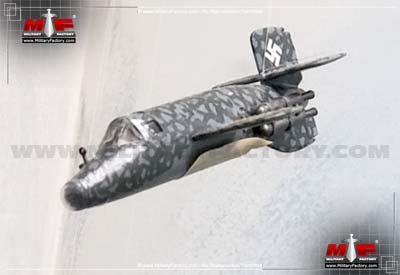
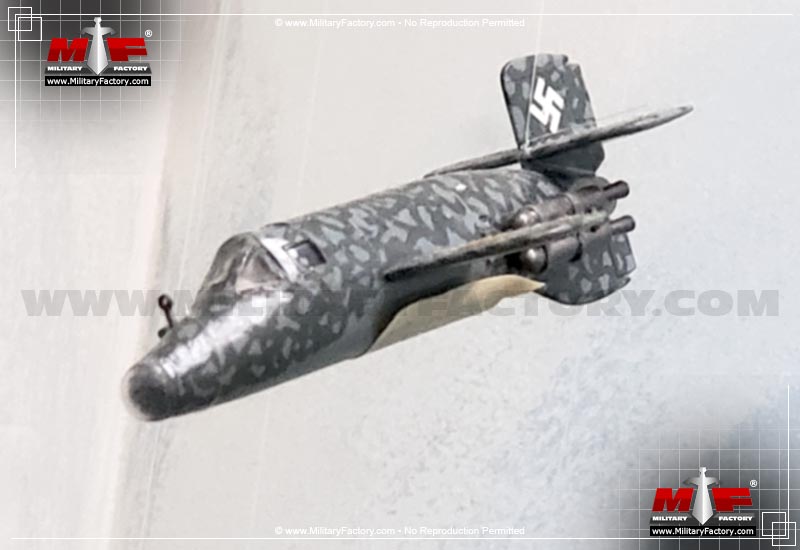
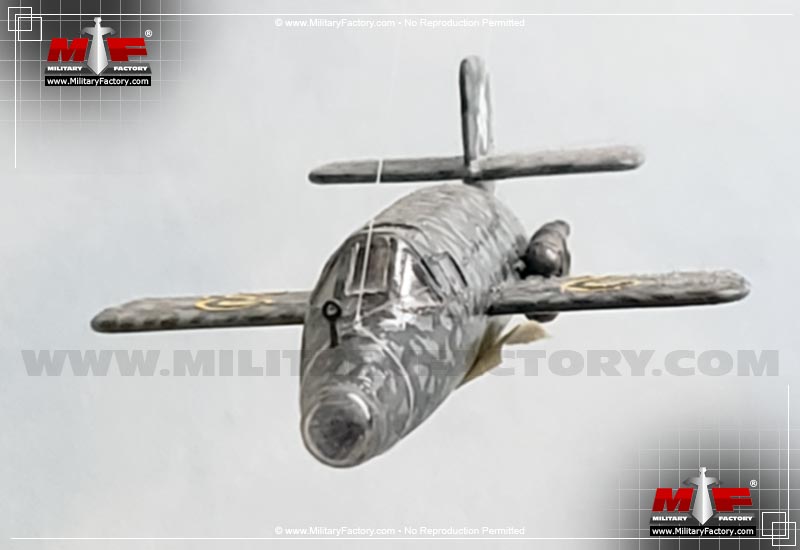
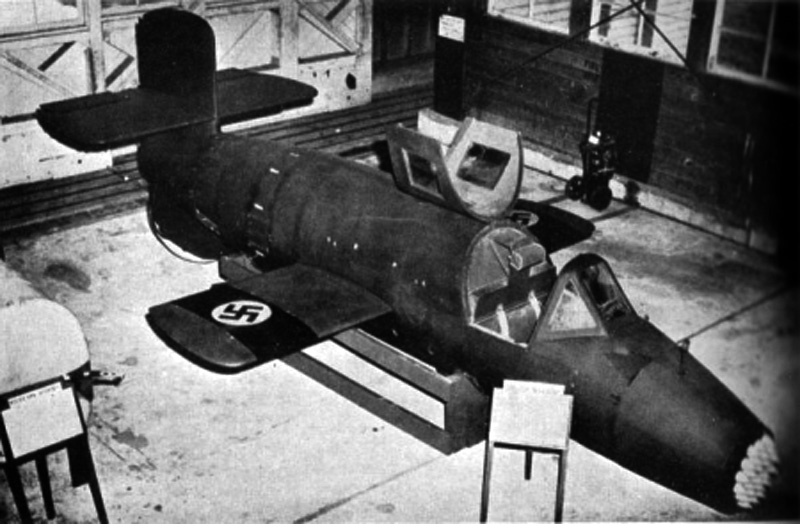
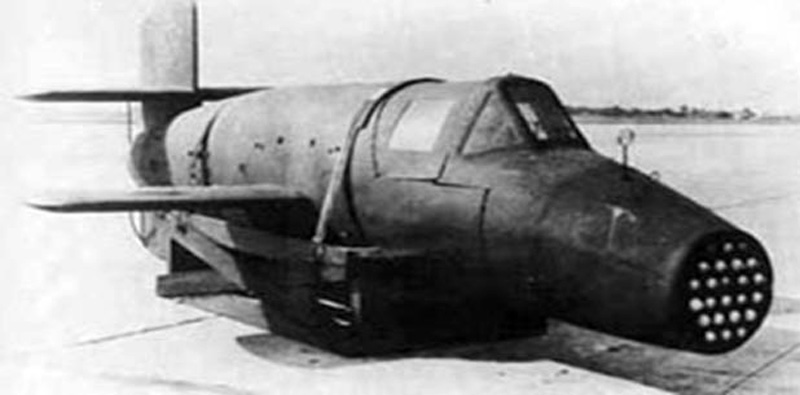
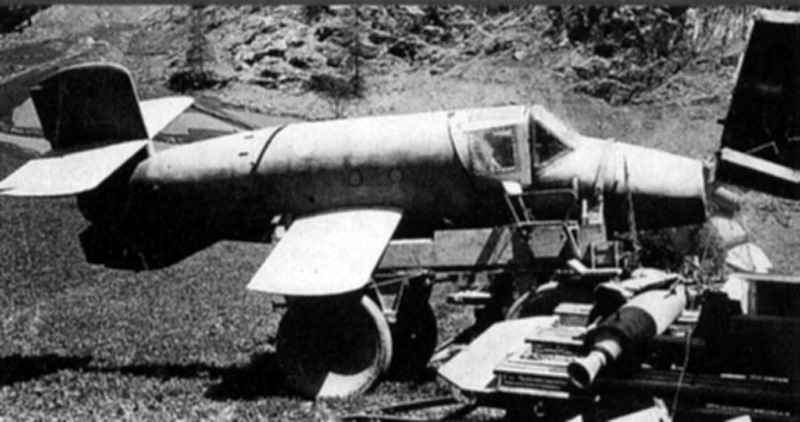
In August of 1944, no fewer than three Natters were available for early flight testing. Its design was rather utilitarian in appearance and consisted of a basic tubular airframe fuselage with an integrated cockpit, empennage section and nose cone. The nose cone was the bread-and-butter of the Natter for it fielded the necessary 24 x Fohn RZ-73 series 2.87" (73mm) high-velocity, high-explosive rocket payload to be used against the enemy bombers. The nose was "cut-off" at its end to reveal the rockets. In flight, the rockets would be covered over in a jettisonable plastic cap to maintain the aircraft's aerodynamic principles. The cockpit was fitted immediately aft of the nose assembly with seating for one and heavily framed with limited viewing. Additionally, the fuselage spine blocked nearly all rearward visibility but this was negligible for the Natter was in no way a "fighter" aircraft of any sort - simple a single-minded short-ranged, short-term interceptor. The fuselage tapered off at the rear to which a HWK 509C-1 series bi-fuel rocket motor was installed. This had the output of 4,400lbs of thrust and would be augmented by 4 x Schmidding-brand solid-fuel jettisonable boosters at launch (two held externally at each empennage side), providing the Natter with the necessary lift and altitude reach within a short amount of time. The boosters provided a further 1,100lbs of thrust each and could burn for up to 6 seconds, jettisoned after use. Wings were short, stubby and straight installations with clipped tips, providing the basic flight controls. There were both a dorsal and ventral vertical tail fin while the dorsal fin also held a pair of smaller horizontal planes.

All told, the Natter weighed in at nearly 5,000lbs. The aircraft's wingspan measured in at just over 13 feet with a running fuselage length of nearly 20 feet. When in profile, the Natter measured a height of 7.5 feet. At the time of launch, the airframe could hit speeds of approximately 620 miles per hour and climb an astounding 37,400 feet per minute. Its operational radius was a limited 12 miles while its service ceiling was 33,300 feet - well within the operational altitude of Allied bombers. The Natter could clock that altitude in just 60 seconds. Total endurance in a typical flight was just 4.6 minutes to 30,000 feet which made every second, literally, count for the Natter pilot. Beyond the 24 x 2.87" rocket armament, the Natter was - at one point - considered for 2 x 30mm MK 108 series heavy autocannons as well.

To maintain the vertical nature of the launch phase the aircraft would be rested on its tail and set up against an 80 foot vertically-set launching ramp. Initial flight control would be accomplished by autopilot via a radio-radar linkage arrangement to which the pilot would then be given control of the aircraft once it was within 5,000 feet of the intended targets. From there, the pilot could guide his aircraft via traditional flight controls at an enemy bomber (large targets by their very nature) and avoid enemy machine gun fire with his relatively small aircraft. Upon initiating the "attack" phase, the nose assembly would jettison its plastic cover cap and expose the 24 x 2.87" Fohn unguided rockets within. At this point, the pilot would fire all 24 rockets in a single ferocious salvo. The next step involved manually disengaging the empennage and its valuable booster rocket section. The canopy was then jettisoned and the pilot bailed out (under 150 miles per hour) in a conventional manner. Both the remaining rear fuselage section and pilot glided back to earth under deployed parachutes to be recovered/reused another day. If the rocket launching facilities failed at some point, the pilot could also consider ramming the aircraft nose into the enemy, of course he bailing out before the moment of impact.

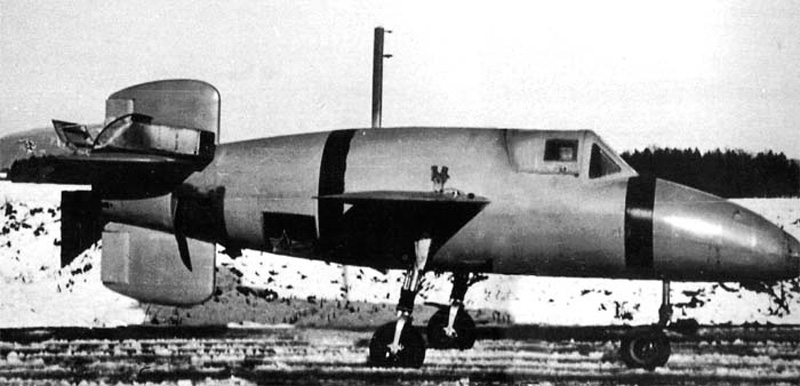
The Natter undertook gliding trials in October of 1944 and the controls proved adequate for the task. In December of 1944, the Natter project had evolved to the point that a new model version - the Ba 349-M - was unveiled with a fixed undercarriage. This was primarily utilized to formally evaluate the in-flight controls of the Natter when tethered to a "mothership" host - in this case, the ubiquitous Heinkel He 111 medium bomber - as the Natter could now be landed "safely" behind the aircraft in controlled tests. In March of 1945, the situation across the German Reich was dire. Nevertheless, attention was still being paid to unorthodox developments of many kinds including jet-powered aircraft, flying wings, rocket fighters, guided missiles and mega- tanks.

March also marked the first manned test flight of a Ba 349 with pilot Lothar Siebert at the controls. The Natter rose from its vertical launch rail as intended but, under 1,700 feet, the canopy was lost. The aircraft then went into a pseudo-loop and ultimately drove straight into the ground, resulting in a total loss of both aircraft and pilot. The cause of the crash was believed to be a faulty canopy fitting and the program resumed nonetheless. The Natter was, however, successfully tested in later weeks under manned control - at least three such instances were recorded. The German Air Ministry was "satisfied enough" with the results of the Natter development program that it deemed the aircraft cleared for formal operations. The series would be produced in two distinct forms, each differentiated by their main rocket propulsion - the Ba 349A was to be completed with the single-chambered HWK 509A-1 series whilst the Ba 349B would have the dual-chambered HWK 509C-1 installed - the latter affording the Natter more flight time.

In April of 1945, Bachemwerkes had produced approximately 20 to 36 Natters for operational service (sources vary on the total). However, April also proved a dismal month for the German Reich for, aside from mounting losses across every major front, leader Adolph Hitler had committed suicide in his underground bunker in Berlin as Soviet Army forces approached. Several German leaders were clearly clamoring for a favorable cease fire with the British and Americans while these enemy forces made steady - sometimes unmolested gains - into German territory. In the German town of Kirchheim, at least ten Natters were setup and presumably poised to strike. However, American Army forces spread through the area and captured these positions in full before their German caretakers could destroy them - bringing an end to the "wrath" of the mighty German Viper.

Amazingly, two complete Natters are known to exist total. One is showcased at the Deutsches Museum in Munich, Germany while the other is a part of the collection at the National Air & Space Museum at Silver Hill, Maryland.
Text ©2003-2013 www.MilitaryFactory.com • All Rights Reserved • No Reproduction Permitted
MilitaryFactory.com does NOT sell equipment/weaponry. Material presented throughout this website is for historical and entertainment value and should not to be construed as usable for hardware restoration, maintenance or general operation. Please consult manufacturers for such information. Our disclaimer. Email corrections / Comments to MilitaryFactory at Gmail dot com.
Picture of Bachem Ba 349 Natter (Adder / Viper)
Pic of the Bachem Ba 349 Natter (Adder / Viper)
Image of the Bachem Ba 349 Natter (Adder / Viper)
View All Images (4)

Specifications for the
Bachem Ba 349 Natter (Adder / Viper)
Vertically-Launched Rocket-Powered Interceptor


Country of Origin: Nazi Germany
Manufacturer: Bachem - Germany
Initial Year of Service: 1945
Production: 36


Focus Model: Bachem Ba 349 Natter (Adder / Viper)
Crew: 1


Length: 19.69ft (6m)
Width: 13.12ft (4.00m)
Height: 7.55ft (2.30m)
Weight (Empty): 1,940lbs (880kg)
Weight (MTOW): 4,921lbs (2,232kg)


Powerplant: 1 x Walter 109-509 (A-2/C-1) liquid-fuel rocket motor developing 4,400lbs of thrust; 4 x Schmidding 109-533 solid-fuel jettisonable booster rockets generating 1,100lbs of thrust each.


Maximum Speed: 495mph (797kmh; 430kts)
Maximum Range: 25miles (40km)
Service Ceiling: 45,932ft (14,000m; 8.7miles)
Rate-of-Climb: 37,400 feet per minute (11,400m/min)


Hardpoints: 0
Armament Suite:
STANDARD:
24 x 2.87" (73mm) unguided high-expolisve rockets in nose.

CONSIDERED:
2 x 30mm MK 108 autocannons


Variants:
Ba 349 - Main Series Designation


Ba 349-M - Developmental variant with fixed undercarriage from Klemm Kl 35.

Ba 349A - Production variant fitting HWK 509A-1 single-chamber rocket motor.

Ba 349B - Production variant fitting HWK 509C-1 dual-chamber rocket motor.


Operators: Nazi Germany

ALL AIRCRAFT CATEGORIES

BY DECADE:


1900 to 1909
1910 to 1919
1920 to 1929
1930 to 1939
1940 to 1949
1950 to 1959
1960 to 1969
1970 to 1979
1980 to 1989
1990 to 1999
2000 to 2009
2010 to 2019
2020 to 2029
VIEW ALL
Compare Aircraft


BY TYPE:


Anti-Submarine Warfare (ASW)
Attack Helicopters
Bomber Aircraft
Medium Bombers
Heavy Bombers
Close-Air Support (CAS)
Commercial Aircraft
Dive Bombers
Electronic Warfare Aircraft (EWA)
Experimental / X-Planes
Fighter Aircraft
Floatplane Aircraft
Flying Boat Aircraft
Aerial Refueling Tankers
Helicopters (ALL)
Interceptor Aircraft
Multi-Role Aircraft
Navy Carrier Aircraft
Night Fighters
Reconnaissance / Scout
Search & Rescue (SAR)
Scout Helicopters
Special Purpose
Torpedo Bombers
Trainer Aircraft
Transport Aircraft
Transport Helicopters
Unmanned Aerial Vehicles (UAVs)
Unmanned Combat Air Vehicles (UCAVs)


COLLECTIONS:


4th Generation Fighter Aircraft
5th Generation Fighter Aircraft
US X-Planes
Classic US Warbirds
French Military Helicopters
Grumman "Cats"
Howard Hughes Aircraft
Indian Air Force
Israeli Air Force
Libyan Aircraft
Modern Chinese Aircraft
Modern Chinese Fighters
Modern Military Aircraft
Modern North Korean Aircraft
Modern Trainer Aircraft
Modern US Aircraft
Mikoyan Aircraft
Sukhoi Aircraft
Syrian Aircraft
Top 10 Fighter Aircraft of All Time


AIRCRAFT BY CONFLICT:


Arab-Israeli War (1948)
Cuban Missile Crisis (1959-1962)
Falklands War (1982)
Indo-Pak War (1965, 1971)
Iran-Iraq War (1980-1988)
Lebanon War (1982)
Operation Allied Force (1999)
Operation Desert Storm (1991)
Six Day War (1967)
Spanish Civil War (1936)
Soviet-Afghan War (1979-1989)
Yom Kippur War (1973)


MISCELLANEOUS:


Aircraft Cockpits
Aircraft Manufacturers List
Aircraft Timeline

WORLD WAR 2:


1939 Aircraft
1940 Aircraft
1941 Aircraft
1942 Aircraft
1943 Aircraft
1944 Aircraft
1945 Aircraft
1946 Aircraft
Australian Aircraft
Battle of Britain Aircraft
Bombers
Four-Engine Bombers
British Aircraft
British Bombers
British Transports
Dive Bombers
Canadian Aircraft
Fighters
Chinese Aircraft
French Aircraft
German Aircraft
German Fighters
German Flying Boats
German Jets
Secret Weapons of the Luftwaffe
Italian Aircraft
Imperial Japanese Aircraft
Imperial Japanese Fighters
Mitsubishi Bombers
Navy Aircraft
Pearl Harbor
Polish Aircraft
Romanian Aircraft
US Aircraft
US Bombers
US Navy Aircraft
Soviet Aircraft
Torpedo Bombers
Transport Aircraft
Tuskegee Airmen Aircraft
W.A.S.P. Aircraft
WW2 Aircraft Ranked by Speed
VIEW ALL


WORLD WAR 1:


1914 Aircraft
1915 Aircraft
1916 Aircraft
1917 Aircraft
1918 Aircraft
Aircraft Timeline
Austro-Hungarian Aircraft
Bomber Aircraft
British Aircraft
Fighters
Flying Boats
French Aircraft
Imperial German Aircraft
Italian Aircraft
Scout Aircraft
Russian Empire Aircraft
US Aircraft
WW1 Aircraft Ranked by Speed
VIEW ALL


KOREAN WAR:


Australian Aircraft
Korean War Aces
Korean War Jets
North Korean Aircraft
US Military Aircraft
VIEW ALL


VIETNAM WAR:


Helicopters
North Vietnam Air Force
US Airpower
VIEW ALL


COLD WAR:


1950s French Aircraft
British V-Bombers
Cold War Bombers
Soviet Aircraft
Soviet Bombers
Soviet Interceptors
Soviet Helicopters
Strategic Air Command
US Aircraft
US Bombers
US Interceptors
VIEW ALL

Site Disclaimer | Privacy Policy | Site Map | MF Origins


©2013 www.MilitaryFactory.com • Content ©2003-2013 MilitaryFactory.com • All Rights Reserved • Site Contact Email: militaryfactory at gmail dot com. The "Military Factory" name and MilitaryFactory.com logo are registered ® trademarks and protected by all applicable domestic and international intellectual property laws.


Top MF Stuff: 2013 Military Pay Scale | Military Ranks | WW2 Weapons | Sniper Rifles | Kts to Mph | WW1 Aircraft | Automatic Rifles | Aircraft Cockpits | Vietnam War Weapons | Main Battle Tanks | Submachine Guns | Shotguns | French Military Victories


Most photographic images appearing on this site are courtesy of the United States Department of Defense and are approved for public use. Other images acquired through the public domain. Digital art work courtesy of Dan Alex. Business Consulting by Kyle Williams. Material presented throughout this website is for historical and entertainment value and should not to be construed as usable for hardware restoration, maintenance or general operation. Please consult manufacturers for such information.


eXTReMe Tracker