Military Factory
Military Pay Chart
Global Firepower
Military Industrial Complex
Second World War
Home
Military Pay Scale
Military Ranks
Small Arms
Aircraft
Land Systems
Navy
Education
Military Factory Facebook Logo
flag of Soviet Union

Simonov PTRS 1941 (PTRS-41) Anti-Tank; Anti-Material Rifle (1941)

Authored By Staff Writer | Last Updated: 12/22/2010

The Simonov PTRS 1941 rifle proved heavier and more complex than the competing Degtyarov model.

Find a School Near You
Follow Military Factory on Facebook:
Trending on Military Factory:
Recent Articles:
Simonov produced the PTRS-41 (or "PTRS 1941") anti-tank rifle for the Red Army during World War 2. While allied with Germany during their conquering of Poland in September of 1939, the two nations were at odds with one another after the German invasion of the Soviet Union in June of 1941. Soviet military industry was pressed to come up with every war-making device imaginable to try and stave off complete elimination from the invading German Army. One such need was for an anti-tank rifle to which Simonov and their PTRS-41 - and Degtyaryov with their PTRD-41 - delivered capable systems in 1941. While the PTRD-41 was the more numerous product available to the Red Army, the PTRS-41 was a respectable attempt that offered up some unique qualities to the former. The PTRD-41 was simpler and lighter, yet only fired a single round before required manual reloading. Conversely, the PTRS-41 was a heavier, longer and more complex (the latter due to its gas system) though fired from a self-loading, five-round clip-fed magazine. All of these factors ensured that the PTRD-41 would be available in lesser numbers to Soviet troops than the PTRD-41 due to mass production requirements during the whole of the war.

The PTRS-41 fired the same 14.5x114mm cartridge as the PTRD-41 but through a semi-automatic, gas-based operation. The cartridges were stacked in an overlapping fashion and fitted onto a base mount as a single-unit "clip" (as opposed to a conventional firearms "magazine"). A novel feature to help facilitate transport allowed the barrel of the PTRS-41 to be removed and carried as two separate components. However, the additions that made the PTRS-41 unique when compared to the PTRD-41 also went on to make for a more complex and temperamental system in the end - particularly the clip feed which was prone to jamming in the field.

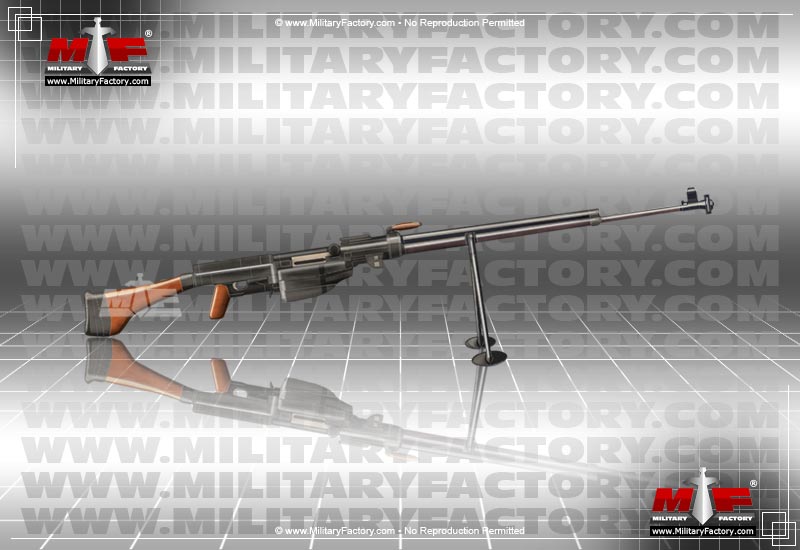
The PTRS-41 was of a conventional layout as rifles go. There was a wooden buttstock at the rear behind the squared-off receiver. A pistol grip and trigger group hung underneath the receiver in traditional fashion. The clip feed was just ahead of the trigger group with the cocking handle set to the right side of the gun body. Shell casings ejected from an ejection port above the clip feed. A carrying handle was fitted ahead of the major working components and a long gas cylinder was mounted above the barrel component. A folding bipod was fitted just underneath the barrel and helped to control the aiming of this heavy weapons system. The barrel protruded a distance away from the gas cylinder and sported a forward post sight with a muzzle brake, the latter intended to help dissipate some of the violent recoil inherent in the firing of such a large caliber round. The self-loading, semi-automatic nature of the weapon allowed it to be fired repeatedly until all rounds of ammunition were spent from the clip.

The PTRS-41 measured in at over 86 inches with its barrel measuring 48 inches in length. Muzzle velocity was an impressive 3,3230 feet per second and armor penetration up to 25mm could be attained from out to 500 meters (when 0-degree sloped).

Like the PTRD-41, the PTRS-41 arrived on the battlefield at a time when German armor protection was an ever-increasing prospect - thusly rendering such anti-tank rifle systems somewhat limited in their usefulness. Regardless, these weapon systems could still prove reliable against softer-skinned enemy vehicles and tanks to which the weapon could be aimed at critical components such as softer rear areas (where engines were typically mounted), driver vision blocks and tracks. Additionally, the PTRS-41 proved handy in house-to-house fighting where its penetrative capabilities could be used to advantage. Despite the growing limitations, the PTRS-41 was fielded throughout the war into 1945. Like other captured Soviet weapons, the Germans put the still-useful PTRS-41 into their own service under the designation of 14.5mm Panzerabwehrbuchse 784(r) but used them only up to 1943.

The PTRS-41 survived the war and appeared in the Korean War under the North Korean and Chinese banners.
Text ©2003-2013 www.MilitaryFactory.com • All Rights Reserved • No Reproduction Permitted
MilitaryFactory.com does NOT sell equipment/weaponry. Material presented throughout this website is for historical and entertainment value and should not to be construed as usable for hardware restoration, maintenance or general operation. Please consult manufacturers for such information. Our disclaimer. Email corrections / Comments to MilitaryFactory at Gmail dot com.
Picture of Simonov PTRS 1941 (PTRS-41)
View All Images (1)

Specifications for the
Simonov PTRS 1941 (PTRS-41)
Anti-Tank; Anti-Material Rifle


Country of Origin: Soviet Union
Manufacturer: Simonov Design Bureau - Soviet Union
Initial Year of Service: 1941


Overall Length: 2108mm (82.99in)
Barrel Length: 1,216.00mm (47.87in)
Weight (Empty): 46.08lbs (20.90kg)


Cartridge: 14.5x114mm
Action: Semi-Automatic; Gas-Operated
Feed: 5-round magazine
Muzzle Velocity: 3,314ft/sec (1,010m/sec)
Range: 1,800ft (549m; 600yds)
Sights: Front and Rear


Variants:
PTRS 1941 - Base Series Designation


PTRS-41 - Alternative Designation

14.5mm Panzerabwehrbuchse 784(r) - German Army designation for captured systems.


Operators: China; North Korea; Soviet Union

ALL SMALL ARMS CATEGORIES

BY YEAR:


1700 to 1799
1800 to 1899
1900 to 1909
1910 to 1919
1920 to 1929
1930 to 1939
1940 to 1949
1950 to 1959
1960 to 1969
1970 to 1979
1980 to 1989
1990 to 1999
2000 to 2009
2010 to 2019
VIEW ALL
Compare Guns


BY TYPE:


Anti-Aircraft Weapons
Anti-Material Rifles
Anti-Tank Weapons
Automatic Rifles
Bolt-Action Rifles
Carbine Guns
Flamethrowers
Flintlock Guns
Grenade Launchers
Hand Grenades
Lever-Action Rifles
Machine Guns
Mortars
Musket Guns
Pistols / Handguns
Recoilless Rifles
Revolvers
Rocket Launchers
Shotguns
Silenced Guns
Sniper Rifles
Special Weapon Systems
Submachine Guns
VIEW ALL


SPECIAL:


18th Century Warfare
3 Soldiers Statue
Battle of Mogadishu
Chainmail Armor
Firearm Types Defined
French Military Victories
Medieval Crossbow
Medieval Longbow
Vietnam War Casualties
Vietnam War Memorial

WORLD WAR 2:


British Guns
French Guns
German Guns (ALL)
German Rifles
Italian Guns
Japanese Guns
Soviet Guns
US Guns
US Infantry Regiment-Level Guns
Machine Guns
Pistols
Rifles
Submachine Guns
Sniper Rifles
VIEW ALL


WORLD WAR 1:

Pistols
Rifles
Machine Guns
Mortars
US Guns
VIEW ALL


KOREAN WAR:

Machine Guns
VIEW ALL


VIETNAM WAR:

Mortars
VIEW ALL


COLLECTIONS:


Ancient Weapons
British SAS Weapons
Civil War Guns
Colt Guns
Glock Guns
GROM Polish Special Forces
Guns of Libya
Guns of North Korea
Guns of Syria
Guns of WW1 & WW2
Heckler & Koch Guns
Kalashnikov Guns
Modern Russian Guns
Navy SEAL Weapons
Spetsnaz Weapons
Weapons of Desert Storm
Wild West Guns
Winchester Guns


HOLLYWOOD/GAMES:


Guns of the Walking Dead

Site Disclaimer | Privacy Policy | Site Map | MF Origins


©2013 www.MilitaryFactory.com • Content ©2003-2013 MilitaryFactory.com • All Rights Reserved • Site Contact Email: militaryfactory at gmail dot com. The "Military Factory" name and MilitaryFactory.com logo are registered ® trademarks and protected by all applicable domestic and international intellectual property laws.


Top MF Stuff: 2013 Military Pay Scale | Military Ranks | WW2 Weapons | Sniper Rifles | Kts to Mph | WW1 Aircraft | Automatic Rifles | Aircraft Cockpits | Vietnam War Weapons | Main Battle Tanks | Submachine Guns | Shotguns | French Military Victories


Most photographic images appearing on this site are courtesy of the United States Department of Defense and are approved for public use. Other images acquired through the public domain. Digital art work courtesy of Dan Alex. Business Consulting by Kyle Williams. Material presented throughout this website is for historical and entertainment value and should not to be construed as usable for hardware restoration, maintenance or general operation. Please consult manufacturers for such information.


eXTReMe Tracker