Al-Qadissiya Tabuk Designated Marksman
The Iraqi Tabuk is a capable of lethal results in an urban battlefield environment.
By Staff Writer
The Iraqi Tabuk, produced by Al-Qadissiya Establishments, is classified as a Designated Marksman Rifle (DMR). Unlike its Soviet-based contemporaries chambered to fire the 7.62x54R cartridge, the Tabuk makes use of the 7.62x39mm Kalashnikov cartridge. Despite its appearance as a traditional sniper rifle, the Tabuk DMR is relied upon to deliver accurate fire-support from both offensive and defensive positions. In this way, the operator relies on the heavy-hitting firepower of an assault rifle pedigree mated to the lethal capabilities of a long-barreled, scoped weapon coupled to a trained marksman. In essence, the Tabuk becomes a long-barrel Kalashnikov system - which is no surprise considering the Soviet origins of the Iraqi system. The Tabuk has proven effective in the confined spaces of urban warfare, particularly in combat actions across Iraq. Though its effective range is within the reported 500 yards and the long-range ballistics of the 7.62x39mm cartridge leave something to be desired in terms of sniping power (hence the "designated marksman rifle" categorization), the urban setting - with its limited ranges - is a good fit for the Tabuk.
Al-Qadissiya Establishments, based in north of Bagdad took to producing the Tabuk on machinery, which was purchased under Saddam Hussein's watch from then-Yugoslavian President Slobodan Milosevic. Yugoslavia took to license-production copies of Soviet-inspired weapon systems since its post-World War 2 Communist days and did so with their 1970 Zastava M70 series - this based on the Soviet RPK light machine gun. As a result, the Tabuk was in fact a modified and indirect copy of the Soviet RPK via the Yugoslavian M70 series. The Iraqi version first appeared in the latter part of the 1980's and has been a capable fixture for the Iraqi Army ever since.
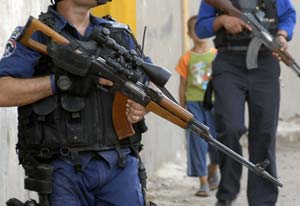
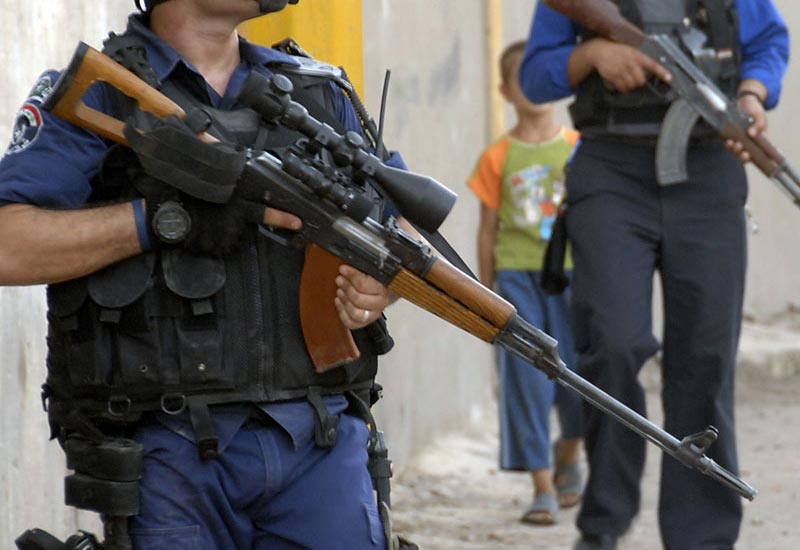
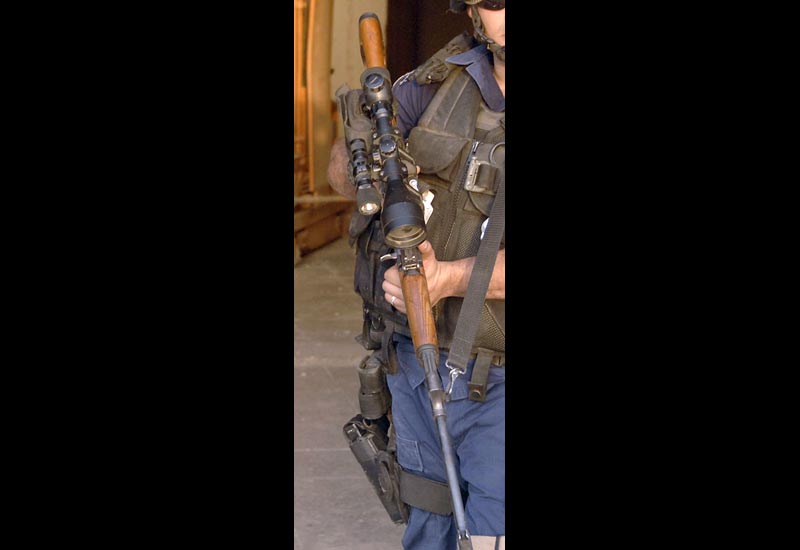
Outwardly, the Tabuk retains most of what makes a weapon a Kalashnikov by Western standards. Along with the curved magazine box is the extensive woodworking along the forward body. The only visible exceptions are the longer barrel (capped with a muzzle brake), optional optics and the skeleton buttstock with integrated cheekpiece. The buttstock supplies not only stability when firing but the cut-out nature of the design makes for a overall lighter weapon. With its RPK origins, the Tabuk retains the stamped-steel receiver of 1.5mm thickness and sports a simple two-mode fire selector switch for "Safe" and "Fire". Fire mode is limited to semi-automatic fire as a full-automatic mode would cause considerable damage to the new (and longer barrel). The barrel itself is 23.6 inches in length and benefits the Tabuk by supplying a high muzzle velocity as compared to a base AKM assault rifle leading up to improved accuracy. Firing operation is a Kalashnikov long-stroke gas system with a rotating bolt. Standard sights include an RPK-style rear tangent adjustable sight and an AK-style adjustable forward post. Spent cartridge casings are ejected through the extraction port along the right side of the gun body. Optics are optional but almost always utilized and mounted to a rail along the left side of the gun body near the receiver. Scope options include a variety of Eastern Bloc types that work well with the inherent ballistics of the 7.62x39mm cartridge. A fully-loaded Tabuk (with scope) weighs in at just under 10lbs with an overall length of 43.7 inches.
Supplying the weapon is a variable array of 7.62x39mm-based magazines. This includes the standard 30-round detachable box magazine (retaining its true Kalashnikov curved form) but can consist of 20- and 40-round magazine forms as well. As the Tabuk is called upon in the fire support role more-so than a traditional sniper role, the weapon can also make use of a 75-round magazine drum. Additionally, the universal cartridge also means that any given infantryman can supply ammunition to the Tabuk operator in a given situation. The ready supply of Kalashnikov-based ammunition also means that the Tabuk can operate with hearty supplies of AK-ammunition in just about any other regional battlefront outside of Iraq.
In practice, the Tabuk has proven an effective and reliable weapon no doubt thanks to its Kalashnikov origins. The rifle is extremely effective the required medium ranges inherent in urban warfare when coupled with the proper ammunition and scope. It is no surprise that the reliability is on par with its Kalashnikov brethren. Its association to the Kalashnikov family line also means that little in the way of training is required to get the most out of this weapon for Kalashnikov rifles are known the world over for their operational simplicity - making them the arm of choice for many-a-guerilla fighter. The semi-automatic fire mode from the available high-count magazines also provides for a very precision-targeted battlefield component attached to any rifle platoon. Where the Tabuk falls behind is in the poor exterior ballistics of its 7.62x39mm round, leading to a less-than-stellar penetration value beyond medium range especially when facing off against an armored target. Beyond that, it is a solid indigenous effort on the part of the Iraqis.
History text ©2003-2009 www.MilitaryFactory.com • All Rights Reserved •
No Reproduction Without Permission • Corrections / Comments to MilitaryFactory at Gmail dot com
Last Updated: 11/2/2009
|