Global Firepower | Military Industrial Complex | Second World War History
Home | Military Pay Scale Chart | Aircraft | Infantry Weapons | Military Vehicles | Navy Ships | Military Education | French Military Victories | Military Ranks | WW2 Weapons
Military Factory Latest from Military Factory
Thumbnail picture of the Dardo infantry fighting vehicle
Dardo IFV
Thumbnail picture of the Supermarine Scimitar fighter
Supermarine Scimitar
Thumbnail picture of the Centauro B1 8x8 tank killer
Centauro 8x8
Thumbnail picture of the Novi Avion fighter
Novi Avion
Thumbnail picture of the FR F2 bolt-action sniper rifle
FR F2
Thumbnail picture of the Lebel Model 1886 bolt-action rifle
Lebel Model 1886
2009 Military Pay Scale Chart - for Army, Navy, Air Force and Marines
  BY TYPE
    · Anti-Aircraft
    · Anti-Materiel
    · Anti-Tank
    · Automatic Rifles
    · Bolt-Action Rifles
    · Howitzers
    · Lever-Action Rifles
    · Machine Guns
    · Mortars
    · Muskets
    · Pistols
    · Revolvers
    · Shotguns
    · Sniper Rifles
    · Special Weapons
    · Submachine Guns
    · View All Weapons

Military Factory > Infantry Weapons > 577 Enfield
 
 
More Pictures QuickGraphs Ballistics Chart CompareX2 Acronyms

577 Enfield

The 577 Enfield Musket fired the same ammunition as the .58 Springfield rifle musket.
By Staff Writer

Bookmark and Share

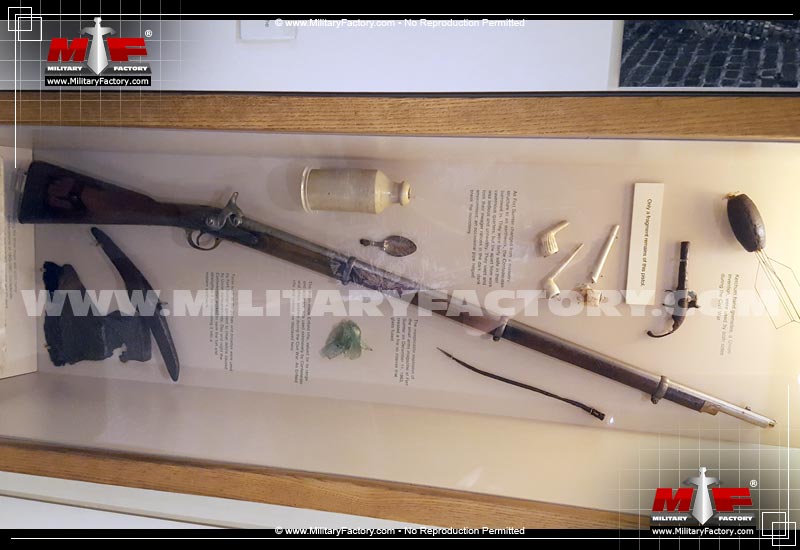
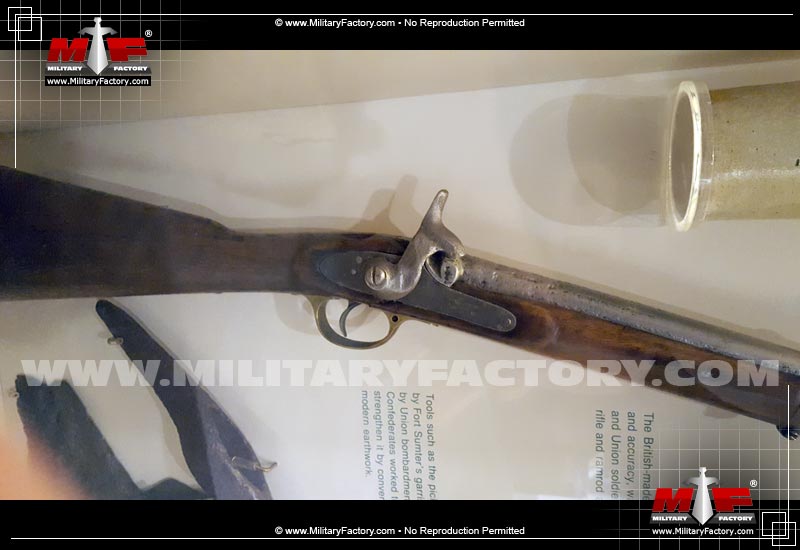
The 577 Enfield rifle musket utilized the standard Minie ball and paper cartridge, an ammunition type shared by the American-made .58 Springfield rifle musket. Already a proven weapon for the British, the 577 Enfield also became a popular rifle in use with US Confederate troops during the American Civil war. The weapon proved a proper counter to the highly effective Union 58 Springfield rifle models. As the war brewed over on both sides, the respective armies struggled to find the arms needed to field proper infantry regiments. As such, the forces of both Union and Confederates alike looked to import foreign designs to help supplant their needs.

Initially produced in 1853, the .577 Enfield was already highly utilized by the British Empire for its accuracy at range and the man-stopping power of the 500 grain ball. The .577 in the American Civil War had the ability to use the Union Springfield rifle ammunition and its own .577 caliber brand, allowing Confederate soldiers to use captured Union ammunition as a result. Knowing the disparity of industrial strength in the North when compared to the South, this design element was a key benefit.

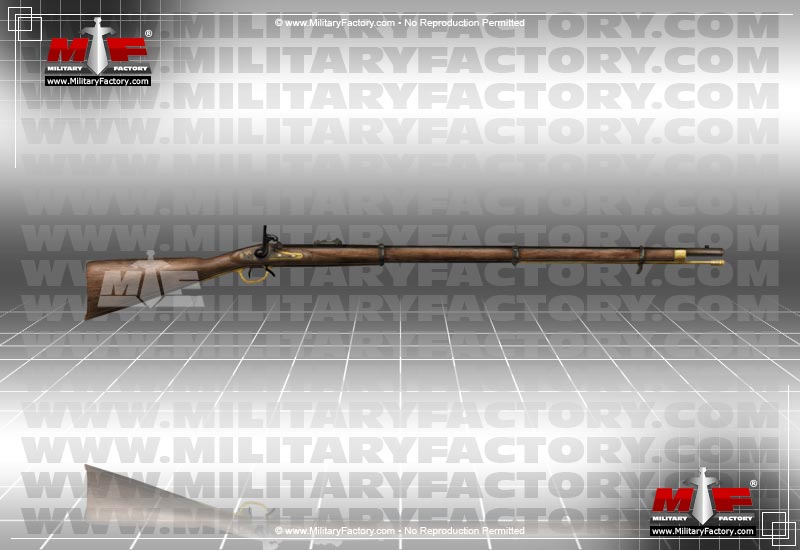
The effective range of the .577 Enfield was listed at 600 yards, though the weapon could range out as far as 1,000 yards. Penetration of the 500 grain Minie ball could top 4 inches of wood at this maximum distance. Enfield sights were wholly adjustable through a rear friction cross bar/standing leaf arrangement. In contrast, the Springfields featured a fixed rear sight with two leaves, capable of marking for targets at 100, 300 and 500 yards as needed.

The Enfield was initially produced as a muzzle-loading musket, though the advent of cartridge breech loading mechanisms rendered muzzle-loading guns extinct. As such, conversions were now being offered for many of the muzzle loading guns in use. For the British, this came in the form of the "Snider" - interestingly enough developed by an American, Jacob Snider - converting the prized 577 Enfields to breech loading guns beginning in 1866. 577 Enfields fought on throughout the British Empire, seeing action in Crimea, India, Africa and the New World.

History text ©2003-2009 www.MilitaryFactory.com • All Rights Reserved • No Reproduction Without Permission • Corrections / Comments to MilitaryFactory at Gmail dot com

Last Updated: 6/17/2009


  Specifications for the 577 Enfield
arrow downOperation:
Action: Hammer Action
Cartridge: Minie ball paper cartidge
Feed System: 1
Muzzle Velocity: 950ft/sec (290m/sec)
Effective Range: 3,000ft (914m; 1,000yds)
Sights: Adjustable Rear

arrow downDimensions:
Overall Length: 1,422mm (55.98in)
Barrel Length: 0mm (0.00in)
Empty Weight: 4.31kg (9.50lbs)


More Pictures QuickGraphs Ballistics Chart CompareX2 Acronyms

  Special Infantry Weapons Collections

Weapon Groups:
Ancient Weapons
Chainmail Armor
Glock Handguns
Heckler & Koch
Kalashnikov Rifles
Medieval Longbow
Medieval Crossbow

World War 2:
Weapons of World War 2
US Infantry Regiment Weapons in World War 2
Guns of World War 2

Miscellaneous:
18th Century Warfare
Battle of Mogadishu
French Military Victories
Three Soldiers Statue
Vietnam War Casualties
Vietnam War Memorial
Vietnam War Weapons
Weapons of Desert Storm


  Recent Infantry Weapons Additions
Thumbnail picture of the FR F2 bolt-action sniper rifle
FR F2
Thumbnail picture of the Lebel Model 1886 bolt-action rifle
Lebel Model 1886
Thumbnail picture of the Winchester Model 1873 rifle
Winchester 1873

  Contacting MilitaryFactory.com
We can only get better if you tell us how. You can contact MilitaryFactory.com at MilitaryFactory at gmail dot com (replace "at" with "@" and "dot with ".") with any questions, comments or corrections. We also accept related military imagery that you approve for us to use on our website. Keep in mind, however, that due to volume, we may not directly respond to your inquiry. Please add us to your list of non-blocked recipients!

  Profile:


Picture of the 577 Enfield
Image Courtesy of Dan Alex

flag of United Kingdom
1853
Designation: 577 Enfield
Classification Type: Rifle Musket
Manufacturer: Royal Small Arms Factory / Enfield Lock - UK

Country of Origin: United Kingdom

Operators: United Kingdom; United States


  Variants
577 Enfield - Base Production Model

  Collections
  • Ultimate Lockpick - Combat Shotguns
  • Sniper! - Tools of a Deadly Trade
  • Machine Gun - Weapon of Mass Suppression
  • Heckler & Koch - World Renowned
  • Big Guns - Anti-Materiel Rifles


Free GI Bill Guide

Top MF Stuff: Military Pay Scale Chart | Military Ranks | World War 2 Weapons | Sniper Rifles | Conversion Calculators


©2009 www.MilitaryFactory.com • Content ©2003-2009 MilitaryFactory.com • All Rights Reserved • Disclaimer Privacy Policy Site Map Origins
Most photographic images appearing on this site are courtesy of the United States Department of Defense and are approved for public use.
Other images acquired through the public domain. Digital art work courtesy of Dan Alex.
Business Consulting by Kyle Williams

Material presented throughout this website is for historical and entertainment value and should not to be construed as usable for
hardware restoration, maintenance or general operation. Please consult manufacturers for such information.

Site Contact: militaryfactory at gmail dot com (replace "at" with "@" and "dot" with ".") eXTReMe Tracker