Military Factory
Military Pay Chart
Global Firepower
Military Industrial Complex
Second World War
Home
Military Pay Scale
Military Ranks
Small Arms
Aircraft
Land Systems
Navy
Education
Military Factory Facebook Logo
flag of United States

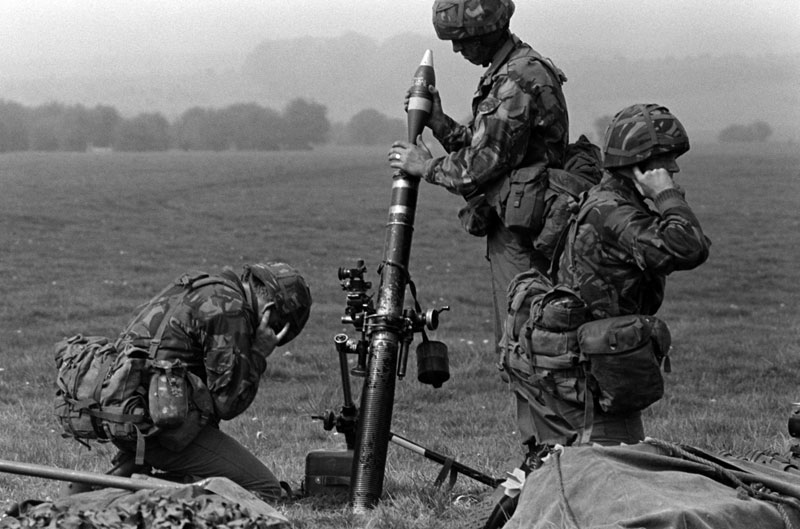
M29, 81mm Mortar High-Angle Heavy Mortar (1952)

Authored By JR Potts, AUS 173d AB | Last Updated: 9/16/2010

The M29 81mm mortar replaced the M1 mortar in 1952 and was used heavily by American forces in the upcoming Vietnam War.

Find a School Near You
Follow Military Factory on Facebook:
Trending on Military Factory:
Recent Articles:
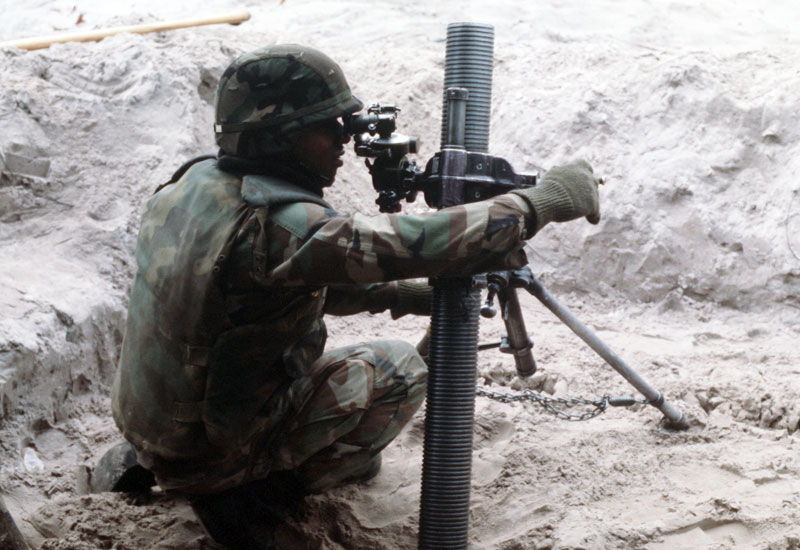
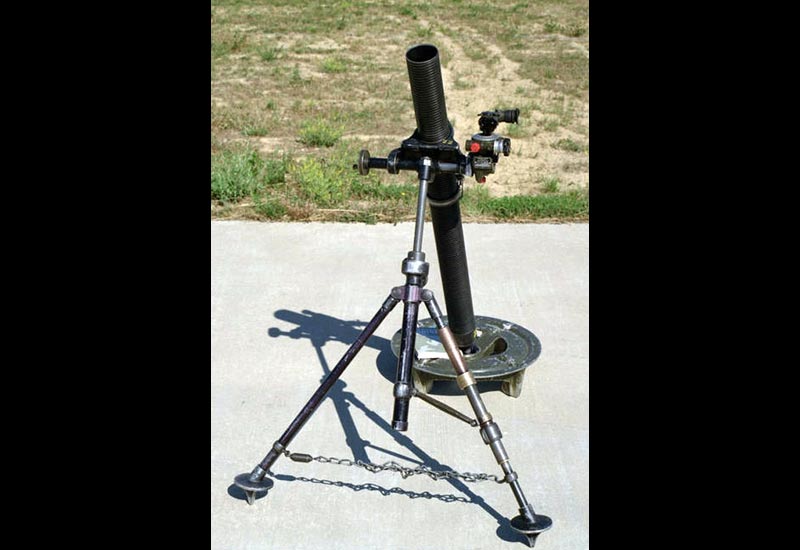
In 1952, the American government replaced the standard Army and Marine Corps 81mm service mortar of World War 2/Korean War - the M1 - with a newer design designated as M29. The "straight tube" M29s were chosen for two reasons: greater range than her predecessors while also proving lighter to maximize portability. The M29 weighed in at a manageable 93.5lbs (42.411 kg) when compared to the 136lbs (61.689 kg) of the M1 she replaced. Mortar crews of the Army and Marine Corps were pleased with the improvements in the new system. A lighter design allowed a fire team to get into position quickly while at the same time carry more mortar rounds. The mortar also offered the promised increase in range as well, allowing fire teams to engage the enemy at distance. The M29 would become the standard American mortar in the upcoming Vietnam War.

The 81mm weapons platoon consisted of the headquarters platoon and four mortar squads. In charge was the platoon commander - normally a lieutenant. Second-in-command was an assistant platoon commander, also normally a lieutenant, as well as a platoon sergeant. A weapons sergeant was in charge of the ammunition and he served as the primary communications personnel. The mortar squad was composed of different numbers of personnel depending on the service branch and battlefield situation. In a surprise combat engagement, a mortar tube could conduct fire missions with as few as three operators (though optimally only for a short time) - this group was made up of the gunner, assistant gunner and ammunition bearer. However, standard operating procedures suggested five to seven personnel as normal for most missions.

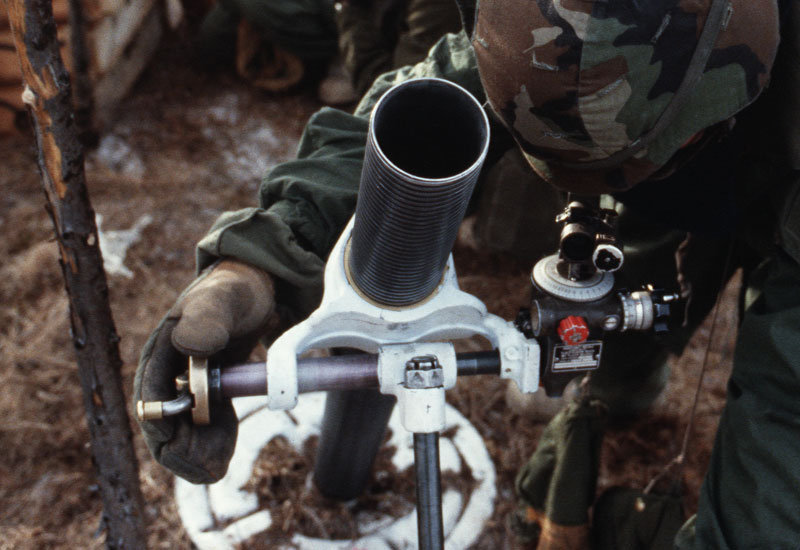
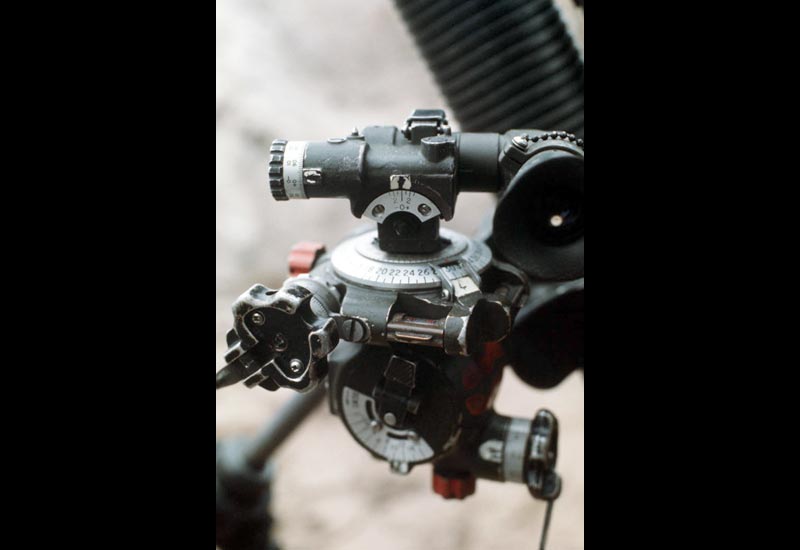
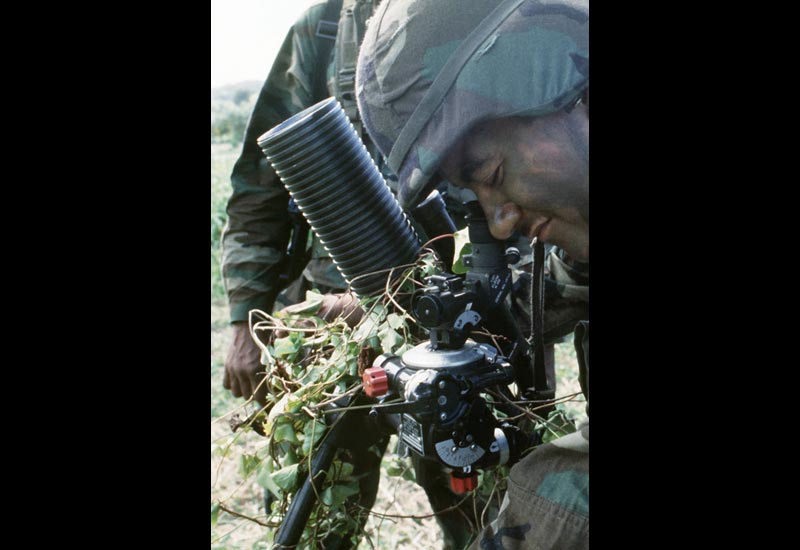
The squad leader carried the sight box containing the M34A2 sight and four aiming stakes. His position was normally behind the mortar in a crouched position where he could control and support the squad during the fire mission. The sergeant also monitored the emplacement of the tube, sighting for distance, loading and firing of the mortar. The assistant squad leader was also the gunner who manned the left side of the mortar where he could operate the sight, the traversing assembly wheel and the gear handle for elevation. His carried equipment alone weighed some 25 lbs. The gunner would receive commands from the squad leader and enter the appropriate firing data onto the sight and position the tube for correct deflection and elevation against the intended target or target area.

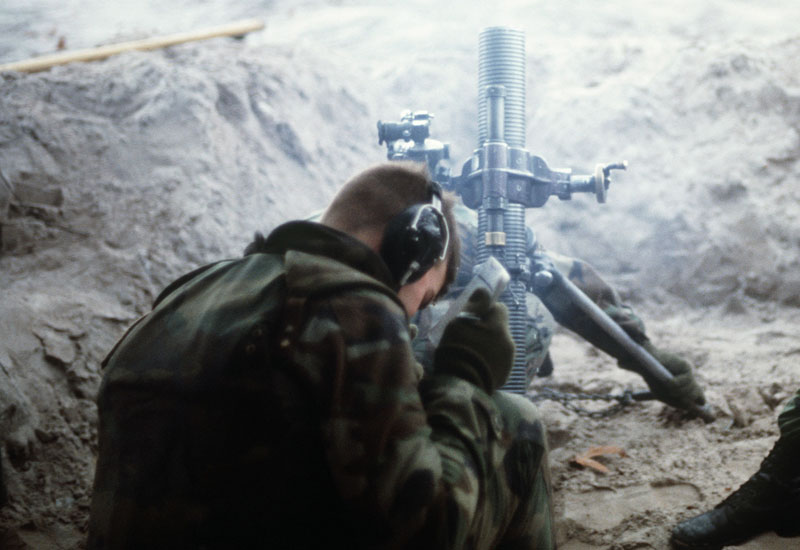
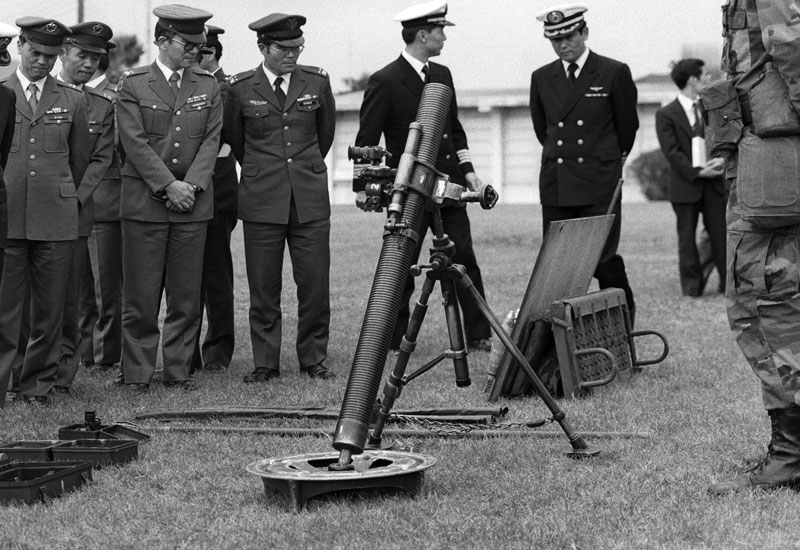
If large deflection shifts were required, the gunner and assistant gunner (the latter carrying one ready-to-fire round of HE (High-Explosive) and the tube, weighing 23lbs) picks up the mortar and repositions it. The assistant gunner stands or crouches to the right side of the mortar and is ready to load the weapon as required. In addition to loading, he is also charged with swabbing the bore of the tube after every ten rounds have been fired or at the end of the fire mission to ensure optimal operating conditions for the life of the mortar tube. The fourth squad member is the first ammunition bearer who positions himself on the right rear and passes rounds to the assistant gunner. He carries the outer ring, weighing 21lbs, into action. In a typical five-man squad scenario, the "fifth man" becomes the second ammunition bearer. Being the least senior "ammo humper" (or ammunition bearer), this specialist carries the inner base plate ring weighing 24 lbs. His primary job is to replace the first ammo bearer in case the crew member is wounded or killed in action. He can also provides personal security for the squad depending on the mission and maintains the ammo stock pile along with being the squad’s truck driver.

The mortar round is fired downrange by dropping the round into the tube with the base end first (this is what makes the M29 a "muzzle-loading" weapon). The mortar, now being fed by gravity, allows the inserted projectile to fall down to the bottom the tube. At the bottom is a firing pin that impacts against the bottom of the projectile which holds the primer cap. On impact with the firing pin, a small ignition charge is lighted and the expanding gasses propel the mortar round out of the tube towards the target at the predetermined trajectory. It is not uncommon to utilize several rounds to "train" the mortar against a target or area.

The mortar system, as a whole, is made up of three major parts consisting of the tube, the base plate and bipod. The barrel itself is made up of the tube, externally threaded at the rear to take a base plug and has a ball-shaped projection on its lower end to fit into the socket of the base plate. The bipod legs are made up of two tubular steel legs hinged at the sides of the elevating mechanism. The legs have spiked feet and their spread is controlled with an adjustable chain-and-spring to reduce the recoil shock when firing. The left leg has a cross level sliding bracket mounted with a locking sleeve and an adjusting nut is used on uneven ground. This enables the sight, located at the left end of the yoke, to be moved into an upright position.

A number of projectiles were made available to M29 fire teams. The M374 HE (high-explosive) round listed a range of 4,934 yards. The M374A1 HE (high-explosive) could tackle targets out to a range of 5,180 yards. The M375 was a general white phosphorous round having a range of 4,934 yards. The M301A1 Illumination round could burn in the night sky for up to 75 seconds (its fall retarded by way of a small parachute) and was given a range of 2,296 yards. The resulting light was equivalent to 500,000 candle power and would illuminate an area of 1,200 yards.

In 1964, the US Army and Marine Corps replaced the M29 with the M29A1. The M29A1 featured an improved hard chrome-plated bore tube that allowed for an increased rate-of-fire and more resistant to battlefield wear-and-tear as well as making for an easier weapon to clean. The M29E1 was another variant in the M29 mortar family line. The new and lighter M3 base plate was also used with the M29 to further its portability requirements.
Text ©2003-2013 www.MilitaryFactory.com • All Rights Reserved • No Reproduction Permitted
MilitaryFactory.com does NOT sell equipment/weaponry. Material presented throughout this website is for historical and entertainment value and should not to be construed as usable for hardware restoration, maintenance or general operation. Please consult manufacturers for such information. Our disclaimer. Email corrections / Comments to MilitaryFactory at Gmail dot com.
Picture of M29, 81mm Mortar
Pic of the M29, 81mm Mortar
Image of the M29, 81mm Mortar
View All Images (9)

Specifications for the
M29, 81mm Mortar
High-Angle Heavy Mortar


Country of Origin: United States
Manufacturer: State Factories - US
Initial Year of Service: 1952


Overall Length: 1295mm (50.98in)
Barrel Length: 838.00mm (32.99in)
Weight (Empty): 46.54lbs (21.11kg)


Cartridge: 81mm
Action: Smooth Bore; Muzzle-Loading
Feed: 1
Rate-of-Fire: 24 rounds per minute
Range: 11,447ft (3,489m; 3,816yds)
Sights: M64A1; M53


Variants:
M29 - Base Series Designation


M29A1 - Hard Chrome-Plated Barrel; improved rate-of-fire, maintenance and reliability.

M29E1


Operators: United States

ALL SMALL ARMS CATEGORIES

BY YEAR:


1700 to 1799
1800 to 1899
1900 to 1909
1910 to 1919
1920 to 1929
1930 to 1939
1940 to 1949
1950 to 1959
1960 to 1969
1970 to 1979
1980 to 1989
1990 to 1999
2000 to 2009
2010 to 2019
VIEW ALL
Compare Guns


BY TYPE:


Anti-Aircraft Weapons
Anti-Material Rifles
Anti-Tank Weapons
Automatic Rifles
Bolt-Action Rifles
Carbine Guns
Flamethrowers
Flintlock Guns
Grenade Launchers
Hand Grenades
Lever-Action Rifles
Machine Guns
Mortars
Musket Guns
Pistols / Handguns
Recoilless Rifles
Revolvers
Rocket Launchers
Shotguns
Silenced Guns
Sniper Rifles
Special Weapon Systems
Submachine Guns
VIEW ALL


SPECIAL:


18th Century Warfare
3 Soldiers Statue
Battle of Mogadishu
Chainmail Armor
Firearm Types Defined
French Military Victories
Medieval Crossbow
Medieval Longbow
Vietnam War Casualties
Vietnam War Memorial

WORLD WAR 2:


British Guns
French Guns
German Guns (ALL)
German Rifles
Italian Guns
Japanese Guns
Soviet Guns
US Guns
US Infantry Regiment-Level Guns
Machine Guns
Pistols
Rifles
Submachine Guns
Sniper Rifles
VIEW ALL


WORLD WAR 1:

Pistols
Rifles
Machine Guns
Mortars
US Guns
VIEW ALL


KOREAN WAR:

Machine Guns
VIEW ALL


VIETNAM WAR:

Mortars
VIEW ALL


COLLECTIONS:


Ancient Weapons
British SAS Weapons
Civil War Guns
Colt Guns
Glock Guns
GROM Polish Special Forces
Guns of Libya
Guns of North Korea
Guns of Syria
Guns of WW1 & WW2
Heckler & Koch Guns
Kalashnikov Guns
Modern Russian Guns
Navy SEAL Weapons
Spetsnaz Weapons
Weapons of Desert Storm
Wild West Guns
Winchester Guns


HOLLYWOOD/GAMES:


Guns of the Walking Dead

Site Disclaimer | Privacy Policy | Site Map | MF Origins


©2013 www.MilitaryFactory.com • Content ©2003-2013 MilitaryFactory.com • All Rights Reserved • Site Contact Email: militaryfactory at gmail dot com. The "Military Factory" name and MilitaryFactory.com logo are registered ® trademarks and protected by all applicable domestic and international intellectual property laws.


Top MF Stuff: 2013 Military Pay Scale | Military Ranks | WW2 Weapons | Sniper Rifles | Kts to Mph | WW1 Aircraft | Automatic Rifles | Aircraft Cockpits | Vietnam War Weapons | Main Battle Tanks | Submachine Guns | Shotguns | French Military Victories


Most photographic images appearing on this site are courtesy of the United States Department of Defense and are approved for public use. Other images acquired through the public domain. Digital art work courtesy of Dan Alex. Business Consulting by Kyle Williams. Material presented throughout this website is for historical and entertainment value and should not to be construed as usable for hardware restoration, maintenance or general operation. Please consult manufacturers for such information.


eXTReMe Tracker