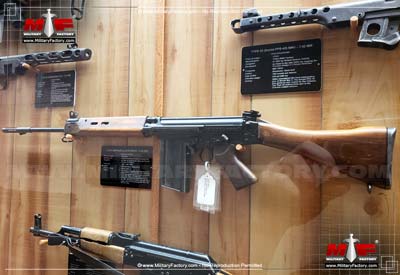
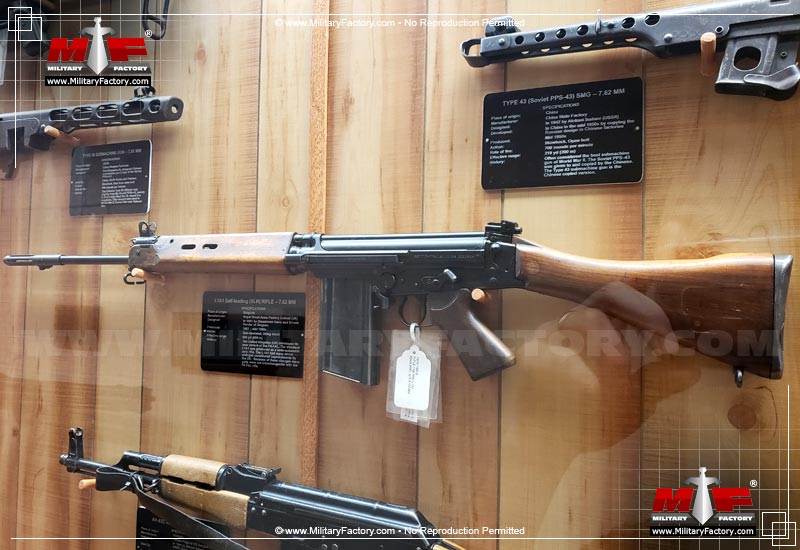
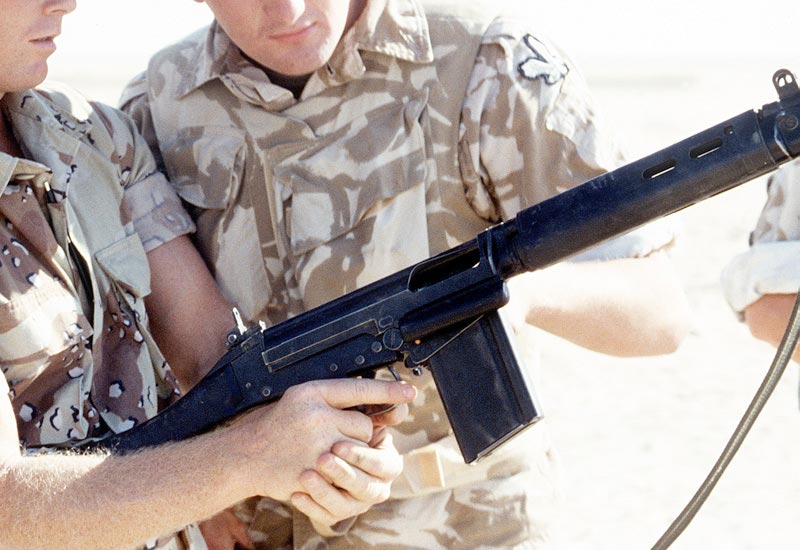
The L1A1 makes no attempt to hide its FN FAL appearance. By Staff Writer
The L1A1 was the standard British Army assault rifle from the mid-1950's on through the late 1980's, ultimately being replaced by the bullpup-configured L85A1. The L1A1 stemmed from a British military need to arm it's troops with a new automatic weapon. Development of their own assault weapon was abandoned so it left the British military looking to fill a role with limited locally-produced possibilities.
Therefore the British Army looked outside the country for assistance and landed an agreement with the Belgium firearms firm of Fabrique-Nationale to license the highly successful FN FAL design. The L1A1 would appear very much like the original FN FAL (in both looks and operation), though the production process and measurements in imperial would change the nuances in design and engineering so much so that the two weapon system's parts were not interchangeable.
In the end, the British Army ended up with a solidly built and designed rifle that was quite capable of fielding to the frontlines for the next 30 years.
We can only get better if you tell us how. You can contact MilitaryFactory.com at MilitaryFactory at gmail dot com (replace "at" with "@" and "dot with ".") with any questions, comments or corrections. We also accept related military imagery that you approve for us to use on our website. Keep in mind, however, that due to volume, we may not directly respond to your inquiry. Please add us to your list of non-blocked recipients!
Profile:
Image Courtesy of the US Department of Defense
1954
Designation:Enfield L1A1 Classification Type:Assault Rifle Manufacturer:Royal Small Arms Factory / Royal Ordnance Factory - UK Country of Origin: United Kingdom
Material presented throughout this website is for historical and entertainment value and should not to be construed as usable for
hardware restoration, maintenance or general operation. Please consult manufacturers for such information.
Site Contact: militaryfactory at gmail dot com(replace "at" with "@" and "dot" with ".")