Military Factory
Military Pay Chart
Global Firepower
Military Industrial Complex
Second World War
Home
Military Pay Scale
Military Ranks
Small Arms
Aircraft
Land Systems
Navy
Education
Military Factory Facebook Logo
flag of United States

USS Canberra (CA-70) Heavy Cruiser / Missile Cruiser (1943)

Authored By Staff Writer | Last Updated: 7/1/2010

The USS Canberra survived World War 2, the Vietnam War and the Cold War as two different class of fighting ships.

Find a School Near You
Follow Military Factory on Facebook:
Trending on Military Factory:
Recent Articles:
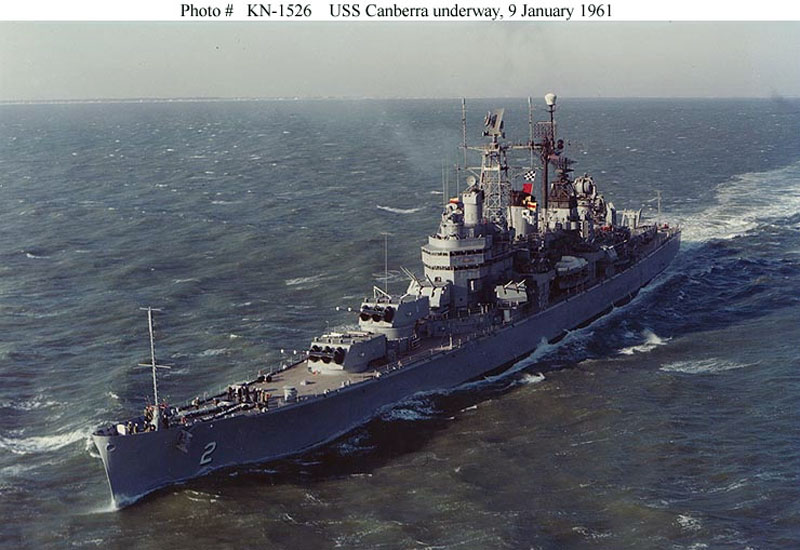
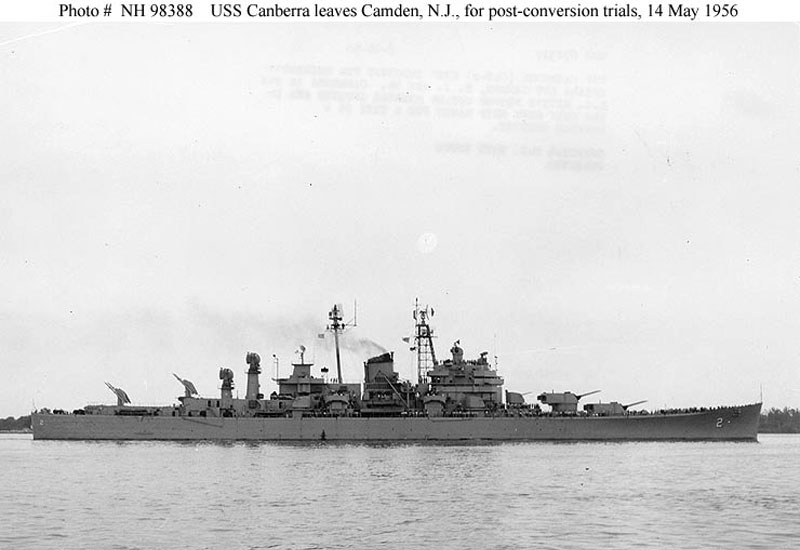
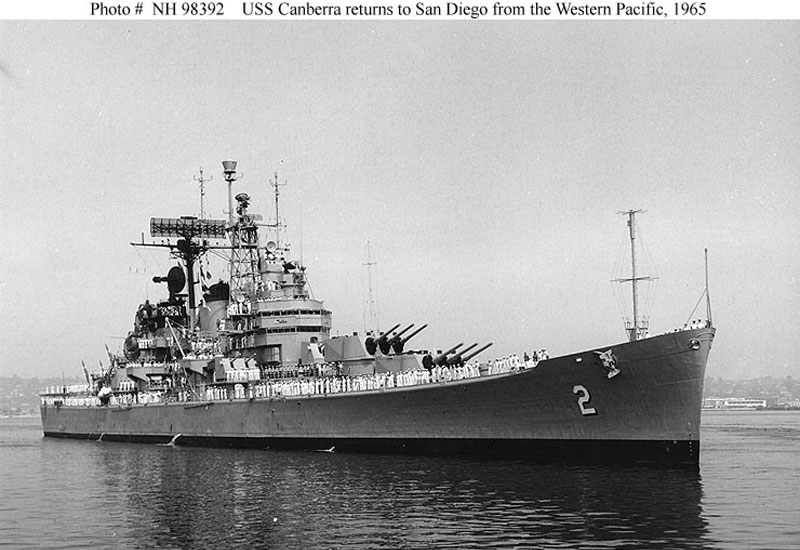
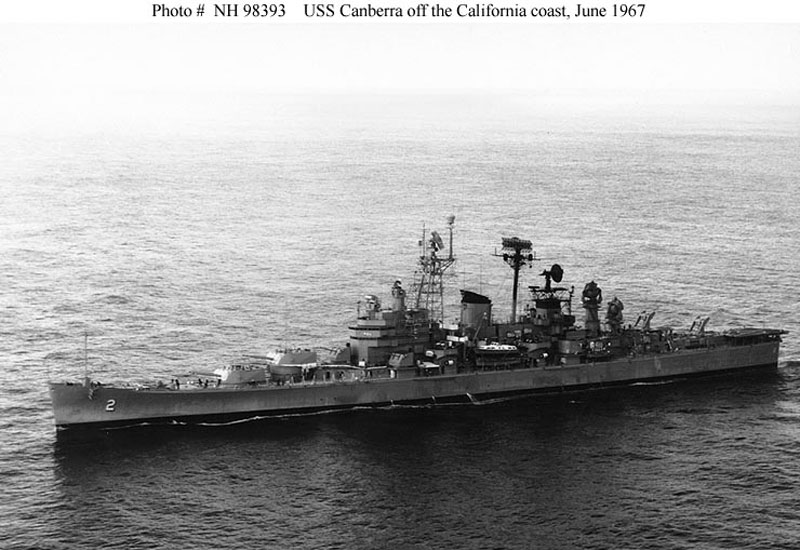
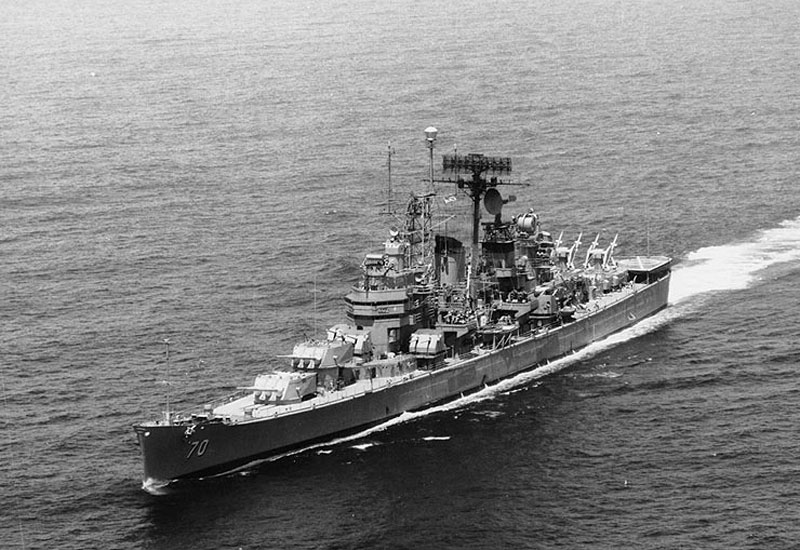
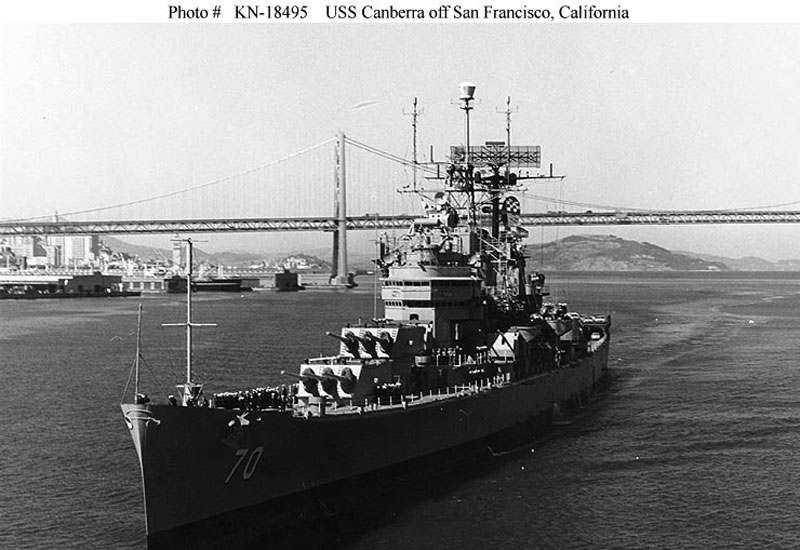
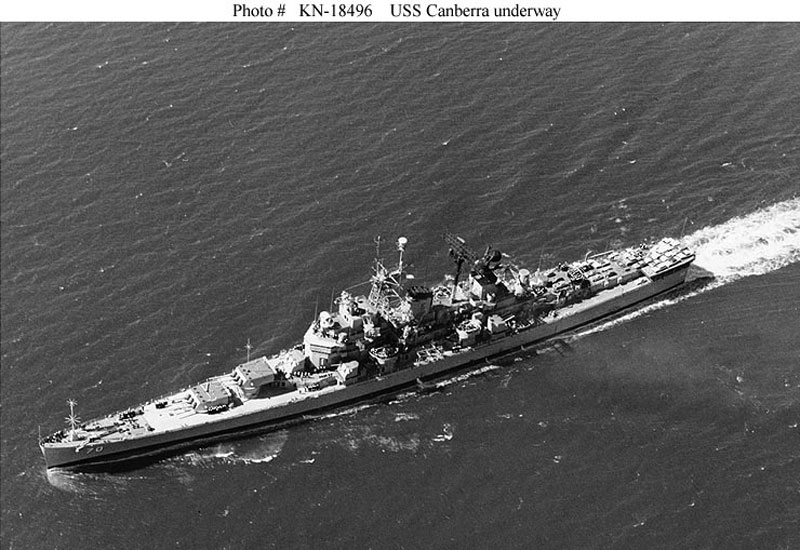
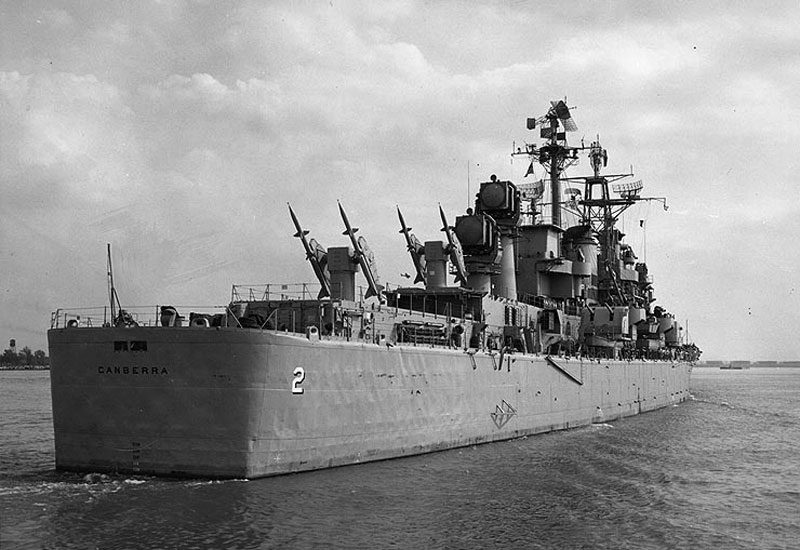
The USS Canberra was a United States naval warship that was put into action in the middle years of World War 2 and survived long enough to take part in some of the most critical years of the Cold War and the Vietnam conflict. The vessel was modestly armed and was fielded initially as part of the Baltimore-class cruiser family. Later, the Canberra was converted to accept the Terrier surface-to-air missile system and had her designation changed from CA-70 to CAG-2 to represent her as a guided missile cruiser, now part of the Boston-class of warships.

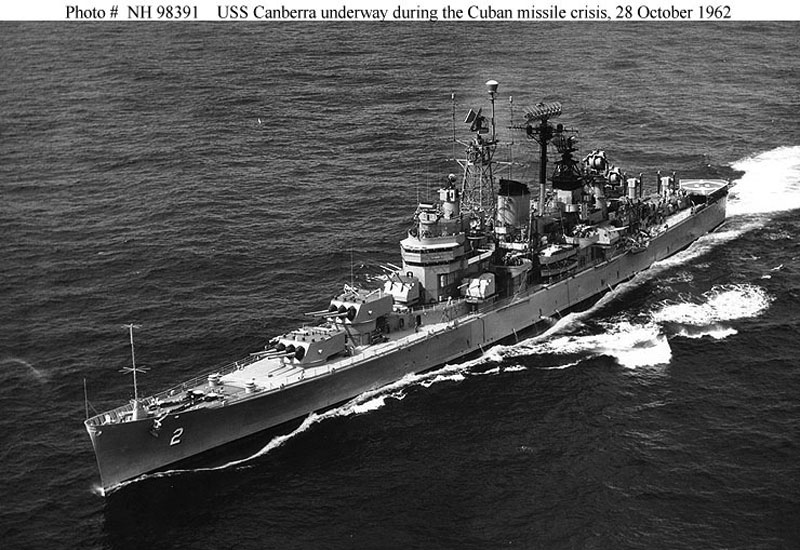
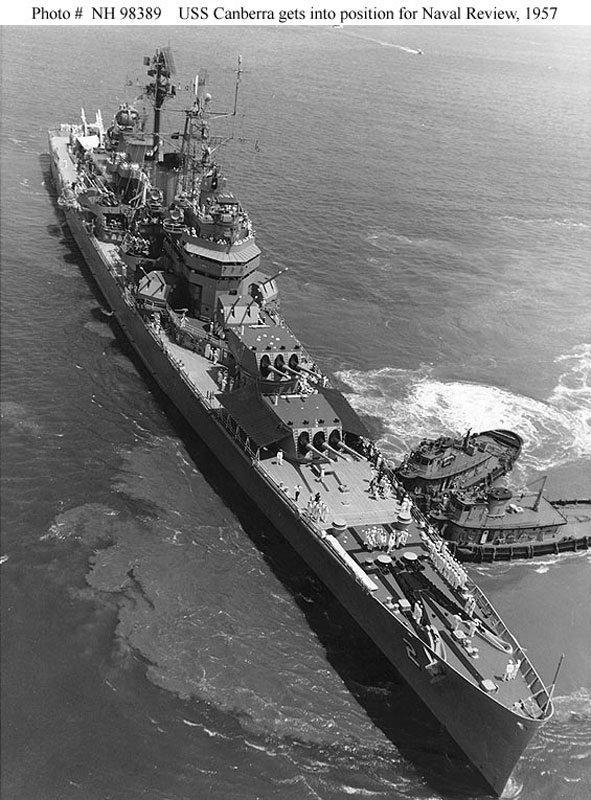
The Canberra's profile is typical of ships in the class with a large superstructure dominating the design. The superstructure is complimented with masts containing sensors and arrays and is surrounded by a battery of armament which originally consisted of 9 x 8" main guns and 12 x 5" cannons. This was altered when the Canberra became a guided missile cruiser and as such she was now armed with 6 x 8" main guns, 10 x 5" cannons and 12 x 3" cannons along with her supply of 2 x Terrier missile launchers for anti-aircraft defense. In any case, the World War 2-era vessel was now making a transition to the Cold War-era where missiles would begin to take the place of cannon as a vessels main armament. Her main guns were held in turrets with two forward and one aft with three guns to an emplacement. The addition of the Terrier system deleted the aft gun turret and its three guns.

While in service during World War 2, her actions primarily kept her located in the central Pacific. In 1944, she served as part of US Task Force 58 for the Battle of Philippine Sea and took part in the battle for Truk eventually succumbing to severe damage inflicted by a Japanese torpedo in the Battle of Formosa off Okinawa in June of that year. Her damage was such that her war days in the conflict were numbered and the USS Canberra was decommissioned following the war in 1947 and put into reserve.

With the arrival of the Cold War, the USS Canberra (CA-70) was back in service, now undergoing conversion to become a guided missile heavy cruiser. This conversion forced her from her Baltimore-class classification to the Boston-class family where she joined the USS Boston as the modernized CAG-2. The vessel was made ready in time to take part in the deterrent blockading actions in the Cuban Missile Crisis. Some time later, Canberra would see herself deployed several times in support of the Vietnam conflict where, by this time, her Terrier missile systems were wholly outdated though her common guns were put to good use as she shelled inland targets and took part in the TET Offensive. With the war over and her fighting years behind her, the USS Canberra returned home with her old CA-70 designation now reinstated and was officially decommissioned in 1970. Her parts were unceremoniously sold for scrap in 1980.

The USS Canberra was first ordered in 1940 and laid down in 1941 by Bethel Steel Company Fore River Shipyard. She was launched in 1943 and commissioned later that same year. She fought under the motto of "Can-Do Kangaroo" and was named in honor of an Australian cruiser - the HMAS Canberra, a vessel lost to the sea after taking torpedo damage from Japanese forces at the Battle of Savo Island. Incidentally, the USS America remains the only United States Navy vessel to be named after an existing foreign ship. In response, the Australian Navy commissioned the destroyer HMAS Bataan as a tribute to the Battle of Bataan.
Text ©2003-2013 www.MilitaryFactory.com • All Rights Reserved • No Reproduction Permitted
MilitaryFactory.com does NOT sell equipment/weaponry. Material presented throughout this website is for historical and entertainment value and should not to be construed as usable for hardware restoration, maintenance or general operation. Please consult manufacturers for such information. Our disclaimer. Email corrections / Comments to MilitaryFactory at Gmail dot com.
Picture of USS Canberra (CA-70)
Pic of the USS Canberra (CA-70)
Image of the USS Canberra (CA-70)
View All Images (12)

Specifications for the
USS Canberra (CA-70)
Heavy Cruiser / Missile Cruiser


Country of Origin: United States
Initial Year of Service: 1943
Operators: United States


Crew: 1,544


Length: 674ft (205.44m)
Beam: 70ft (21.34m)
Draught: 24ft (7.32m)
Displacement: 13,600tons


Machinery: 4 x shaft geared turbines with 4 x 615psi boilers.

Surface Speed: 33kts (38mph)
Range: 8,164miles (13,139km)


Armament:
CA 70 (heavy cruiser):
9 x 8"/55 main guns
12 x 5"/38 cannons

CAG 2 (missile cruiser):
6 x 8"/55 main guns
10 x 5"/38 cannons
12 x 3"/50 cannons
2 x Terrier twin-rail surface-to-air missile (SAM) launchers


Ship Class: Baltimore-class / Boston-class
Number-in-Class: 2
Ships-in-Class: USS Albany (CA-123); USS Baltimore (CA-68); USS Boston (CA-69); USS Bremerton (CA-130); USS Canberra (CA-70); USS Chicago (CA-136); USS Columbus (CA-74); USS Fall River (CA-131); USS Helena (CA-75); USS Los Angeles (CA-135); USS Macon (CA-132); USS Oregon City (CA-122); USS Pittsburgh (CA-72); USS Quincy (CA-71); USS Rochester (CA-124); USS Saint Pau (CA-73); USS Toldeo (CA-133)

ALL NAVY SHIP CATEGORIES
Site Disclaimer | Privacy Policy | Site Map | MF Origins


©2013 www.MilitaryFactory.com • Content ©2003-2013 MilitaryFactory.com • All Rights Reserved • Site Contact Email: militaryfactory at gmail dot com. The "Military Factory" name and MilitaryFactory.com logo are registered ® trademarks and protected by all applicable domestic and international intellectual property laws.


Top MF Stuff: 2013 Military Pay Scale | Military Ranks | WW2 Weapons | Sniper Rifles | Kts to Mph | WW1 Aircraft | Automatic Rifles | Aircraft Cockpits | Vietnam War Weapons | Main Battle Tanks | Submachine Guns | Shotguns | French Military Victories


Most photographic images appearing on this site are courtesy of the United States Department of Defense and are approved for public use. Other images acquired through the public domain. Digital art work courtesy of Dan Alex. Business Consulting by Kyle Williams. Material presented throughout this website is for historical and entertainment value and should not to be construed as usable for hardware restoration, maintenance or general operation. Please consult manufacturers for such information.


eXTReMe Tracker