Global Firepower | Military Industrial Complex | Second World War History
Home | Military Pay Scale Chart | Aircraft | Infantry Weapons | Military Vehicles | Navy Ships | Military Education | French Military Victories | Military Ranks | WW2 Weapons
Military Factory Latest from Military Factory
Thumbnail picture of the Dardo infantry fighting vehicle
Dardo IFV
Thumbnail picture of the Supermarine Scimitar fighter
Supermarine Scimitar
Thumbnail picture of the Centauro B1 8x8 tank killer
Centauro 8x8
Thumbnail picture of the Novi Avion fighter
Novi Avion
Thumbnail picture of the FR F2 bolt-action sniper rifle
FR F2
Thumbnail picture of the Lebel Model 1886 bolt-action rifle
Lebel Model 1886
2009 Military Pay Scale Chart - for Army, Navy, Air Force and Marines
  By Type
    · Age of Sail
    · Aircraft Carriers
    · Escort Carriers
    · Amphibious
    · Amphibious Assault
    · Battleships
    · 2nd Class Bttlshps
    · Cargo Ships
    · Cruisers
    · Destroyers
    · Dreadnoughts
    · Pre-Dreadnoughts
    · Frigates
    · Ironclads
    · Midget Submarines
    · Mine Sweepers
    · Patrol Craft
    · Pocket Battleships
    · Special Forces
    · View All Ships
  Submarines
    · Full List
    · Diesel-Electric
    · Ballistic Missile
    · Nuclear Attack
  World War 2
    · Full List
    · Aircraft Carriers
    · Battleships
    · Destroyers
    · Submarines
    · US Warships
  Vietnam War
    · Full List

MilitaryFactory > Navy Ships > USS Bonhomme Richard (1765)
 
 
More Pictures CompareX2 Conversions Dictionary Acronyms

USS Bonhomme Richard (1765)

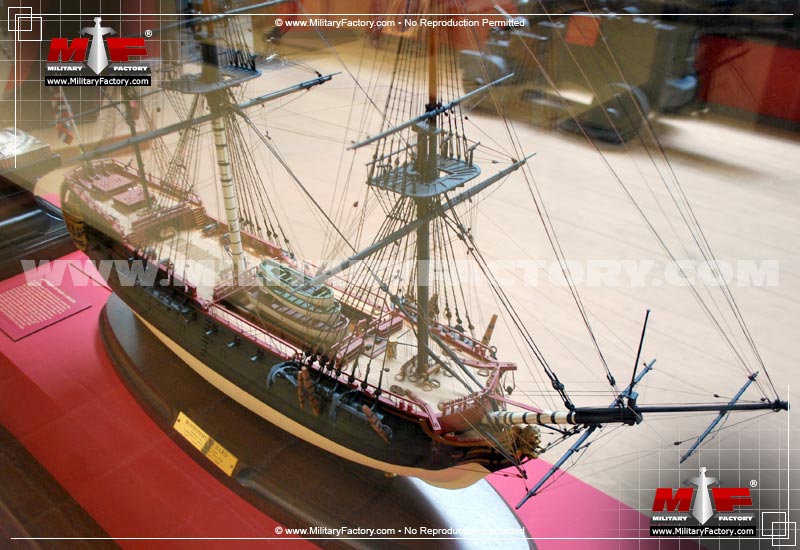
John Paul Jones used the Bonhomme Richard to net the Continental Navys first sea victory against the British.
By JR Potts, AUS 173d AB

Bookmark and Share

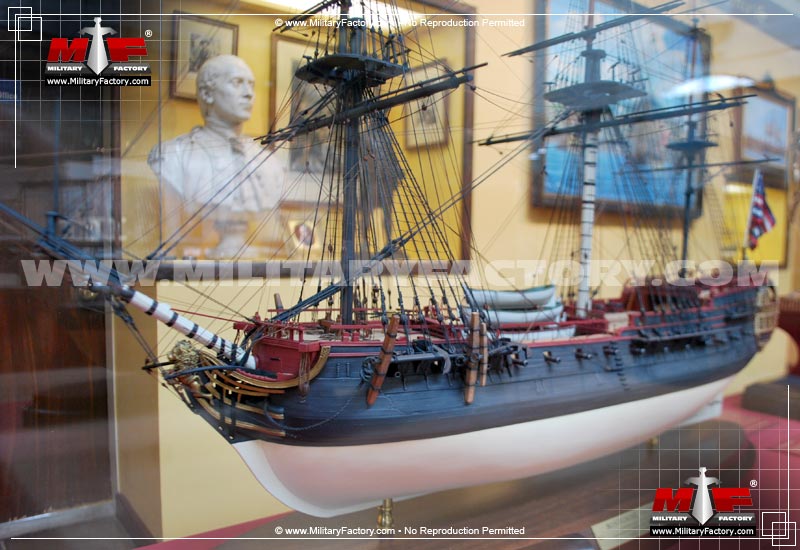
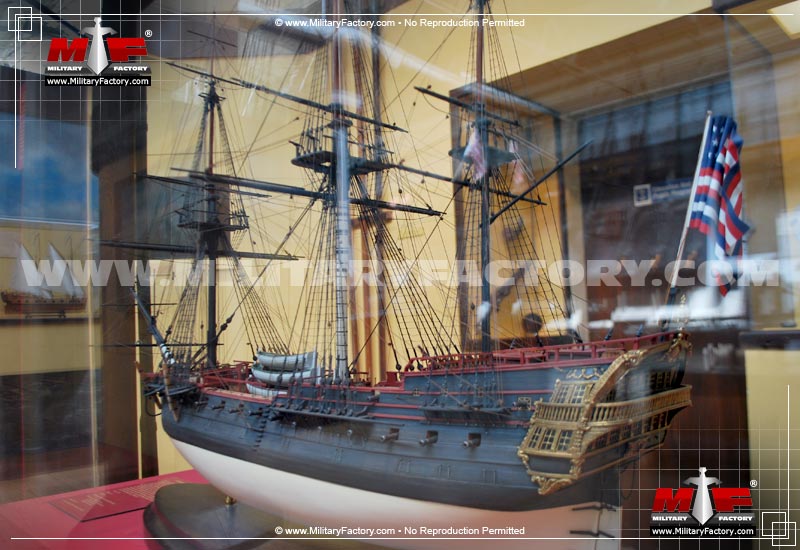
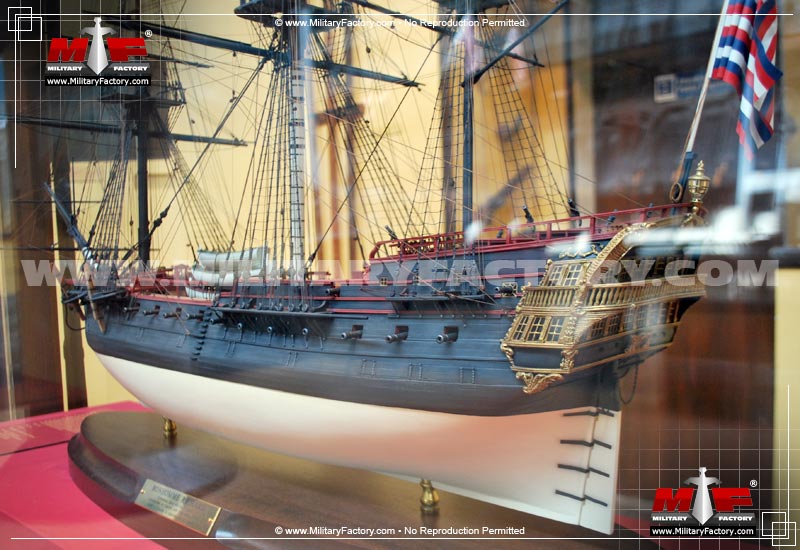
The Duc de Duras, a 900 ton merchant ship built in France for the French East India Company in 1765, transported freight between the Orient and France. She was placed at the disposal of John Paul Jones and the Continental Navy on February 4, 1779, by King Louis XVI of France as a result of a loan to the United States. Jones was an admirer of Benjamin Franklin because of his founding father roots and also perhaps because Franklin was an envoy to France as the Commissioner to Paris. Jones renamed the Duc de Duras the “Bonhomme Richard” when, translated in English, meant “Poor Richard“ - the pen name Franklin used when he wrote his “Poor Richard’s Almanac”. Franklin used the journal to shape public will against the British crown using witty humor.

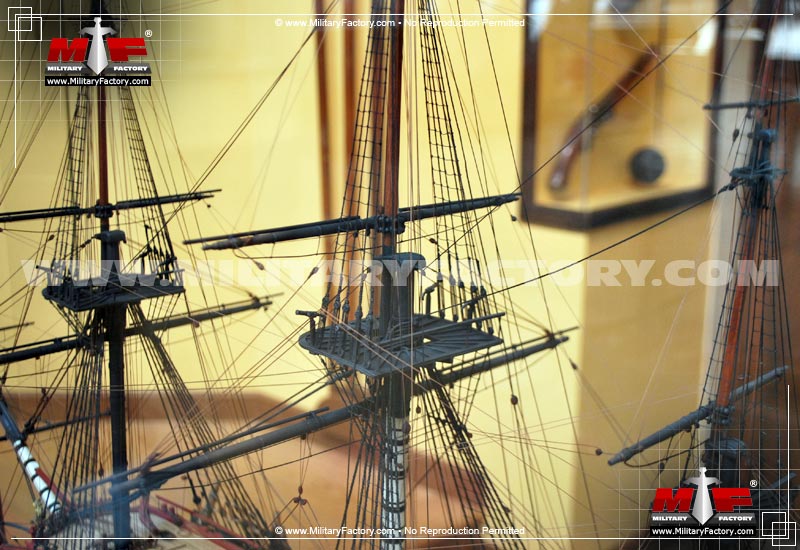
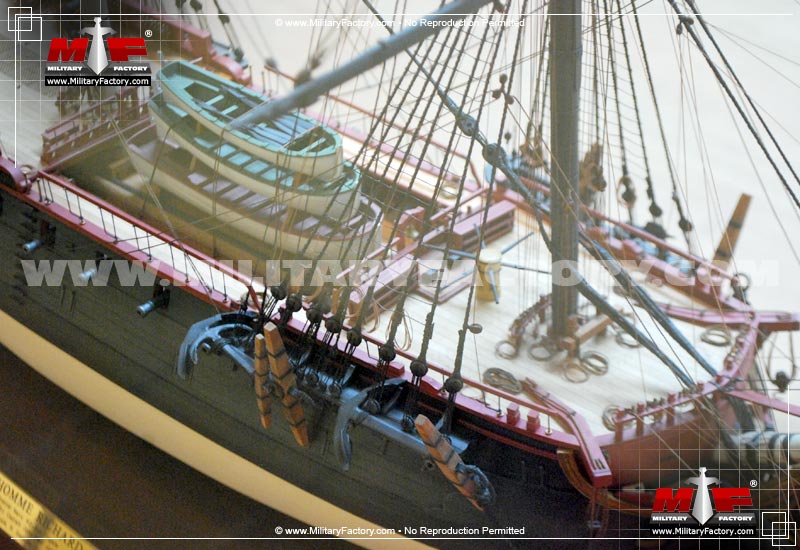
The French gave Jones the authority to use his own judgment as to where he would sail to attack British shipping. Jones now had the ship but needed officers and a crew. The ship also needed to be converted from a merchantmen to a ship of war. A few months were needed to find and secure cannon and stores so she could become a fighting frigate. By this time Jones was bestowed the title of commodore as other ships were also placed under his command. The Bonhomme Richard was not a new ship by any regard, having made many voyages in her cargo guise. As such, she had a tendency to develop leaks to the point that Capitan Jones felt uneasy. With a new coat of paint and a new name she was finally ready for the sea.

Jones sailed the Bonhomme Richard out on June 19, 1779 along with his squadron of ships including the fine USS Alliance (a 36-gun frigate), the French warships Pallas (a captured British 32-gun frigate), the Vengeance (a 12-gun British brig), the cutter Le Cerf and a complement of troop ships. This voyage resulted in no contact with British shipping but in August the fleet set sail into the North Sea and captured 16 British merchantmen along with their cargos. After returning to port for repairs, Alliance and the Bonhomme Richard collided in a storm.

The squadron sailed again on the 23rd. While they were near the entrance to Dingle Bay, a lookout sighted the vessel Fortune. Jones approached and the Bristol-bound brig lowered its flag as it was clearly out-gunned. Two armed boats were lowered from Jones' flagship and took the Fortune as a prize. Jones placed a small crew on board and sent the Fortune back to France. Also that day, the Alliance's commanding officer, Captain Pierre Landais, a former officer in the French Navy who went to America and received a captain's commission in the Continental Navy, was given the Alliance due to his sea experience. Landais was not content to serve under Jones and whenever possible was quite to derail his commands.

The squadron now found itself close to the Irish coast with the wind calming down. Jones was concerned if his ships pursued vessels into the shoals they might be stalled and result in capture. Jones ordered Landais to not follow a particular vessel towards shore. To that, Landais boarded the Bonhomme Richard and told Jones face-to-face that he would no longer obey Jones' orders. This became the first American Munity at sea.

Problems continued for Jones and his squadron for, that evening, when Bonhomme Richard had drifted dangerously close to the shoals, Jones ordered his barge lowered so it could tow the frigate into deeper water away from Ireland. The coxswain and the boat's Irish oarsmen were delighted to return home and decided to cut the lines and row their vessels towards shore. The Le Cerf became separated from the squadron while looking for the boats and had no choice but to return to home port. Pallas, the French frigate, broke her tiller and dropped out of sight. Landais took Alliance off on his own without permission, leaving the Vengeance and the Bonhomme Richard to sail alone.

The two ships continued in a generally northerly direction west of the outer Hebrides and then headed for Cape Wrath towards Scotland. On August 30th, Jones sighted three ships and quickly gave chase. He overtook the brig Union and persuaded her to surrender. Alliance netted with a prize named Betsy and Landais again touted Jones' authority. Within a few days Pallas rejoined the squadron and, on the next day, Vengeance captured an Irish brigantine on its way to England. The squadron passed the Shetlands then turned south to begin the last leg of its cruise around the British Isles. The definant Alliance took two more small ships and Landais again left the squadron unknown to Jones. Jones next wanted to attack Newcastle, England, to interrupt England's coal supply however this task eventually proved impossible. Instead, the Bonhomme Richard drove a ship ashore south of Yorkshire and took a British brigantine sailing from Rotterdam to Britain.

On September 23, 1779, the small fleet sighted the British Baltic Fleet of 41 vessels under the protection of a 44-gun frigate, the HMS Serapis, and the Sloop of War Countess of Scarborough, a 22-gun ship-of-the-line. At around 6:00 PM, the Bonhomme Richard engaged the Serapis and the Pallas attacked the Countess of Scarborough in what became the Battle of Flamborough Head. The USS Alliance did not engage the British but fired on the Bonhomme Richard instead. This action resulted in a court martial for Landias upon his return to France. Bonhomme Richard rounded Serapis' port quarter and fired but two of its cannon exploded below deck killing many of the gun crew. In Jones' favor, Midshipman Fanning and his men succeeded in eliminating the British sharpshooters from the top sail of the Bonhomme Richard.

Four hours of intense fighting left the Bonhomme Richard battered. and Captain Pearson of the Serapis saw the enemy ship badly listing from shot and shell. Pearson suggested surrender to Jones with Jones returning to the British captain saying "I have not yet begun to fight." Jones maneuvered his ship close to the Serapis and rammed her. The ensuing, carnage on both sides was horrifying and all this occurring while the American ship was sinking.

The two vessels became locked together via grappling hooks for another two hours. Jones utilized his British prisoners to work the pumps to keep his ship afloat. His actions wore the enemy down to the point of collapse and with the Serapis on fire, the British finally surrendered to Jones by striking their colors. Jones' crew put out the fire and took stock of the Richard. He decided to transfer his crew to the British ship while the Bonhomme Richard was allowed to sink, this occurring on September 25, 1779 despite valiant attempts to save the gallant ship. Jones sailed the Serapis to port in the United Provinces in Holland. The Continitinal Navy had its first victory over a British ship and this occurring in Britain’s home waters of all places. This battle catapulted Jones into hero status and he was heralded as “The Father of the American Navy”. His battle cry of “not begun to fight” would go down in American naval history and quotation lore.

History text ©2003-2009 www.MilitaryFactory.com • All Rights Reserved
No Reproduction Without Permission • Corrections / Comments to MilitaryFactory at Gmail dot com

Last Updated: 6/24/2009


  Specifications for the USS Bonhomme Richard (1765)
arrow downDimensions:
Length: 152ft (46.33m)
Beam: 40ft (12.19m)
Draught: 19ft (5.79m)

arrow downPerformance:
Surface Speed: 12kts (14mph)
Range: Essentially Unlimited

arrow downStructure:
Complement: 375
Suface Displacement: 998tons
arrow downPower:
Engine(s): Sail - Wind Powered
arrow downArmament Suite:
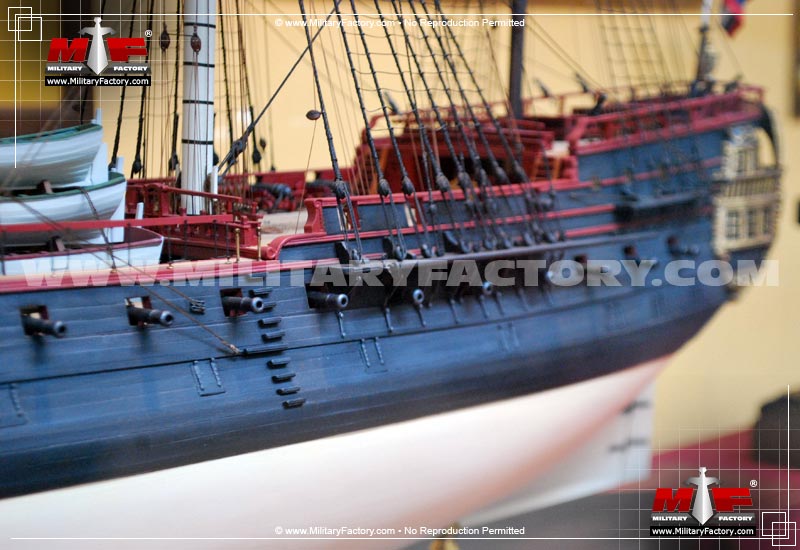
28 x 12-pdr (43 cwt) (159mm) smoothbore cannons
6 x 18-pdr cannons
8 x 9-pdr cannons

More Pictures CompareX2 Conversions Dictionary Acronyms

  Special Navy Ship Collections

Collections:
United States Navy Carriers
Modern Warships

World War 2:
Destroyers of World War 2
Navy Ships of World War 2
USN Warships of World War 2
Submarines of World War 2

Vietnam War:
Warhips of the Vietnam War

Miscellaneous:
Battle of Trafalgar
How Submarines Work
United States Navy Classification


  Recent Navy Ship Section Additions
Thumbnail picture of the USS New York LPD-21 amphibious support landing dock
USS New York (LPD-21)
Thumbnail picture of the Bell PACV/ACV hovercraft
Bell PACV/ACV
Thumbnail picture of the USS United States frigate of 1797
USS United States

  Contacting MilitaryFactory.com
We can only get better if you tell us how. You can contact MilitaryFactory.com at MilitaryFactory at gmail dot com (replace "at" with "@" and "dot with ".") with any questions, comments or corrections. We also accept related military imagery that you approve for us to use on our website. Keep in mind, however, that due to volume, we may not directly respond to your inquiry. Please add us to your list of non-blocked recipients!

Aircraft Carriers

  Navy Ship Profile:


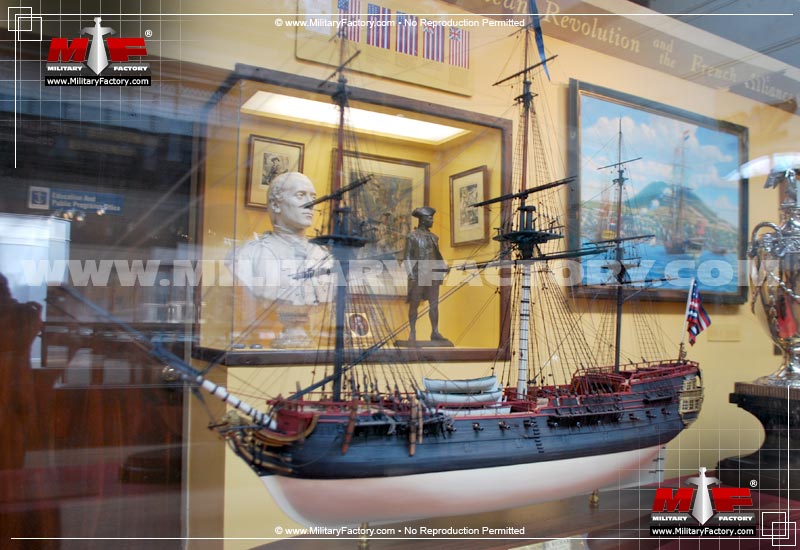
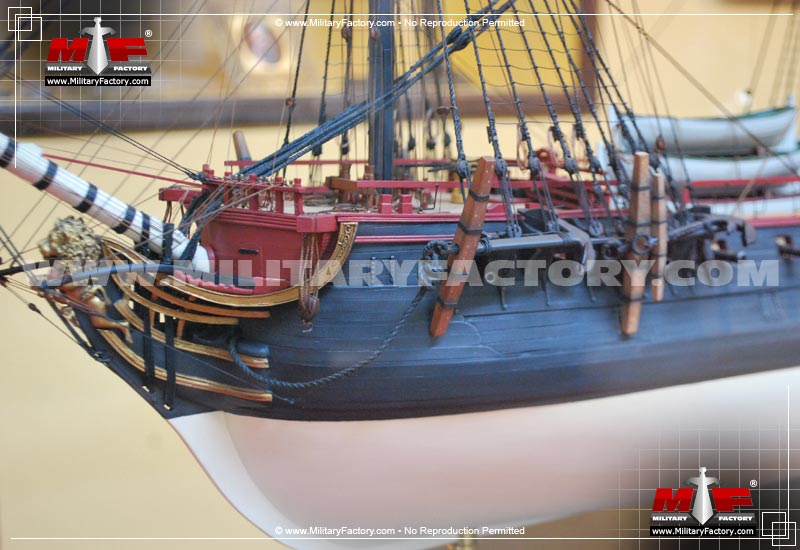
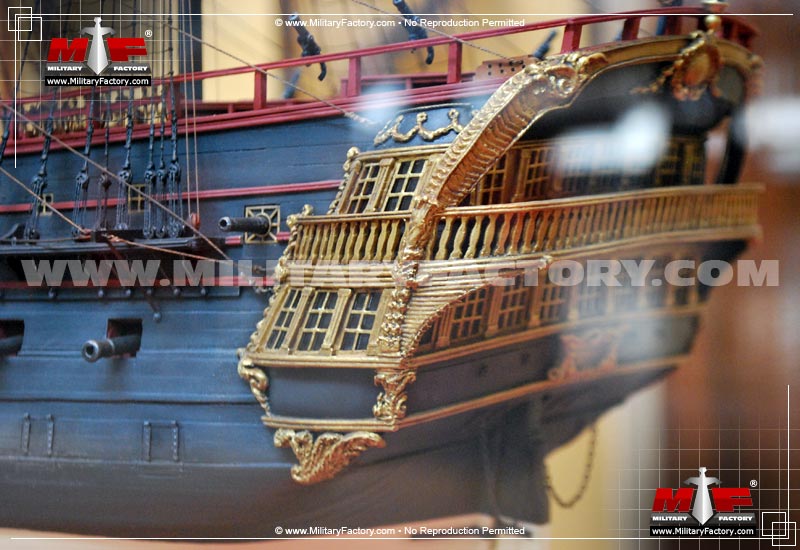
Picture of the USS Bonhomme Richard (1765).
Photo Courtesy of the United States Navy

flag of United States
1765
Designation: USS Bonhomme Richard (1765)
Classification Type: 42-Gunner
Ship Class: Frigate

Country of Origin: United States
Number in Class: 1

Operators: United States


  Ships in Class
USS Bonhomme Richard

  Collections
  • Dreadnoughts - Bigger Ships, Bigger Guns
  • Pocket Battleships
  • Destroyers - Power of One
  • Tall Ships
  • Carriers of the United States Navy
  • Cruisers
  • Battleships of World War 2


Free GI Bill Guide

Top MF Stuff: Military Pay Scale Chart | Military Ranks | World War 2 Weapons | Sniper Rifles | Conversion Calculators


©2009 www.MilitaryFactory.com • Content ©2003-2009 MilitaryFactory.com • All Rights Reserved • Disclaimer Privacy Policy Site Map Origins
Most photographic images appearing on this site are courtesy of the United States Department of Defense and are approved for public use.
Other images acquired through the public domain. Digital art work courtesy of Dan Alex.
Business Consulting by Kyle Williams

Material presented throughout this website is for historical and entertainment value and should not to be construed as usable for
hardware restoration, maintenance or general operation. Please consult manufacturers for such information.

Site Contact: militaryfactory at gmail dot com (replace "at" with "@" and "dot" with ".") eXTReMe Tracker