Global Firepower | Military Industrial Complex | Second World War History
Home | Military Pay Scale Chart | Aircraft | Infantry Weapons | Military Vehicles | Navy Ships | Military Education | French Military Victories | Military Ranks | WW2 Weapons
Military Factory Latest from Military Factory
Thumbnail picture of the Dardo infantry fighting vehicle
Dardo IFV
Thumbnail picture of the Supermarine Scimitar fighter
Supermarine Scimitar
Thumbnail picture of the Centauro B1 8x8 tank killer
Centauro 8x8
Thumbnail picture of the Novi Avion fighter
Novi Avion
Thumbnail picture of the FR F2 bolt-action sniper rifle
FR F2
Thumbnail picture of the Lebel Model 1886 bolt-action rifle
Lebel Model 1886
2009 Military Pay Scale Chart - for Army, Navy, Air Force and Marines
  By Type
    · Age of Sail
    · Aircraft Carriers
    · Escort Carriers
    · Amphibious
    · Amphibious Assault
    · Battleships
    · 2nd Class Bttlshps
    · Cargo Ships
    · Cruisers
    · Destroyers
    · Dreadnoughts
    · Pre-Dreadnoughts
    · Frigates
    · Ironclads
    · Midget Submarines
    · Mine Sweepers
    · Patrol Craft
    · Pocket Battleships
    · Special Forces
    · View All Ships
  Submarines
    · Full List
    · Diesel-Electric
    · Ballistic Missile
    · Nuclear Attack
  World War 2
    · Full List
    · Aircraft Carriers
    · Battleships
    · Destroyers
    · Submarines
    · US Warships
  Vietnam War
    · Full List

MilitaryFactory > Navy Ships > USS America (CV-66)
 
 
More Pictures CompareX2 Conversions Dictionary Acronyms

USS America (CV-66)

The USS America was part of the Kitty Hawk-class of carriers, some of the largest conventionally powered vessels of their time.
By Staff Writer

Bookmark and Share

The USS America (CV-66 though initially designated as CVA-66) was a conventionally-powered aircraft carrier that served the United States Navy through the Cold War and beyond, officially being decommissioned in 1996. She was of the Kitty Hawk-class of aircraft carriers which were eventually replaced by the powerful breed of nuclear-powered types in the USS Nimitz mold. The America fought on for America in her war with Vietnam, served as a deterrent in the Persian Gulf and Lebanon and took part in Operations Desert Shield and Desert Storm. All her years of service sadly culminated in her use as a target in 2005. Her name was officially struck from the Naval Vessel Register on August 9th, 1996.

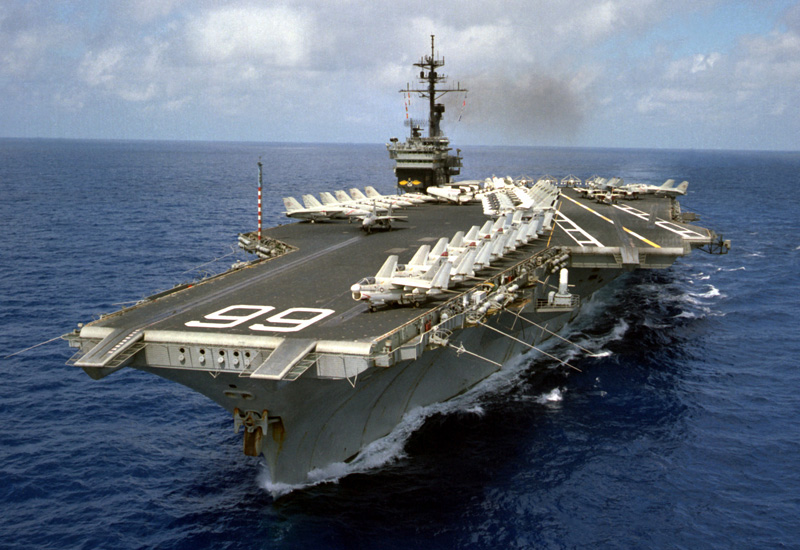
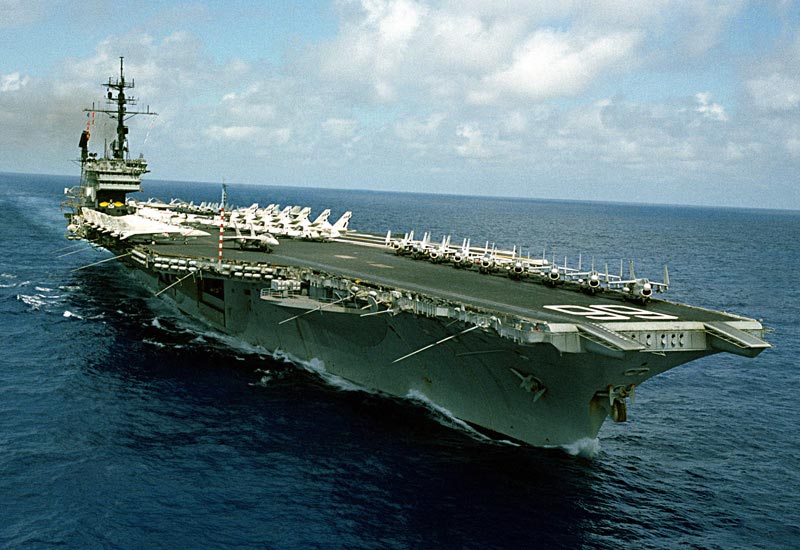
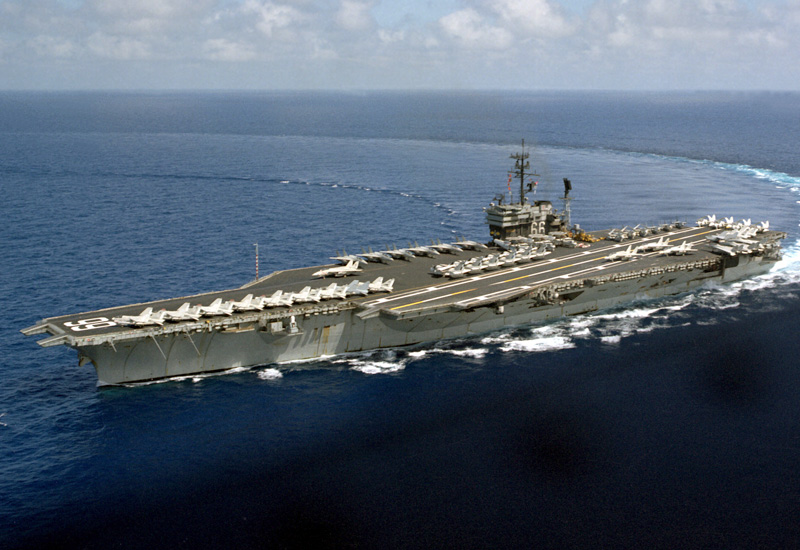
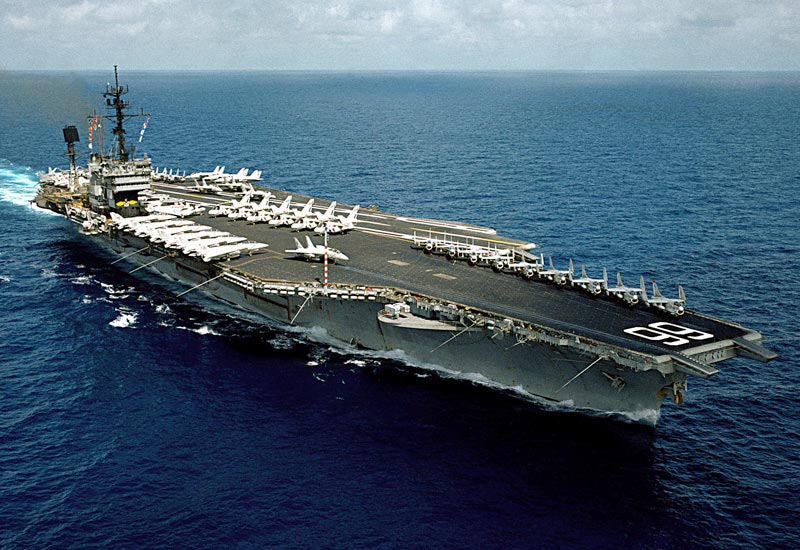
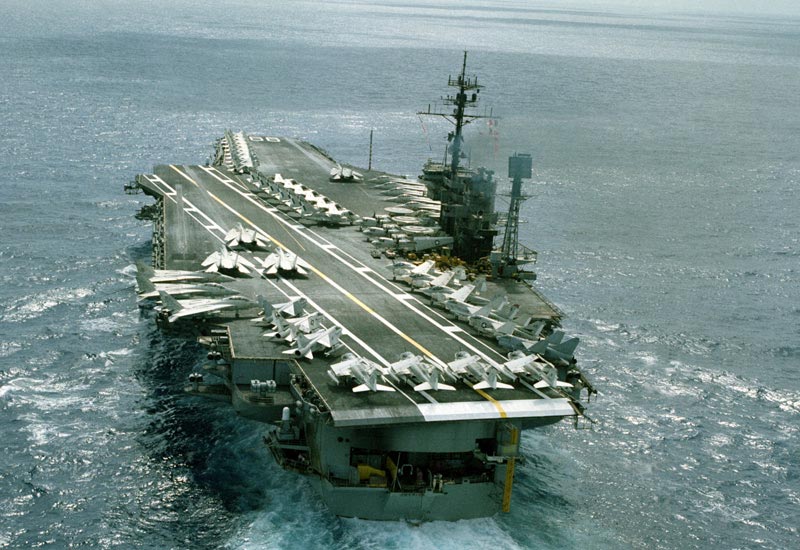
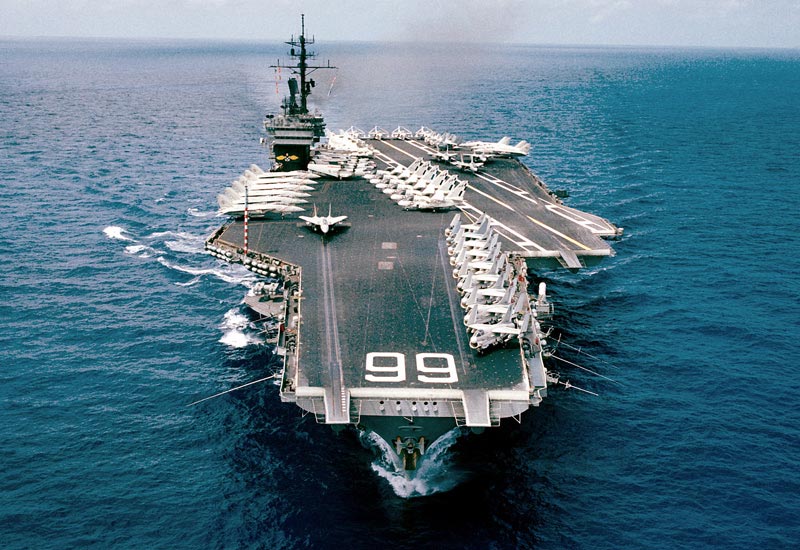
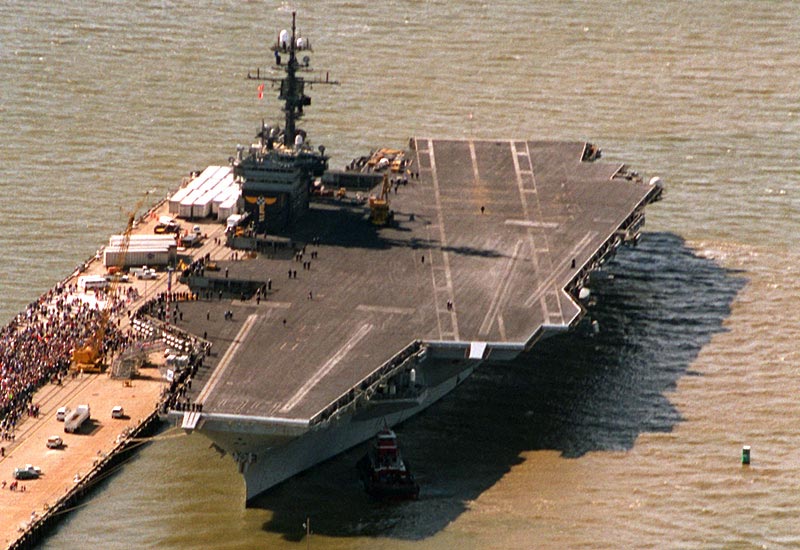
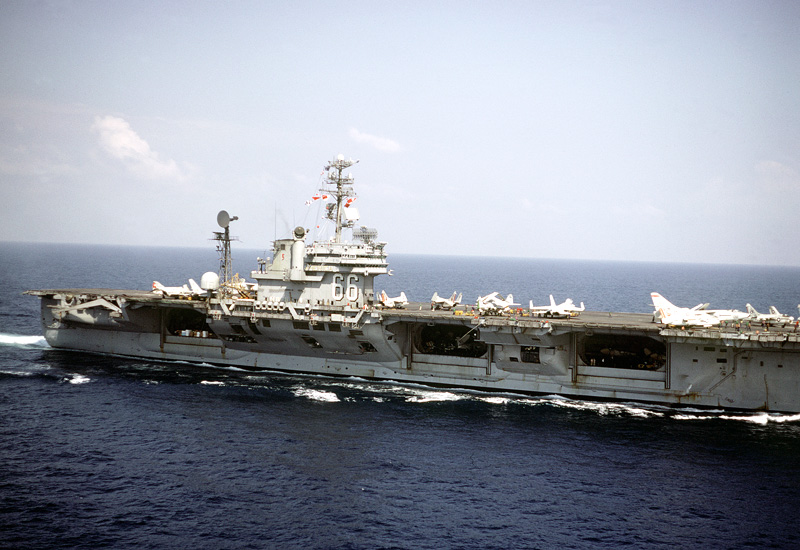
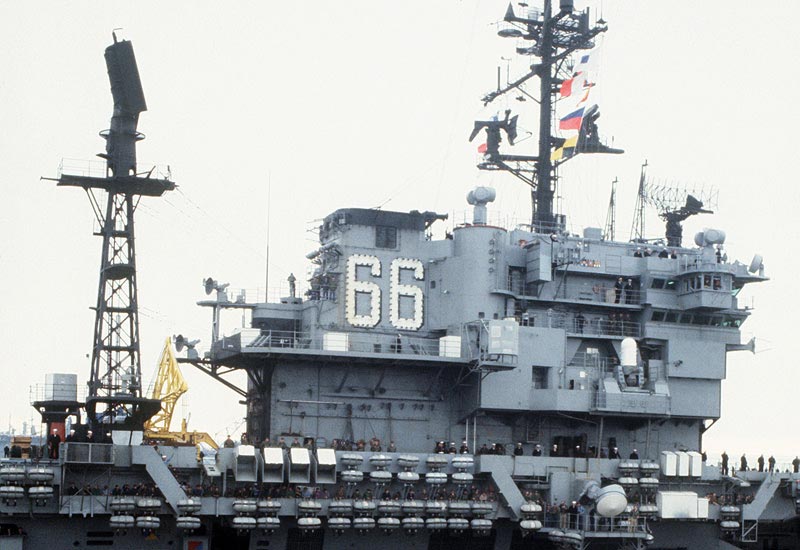
Her design was of a traditional layout with a starboard island and the characteristic angled deck serving three catapults (one angled off port and two forward). The flight deck was serviced by four hangar elevators in total with one located on the port side and three on the starboard side, with one of these located aft of the island. The island was dominated by a communications and sensor mast with a further mast located just behind the island before the rear starboard-side hangar deck.

As aircraft carriers go, their power is truly made known by the fleet she can put into the air and the USS America was no exception. Her deck and lower hangars could hold, maintain and repair up to 79 aircraft of various makes and sizes including F-4 Phantoms, A-6 Intruders, A-7 Corsair II’s and SP-2 Neptunes in addition to anti-submarine and transport helicopters. Supported by her flotilla of fleet defenders and resupply ships, the USS America formed an important and vital cog to United States Navy operations covering the globe.

Defensively, the USS America was served by a variety of sensors and processing systems by way of the AN/SPS-48 and AN/SPS-49 air search radars. Her electronic countermeasures suite consisted of the AN/SLQ-32 built by Raytheon Company. Additionally, these systems were augmented by three Sea Sparrow (initially Terrier missile) surface-to-air missiles. This was further supported by 3 x 20mm Phalanx CIWS (Close-In Weapon Systems) for anti-aircraft and anti-missile defense.

By 1967, on her second deployment out, the USS America was called into the Persian Gulf as tensions rose between Israel and her Arab neighbors that erupted in the inevitable Six Day War. Little in the way of action for the USS America crew was apparent until the USS Liberty was attacked by Israeli torpedo boats - apparently in "error" caused through poor communications - sending America's fighters and bombers scrambling off of her deck. 34 souls were lost with 75 injuries.

Her next major assignment saw her on post at Yankee Station in the Vietnam War. Her aircraft were used in anger to pound targets inland, disrupt infrastructure and provide combat air patrols as needed. She would be deployed to Vietnam a total of three times before the cessation of hostilities in 1973. Following the war, the USS America supported the evacuations related to the crisis in Lebanon before undertaking a variety of exercises and tests including NATO-sponsored gatherings. During the Vietnam War, USS America performed to mythical standards without the loss of any of her pilots. Her aircrews dropped over 11,000 tons of ordnance on Vietcong targets and flew over 10,500 sorties total.

The USS American did not have to wait long to see action once more, this time at US President Ronald Reagan's order for two battle groups to be sent into the Mediterranean off the coast of Libya. America's aircraft were used to their highest potential as Libyan SAM sites and aggressive Libyan Navy ships were targeted and destroyed or damaged. Grumman F-14 Tomcats, Vought A-7 Corsair II's and A-6 Intruders were used in the strikes which included the first ever use of the AGM-84 Harpoon air-to-surface missile against a Libyan vessel. Further strikes followed including support of Operation El Dorado Canyon that featured the F-111 Aardvark swing-wing fighter-bombers of the US Air Force. This attack constituted several A-6 Intruders from American as well, charged with silencing more Libyan SAM systems. With her role in the Libyan strikes completed after the arrival of USS Enterprise into the region, USS America served for a time off of Lebanon (taking part in the 1983 evacuations) once more and ultimately made her way back home.

The 1990's brought about a new challenge and a changed face of warfare. Iraqi leader Saddam Hussein had entrenched his military in positions throughout the US-friendly Gulf nation of Kuwait, effectively giving him control over a large portion of the worlds oil production. The USS America, as part of a larger contingent of world allies, was once again bound for the region and joined the USS John F. Kennedy and the USS Saratoga in the Red Sea. By January 17th, 1991, Operation Desert Storm was in full swing and America's air wing was back in action providing combat air patrols and – later - direct strikes on targets inland. Now officially reassigned to the Persian Gulf alongside the USS Theodore Roosevelt and others, America continued her support with inland strikes, this time conducted from the eastern side of Iraq. In total, USS America would go on to complete some 3,000 sorties from her decks as Iraqi elements were smashed to oblivion and forced to retreat. She later took part in Operation Southern Watch, the enforcement of the no-fly zone over southern Iraq. USS America was later called back to action as she operated in support for NATO forces inland off the Adriatic in Operation Joint Endeavor (over Bosnia).

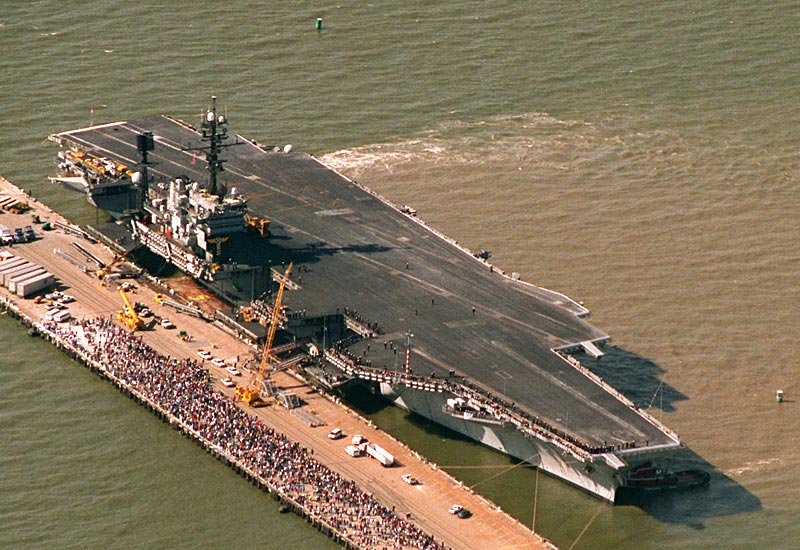
USS America undertook her final deployment (out of a total of 20) on August 28th, 1995. Her thirty years of trusted service had finally come to an end. Decommissioning took place in middle 1996 and had her name struck from the Naval Vessel Register that same year. Sadly, she was selected for use as a target ship and sunk as such on May 14th, 2005 off of the North Carolina coast. Such was the end for the storied ship as she became the largest ship to ever be purposefully scuttled in this fashion. The event was secretive and unveiled days after the fact with the action serving useful to see how well a carrier to sustain damage from a variety of munitions including cruise missile strikes.

The USS America was ordered in 1960 and laid down in 1961. She was launched in 1964 and officially commissioned in 1965. She made her home port in Norfolk, Virginia, USA, and fights under the motto of "Don't Tread on Me". The America is known affectionately as "the Big A". At the time, USS America was the third ship in the United States Navy history named for the country.

History text ©2003-2009 www.MilitaryFactory.com • All Rights Reserved
No Reproduction Without Permission • Corrections / Comments to MilitaryFactory at Gmail dot com

Last Updated: 10/29/2008


  Specifications for the USS America (CV-66)
arrow downDimensions:
Length: 1048ft (319.43m)
Beam: 248ft (75.59m)
Draught: 38ft (11.58m)

arrow downPerformance:
Surface Speed: 34kts (39mph)
Range: 13,421miles (21,599km)

arrow downStructure:
Complement: 3,306
Suface Displacement: 83,573tons
arrow downPower:
Engine(s): 8 x boilers powering 4 x steam turbines at 280,000shp.
arrow downAir Arm:
79 aircraft of various makes including Vought A-7 Corsair II, F-4 Phantom and F-8 crusader fighter-bombers, SP-2 Neptune anti-submarine aircraft, SH-3A Sea King helicopters.
arrow downArmament Suite:
3 x Mark 29 launchers (Sea Sparrow surface-to-air missiles)
3 x 20mm Phalanx CIWS (Close-In Weapon Systems) systems

More Pictures CompareX2 Conversions Dictionary Acronyms

  Special Navy Ship Collections

Collections:
United States Navy Carriers
Modern Warships

World War 2:
Destroyers of World War 2
Navy Ships of World War 2
USN Warships of World War 2
Submarines of World War 2

Vietnam War:
Warhips of the Vietnam War

Miscellaneous:
Battle of Trafalgar
How Submarines Work
United States Navy Classification


  Recent Navy Ship Section Additions
Thumbnail picture of the USS New York LPD-21 amphibious support landing dock
USS New York (LPD-21)
Thumbnail picture of the Bell PACV/ACV hovercraft
Bell PACV/ACV
Thumbnail picture of the USS United States frigate of 1797
USS United States

  Contacting MilitaryFactory.com
We can only get better if you tell us how. You can contact MilitaryFactory.com at MilitaryFactory at gmail dot com (replace "at" with "@" and "dot with ".") with any questions, comments or corrections. We also accept related military imagery that you approve for us to use on our website. Keep in mind, however, that due to volume, we may not directly respond to your inquiry. Please add us to your list of non-blocked recipients!

Aircraft Carriers

  Navy Ship Profile:


Picture of the USS America (CV-66).
Photo Courtesy of the Robert J. Sitar and the United States Navy

flag of United States
1965
Designation: USS America (CV-66)
Classification Type: Aircraft Carrier
Ship Class: Kitty Hawk-class

Country of Origin: United States
Number in Class: 4

Operators: the United States of America


  Ships in Class
USS Kitty Hawk (CV-63); USS Constellation (CV-64); USS America (CV-66); USS John F. Kennedy (CV-67)

  Collections
  • Dreadnoughts - Bigger Ships, Bigger Guns
  • Pocket Battleships
  • Destroyers - Power of One
  • Tall Ships
  • Carriers of the United States Navy
  • Cruisers
  • Battleships of World War 2


Free GI Bill Guide

Top MF Stuff: Military Pay Scale Chart | Military Ranks | World War 2 Weapons | Sniper Rifles | Conversion Calculators


©2009 www.MilitaryFactory.com • Content ©2003-2009 MilitaryFactory.com • All Rights Reserved • Disclaimer Privacy Policy Site Map Origins
Most photographic images appearing on this site are courtesy of the United States Department of Defense and are approved for public use.
Other images acquired through the public domain. Digital art work courtesy of Dan Alex.
Business Consulting by Kyle Williams

Material presented throughout this website is for historical and entertainment value and should not to be construed as usable for
hardware restoration, maintenance or general operation. Please consult manufacturers for such information.

Site Contact: militaryfactory at gmail dot com (replace "at" with "@" and "dot" with ".") eXTReMe Tracker