Military Factory
Military Pay Chart
Global Firepower
Military Industrial Complex
Second World War
Home
Military Pay Scale
Military Ranks
Small Arms
Aircraft
Land Systems
Navy
Education
Military Factory Facebook Logo
flag of United States

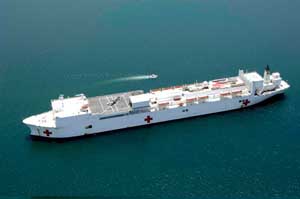
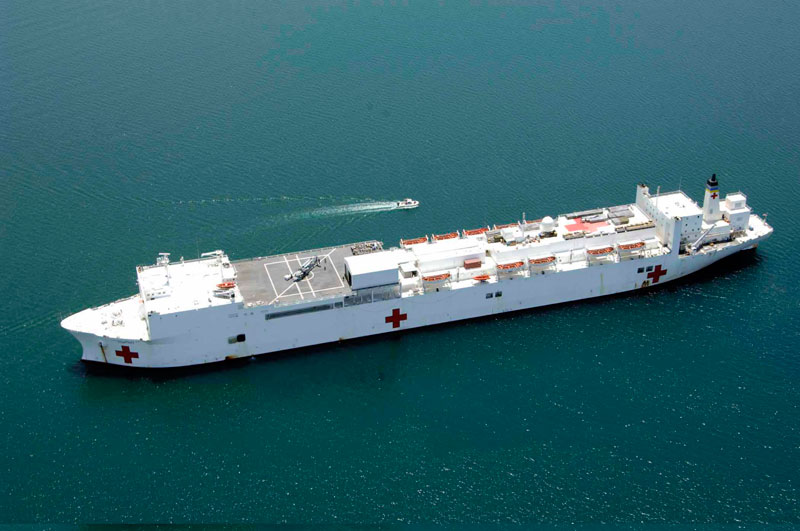
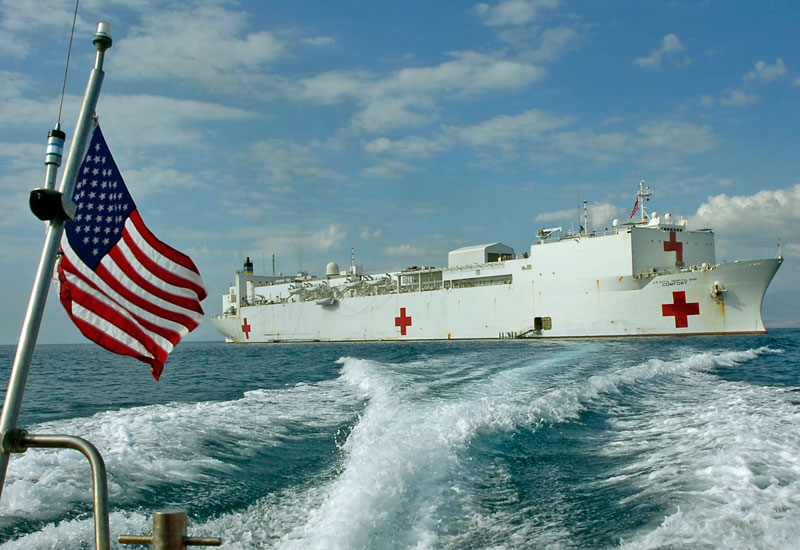
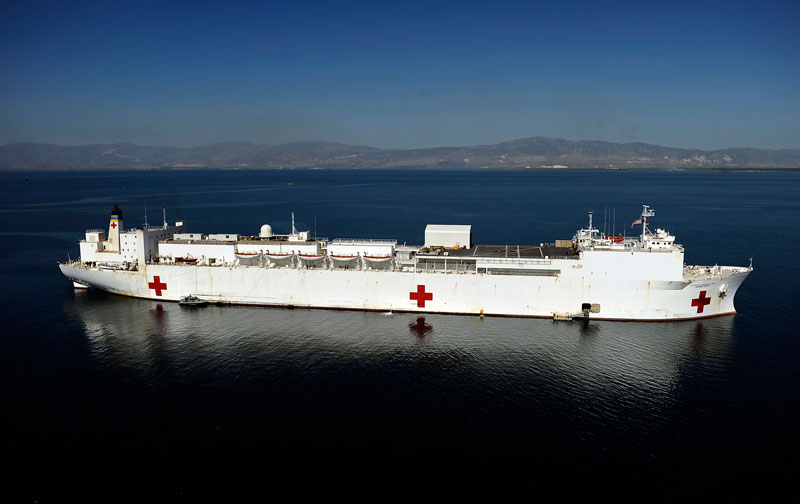
USNS Comfort (T-AH-20) Medical Support Vessel (1987)

Authored By JR Potts, AUS 173d AB | Last Updated: 5/9/2013

The USNS Comfort, a converted oil supertanker, has provided just that to many since her inception in 1987.

Find a School Near You
Follow Military Factory on Facebook:
Trending on Military Factory:
Recent Articles:
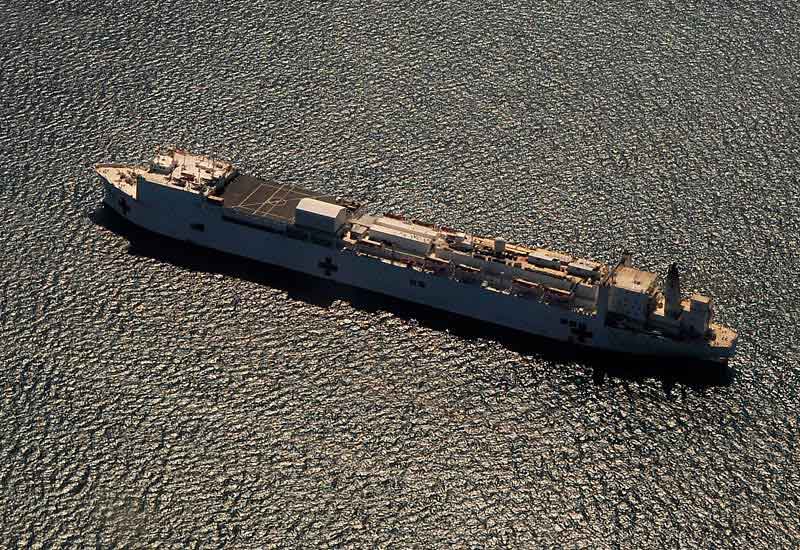
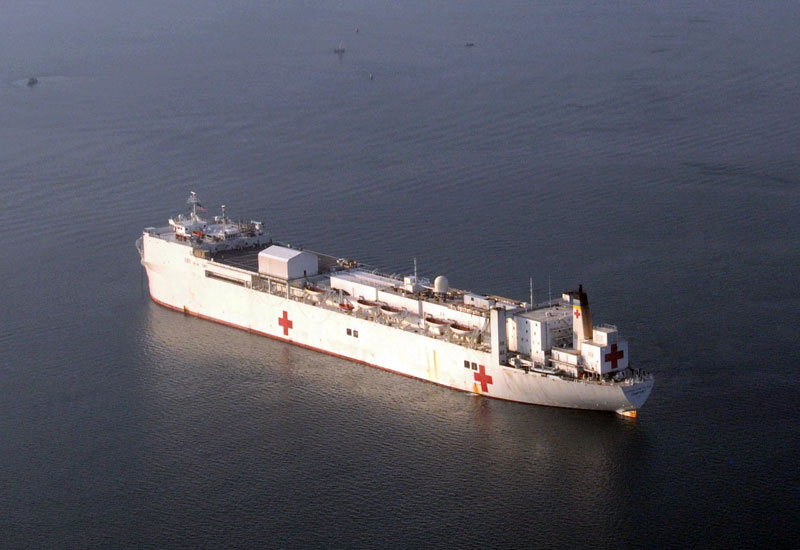
The USNS Comfort is one of two hospital ships in the Mercy-class maintained by the United States Navy. Hospital ships in service with the USN were originally assigned two mission sets that continue to this day: firstly, they serve as a large, mobile floating medical facility that provides surgical acute care in support of US military forces when operating in hostile theaters; secondly, their mission is to serve as a floating hospital for use by a number of government-supported agencies in assistance to victims of natural disasters while also providing international humanitarian relief. Comfort makes her home in port at Baltimore, Maryland, while her sister ship, USNS Mercy, is docked on the West Coast.

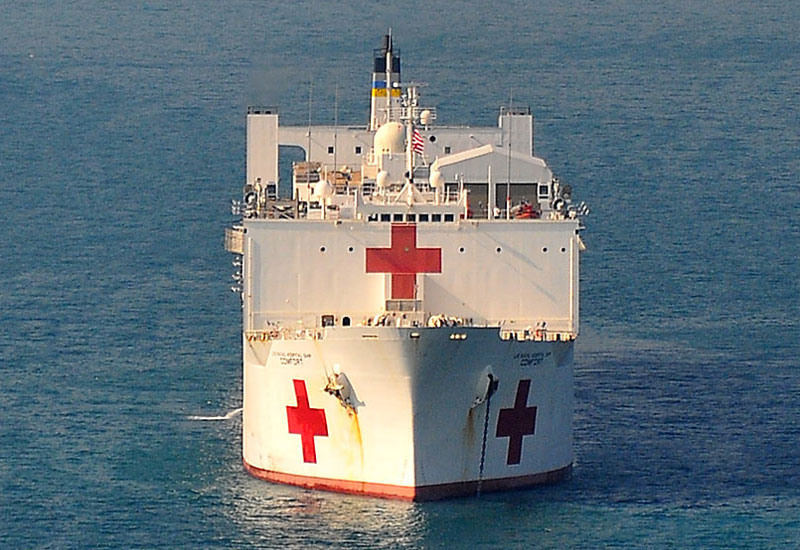
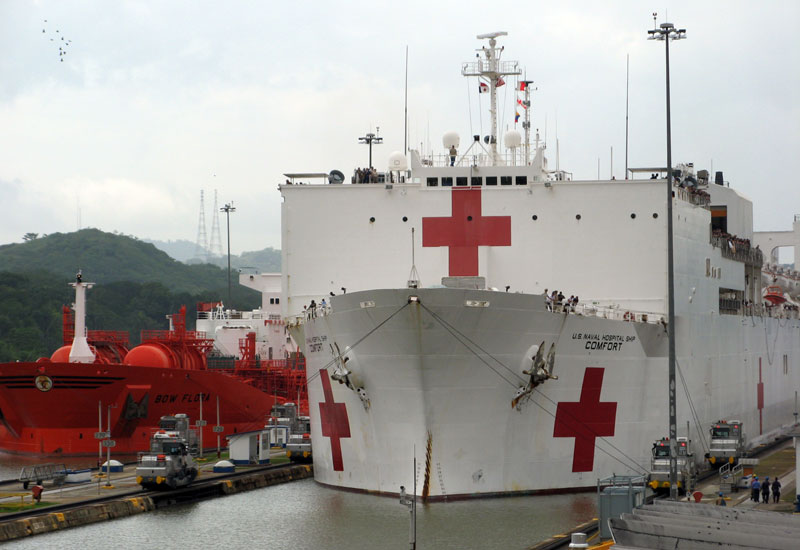
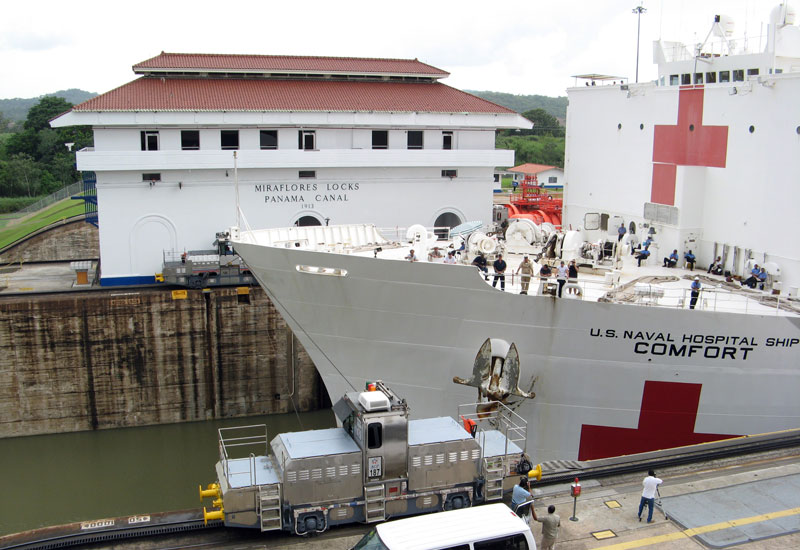
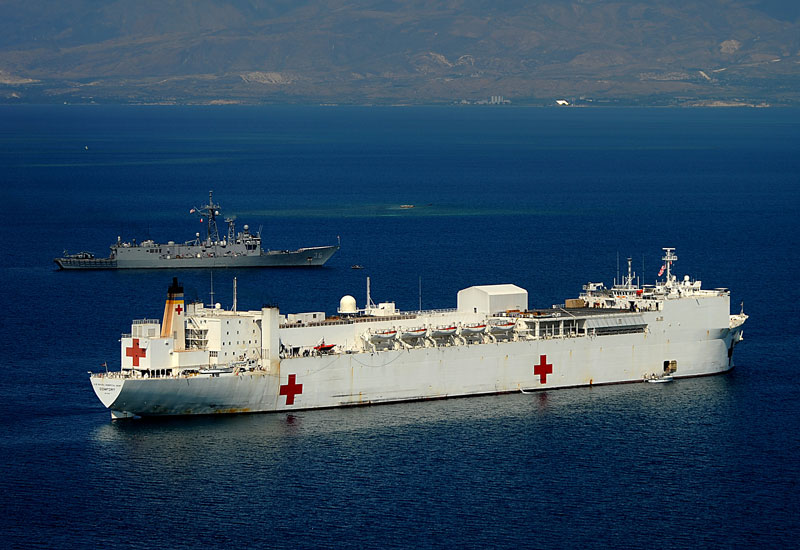
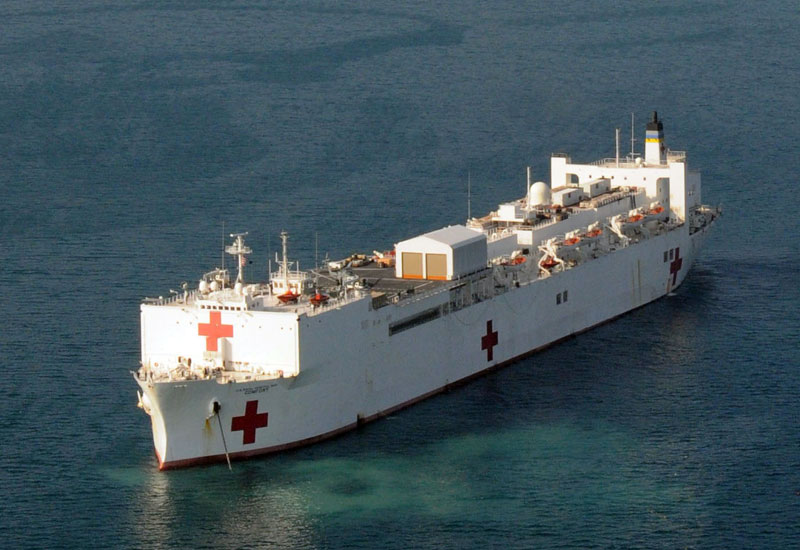
Comfort was originally built as an oil super tanker in 1976 in San Diego, California, and christened the SS Rose City. When purchased and delivered to the US Navy in 1987, instead of being used as an oil tanker, she was put into the yard and converted to a hospital ship as the second of such in the Mercy-class. The ship is adorned with large red crosses to distinctly and obviously paint her purpose while protecting her crew and human cargo against attack in hostile situations. The Geneva Convention protects such hospital ships if they carry no munitions or weapons and any country that fires on them is charged with an international war crime.

Comfort has a deep draft and, in many ports, she has to stand offshore at least a mile. To receive wounded, Comfort has a large day-and-night helo pad designed to receive one helicopter at a time, a bonus for accepting patients at any time but a negative for accepting patients in any number. Despite the onboard helipad, no helicopters are stationed on the Mercy-class ships - another minus to its design. However, she can land such large types as the Boeing CH-47 Chinook, the Sikorsky CH-53D, the Sikorsky CH-53E, the Sikorsky MH-53E, and the Russian Mil MI-17 helicopters on her pad. The ship also has the ability to also receive patients from other ships docked alongside her though not while out at sea.

The heart of the ship is her 12 operating rooms and 1,000 beds that support the many different required levels of care. Five hundred beds are designated for minimal case needs, a further four hundred are for intermediate cases and twenty reserved for surgical recovery and a further eighty for intensive care patients. Comfort can receive and care for 200 patients per day. The number of and types of injuries of patients coming onboard sometimes require a reshuffle of the bed arrangements depending on the injuries. Surgeries while underway is difficult at best though the Comfort was specifically designed with a large rounded hull some 894 feet long , 106 feet wide and weighing 69,360 tons. This makes her a stable platform for most medical procedures.

She is a complete medical facility that even includes a dental clinic, four x-ray machines and a CT scanner. A pair of oxygen-producing plants, an optometry lab and coolers to hold 5,000 units of blood are all part of her tool box - Comfort is a hospital that can sustain up to 2,000 people onboard, crew combined with patients, and supply much-needed water to both as she maintained a fresh water plant making up to 300,000 gallons of water a day. Other onboard services include a satellite lab and a central area for sterile causality receiving. A medical supply depot, along with a well-stocked pharmacy, are all included. Due to the nature of her work she has a large laundry operations and her own morgue.

Her one major drawback is patient movement within the ship's walls. Originally built as an oil tanker, the bulk heads used to separate the oil were left in place and her refit did not include hatches between them. Most of the movement of patients from one area of the ship to another must be made by moving the patients up to the main deck and then moving them down into other parts of the ship instead of using horizontal hallways forward to aft.

Once she is called to duty in a given area, her activation time is five days. Considering she requires a modest skeleton crew to receive a full medical emergency and the merchant marine staff need to be situated and all supplies filled, this is something of a tall order.

On January 12, 2010, a magnitude 7 earthquake hit Haiti, laying waste to the capital city of Port of Prince. As of this writing, the country more or less is functioning without a government in place and the Red Cross has estimated between 100,000 and 200,000 people have died. Tens of thousands remain injured and an international search continues for people who may be alive (and those dead) in the rubble.

The USNS Comfort left her home port at 6:31pm EST on January 16th, 2010, and began receiving the seriously injured from Haitian shores on the 19th, this by helicopter transport. Comfort docked at Haiti on January 20th, 2010, one day earlier than expected.

Comfort has had a long career and served in war and peace around the world.

Operation Desert Storm

Stationed near Kuwait and Saudi Arabia in 1990, Comfort saw 8,700 patients. Her deck saw 2,100 helicopter landings and her 12 operating rooms preformed 337 surgeries. Her kitchens served 800,000 meals for the crew and patients alike. She received the Kuwait Liberation medal and Combat Action Ribbon for her service.

Operation Uphold Democracy

In 1994, during internal unrest, Comfort was sent to Haiti - not as a hospital but as a processing center for migrants. Instead of extra doctors, she boarded civilian personnel to ID and process Haitian migrants. Arriving in June that year she took on 1,100 people of which 400 were transported to Guantanamo Bay, Cuba. Later on that year, Comfort returned to Haiti as a hospital to receive casualties from the continued unrest and returned to her home port in October 1994.

Operation Noble Eagle

On September 12, 2001 Comfort left for New York due to the terrorist attack on 9/11. She docked at pier 92 in Manhattan on 9/14. During her stay, 541 relief workers were seen for their many injuries including respiratory ailments that proved deadly to many years later. Navy personnel provided mental counseling and local massage therapists provided services to the workers. For this action Comfort received the Navy Unit Commendation medal.
Continue to Page 2 (of 2) >>
Text ©2003-2013 www.MilitaryFactory.com • All Rights Reserved • No Reproduction Permitted
MilitaryFactory.com does NOT sell equipment/weaponry. Material presented throughout this website is for historical and entertainment value and should not to be construed as usable for hardware restoration, maintenance or general operation. Please consult manufacturers for such information. Our disclaimer. Email corrections / Comments to MilitaryFactory at Gmail dot com.
Picture of USNS Comfort (T-AH-20)
Pic of the USNS Comfort (T-AH-20)
Image of the USNS Comfort (T-AH-20)
View All Images (27)

Specifications for the
USNS Comfort (T-AH-20)
Medical Support Vessel


Country of Origin: United States
Initial Year of Service: 1987
Operators: United States


Crew: 1,280


Length: 894ft (272.49m)
Beam: 106ft (32.31m)
Draught: 33ft (10.06m)
Displacement: 69,360tons


Machinery: 2 x Elect GE turbine engines; 2 x boilers producing 24,500 horsepower driving 1 x shaft.


Surface Speed: 17.5kts (20mph)
Range: 2,000miles (3,219km)


Armament:
None per the Geneva Convention.


Air Arm: None as standard though she can accept a single helicopter on her flight deck.


Ship Class: Mercy-class
Number-in-Class: 2
Ships-in-Class: USNS Mercy (T-AH-19); USNS Comfort (T-AH-20)

ALL NAVY SHIP CATEGORIES
Site Disclaimer | Privacy Policy | Site Map | MF Origins


©2013 www.MilitaryFactory.com • Content ©2003-2013 MilitaryFactory.com • All Rights Reserved • Site Contact Email: militaryfactory at gmail dot com. The "Military Factory" name and MilitaryFactory.com logo are registered ® trademarks and protected by all applicable domestic and international intellectual property laws.


Top MF Stuff: 2013 Military Pay Scale | Military Ranks | WW2 Weapons | Sniper Rifles | Kts to Mph | WW1 Aircraft | Automatic Rifles | Aircraft Cockpits | Vietnam War Weapons | Main Battle Tanks | Submachine Guns | Shotguns | French Military Victories


Most photographic images appearing on this site are courtesy of the United States Department of Defense and are approved for public use. Other images acquired through the public domain. Digital art work courtesy of Dan Alex. Business Consulting by Kyle Williams. Material presented throughout this website is for historical and entertainment value and should not to be construed as usable for hardware restoration, maintenance or general operation. Please consult manufacturers for such information.


eXTReMe Tracker