Military Factory
Military Pay Chart
Global Firepower
Military Industrial Complex
Second World War
Home
Military Pay Scale
Military Ranks
Small Arms
Aircraft
Land Systems
Navy
Education
Military Factory Facebook Logo
flag of United States

Higgins Boat LCVP (Landing Craft, Vehicle, Personnel) Amphibious Assault Landing Craft (1941)

Authored By Staff Writer | Last Updated: 5/9/2013

With production ranging from 1941 to 1950, some 20,000 Higgins Boats were produced during the rush of World War 2.

Find a School Near You
Follow Military Factory on Facebook:
Trending on Military Factory:
Recent Articles:
Since the first boat was used to assault enemy-held shores in ancient warfare, the amphibious assault has been a key tool in the arsenal of any war planner. The amphibious operation, resulting in the landing of men, machine and supplies, across enemy beaches has allowed entire armies to meet the enemy on its own terrain. This tactic was ultimately used to great effect by the plethora of amphibious actions encountered throughout World War 2 some thousands of years later - in the landings of North Africa, across the vast expanse of the Pacific Ocean and in the European Theater. The end results were often costly, bloody affairs yet wholly effective in surprising an unsuspecting enemy in full. For the Allies, the war could not have been won without the mighty armada of "Higgins Boats" pressed into service. Higgins Boats were named after their designer - American Andrew Higgins of Louisiana. Their service in the conflict was such that even several high-ranking Allied personnel of the war credited Mr. Higgins with "winning the war" - such was the importance of these craft.

Mr. Higgins began operations through his Higgins Lumber and Export Company in 1922. Years later, Higgins designed and developed a shallow draught boat intended for service in Gulf waters with some pseudo-amphibious capabilities built into the craft. The vessel could operate effectively in just 18 inches of water and could land its bow ashore and remove itself to water as needed. However, the economic woes of the 1920s doomed Higgins Lumber for good prompting Higgins to begin Higgins Industries in 1930 where he could continue production of various watercraft - one of his customers eventually becoming the United States Coast Guard which, in turn, helped to establish a foothold with the American military - which would serve him well in the upcoming world war.

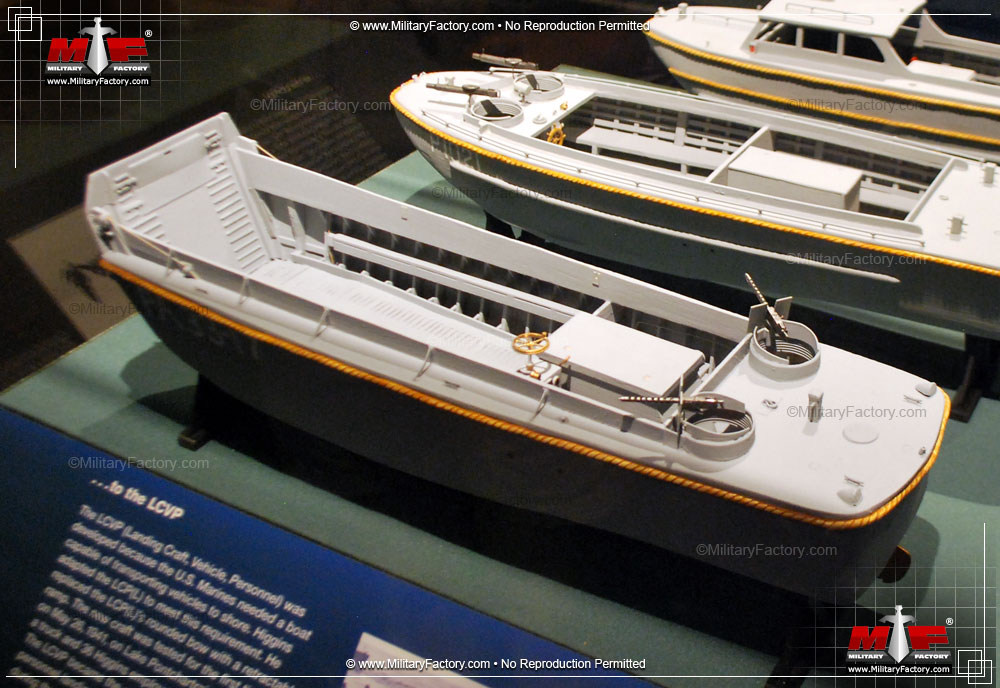
Within time, the United States Marine Corps came looking for an amphibious watercraft to fulfill a requirement that the United States Navy was unable to. Higgins' shallow-draught boat design struck a favorable cord and formal evaluations by the USMC were underway in 1938 as a shadow of war grew over Europe. The initial design, the LCP(L) (Landing Craft Personnel (Large)) was adequate but required cargo to be unloaded over the sides, a tactical nightmare considering the nature of war. A pair of machine gun positions were situated at the front of the design to provide suppression fire as needed. Borrowing a design element from the Japanese Navy, Higgins reworked the LCPL in 1941 to include a slim front loading ramp to allow for unloading from the bow. This then produced the LCP(R) (Landing Craft, Personnel (Ramped) which was successfully evaluated. The machine gun positions were still notably set to the front of the craft which, now with the unloading process relocated to the bow, created a rather dangerous bottleneck of sorts for the disembarking troops. With that said, the front ramp was reworked to become the full width of the craft, this forcing the machine gun cockpits towards the rear of the boat, away from the disembarking troops. Not only could the craft now carry a full complement of combat-ready infantry and supplies, it could now transport a full-size vehicle (JEEP) into the fray (along with 12 troops) - considerably expanding the tactical reach of American amphibious operations. This produced the LCVP (Landing Craft, Vehicle, Personnel) which became the classic "Higgins Boat" that we know today.

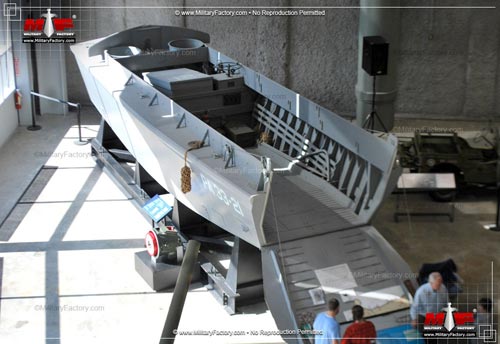
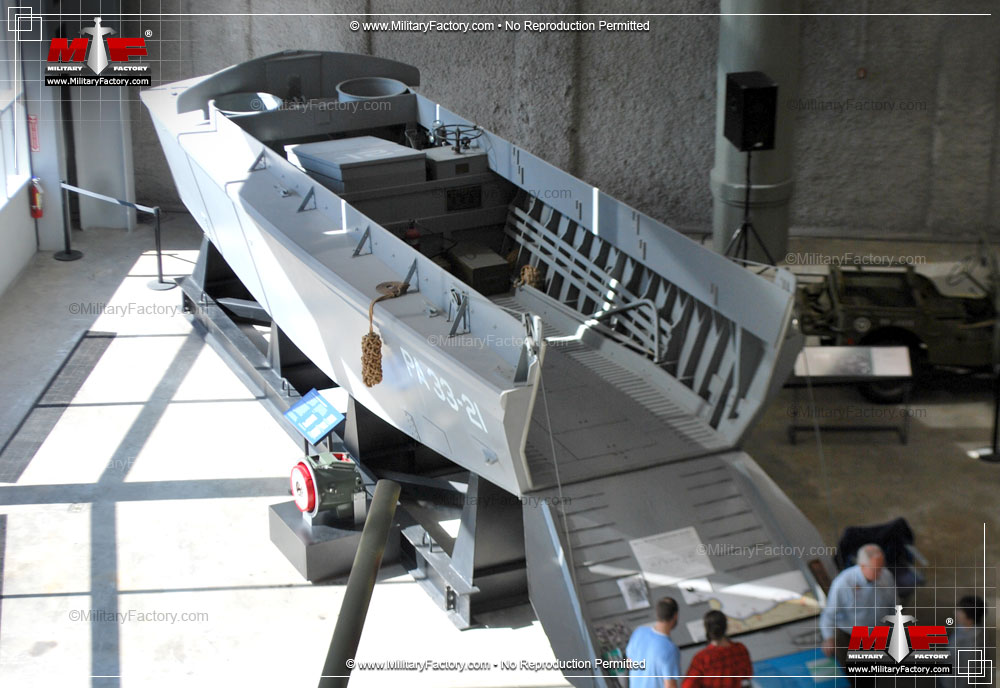
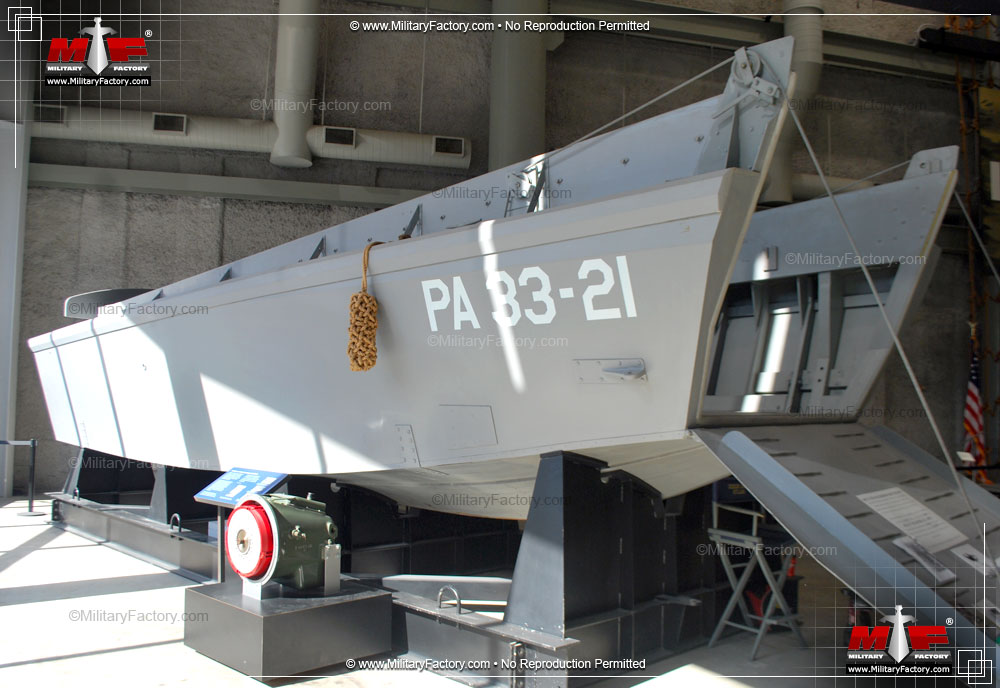
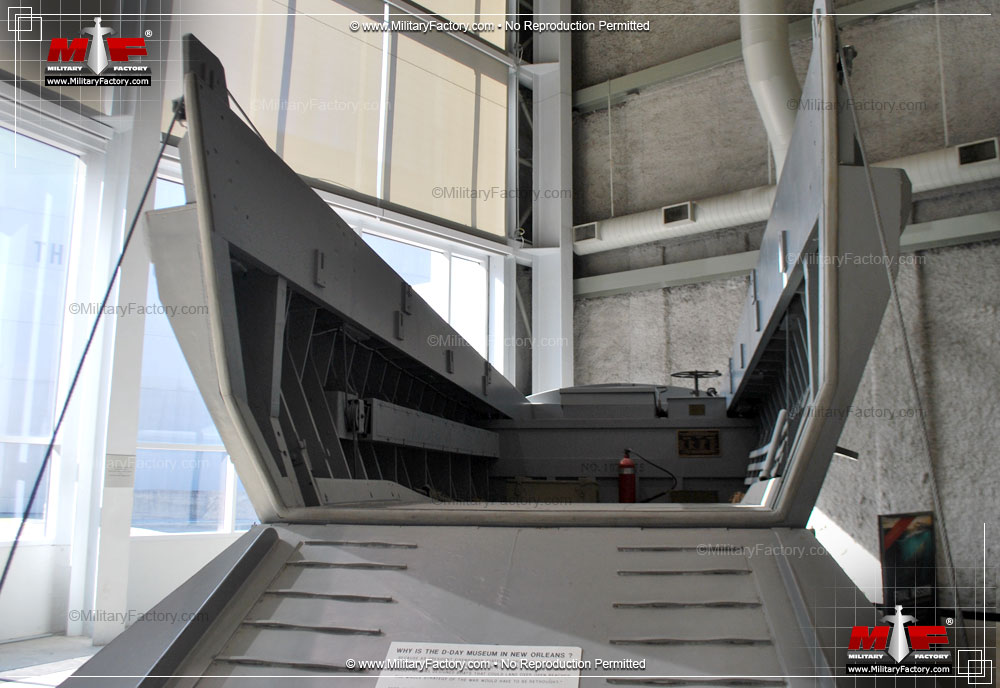
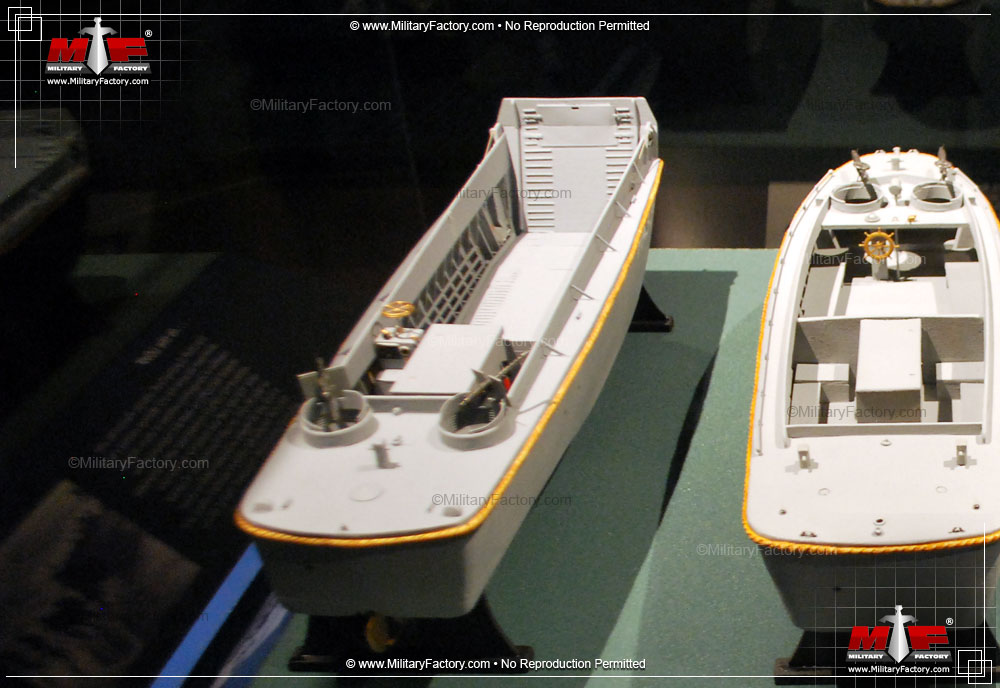
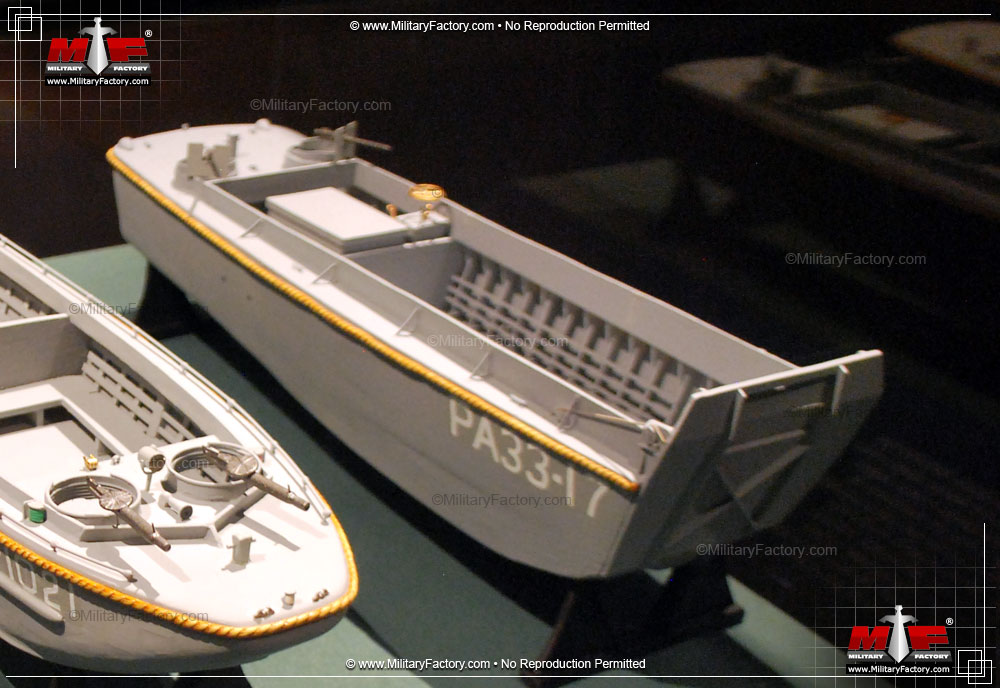
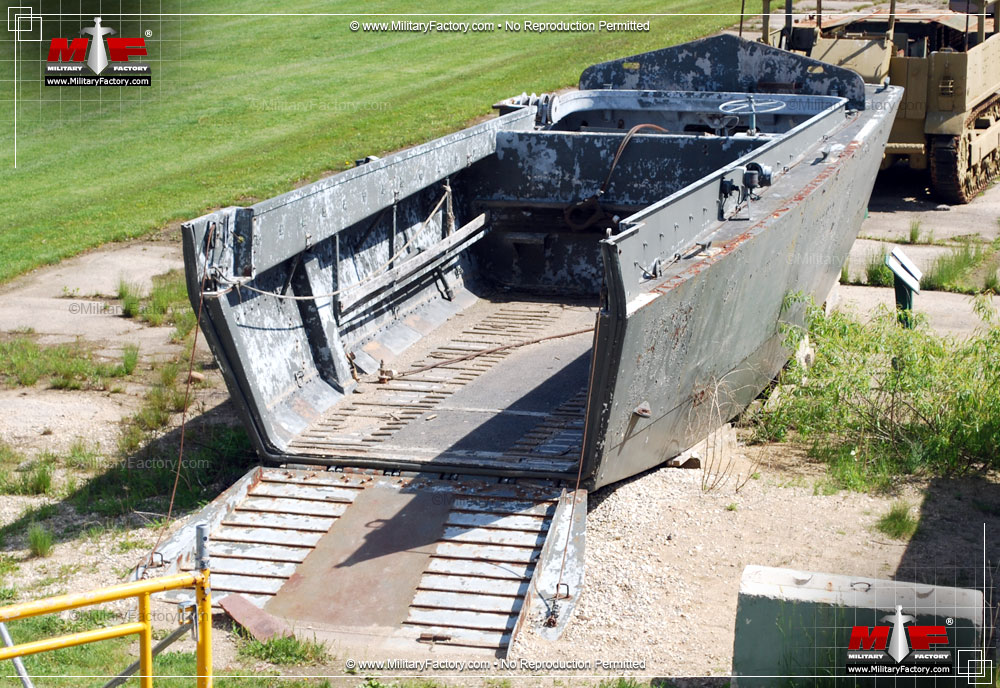
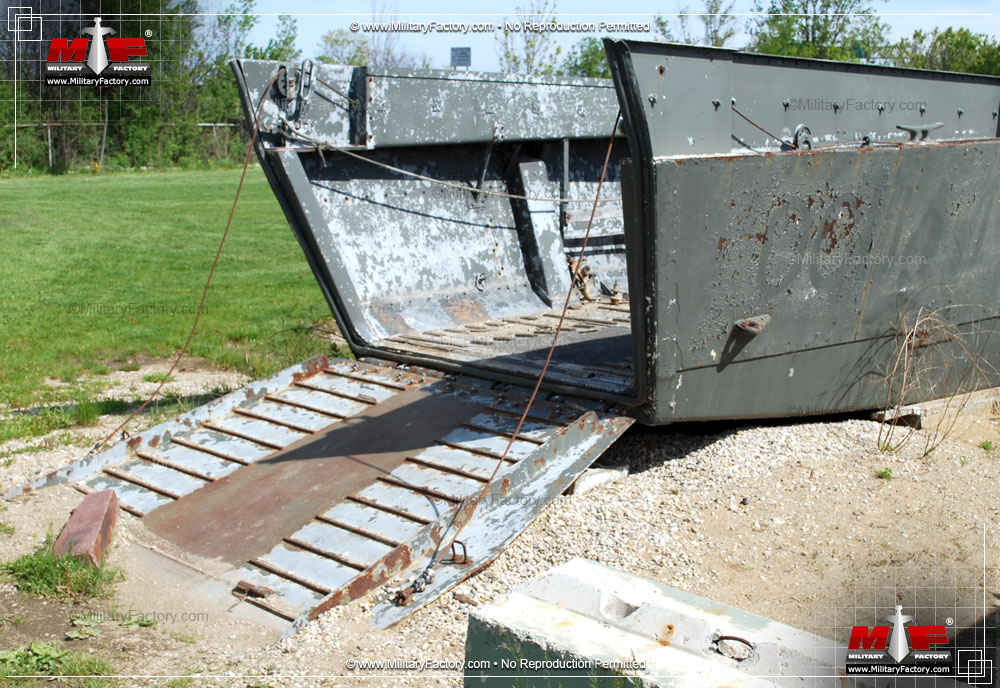
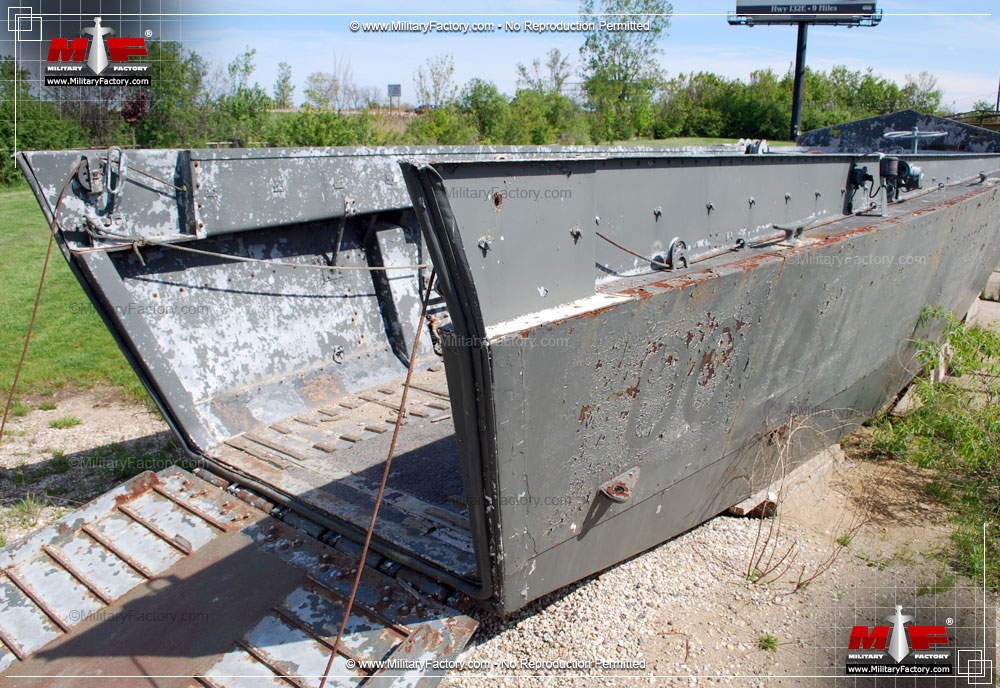
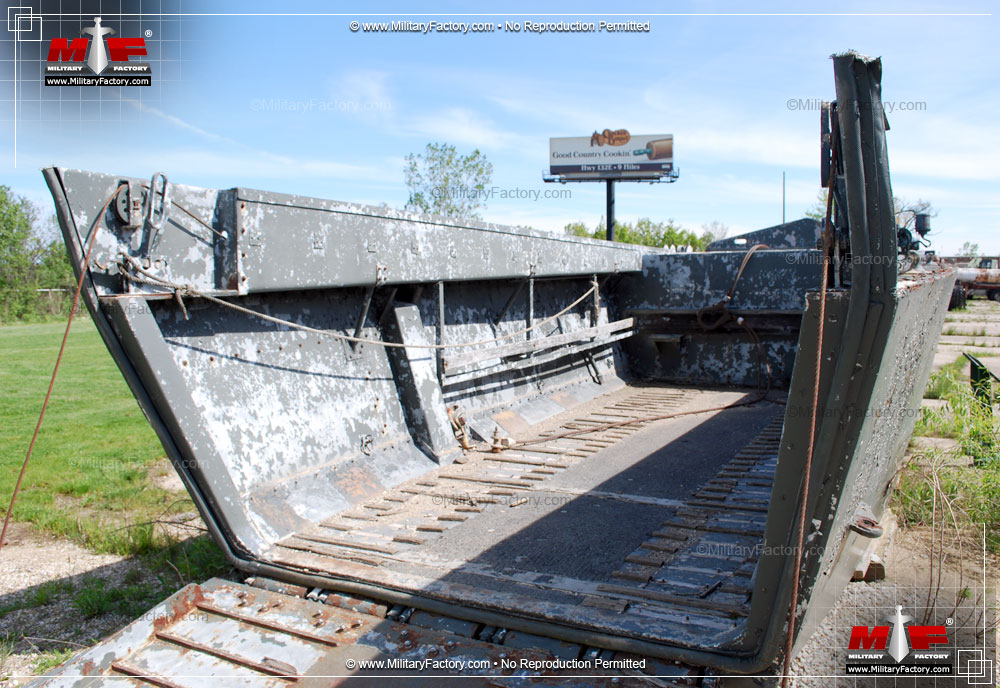
Design of the finalized Higgins Boat was a rather basic, utilitarian affair. The concept essentially revolved around the use of a boxy boat-like hull with a hollowed bow and midsection area. The engine (seated in an upwards diagonal mounting) was contained in the center-rear portion of the craft with a propeller shaft running under the floor to the stern. A rudder was set just aft of the propeller itself for maneuvering. The steering position was set to the left side of the craft, aft of center, with a simple steering wheel and applicable engine system gauges present. To the rear of the driver position were two machine gun cockpit positions intended to supply suppressing fire upon approach (via 2 x 7.62mm machine guns). Fuel was stored in compartments held at the extreme aft corners of the boat. The open cargo area measured over 17 feet long with a width of 7.9 feet. A 7 foot tall door/ramp was affixed to the bow. Once landed, the door was dropped and the crew/cargo could be vacated. Propulsion was via a Gray Marine diesel engine of 225 horsepower or a Hall-Scott gasoline-fueled engine of 250 horsepower. This supplied the craft with a top speed of 12 knots in ideal conditions - though the Higgins Boat operated rather poorly in heavy, churning seas. Total hauling capacity was 8,100lbs of cargo while the craft displaced at 15,000lbs unloaded. A canvas covering could be erected over the open-air cargo hold, though this only sheltered the troops situated along the sides of the boat. Construction was largely of wood, consisting of oak, pine and mahogany.

On December 7th, 1941, forces of the Empire of Japan attacked the American naval base at Pearl Harbor, Hawaii, beginning official American involvement in World War 2. This prompted the industrial might of the country to reach unheard of productivity and among the byproducts of this endeavor became the Higgins Boat. Production of Higgins Boats began in 1941 but would eventually peak during war time and ultimately tail off in the post-war years to which over 20,000 units were delivered (from Higgins Industries and other participants).

Higgins Boats were ultimately used in all manner of landing operations from Operation Torch in North Africa to the much publicized D-Day Landings of North France. LCVPs made the landings in Italy possible, thusly beginning the all-important "second front" in Europe (to work in conjunction with the existing Soviet front to the East) and dividing Hitler's attention. Truth be told, perhaps the greatest need for such watercraft lay in the Pacific Theater where Marine and Army elements were charged with uprooting fanatical Japanese defenders from countless island strongholds. As one can imagine, the fighting was brutal, bloody and intense - thousands of casualties could be inflicted upon Allied marines before they even exited their craft. LCVPs were further utilized in the landings at Guadalcanal, Tarawa, the Philippines, Iwo Jima and Okinawa prior to the end of the Pacific Campaign.

The best visual example of the dangers of amphibious warfare were showcased in the Hollywood motion picture "Saving Private Ryan", a rather realistic display of the carnage inherent in war - particularly when assaulting a prepared enemy from defenseless positions. Consider that one LCVP carried a crew of three to four personnel - the coxswain (driver), an engineer and additional crewman or two - as well as a full complement of 36 troops, all mashed together in close proximity to one another, a well-placed burst of machine gun fire could do maximum damage. It is worth mentioning that not all landings encountered such enemy resistance for some notable actions saw marine units simply taking a beach without a single shot being fired.
Continue to Page 2 (of 2) >>
Text ©2003-2013 www.MilitaryFactory.com • All Rights Reserved • No Reproduction Permitted
MilitaryFactory.com does NOT sell equipment/weaponry. Material presented throughout this website is for historical and entertainment value and should not to be construed as usable for hardware restoration, maintenance or general operation. Please consult manufacturers for such information. Our disclaimer. Email corrections / Comments to MilitaryFactory at Gmail dot com.
Picture of Higgins Boat LCVP (Landing Craft, Vehicle, Personnel)
Pic of the Higgins Boat LCVP (Landing Craft, Vehicle, Personnel)
Image of the Higgins Boat LCVP (Landing Craft, Vehicle, Personnel)
View All Images (18)

Specifications for the
Higgins Boat LCVP (Landing Craft, Vehicle, Personnel)
Amphibious Assault Landing Craft


Country of Origin: United States
Initial Year of Service: 1941
Operators: United States


Crew: 39


Length: 36.2ft (11.03m)
Beam: 10.9ft (3.32m)
Draught: 3ft (0.91m)
Displacement: 9tons


Machinery: 1 x Grey diesel engine delivering 225 horsepower OR 1 x Hall-Scott gasoline engine delivering 250 horsepower.


Surface Speed: 12kts (14mph)
Range: 0miles (0km)


Armament:
2 x 0.30 caliber Browning general purpose machine guns in aft cockpit positions.


Ship Class: Not Applicable
Number-in-Class: 20000
Ships-in-Class: Not Applicable.

ALL NAVY SHIP CATEGORIES
Site Disclaimer | Privacy Policy | Site Map | MF Origins


©2013 www.MilitaryFactory.com • Content ©2003-2013 MilitaryFactory.com • All Rights Reserved • Site Contact Email: militaryfactory at gmail dot com. The "Military Factory" name and MilitaryFactory.com logo are registered ® trademarks and protected by all applicable domestic and international intellectual property laws.


Top MF Stuff: 2013 Military Pay Scale | Military Ranks | WW2 Weapons | Sniper Rifles | Kts to Mph | WW1 Aircraft | Automatic Rifles | Aircraft Cockpits | Vietnam War Weapons | Main Battle Tanks | Submachine Guns | Shotguns | French Military Victories


Most photographic images appearing on this site are courtesy of the United States Department of Defense and are approved for public use. Other images acquired through the public domain. Digital art work courtesy of Dan Alex. Business Consulting by Kyle Williams. Material presented throughout this website is for historical and entertainment value and should not to be construed as usable for hardware restoration, maintenance or general operation. Please consult manufacturers for such information.


eXTReMe Tracker