Military Factory
Military Pay Chart
Global Firepower
Military Industrial Complex
Second World War
Home
Military Pay Scale
Military Ranks
Small Arms
Aircraft
Land Systems
Navy
Education
Military Factory Facebook Logo
flag of United Kingdom

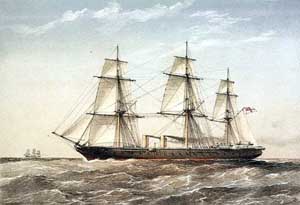
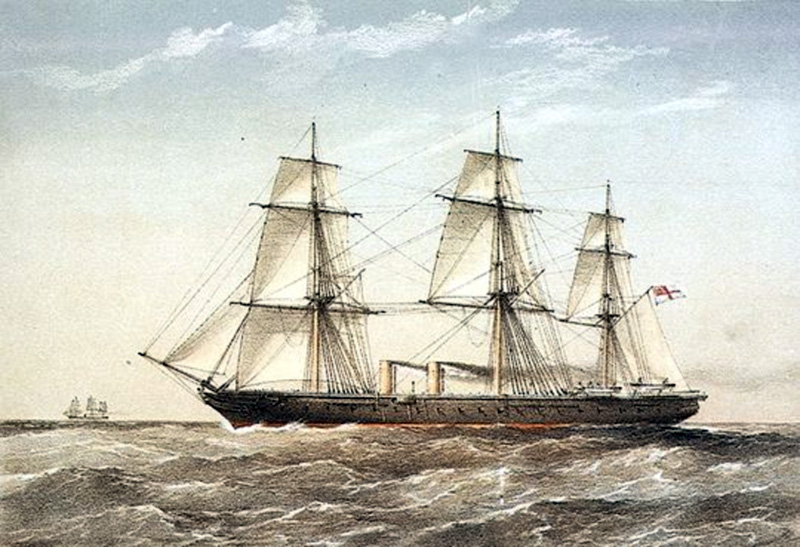
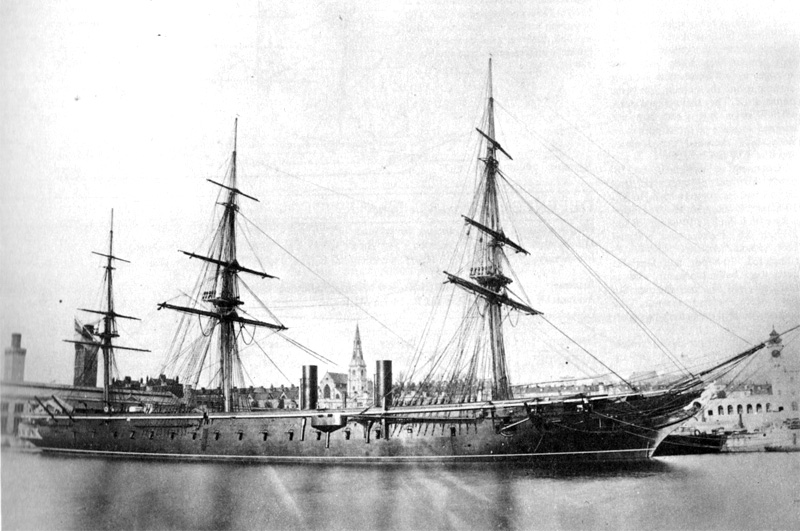
HMS Warrior (1860) Three-Masted Ironclad Battleship (1861)

Authored By JR Potts, AUS 173d AB | Last Updated: 5/9/2013

The HMS Warrior was constructed in response to growing French power on the high seas.

Find a School Near You
Follow Military Factory on Facebook:
Trending on Military Factory:
Recent Articles:
After 1815, the British Royal Navy took on the role of "World's Policeman" by - with some help from American Navy ships like the USS Yorktown - targeting piracy and attempting to subdue the slave trade. Despite the alliance during the Crimean War (1853-1856) against the Russian Empire, the British and French were no longer on such terms due to a growing naval race between the two nations. The French Navy took the lead with a new design and built the "La Gloire" - the first ocean-going ironclad battleship in the world. As soon as she was laid down in April of 1858, the British Navy recognized that all of their unarmored wooden battleships-of-the-line were obsolete. The British, therefore, held little choice in building ironclads all their own. The race was on while 2,000 British shipbuilders worked day and night on the Royal Navy's counter to the French La Gloire - threatening to dominate British sea power. On August 1st, 1861, the first of the Royal Navy's iron-hulled, ocean-going warships - the HMS Warrior - was commissioned and became the largest and most powerful warship in the world. The French battleship La Gloire was only half her size and was under-gunned in comparison. To the dismay of the French, it was now the famous La Gloire that became obsolete.

HMS Warrior and her sister ship, the HMS Black Prince, when built were the most powerful warships in the world due to their balance of armor and speed, the latter through a hybrid propulsion arrangement of steam and sail, capable of reaching 17.5 knots. This quality made the class the fastest ships of the day. Interestingly enough, the British Admiralty classified her ships by the armament placed onboard and thusly the HMS Warrior was listed as a Third-Rate Frigate despite many considering her an Ironclad. Frigates would normally carry a crew of 300 personnel while the HSM Warrior was crewed by approximately 700 officers - both men and boys. 600 sailors lived in one long stable gun deck that was divided into thirty-four messes, each with eighteen men housed into the space between two guns. The cramped space had a table top that could be placed on top of the two cannon to become an ad hoc mess table during mealtimes. At night, the men hung in their hammocks above the cannon while the boys slept on the deck between the guns. The officers had individual cabins and the captain's cabin was, of course, finely furnished resembling something of a Victorian drawing room at sea. The Wardroom mess table would be set with silver, crystal and fine bone china.

The bow and stern of the HMS Warrior were unprotected but amidships she fielded an iron belt of 4.5 inches (114mm) which was supported by up to eighteen inches of teak wood. Bolted iron armor plates to the side of the curved hull forced blacksmith's to bend and shape each plate which measured 3x12 feet. The plates were set in their place through a "tongue-and-groove" fashion in order to closely fit atop the available surface of the hull. In all, some 202 armor plates had to be put onto the ship, the protection adding some 960 tons of weight to the vessel. All the plates were fitted over 2 x 9-inch thick (230mm) layers of teak wood laid on top of each other. The armor was then bolted through the cannon-ball-absorbing, 18-inch teak into the hull having a total thickness of two feet.

The HMS Warrior showcased a main battery of 26 x 68-pounder (7-inch, 178 mm) RML - Rifle Muzzle Loading - guns, 13 guns each along both port and starboard sides. The original design called for 40 such guns to be fitted but this was reduced prior to service. The 68-pounder had an effective range of 3,000 yards (2,700 meters), a distance that the 68lb (31kg) solid shot projectile would cover in 15 seconds. The 68-pounder cannon could fire a number of muzzle-loaded projectiles: solid shot, solid iron balls, explosive shells (hollowed iron balls filled with gunpowder to fragment the ball on impact) and grapeshot (a mass of small metal balls packed within a canvas bag). Case shot was filled with nails, scrap iron or lead wire and used effectively against enemy sailors or marines in the rigging at close ranges. Molten iron shells were filled with molten iron and used to set fires aboard wooden ships. 10 x 7-inch Armstrong RBL guns were then added prior to service entry. 2 x 20-pounder cannons were also fielded as was a single 12-pounder gun. A 6-pounder brass gun was retained for gunnery training at sea.

The sailing rig of the Warrior was comparable to an 80-gun, three-masted ship-of-the-line with a long bow sprit. She held two telescopic funnels that could be lowered when sails were unfurled to maximize the wind flow into her sails. The Warrior-class was the last warship to be fitted with a figurehead on the bow-sprite - bringing an end to a long-running naval tradition. The basic Warrior design encompassed an armored box accommodating weapons, engines and boilers to which then a wooden bow and stern were added. Another Warrior "first" concerning warships was the use of watertight compartments built to stop sea water from flooding inside the ship - a requirement in all large ships since. The cost of the vessel escalated to 400,000 Pounds, twice the cost of a 90-gun wooden ship-of-the-line of the period.

Warrior held two methods of propulsion - the engine, a Penn jet-condensing, horizontal trunk, single expansion steam trunk engine, and tried-and-proven wind power through use of sails. She had 10 x boilers making 5,267 ihp from coal-fired steam, allowing for a speed of 14.5 knots (26.9 kmh) driving a single one shaft with propeller system. The three masts and rigging were supplied by Chatham Dockyard and were lowered into the ship during construction by some 100 seamen while requiring 25 miles of rope and rigging. The Warrior made cruises around Europe and across the Mediterranean, showing the flag, but never firing a shot in anger. She was assigned to guard Queen Victoria when she stayed at Osborne House and was deployed to Osborne Bay. In 1868, the vessel was an escort for the royal yacht, HMY Victoria, while the Prince of Wales - the future King Edward VII - were on board. She was also assigned to the Channel Squadron to patrol the vital Atlantic sea lanes.

By 1871, HMS Warrior was no longer the pride of the British Fleet and her roles were reduced to coastguard and reserve duties. In 1883, two of her three masts were found to be rotten and the cost of repair was found to be too prohibitive for the aging ship. She was therefore stripped of her masts and guns and then placed in the reserve. When renamed Vernon III, she was used to supply steam and electricity to the Royal Navy's torpedo training school for the next twenty years. In 1924, the Royal Navy decided the old Warrior was ready for scrap and she was to be sold though there proved no commercial takers so the endeavor was abandoned in 1929. In 1942, she was converted into a shopkeeper's home and floating oil dock at the Pembroke Dock in Wales and renamed "Oil Fuel Hulk C77". She continued in this role until 1979, helping to refuel thousands of ships.
Continue to Page 2 (of 2) >>
Text ©2003-2013 www.MilitaryFactory.com • All Rights Reserved • No Reproduction Permitted
MilitaryFactory.com does NOT sell equipment/weaponry. Material presented throughout this website is for historical and entertainment value and should not to be construed as usable for hardware restoration, maintenance or general operation. Please consult manufacturers for such information. Our disclaimer. Email corrections / Comments to MilitaryFactory at Gmail dot com.
Picture of HMS Warrior (1860)
Pic of the HMS Warrior (1860)
View All Images (2)

Specifications for the
HMS Warrior (1860)
Three-Masted Ironclad Battleship


Country of Origin: United Kingdom
Initial Year of Service: 1861
Operators: United Kingdom


Crew: 705


Length: 418ft (127.41m)
Beam: 58.4ft (17.80m)
Draught: 26ft (7.92m)
Displacement: 9,200tons


Machinery: 1 x Penn jet-condensing, horizontal trunk, single-expansion steam engine; 10 x boilers developing 5,267ihp to 1 x shaft.

Surface Speed: 17.5kts (20mph)
Range: Essentially Unlimited


Armament:
10 x 110-pdr (203mm) RBL main guns
26 x 68-pdr (178mm) RML main guns
3 x 42-pdr (178mm) RML cannons
2 x 20-pdr RBL cannons (field gun)
1 x 12-pdr (18cwt) cannon (field gun)
1 x 6-pdr brass cannon (training)


Ship Class: Warrior-class
Number-in-Class: 2
Ships-in-Class: HMS Warrior; HMS Black Prince

ALL NAVY SHIP CATEGORIES
Site Disclaimer | Privacy Policy | Site Map | MF Origins


©2013 www.MilitaryFactory.com • Content ©2003-2013 MilitaryFactory.com • All Rights Reserved • Site Contact Email: militaryfactory at gmail dot com. The "Military Factory" name and MilitaryFactory.com logo are registered ® trademarks and protected by all applicable domestic and international intellectual property laws.


Top MF Stuff: 2013 Military Pay Scale | Military Ranks | WW2 Weapons | Sniper Rifles | Kts to Mph | WW1 Aircraft | Automatic Rifles | Aircraft Cockpits | Vietnam War Weapons | Main Battle Tanks | Submachine Guns | Shotguns | French Military Victories


Most photographic images appearing on this site are courtesy of the United States Department of Defense and are approved for public use. Other images acquired through the public domain. Digital art work courtesy of Dan Alex. Business Consulting by Kyle Williams. Material presented throughout this website is for historical and entertainment value and should not to be construed as usable for hardware restoration, maintenance or general operation. Please consult manufacturers for such information.


eXTReMe Tracker