HMS Ben-my-Chree
A seaplane launched from the HMS Ben-my-Chree became the first aircraft to deliver a torpedo against a ship.
By Staff Writer
The HMS Ben-my-Chree served the Royal Navy through the middle years of World War 1, operating as a seaplane carrier. Originally, the vessel was a 2,500 liner used to ferry passengers to the Isle of Man until being taken over by the Royal Navy for purposes of the war effort. After her conversion, the Ben-my-Chree retained some of her passenger likeness but several major additions solidified her position as a warship of the waters.
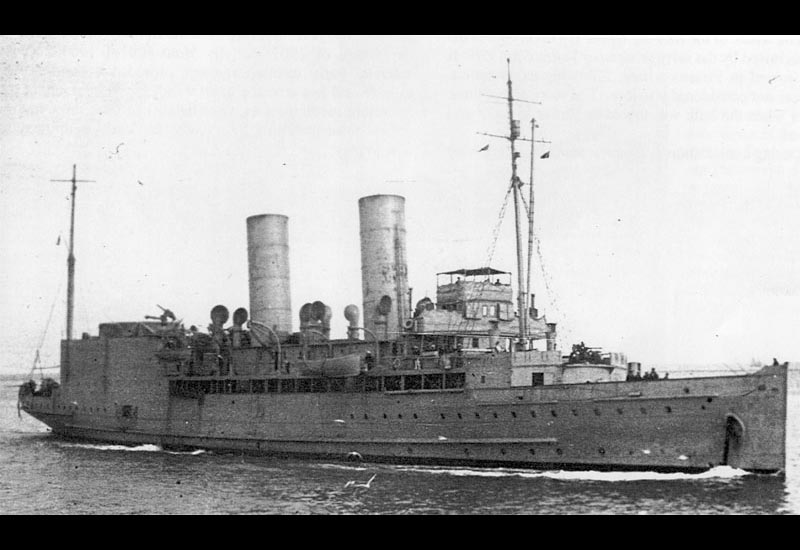
The profile of the HMS Ben-my-Chree was dominated by two smoke funnels amidships. Masts were located forward and aft of these funnels with the bridge superstructure between the forward funnel and mast. A larger superstructure containing the hangar was fitted aft. The forward upper part of the forecastle was fitted with a fly-off ramp for launching her seaplane fighters. A total of six aircraft could be carried aboard, though four was highly ideal considering the space allowed. Initially, these aircraft centered around the Sopwith Schneider seaplane, finally giving the Allies an offensive naval airborne punch and threatening the general dominance of the German Zeppelins. Soon to follow would be the Short seaplanes which brought about the advent of the torpedo bomber in naval aviation lore. Several such aircraft served in the Dardanelles campaign, sinking two Turkish ships with direct torpedo hits.
Beyond her limited air wing, armament aboard the Ben-my-Chree was generally offensive. This included cannon of various calibers led by the 4 x 12-pounder batteries and 2 x 3-pounder systems installed in the 1915 conversion from a passenger liners. A 1916 refit added additional 12-pounder cannons, 2-pounder "pom-pom" cannons and 3-pounder cannons on their respective towing carriages.
As a vessel of war, the Ben-my-Chree saw combat action in World War 1. Throughout the conflict, she served as a mobile raiding platform, artillery spotter, rescue ship and a direct strike carrier. In February of 1916, the Ben-my-Chree was shortly out of action after it had collided with the SS Uganda, causing serious forward damage to the former. Once back in action, the vessel served her days through bombing raids, more artillery spotting and general reconnaissance of enemy movements. On January 11th, 1917, whilst at anchor in Kastelorgio harbor, the Ben-my-Chree was permanently knocked out of commission by Turkish shore batteries and capsized. Post-war, the hull was brought up and reassessed, eventually being sold for scrap in 1921.
The HMS Ben-my-Chree was laid down by Vickers at Barrow-in-Furness in 1907 (conversion handled by Cammell Laird in Birkenhead) and launched the following year. She was officially commissioned in 1915. The unusual name of "Ben-my-Chree" stems from the Old Irish Manx language and is related to Manx Gaelic, a language spoken on the Isle of Man which was the passenger ferry route the original Ben-my-Chree liner was built for before her acquisition and military conversion by the Royal Navy in 1915.
History text ©2003-2009 www.MilitaryFactory.com • All Rights Reserved
No Reproduction Without Permission • Corrections / Comments to MilitaryFactory at Gmail dot com
Last Updated: 8/5/2008
|