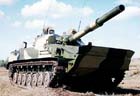
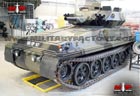
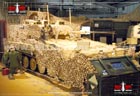
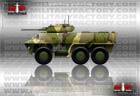
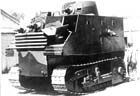
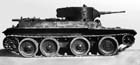
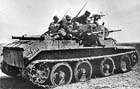
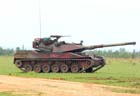
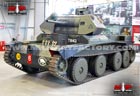
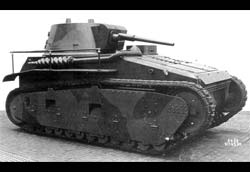
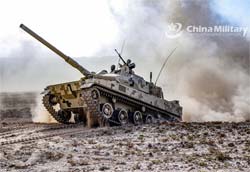
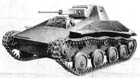
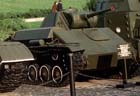
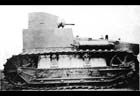
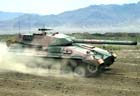
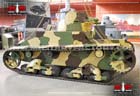
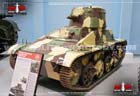
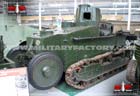
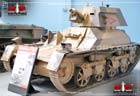
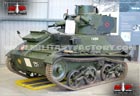
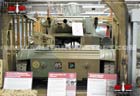
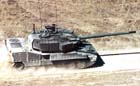
Alvis FV101 Scorpion The Scorpion series of light tank has seen many major variants produced both for local use and for export. The Scorpion chassis can be fitted to utilize a variety of weapon systems and interior setups, increasing it's lifespa...
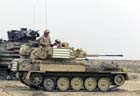
Alvis FV107 Scimitar The FV107 Scimitar is based on the successful family line of Scorpion CVRT chassis systems that operate throughout the British military and some export countries. The FV107 features a crew three and is armed with a 30mm gun t...
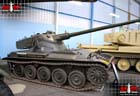
AMX-13 Started just at the end of World War II, development of the AMX-13 reached full production in 1952 with over 3,000 units built. An automatic loader negates the need for a fourth man in the turret, though manual loading is req...
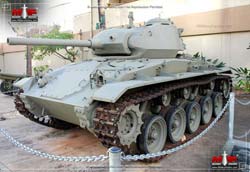
Light Tank M24 Chaffee The Light Tank M24 Chaffee was the successor to the M5 Stuart light tank. Though appearing late into the Second World War, the Chaffee would nonetheless find its role in the Korean War soon after and become a common sight in ...
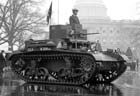
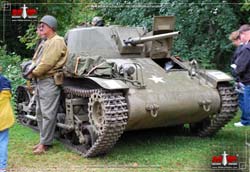
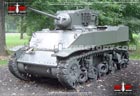
Light Tank M3 / M5 (General Stuart) The M3 / M5 series (commonly known as the "General Stuart") was an Allied design classified as a light tank and appeared through the early and middle years of the Second World War. The system was under-gunned and lightly armo...
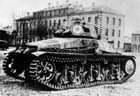
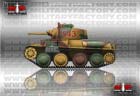
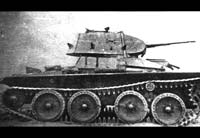
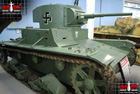
LT vz 35 (PzKpfw 35(t)) The LT vz 35 was a light tank initially appearing with Czech Army forces in the mid-1930's. Two prototypes were drawn up, holding the designation of S-11-a (or T-11 in some sources) and produced to which they succeeded in arm...
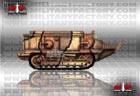
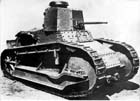
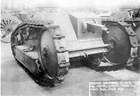
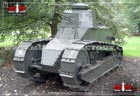
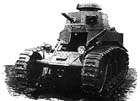
M1917 The M1917 6-ton was aversion of the French-made char leger FT-17. It represents an early foray into US military motorized doctrine and design.
The American version featured an American-produced engine, all steel wheels, an...
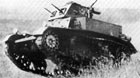
M22 Locust The M22 Locust was a Allied light tank appearing in World War 2 and designed to be air-dropped into battle alongside airborne elements. The general idea of a highly-mobile army continued to fascinate American warplanners as t...
M41 Walker Bulldog The M41 Walker Bulldog was designed to replace the World War Two-era M24 Chaffee. Armed with a 76mm main gun, it was a very standardized tank, with driver front left and the weapons crew in the turret (loader left, gunner fro...
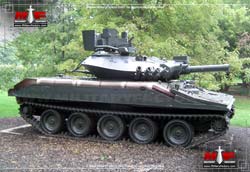
M551 Sheridan The M-551A1 Sheridan is a lightly armored, tracked, air droppable, direct fire tank that can be used in airdrop missions. It uses a Laser Range Finder and Tank Thermal Sight. The Army received the Sheridan in 1967. It has bee...
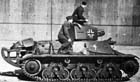
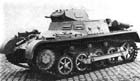
SdKfz 101 Panzerkampfwagen I (PzKpfW I) By today's standards the Panzer I series of tanks could be viewed as nothing more than an anti-infantry tank system. In 1935, however, the Panzer I was the spear tip of Hitler's blitzkrieg operations throughout Europe. The sy...
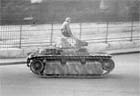
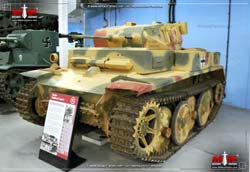
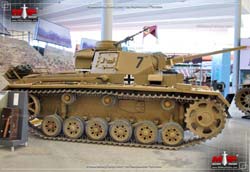
SdKfz 121 Panzerkampfwagen II (PzKpfW II) The Panzer II (PzKpfw II or Panzerkampfwagen II) was designed to meet a 1934 light tank requirement as specified by the German Ordnance Department. A design proposed by MAN was accepted and by 1935, the system was in producti...
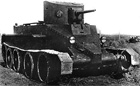
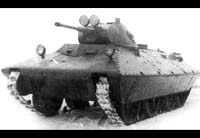
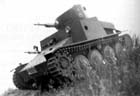
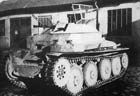
SdKfz 140 (LT vz 38(t)) This light tank system initially began as a Czechoslovakian creation in the form of the LT vz 38. The system was drawn up to a new Czech Army specification intended to right the wrongs inherent in the earlier LT vz 35 light t...
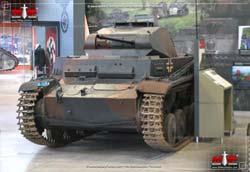
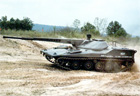
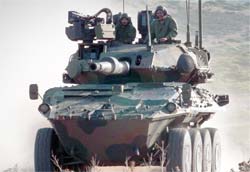
Steyr SK 105 Kurassier The SK 105 is classified as a mobile anti-tank system designed initially by the firm of Saurer-Werke but later picked up by the Steyr-Daimler-Puch consortium. The system was realized in 1967 with early production models hitti...
T-26 As was the norm after World War 1 in all industrialized nations around the globe, Soviet warplanners set about to upgrade their armed forces to meet the demands of the everchanging battlefield. In particular demand was the im...
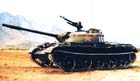
Type 62 Yet another in the long line of NORINCO designs inspired by Soviet-era purchases, the Type 62 (classified as a “light tank”) is nothing more than a base version of the Type 59 built for better off road capabilities. Thusly th...
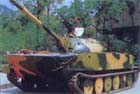
Type 63 The Chinese NORINCO-built Type 63 is in many ways a relative to the Soviet-designed and built PT-76 troop carrier. The weapon system is fully amphibious, utilizing water bilge pumps at a fording speed of up to 12km/h (propell...
Type 97 Te-Ke Developed from an early Imperial Japanese Army request for a light tank in 1937, the Type 97 Te-Ke was simply outmatched against Allied armor. The system suffered from an undergunned main armament and light protection for the...