Adolf Hitler and his Germany had always held a fondness for big, powerful weapons and heavy howitzers proved no exception. A Corps-level artillery piece was needed as a counter battery-weapon capable of taking out enemy battalion gun positions at long distances. The premier armament manufacturer in Europe from the 16th Century and onwards into World War 2 was Krupp Industries of Essen, Germany. The Krupp 21cm Mrs 16 howitzer of World War 1 was now an ageing system and new guns were being developed for the revamped German army. The first new German heavy howitzer produced for World War 2 became the Krupp 21cm Morser 18, a 211mm caliber field gun appearing in 1939. The gun was initiated using a double-recoil hydropneumatic mechanism to help minimize recoil while at the same time increasing target acquisition ranges, able to send out a 250lb HE (High Explosive) shell some 15,857 yards (14,500 meters) down range.
However, by 1941 the German Army was looking for a heavy "mortar" system with inherently more range (the German military community called howitzers "mortars" since they used them for plunging fire missions as well as for pure counter-battery duty). Krupp produced a smaller version of the 21cm Morser 18 and this became the 17cm Kanone 18 with a caliber of 172.5mm (6.79 inches). The 17cm impressed German artillery units firing the 150lb HE shell with a range of 30,621 yards (27,432m), effectively doubling the range of the preceding 21cm with an increase of velocity of 1,000 feet per second. The real surprise was the explosive power of the 150lb shell, almost indistinguishable from the 21cm 250lb shell. The production of the 21cm was halted for almost two years so that production of 17cm guns production could be increased.
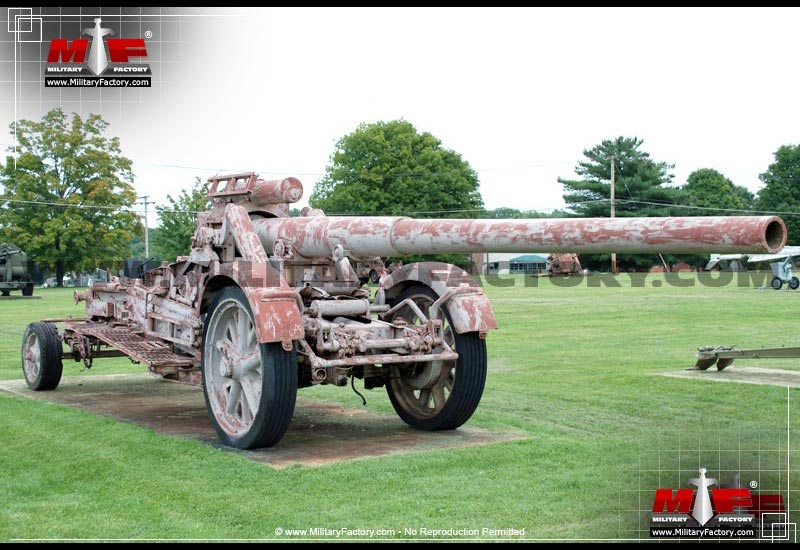
The 17cm Kanone 18 series guns weighed with a combat weight of 38,600lbs. When set up to travel, she displaced 51,500lb. Her overall length measured in at 28 feet which led to her being something of a cumbersome and heavy weapon to maneuver through tight spaces such as town roads and the like. While officially listed as a 172.5mm gun, the informal caliber was displayed as 173mm. Her breech consisted of a horizontal breech block system. Elevation ranged from -6 to +50 degrees with a basic traverse of 16 degrees when set on its wheels. Muzzle velocity was rated at 3,035 feet per second and maximum range was out to 18.4 miles. She fired two types of HE shells - a 138lb and 150lb projectile, each differing in muzzle velocities and range.
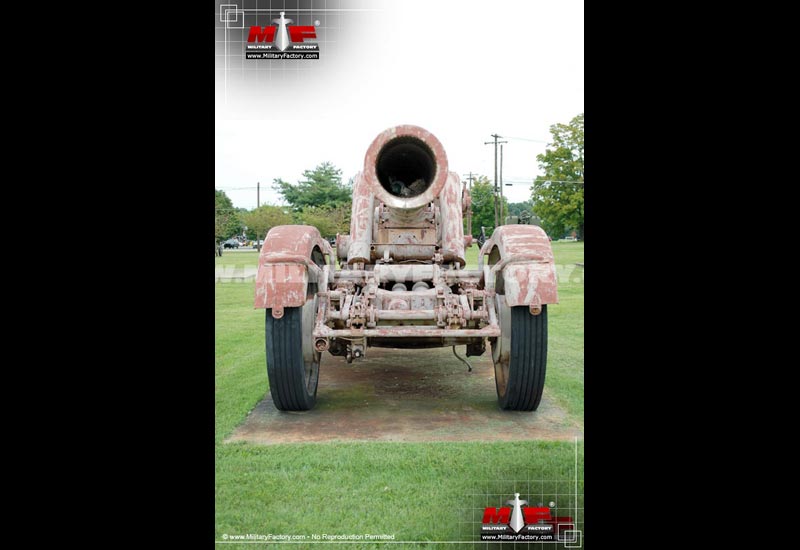
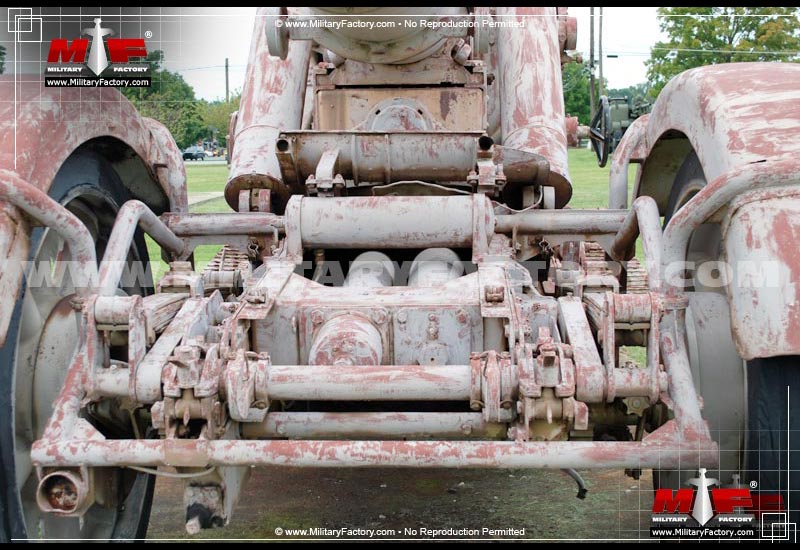
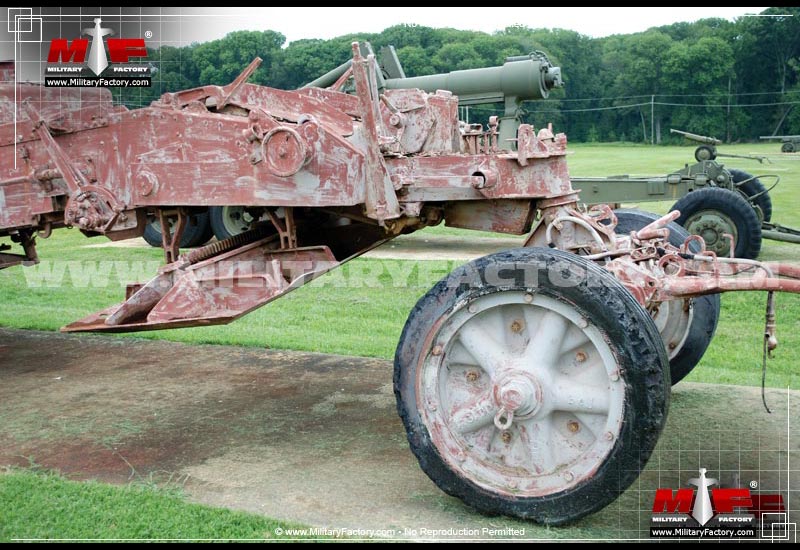
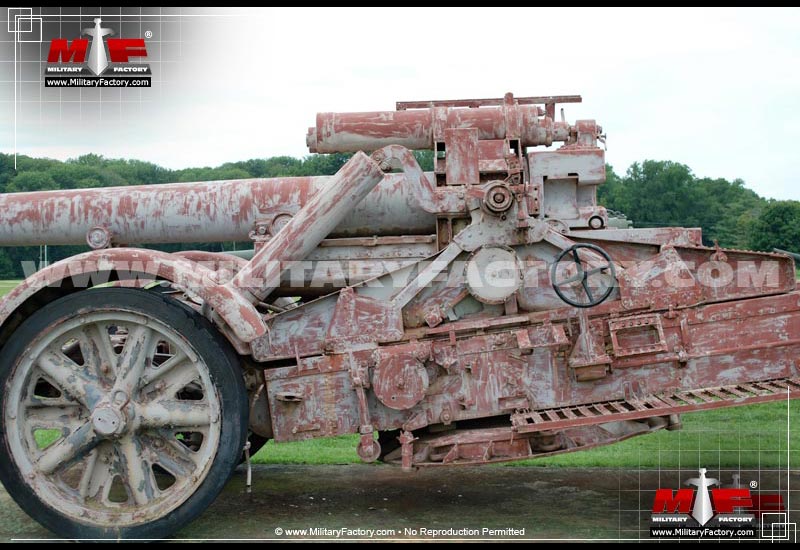
The 17cm utilized the double-recoil system which made her an inherently solid firing platform. The gun assembly was attached to the 21" Mrs. Laf. Carriage, this assembly having four hard rubber-tired wheels for maneuvering and transport. Preparing the gun for firing required the platform to be let down onto two sockets in the carriage. There, three large steel rollers - mounted on vertical legs - would support the weight of the gun. The rear-most roller was connected to a large screw jack leg. The design did not require a spade for stability for the trails sat on an oblong metal float connected to a gear, allowing the gun to have a 16-degree traversal, this being controlled by turning a traversing hand wheel. If additional traversing was required, the screw jack leg could be screwed down using a hand wheel on the side of the carriage. This action would then pick the float off of the ground allowing one soldier, using the trail spike, to swing the 19.25-ton gun carriage in a 360 degree arc, allowing firing positions to be changed rather rapidly in the heat of battle.
When the gun was fired, the barrel recoiled rearwards into its cradle while the bottom section of the carriage (holding the barrel) moved forward across the main part of the carriage. This "double recoil" system reduced the overall recoil force and effectively increased the platform's stability when firing. A manually-operated breechblock was used and was of a horizontal sliding wedge type. The firing mechanism and the extractors were conventional heavy artillery Krupp designs.
Today, modern heavy howitzers are generally self-propelled designs containing both for gun and crew for the sake of speed and safety and from being spotted and fired upon by enemy forces in the air and on the ground. This "shoot and scoot" capability was not built into the likes of field guns such as the World War 2-era 17cm Kanone 18. Howitzers of this size were still being deployed as they were back in World War 1, essentially in fixed positions. In the new "Lightning War" mentality brought about by Hitler's Army in their invasion of Poland, troops on both sides were now expected to cover more ground then ever before.
When compared to the massive experimental Krupp Karl-Gerat 041 self-propelled gun (SPG) - which required more than a day to set up - the 17cm Kanone 18 howitzer was a simpler design to move, arrange and break down for transport. However, compared to other similar-class artillery pieces seeing extensive combat usage in the war, the series was noted as a cumbersome component. The gun barrel was usually transported separately from the rest of the gun and carriage and featured a locking ring, breech jacket, and breech ring for faster separation. For short distance transport, the SdKfz 8 semi-tracked vehicle would tow the gun on the gun's carriage, wholly intact. The barrel could be managed by winches and ramps which allowed the assembly to swing over to a second towing vehicle. This was fairly rapid for the day though still consisted of several hours time. For longer transport maneuvers, the gun barrel (or "tube") was completely removed. Occasionally, Kanone 18 guns were loaded onto a special railway flatbed cars for transport and these guns could also be fired as a conventional mobile "rail gun" from her tracks ala World War 1.
For its time, the 17cm Kanone 18 field gun had a technically advanced recoil system and proved an excellent long range howitzer for German Army actions. If the gun maintained any inherent faults it was that the series became rather expensive to produce in wartime Germany. Additionally, the series required much attention to maintain her to quality standards, required many hands and setup time for preparation to fire and take-down and her carriage was rather slow when going it off road. Many Kanone 18 guns were therefore captured by the Allies when German positions were overrun, there being no time for the German gunners to pack up their large artillery pieces for the retreat. In these cases, and when the Kanone 18's ammunition was also captured intact, Allied forces were not shy about loosing their new guns against their former masters.
The 17cm Kanone 18 series guns were in operational service from 1941 to the end of the war in 1945. Production was handled by Krupp up to 1942 to which then Hanomag took over the reins. Overall production was rather limited, however, to some reported 338 systems in circulation.
Power & Performance Those special qualities that separate one land system design from another. Performance specifications presented assume optimal operating conditions for the 17cm Kanone 18 (17cm K18) Towed Heavy Field Gun.
None. Typically towed by SfKfz 8 semi-tracked utility vehicle. Installed Power
18 miles 29 km Range
Structure The physical qualities of the 17cm Kanone 18 (17cm K18) Towed Heavy Field Gun.
10 (MANNED) Crew
42.0 ft 12.8 meters O/A Length
9.2 ft 2.8 meters O/A Width
10.2 ft 3.1 meters O/A Height
38,625 lb 17,520 kg | 19.3 tons Weight
Armament & Ammunition Available supported armament, ammunition, and special-mission equipment featured in the design of the 17cm Kanone 18 (17cm K18) Towed Heavy Field Gun.
1 x 172.5mm 46 caliber (6.79") main gun barrel
AMMUNITION: Dependent on ammunition carrier. HE shells of 138lbs and 150lbs varying in velocity and range.
Variants Notable series variants as part of the 17cm Kanone 18 (17cm K18) family line.
17cm Kanone 18 - Base Series Designaiton
Operators Global customers who have evaluated and/or operated the 17cm Kanone 18 (17cm K18). Nations are displayed by flag, each linked to their respective national land systems listing.
Total Production: 338 Units Contractor(s): Krupp / Hanomag - Nazi Germany
[ Nazi Germany ]
1 / 5
Image copyright www.MilitaryFactory.com; No Reproduction Permitted.
2 / 5
Image copyright www.MilitaryFactory.com; No Reproduction Permitted.
3 / 5
Image copyright www.MilitaryFactory.com; No Reproduction Permitted.
4 / 5
Image copyright www.MilitaryFactory.com; No Reproduction Permitted.
5 / 5
Image copyright www.MilitaryFactory.com; No Reproduction Permitted.
The "Military Factory" name and MilitaryFactory.com logo are registered ® U.S. trademarks protected by all applicable domestic and international intellectual property laws. All written content, illustrations, and photography are unique to this website (unless where indicated) and not for reuse/reproduction in any form. Material presented throughout this website is for historical and entertainment value only and should not to be construed as usable for hardware restoration, maintenance, or general operation. We do not sell any of the items showcased on this site. Please direct all other inquiries to militaryfactory AT gmail.com. No A.I. was used in the generation of this content.