The portable mass rocket launcher was realized in World War 2 with the Allies, Germans and Soviets all utilizing some form of the weapon type. Perhaps it was the Soviets that placed a premium on such weaponry and made tremendous use of rocket artillery along with traditional artillery to decimate the ranks of the German Army along the East Front. The Germans utilized a system known as the "Nebelwefer" while the Allies made use of the "Land Matress". In any case, the unguided, tube-launched rockets held a devastating effect on enemy troops and became one of the most feared weapons of the war. With America finding itself in another war, this time on the Korean Peninsula, much of its World War 2-era weaponry was becoming antiquated, leading to the development of more modern systems that included the M21 4.5 inch (114.3mm) multiple rocket launcher (T123). The system debuted in 1953 and some 1,200 examples were produced. Production of M25s was handled by the Rock Island Arsenal.
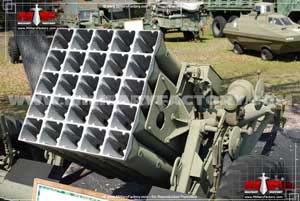
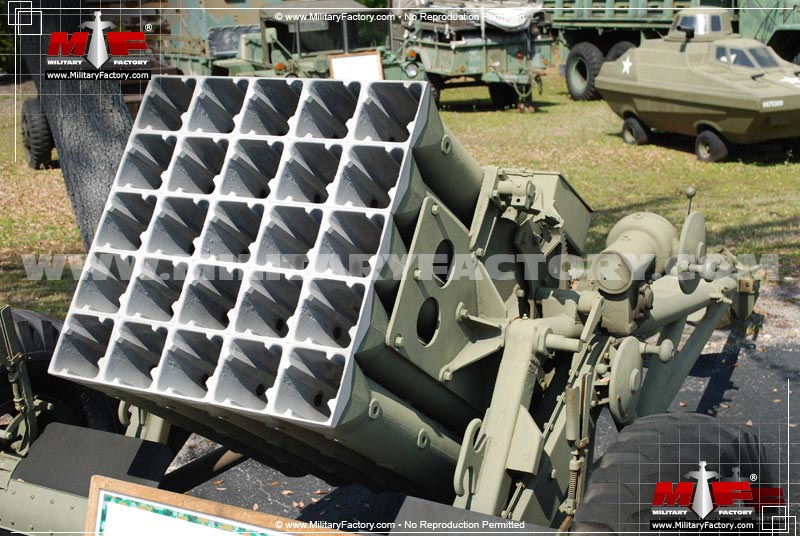
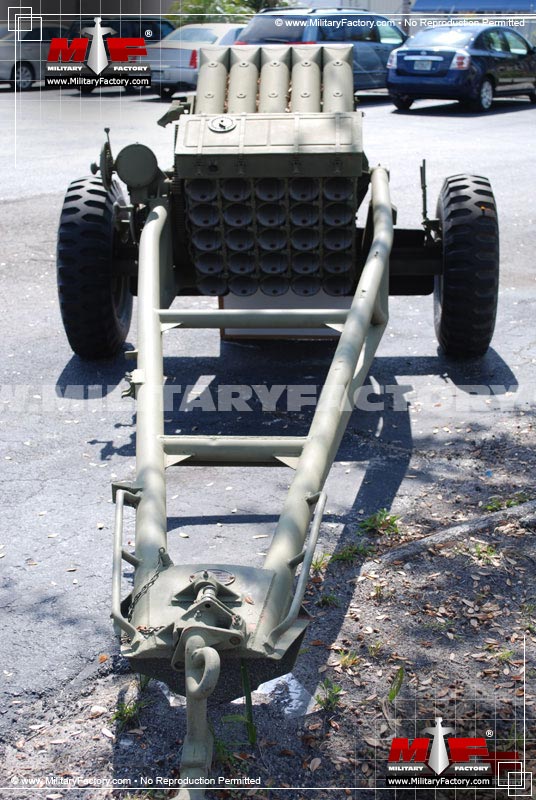
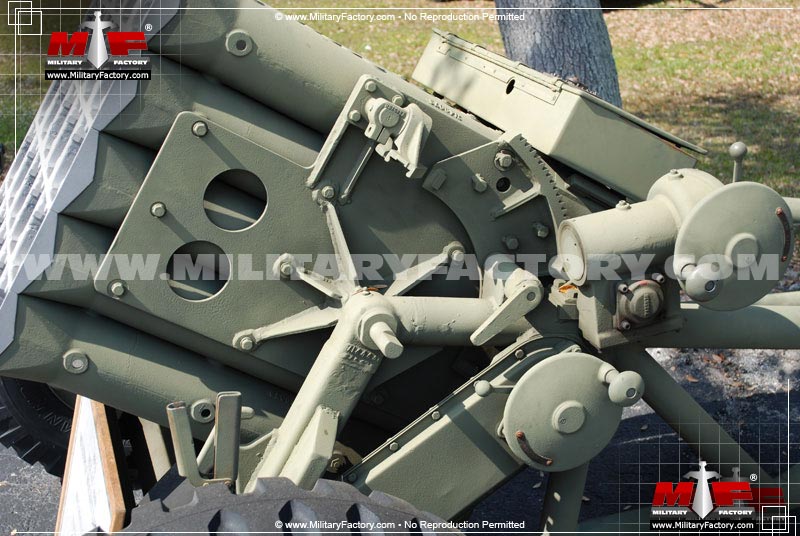
The M21 was an electrically-operated, reusable, tube-based, portable rocket launcher. The purpose of such a weapon was to saturate a target area that held concentrations of enemy troops or light-armored vehicles with high-explosive artillery in the shape of rockets. The firing tubes were arraigned into five rows of five tubes each, creating a "wall" of launch tubes. The tube muzzles were, in fact, square-shaped in design, each having four off-set diamond-shaped points to which each rocket could be centered by within their respective launch tube upon entry into the tube. Each launch tube was mounted atop a two-wheeled, rubber-tired transportation carriage with an extended towing "A-Frame" bar - not only useful in the towing of the launcher by a mover vehicle but also serving as a rudimentary recoil absorption system when the weapon was fired as well as allowing for essentially 360-degrees of traversal. To obtain traverse, the crew need only move the towing arm to reposition the M25's launch direction. Through the use of small hand wheels, elevation could be adjusted between 5- and 45-degrees. The rockets themselves followed a simple trajectory and, while accuracy of such weapons was always somewhat suspect, there was no denying the psychological aspect of the weapon's firing nature against those enemy unfortunate enough to be on the receiving end.
A minimal crew of two was required to operate the M21 and these personnel stood out in the elements during setup of the system and reloading. When the M21 was fired, it was beneficial to the crew to find nearby cover to protect themselves from the launch blast caused by the exiting rockets. Utility-minded vehicles in the US Army such as Jeeps and light trucks were used to tow the M25 into position though the latter served a more complete purpose for its ability to carry the required rocket ammunition supply together with the launcher. The launcher itself weighed in at 1,200 lbs (544kg) when empty and 2,220 lbs (1,007kg) when fully loaded and ready to fire.
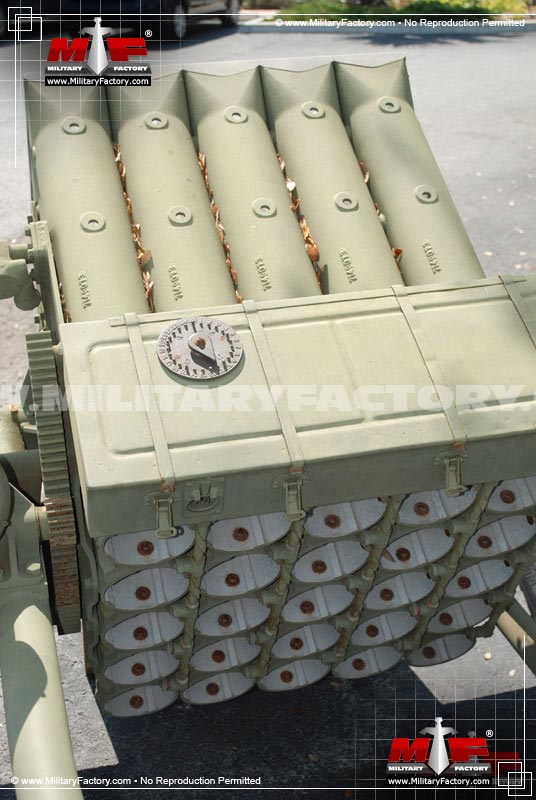
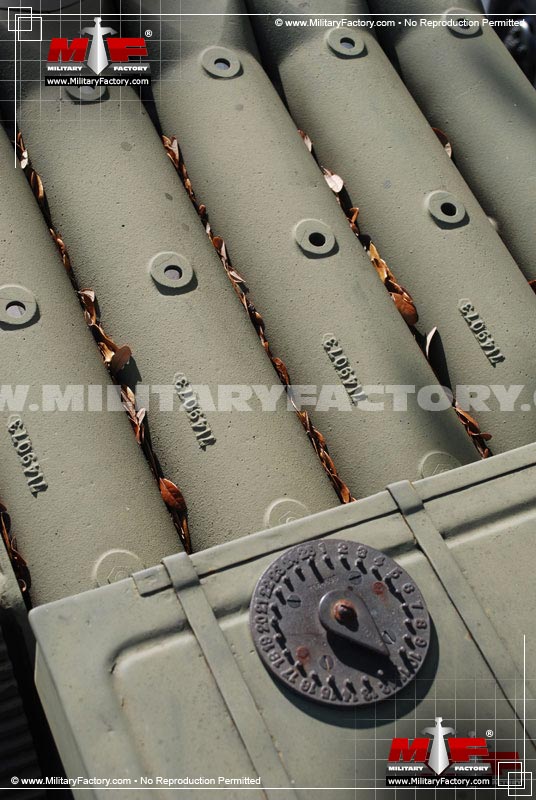
The twenty-five rockets were loaded from the muzzle of each tube, the process taking approximately 80 seconds to complete by a trained and experienced crew. Along the top rear of the launch tubes was a small compartment containing the batteries needed to electrically fire the rockets. On this compartment was also a round dial with numbers ranging from 1 to 25 and a turn knob that allowed the launch crew to select how many rockets to launch in a given salvo - it took just 2.5 seconds to launch a full salvo of 25 rockets - the feature allowed the crew to let loose partial salvos or entire loads as needed or directed. Each rocket was capped with a high-explosive warhead and were 30 inches long with a 4.5 inch diameter. The rockets themselves weighed some 38lbs and held a range out to a listed 5,000 yards, allowing it to strike at targets well behind enemy lines.
The M21 was assigned shipped to the Korean theater during the Korean War (1950-1953) and used by both the United States Marines Corps and special regular United States Army groups against attacking North Korean and Chinese troops in an effort to help break up massed formations of soldiers and vehicles. The weapons undoubtedly worked as advertised.
Power & Performance Those special qualities that separate one land system design from another. Performance specifications presented assume optimal operating conditions for the M21 4.5in (114mm) Reusable Multiple Rocket Launch System.
None. This is a towed artillery piece. Installed Power
3 miles 5 km Range
Structure The physical qualities of the M21 4.5in (114mm) Reusable Multiple Rocket Launch System.
4 (MANNED) Crew
12.0 ft 3.65 meters O/A Length
4.6 ft 1.4 meters O/A Width
3.0 ft 0.914 meters O/A Height
2,196 lb 996 kg | 1.1 tons Weight
Armament & Ammunition Available supported armament, ammunition, and special-mission equipment featured in the design of the M21 4.5in (114mm) Reusable Multiple Rocket Launch System.
25 x 4.5 inch (114.3mm) launch tubes
AMMUNITION: Dependent upon ammunition vehicle. Shell weight of 38lbs with High-Explosive warhead.
Variants Notable series variants as part of the M21 4.5in (114mm) family line.
M21 4.5in (114mm) - Base Series Designation
Operators Global customers who have evaluated and/or operated the M21 4.5in (114mm). Nations are displayed by flag, each linked to their respective national land systems listing.
Total Production: 1,200 Units Contractor(s): Rock Island Arsenal - USA
[ United States ]
1 / 6
Front left side view of the M21 rocket launcher on display
2 / 6
Rear view of the M21 launcher showing the tow carriage in great detail
3 / 6
Close-up top-rear detail view of the launch tubes of an M21 launcher
4 / 6
Close-up detail view of the selector dial on an M21 numbered from 1 to 25 rockets
5 / 6
Detail view of the mounting for an M21 launch tube arrangement; note elevation hand wheels
6 / 6
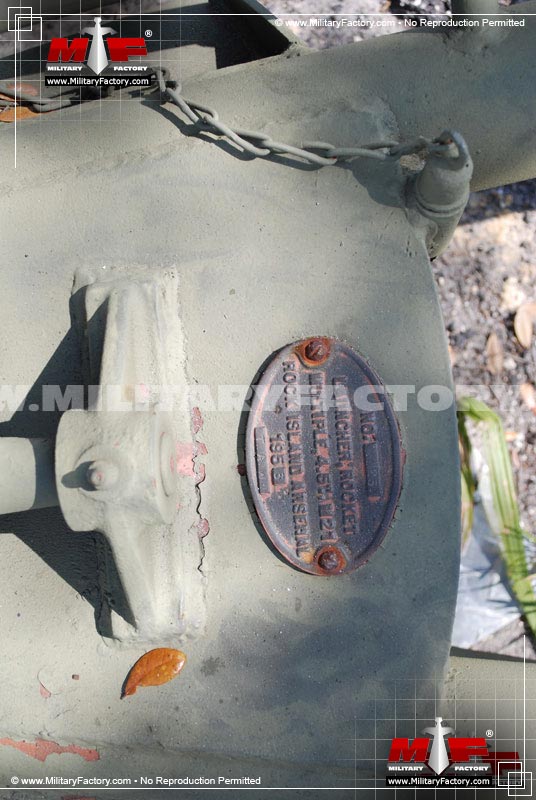
Close-up view of the manufacturing plate on an M21 multiple rocket launch system
The "Military Factory" name and MilitaryFactory.com logo are registered ® U.S. trademarks protected by all applicable domestic and international intellectual property laws. All written content, illustrations, and photography are unique to this website (unless where indicated) and not for reuse/reproduction in any form. Material presented throughout this website is for historical and entertainment value only and should not to be construed as usable for hardware restoration, maintenance, or general operation. We do not sell any of the items showcased on this site. Please direct all other inquiries to militaryfactory AT gmail.com. No A.I. was used in the generation of this content.