In World War 2 the German Army developed tank hunters, the "Panzerjagers" or tank destroyers - a classification of armored vehicle that was specifically designed to counter the presence of enemy tanks through sheer firepower. They first mounted a proven 75mm anti-tank gun on a medium tank chassis and used an open turret configuration that sported a three sided armor shield arrangement for crew protection and maximum operating space. Many designs were based on existing equipment availability and even included using captured equipment from the Polish and French armies as the war wore on. Most often times, the hulls were of tank systems that had passed their prime as true tank systems and found new life as dedicated tank destroyers.
After the war's end in 1945, Germany had no need for their own standing army with the country now divided between the Allies and the Soviet Union in an "East meets West" fashion. At the outbreak of the Korean War in 1950, the United States called for the rearmament of West Germany in order to help defend Western Europe from a possible Soviet land invasion. The first prototypes of the "Kanonenjagdpanzer" were built in 1960 by Hanomag and Henschel for the West German Army. This tank destroyer was designed with a low profile and high mobility, increasing her battlefield survivability rate in case war would find Europe once more.
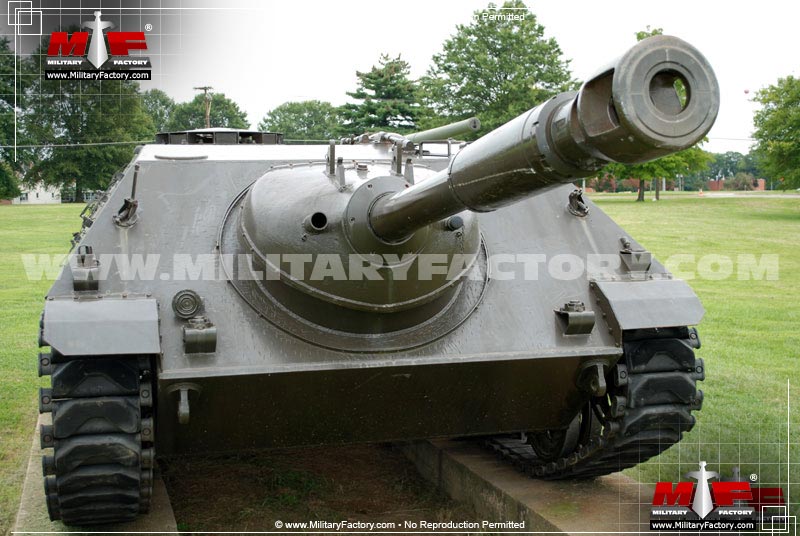
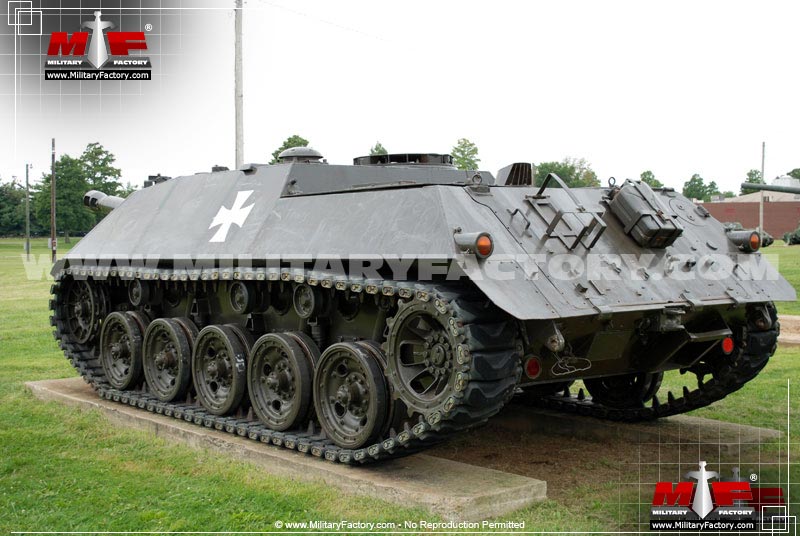
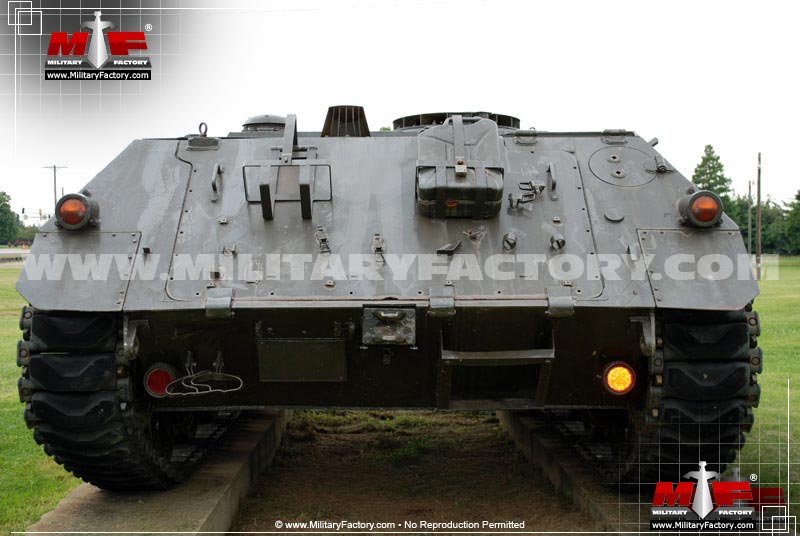
The "Jagdpanzer Kanone" was constructed with a welded steel hull of only 50mm of armor protection. Speed would be her inherent defensive quality, being able to make upwards of 43mph with her 500 horsepower diesel engine supporting a four man crew. The commander, driver, gunner and loader were cramped in the vehicle dimensions of 28.7 feet long, 9.7 feet wide and 6.8 feet high and the fighting cabin was NBC protected to deal with the very real threat being posed by Nuclear, Biological and Chemical threats from the Soviet Union.
Her primary function as a tank destroyer was, naturally, to destroy enemy tanks within range with her powerful 90mm Rhinemetall BK 90/L40 main gun. 2 x 7.62mm MG3 general purpose machine guns were secondary and served as enemy troop suppression weapons. For concealment, the destroyer could call upon 8 x integrated smoke grenade dischargers if retreat under cover was preferable. These grenades could also provide a handy smokescreen when undertaking a possible counter attack on the offensive. The ideal combat situation for these Jagdpanzer units was, however, the planned ambush and the skill of such units fighting from prepared locations and lying in wait was a battlefield quality that could prove high in demand once a war in Europe was underway.
Hanomag and Henschel produced Jagdpanzer units until 1967 to which 770 units were built for the West German government. Totals included 375 systems as produced by Hanomag and a further 375 by Henschel. At least 80 of these were ultimately delivered to the Belgian Army by April of 1975 and beyond. When the Soviets deployed the newer T-64 and T-72 main battle tanks, the 90mm gun fitted on the Jagdpanzer was no longer capable of destroying Soviet tanks at long range, making the Kanonenjagdpanzer obsolete as a self-propelled tank destroyer.
Between 1983 and 1985, by removing the original main gun, some 163 of the Jagdpanzer tank destroyers were converted to accept anti-tank guided missiles by the installation of a roof-mounted guided missile launcher for the "Raketenjagdpanzer Jaguar 2" missile system. Some converted Jagdpanzers remained in service until 1990 in their new guise.
Power & Performance Those special qualities that separate one land system design from another. Performance specifications presented assume optimal operating conditions for the Kanonenjagdpanzer (Jagdpanzer Kanone - JPK) Tank Destroyer.
1 x MTU MB 837 Aa 8-cylinder water-cooled diesel engine delivering 500 horsepower. Installed Power
43 mph 70 kph Road Speed
239 miles 385 km Range
Structure The physical qualities of the Kanonenjagdpanzer (Jagdpanzer Kanone - JPK) Tank Destroyer.
4 (MANNED) Crew
28.7 ft 8.75 meters O/A Length
9.8 ft 2.98 meters O/A Width
6.9 ft 2.09 meters O/A Height
56,659 lb 25,700 kg | 28.3 tons Weight
Armament & Ammunition Available supported armament, ammunition, and special-mission equipment featured in the design of the Kanonenjagdpanzer (Jagdpanzer Kanone - JPK) Tank Destroyer.
1 x 90mm Rheinmetall BK 90/L40 main gun
2 x 7.62mm MG3 general purpose machine guns
8 x Smoke Grenade Dischargers
AMMUNITION: Not Available.
Variants Notable series variants as part of the Kanonenjagdpanzer (Jagdpanzer Kanone - JPK) family line.
Kanonenjagdpanzer - Formal Series Designation
Jagdpanzer Kanone - Alternative Series Designation.
Operators Global customers who have evaluated and/or operated the Kanonenjagdpanzer (Jagdpanzer Kanone - JPK). Nations are displayed by flag, each linked to their respective national land systems listing.
Total Production: 850 Units Contractor(s): Henschel / Hanomag - West Germany
[ West Germany; Belgium ]
1 / 4
Image copyright www.MilitaryFactory.com; No Reproduction Permitted.
2 / 4
Image copyright www.MilitaryFactory.com; No Reproduction Permitted.
3 / 4
Image copyright www.MilitaryFactory.com; No Reproduction Permitted.
4 / 4
Image copyright www.MilitaryFactory.com; No Reproduction Permitted.
The "Military Factory" name and MilitaryFactory.com logo are registered ® U.S. trademarks protected by all applicable domestic and international intellectual property laws. All written content, illustrations, and photography are unique to this website (unless where indicated) and not for reuse/reproduction in any form. Material presented throughout this website is for historical and entertainment value only and should not to be construed as usable for hardware restoration, maintenance, or general operation. We do not sell any of the items showcased on this site. Please direct all other inquiries to militaryfactory AT gmail.com. No A.I. was used in the generation of this content.