The BM-21 "Grad" is a specialty weapon utilized by over 65 countries in one form or another and, despite her Cold War origins, remains a viable and relatively inexpensive system even today. While the chassis and rocket technology have evolved over the years, the basic principle of delivering a large volley of directional explosives against a target area remains the heart and soul of the BM-21 system. The designation of "BM-21" comes about from "Boyevaya Mashina" (meaning "combat vehicle") while the rocket system ("M-21") provides the numeric designator. "Grad" is simply a nickname translating to "hail" as in "hail storm" which aptly describes the firepower of the BM-21.
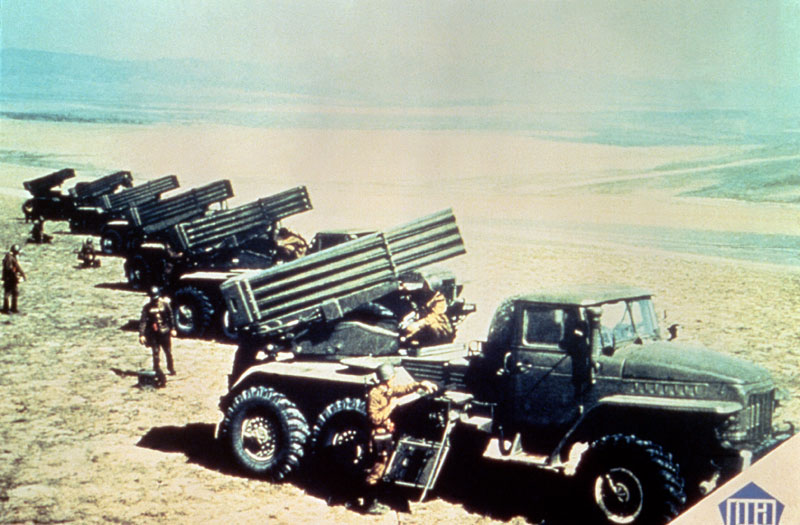
The Soviets garnered much in the way of valuable experience during their use of mobile "Katyusha" rocket launching vehicles during World War 2, particularly after the June 1941 German invasion of the Soviet Union through "Operation Barbarossa". These trucks could be built in large numbers in a short amount of time and just about any wheeled vehicle could be turned into a projector. When amassed, these rocket projecting systems could be used to target areas where enemy troops or soft-skinned vehicles were concentrated and deliver volleys of high-explosive lethality. While not wholly accurate, these weapon systems made up for their limitations through sheer firepower, a definite psychological weapon to say the least. As surely as World War 2 ended, the Soviet Army made it a point to continue development and production of similar rocket projecting platforms to fight within the scope of Soviet armor doctrine.
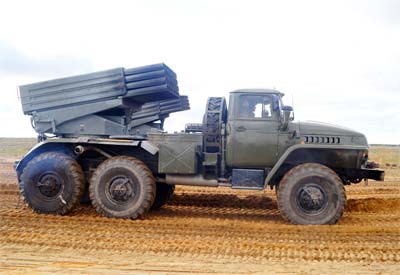
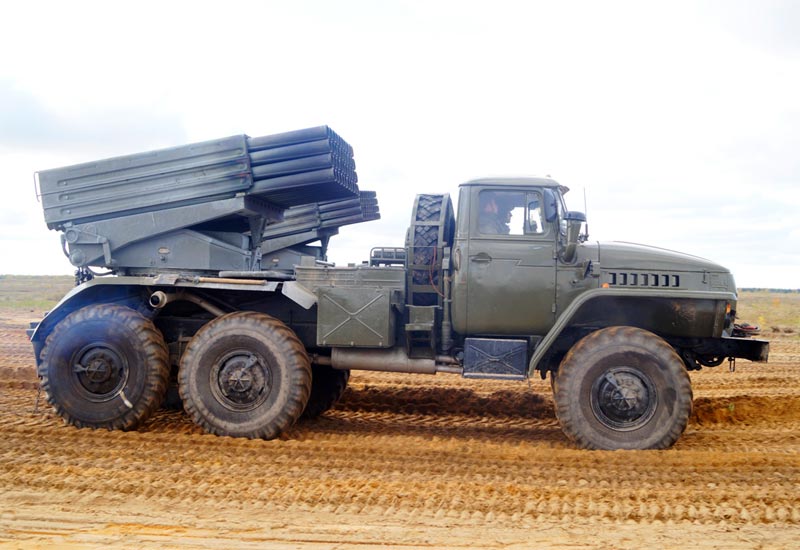
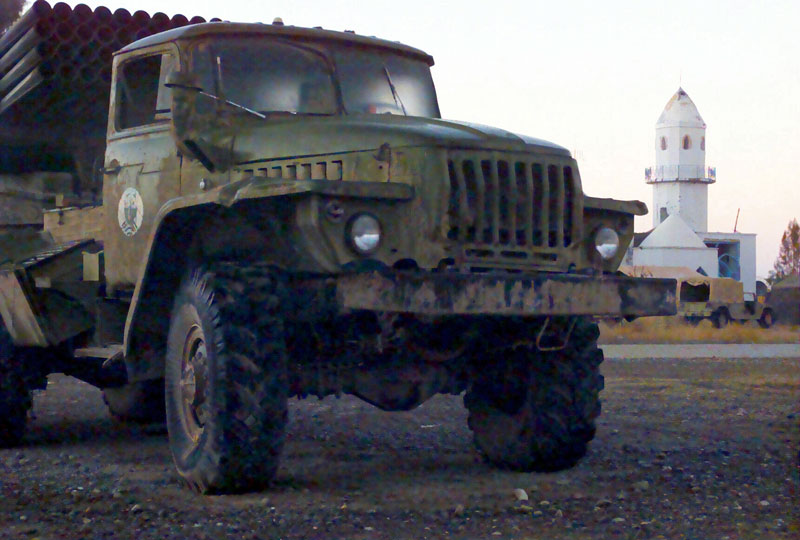
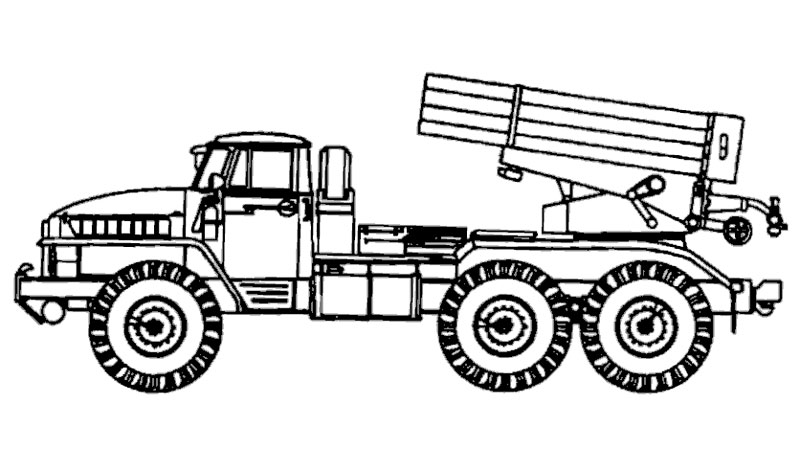
The original BM-21 was developed in the early 1960s and delivered into the army inventory by 1964. When formally identified by the West, the system was assigned the simple designation of "M1964". Collectively, the BM-21 consisted of the launch vehicle with the rocket projector system. The initial BM-21 Grad was based on the Ural-375D 6x6 truck chassis but has since been upgraded to the Ural-4320 6x6 truck chassis, this in 1976. In either form, the vehicle promotes high ground clearance and benefits from its all-wheel drive, 6-wheeled design with good cross-country ability.
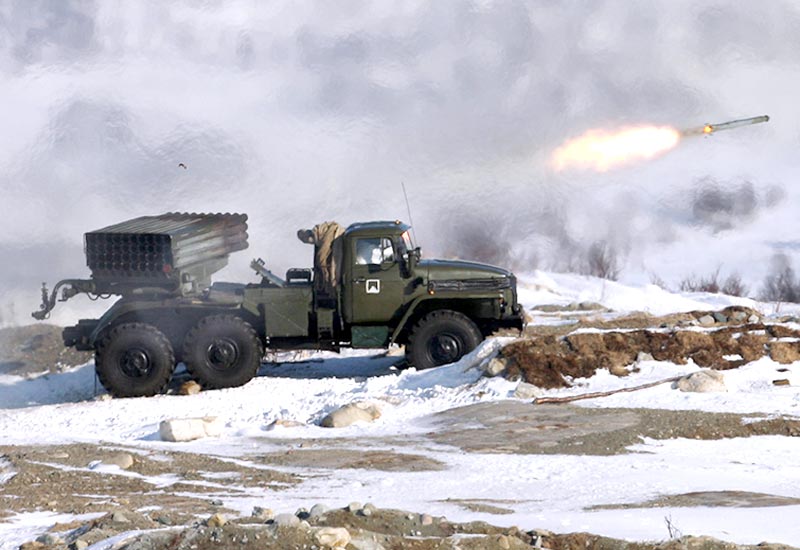
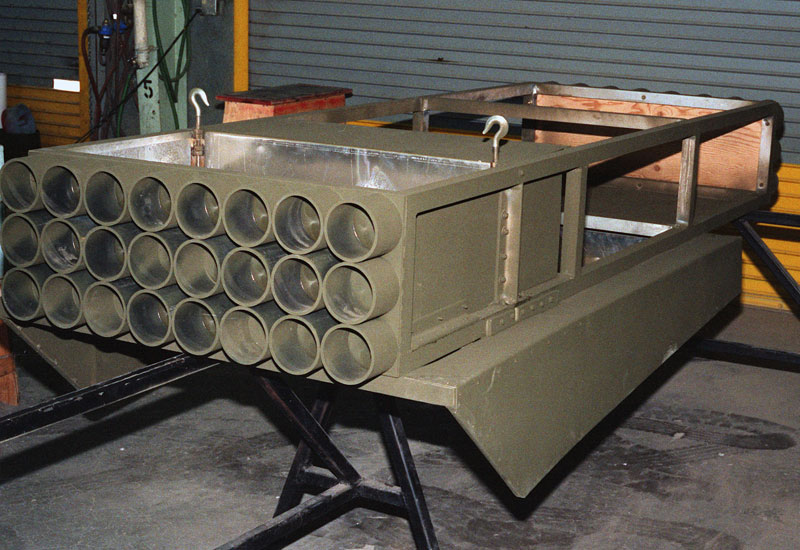
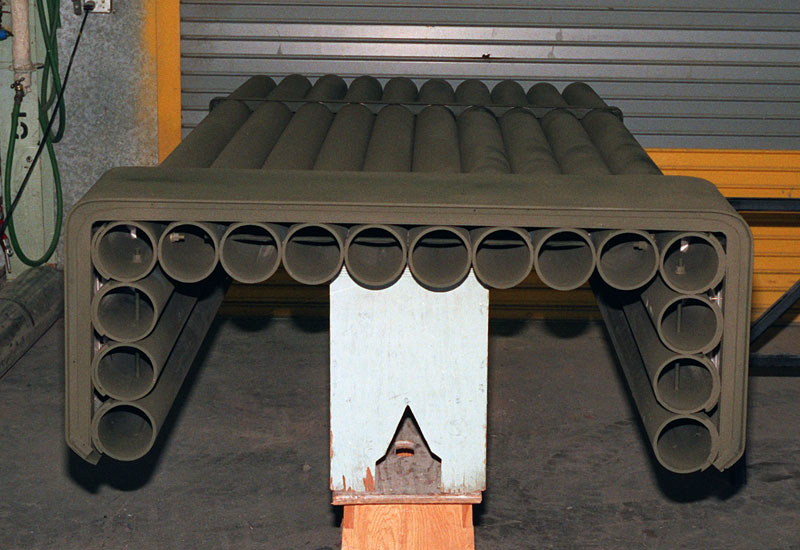
The projector section of the weapon system is designated as the "M-21 Field Rocket System". The launch system itself is made up of 40 x 122mm launch tubes stacked horizontally in four rows of ten tubes. The tubes are connected to one another and swivel on a pivoting platform as a unit aft of the truck cab. This allows the BM-21 to engage target areas without having to reposition the entire launch vehicle. The crew cab is unarmored and therefore unprotected from the launch operation so extreme caution must be exercised by the crew. The launch tubes can loose their forty rockets away in just twenty seconds and the crew can set each to launch individually, segmented in firing groups or entirely as required. The BM-21 typically operates with a crew of four personnel though additional members make for shorter setup and turnaround times.
The truck chassis itself is a rugged all-wheel drive platform fitting a gasoline-powered V-8 engine outputting 180 horsepower. The engine is conventionally mounted in the front of the chassis with the crew cabin just aft. The launch platform and launch tubes are seated on their mount at the rear flatbed portion of the truck. BM-21s are typically fielded with an accompanying resupply vehicle (the 6x6 "9T254") bringing along 60 refill rockets. The reloading process takes around ten minutes and involves the crew manually fitting each rocket into their respective launch tubes. Each launch tube is "rifled" to promote stabilization in flight, though this is at the expense of greater range.
Each rocket measures in at over 9 feet in length and rests within each launch tube. The rocket maintains its own stabilization fins for airborne travel which make them relatively accurate weapons when targeting an area - not so much when attempting to engage a precise target. Each rocket can be fitted with a variety of accepted military warheads that range from the typical HE (High-Explosive) and Fragmentation to specialized versions including radio frequency jammer, illumination, chemical or incendiary types. Additionally, rockets can "deliver" submunitions against a target area in the form of anti-tank or anti-personnel bomblets. Depending on the rocket type, warhead and operating conditions, range can be out to as much as 20 miles. Each rocket can also be fitted with any warhead as designed and developed by a respective operator, no longer limited to the Soviet/Russian offerings.
The BM-21 has been branched out into a plethora of variants, some including original Soviet/Russian designs while others are further developments within their respective armies. Chief operators beyond the Soviet Union/Russia have included Algeria (250), Bulgaria (300), Cambodia (100), Greece (116), India (over 150), Iran (over 100), Kazakhstan (100), Poland (219), Romania (352), Syria (250), Ukraine (600), Vietnam (800) and Yemen (280). Some nations mount the M-21 rocket projector on indigenous chassis for 6x6 or 8x8 wheel capability. Russia is thought to still have access to some 1,750 BM-21 systems and their variants. Modernized versions exist globally.
China produces a copy of the BM-21 as the "Type 81 SPRL", this based on captured specimens from the 1979 Sino-Vietnam War. Their version is different only in that it makes use of an indigenous Chinese 6x6 chassis and features blast shields for the crew cab. Other sub-variants to this base family line exist.
Power & Performance Those special qualities that separate one land system design from another. Performance specifications presented assume optimal operating conditions for the BM-21 (Grad) Multiple Launch Rocket System (MLRS).
1 x ZiL-375 V-8 gasoline engine developing 180 horsepower driving conventional 6x6 all-wheel arrangement. Installed Power
47 mph 75 kph Road Speed
252 miles 405 km Range
Structure The physical qualities of the BM-21 (Grad) Multiple Launch Rocket System (MLRS).
4 (MANNED) Crew
24.1 ft 7.35 meters O/A Length
7.9 ft 2.4 meters O/A Width
10.1 ft 3.09 meters O/A Height
33,318 lb 15,113 kg | 16.7 tons Weight
Armament & Ammunition Available supported armament, ammunition, and special-mission equipment featured in the design of the BM-21 (Grad) Multiple Launch Rocket System (MLRS).
40 x 122mm Rocket Launcher Tubes (4 x 10 tube arrangement).
AMMUNITION: 40 x 122mm rockets.
Variants Notable series variants as part of the BM-21 (Grad) family line.
BM-21 "Grad" - Base Series Designation
M1964 - Western designation
Operators Global customers who have evaluated and/or operated the BM-21 (Grad). Nations are displayed by flag, each linked to their respective national land systems listing.
Total Production: 4,000 Units Contractor(s): State Factories - Soviet Union
The "Military Factory" name and MilitaryFactory.com logo are registered ® U.S. trademarks protected by all applicable domestic and international intellectual property laws. All written content, illustrations, and photography are unique to this website (unless where indicated) and not for reuse/reproduction in any form. Material presented throughout this website is for historical and entertainment value only and should not to be construed as usable for hardware restoration, maintenance, or general operation. We do not sell any of the items showcased on this site. Please direct all other inquiries to militaryfactory AT gmail.com. No A.I. was used in the generation of this content.