Military Factory
Military Pay Chart
Global Firepower
Military Industrial Complex
Second World War
Home
Military Pay Scale
Military Ranks
Small Arms
Aircraft
Land Systems
Navy
Education
Military Factory Facebook Logo
flag of United Kingdom

Archer (SPG) Tank Destroyer / Assault Gun (1944)

Authored By Staff Writer | Last Updated: 8/31/2012

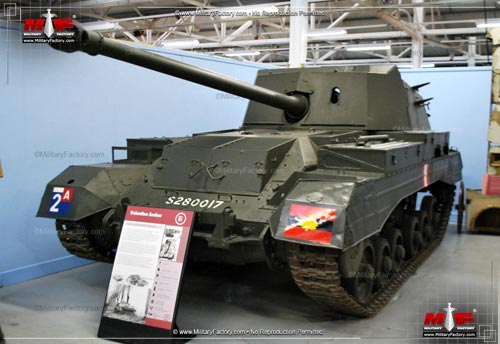
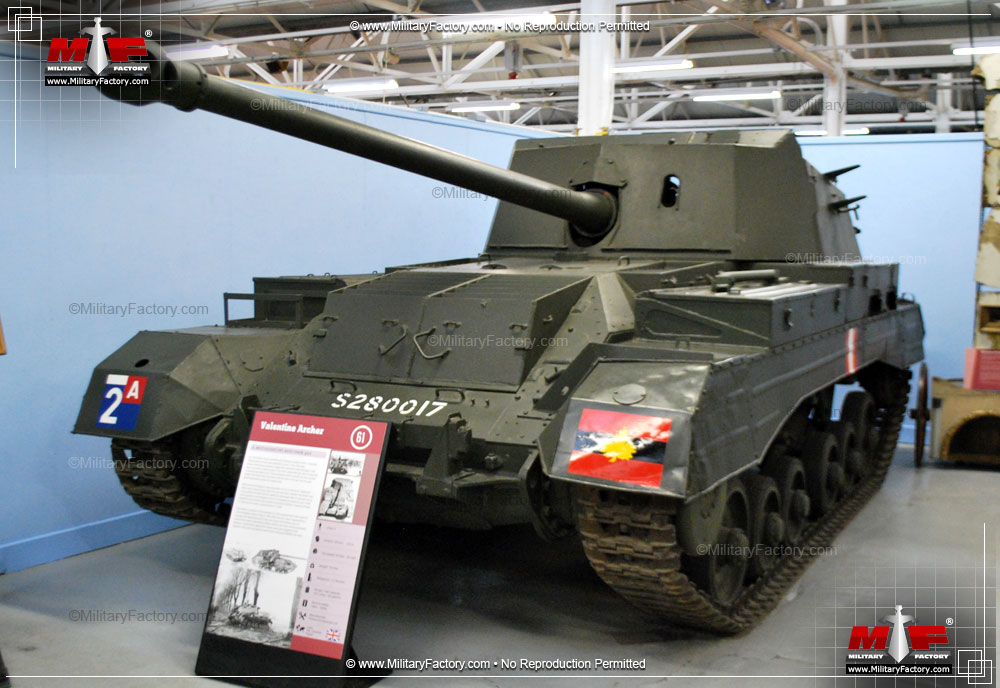
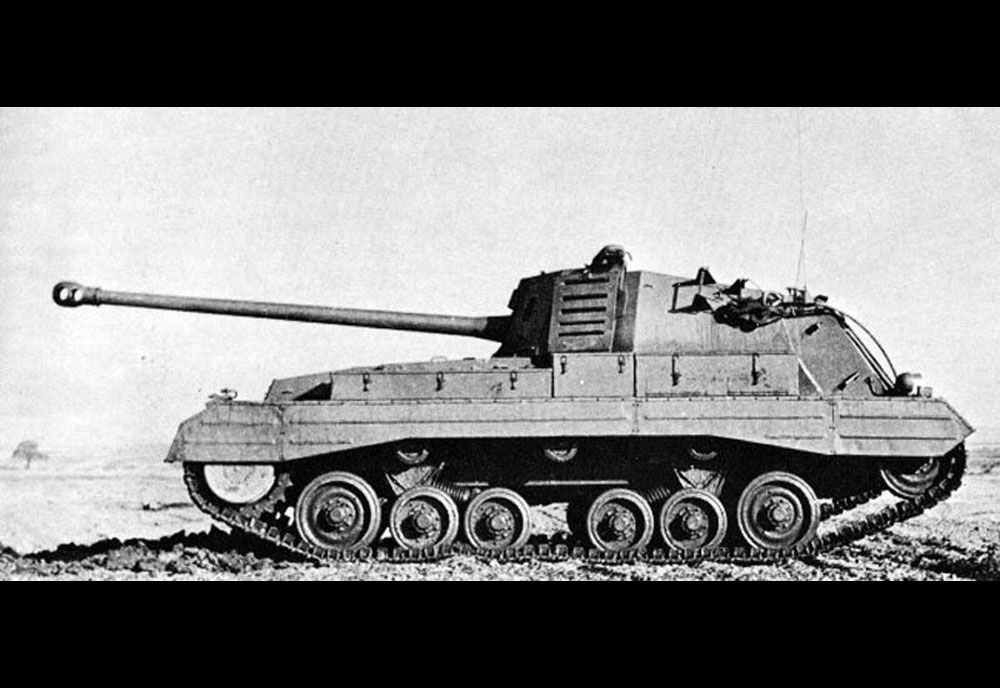
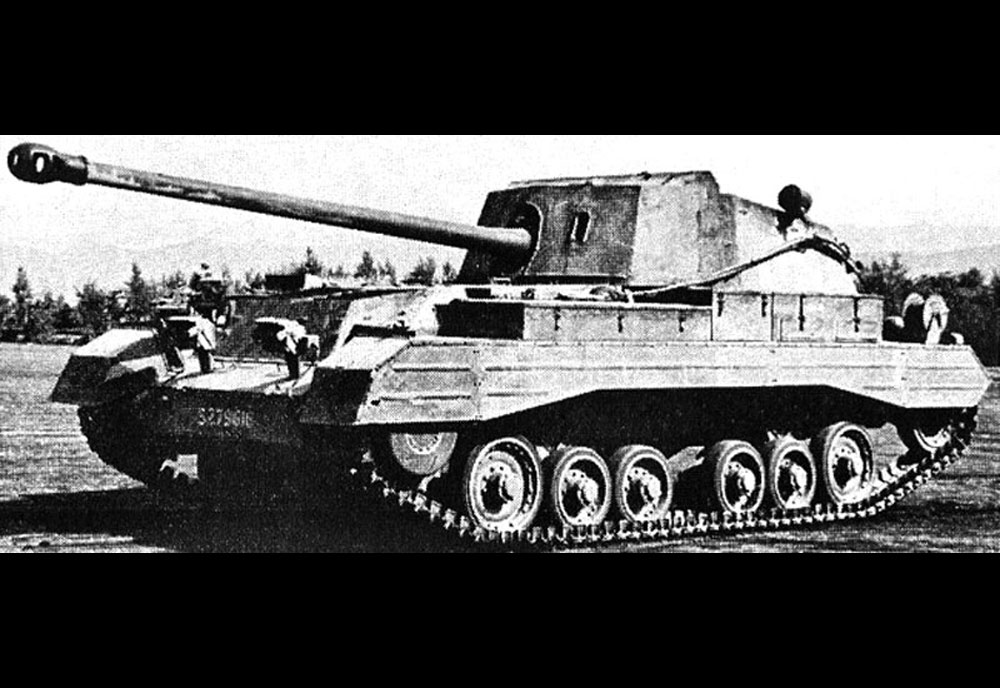
The Archer was unique in that it featured a main gun fixed to fired rearward over the engine compartment.

Find a School Near You
Follow Military Factory on Facebook:
Trending on Military Factory:
Recent Articles:
In order to "upgun" its available inventory to become more efficient predators against the growing armor thickness of German tanks in World War 2, the British Army took to modifying their Valentine infantry tanks to mount a more lethal gun of 76.2mm (known as the "17-pounder"). The "Archer", as the converted model came to be known, was unique in that it fitted the main gun in a fixed superstructure designed to fire over the rear engine compartment of the hull. As such, the vehicle could be set in key strategic positions and utilized moreso as an assault tank waiting for enemy targets. With the driver and front of the vehicle already pointed away from the enemy, the Archer crew could fire its lethal gun and displace to a new favorable position and repeat the action. Couple this guerilla style tactic with the vehicle's naturally low silhouette, and the Archer would see successes throughout the latter half of World War 2 while serving with the British Royal Artillery regiment.

In the early phases of the war, British authorities were somewhat keen on the need to upgrade their anti-armor capabilities, though this need perhaps less so than their German counterparts across the North Sea. The Germans were quick to utilized aging, less capable tracked chassis and reconstitute these still-serviceable forms for making stopgap tank-killing systems with hurried installations of ever more formidable armaments to these hulls. The British came to realize that their 57mm (6-pounder) anti-tank cannons would inevitably meet their matches on the modern battlefield and looked for a successor to mate with a self-propelled, tracked chassis. This proved quite unique to the British experience up to this point in the war for the 57mm armament was a relatively new addition to artillery inventory and the move to a new, unproven gun was something of a blind step forward. The new weapon system - 76.2mm in caliber and known as the "17-pounder" - was initially developed as a towed artillery piece. However, the weapon proved quite large and relatively heavy to be toted around with any level of quickness and the tracked hull designs that might have proved capable of mounting such a weapon were still some months away from becoming realistic possibilities. Therefore, the decision was made in the middle of 1942 to mount it on an existing tracked chassis as a stopgap solution all their own.

Initially, the idea proposed revolved around revamping the "Bishop" self-propelled gun to act as an anti-tank system. The Bishop herself mounted a powerful 25-pdr main gun but the revision would have seen her fit the newer 76.2mm system. This conversion idea fell to naught, as did another concerning the use of the Crusader tank which lacked the needed armor protection for crew and gun alike. Ultimately it was settled that the Valentine infantry tank would prove most suitable for the project. The Valentine was a proven commodity in British Army inventories and readily available in some number. As a whole, Valentine hull proved generally more readily adaptable of accepting a new armament mount as required for the 17-pdr. Interestingly, the Valentine was already considered a contender for a previous "up-gunning" project back in 1941 but, back then, it proved logistically easier to simply revise the Crusader tank turret for the task instead.

With the Valentine becoming the opportune candidate for the conversion process, work on the project steadily ramped up by early 1943. By March, a pair of pilot vehicles - one featuring a conventionally-set forward gun facing with the other fielding an unorthodox rear-facing gun mount - were made ready for evaluation. Through March and into April, these vehicles underwent a period of intense evaluation and authorities ultimately decreed that the rear-facing gun mount was in all actuality the best choice for the required need. This particular design sported a low profile making it a smaller target and the rear-facing gun held an inherent tactical advantage when firing at an alerted enemy while the vehicle itself was in retreat.

This prototype was selected for serial production and would feature much of the same components as the production Valentine tanks to help speed up their assembly - sans the turret of course, this replaced by a fixed, welded, open-topped superstructure (later models would incorporate a light armor covering). The new vehicle would include the same hull, gearbox and engine - the latter being a General Motors 6-cylinder diesel breed - as the Valentine it was born from. Additionally, the new mount was given a new gun sight system as well as a new engine cooling system while the guns traversal function was improved. The firm of Vickers-Armstrong was tabbed for production and handed a government contract for 800 vehicles to be built under the formal designation of "SP 17-pdr Valentine". Production was scheduled to commence in late 1943. The vehicle would eventually come to be known under the more recognizable name of "Archer" within its first few months of service.

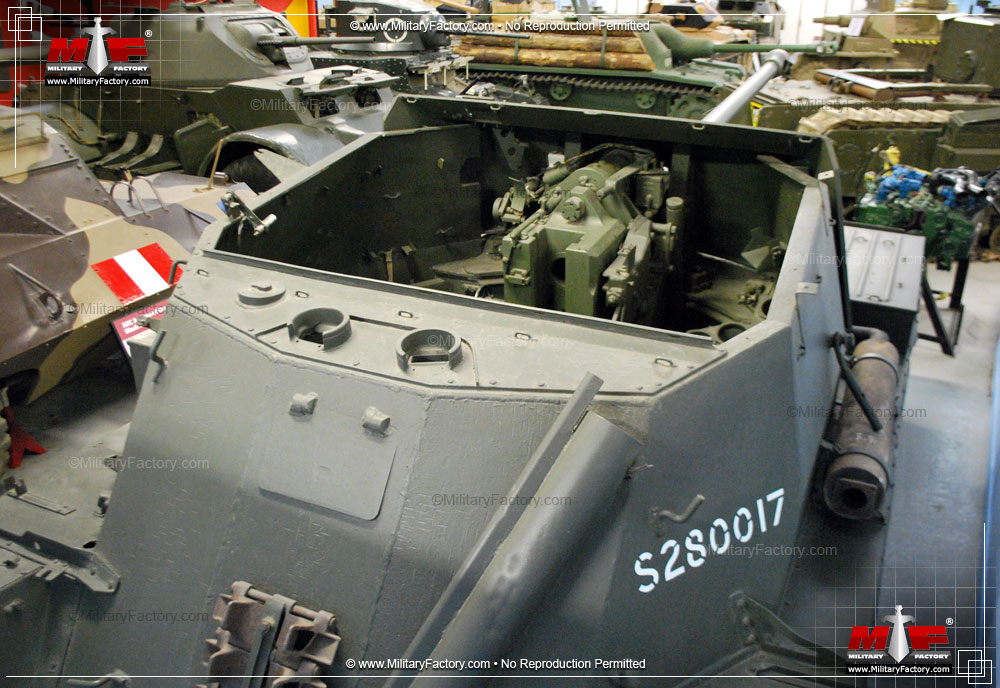
The crew of the Archer would operate the gun actions from the superstructure position while exposed to the elements and battlefield dangers such as artillery and mortar fire. The driver remained in a covered position in the forward hull. The gun emplacement was seated at the front of the vehicle to help maintain balance. The main gun, when fired, would actually recoil backwards quite close to the driver's position in the hull and, as such, this required him to exist the vehicle whenever the firing action commenced. While fitted to the fixed superstructure, the main gun was traversable to a limited extent. The vehicle would be crewed by four personnel made up of the driver, commander, loader and gunner. A single 7.7mm Bren machine gun fitting was set up for self-defense against enemy infantry and low-flying enemy aircraft.

Once in service, British crews took some time to get accustomed to the strange arrangement that was the rear-facing gun. Conventional wisdom held that all armored vehicle armament faced forward toward the action with the driver set equally forward in the design - watching said action unfold along with the gunnery crew. However, once in practice, crews soon learned to play up on the strengths of their new Archers and the system went on to have a healthy battlefield existence. Members of the Royal Artillery companies were given the Archer and most ended up generally preferring them to its towed 17-pdr counterpart for obvious reasons.

With production numbers steadily growing, the Archer was officially fielded across the European Theater in October of 1944 where it ultimately saw actions across Northwest Europe and into the Allied landings of Italy. British artillery crews generally favored their Archers when compared to the American-made M10 Achilles tank destroyers they received via Lend-Lease. The standard operating tactic of the Archer was to sit in wait as an ambush weapon of sorts. The low profile generally made for a harder target to spot, allowing her to be hidden against earthen hills, in heavy woods and against structures. As the unsuspecting enemy approached within range of the 76.2mm main gun, the Archer crew would "light up" and fire off as many rounds as possible in a short window of opportunity, they maintaining the initiative of the moment. Before the enemy could respond with return fire, the Archer crew would displace or retreat to a position of improved advantage and perhaps repeat the process. The 17-pdr gun became a proven tank-killing system that could pierce the armor of just about every German vehicle then available, save for the heavier, thicker armored systems. Such an advantage in having the first-shot and, possible, the first-kill, provided the Archer system with a unique strategy that few other tank-killing systems of the war could match.

However, the Archer was not without her drawbacks - the fact that the driver had to stand outside of his vehicle so the gunnery crew could fire might add costly minutes to a quick getaway from enemy return fire. Also, her gun was limited in its traversal, essentially requiring the entire machine to be pointed in the direction of the enemy. With its open-topped superstructure, this also left the gunnery crew with little in the way of topside protection while the surrounding walls of light armor were quite thin and designed to deflect small arms fire and perhaps artillery spray.

These drawbacks eventually proved less than critical to Allied warplanners for the war in Europe had concluded by June of 1945 - Hitler committed suicide in late-April while the Germans officially capitulated in May. With production of the Archer still ongoing at war's end, the original contract for 800 examples was cancelled, leaving just 655 of the vehicles in current circulation. Such actions proved common practice worldwide where much of the costly wartime production was slashed or cancelled outright, leaving many projects in limbo if existing in any physical form at all. Regardless, the Archer had completed her storied tour in the most famous World War of them all. She went on to serve in her role with the British Army up until the middle of the 1950s before being retired in full.
Text ©2003-2013 www.MilitaryFactory.com • All Rights Reserved • No Reproduction Permitted
MilitaryFactory.com does NOT sell equipment/weaponry. Material presented throughout this website is for historical and entertainment value and should not to be construed as usable for hardware restoration, maintenance or general operation. Please consult manufacturers for such information. Our disclaimer. Email corrections / Comments to MilitaryFactory at Gmail dot com.
Picture of Archer (SPG)
Pic of the Archer (SPG)
Image of the Archer (SPG)
View All Images (4)

Specifications for the
Archer (SPG)
Tank Destroyer / Assault Gun


Country of Origin: United Kingdom
Manufacturer: State Factories - United Kingdom
Initial Year of Service: 1944
Production: 655


Focus Model: Archer (SPG)
Crew: 4


Overall Length: 21.92ft (6.68m)
Width: 9.06ft (2.76m)
Height: 7.38ft (2.25m)
Weight: 17.9 US Short Tons (16,257kg; 35,841lbs)


Powerplant: 1 x General Motors 6-71 6-cylinder diesel engine delivering 192 horsepower.


Maximum Speed: 20mph (32.2 km/h)
Maximum Range: 140 miles (225 km)


NBC Protection: None
Nightvision: None


Armament:
1 x 76.2mm (17-pdr) main gun
1 x 7.7mm Bren general purpose machine gun


Ammunition:
Not Available.


Variants:
SP 17-pdr Valentine ("Archer") - Base Series Designation.


Operators: United Kingdom

ALL LAND SYSTEMS CATEGORIES

By Decade:


1910 to 1919
1920 to 1929
1930 to 1939
1940 to 1949
1950 to 1959
1960 to 1969
1970 to 1979
1980 to 1989
1990 to 1999
2000 to 2009
2010 to 2019
VIEW ALL
Compare Tanks


By Type:


4x4 Military Vehicles
6x6 Military Vehicles
8x8 Military Vehicles
Artillery Gun Systems
Anti-Aircraft (AA) Guns
Anti-Aircraft (AA) Vehicles
Anti-Tank (AT) Guns
Anti-Tank (AT) Vehicles
Armored Cars
Armored Personnel Carriers (APC)
Battlefield Robots
Halftrack Vehicles
Heavy Tanks
Infantry Fighting Vehicles (IFV)
Light Tanks
Main Battle Tanks (MBT)
Modern Combat Tanks
Medium Tanks
Military Motorcycles
Multiple Launch Rocket Systems (MLRS)
Reconnaissance Vehicles
Special Purpose Vehicles
Self-Propelled Guns (SPG)
Tank Destroyers
General Purpose / Utility Vehicles


By Nation:


Afghanistan
Britain
China
France
Germany
Iran
Iraq
Israel / Israeli Army
Italy
Libyan Army
North Korea / North Korean Army
Pakistan
Russia
South Korea
Soviet Union
Syrian Army
United States
VIEW ALL

World War 2:


Artillery
Infantry Fighting Vehicles
Tank Destroyers (All)
Tanks (All)
Australian Tanks
British Tanks
Canadian Tanks
Cruiser Tanks (UK)
Czechoslovakian Tanks
French Tanks
German Tanks
German Tank Destroyers
German FlaK Guns
German Reconnaissance Vehicles
Hungarian Tanks
Italian Tanks
Japanese Tanks
Romanian Tanks
Soviet Tanks
Swedish Tanks
US Tanks
VIEW ALL


World War 1:


France WW1 Tanks
Germany WW1 Tanks
Britain WW1 Tanks
US WW1 Tanks
WW1 Artillery
WW1 Tanks (all)
VIEW ALL


Spanish Civil War:

VIEW ALL


Korean War:

Tanks
VIEW ALL


Vietnam War:

VIEW ALL


Cold War:

Cold War Tanks
Cold War American Tanks
Falklands War
Post-WW2 British Tanks
VIEW ALL


Gulf War (1991):

VIEW ALL


Miscellaneous:

Armored Vehicle Chassis Types

Site Disclaimer | Privacy Policy | Site Map | MF Origins


©2013 www.MilitaryFactory.com • Content ©2003-2013 MilitaryFactory.com • All Rights Reserved • Site Contact Email: militaryfactory at gmail dot com. The "Military Factory" name and MilitaryFactory.com logo are registered ® trademarks and protected by all applicable domestic and international intellectual property laws.


Top MF Stuff: 2013 Military Pay Scale | Military Ranks | WW2 Weapons | Sniper Rifles | Kts to Mph | WW1 Aircraft | Automatic Rifles | Aircraft Cockpits | Vietnam War Weapons | Main Battle Tanks | Submachine Guns | Shotguns | French Military Victories


Most photographic images appearing on this site are courtesy of the United States Department of Defense and are approved for public use. Other images acquired through the public domain. Digital art work courtesy of Dan Alex. Business Consulting by Kyle Williams. Material presented throughout this website is for historical and entertainment value and should not to be construed as usable for hardware restoration, maintenance or general operation. Please consult manufacturers for such information.


eXTReMe Tracker