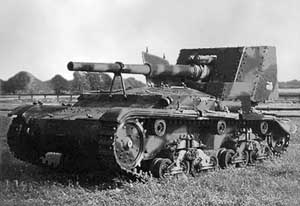
"The M.41M da 90/53 proved a powerful weapon for the Italian Army in World War 2, its career effectively over with the end of the North Africa campaign."
The Semovente 90/53 ("Semovente M.41M da 90/53") is generally regarded as the most powerful of the available tank destroyers utilized by the Italian Army in World War 2. Like other tank destroyer developments of the conflict, the Semovente 90/53 was born from wartime need and created by combining existing systems - either those proven or available in number. The weapon system entered operational service with the Italian Army in 1941 and only yielded a limited production run, these by way of a combined effort from FIAT, SPA and Ansaldo facilities.
The Italians were already keen on turning their existing light and medium tank systems into serviceable assault guns for field support artillery work to which some were even used to combat enemy tanks directly. However, these makeshift systems were assault guns at heart and engaging enemy tanks proved a mixed affair. The Axis powers fighting along the Eastern Front were delivered a wakeup call with the arrival of the Soviet T-34 medium and KV-1 and KV-2 heavy tanks. A mobile armor-defeating armament was requested by the Italian Army that forced the creation of the heavy Semovente 90/53 to fill the battlefield role. The Italians had already seen the success of the German "88" anti-aircraft gun when utilized as a tank destroyer and were high on a similar indigenous prospect. The Semovente 90/53 was essentially born from combining the proven Ansaldo 90mm Cannone da 90/53 anti-aircraft cannon - in some ways the Italian equivalent to the German 88 - to the existing chassis of the M14/41 14-ton medium tank of 1941.The Cannone da 90/53 held a range of up to 2,180 yards.
The 90/53 series gun proved one of the more successful of all the anti-aircraft guns fielded in World War 2. The designation implied the 90mm caliber as well as the barrel being of 53 caliber lengths. Of the 539 cannons available by July of 1943, at least 48 of these were modified for use in the new Semovente 90/53 tank destroyer, the rest sent elsewhere for their original anti-aircraft role. The M14/41 medium tank was produced by FIAT in numbers as much as 1,800 examples and utilized by the Italians, Australians, British and Germans before the end of her operational tenure. The tank saw first combat in the North African Campaign but proved unreliable and prone to catching fire when hit. As such, these deficiencies forced the tank to second line roles before being completely removed from service. With a supply of M14/41 hulls and the need for a tank destroyer, it made complete sense to convert these hulls by adding the proven Cannone da 90/53. The designation "Semovente 90/53" itself directly denoted use of the "90/53" series gun. The aforementioned availability of just forty-eight 90mm guns led to the creation of only 48 Semovente 90/53 examples, all these manufactured in 1941. As Italian manufacturing capabilities lacked behind those of the Germans and the Allies, production of this tank killer was severely curtailed for the 90mm gun was still needed for its anti-aircraft use elsewhere. The major modification of note in regards to the M14/41 tank was the relocation of the rear-mounted engine to the front of the hull so the gun mount could be added to the rear.
Like other tank destroying elements encountered during the war, the Semovente 90/53 suffered from several key drawbacks in her design - chief among these being the open-air fighting compartment for the gunnery crew. While not including a complete superstructure allowed the crew to operate in an unobstructed workspace while making for cheap manufacturing costs and speed of construction. Additionally, it had always been seen that such vehicles would operate far enough from frontlines - and away from direct enemy contact - that this limitation was deemed acceptable. However, this design approach left the gunnery crew open to the elements and, more importantly, battlefield dangers such as "spray" from enemy grenades, artillery and small arms fire. Only the driver was completely protected over in armor, the gunnery crew given just forward-facing panels of armor for which to reside behind. Nevertheless, this open-cabin practice proved the norm for all nations utilizing stopgap conversion tank destroyers for duration of the war.
To add insult to injury, the Semovente 90/53 was also limited in her ammunition-carrying capabilities, restricted to just six rounds of the large 90mm projectiles (though sometimes none were carried at all). As such, each 90/53 tank destroyer was assigned a dedicated ammunition carrier modified from existing FIAT L6/40 light tanks and carried a further twenty-six projectiles. To help increase the value of this carrier, a towed trailer was also latched to the L6/40 which brought an additional forty projectiles into action. In this arrangement, ammunition specialists were assigned the process of loading the gun breech during action.
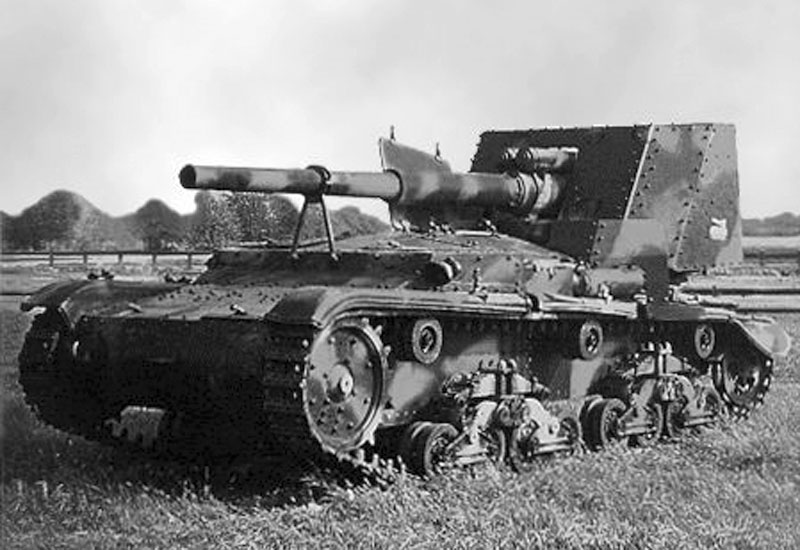
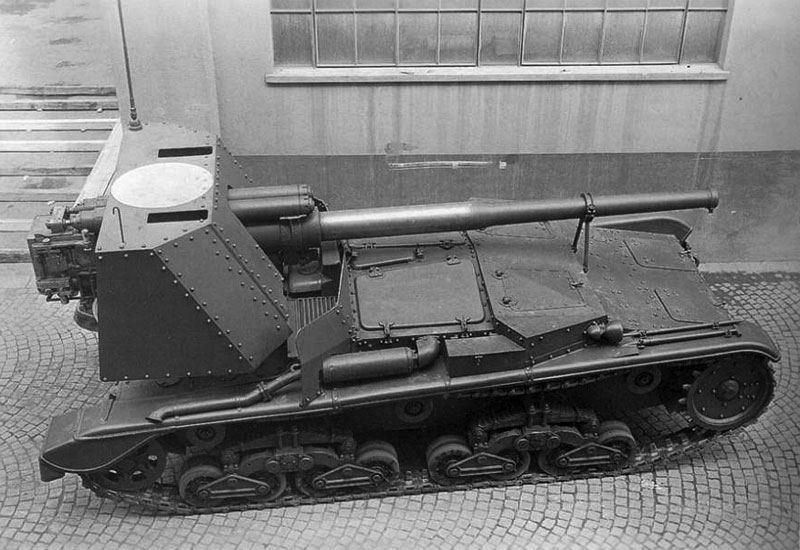
Externally, the Semovente 90/53 shared a chassis appearance not unlike the M14/41. There were two track systems to a hull side with the drive sprocket held at the front and the track idler at the rear. Three track return rollers were held under the top portion of the running track. Each track side was afforded eight road wheels fitted as pairs and furthermore attached as whole pairs to the vertical volute spring suspension system. The upper hull structure remained relatively faithful to the original M14/41. A simple superstructure was added to the rear portion of the hull roof to hold the 90mm gun emplacement. The gun ran just short of the length of the hull itself and sported its own recoil mechanism. Armor protection was located just to the front and the front-left and front-right while the sides, rear and top were open. Only some of the breech was covered over by an armored roof panel. Armor protection at its thickest was 40mm (1.57 inches). The Semovente 90/53 sported a distinct "nose-up" appearance when at rest, owing this to her M14/41 origins. The system was crewed by five personnel made up of the driver, commander and three gunnery crew. Power was derived from a single SPA 15-TM-41 8-cylinder gasoline engine of 145 horsepower fitted to the front of the hull. This supplied the vehicle with a maximum speed of 22 miles per hour and an operational range equal to 124 miles.
Despite the original request from Italian forces along the Eastern Front, the Semovente 90/53 was never shipped to the theater. Instead, she was utilized to good effect in the North African Campaign following the Allied Operation Torch landings in November of 1942. The flat and featureless desert terrain of the region played well to the strengths of the 90/53 tank destroyer to the point that it became a well-feared and much-respected weapon by Allied tank crews. In fact, the 90/53 - in several ways - overshadowed the original M14/41 tank that it was converted from in both battlefield value and effectiveness. Despite the Axis loss in the African Campaign, the Semovente 90/53 was still an Italian Army fixture in the Italian Campaign following the Allied landings in Sicily (Operation Husky) in July of 1943 though its best days were left on the African continent.
However, by the end of September of 1943, fascist-led Italy was no more and officially tendered its surrender to the Allies. This left a few 90/53 systems in the hands of the retreating German Army who having suspected the Italian surrender, utilized these weapons for a short time. The mountainous terrain of the Italian countryside was very different from that as encountered in the African desert and tactical use of the 90/53 suffered as a result - there were lesser tank actions required on the part of the Allies across such terrain and thusly the Semovente 90/53 lacked any armored targets to contend with. The remaining Semovente 90/53 tank destroyers were therefore utilized in the indirect, long-range artillery role from then on until lost in combat or replaced by other German systems but several managed to forge on into the final days of the war in actions around northern Italy.
A preserved captured example of an Italian Army Semovente 90/53 tank destroyer can be seen at the Aberdeen Proving Ground, Maryland, USA.
Power & Performance Those special qualities that separate one land system design from another. Performance specifications presented assume optimal operating conditions for the Semovente 90/53 Tank Destroyer / Assault Artillery Vehicle.
1 x SPA 15-TM-41 8-cylinder gasoline-fueled engine developing 145 horsepower. Installed Power
22 mph 36 kph Road Speed
124 miles 200 km Range
Structure The physical qualities of the Semovente 90/53 Tank Destroyer / Assault Artillery Vehicle.
2 (MANNED) Crew
17.1 ft 5.2 meters O/A Length
7.2 ft 2.2 meters O/A Width
7.1 ft 2.15 meters O/A Height
37,479 lb 17,000 kg | 18.7 tons Weight
Armament & Ammunition Available supported armament, ammunition, and special-mission equipment featured in the design of the Semovente 90/53 Tank Destroyer / Assault Artillery Vehicle.
1 x 90mm 90/53 main gun
AMMUNITION: None carried on vehicle. 66 x 90mm projectiles available through a partnering ammunition carrier with tow vehicle.
Variants Notable series variants as part of the Semovente 90/53 family line.
M.41M da 90/53 - Base Series Designation
Operators Global customers who have evaluated and/or operated the Semovente 90/53. Nations are displayed by flag, each linked to their respective national land systems listing.
Total Production: 48 Units Contractor(s): FIAT / Ansaldo / SPA - Italy
[ Kingdom of Italy; Nazi Germany ]
1 / 3
Front left side view of the Semovente 90/53 tank destroyer at rest
2 / 3
High angled right side view of the Semovente 90/53 tank destroyer
3 / 3
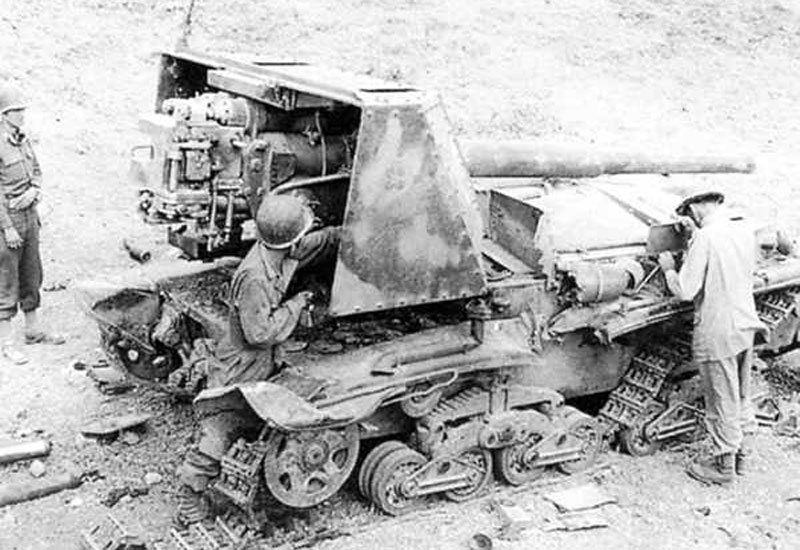
Rear right side view of a captured, damaged Semovente 90/53 tank destroyer
The "Military Factory" name and MilitaryFactory.com logo are registered ® U.S. trademarks protected by all applicable domestic and international intellectual property laws. All written content, illustrations, and photography are unique to this website (unless where indicated) and not for reuse/reproduction in any form. Material presented throughout this website is for historical and entertainment value only and should not to be construed as usable for hardware restoration, maintenance, or general operation. We do not sell any of the items showcased on this site. Please direct all other inquiries to militaryfactory AT gmail.com. No A.I. was used in the generation of this content.