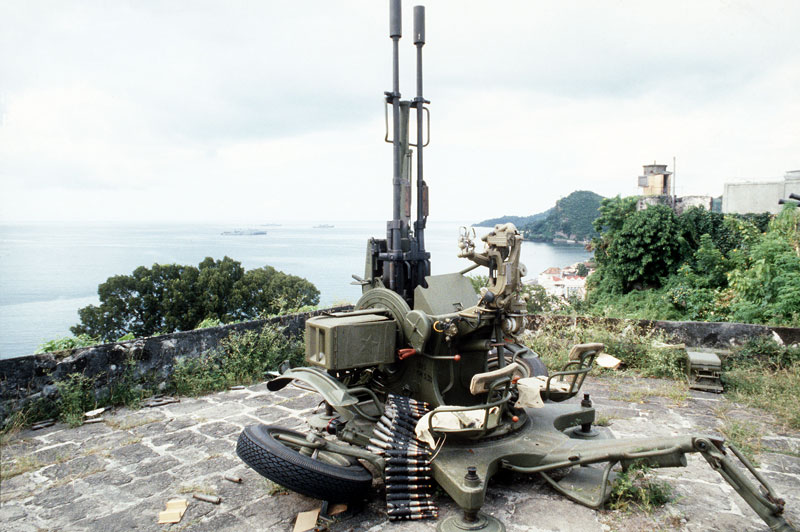
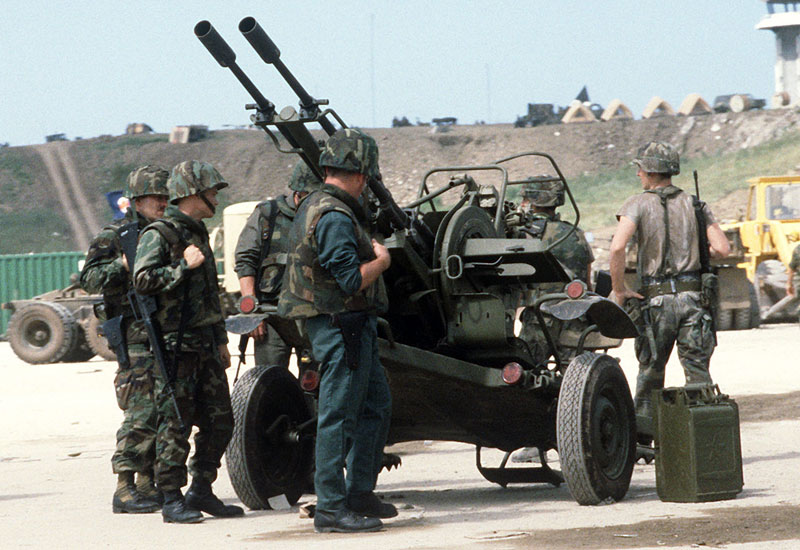
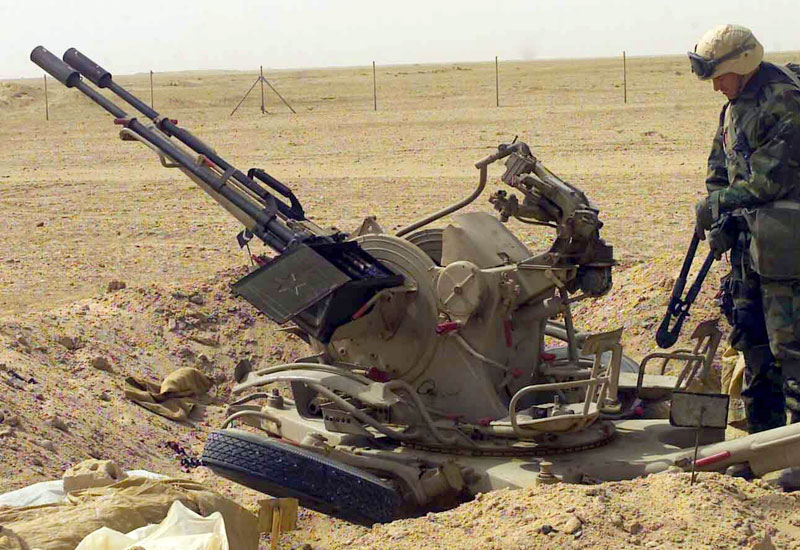
"The ZU-23-2 is a multi-faceted anti-aircraft platform that can be towed or mounted on wheeled and tracked vehicles as needed."
Power & Performance Those special qualities that separate one land system design from another. Performance specifications presented assume optimal operating conditions for the ZU-23-2 / ZU-23 Towed Anti-Aircraft Artillery (AAA).
None. This is a towed artillery piece. Installed Power
1 miles 2 km Range
Structure The physical qualities of the ZU-23-2 / ZU-23 Towed Anti-Aircraft Artillery (AAA).
6 (MANNED) Crew
15.0 ft 4.57 meters O/A Length
9.4 ft 2.88 meters O/A Width
4.0 ft 1.22 meters O/A Height
2,092 lb 949 kg | 1.0 tons Weight
Armament & Ammunition Available supported armament, ammunition, and special-mission equipment featured in the design of the ZU-23-2 / ZU-23 Towed Anti-Aircraft Artillery (AAA).
2 x 23mm cannons.
AMMUNITION: 50 x 23mm projectiles to a gun.
Variants Notable series variants as part of the ZU-23-2 / ZU-23 family line.
ZU-23 - Original Production Model
ZU-23M - Modernized variant
ZU-23-2 - Polish Designation; base production model; appearing in 1972.
ZUR-23-2S "Jod" - Polish Designation; fitted with electro-optical sight system; provision for Strela-2M SA missle twin launcher; appearing in 1988.
ZUR-23-2KG "Jodek-G" - Polish Designation; fitting CKE-2 reflex sight, night/day sight and laser rangefinder; electromechanic traverse system; Grom twin missile launcher capable; appearing in 2002.
ZU-23-2M "Wrobel" - Polish Designation; navalized variant; hyraulically powered traverse; appearing in 1979.
ZU-23-2MR "Wrobel-II" - Polish Designation; navalized variant; Strela-2M missile capability; water-cooled barrel systems; appearing in 1986.
"Hibneryt" - Polish Designation; ZU-23-2 gun system fitted to Star 266 series truck; modernized electrical installation; electromechanic traverse system.
ZU-23-2M2 "Vlara" - Czech Designation; upgraded and modernized ZU-23 systems.
23 ltK 95 - Finnish Designation; upgraded ZU-23 systems.
SAKO 23mm M87 - Finnish Designation; navalized ZU-23 systems.
SAKO 23mm M74 - Finnish Designation; navalized ZU-23 systems.
SAKO 23mm M77 - Finnish Designation; navalized ZU-23 systems.
SAKO 23mm M80 - Finnish Designation; navalized ZU-23 systems.
SAKO 23mm M85 - Finnish Designation; navalized ZU-23 systems.
Type 85 - Chinese Designation; local production; twin 23mm gun systems.
Type 87 - Chinese Designation; local production; twin 25mm gun systems.
The ZU-23-2 is a light, towed anti-aircraft / air defense system developed by the Soviet Union in the 1950s. Design work began in the latter part of the decade and culminated with the system achieving operational status in 1960. Amazingly, the weapon has proven so sound that it is still in operation throughout the world and production continues to this day. To date, tens of thousands of the weapon type have been delivered across the globe and evolved into other useful variants and modernized when possible. The rather complicated designation arrangement used for the "ZU-23-2" is actually quite descriptive when broken down: ZU = Zenitnaya Ustanovka which translates to "anti-aircraft mount" in the Russian while "23" designates the type's barrel calibers and "2" signifies the number of barrels being utilized in the design.
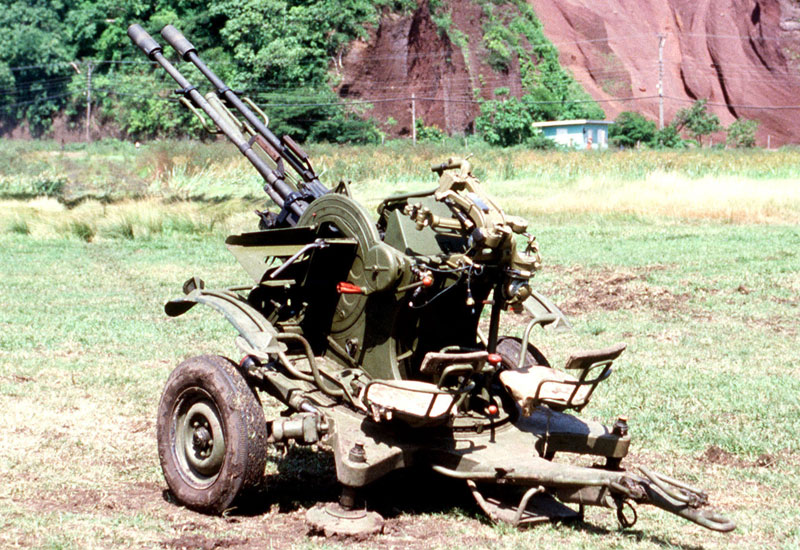
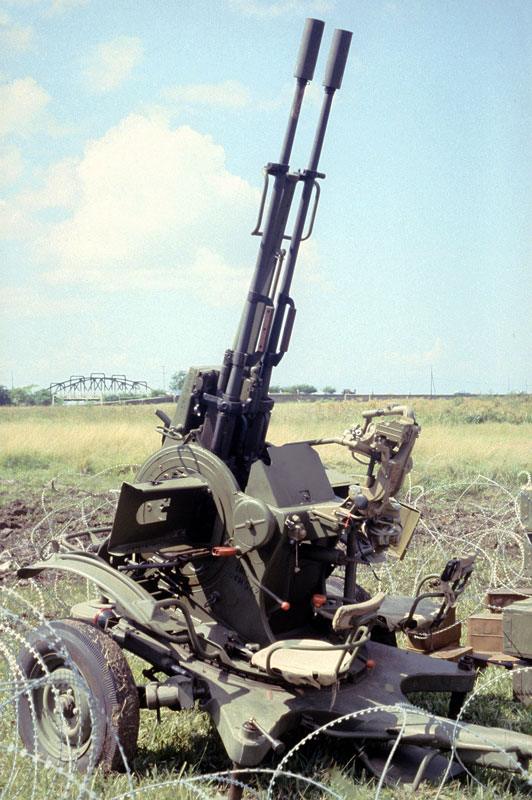
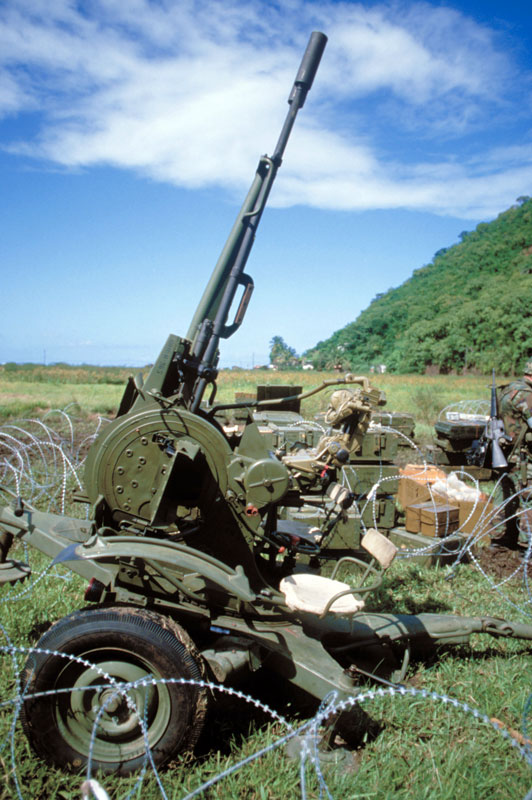
At its core, the ZU-23-2 is intended to combat low-flying enemy aircraft as well as light-armored vehicles - the latter if required. The standard operating crew is typically six personnel though extreme circumstances can see the weapon being handled by a single operator. As a towed air defense system, the ZU-23-2 is made up of a wheeled carriage, the gun mount and the gun barrels. Two small road wheels allow for vehicular towed transport. These installations are lifted off of the ground and folded when the weapon system is prepped to fire. The mount sits atop a steel platform with a three-point adjustable stance that lifts the weapon system off of the ground and distributes the inherent recoil of the firing action. The gun system is comprised of 2 x 23mm gun barrels in a side-by-side arrangement. Optics are fitted as are integrated ammunition boxed designed to accept the required 23mm projectile cartridges. The gunner takes a position in a rear-set steel molded chair with foot rests located at the front sides of the gun mount. Traverse is essentially a full 360-degrees while elevation controls allow the guns to engage both land and airborne targets as required. Ammunition supply is only limited by the present ammunition carrier.
The ZU-23-2 design is centered around the pairing of two 2A14 series Afanasyev-Yakushev 23x152mm autocannons. Each barrel measures in at 6.5 feet in length and rated with a muzzle velocity of 3,182 feet per second. Range is listed out to 1.5 miles, reaching upwards of 6,500 feet and highly suitable for engaging low-flying enemy helicopter and strike aircraft. Each 23mm projectile weighs in at 0.37lbs. In practice, up to 400 rounds per minute could be reached while manufacturer specifications detailed an optimal rate-of-fire nearing 2,000 rounds per minute. Each gun is afforded 50 x 23mm projectiles from a standard ammunition fitting. Ammunition types range from Armor-Piercing Incendiary and High-Explosive to High-Explosive Fragmentation and Armor-Piercing Discarding Sabot-Tracer.
The excellent portability of the ZU-23-2 means that it can not only be towed by a mover vehicle but also mounted onto a variety of vehicle types - particularly flatbed trucks (even improvised fighting vehicles known as "Technicals") and similar wheeled instruments capable of handling the weapon weight and recoil. This makes the ZU-23-2 a highly-mobile, low-cost air-defense gunnery platform solution with inherent tactical advantages. The ZU-23-2 was has also been fitted to armored fighting vehicles of several types to further expand the capabilities of the weapon.
The ZU-23-2 (also known under the designation of "ZU-23") was first seen in its base "ZU-23-2" designated production form for issue to the Soviet Army. This was followed by the "ZU-23M" which was a modernized version bringing about a new targeting system and electromagnetic rotation. The new targeting system included a laser-based rangefinder for improved accuracy. Beyond these two Soviet Army production forms, the ZU-23-2 was not evolved further.
Poland proved a quantitative operator of the ZU-23-2 system and produced the weapon type locally under license beginning in the 1970s. After an electro-optical sight was added, it became known under the new designation of ZUR-23-2S "Jod". Unique to this new version was the addition of Strela-2M twin launchers. The ZUR-23-2KG "Jodek-G" was similar in scope but fielded a newer, more capable sighting system. This version made use of a Grom surface-to-air, twin missile launcher. The "Hibneryt" was a mobile, truck-based installation version complete with an electrically-based rotating gun mount. At least two navalized versions of the ZU-23-2 were developed for the Polish Navy and have been in use since the 1980s.
Finland was another operator of note, fielding a modernized form of the ZU-23-2 as the "23 ltK 95". A navalized version also existed and over 1,100 of the gun type were eventually received. China, a keen operator of Soviet-era equipment for decades, took to local license-production of the ZU-23-2 under the designation of "Type 85". A 25mm version was later developed and known as the "Type 87" though maintaining the form and general function of the original Soviet design.
The ZU-23-2 found a home in dozens of foreign inventories with a political relation or military tie to the Soviet Empire. Afghanistan operated at least 8,000 examples while Pakistan purchased some 5,000 or so. Other operators went on to include Greece, Georgia, Libya, Poland and Myanmar among others. Syria accepted 650 systems and Yemen took 200 into inventory. Israel became an interesting operator after acquiring captured examples. The United States tested several procured examples to figure out the weapon's strengths and weaknesses during the Cold War. It is estimated at some 23,600 ZU-23-2 systems have been produced to date.
The ZU-23-2 still makes appearances today, these on nightly news briefings detailing the rebellion situation in Libya that has been ongoing since early 2011. Many of these 450 available systems are often times pictured on the back of rebel flatbed civilian pickup trucks or dug into defensive positions on guard against Libyan President Muammar al Ghaddafi's air elements.
Operators Global customers who have evaluated and/or operated the ZU-23-2 / ZU-23. Nations are displayed by flag, each linked to their respective national land systems listing.
Total Production: 23,629 Units Contractor(s): State Factories - Soviet Union
[ Afghanistan; Algeria; Armenia; Bangladesh; Bosnia and Herzegovina; Bulgaria; Cambodia; China; Cape Verde; Cuba; Cyprus; East Germany; Ecuador; Egypt; Estonia; Ethiopia; Finland; Gabon; Georgia; Greece; Guinea-Bissau; India; Indonesia; Iran; Iraq; Israel; Hungary; Laos; Lebanon; Libya; Morocco; Moldova; Mongolia; Mozambique; Myanmar; Nicaragua; Nigeria; Pakistan; Peru; Poland; Russia; Sahrawi Arab Democratic Republic; Serbia; South Africa; Soviet Union; Sri Lanka; Tanzania; Turkey; Uganda; Ukraine; United States; Venezuela; Vietnam; Yemen; Zimbabwe ]
1 / 6
Rear left side view of the ZU-23 anti-aircraft gun
2 / 6
Rear left side view of a captured ZU-23 anti-aircraft gun system
3 / 6
Left side view of a ZU-23 anti-aircraft unit; note crew seating placements
4 / 6
Rear view of the ZU-23 anti-aircraft gun system
5 / 6
US soldiers inspect a captured ZU-23 gun system; note wheeled carriage
6 / 6
A US soldier deals with an abandoned ZU-23 system in Iraq
The "Military Factory" name and MilitaryFactory.com logo are registered ® U.S. trademarks protected by all applicable domestic and international intellectual property laws. All written content, illustrations, and photography are unique to this website (unless where indicated) and not for reuse/reproduction in any form. Material presented throughout this website is for historical and entertainment value only and should not to be construed as usable for hardware restoration, maintenance, or general operation. We do not sell any of the items showcased on this site. Please direct all other inquiries to militaryfactory AT gmail.com. No A.I. was used in the generation of this content.