Like most of the Allied nations at the start of World War 2 (1939-1945), Canada saw itself with an outdated armor corps which was made up of mostly World War 1-era equipment passed on to them by the United States and elsewhere. With Britain firmly entrenched with fighting the Axis powers in Europe, and needing all of her own production efforts and America still sat on the sidelines, it fell to Canadian industry to take upon itself locally-production of a modernized combat tank. The American M3 "Lee" / "Grant" Medium Tank series was offered as a possible solution for mass-production but its sponson-mounted main armament was deemed quite antiquated when compared to turreted designs witnessed in the fighting in Europe.
With that, only the hull and powerplant of the American M3 were selected for production ahead of the whole M3 design with an entirely Canadian-originated turret to be set upon the hull.
At this point in the World War, Canada had little production infrastructure to speak of, especially when it came to producing heavy-duty military hardware, so the locomotive industry was charged with changing its production lines to accept the building of the new machine. The tank was initially required to showcase a 75mm main gun - itself a quite powerful caliber for the time though not the standard Allied tank gun of the war just yet. A smaller-caliber, readily-available 2-pounder (40mm) anti-tank gun was selected instead with the prospect of updating this armament to a 57mm caliber weapon later on. The first series tank appeared as "Cruiser Tank Ram Mk 1".
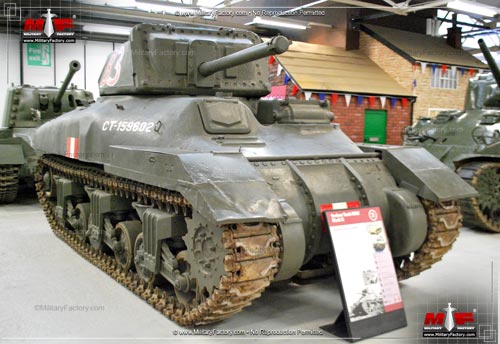
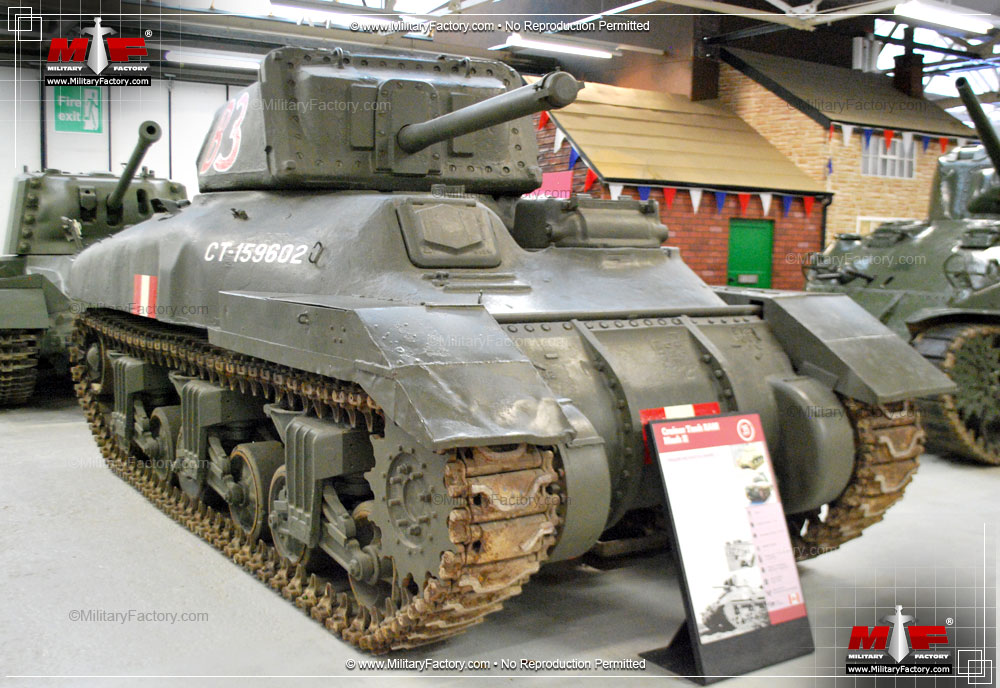
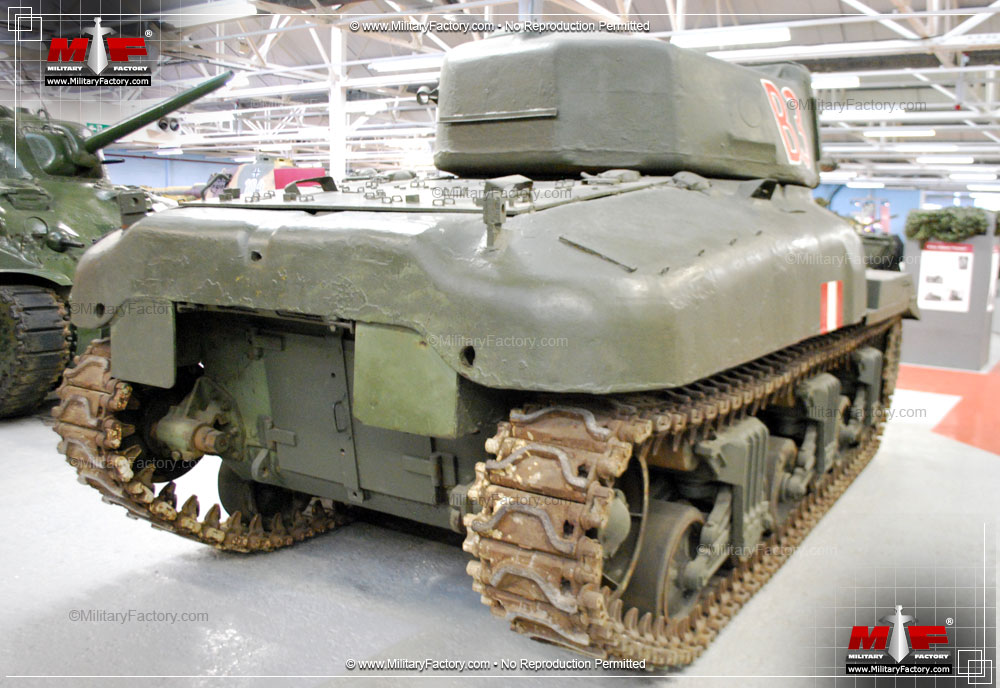
Externally, the Ram was a very conventional design for its time: it borrowed some of the design elements of the American M3 while the cast armor turret gave the Ram its own unique profile. Armor protection was respectable and offered up to 3.5" at the thickest facings. A crew of five operated the steel beast and power was derived from a single Continental R-975 radial gasoline-fueled engine producing 400 horsepower. The Continental engine provided up to 25 miles per hour speeds on road while covering some 125 to 145 miles of ground. The system weighed in at just under 30 tons and offered up decent off-road capabilities.
For armament (beyond the main gun fit), two 0.30 caliber machine guns, one bow-mounted and the other co-axially-mounted) completed the armament and these served primary as anti-infantry weapons. A third 0.30 machine gun could be installed at the turret for Anti-Aircraft (AA) defense. The Cruiser Tank Ram Mk II followed with the larger 57mm main gun (6-pounder).
Unfortunately for this homegrown Canadian tank design of World War 2 and those involved in bringing her to fruition, the availability of M4 Shermans due to the American commitment to conflict made the Ram venture expendable. The Sherman stocked the tank inventories of Britain and Australia as well and, in time, became the standardized combat tank of the Canadian Army. this move relegated Ram to crew training at home and in the UK. As such, no Ram tanks saw combat in the whole of the war.
Not completely abandoned, the Ram design went on to be converted into some turretless designs as a make-shift Armored Personnel Carriers (APCs) providing tracked passenger travel under armor protection. The Ram chassis also served as the platform for the 25-pdr "Sexton" Self-Propelled Gun (detailed elsewhere on this site) and became one of the more recognizable SPG systems of the war. Another RAM-inspired form existed as the "Ram OP / Command" artillery observation post vehicle and these retained their turrets but were given "dummy" main guns to hide their true battlefield purpose. The tanks were also given additional communications gear in the form of two Wireless Set No.19s.
In all, some 2,150 Ram tanks made their way off of Canadian assembly lines during World War 2 - a considerable number for an indigenous design.
Special thanks to Matthew N. via email for corrections to this article.
Power & Performance Those special qualities that separate one land system design from another. Performance specifications presented assume optimal operating conditions for the Ram Mk II Medium Tank / Cruiser Tank.
1 x Continental R-975 radial gasoline-fueled engine developing 400 horsepower driving a conventional track-and-wheel arrangement. Installed Power
25 mph 40 kph Road Speed
144 miles 232 km Range
Structure The physical qualities of the Ram Mk II Medium Tank / Cruiser Tank.
5 (MANNED) Crew
19.0 ft 5.79 meters O/A Length
9.2 ft 2.79 meters O/A Width
8.7 ft 2.66 meters O/A Height
65,001 lb 29,484 kg | 32.5 tons Weight
Armament & Ammunition Available supported armament, ammunition, and special-mission equipment featured in the design of the Cruiser Tank Ram Medium Tank / Cruiser Tank.
1 x 57mm (6-pdr) main gun.
1 x 0.30 caliber co-axial machine gun.
1 x 0.30 caliber bow-mounted machine gun.
OPTIONAL:
1 x 0.30 caliber Anti-Aircraft (AA) machine gun.
AMMUNITION: 92 x 6-pounder projectiles
4,440 x 0.30 caliber ammunition
440 x .45 caliber ammunition
43 x 2" smoke bombs
6 x Infantry hand grenades
Variants Notable series variants as part of the Cruiser Tank Ram family line.
M3 General Lee - American-produced medium tank on which the Ram is based on.
Cruiser Tank Ram Mk I - Initial Production Model fitted with 40mm (2-pdr) main gun.
Cruiser Tank Ram Mk II - Fitted with 57mm (6-pdr) main gun.
Ram Kangaroo - Sans turret; armored personnel carrier.
Ram Command / OP Tank - Observation Post Vehicle
Sexton - Self-propelled gun utilizing Ram hull with open-top superstructure fitted with 25-pdr main gun.
Operators Global customers who have evaluated and/or operated the Cruiser Tank Ram. Nations are displayed by flag, each linked to their respective national land systems listing.
Total Production: 2,150 Units Contractor(s): Montreal Locomotive Works / Canadian Tank Arsenal - Canada
[ Canada; Holland; United Kingdom ]
1 / 2
Image copyright www.MilitaryFactory.com; No Reproduction Permitted.
2 / 2
Image copyright www.MilitaryFactory.com; No Reproduction Permitted.
The "Military Factory" name and MilitaryFactory.com logo are registered ® U.S. trademarks protected by all applicable domestic and international intellectual property laws. All written content, illustrations, and photography are unique to this website (unless where indicated) and not for reuse/reproduction in any form. Material presented throughout this website is for historical and entertainment value only and should not to be construed as usable for hardware restoration, maintenance, or general operation. We do not sell any of the items showcased on this site. Please direct all other inquiries to militaryfactory AT gmail.com. No A.I. was used in the generation of this content.