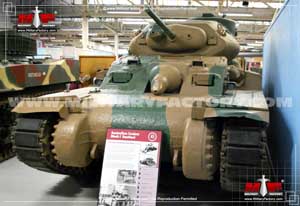
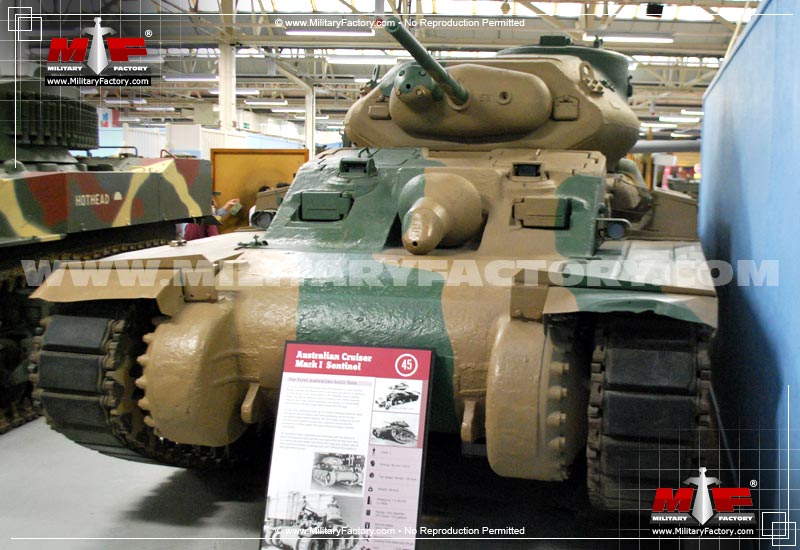
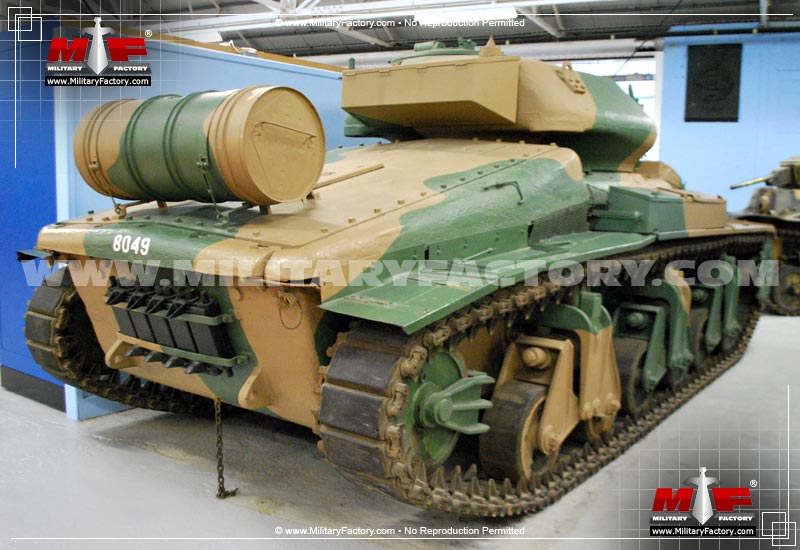
The Sentinel tank was an indigenous Australian design of World War 2, appearing at a time when Australia lacked the tank-design know-how, manufacturing facilities to produce a design en mass and Japanese expansion into the Pacific was becoming an even greater threat to the mainland. The Sentinel was therefore developed to fill this void and, by all accounts, was an impressive design in its own right. Since the Japanese invasion of the Australian mainland was never to happen and tanks were pouring off of assembly lines in the United States, the Sentinel appeared for a time in limited numbers and ultimately relegated to the training of Australian tank crews throughout the end of the war.
In 1939 it was decided upon by the Australian government to update their stock of inadequate armor. Japan expansion in the Pacific was at threatening reaches and an invasion of the Northern coast of Australia seemed all but imminent. Australia found itself with no powerful manufacturing infrastructure to speak of, not even enough of an automobile industry, to allow for the mass production of any one such vehicle and it seemed that her Allies would not be in a position to fit Australia's current needs with extra armor from their stock. Additionally, Australian involvement in any kind of tank design was nearly nonexistent. As such, Australia set out to rectify the problem by enlisting the help of tank engineers from Britain and observing tank engineering practices with trips to the United States.
Work set about to create a competent design utilizing as many components from the American M3 General Lee series of tank. This particular tank would be designated as the Cruiser Tank Sentinel and would follow up with the initial Sentinel AC1 (short-hand designation of "Australian Cruiser 1"). Production facilities were also being constructed and prepared while development of the AC1 ensued. The AC1 was fitted with a 40mm (2-pounder) main gun with two self-defense 7.62mm machine guns. Power was derived from an amazing setup of three Cadillac engines mated into one powerplant system. Armor was cast throughout the design (at some points reaching as thick as 2 and a half inches) and a crew of up to five personnel were required for optimal operation. The design was characterized by a solid-looking hull with six road wheels per side. The main gun was fitted into an angular turret. An attempt at improving the AC1 was made in the form of the AC2 but the former won out for production rights. One spectacular facet of the Sentinel series was that it took just 22 months to develop from paper to production.
The Sentinel AC1 was ready for prime time by 1942 and the speed of development ushered in some subtle deficiencies. Additionally, the 2-pdr main gun was woefully outclassed by the armor thickness it might be facing and as such the design was furthered in the form of the AC3. The Sentinel AC3 model series was fitted with a grand 87.6 (25-pounder) main gun, an armament with artillery origins and already in production. Despite the larger caliber the gun was still seen as inadequate. The Sentinel AC3 would be further followed up on with the AC4 prototype - this model fitted with the more Allied-standard 76.2mm main gun (the British 17-pounder), though by this time the threat of invasion along Australian shores had all but dissipated. Additionally American tanks were flying off of the assembly lines overseas and making their way into Allied hands all across the globe.
In the end, existing Sentinel units were used for training Australian tank units throughout the war. Production was stopped as abruptly as it had begun. By any regard the Sentinel is often seen as a successful endeavor, though never seeing the baptism of fire consistent with her counterparts. The system was of a sound design but more importantly it forced the Australians to search for the answer to their tank deficiencies from within their own resources, updating their production infrastructure in the process.
Power & Performance Those special qualities that separate one land system design from another. Performance specifications presented assume optimal operating conditions for the Sentinel AC1 (Australian Cruiser 1) Cruiser Tank / Medium Tank.
3 x Cadillac V-8 gasoline engines developing 330 horsepower. Installed Power
30 mph 48 kph Road Speed
200 miles 322 km Range
Structure The physical qualities of the Sentinel AC1 (Australian Cruiser 1) Cruiser Tank / Medium Tank.
5 (MANNED) Crew
20.8 ft 6.33 meters O/A Length
9.1 ft 2.77 meters O/A Width
8.4 ft 2.56 meters O/A Height
62,722 lb 28,450 kg | 31.4 tons Weight
Armament & Ammunition Available supported armament, ammunition, and special-mission equipment featured in the design of the Cruiser Tank Sentinel AC (Australian Cruiser) Cruiser Tank / Medium Tank.
1 x 40mm (2-pdr) main gun
2 x 7.62mm machine guns
AMMUNITION: Not Available.
Variants Notable series variants as part of the Cruiser Tank Sentinel AC (Australian Cruiser) family line.
Sentinel AC1 - Initial Production Model; fitted with 40mm (2-pdr) main gun; 3 x Cadillac engines.
Sentinel AC2 - Improved AC1; never produced.
Sentinel AC3 - Fitted with 25-pounder (87.6mm) main gun.
Sentinel AC4 - Prototype Model; fitted with 17-pounder (76.2mm) main gun.
Operators Global customers who have evaluated and/or operated the Cruiser Tank Sentinel AC (Australian Cruiser). Nations are displayed by flag, each linked to their respective national land systems listing.
Total Production: 65 Units Contractor(s): New South Wales Government Railways - Australia
[ Australia ]
1 / 2
Image copyright www.MilitaryFactory.com; No Reproduction Permitted.
2 / 2
Image copyright www.MilitaryFactory.com; No Reproduction Permitted.
The "Military Factory" name and MilitaryFactory.com logo are registered ® U.S. trademarks protected by all applicable domestic and international intellectual property laws. All written content, illustrations, and photography are unique to this website (unless where indicated) and not for reuse/reproduction in any form. Material presented throughout this website is for historical and entertainment value only and should not to be construed as usable for hardware restoration, maintenance, or general operation. We do not sell any of the items showcased on this site. Please direct all other inquiries to militaryfactory AT gmail.com. No A.I. was used in the generation of this content.