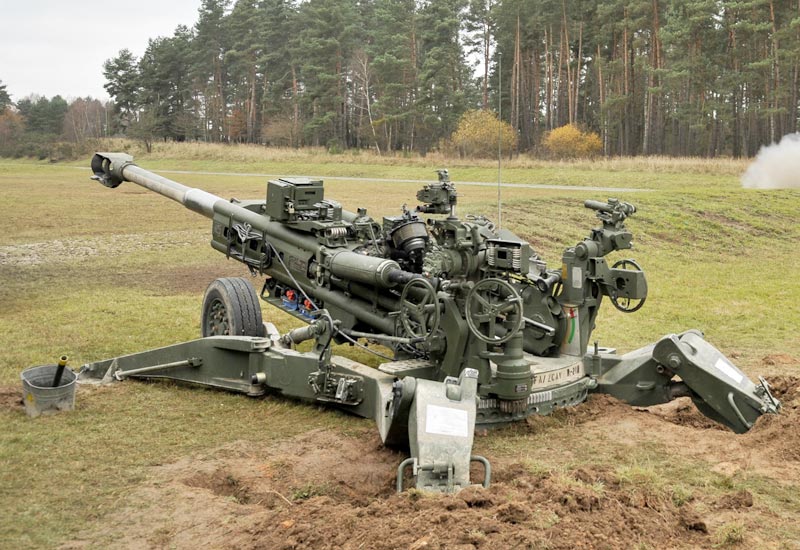
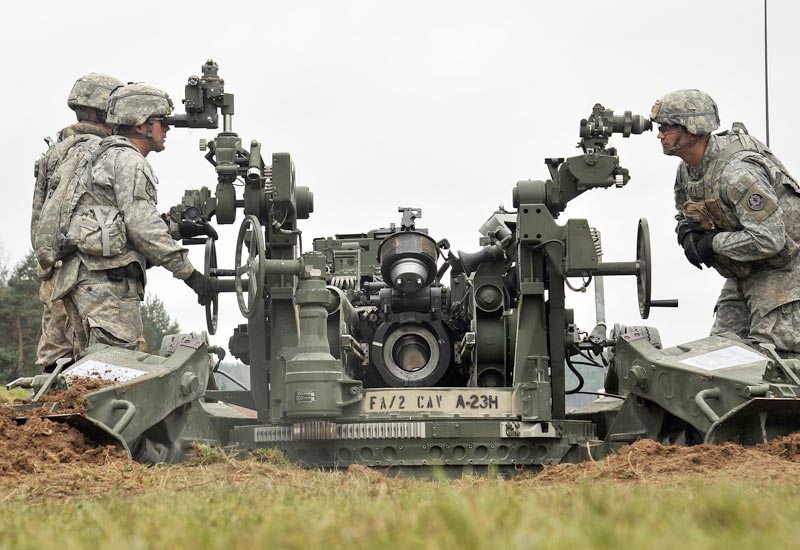
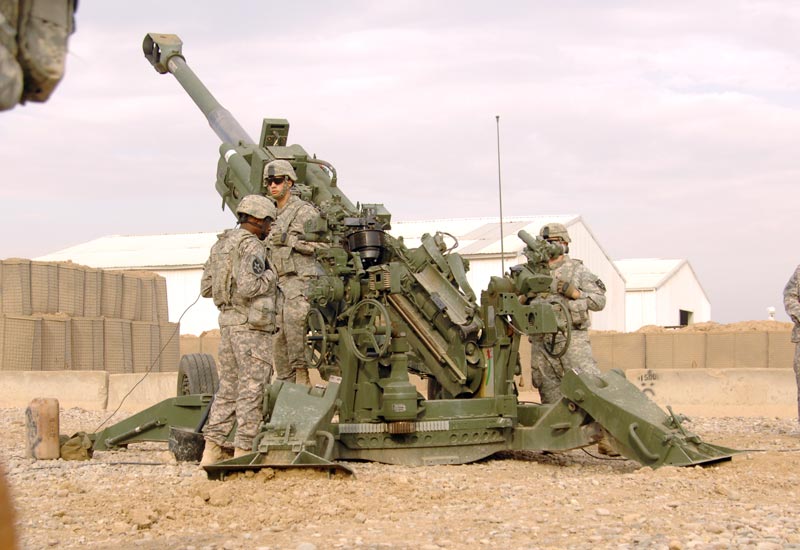
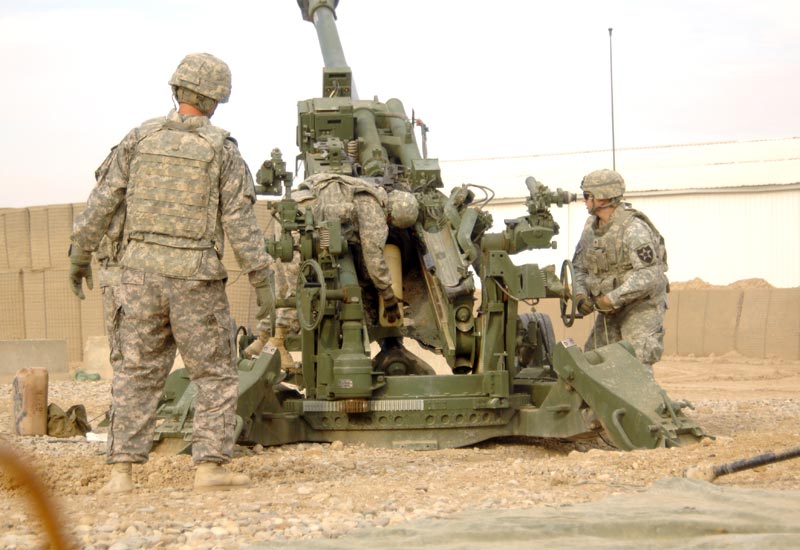
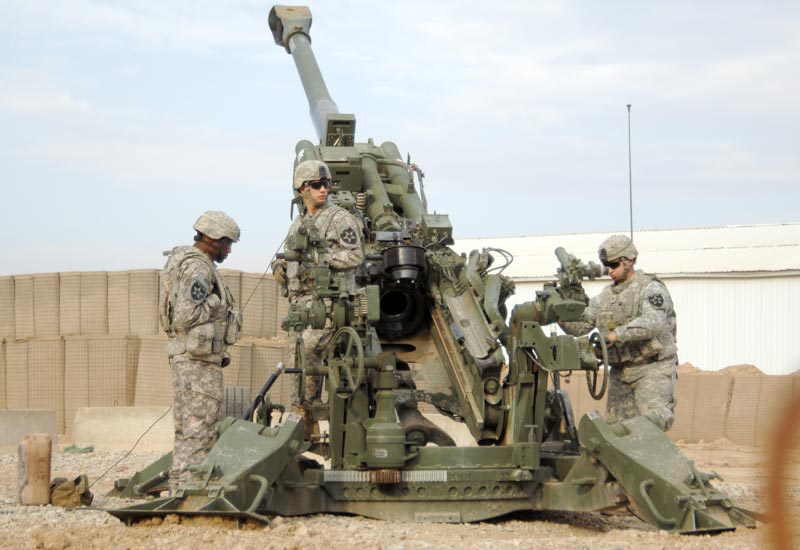
"The British-originated M777 Ultra-lightweight Field Howitzer was selected to replacing the aging stock of M198 howitzers in service with the American military and elsewhere."
Power & Performance Those special qualities that separate one land system design from another. Performance specifications presented assume optimal operating conditions for the M777 155mm Lightweight Towed Artillery.
None. This is a towed artillery piece. Installed Power
19 miles 30 km Range
Structure The physical qualities of the M777 155mm Lightweight Towed Artillery.
7 (MANNED) Crew
33.5 ft 10.2 meters O/A Length
12.1 ft 3.7 meters O/A Width
7.4 ft 2.26 meters O/A Height
8,256 lb 3,745 kg | 4.1 tons Weight
Armament & Ammunition Available supported armament, ammunition, and special-mission equipment featured in the design of the M777 UFH (Ultra-lightweight Field Howitzer) 155mm Lightweight Towed Artillery.
1 x 155mm gun tube / barrel.
AMMUNITION: Dependent on ammunition supply / carrier.
Variants Notable series variants as part of the M777 UFH (Ultra-lightweight Field Howitzer) family line.
M777 - Base Series Designation.
M "Triple-Seven" - Alternative name.
XM777 - Prototype Model Designation.
M777A1 - Digital Fire Control System (FCS).
M777A2 - Updated FCS software for use with Raytheon Excalibur projectile.
The M777 "Ultra-lightweight Field Howitzer" (UFH) was developed as a private venture (under Britain-based Vickers Shipbuilding and Engineering Ltd) and eventually evolved into a formal replacement for the aging American M198 155mm caliber towed artillery systems featured in the inventories of the United States Army and United States Marine Corps (among other global users). The M198 itself began operational service in 1979 and holds design origins dating back to the late 1960s. Some 1,600 units were ultimately produced and these have gone on to see widespread combat service around the world.
BAe Systems was awarded the contract to develop and produce the M198's replacement which arrived in pilot form as the "XM777". The production-quality version then evolved to carry the designation of "M777" - or more casually, the "M Triple-Seven". Some of the M777s earliest combat exposure was in the American involvement in Afghanistan as it entered formal service in 2005. Beyond its use by the United States armed forces, the M777 has also been adopted by the Australian and the Canadian armies which operate the series in the dozens. The U.S. Army and USMC both maintain quantitative stocks of the guns in inventory today.
The complete M777 system weights less than 10,000lb which makes it considerably light in its category - notably lighter than the preceding M198 series. This sort of attention to engineering makes the M777 system extremely adaptable and flexible in-the-field and transportable through a variety of means improving upon the original M198 in both its tactical and logistical qualities. The M777 can be transported by land via approved utility truck or through the air by approved aircraft. For the latter, this includes the Boeing V-22 "Osprey" tilt-rotor helicopters as well as the veteran Boeing CH-47 "Chinook" tandem-rotor haulers to which the M777 unit is hung underneath the airframe. The system is also fully-transportable by fixed-wing airlifters such as the Lockheed C-5 "Galaxy", Lockheed C-117 "Globemaster III", and Lockheed C-130 "Hercules", and European-originated Transall C-160 series of transports.
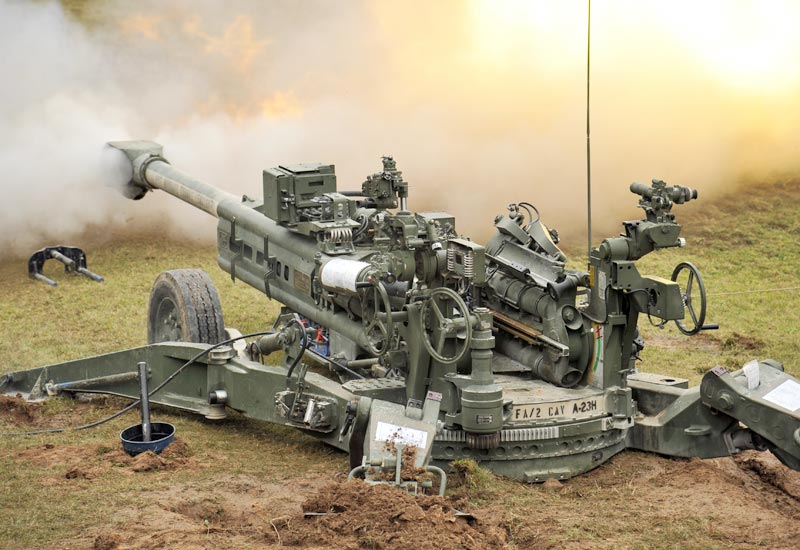
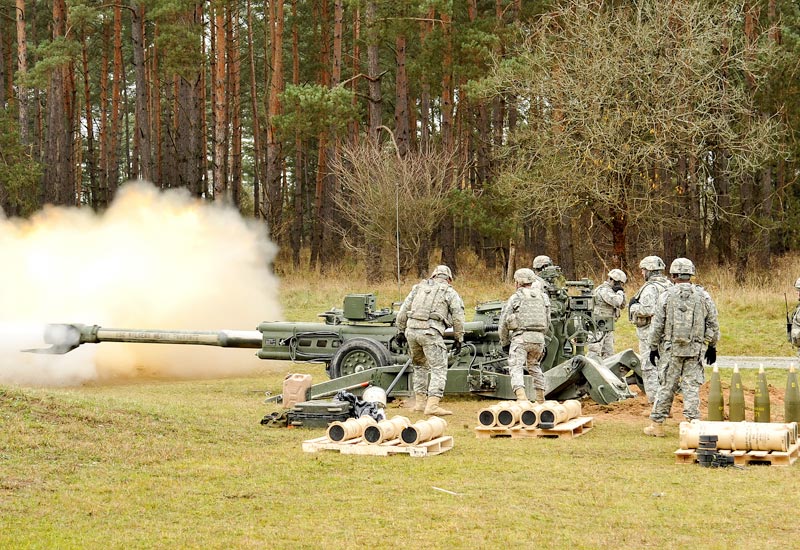
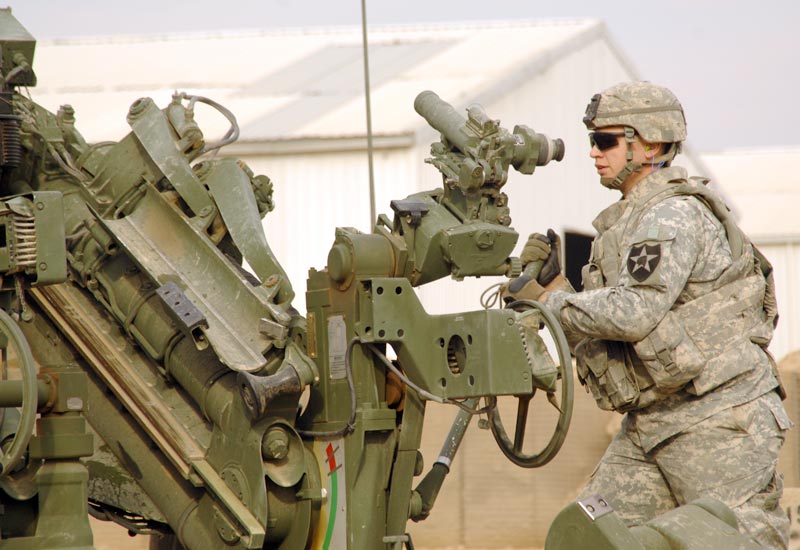
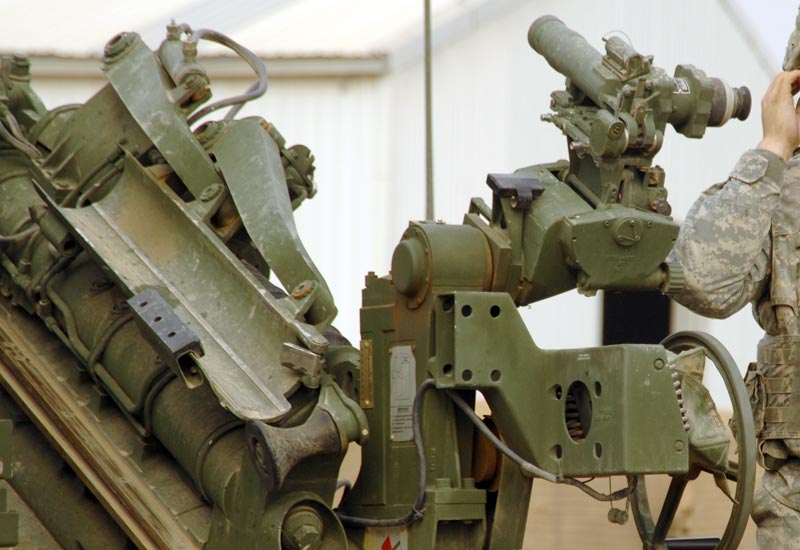
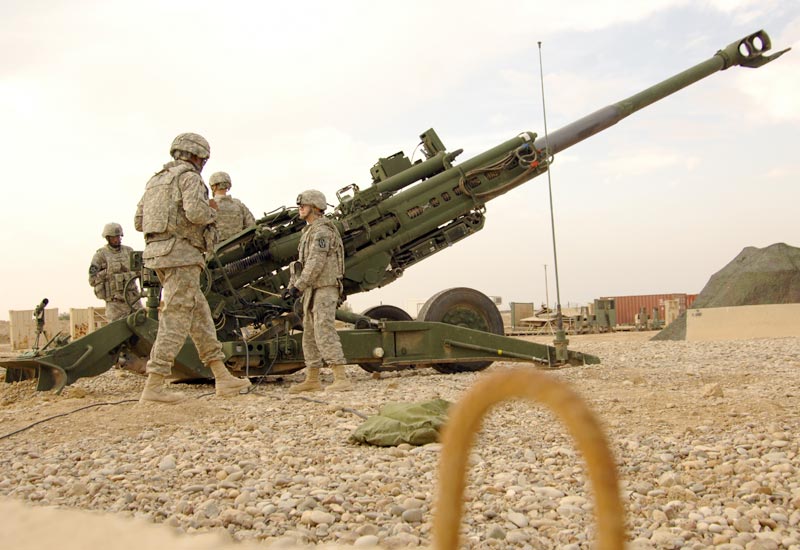
The M777 gun and gun mount sit atop a carriage system made up of a split-trail, two-wheeled configuration (consisting of the body and saddle). When setup to fire, the M777 adopts a four-point stance for maximum support and to help content with the weapon's inherently violent recoil. The muzzle is capped by a large double-baffled muzzle brake for this purpose as well. Elevation and traverse are handled at the rear of the weapon near the breech as is loading and reloading. The M777 is crewed by five specially-trained personnel to handle the various functions of the gun (the M198 required 9 personnel). The barrel is 155mm (39 calibers) and weighs in at approximately 9,300 lb (unlike the 15,700lb weight of the M198 series). The weapon achieves a rate-of-fire of up to five rounds-per-minute with a sustained rate of two rounds-per-minute. The barrel is designed for a lifespan of 2,650 firings. Rocket Assisted Projectiles (RAP) increase the effective range of the weapon system out to 18.6 miles (30km). The base range using conventional projectiles is 15 miles. Use of titanium across the M777's design lowers overall operating weights, the trade-off being increased cost and complexity of construction.
The M777A1 standard (previously designated as the M777E1) features a custom digital Fire Control System (FCS) that uses all-modern positioning and targeting technology for enhanced accuracy. The M777A1 has replaced the previous-generation M198 towed field guns in U.S. Army and U.S. Marine service. Another variant, the M777A2, has seen combat action since January 2008. It is based on the M777A1 though slightly modified to fire the advanced Raytheon "Excalibur" precision projectile (touting a 25-mile range) and features updated software. The U.S. National Guard is another active user of the gun. The A2 mark is currently (2022) the latest production standard of the M777 family.
While the weapon is British in origin, final assembly of the guns takes place in the United States out of the BAe Systems plant in Hattiesburg, Mississippi. Roughly 70% of the weapon is completed in the United States.
2016 - A vehicle-mounted version of the M777 was unveiled in 2006 and is known as the M777 "Portee".
April 2016 - It was revealed that tests were underway for M777ER (Extended Range) variant. This model adds a 6-foot barrel extension to the existing M777 barrel, increasing range out to 70 kilometers - more than doubling the range of the weapon. The gun has been demonstrated to USMC elements at the Yuma Proving Ground (Arizona).
January 2017 - The Canadian Army undertook successful live-fire testing with M777 howtizers involving an anti-jamming device for its GPS units.
November 2018 - The Indian Army has formally introduced its new stock of M777A2 series 155mm towed field guns from the United States. One-hundred forty-five of the guns will eventually make up the Indian stock, spanning some seven regiments.
April 2022 - Canada has announced delivery of M777 artillery systems to the nation of Ukraine for its fight against neighboring Russia.
Operators Global customers who have evaluated and/or operated the M777 UFH (Ultra-lightweight Field Howitzer). Nations are displayed by flag, each linked to their respective national land systems listing.
Total Production: 1,200 Units Contractor(s): BAe Systems Global Combat Systems Division - UK / USA
[ Australia; Canada; India; Saudi Arabia; Ukraine; United States ]
1 / 10
Image from the United States Department of Defense DVIDS imagery database.
2 / 10
Image from the United States Department of Defense DVIDS imagery database.
3 / 10
Image from the United States Department of Defense DVIDS imagery database.
4 / 10
Image from the United States Department of Defense DVIDS imagery database.
5 / 10
Image from the United States Department of Defense DVIDS imagery database.
6 / 10
Image from the United States Department of Defense DVIDS imagery database.
7 / 10
Image from the United States Department of Defense DVIDS imagery database.
8 / 10
Image from the United States Department of Defense DVIDS imagery database.
9 / 10
Image from the United States Department of Defense DVIDS imagery database.
10 / 10
Image from the United States Department of Defense DVIDS imagery database.
The "Military Factory" name and MilitaryFactory.com logo are registered ® U.S. trademarks protected by all applicable domestic and international intellectual property laws. All written content, illustrations, and photography are unique to this website (unless where indicated) and not for reuse/reproduction in any form. Material presented throughout this website is for historical and entertainment value only and should not to be construed as usable for hardware restoration, maintenance, or general operation. We do not sell any of the items showcased on this site. Please direct all other inquiries to militaryfactory AT gmail.com. No A.I. was used in the generation of this content.