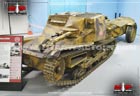
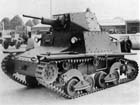
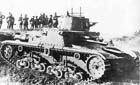
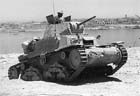
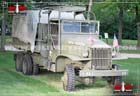
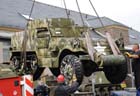
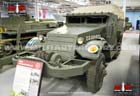
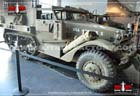
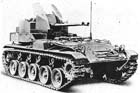
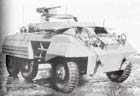
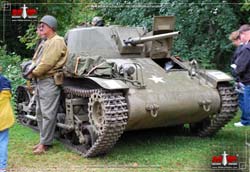
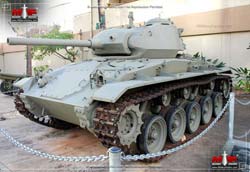
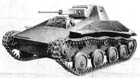
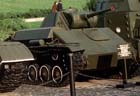
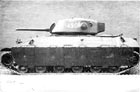
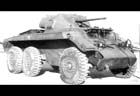
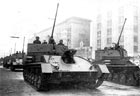
Armor from 1940-1949 World War 2 is the center stage for some of the greatest armor confrontations in history.
1
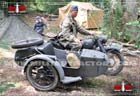
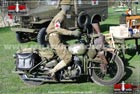
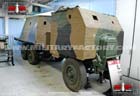
BMW R 75 The motorcycle with sidecar was popularized by the mobility presented by the German Army, especially early in the war. These types of motorcycles came in three classes fitting light, medium and heavy and divided into these gr...
1940
2
Centurion (A41) Though considered a pivotal tank design of the Cold War, the Centurion main battle tank actually had its design roots in the latter stages of World War 2. The tank was conceived of as a new cruiser tank system in response to ...
1945
3
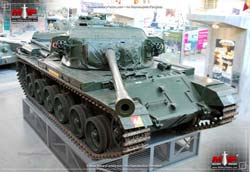
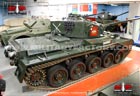
Cruiser Tank Comet (A34) The Comet Cruiser tank was arguably Britain's most powerful tank platform in the Second World War. Arriving in late (November) 1944, tank crews had to be retrained in the finer points of this exceptional weapons system, thus ...
1944
4
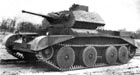
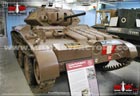
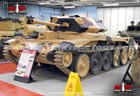
Cruiser Tank Mk VI Crusader The Crusader series of British cruiser tanks was an important contributor to the early war years, particularly in North Africa where it would take part in El Alamein and Tunisia. Dogged by reliability problems, overheating an...
1941
5
Cruiser Tank Mk VIII Centaur (A27L) The Centaur series of main battle tanks was a product of Leyland Motors and developed alongside the competing Cromwell series of tank and built to the same specifications. The Centaur grew into a very similar design when comp...
1942
6
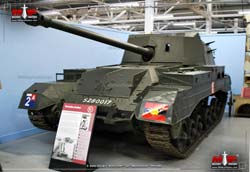
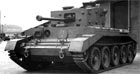
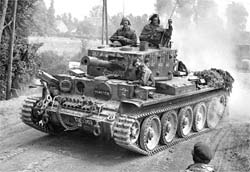
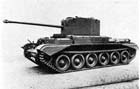
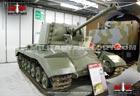
Cruiser Tank Mk VIII Challenger (A30) The Challenger Mk VIII Cruiser was a British response to the very real and deadly threat being posed by German armor on the battlefields in World War 2. The system was a purpose-built design - intended as a tank destroyer by ...
1943
7
Cruiser Tank Mk VIII Cromwell (A27M) The Cromwell (officially known as Tank, Cruiser, Mk VIII, Cromwell (A27M)) was one of two design proposals submitted to fulfill the British Army specification A27. The specification centered on a direct replacement for the ar...
1943
8
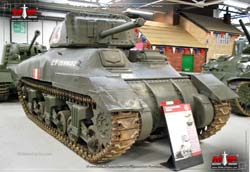
Cruiser Tank Ram Like most of the Allied nations at the start of World War 2, Canada saw itself with an outdated armor corps made up of mostly World War 1-era equipment passed on to them by the United States. With Britain firmly entrenched wi...
1941
9
Cruiser Tank Sentinel AC (Australian Cruiser) The Sentinel tank was an indigenous Australian design of World War 2, appearing at a time when Australia lacked the tank-design know-how, manufacturing facilities to produce a design en mass and Japanese expansion into the Pa...
1942
10
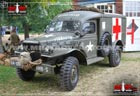
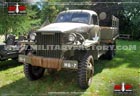
Dodge WC-54 3/4 Ton Ambulance The Model WC-54 3/4 Ton Ambulance was manufactured by the Chrysler Corporation (Dodge Brothers Division) from the years 1942 through 1945. The body work for the chassis was completed by the Wayne company. The system itself wa...
1942
11
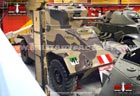
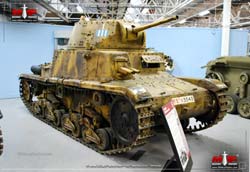
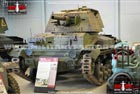
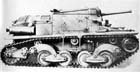
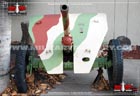
Fiat M.15/42 The Italian Fiat M.15/42 medium tank was nothing more than a further development of the M.14/41 series with one of the more distinguishable features being the exclusion of the left side-hull crew hatch in the M.15/42. Though ...
1943
12
Grizzly I Cruiser Like Australia, Canada also found itself without much of an armored corps (or facilities to produce such systems) at the start of hostilities in World War 2. And much like the Australians, the Canadians were forced to rely on...
1943
13
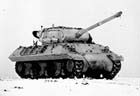
Gun Motor Carriage M10 (Wolverine / Achilles) The M10 3-inch Gun Motor Carriage was the principle allied tank destroyer of the Second World War. The British produced their own version of the M10 Wolverine known as the Achilles. The idea of the Wolverine tank destroyer ca...
1942
14
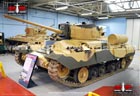
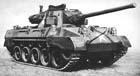
Gun Motor Carriage M18 (Hellcat) The M18 "Hellcat" (or known officially as the "Gun Motor Carriage M18") was a classical example of American tank destroyer efforts in World War 2. The system, much like the M10 Wolverine that preceded it, featured a powerful ...
1943
15
Gun Motor Carriage M36 (Jackson / Slugger) The M36 (sometimes "Jackson" or "Slugger") was an up-gunned upgrade of the M10 "Wolverine" design, both types appearing through World War 2. The M36 mostly differed from its predecessor by the fitting of a 90mm M3-type main g...
1944
16
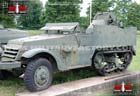
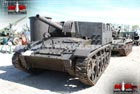
Half-Track Personnel Carrier M3 No image of the American Army effort in world war two is complete with the appearance of a half-track series vehicle. The system appeared in large numbers and was very similar in role to the German SdKfz 251 half-track, servi...
1941
17
Infantry Tank Mk III Valentine Considered one of the more successful British tank designs of the early war years, the Valentine series served both British and Soviet forces effectively. British forces first fielded the system in Operation Crusader, in whic...
1940
18
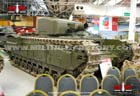
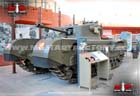
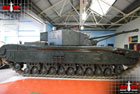
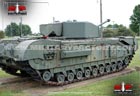
Infantry Tank Mk IV Churchill (A22) The British Churchill series of tanks was the most important British tank of the Second World War. Built in numbers second only to the Valentine, the Churchill was designed to replace the aging Matildas. Reminiscent of tank d...
1941
19
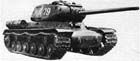
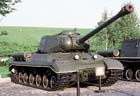
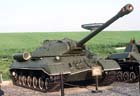
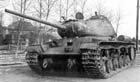
IS-3/JS-3 (Josef Stalin) The IS-3 ("IS" for "Iosef Stalin" or "Josef Stalin") was an attempt to build upon the already formidable IS-2. Improvements over the IS-2 model included a redesigned rounded turret and a new heavily-sloped front armor configu...
1945
20
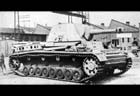
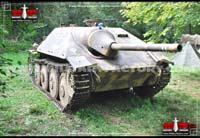
Jagdpanzer 38(t) Hetzer The Jagdpanzer 38(t) fur 7.5-cm PaK 39 "Hetzer" (meaning "baiter") was yet another in the long line of Nazi Germany conversions of the successful Czech-designed 38(t) tank chassis. The Hetzer was easily identifiable by its hu...
1943
21
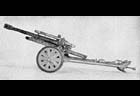
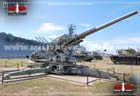
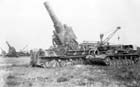
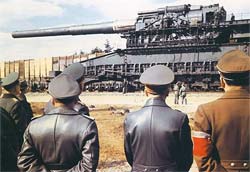
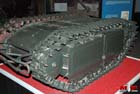
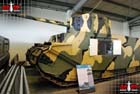
Karl-Gerat 040 / 041 The Karl-Gerät (040/041) (or "Karl device" in German) was a self-propelled siege howitzer designed and built by Rheinmetall in World War 2. The howitzer became the largest self-propelled gun ever built and used in combat. Des...
1940
22
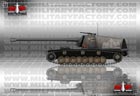
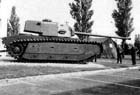
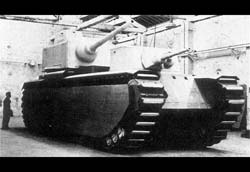
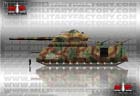
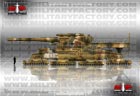
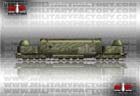
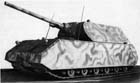
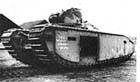
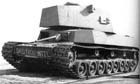
Krupp Landkreuzer P.1000 Ratte (Rat) The Landkreuzer P.1000 "Ratte" (translating to "Rat") was a proposed super-heavy tank designed by the German firm Krupp in 1942. Hitler gave the project his blessing and the program set about to create the most powerful tank ...
1942
23
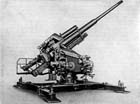
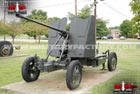
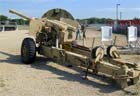
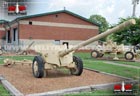
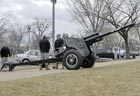
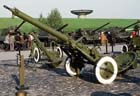
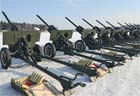
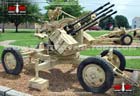
KS-19 (Type 55) The KS-19 (Type 59) is a manually loaded and operated towed anti-aircraft artillery system. A sustained rate of fire by a capable crew is reported to be between 10-15 rounds per minute. Sighting can be accomplished with the o...
1949
24
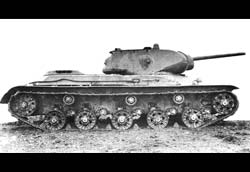
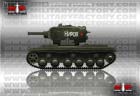
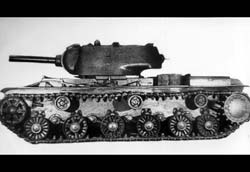
KV-2 (Klimenti Voroshilov) The KV-2 series of heavy tank was a mammoth follow-up to the successful KV-I. The idea behind this successor was a utilization of the KV-1 chassis with a marriage to a more potent main gun in the form of the M1938 122mm calib...
1940
25
Light Tank, M24 (Chaffee) The Light Tank M24 Chaffee was the successor to the M5 Stuart light tank. Though appearing late into the Second World War, the Chaffee would nonetheless find its role in the Korean War soon after and become a common sight in ...
1944
26
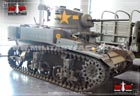
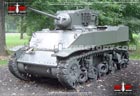
Light Tank, M3 / M5 (Stuart) The M3 / M5 series (commonly known as the "General Stuart") was an Allied design classified as a light tank and appeared through the early and middle years of the Second World War. The system was under-gunned and lightly armo...
1941
27
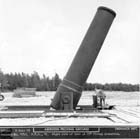
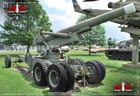
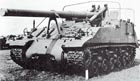
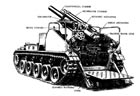
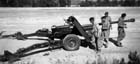
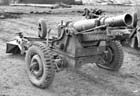
Little David In 1944, the United States War Department was planning for the invasion of the Japanese mainland and expecting to encounter very strong fortifications. As such, the Army wuld need a heavy weapon to combat such structures. Spe...
1944
28
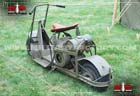
M22 Locust The M22 Locust was a Allied light tank appearing in World War 2 and designed to be air-dropped into battle alongside airborne elements. The general idea of a highly-mobile army continued to fascinate American warplanners as t...
1943
29
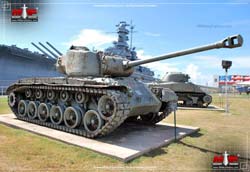
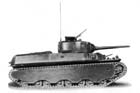
M26 Pershing The M-26 was developed near the end of World War II and named after World War One General John J Pershing of the American Expeditionary Force. The M26 Pershing had a slow and arduous beginning, when the need for a heavy tank ...
1945
30
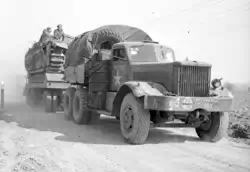
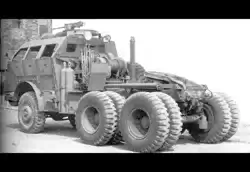
M35 (Deuce and a Half) When one hears of the real workhorses of the second world war, they tend to think of the tanks, planes and bombers of the war. But little attention is rarely given to the unsung hero as in the M-35 2.5 ton 6 x 6 CCKV supply t...
1941
31
M46 Patton The M46 Patton is classified as a medium tank and can further be classified as a 'stop-gap' measurement to the next generation of US tank engineering. The M46 Patton was basically a modernized M-26 Pershing Heavy Tank from Wo...
1949
32
M7 Priest The M-7 Priest was the principle mobile artillery system for the allies in World War 2. The British maintained their own versions of the vehicle (until the Sextons became available) and saw first combat with the weapons syste...
1942
33
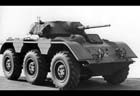
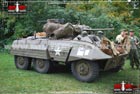
M8 Greyhound The M8 is arguably the most recognizable and important vehicle in the Second World War for United States ground forces. It's design style and excellent cross-country performance earned it the nickname of 'Greyhound'. Four man...
1941
34
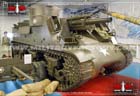
Medium Tank, M3 (Lee / Grant) The M3 medium tank series appeared at a time when Allied armor (in respects to both armor protection and armament) was generally inferior to their German counterparts in Europe and North Africa. The M3 evolved from the M2 med...
1942
35
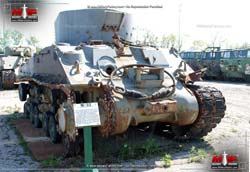
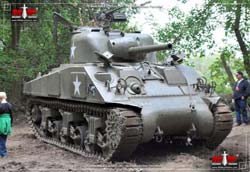
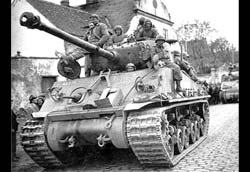
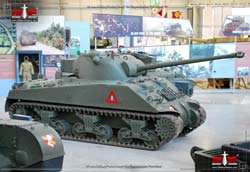
Medium Tank, M4 / M4 (Sherman) The M4 Sherman series of medium tanks proved an invaluable asset to Allied operations North Africa, Europe and the Pacific theaters of war in World War 2. The Sherman proved a relatively inexpensive, easy-to-maintain and - pe...
1942
36
Medium Tank, M4A3E2 (Sherman Jumbo) The M4A3E2 or (76) Sherman Jumbo was designated an assault tank and not a tank destroyer as commonly reported in other sources. It provided applique armor to front and sides of the hull, a standard 75mm main gun and HE (High ...
1944
37
Medium Tank, M4A4 (Sherman VC Firefly) Outwardly, the Sherman Firefly series of tank destroyers looked every bit like their M4 Sherman base counterparts. Closer examination would reveal a British-designed system that was finally capable of dealing with the impress...
1944
38
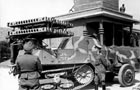
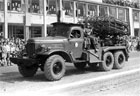
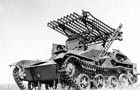
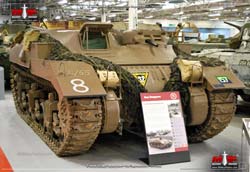
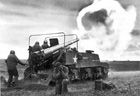
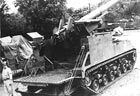
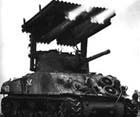
Rocket Launcher, T34 (Sherman Calliope) The attempt to mate a multiple rocket launching system to a vehicle was nothing new by 1944. The Soviets were already finding successes with their Katyusha launchers against the Germans, who in turn had been fielding their Ne...
1944
39
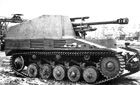
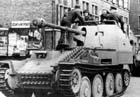
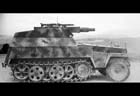
SdKfz 124 Wespe The SdKfz 124 Wespe (or "Wasp") was an excellent German self-propelled howitzer of World War 2. Using the well-regarded hull of the now-outclassed Panzer II light tanks, the Wespe appeared in modified form from 1943 through t...
1943
40
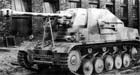
SdKfz 131/132 Marder II (Marten II) Much like the Marder I before it, the Marder II (Marten II) was a purpose conversion tank destroyer based on an existing tank chassis - this for the Marder II being the hefty supply of outdated Panzer II tank systems. Marder ...
1942
41
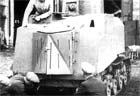
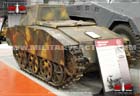
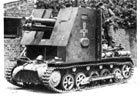
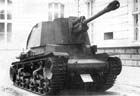
SdKfz 135 Marder I (Marten I) After the Fall of France, Germany confiscated several hundred Tractor Blinde 37L (commonly known as "Lorraine Tractors") which were general purpose chassis covering a variety of roles including armored personnel carrier and b...
1942
42
SdKfz 138 Marder III (Marten III) Marder III systems was yet another hastily modified conversion model of existing Panzer II tank chassis overstock. With the Panzer II system as a whole virtually obsolete on the changing battlefields of World War 2 and the pr...
1942
43
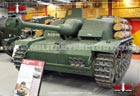
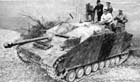
SdKfz 142 StuG III (Sturmgeshutz) The StuG III was a well known German assault gun of World War 2. The system stemmed from a German Army need to supply ground troops with a mobile artillery system when traditional armor units such as tanks were not not made a...
1940
44
SdKfz 142/1 StuG 40 (StuG IV) The StuG 40 (or StuG IV) was a further refinement of the successful StuG III tank destroyer / assault gun. The system sported a powerful L/48 75mm main gun and kept the low profile of its predecessor. The system was fielded i...
1943
45
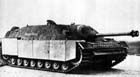
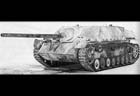
SdKfz 162 Jagdpanzer IV (Panzerjager 39) First appearing in 1943, the Jagdpanzer IV was designed in response to a German need for an upgunned artillery vehicle to replace their small caliber crop of existing tank destroyers. The system would feature the powerful and...
1943
46
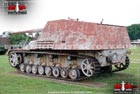
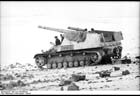
SdKfz 164 Hornisse / Nashorn The SdKfz 164 came about from the existing weapon carrier vehicle designed to lug the sFH 18 artillery gun. This vehicle was itself a combination of Panzer III tank parts and the chassis of the Panzer IV tank, making it an ef...
1943
47
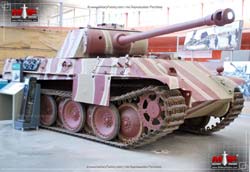
SdKfz 171 Panzerkampfwagen V Panther (PzKpfw V) The Panzerkampfwagen V "Panther" series of heavy tanks formed the backbone of the German Army through much of the pivotal war years. The system offered up decent performance but, more importantly, was armed with a powerful ma...
1942
48
SdKfz 173 Jagdpanther (Panzerjager V Jagdpanther) The Jagdpanther was the missing link to complete battlefield domination for the Germany Army. Already having the well-established Tiger II and Panther series of tanks, the Jagdpanther tank destroyer would have been a formidab...
1944
49
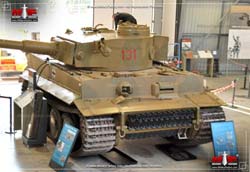
SdKfz 181 Panzerkampfwagen VI Tiger (PzKpfw VI) The PzKpfw VI Tiger began as a Henschel design of several other heavy tanks meeting specified German requirements based on speed, armor protection and a powerful main gun. Pitted against a Porsche offering, both prototype tan...
1942
50
SdKfz 182 Panzerkampfwagen VIB Tiger II (PzKpfw VIB) Even with the formidable Tiger I heavy tank series already hitting the production lines, it was envisioned that the system could be made into a more powerful class of tank. This decision leaned heavily on counteracting any ne...
1944
51
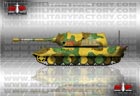
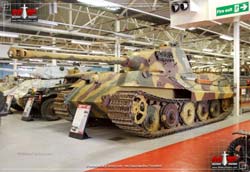
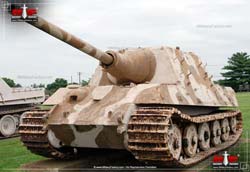
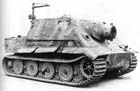
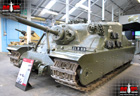
SdKfz 186 Jagdtiger (Hunting Tiger) The SdKfz 186 Jagdtiger was a further development of the mammoth and powerful Tiger II heavy tank and was an optimistic - yet effective - design at best. Though blessed with a powerful main armament and thick frontal armor, t...
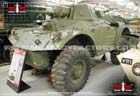
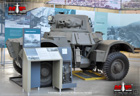
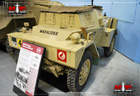
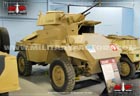
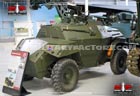
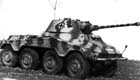
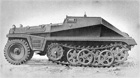
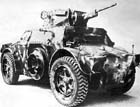
SdKfz 223 The SdKfz 223 was part of a larger family of German light armored cars, each playing a specific role on the battlefield. The SdKfz 223 served as a command and communications center and was distinguished from the other models ...
1942
54
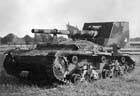
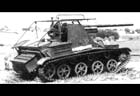
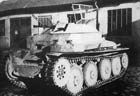
Semovente L.40 da 47/32 The Semovente L.40 da 47/32 served with Italian and German army elements throughout World War 2. Though never noted for their armored vehicle designs in the conflict, the Italians were actually forward-thinking in their embra...
1942
55
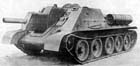
SU-122 The SU-122 is designated as an 'assault gun' system. The SU-122 utilized the same successful and easy-to-produce T34 Main Battle Tank chassis (visual similarities abound) with the SU-122 featuring 45mm thick armor.
The wea...
1942
56
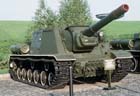
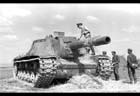
SU-152 (Zveroboy) By mid-1942 the Soviet Army needed a mobile heavy siege gun for fixed fortifications. Up to this point, most Soviet howitzers were pulled by horses along with their gun crews due to the fact that draft animals were more plent...
1942
57
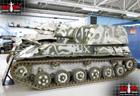
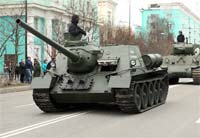
SU-76 / Samokhodnaya Ustanovka 76M (Suchka) On June 22, 1941 Germany invaded the Soviet Union and caught them unaware. Hitler’s goal was to eliminate the Soviets as a military power and exterminate Communism while giving the German people living space. During the sum...
1942
58
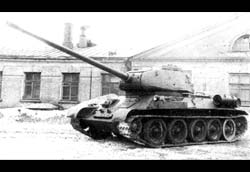
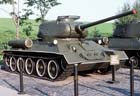
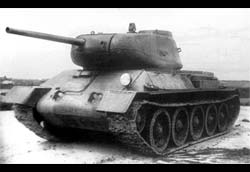
T-34 The Soviet-produced T-34 was a medium tank that attained legendary status in the Second World War. Itself a product of much engineering and design of earlier models - the BT-IS, A-20, A-30 and the T-32 all coming before it - ...
1940
59
T-34/76 The T-34/76 was nothing more than the German designation used for the base T-34 medium tank in use by the Soviet Union during World War 2. For a full history of the T-34, visit the T-34 entry....
1940
60
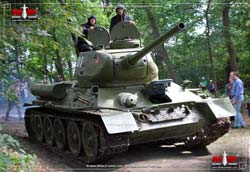
T-34/85 The T-34/85 is designated as an 'up-gunned' version of the familiar and successful base T-34 tank build by the Soviet Union and fielded during the Second World War. The T-34/85 featured a more powerful main gun - of 85mm cali...
1944
61
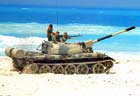
T-54 The T-54 series of Soviet main battle tanks came about with development after World War 2, ending with the system becoming operationally available by 1949. It can be said that no other Cold War or post-Cold War tank has seen ...
1949
62
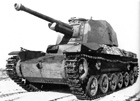
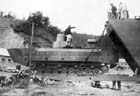
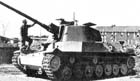
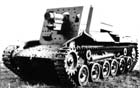
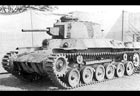
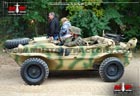
Type 2 Ka-Mi Development of the Type 2 began in 1928 and was the Army’s attempt to turn the Type 95 Kyu-Go light tank into an amphibious vehicle by adding flotation tanks. This concept failed so the designers switched to pontoons to prov...
1942
63
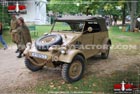
Volkswagen Kubel / Kubelwagen The Volkswagen ("People's Car") was the product of Porsche and Mercedes-Benz engineering and design created in 1933 at Adolph Hitler's request, with the first production units - the Type 62 - appearing in 1936 - and based on ...
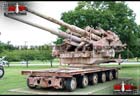
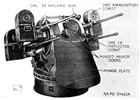
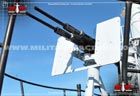
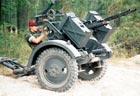
ZPU-4 The ZPU-4 anti-aircraft gun was developed in the post-war Soviet Union, seeing official production service in 1949. The towed artillery system featured four air-cooled, quick change 14.5mm main guns with a maximum range of 8,...
1949
Totals:
65
There are a total of 65 Armored vehicles from 1940 to 1949 in the Military Factory.
Material presented throughout this website is for historical and entertainment value and should not to be construed as usable for
hardware restoration, maintenance or general operation. Please consult manufacturers for such information.
Site Contact: militaryfactory at gmail dot com(replace "at" with "@" and "dot" with ".")