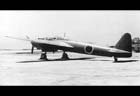
There are 18 World War 2 Airplanes from 1944 in the Military Factory.
1
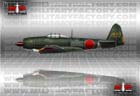
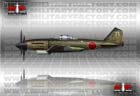
Aichi B7A Ryusei (Grace) The Aichi-produced B7A Ryusei (translated to "Shooting Star" and nicknamed "Grace" by the Allies) was a limited-production torpedo bomber in service with the Empire of Japan during the latter years of World War Two. Unfortuna...
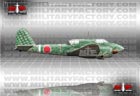
Aichi E16A Zuiun (Paul) The E16A Zuiun (translated into "Auspicious Cloud" and codenamed "Paul" by the Allies) was a dedicated reconnaissance floatplane and part-time dive-bomber for the Empire of Japan in World War Two. The system was an excellent ...
Arado Ar 234 Blitz (Lightning) The Arado Ar 234 "Blitz" (or "Lightning") was part of the German success with turbojet development in the latter years of World War Two. The system was the world's first purpose-built jet bomber to ever enter service, and did...
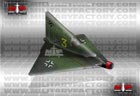
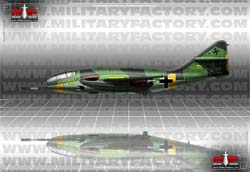
Arado Ar E.381 The Ar E.381-series of prototypes was submitted in 1944 for review by the German Air Ministry. Whilst a plethora of companies (including Messerschmitt and Sombold) were competing to fulfill the role of what was to be dubbed "...
Blohm & Voss Bv 238 The mammoth Blohm & Voss Bv 238 was the next evolution in the Blohm & Voss flying boat series for Germany during World War Two. The system was built as the largest aircraft ever produced by any of the Axis powers and was to p...
Douglas A-26 Invader The original design of the Douglas-produced A-26 Invader was conceived of in three forms - night fighter, bomber and attack aircraft. The attack aircraft design was selected for production with the United States Army Airforce...
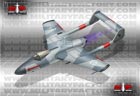
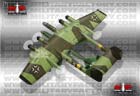
Fieseler Fi 103R (Reichenberg) The Fiseler Fi 103R was, in essence, the piloted form of the successful V-1 rocket that terrorized London citizens throughout the Second World War. The piloted system was to be a type of suicide missile that the pilot could a...
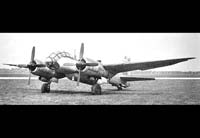
Focke-Wulf Ta 154 Moskito (Mosquito) The Ta 154 Moskito ("Mosquito") was another product of the Focke-Wulf aircraft design firm operating for the Third Reich. The design was classified as a night fighter and appeared most promising until a series of delays and l...
Gloster Meteor The Gloster Meteor was the first jet-powered aircraft to enter operational service for any air force in history. Though the Messerschmitt Me 262 Schwalbe was also under development at the same time, the Meteor actually beat t...
Hawker Tempest The Hawker Tempest series was an attempt to improve upon the deficiencies in performance that resulted in the Hawker Typhoon design. The aircraft featured some visual similarities to its predecessor but was designed with a lo...
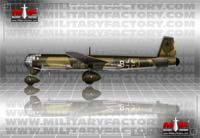
Junkers Ju 287 The Junkers Ju 287 was arguably the most unique design of all of the German jet-powered projects in development during and up until the end of World War Two. The system was designed as a high-speed heavy bomber which strayed ...
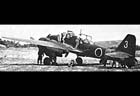
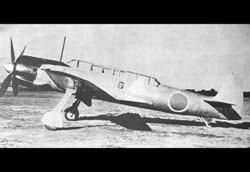
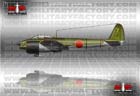
Kawasaki Ki-45 KAIc Toryu (Nick) Despite serving in limited numbers, fielded with no search-finding radar and appearing as the only Imperial Japanese Army night-fighter of the Second World War, the Kawasaki-brand Ki-45 KAIc night-fighter platform proved a su...
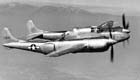
Lockheed XP-58 Chain Lightning The XP-58 "Chain Lightning" was initially envisioned as a larger version of the successful Lockheed P-38 Lightning twin-boom design capable of downing hordes of enemy bomber formations in single burst shots. The fear covering...
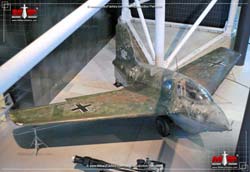
Messerschmitt Me 163 Komet (Comet) The Me 163 Komet was perhaps the most unique aircraft design of the Second World War. German scientists, always on the cutting edge of evolving war technology, developed a rocket-powered aircraft based on testing completed wi...
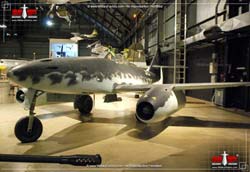
Messerschmitt Me 262 Schwalbe (Swallow) The Me 262 Schwalbe (or "Swallow") is a good case study in the "what if" category centering around poor production design and the bureaucracy inherent in a dictatorship like that of the Third Reich. With the unrealized capabi...
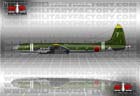
Mitsubishi Ki-67 Hiryu (Peggy) The Mitsubishi-designed Ki-67 Hiryu (translated to "flying dragon" and dubbed "Peggy" by the Allies, is oft-regarded as the best bomber fielded by Japan in the Second World War. The system was of a twin-engine design, armed w...
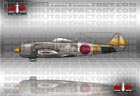
Nakajima Ki-84 Hayate (Frank) Out of the many fine fighters available to the Japanese Army in the closing months of World War 2, none were of greater import than the arrival of the Nakajima Ki-84 Hayate (meaning "gale" and known as "Frank" to the Allies. ...
Republic XP-72 Super Thunderbolt (Wasp Major) The XP-72 Wasp Major Thunderbolt was intended to be an "ultimate" design of the highly successful P-47 Thunderbolt fighter-bomber as produced by Republic. The XP-72 was to incorporate the successful P-47 airframe and mate it ...