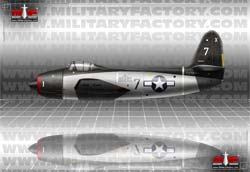
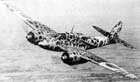
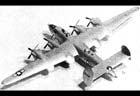
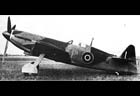
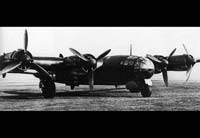
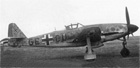
There are 15 World War 2 Airplanes from 1942 in the Military Factory.
1
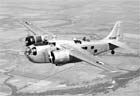
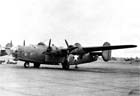
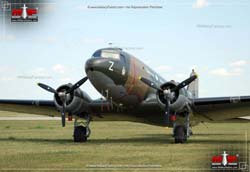
Curtiss-Wright C-46 Commando The United States Air Force utilized the C-46 Commando series as their primary transport workhorse in the Pacific Theater of War during the Second World War. The system was initiated to replace the Douglas series of DC-3 tran...
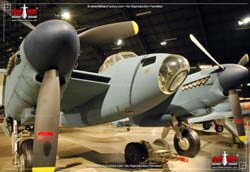
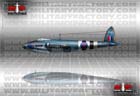
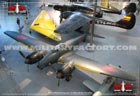
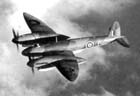
de Havilland D.H.98 Mosquito Few can find much fault in the de Havilland design of its Mosquito series of nightfighters featured so prominently in the Battle of Britain and throughout the entire World War Two campaigns across Europe. The twin-engine nigh...
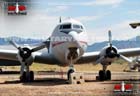
Douglas C-54 Skymaster (DC-4) Derived from the commercial DC-4 airliner, the C-54 Skymaster was a workhorse transport aircraft for both the United States Army and the United States Navy branches of service. Planned as a technologically superior successor ...
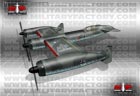
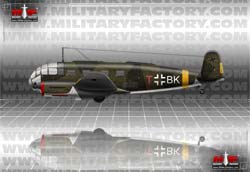
Heinkel He 111 Z (Zwilling) The He 111 Z (or "Zwilling") was an interesting, albeit bizarre, joining of two He 111 medium bombers (detailed elsewhere on this site). In an attempt to bring together existing designs to produce a large transport capable of...
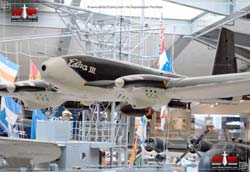
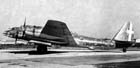
Heinkel He 177 Greif (Griffin) The Heinkel He 177 Greif (or "Griffin") was a bomber produced in limited numbers for the German Luftwaffe. By any standard, the aircraft should have made more of an impact on the war for Germany's sake but structural flaws an...
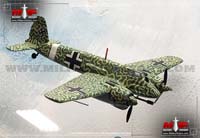
Henschel Hs 129 The Henschel Hs 129 fighter-bomber was built to a 1937 German specification for a twin-engine close-support aircraft with considerable armor protection for pilot and crew and the ability to field twin 20mm cannons at least. T...
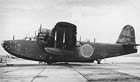
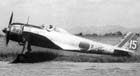
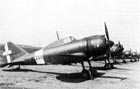
Kawasaki Ki-45 Toryu (Nick) By 1937, interest in a twin-engine fighter had peaked for the Imperial Japanese Army so much so that a requirement was put forth for the nation's first. Kawasaki entered into the fray successfully and presented the Ki-45 seri...
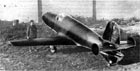
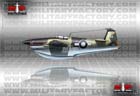
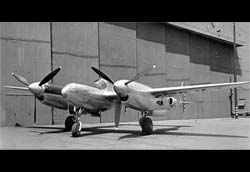
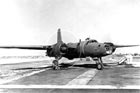
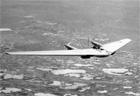
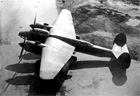
Lockheed XP-49 The XP-49 was a development of the Lockheed Corporation and a possible replacement for its successful line of P-38 Lightning aircraft. The XP-49 was to be a high-altitude performer with the capabilities of a well-designed fig...
Mitsubishi A6M Reisen (Zeke) With a design history beginning as early as 1937, the A6M series (commonly referred to as the "Zero" or by the Allied codename of "Zeke") became the first carrierborne fighter aircraft to supercede all other land-based counte...
Nakajima B6N Tenzan (Jill) The Nakajima B6N Tenzan (translating to "heavenly mountain") series was a capable torpedo bomber fielded by the Imperial Japanese Navy (IJN) in the Second World War. The system performed capably and would stay in operational ...
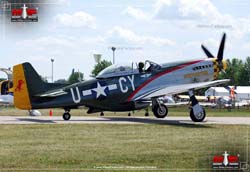
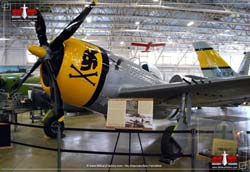
Republic P-47 Thunderbolt The P-47 Thunderbolt (commonly called the "Jug" or "Juggernaut" for its stout appearance) was another example of an American-produced classic warbird. The design of the P-47 held many challenges but the end-result would produ...
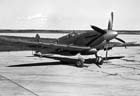
Supermarine Seafire With the successful conversions of Hawker Hurricanes to carrier-operation roles, it was decided to take the successful land-based Supermarine Spitfires and attempt the same modifications. The resulting design was the Supermar...
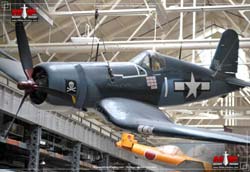
Vought F4U Corsair The F4U Corsair series of aircraft was one of the finer fighter developments of the Second World War, primarily seeing combat in the Pacific Theater of War. The uniquely designed bent-wings and ever-improving powerplant assur...
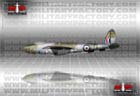
Westland Welkin The Westland Welkin was a twin-engine fighter designed to be a high-altitude interceptor capable of meeting Germany's like-minded designs. The aircraft was first flown in 1942 but the series as a whole would become bogged dow...
Yokosuka D4Y Suisei (Judy) The Yokosuka D4Y Suisei (translating to "Comet" and nicknamed "Judy" by the Allies) was a capable dive bomber serving the Imperial Japanese Navy during the Second World War. The system saw some reliability issues in early pre...