Aircraft of World War 1: 1917 The beginning of the end for the German, Austro-Hungarian and Ottoman empires.
1
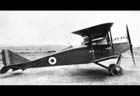
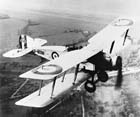
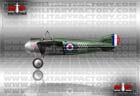
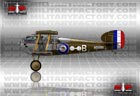
Airco DH.5 With the view afforded the pilots of the DH.2, famed aircraft designer Geoffrey de Havilland set out to create a similar, yet more than capable in terms of performance, off-shoot in the form of the DH.5. The end result would ...
1917
2
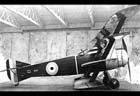
Airco DH.9 The AirCo / de Havilland DH.9 was a further revision of the DH.4 bomber. Design was accomplished by the de Havilland company with production handled by the Aircraft Manufacturing Company ("AirCo" or "Airco"). The series was f...
1917
3
Albatros C.X The Albatros production of the C.X model continued the firm's commitment to producing capable reconnaissance biplane aircraft. Supplanting the earlier C-series types before it, the C.X model looked to improved upon an already...
1917
4
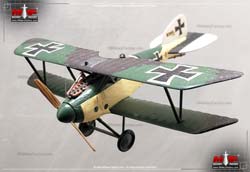
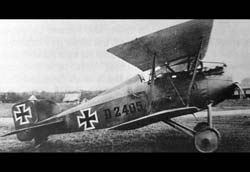
Albatros D.III Having already found successes in the Albatros D.I and D.II models, designer Robert Thelen sought for more in the way of maneuverability when tackling the new Albatros D.III. This was accomplished by a new unstaggered wing la...
1917
5
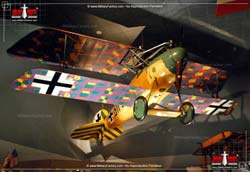
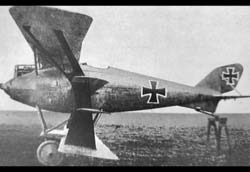
Albatros D.V The Albatros D.V series is often regarded as the best of th bunch in regards to the preceding D.I, D.II and the D.III models. By the latter years of 1917, the improved D.III was already showing signs that it had become outcla...
1917
6
Albatros D.Va The Albatros D.Va was a further development in the “D” series and a continuation of the successful D.V series. As with all of the preceding Albatros D models, the D.Va featured only minor improvements in the hopes that the ai...
1917
7
Armstrong Whitworth FK.8 The Armstrong Whitworth FK.8 model series was an aircraft conceived of by aircraft designer Frederick Koolhoven of Dutch origins. The system turned out to be a most versatile platform used throughout the First World War and p...
1917
8
Aviatik D.I (Berg D.I) The Aviatik D.I served the Austro-Hungarian Empire as a fighter and reconnaissance escort through the final years of World War 1. The system eventually proved a capable combat aircraft with good speed, climbing ability and se...
1917
9
Breguet Bre.14 French aviation design triumphed with the arrival of the Breguet Bre.14 series (sometimes written as Breguet Br.XIV). The aircraft proved to be of the utmost reliability and lethality upon entering the war front in 1916 and w...
1917
10
Bristol F.2 The Bristol F.2 fighter series operated throughout the British Empire for decades, serving through World War 1 and through the interwar years. The system proved a viable fighter platform despite its origination as a reconnais...
1917
11
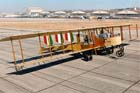
Caproni Ca.36 The Caproni Ca.36 represented the definitive model in the C-bomber series debuted in 1914 as the C.31. The Ca.36 was a tremendous asset to allied operations against Germany and the Austro-Hungarian Empire and were put into ac...
1917
12
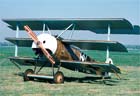
Fokker Dr.I (Dreidecker) Triplane The Fokker Dr.I ("Dr" for "Dreidecker" meaning "triplane") series is most closely associated with Manfred von Richthofen (aka "the Red Baron") as the triplane aircraft was his chosen mount in the final months of his life, acc...
1917
13
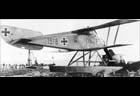
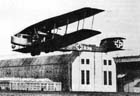
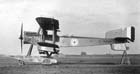
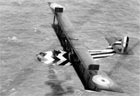
Friedrichshafen G.III The Friedrichshafen G.III was a medium bi-plane class bomber utilized by the German Empire in World War 1 and designed by the firm of Flugzeugbau Friedrichshafen GmbH. The G.III was designed to make up for the limitations inh...
Nieuport Nie.27 The Nieuport Nie.27 (or simply Nieuport 27) was designed by Gustave Delage and became an advanced trainer and fighter, serving with units of the Aeronautique Militaire, the Royal Flying Corps and the Corpo Aeronatico Militair...
1917
16
Nieuport Nie.28 The French-built Nieuport 28 fighter was the third of the successful trilogy of "Nieuport Fighting Scouts" that included the original Nieuport 11 and 17 models. The 28 model would become the aircraft of choice for aces such a...
1917
17
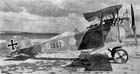
Pfalz D.III The Pfalz D.III was an exceptional aircraft produced in large numbers by Bavaria for Bavarian forces and; later, Imperial German air forces. The D.III biplane was a agile fighter capable of high-speed diving attacks and excel...
1917
18
Phonix C.I The Phonix C.I was a rather simplistic two-seat armed reconnaissance fighter utilized by the Austro-Hungarian Empire during World War 1. The system was produced by the Phonix Flugzeug-Werke firm. Phonix Flugzeug-Werke had alr...
1917
19
Phonix D (Series) The Phonix D.I was a single-seat fighter platform developed and produced by the Phonix Flugzeug-Werke firm in Germany. The aircraft was produced in over 200 (sources vary on the total) examples covering the D.I , D.II and the...
1917
20
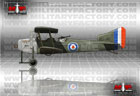
Royal Aircraft Factory S.E.5 The Royal Aircraft Factory S.E.5 ("S.E." for "Scout Experimental") was designed from the outset as an aircraft with a "green" pilot in mind. Additionally, care in the design of the aircraft was taken to make sure it was a pla...
1917
21
Siemens-Schuckert D.III The Siemens-Schuckert D series of fighters evolved from captured French-made Nieuport 11 aircraft. The D.III appeared as an improved D.I - a design which arrived too late to be of much use and was therefore relegated to train...
1917
22
Sopwith Camel Though the Sopwith Camel (the official designation being Sopwith Biplane F.1) was designed as a replacement for the Sopwith Pup, the Camel was in fact a further development of the type. The single-seat biplane fighter provide...
1917
23
Sopwith Dolphin The Sopwith Dolphin was yet another fighter design in the long line of Thomas Sopwith production aircraft during World War 1. The system was produced with the fighter pilot in mind and offered up an unobstructed view from out...
1917
24
Sopwith Snipe The Sopwith Snipe took all of the components that had made the Sopwith Camel a legend in the middle years of World War 1 and introduced several new features that made this new design the most formidable Allied fighter. Appear...
1917
25
SPAD S.XII (S.12) French flying ace Georges Guynemer pushed the idea of a cannon-armed fighter plane after his experiences in aircraft such as the SPAD S.VII. This led the Societe Pour l'Aviation et ses Derives (SPAD) company to develop such a...
1917
26
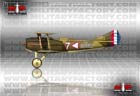
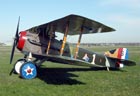
SPAD S.XIII (S.13) The SPAD S.XIII (S.13) was a further development of the successful SPAD S.VII (S.7) design, the latter eventually becoming outclassed by the newer and better German aircraft designs of World War 1. The S.XIII would prove a su...
1917
27
Standard J-1 The Standard J-1 appeared in the First World War and served the United States Army Air Service in the role of trainer. The system featured two cockpits in tandem, each with an equal set of simple controls on wooden panels for...
1917
28
Vought VE-7 Bluebird In 1917 Mr. Birdseye B. Lewis formed an aircraft business with the Vought group, becoming the Lewis & Vought Corporation in the United States. The Vought VE-7 Bluebird, named for Lewis himself, was a biplane designed that sa...
1917
Totals:
28
There are a total of 28 World War I aircraft of 1917 in the Military Factory.
Most photographic images appearing on this site are courtesy of the United States Department of Defense and are approved for public use.
Other images acquired through the public domain.
Digital art work courtesy of Dan Alex. Business Consulting by Kyle Williams
Material presented throughout this website is for historical and entertainment value and should not to be construed as usable for
hardware restoration, maintenance or general operation. Please consult manufacturers for such information.