Military Factory
Military Pay Chart
Global Firepower
Military Industrial Complex
Second World War
Home
Military Pay Scale
Military Ranks
Small Arms
Aircraft
Land Systems
Navy
Education
Military Factory Facebook Logo
flag of United States

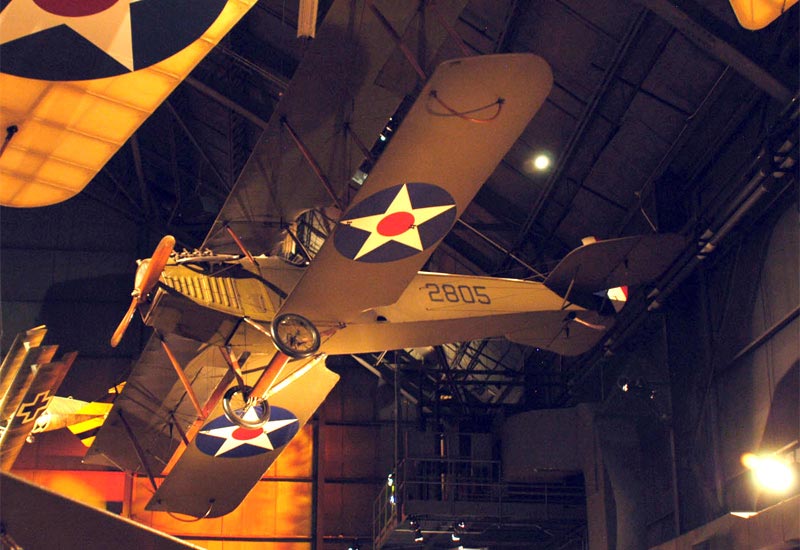
Curtiss JN-4 (Jenny) Trainer (1915)

Authored By Staff Writer | Last Updated: 7/15/2012

The Curtiss JN-4 Jenny series of biplane trainers served in thousands of examples across multiple national air forces.

The much-loved Curtiss JN-4 "Jenny" two-seat trainer aircraft was utilized in a myriad of ways throughout her operational career. The JN-4 proved just as critical a "weapon" in World War 1 as it did an advertising platform for civil aviation in the decade to follow. The "Jenny" gave many-an-airmen in America, Canada and Britain their first taste of powered flight while also training pilots in the details of aerial gunnery, bombardment, observation and basic aircraft handling. The aircraft proved highly suitable in stunt flying and helped give rise to the classic "barnstorming" age of the 1920s, proving popular across many air shows during the decade. A 1915 version, the JN-3, was used by the US Army in their war against Pancho Villa during the Mexican Revolution (1910-1920). Over 6,800 Jennys were produced and many of these were of the definitive JN-4D production model. Design of the aircraft was attributed to Benjamin D. Thomas.

The nickname of "Jenny" was formed from the "JN" used in the aircraft designation.

The JN-4 was born of a 1914 US Army requirement calling for a dedicated two-seat trainer aircraft platform to be powered by a single engine installation in a "puller" arrangement. The actual Curtiss JN-4 model owed much of its existence to the original Curtiss "Model J" and "Model N" airplane developments appearing prior; the Model J being a conventional biplane aircraft fitted with the Curtiss O series inline engine of 90 horsepower while the Model N series being completed with the Curtiss OXX inline engine of 100 horsepower. It was these two aircraft that would come to form the basis for the JN-1 mark to follow and this was, itself, followed by the limited-run JN-2 biplane form. The US Army Signal Corps purchased several JN-2s though these were eventually deemed unsafe after a fatal accident. The upcoming JN-3 was developed as an interim design and this sported unequal-span biplane wings with refined controls for the wing surfaces, quickly becoming the new JN standard for the preceding JN-2s. The design was furthered to become the definitive "JN-4" and it was this mark that would go on to make history for American military aviation. Its success was such that a modified, local-license production version in Canada - the JN-4 (Can) - was soon realized.

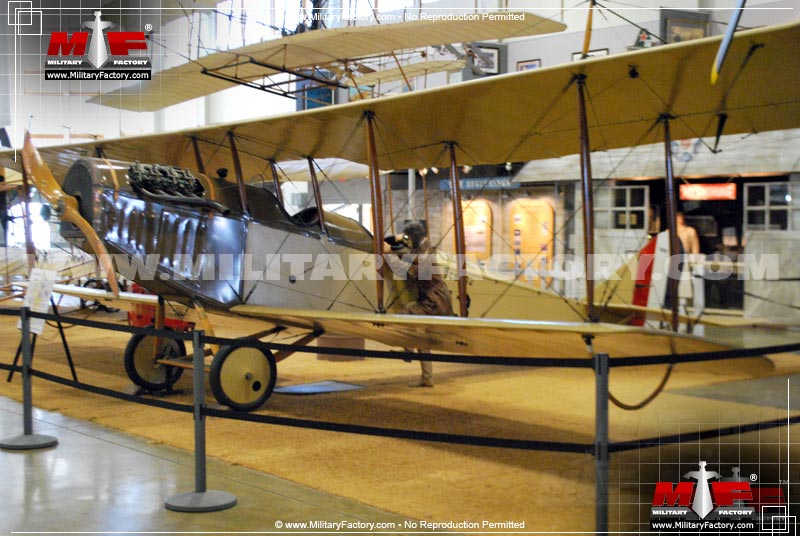
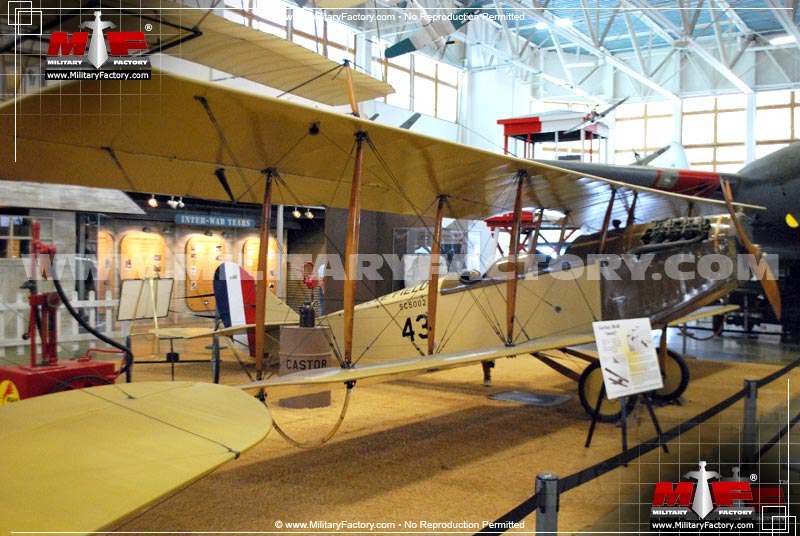
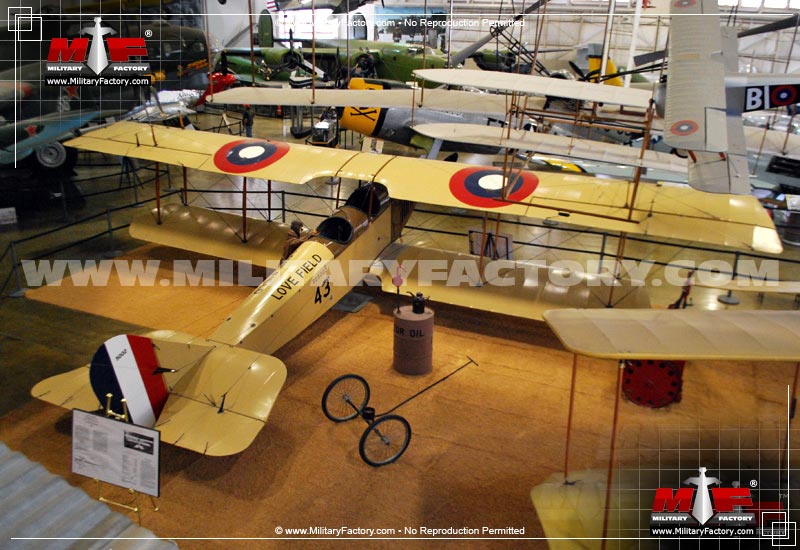
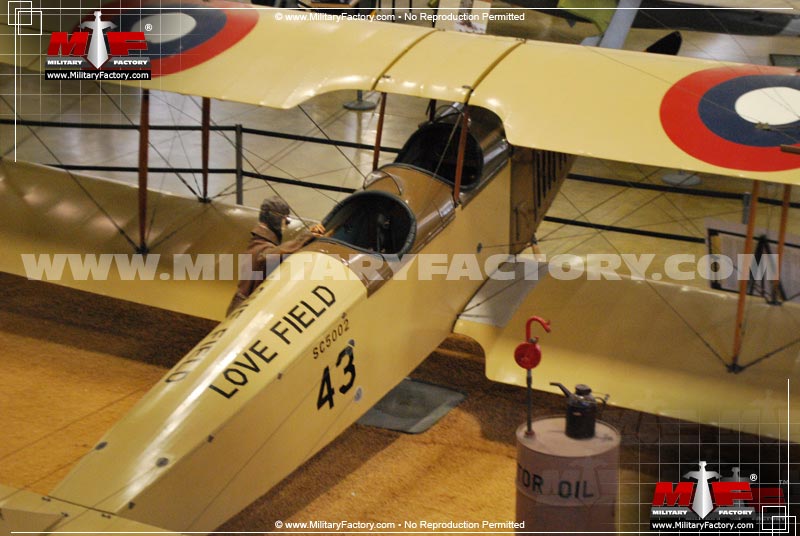
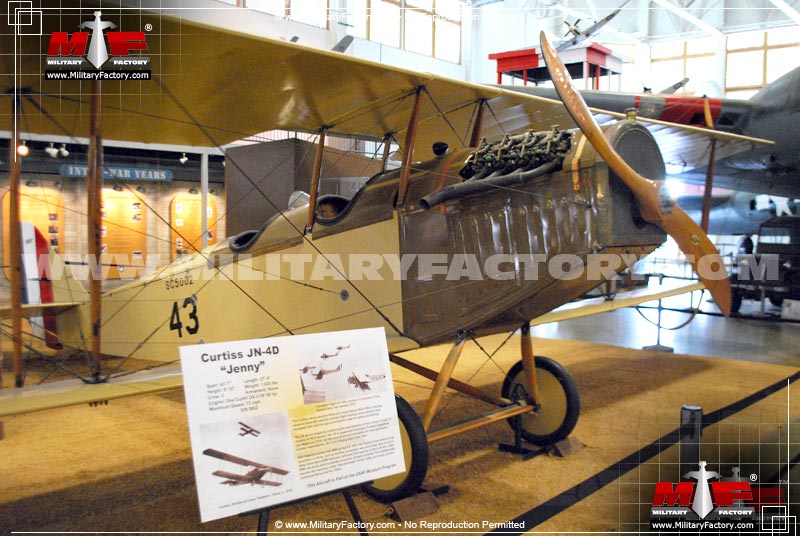
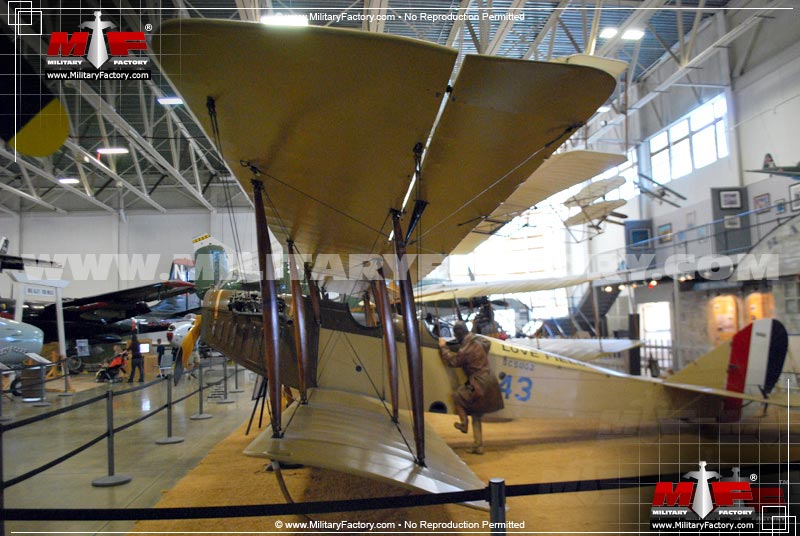
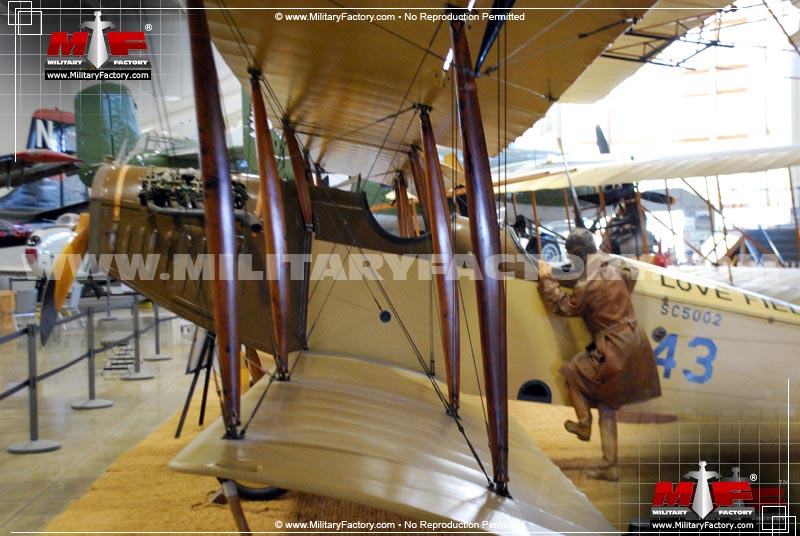
Design of the JN-4 was traditional for the time, characterized by its use of a staggered biplane wing arrangement of unequal span and parallel struts with a double-bay configuration. The engine was situated at the forward-most portion of the slim fuselage with twin inline cockpits (the front for the student and the rear for the instructor) fitted aft of the engine compartment and forward of amidships. When viewed in the side profile, the fuselage was something of a pleasing teardrop shape, running under the engine compartment to the base of the empennage tapering rearwards. The tail unit consisted of a rounded vertical tail fin and applicable horizontal tailplanes. Each pilot sat in an open-air cockpit protected by nothing more than a windscreen at the front. Visibility was therefore quite good from the sides and to the rear though the front was dominated by the engine placement and both positions suffered from the large biplane wing structure. The undercarriage consisted of a two-wheeled, reinforced arrangement of struts and cabling as well as a wooden tail skid under the tail unit. As the JN-4 was a dedicated trainer aircraft, she was not typically fitted with armament of any kind.

The JN-4 (JN-4D) was powered by a single Curtiss OX-5 series 8-cylinder Vee-type inline piston engine developing 90 horsepower. This supplied the mount with a top speed of 75 miles per hour and a service ceiling of 6,500. Endurance measured in at 2 hours and 15 minutes of flight time while dimensions included a wingspan of 43 feet, 8 inches and a length of 9 feet, 10 inches.

The JN-4 was responsible for the training of nearly every 9 in 10 American airmen during its tenure, such was its importance and lasting legacy. The JN-4 offered up many-a-pilot's first taste of flight and thusly this proved no more important than during World War 1 after America's entry in 1917. In addition to its use in training American airmen, the JN-4 served the Canadians and British equally well. More advanced training included use of machine gun and bomb armament but this variant was few in number compared to the non-armed Jennys being built. Some served as air ambulances which broadened the tactical value of the JN-4 considerably. All told, the Jenny was the most important American biplane of World War 1 despite the fighter types available, these being largely foreign in their origination.

The JN-4 was produced in a few notable variants beginning with the basic "JN-4" which were followed by the 781 "JN-4A" examples manufactured with an increase-area tailplane. The "JN-4B" brought also utilized a larger tailplane and was powered by the Curtiss OX-2 series engine; 85 of this type were produced for both the United States Army and Navy. The "JN-4C" was produced in two experimental model forms and never saw serial production. The "JN-4 (Canadian)" was produced in 1,260 examples under license by Canadian Aeroplanes Ltd for the RFC. It was largely based on the preceding JN-3 model with a lightened structure, revised lower wing assembly as well as other Canadian-inspired refinements. The "JN-4D" was an improved Jenny with the control stick feature of the Canadian JN-4 types while being closely associated with the earlier JN-4A mark. Some 2,765 examples of this mark were produced. One JN-4D-2 prototype was completed with a revised engine mounting. The "JN-4H" was an advanced trainer version which was powered by a Wright inline engine of 150 horsepower to which 929 examples were delivered. Several sub-marks of this primary mark then appeared as the "JN-4HT" (general trainer), "JN-4HB" (bomber trainer), "JN-4HG" (gunnery trainer) and "JN-4HM" (communications platform). The "JN-5H" was a single-example mark that led to the JN-6. The "JN-6" was an improved JN-5 of which 1,035 were produced for both the US Army and Navy. The "JN-6H" marked an improved JN-6 form while the mark was also branched into dedicated trainers from bombing (JN-6BH), general training (JN-6HG-1), gunnery training (JN-6HG-2),observer training (JN-6HO) and fighting training (JN-6HP). Over time, the "JNS" designation came to be used for several hundred war-time Jennys being brought up to 1920s standards. By this time, engine output power was nearly two times that of the original, resulting in improved performance capabilities and reliability.

Easy to fly and available in the thousands, the JN-4 survived her war time experiences to see extended use in private hands. Scores were sold to private operators who saw to it that the type would stand the test of time. Its use went beyond that of the well-known war-time participants for the aircraft was also purchased by Argentina and Cuba. She also served as America's first mailplane to which a commemorative USPS stamp was issued resulting the famously misprinted (and highly rare and popular) "Inverted Jenny".

The competing "Standard J" biplane trainer attempted to steal the reigns of the JN-4 series as America's primary trainer and stunt plane. While being produced in over 1,600 examples herself, the aircraft never did quite reach the levels of success that the JN-4 did during her service life. The Standard J saw production from 1916 to 1918.
Text ©2003-2013 www.MilitaryFactory.com • All Rights Reserved • No Reproduction Permitted
MilitaryFactory.com does NOT sell equipment/weaponry. Material presented throughout this website is for historical and entertainment value and should not to be construed as usable for hardware restoration, maintenance or general operation. Please consult manufacturers for such information. Our disclaimer. Email corrections / Comments to MilitaryFactory at Gmail dot com.
Picture of Curtiss JN-4 (Jenny)
Pic of the Curtiss JN-4 (Jenny)
Image of the Curtiss JN-4 (Jenny)
View All Images (8)

Specifications for the
Curtiss JN-4 (Jenny)
Trainer


Country of Origin: United States
Manufacturer: Curtiss Aeroplane and Motor Company LTD - USA
Initial Year of Service: 1915
Production: 6,906


Focus Model: Curtiss JN-4 (Jenny)
Crew: 2


Length: 27.33ft (8.33m)
Width: 43.64ft (13.30m)
Height: 9.84ft (3.00m)
Weight (Empty): 1,389lbs (630kg)
Weight (MTOW): 1,918lbs (870kg)


Powerplant: 1 x Curtiss OX-5 V8 piston engine developing 90 horsepower.


Maximum Speed: 75mph (121kmh; 65kts)
Maximum Range: 0miles (0km)
Service Ceiling: 21,325ft (6,500m; 4.0miles)
Rate-of-Climb: 0 feet per minute (0m/min)


Hardpoints: 0
Armament Suite:
Generally none though some were used for gunnery and bombing training by way of machine gun mounts and practice bombs.


Variants:
JN-4 - Base Series Designation and initial production version.


JN-4A - Production based on the JN-4; 781 examples.

JN-4B - Fitted with Curtiss OX-2 piston engine; 85 examples completed.

JN-4C - Two experimental types.

JN-4 "Canuck" - Canadian version based on the JN-3; 1,260 examples completed.

JN-4D - Improved Jenny; control stick feature of the Canadian JN-4 "Canuck"; 2,812 examples produced.

JN-4D-2 - One-off prototpe with revised engine mount.

JN-4H - Advanced trainer; Hispano-Suiza 8 engine; 929 examples produced.

JN-4HT - Basic Trainer

JN-4HB - Bombing Trainer

JN-4HG - Gunnery Trainer

JN-4HM - Communications Platform

JN-5H - One-off advancede trainer concept

JN-6 - Improved Jenny; based on the JN-5 prototype.

JN-6H - Improved JN-6

JN-6BH - Bomber Trainer

JN-6HG-1 - Basic Trainer Trainer

JN-6HG-2 - Gunnery Trainer

JN-6HO - Observer Trainer

JN-6HP - Fighter Trainer

JNS - Standardized Jenny conversions of the 1920s.


Operators:
Argentina; Australia; Canada; Cuba; United Kingdom; United States

ALL AIRCRAFT CATEGORIES

BY DECADE:


1900 to 1909
1910 to 1919
1920 to 1929
1930 to 1939
1940 to 1949
1950 to 1959
1960 to 1969
1970 to 1979
1980 to 1989
1990 to 1999
2000 to 2009
2010 to 2019
2020 to 2029
VIEW ALL
Compare Aircraft


BY TYPE:


Anti-Submarine Warfare (ASW)
Attack Helicopters
Bomber Aircraft
Medium Bombers
Heavy Bombers
Close-Air Support (CAS)
Commercial Aircraft
Dive Bombers
Electronic Warfare Aircraft (EWA)
Experimental / X-Planes
Fighter Aircraft
Floatplane Aircraft
Flying Boat Aircraft
Aerial Refueling Tankers
Helicopters (ALL)
Interceptor Aircraft
Multi-Role Aircraft
Navy Carrier Aircraft
Night Fighters
Reconnaissance / Scout
Search & Rescue (SAR)
Scout Helicopters
Special Purpose
Torpedo Bombers
Trainer Aircraft
Transport Aircraft
Transport Helicopters
Unmanned Aerial Vehicles (UAVs)
Unmanned Combat Air Vehicles (UCAVs)


COLLECTIONS:


4th Generation Fighter Aircraft
5th Generation Fighter Aircraft
US X-Planes
Classic US Warbirds
French Military Helicopters
Grumman "Cats"
Howard Hughes Aircraft
Indian Air Force
Israeli Air Force
Libyan Aircraft
Modern Chinese Aircraft
Modern Chinese Fighters
Modern Military Aircraft
Modern North Korean Aircraft
Modern Trainer Aircraft
Modern US Aircraft
Mikoyan Aircraft
Sukhoi Aircraft
Syrian Aircraft
Top 10 Fighter Aircraft of All Time


AIRCRAFT BY CONFLICT:


Arab-Israeli War (1948)
Cuban Missile Crisis (1959-1962)
Falklands War (1982)
Indo-Pak War (1965, 1971)
Iran-Iraq War (1980-1988)
Lebanon War (1982)
Operation Allied Force (1999)
Operation Desert Storm (1991)
Six Day War (1967)
Spanish Civil War (1936)
Soviet-Afghan War (1979-1989)
Yom Kippur War (1973)


MISCELLANEOUS:


Aircraft Cockpits
Aircraft Manufacturers List
Aircraft Production
Aircraft Timeline

WORLD WAR 2:


1939 Aircraft
1940 Aircraft
1941 Aircraft
1942 Aircraft
1943 Aircraft
1944 Aircraft
1945 Aircraft
1946 Aircraft
Australian Aircraft
Battle of Britain Aircraft
Bombers
Four-Engine Bombers
British Aircraft
British Bombers
British Transports
Dive Bombers
Canadian Aircraft
Fighters
Chinese Aircraft
French Aircraft
German Aircraft
German Fighters
German Flying Boats
German Jets
Secret Weapons of the Luftwaffe
Italian Aircraft
Imperial Japanese Aircraft
Imperial Japanese Fighters
Mitsubishi Bombers
Navy Aircraft
Pearl Harbor
Polish Aircraft
Romanian Aircraft
US Aircraft
US Bombers
US Navy Aircraft
Soviet Aircraft
Torpedo Bombers
Trainer Aircraft
Transport Aircraft
Tuskegee Airmen Aircraft
W.A.S.P. Aircraft
WW2 Aircraft Ranked by Speed
VIEW ALL


WORLD WAR 1:


1914 Aircraft
1915 Aircraft
1916 Aircraft
1917 Aircraft
1918 Aircraft
Aircraft Timeline
Austro-Hungarian Aircraft
Bomber Aircraft
British Aircraft
Fighters
Flying Boats
French Aircraft
Imperial German Aircraft
Italian Aircraft
Scout Aircraft
Russian Empire Aircraft
US Aircraft
WW1 Aircraft Ranked by Speed
VIEW ALL


KOREAN WAR:


Australian Aircraft
Korean War Aces
Korean War Jets
North Korean Aircraft
US Military Aircraft
VIEW ALL


VIETNAM WAR:


Helicopters (ALL)
Transport Helicopters
North Vietnam Air Force
US Airpower
VIEW ALL


COLD WAR:


1950s French Aircraft
British V-Bombers
Cold War Bombers
Soviet Aircraft
Soviet Bombers
Soviet Interceptors
Soviet Helicopters
Strategic Air Command
US Aircraft
US Bombers
US Interceptors
VIEW ALL

Site Disclaimer | Privacy Policy | Site Map | MF Origins


©2013 www.MilitaryFactory.com • Content ©2003-2013 MilitaryFactory.com • All Rights Reserved • Site Contact Email: militaryfactory at gmail dot com. The "Military Factory" name and MilitaryFactory.com logo are registered ® trademarks and protected by all applicable domestic and international intellectual property laws.


Top MF Stuff: 2013 Military Pay Scale | Military Ranks | WW2 Weapons | Sniper Rifles | Kts to Mph | WW1 Aircraft | Automatic Rifles | Aircraft Cockpits | Vietnam War Weapons | Main Battle Tanks | Submachine Guns | Shotguns | French Military Victories


Most photographic images appearing on this site are courtesy of the United States Department of Defense and are approved for public use. Other images acquired through the public domain. Digital art work courtesy of Dan Alex. Business Consulting by Kyle Williams. Material presented throughout this website is for historical and entertainment value and should not to be construed as usable for hardware restoration, maintenance or general operation. Please consult manufacturers for such information.


eXTReMe Tracker