Military Factory
Military Pay Chart
Global Firepower
Military Industrial Complex
Second World War
Home
Military Pay Scale
Military Ranks
Small Arms
Aircraft
Land Systems
Navy
Education
Military Factory Facebook Logo
flag of China

Shenyang J-11 (Flanker B+) Multirole / Air Superiority Fighter (1998)

Authored By Staff Writer | Last Updated: 8/23/2012

The Shenyang J-11 is nothing more than a modified Chinese version of the Soviet-Russian Sukhoi Su-27 Flanker fighter series.

Find a School Near You
Follow Military Factory on Facebook:
Trending on Military Factory:
Recent Articles:
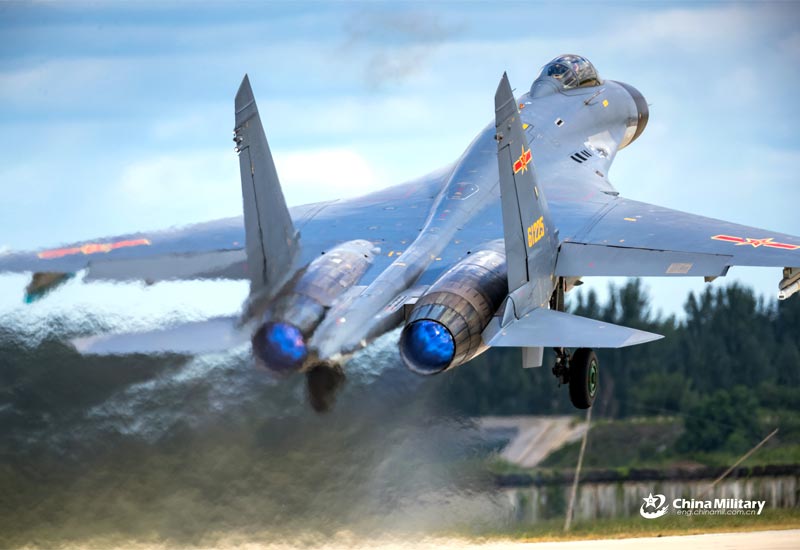
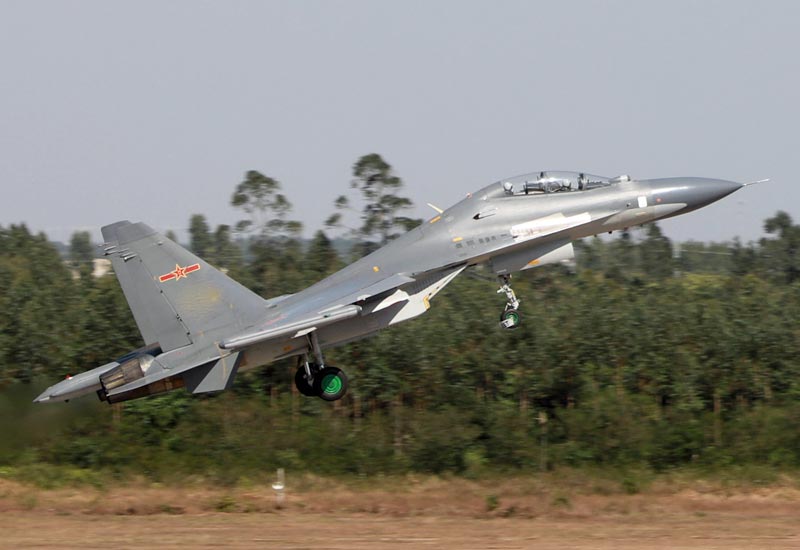
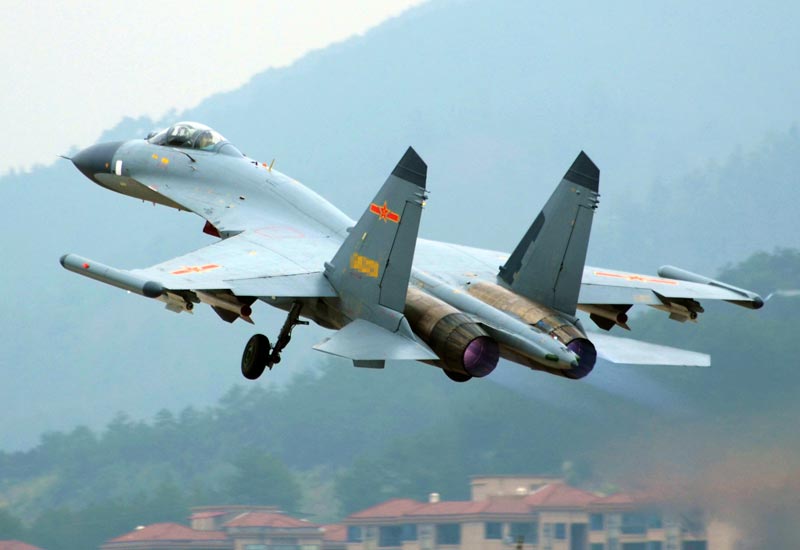
The Shenyang J-11 is based on the Soviet-Russian Sukhoi Su-27 "Flanker" air-superiority fighter series with some local modifications to suit Chinese air force requirements. As with other Russian-originated, Chinese-produced jets, the J-11 is therefore nothing short of a Chinese copy of the Russian product. The aircraft is produced locally under the Shenyang Aircraft Corporation banner and mimics the Russian design quite closely with most of the modifications being internal in nature. The J-11 enjoys a top speed of Mach 2.35 with a range out to 2,070 miles and a service ceiling of 62,500 feet. A rate-of-climb of 64,000 feet per minute is reported making her a capable fighter mount on par with other 4th Generation types currently in service. In all, some 120 J-11s are thought to be in service with the PLAAF with more believed on order (as many as 90 examples). Its presence will only likely grow in the near future as China expands is military capabilities in the region.

China became the first foreign, non-Soviet nation to be given rights to procure and operate the highly-touted Su-27 in 1992. Three years later, China entered into a joint agreement with Russia to obtain a local-production license for manufacture of the Su-27SK air superiority fighter - the agreement was for 200 aircraft. The following year, China received a joint production contract with the Sukhoi concern for indigenous construction of Su-27s via kit components supplied by the Russians while the Chinese beginning to rely more and more on their own internal production facilities. Within the Chinese inventory, the initial Su-27SK models were designated as the "J-11" to which NATO assigned the codename of "Flanker B+" to the type. The first J-11 was showcased in December of 1998 with serial production beginning two years later following technological delays.

While the J-11 signaled a major step forwards for the People's Liberation Army Air Force, it still relied heavily upon Russian-supplied components and munitions - in particular, the "smart" weapons associated with the latest types, the fire-control radar, powerplants and the all-important avionics. The Chinese Su-27SKs also inherently lacked the multirole capabilities that the PLAAF sought. Therefore, the PLAAF shored up their reliance on Sukhoi and the Russian partnership and chose instead to develop these high-end technologies indigenously. According to some sources (and in true Chinese fashion), this involved the Chinese reverse-engineering the available Russian technologies in their possession to benefit future local development to which the Russians, in protest, canceled their Su-27SK arrangement with the Chinese. Production of the original J-11s lasted up to about 95 to 100 aircraft based on reports. In one last-ditch attempt, Sukhoi marketed the improved multi-role Su-27SKM to the Chinese but failed to convince them otherwise.

The Chinese moved ahead in their attempt to develop a largely indigenous version of the Su-27, complete with dual-role capabilities to handle both air- and ground-based threats through indigenous facilities. The initial J-11 fighter models were only truly cleared to fire air-to-air missiles with some accuracy, with strike capabilities was a distant secondary role and this further limited to conventional drop bombs at that. Additionally, the revised local-production aircraft would be stocked with Chinese engines, avionics and weapon systems (including locally-designed PL-series missiles and guided bombs) as required of the type. Power for this new form was to be the Chinese copy of the Russian Lyulka Saturn AL-31F series turbofan engines with the hope being that one day these could be replaced by the indigenous Woshan WS-10A "Taihang" turbofan series of engines (29,101lbf with afterburning) of similar capabilities. The new aircraft became known under the Shenyang designation of "J-11B" and was first recognized in 2002.

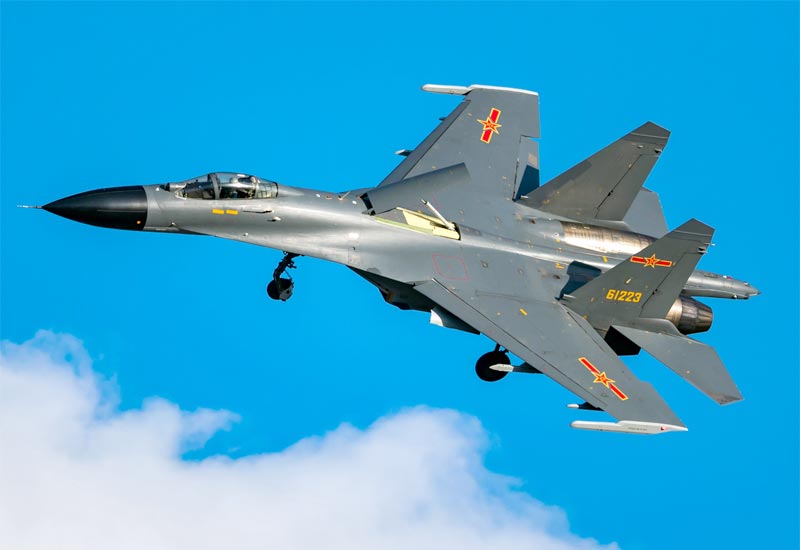
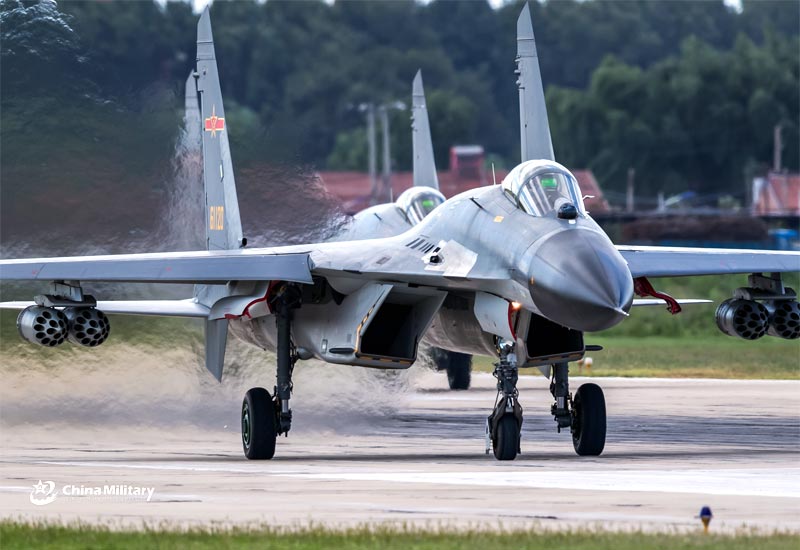
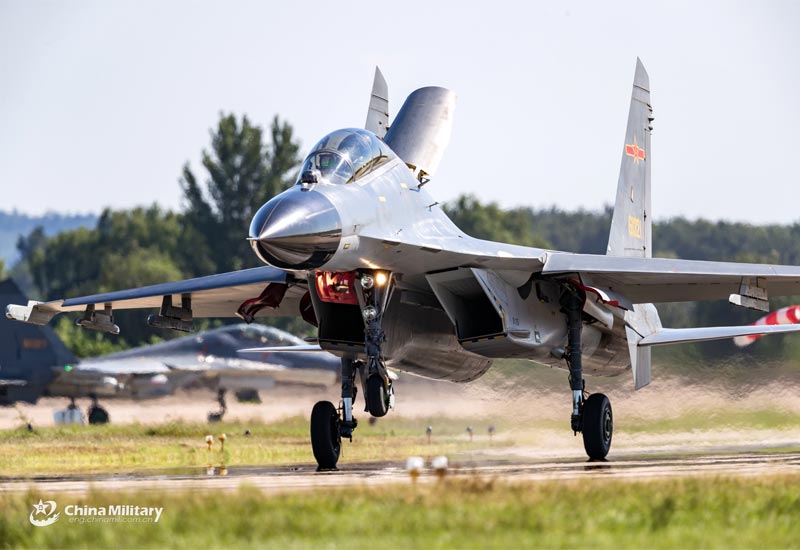
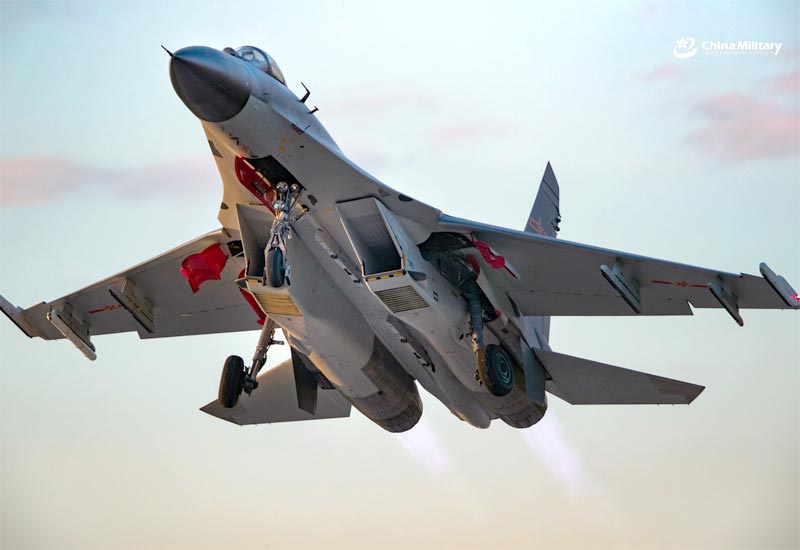
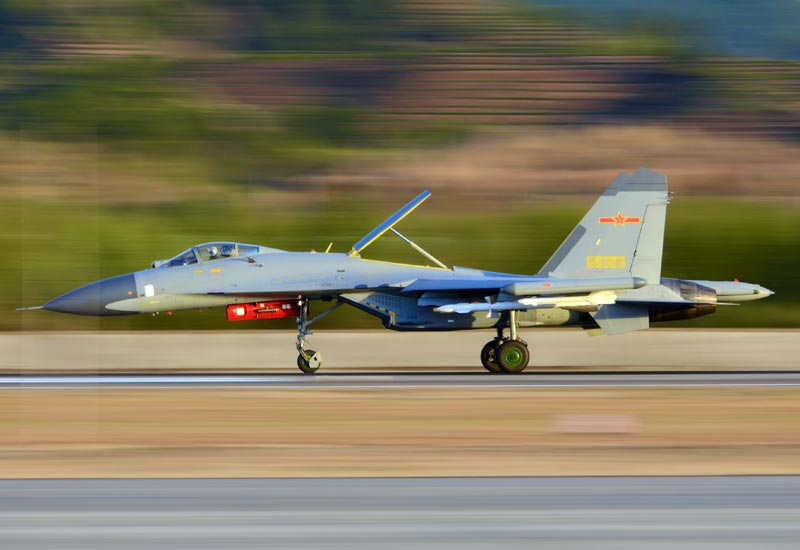
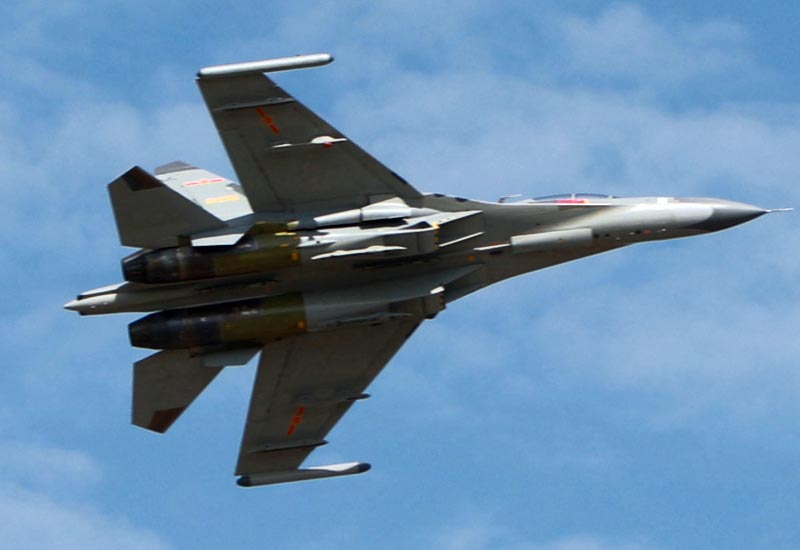
The J-11 series maintains the appearance of the original Su-27 Flanker series to a tee. The cockpit is situated well-forward in the well-contoured nose behind a nosecone assembly housing the internal radar facilities. The wings are set well-aft of amidships and swept rearwards with straight wingtips. The fuselage is wide with air intakes along the bottom facing, aspirating the twin engine layout. The engines are well-spaced apart and further divided at the rear of the design by a small tail fairing "stinger" type protrusion. The empennage is conventional in nature, consisting of a pair of rear-swept vertical tail fins and applicable horizontal tail planes, also swept. The undercarriage is fully retractable and consists of two main legs and a nose landing gear leg.

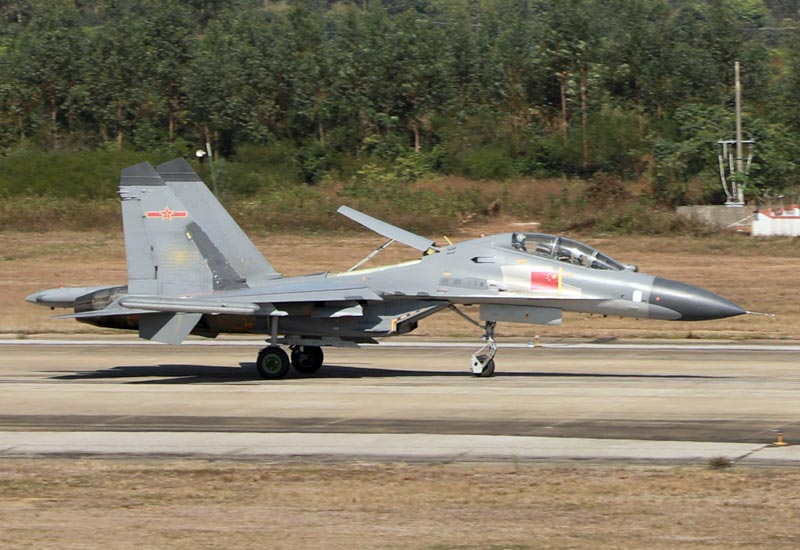
To date, there are a handful of J-11 variants beginning with the initial J-11. J-11 signifies the Chinese-built, Russian-supplied Su-27SK air superiority models. The J-11A was improved with better radar avionics and a new Chinese-developed Helmet-Mounted Sight (HMS). The J-11B marked the Chinese departure from Russian reliance as these became the much-needed multirole variant that the PLAAF required. The J-11BS is a two-seat trainer derivative of the J-11B that incorporates a second instructor's cockpit in tandem with the student cockpit (at the expense of internal volume) though retains full combat-capability. The J-11BS is currently in development as of this writing with a prototype believed to have been lost in 2009. The J-11BH is believed to be a navalized form of the J-11B multirole mount and became first known in 2010. Now that the Chinese Navy is completing work an ex-Soviet aircraft carrier, the J-11BH will have found a home on the high seas.

One of the more distinct J-11 developments currently under consideration is the J-16 which is thought to be a highly "stealthified" mount incorporating the latest in Chinese technology as well as proven stealth characteristics. The J-16 is purported to have revised engine intake openings, possibly modified engine exhaust ports to reduce the aircraft's heat signature, vertical tail fins canted outwards of centerline and an internal weapons bay to reduce the radar cross section. Still other stealthy developments are thought to exist using the J-17, J-18 and J-19 designations.

Armament for the J-11 series involves the standard Russian-developed 1 x 30mm Gryazev-Shipunov GSh-30-1 internal cannon afforded 150 rounds of ammunition. For the air defense role, the J-11 can be outfitted with a variety of Chinese-engineered and Russian-inspired air-to-air homing missile systems including the PL-8, PL-9 and PL-12 as well as the Vympel R-27, R-73 and R-77 series. For the ground-attack role, the J-11 takes on rocket pods (unguided rockets) and conventional drop bombs including cluster types. With more advanced attack radars, the J-11 will finally be cleared for use with Chinese laser-guided munitions and other "smart" ordnance as available. The J-11 enjoys a healthy reach across ten external hardpoints including two wingtip mounts, four underwing, two near the air intakes and two underfuselage.
Text ©2003-2013 www.MilitaryFactory.com • All Rights Reserved • No Reproduction Permitted
MilitaryFactory.com does NOT sell equipment/weaponry. Material presented throughout this website is for historical and entertainment value and should not to be construed as usable for hardware restoration, maintenance or general operation. Please consult manufacturers for such information. Our disclaimer. Email corrections / Comments to MilitaryFactory at Gmail dot com.
Picture of Shenyang J-11 (Flanker B+)
Pic of the Shenyang J-11 (Flanker B+)
Image of the Shenyang J-11 (Flanker B+)
View All Images (3)

Specifications for the
Shenyang J-11 (Flanker B+)
Multirole / Air Superiority Fighter


Country of Origin: China
Manufacturer: Shenyang Aircraft Corporation - China
Initial Year of Service: 1998
Production: 120


Focus Model: Shenyang J-11 (Flanker B+)
Crew: 1


Length: 71.85ft (21.9m)
Width: 48.23ft (14.70m)
Height: 19.42ft (5.92m)
Weight (Empty): 37,192lbs (16,870kg)
Weight (MTOW): 72,753lbs (33,000kg)


Powerplant: 2 x Lyulka AL-31F / Woshan WS-10A Taihang turbofan engines delivering 29,101lbs of thrust each with afterburner.


Maximum Speed: 1,553mph (2,500kmh; 1,350kts)
Maximum Range: 2,193miles (3,530km)
Service Ceiling: 60,696ft (18,500m; 11.5miles)
Rate-of-Climb: 64,000 feet per minute (19,507m/min)


Hardpoints: 10
Armament Suite:
STANDARD:
1 x 30mm Gryazev-Shipunov GSh-30-1 internal cannon.

OPTIONAL:
Air-to-Air Missiles
Air-to-Surface Missiles
Laser-Guided Bombs
Conventional Drop Bombs / Cluster Bombs
Rocket Pods (Unguided Rockets)


Variants:
J-11 - Initial Production Forms; based on Russian Su-27SK.


J-11A - Upraded J-11 Production Models

J-11B - Indigenous Chinese Multirole Variant.

J-11BS - Two-Seat Trainer Variant; combat-capable platform.

J-11BH - Navalized Conversion Model of the J-11B production form; appearing in 2010.

J-16 - Upgraded J-11B; believed fitted with internal weapons bay; stealth features.


Operators: China

ALL AIRCRAFT CATEGORIES

BY DECADE:


1900 to 1909
1910 to 1919
1920 to 1929
1930 to 1939
1940 to 1949
1950 to 1959
1960 to 1969
1970 to 1979
1980 to 1989
1990 to 1999
2000 to 2009
2010 to 2019
2020 to 2029
VIEW ALL
Compare Aircraft


BY TYPE:


Anti-Submarine Warfare (ASW)
Attack Helicopters
Bomber Aircraft
Medium Bombers
Heavy Bombers
Close-Air Support (CAS)
Commercial Aircraft
Dive Bombers
Electronic Warfare Aircraft (EWA)
Experimental / X-Planes
Fighter Aircraft
Floatplane Aircraft
Flying Boat Aircraft
Aerial Refueling Tankers
Helicopters (ALL)
Interceptor Aircraft
Multi-Role Aircraft
Navy Carrier Aircraft
Night Fighters
Reconnaissance / Scout
Search & Rescue (SAR)
Scout Helicopters
Special Purpose
Torpedo Bombers
Trainer Aircraft
Transport Aircraft
Transport Helicopters
Unmanned Aerial Vehicles (UAVs)
Unmanned Combat Air Vehicles (UCAVs)


COLLECTIONS:


4th Generation Fighter Aircraft
5th Generation Fighter Aircraft
US X-Planes
Classic US Warbirds
French Military Helicopters
Grumman "Cats"
Howard Hughes Aircraft
Indian Air Force
Israeli Air Force
Libyan Aircraft
Modern Chinese Aircraft
Modern Chinese Fighters
Modern Military Aircraft
Modern North Korean Aircraft
Modern Trainer Aircraft
Modern US Aircraft
Mikoyan Aircraft
Sukhoi Aircraft
Syrian Aircraft
Top 10 Fighter Aircraft of All Time


AIRCRAFT BY CONFLICT:


Arab-Israeli War (1948)
Cuban Missile Crisis (1959-1962)
Falklands War (1982)
Indo-Pak War (1965, 1971)
Iran-Iraq War (1980-1988)
Lebanon War (1982)
Operation Allied Force (1999)
Operation Desert Storm (1991)
Six Day War (1967)
Spanish Civil War (1936)
Soviet-Afghan War (1979-1989)
Yom Kippur War (1973)


MISCELLANEOUS:


Aircraft Cockpits
Aircraft Manufacturers List
Aircraft Timeline

WORLD WAR 2:


1939 Aircraft
1940 Aircraft
1941 Aircraft
1942 Aircraft
1943 Aircraft
1944 Aircraft
1945 Aircraft
1946 Aircraft
Australian Aircraft
Battle of Britain Aircraft
Bombers
Four-Engine Bombers
British Aircraft
British Bombers
British Transports
Dive Bombers
Canadian Aircraft
Fighters
Chinese Aircraft
French Aircraft
German Aircraft
German Fighters
German Flying Boats
German Jets
Secret Weapons of the Luftwaffe
Italian Aircraft
Imperial Japanese Aircraft
Imperial Japanese Fighters
Mitsubishi Bombers
Navy Aircraft
Pearl Harbor
Polish Aircraft
Romanian Aircraft
US Aircraft
US Bombers
US Navy Aircraft
Soviet Aircraft
Torpedo Bombers
Trainer Aircraft
Transport Aircraft
Tuskegee Airmen Aircraft
W.A.S.P. Aircraft
WW2 Aircraft Ranked by Speed
VIEW ALL


WORLD WAR 1:


1914 Aircraft
1915 Aircraft
1916 Aircraft
1917 Aircraft
1918 Aircraft
Aircraft Timeline
Austro-Hungarian Aircraft
Bomber Aircraft
British Aircraft
Fighters
Flying Boats
French Aircraft
Imperial German Aircraft
Italian Aircraft
Scout Aircraft
Russian Empire Aircraft
US Aircraft
WW1 Aircraft Ranked by Speed
VIEW ALL


KOREAN WAR:


Australian Aircraft
Korean War Aces
Korean War Jets
North Korean Aircraft
US Military Aircraft
VIEW ALL


VIETNAM WAR:


Helicopters
North Vietnam Air Force
US Airpower
VIEW ALL


COLD WAR:


1950s French Aircraft
British V-Bombers
Cold War Bombers
Soviet Aircraft
Soviet Bombers
Soviet Interceptors
Soviet Helicopters
Strategic Air Command
US Aircraft
US Bombers
US Interceptors
VIEW ALL

Site Disclaimer | Privacy Policy | Site Map | MF Origins


©2013 www.MilitaryFactory.com • Content ©2003-2013 MilitaryFactory.com • All Rights Reserved • Site Contact Email: militaryfactory at gmail dot com. The "Military Factory" name and MilitaryFactory.com logo are registered ® trademarks and protected by all applicable domestic and international intellectual property laws.


Top MF Stuff: 2013 Military Pay Scale | Military Ranks | WW2 Weapons | Sniper Rifles | Kts to Mph | WW1 Aircraft | Automatic Rifles | Aircraft Cockpits | Vietnam War Weapons | Main Battle Tanks | Submachine Guns | Shotguns | French Military Victories


Most photographic images appearing on this site are courtesy of the United States Department of Defense and are approved for public use. Other images acquired through the public domain. Digital art work courtesy of Dan Alex. Business Consulting by Kyle Williams. Material presented throughout this website is for historical and entertainment value and should not to be construed as usable for hardware restoration, maintenance or general operation. Please consult manufacturers for such information.


eXTReMe Tracker