Military Factory
Military Pay Chart
Global Firepower
Military Industrial Complex
Second World War
Home
Military Pay Scale
Military Ranks
Small Arms
Aircraft
Land Systems
Navy
Education
Military Factory Facebook Logo
flag of France

Farman MF.11 Shorthorn Reconnaissance / Bomber Aircraft (1914)

Authored By Staff Writer | Last Updated: 7/14/2012

Just about every major player on the Allies side of World War 1 stocked the French Farman MF.11 in their inventories.

Find a School Near You
Follow Military Factory on Facebook:
Trending on Military Factory:
Recent Articles:
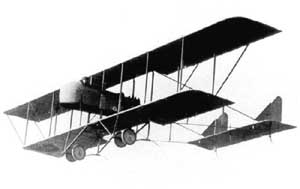
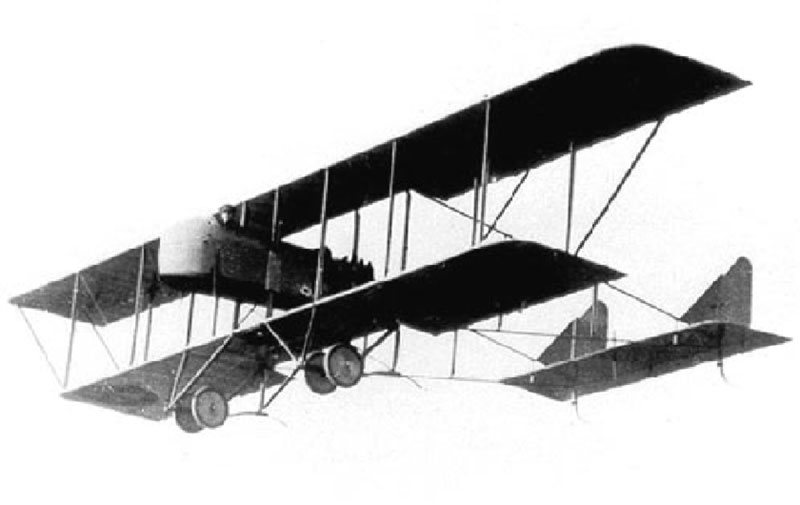
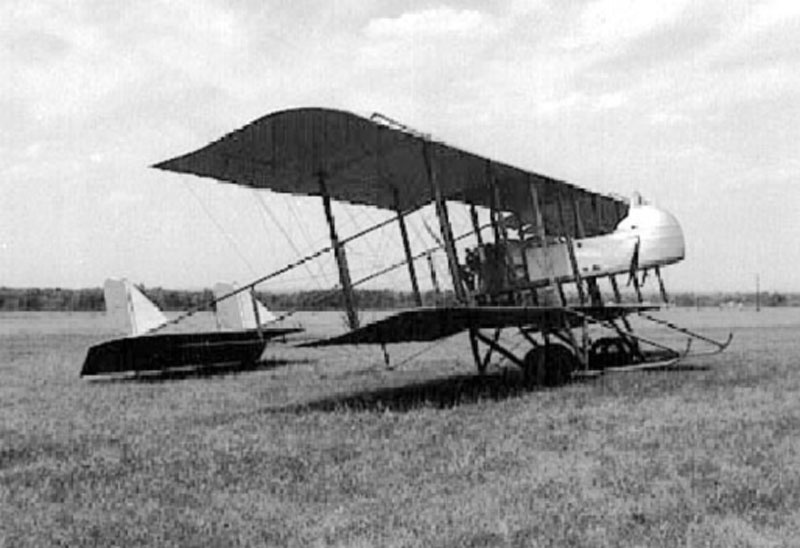
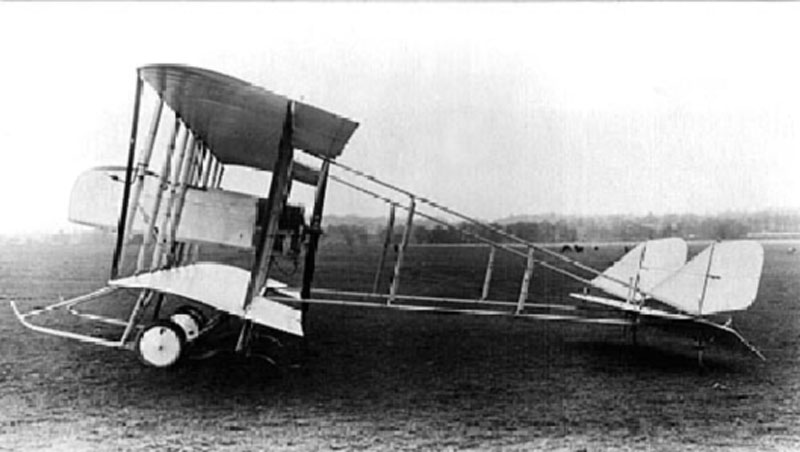
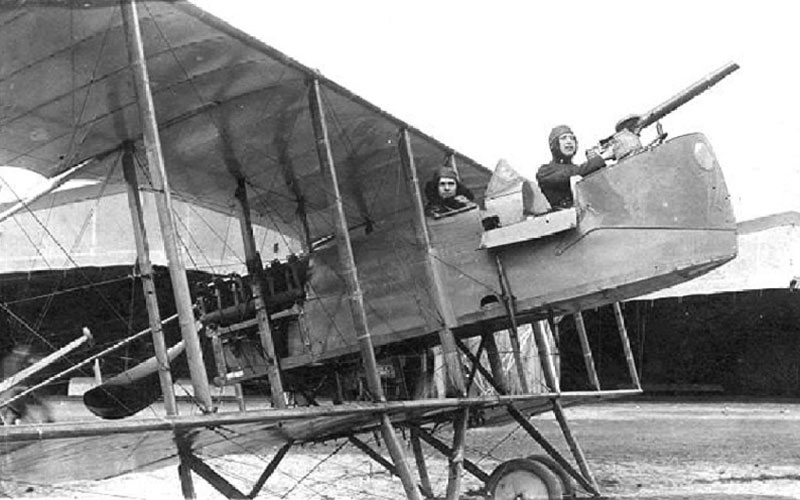
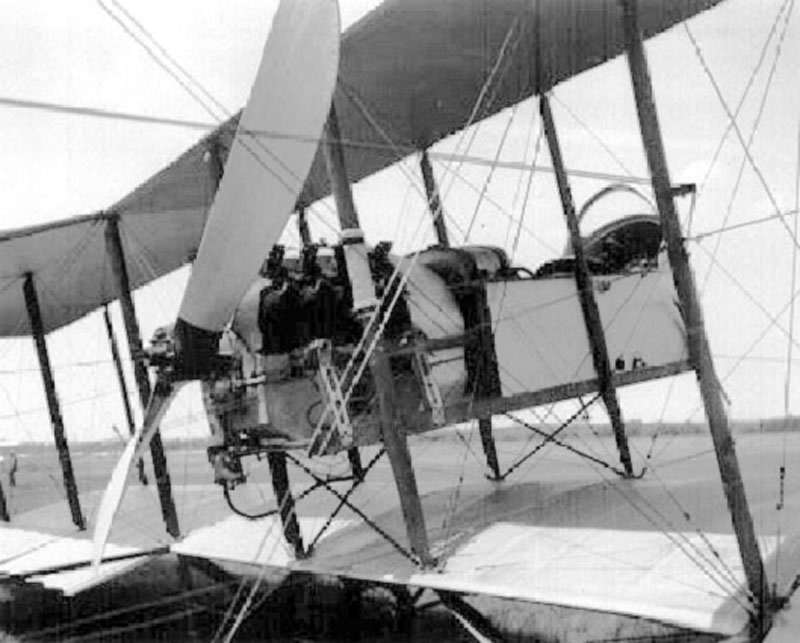
The Farman MF.11 "Shorthorn" was a development of French aeronautical engineering and was essentially an early-war biplane design fielding limited armament and a rear-mounted, rear-facing engine. The MF.11 came about before the Triple Entente (the "allies" of World War 1) had developed the synchronized interrupter gear that allowed machine guns to fire through a spinning propeller. As such, she was fitted with her engine at the rear of the nacelle in what was known as a "pusher" arrangement (in contrast, conventional prop aircraft utilized "puller" engine arrangements) freeing up the frontal area for armament and generally unfettered views. Officially designated as the Farman MF.11 after her designer - Maurice Farman of Farman Aviation Works - she eventually became better known by the nickname of "Shorthorn", this name having been derived from the preceding MF.7 "Longhorn" design though lacking the forward elevator assembly and forward skids of the original. The MF.11 would become the first armed aircraft platform to participate in aerial warfare in World War 1.

Farman Aviation Works was founded by brothers Henri and Maurice and undertook the construction of aircraft from 1908 up until 1936. In 1941, after the French nationalization of aerospace industries, the firm remerged as the Societe Anonyme des Usines Farman (SAUF). By 1944, the company was officially absorbed by Sud-Ouest. Despite Marcel Farman's (Maurice's son) attempt to resurrect the family firm in 1952, the new company was deemed a failure by 1956.

The MF.11 featured a centralized, open-air nacelle housing the engine compartment and positions for two crew seated in tandem as well as placement for defensive armament and applicable flight control systems. The nacelle sat suspended within the network of interplane parallel struts and necessary cables with the upper wing assembly overhead of the crew and the lower wing assembly running under. The nacelle itself was slab-sided with a rounded front end topped by a small windscreen. Construction was typical of the time with a wood frame covered over in tight canvas. Struts extended out from the upper and lower wing assemblies to generate rudimentary support for the empennage (tail section) to which was affixed a large-area horizontal plane mounting a pair of vertical tail fins. The engine was situated ahead of the tail system and aft of the crew, powering a simple two-bladed wooden propeller. The undercarriage of the airframe was typical World War 1 - a collection of double-tired, bicycle-type wheels held in place by a network of reinforced struts, these supports attached to the underside of the lower wing assembly. Each landing gear "leg" was afforded a ski-type structure to help prevent "nose-over" accidents while on the ground. There was no tail wheel, rear support being provided by a simple tailskid. This gave the MF.11 a noticeable "nose-up" appearance when at rest.

In her early production form, the MF.11 sat the pilot at the front of the aircraft with the observer to his rear. While this afforded the pilot unobstructed and unsurpassed views of the upcoming terrain, this severely restricted defensive options and viewpoints for the observer who sometimes doubled as a machine gunner when his position was armed as such. It was only in the revised MF.11bis that the seating arrangement was reversed, giving the observer/gunner a better view with a better field-of-fire at the front of the nacelle while relocating the pilot and the flight controls to the rear. Machine guns generally ranged in the 7.5mm caliber but were often the model and make of the respective operating country (Hotchkiss, Lewis and Fiat types were known to be used).

Like many other aerial implements of World War 1, the rickety MF.11 led a relatively short life on the Front, quickly being outclassed and outmoded by the new German Fokker monoplane in 1915. Once her period of usefulness as a frontline system was over, the MF.11 - and all her family - was generally relegated to trainer duties for upcoming aviation personnel. Nevertheless, the Farman design was an important contributor to early operations for both France, Britain, Italy and Russia in the early stages of the air war over Europe.

Entering operational service in 1914, the MF.11 was a regular participant of reconnaissance and light bombing sorties with numerous squadrons during her tenure. At one point, some 37 French escadrilles (squadrons) were formed with the MF.11 as the showcase weapon where she undertook bombing duties in day and night as needed (the MF.11 was capable of fielding a payload of 18 x 16lb bombs). In practice, her crews recounted her as a stable mount displaying solid flying qualities even in choppy skies. The Royal Navy operated at least 80 examples and several were stationed at Dardanelles and Mesopotamia. MF.11s in Belgium service were used to bomb German Zeppelin air bases and U-Boat submarine pens. Her first bombing mission was recorded on December 21st, 1914 when a British MF.11 attacked German artillery positions at Ostend, Belgium. One MF.11 crew was later credited with the downing of an airborne German Zeppelin by machine gun fire. The MF.11 continued frontline operational service up until 1915 before being relegated to second-line duties and ultimate retirement.

License production of the MF.11 outside of France was handled by companies in the United Kingdom, Russia and Italy. While only subtle changes existed between these types, such large-scale production ensured that the MF.11 would entertain a lengthy reach within the inventories of non-French operators.

The British took to designating the MF.11 as the "S.11" but this proved a lesser known identifier. She flew with the Royal Flying Corps in No.2, No.3, No.4, No.9, No.14, No.16, No.19, No.23, No.24, No.25, No.29, No.30 and No.65 squadrons as well as with flying elements of the Royal Naval Air Service. By default, British Commonwealth Australia further fielded the type within their Australian Flying Corps as part of squadrons No.5, the Mesopotamian Half Flight (the first Australian Flying Corps to see operational service) and the Central Flying School AFC, the latter based out of Point Cook, Victoria. Australia purchased their initial systems in 1916 to be used for training of pilots and crew and utilized them as such until better alternatives became available in 1919.

Across Europe and beyond French usage there existed squadrons in Belgium, Italy, Greece, Norway, Portugal, Romania, Serbia, Spain, Switzerland and the Ukraine service. Far to the East, the MF.11 was also operated by the Russian air service for a time. In the post-war years, at least two MF.11s were purchased by the Kingdom of Saudi Arabia from Italy sometime in 1921.

Italy itself produced additional MF.11 variants under license and attempted to better the design by implementation of different engine types of varying horsepower. This included the SAI 5 powered by a Fiat A.10 series engine of 100 horsepower and the Farman Columbo (MF.C) powered by a Colombo D.110 series engine of 110 horsepower. The latter also featured a revised, oval-shaped nacelle. Italian producers of the MF.11 were Savoia, Fiat, Macchi, Zari and Vickers Terni and many of the Italian-born MF.11s were appropriately armed with Italian Fiat-brand machine guns.

The Farman MF.13 (also known as the MF.130hp) was another side development of the MF.11, this featuring a 130 horsepower engine - hence its designation. The MF.14 (Model 1914) designation was collectively assigned to MF.11 and improved MF.11bis designs with their 100 horsepower engines.
Text ©2003-2013 www.MilitaryFactory.com • All Rights Reserved • No Reproduction Permitted
MilitaryFactory.com does NOT sell equipment/weaponry. Material presented throughout this website is for historical and entertainment value and should not to be construed as usable for hardware restoration, maintenance or general operation. Please consult manufacturers for such information. Our disclaimer. Email corrections / Comments to MilitaryFactory at Gmail dot com.
Picture of Farman MF.11 Shorthorn
Pic of the Farman MF.11 Shorthorn
Image of the Farman MF.11 Shorthorn
View All Images (5)

Specifications for the
Farman MF.11 Shorthorn
Reconnaissance / Bomber Aircraft


Country of Origin: France
Manufacturer: Farman Aviation Works - France / Savoia; Fiat; Macchi; Zari; Vickers Terni - Italy
Initial Year of Service: 1914
Production: 300


Focus Model: Farman MF.11 Shorthorn
Crew: 2


Length: 31.00ft (9.45m)
Width: 52.99ft (16.15m)
Height: 10.43ft (3.18m)
Weight (Empty): 1,213lbs (550kg)
Weight (MTOW): 2,046lbs (928kg)


Powerplant: 1 x Renault 8-cylinder, air-cooled inline piston engine delivering 100 horsepower. Also de Dion Bouton and Fiat A10 series engines.


Maximum Speed: 66mph (106kmh; 57kts)
Maximum Range: 217miles (350km)
Service Ceiling: 12,467ft (3,800m; 2.4miles)
Rate-of-Climb: 0 feet per minute (0m/min)


Hardpoints: 18
Armament Suite:
STANDARD:
1 x 7.5mm machine gun in rear (later forward) observers cockpit.

OPTIONAL:
18 x 16lb coventional crop bombs held externally. Maximum bombload of up to 288lbs.


Variants:
MF.11 "Shorthorn" - Base Series Designation; observer/gunner in rear cockpit.


MF.11bis "Shorthorn" - Lengthened nacelle; observer/gunner relocated to forward cockpit with armament.

MF.13 - Fitted with 130 horsepower engine.

MF.14 - MF.11/MF.11bis models produced in 1914.

S.11 - British Designation; license production

F.5b - Italian Designation; license production; armed with Fiat machine gun in front cockpit.

Farman "Colombo" (MF.C) - Italian Production Model; fitted with Colombo D.110 series engine of 110 horsepower.

SIA 5 - Italian Production Model; forward machine gun (fixed); fitted with Fiat A.10 series engine of 100 horsepower.


Operators: Australia; Belgium; France; Italy; Greece; Japan; Norway; Portugal; Romania; Russia; Saudi Arabia; Serbia; Spain; Switzerland; Ukraine; United Kingdom

ALL AIRCRAFT CATEGORIES

BY DECADE:


1900 to 1909
1910 to 1919
1920 to 1929
1930 to 1939
1940 to 1949
1950 to 1959
1960 to 1969
1970 to 1979
1980 to 1989
1990 to 1999
2000 to 2009
2010 to 2019
2020 to 2029
VIEW ALL
Compare Aircraft


BY TYPE:


Anti-Submarine Warfare (ASW)
Attack Helicopters
Bomber Aircraft
Medium Bombers
Heavy Bombers
Close-Air Support (CAS)
Commercial Aircraft
Dive Bombers
Electronic Warfare Aircraft (EWA)
Experimental / X-Planes
Fighter Aircraft
Floatplane Aircraft
Flying Boat Aircraft
Aerial Refueling Tankers
Helicopters (ALL)
Interceptor Aircraft
Multi-Role Aircraft
Navy Carrier Aircraft
Night Fighters
Reconnaissance / Scout
Search & Rescue (SAR)
Scout Helicopters
Special Purpose
Torpedo Bombers
Trainer Aircraft
Transport Aircraft
Transport Helicopters
Unmanned Aerial Vehicles (UAVs)
Unmanned Combat Air Vehicles (UCAVs)


COLLECTIONS:


4th Generation Fighter Aircraft
5th Generation Fighter Aircraft
US X-Planes
Classic US Warbirds
French Military Helicopters
Grumman "Cats"
Howard Hughes Aircraft
Indian Air Force
Israeli Air Force
Libyan Aircraft
Modern Chinese Aircraft
Modern Chinese Fighters
Modern Military Aircraft
Modern North Korean Aircraft
Modern Trainer Aircraft
Modern US Aircraft
Mikoyan Aircraft
Sukhoi Aircraft
Syrian Aircraft
Top 10 Fighter Aircraft of All Time


AIRCRAFT BY CONFLICT:


Arab-Israeli War (1948)
Cuban Missile Crisis (1959-1962)
Falklands War (1982)
Indo-Pak War (1965, 1971)
Iran-Iraq War (1980-1988)
Lebanon War (1982)
Operation Allied Force (1999)
Operation Desert Storm (1991)
Six Day War (1967)
Spanish Civil War (1936)
Soviet-Afghan War (1979-1989)
Yom Kippur War (1973)


MISCELLANEOUS:


Aircraft Cockpits
Aircraft Manufacturers List
Aircraft Timeline

WORLD WAR 2:


1939 Aircraft
1940 Aircraft
1941 Aircraft
1942 Aircraft
1943 Aircraft
1944 Aircraft
1945 Aircraft
1946 Aircraft
Australian Aircraft
Battle of Britain Aircraft
Bombers
Four-Engine Bombers
British Aircraft
British Bombers
British Transports
Dive Bombers
Canadian Aircraft
Fighters
Chinese Aircraft
French Aircraft
German Aircraft
German Fighters
German Flying Boats
German Jets
Secret Weapons of the Luftwaffe
Italian Aircraft
Imperial Japanese Aircraft
Imperial Japanese Fighters
Mitsubishi Bombers
Navy Aircraft
Pearl Harbor
Polish Aircraft
Romanian Aircraft
US Aircraft
US Bombers
US Navy Aircraft
Soviet Aircraft
Torpedo Bombers
Transport Aircraft
Tuskegee Airmen Aircraft
W.A.S.P. Aircraft
WW2 Aircraft Ranked by Speed
VIEW ALL


WORLD WAR 1:


1914 Aircraft
1915 Aircraft
1916 Aircraft
1917 Aircraft
1918 Aircraft
Aircraft Timeline
Austro-Hungarian Aircraft
Bomber Aircraft
British Aircraft
Fighters
Flying Boats
French Aircraft
Imperial German Aircraft
Italian Aircraft
Scout Aircraft
Russian Empire Aircraft
US Aircraft
WW1 Aircraft Ranked by Speed
VIEW ALL


KOREAN WAR:


Australian Aircraft
Korean War Aces
Korean War Jets
North Korean Aircraft
US Military Aircraft
VIEW ALL


VIETNAM WAR:


Helicopters
North Vietnam Air Force
US Airpower
VIEW ALL


COLD WAR:


1950s French Aircraft
British V-Bombers
Cold War Bombers
Soviet Aircraft
Soviet Bombers
Soviet Interceptors
Soviet Helicopters
Strategic Air Command
US Aircraft
US Bombers
US Interceptors
VIEW ALL

Site Disclaimer | Privacy Policy | Site Map | MF Origins


©2013 www.MilitaryFactory.com • Content ©2003-2013 MilitaryFactory.com • All Rights Reserved • Site Contact Email: militaryfactory at gmail dot com. The "Military Factory" name and MilitaryFactory.com logo are registered ® trademarks and protected by all applicable domestic and international intellectual property laws.


Top MF Stuff: 2013 Military Pay Scale | Military Ranks | WW2 Weapons | Sniper Rifles | Kts to Mph | WW1 Aircraft | Automatic Rifles | Aircraft Cockpits | Vietnam War Weapons | Main Battle Tanks | Submachine Guns | Shotguns | French Military Victories


Most photographic images appearing on this site are courtesy of the United States Department of Defense and are approved for public use. Other images acquired through the public domain. Digital art work courtesy of Dan Alex. Business Consulting by Kyle Williams. Material presented throughout this website is for historical and entertainment value and should not to be construed as usable for hardware restoration, maintenance or general operation. Please consult manufacturers for such information.


eXTReMe Tracker