Military Factory
Military Pay Chart
Global Firepower
Military Industrial Complex
Second World War
Home
Military Pay Scale
Military Ranks
Small Arms
Aircraft
Land Systems
Navy
Education
Military Factory Facebook Logo
flag of Italy

Savoia-Marchetti SM.81 Pipistrello (Bat) Bomber / Transport Aircraft (1935)

Authored By Staff Writer | Last Updated: 1/7/2011

The Savoia-Marchetti SM.81 survived World War 2 and continued in service until 1950.

Find a School Near You
Follow Military Factory on Facebook:
Trending on Military Factory:
Recent Articles:
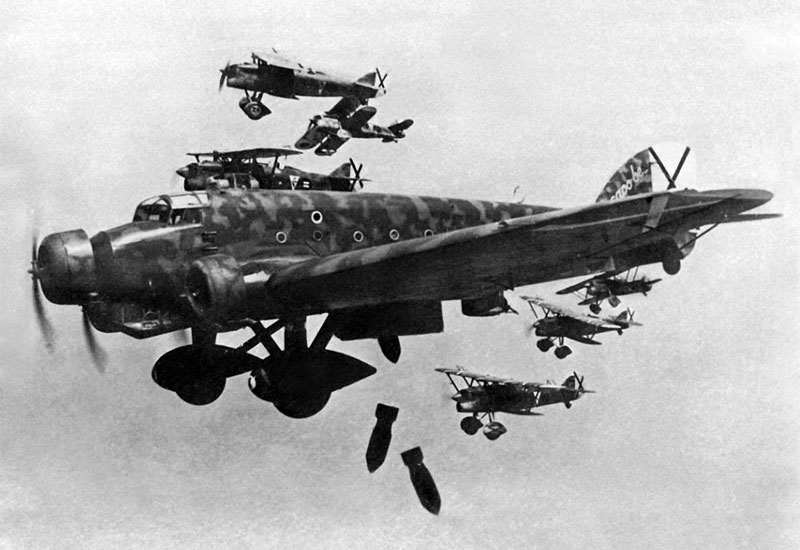
The Savoia-Marchetti SM.81 Pipistrello ("Bat") served primarily with the Regia Aeronautica throughout the 1930s and 1940s. The aircraft played an effective role as both a troop transport and a bombing platform, taking part in the 1935 Italo-Abyssinian War, the 1936 Spanish Civil War, the 1939 invasion of Albania and the 1943 evacuation of Axis forces in Tunisia. The aircraft was nicknamed the "Slug" by its pilots on account of her slow performance by 1940s standards. Some 535 examples were produced in whole.

Roots of Savoia-Marchetti
Roots to the Savoia-Marchetti firm were laid down in 1915 during World War 1 (1914-1918). At this time, the company operated under the name of Societa Idrovolanti Alta Italia ("Seaplane Company of North Italy") under the initials of "SIAI" with a concentration on seaplane design and production. In the post-war world, the firm absorbed Societa Anonima Costruzioni Aeronautiche Savoia, an aircraft bureau begun by Umberto Savoia (also founded in 1915), and added the Savoia name. In 1922, chief designer Alessandro Marchetti joined the ranks of Savoia and the company name changed once more, this time to the more well-known "Savoia-Marchetti".

Savoia-Marchetti went on to develop quite an esteemed name for themselves as they focused their talents on fast aircraft that could offer good overall performance. The firm's standout product became the SM S.55 flying boat of 1926, quickly cementing Savoia-Marchetti as a top-flight aircraft producer. The bureau would also develop several platforms to ultimately set several world air speed and endurance records. Before World War 2, Italian Air Marshall Italo Balbo looked to the company to begin developing products with a war mindset and, as such, the Savoia-Marchetti firm responded with prototypes and evaluation models, ultimately being responsible for both fighter and large aircraft production for much of the Regia Aeronautica through the war. By 1943, the firm changed their name once more to SIAI-Marchetti. Most of the company's production facilities were damaged or outright destroyed during the war.

In post-war Europe, SIAI-Marchetti eked an existence out by producing rail cars and service trucks for civilian use. However, this was not enough to stave off bankruptcy, which eventually found the company in 1951. The firm re-emerged in 1953 and began concentrating on design and production of helicopters. By the mid-1980s, the company was absorbed into Italian helicopter maker Agusta and the SIAI-Marchetti name was no more.

Origins of the SM.81
The SM.81 was originally designed as a bomber by Alessandro Marchetti with roots in the SM.73 civilian airliner. The SM.73 was first unveiled in 1934 and went on to see extensive commercial success in the airliner market. Generally, civil airliners made for good starting points in bomber designs thanks to their focus on speed, weight loads and range. The three-engined SM.81 proved this as such and was developed into a very capable military platform during the latter portion of the inter-war years. First flight was recorded in 1934. The militarized SM.81 underwent extensive evaluation by the Regia Aeronautica before being accepted into service in 1935 with large-scale production soon following. As planned from the beginning, the SM.81 (like the SM.73 before it) would be able to take on a series of powerplants as needed to help define required roles within the Italian Air Force.

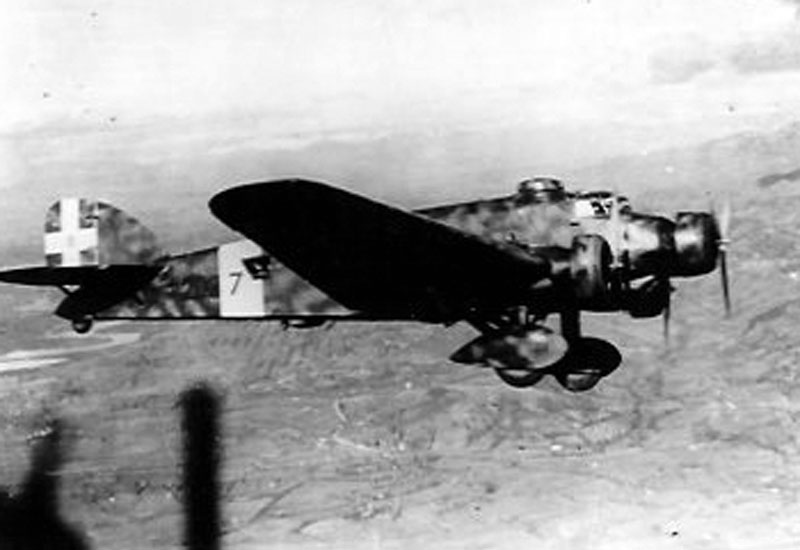
Savoia-Marchetti SM.81 Walk-Around
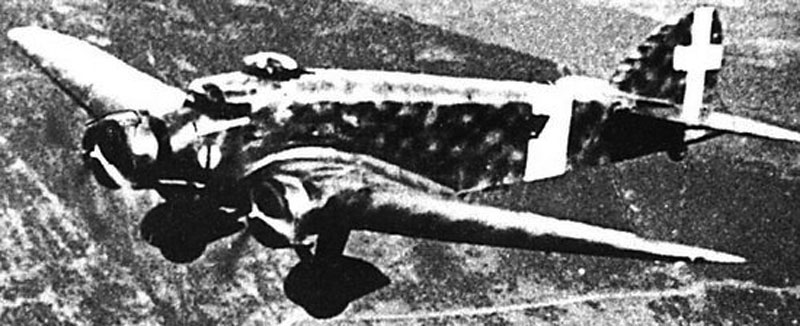
The SM.81 took on a most utilitarian role, resembling the German Junkers Ju 52/3m in many ways. She featured a smooth fuselage with a certain 1930s interwar flare to her, mounting three engines along her design and sporting both smooth and slab-sided contours. One engine was fitted to the extreme forward end of the fuselage while the remaining pair were each fitted to the leading edge of each wing. Viewports dotted the fuselage sides and the canopy was glazed. Wings were low-set monoplane cantilever designs with wide span and large surface area. These assemblies were held well-forward in the design as was the flight deck, this fitted slightly ahead of the wing leading edges. Vision was adequate for flying, less so for when taxiing on the ground. The fuselage gradually tapered off into the empennage to which rounded tail surfaces were affixed. There was a single vertical tail fin with a shallow leading edge and applicable stabilizers to each empennage side. The main landing gear legs were generally spatted for improved aerodynamics with a diminutive tailwheel set at the rear. The undercarriage was fixed and non-retractable. Standard crew was six personnel.

Armament
When used in her militarized role, the SM.81 took on several defensive machine gun positions about her design. This was usually made up of 5 to 6 x 7.7mm Breda-SAFAT machine guns. Two were fitted into a retractable ventral gun position while two were mounted on the rear-facing deck above and behind the cockpit. The remaining pair were split into two beam positions along the sides of the fuselage. For offensive sorties, the SM.81 could field varying stores of internal munitions ranging from several 1,100lb bombs to over fifty 33lb bombs. Total bombload was limited to 4,415lbs of ordnance through 2,000lbs was usually the standard operating load.

Power
From the outset, the SM.81 would be powered by a variety of powerplants. A series of Alfa Romeo, Gnome-Rhone and Piaggo radial piston powerplants were installed in some number by the end of her production run. Alfa Romeo supplied their 125 RC.35 and 126 RC.34 series engines of 580- to 900-horsepower while Piaggo's P.X RC.15 and P.IX RC.40 of 670- to 700-horsepower were both utilized. Gnome-Rhone's contribution was its 14K series engine of 650- to 1,000-horsepower. One distinct SM.81bis model even fielded just two Isotta-Fraschini Asso XI inline engines of 840 horsepower for evaluation purposes. The nose of this aircraft was appropriately revised to cover the missing area caused by removal of the nose engine and became a bombardiers position. The type was not furthered.

The production breakdown for each engine type was as follows: Alfa Romeo 125 RC.35 in 192 examples; Piaggo P.IX RC.40 in 140 examples; Gnome-Rhone 14K in96 examples; Alfa Romeo 126 RC.34 in 58 exampes; Piaggo P.X RC.15 in 48 examples.

At the time of her inception, the SM.81's performance was excellent. She could top speeds of over 200 miles per hour with a ceiling nearing 23,000 feet and a range equal to 1,200 miles. However, by the time of World War 2, these specs were wholly inadequate and she became a sitting duck to the new generation of enemy fighters on the prowl.

The SM.81 in Action
The SM.81 saw her combat debut in the Second Italo-Abyssinian War of 1935-1936, a conflict pitting the forces of the Kingdom of Italy against the forces of the Ethiopian Empire, resulting in the latter's conquer and annexation into the Italian East Africa colony. The platform served well in the reconnaissance, bomber and transport role, making her an important facet of the Italian war machine for the near future and netted orders for further production examples. The SM.81 was also fielded by the Aviazone Legionaria during the upcoming Spanish Civil War of 1936-1939. Italian dictator Benito Mussolini even made use of one converted SM.81 as his personal transport - this aircraft receiving the unfortunate name of "Taratuga" (or "Tortoise").

By the time of World War 2, the 1930s roots of the SM.81 were becoming painfully obvious. Despite her robust internal construction and design (she reportedly held up very well to enemy gunfire, able to absorb a great deal of punishment), the type was well slower than newer contemporary bomber models and made for easy fighter fodder. As such, production of the SM.81 was halted in March of 1938 and the type was relegated to second-line duties and night time bombing. The appearance of the more powerful Savoia-Marchetti SM.79 "Sparrowhawk" in 1936 also helped to doom the SM.81 to lesser roles. Of the 534 examples already delivered, 304 were still in service with the Regia Aeronautica, though many outside of Italy. In time, these active service SM.81s were quickly converted for the troop carrier role to help extend their usefulness in the war effort. Despite their age, the SM.81 was still fielded in limited yet aggressive bombing roles from 1940 on, now centering on targets in East Africa.

From then on, the type was placed into action strictly along the African and Eastern Fronts. Their impressive rebirth as troop transports forced production to resume once again in early 1943. About 80 additional aircraft (designated as SM.81/T) were produced before the Italians surrendered to the Allies in September of 1943, but by this time, nearly all of the active SM.81s were removed from service with just four remaining in Southern Italy. In parts of Axis-controlled Northern Italy, Italian SM.81s still fought on in some number, making up of two pro-axis air force groups. After the war, some SM.81s survived to be used a little longer, eventually seeing the series retired in whole by 1950.

The SM.81 was produced in only two distinct marks - the SM.81 base production bomber/transport and the SM.81/T when production was resumed. The SM.81Bwas a "one-off" experimental twin-engine prototype that was dropped from consideration due to poor performance specs. Beyond Italy, the SM.81 made it into the inventories of the Taiwan (the Republic of China) and Spain. The three delivered to Taiwan only to be lost in training accidents by early 1938.
Text ©2003-2013 www.MilitaryFactory.com • All Rights Reserved • No Reproduction Permitted
MilitaryFactory.com does NOT sell equipment/weaponry. Material presented throughout this website is for historical and entertainment value and should not to be construed as usable for hardware restoration, maintenance or general operation. Please consult manufacturers for such information. Our disclaimer. Email corrections / Comments to MilitaryFactory at Gmail dot com.
Picture of Savoia-Marchetti SM.81 Pipistrello (Bat)
Pic of the Savoia-Marchetti SM.81 Pipistrello (Bat)
Image of the Savoia-Marchetti SM.81 Pipistrello (Bat)
View All Images (3)

Specifications for the
Savoia-Marchetti SM.81 Pipistrello (Bat)
Bomber / Transport Aircraft


Country of Origin: Italy
Manufacturer: Savoia-Marchetti - Italy
Initial Year of Service: 1935
Production: 614


Focus Model: Savoia-Marchetti SM.81 Pipistrello (Bat)
Crew: 6


Length: 60.04ft (18.3m)
Width: 78.74ft (24.00m)
Height: 14.11ft (4.30m)
Weight (Empty): 14,991lbs (6,800kg)
Weight (MTOW): 20,503lbs (9,300kg)


Powerplant: 3 x Piaggo P.X RC.15 OR Alfa Romeo 125 RC.35 OR Alfa Romeo 126 RC.34 OR Gnome-Rhone 14K radial piston engines delivering 670 horsepower each.


Maximum Speed: 208mph (335kmh; 181kts)
Maximum Range: 932miles (1,500km)
Service Ceiling: 22,966ft (7,000m; 4.3miles)
Rate-of-Climb: 0 feet per minute (0m/min)


Hardpoints: 0
Armament Suite:
STANDARD:
2 x 7.7mm Breda-SAFAT machine guns in retractable ventral position.
2 x 7.7mm Breda-SAFAT machine guns in dorsal rear-facing position.
1 x 7.7mm Breda-SAFAT machine gun in left beam position.
1 x 7.7mm Breda-SAFAT machine gun in right beam position.

OPTIONAL:
up to 4,415lbs of internal ordnance (2,000lbs standard).


Variants:
SM.81 - Base Production Model Designation; 535 examples produced.


SM.81/T - Resumed Production Designation; 1943.

SM.81bis - Developmental two-engine prototype; single example produced.


Operators: China; Italy; Spain

ALL AIRCRAFT CATEGORIES

BY DECADE:


1900 to 1909
1910 to 1919
1920 to 1929
1930 to 1939
1940 to 1949
1950 to 1959
1960 to 1969
1970 to 1979
1980 to 1989
1990 to 1999
2000 to 2009
2010 to 2019
2020 to 2029
VIEW ALL
Compare Aircraft


BY TYPE:


Anti-Submarine Warfare (ASW)
Attack Helicopters
Bomber Aircraft
Medium Bombers
Heavy Bombers
Close-Air Support (CAS)
Commercial Aircraft
Dive Bombers
Electronic Warfare Aircraft (EWA)
Experimental / X-Planes
Fighter Aircraft
Floatplane Aircraft
Flying Boat Aircraft
Aerial Refueling Tankers
Helicopters (ALL)
Interceptor Aircraft
Multi-Role Aircraft
Navy Carrier Aircraft
Night Fighters
Reconnaissance / Scout
Search & Rescue (SAR)
Scout Helicopters
Special Purpose
Torpedo Bombers
Trainer Aircraft
Transport Aircraft
Transport Helicopters
Unmanned Aerial Vehicles (UAVs)
Unmanned Combat Air Vehicles (UCAVs)


COLLECTIONS:


4th Generation Fighter Aircraft
5th Generation Fighter Aircraft
US X-Planes
Classic US Warbirds
French Military Helicopters
Grumman "Cats"
Howard Hughes Aircraft
Indian Air Force
Israeli Air Force
Libyan Aircraft
Modern Chinese Aircraft
Modern Chinese Fighters
Modern Military Aircraft
Modern North Korean Aircraft
Modern Trainer Aircraft
Modern US Aircraft
Mikoyan Aircraft
Sukhoi Aircraft
Syrian Aircraft
Top 10 Fighter Aircraft of All Time


AIRCRAFT BY CONFLICT:


Arab-Israeli War (1948)
Cuban Missile Crisis (1959-1962)
Falklands War (1982)
Indo-Pak War (1965, 1971)
Iran-Iraq War (1980-1988)
Lebanon War (1982)
Operation Allied Force (1999)
Operation Desert Storm (1991)
Six Day War (1967)
Spanish Civil War (1936)
Soviet-Afghan War (1979-1989)
Yom Kippur War (1973)


MISCELLANEOUS:


Aircraft Cockpits
Aircraft Manufacturers List
Aircraft Timeline

WORLD WAR 2:


1939 Aircraft
1940 Aircraft
1941 Aircraft
1942 Aircraft
1943 Aircraft
1944 Aircraft
1945 Aircraft
1946 Aircraft
Australian Aircraft
Battle of Britain Aircraft
Bombers
Four-Engine Bombers
British Aircraft
British Bombers
British Transports
Dive Bombers
Canadian Aircraft
Fighters
Chinese Aircraft
French Aircraft
German Aircraft
German Fighters
German Flying Boats
German Jets
Secret Weapons of the Luftwaffe
Italian Aircraft
Imperial Japanese Aircraft
Imperial Japanese Fighters
Mitsubishi Bombers
Navy Aircraft
Pearl Harbor
Polish Aircraft
Romanian Aircraft
US Aircraft
US Bombers
US Navy Aircraft
Soviet Aircraft
Torpedo Bombers
Trainer Aircraft
Transport Aircraft
Tuskegee Airmen Aircraft
W.A.S.P. Aircraft
WW2 Aircraft Ranked by Speed
VIEW ALL


WORLD WAR 1:


1914 Aircraft
1915 Aircraft
1916 Aircraft
1917 Aircraft
1918 Aircraft
Aircraft Timeline
Austro-Hungarian Aircraft
Bomber Aircraft
British Aircraft
Fighters
Flying Boats
French Aircraft
Imperial German Aircraft
Italian Aircraft
Scout Aircraft
Russian Empire Aircraft
US Aircraft
WW1 Aircraft Ranked by Speed
VIEW ALL


KOREAN WAR:


Australian Aircraft
Korean War Aces
Korean War Jets
North Korean Aircraft
US Military Aircraft
VIEW ALL


VIETNAM WAR:


Helicopters
North Vietnam Air Force
US Airpower
VIEW ALL


COLD WAR:


1950s French Aircraft
British V-Bombers
Cold War Bombers
Soviet Aircraft
Soviet Bombers
Soviet Interceptors
Soviet Helicopters
Strategic Air Command
US Aircraft
US Bombers
US Interceptors
VIEW ALL

Site Disclaimer | Privacy Policy | Site Map | MF Origins


©2013 www.MilitaryFactory.com • Content ©2003-2013 MilitaryFactory.com • All Rights Reserved • Site Contact Email: militaryfactory at gmail dot com. The "Military Factory" name and MilitaryFactory.com logo are registered ® trademarks and protected by all applicable domestic and international intellectual property laws.


Top MF Stuff: 2013 Military Pay Scale | Military Ranks | WW2 Weapons | Sniper Rifles | Kts to Mph | WW1 Aircraft | Automatic Rifles | Aircraft Cockpits | Vietnam War Weapons | Main Battle Tanks | Submachine Guns | Shotguns | French Military Victories


Most photographic images appearing on this site are courtesy of the United States Department of Defense and are approved for public use. Other images acquired through the public domain. Digital art work courtesy of Dan Alex. Business Consulting by Kyle Williams. Material presented throughout this website is for historical and entertainment value and should not to be construed as usable for hardware restoration, maintenance or general operation. Please consult manufacturers for such information.


eXTReMe Tracker