Military Factory
Military Pay Chart
Global Firepower
Military Industrial Complex
Second World War
Home
Military Pay Scale
Military Ranks
Small Arms
Aircraft
Land Systems
Navy
Education
Military Factory Facebook Logo
flag of Nazi Germany

Blohm and Voss Bv 141 Tactical Reconnaissance Aircraft (1938)

Authored By Dalex | Last Updated: 5/14/2013

Despite its radical and unorthodox layout, the Blohm & Voss Bv 141 actually did fly and was produced in some 20 examples.

Find a School Near You
Follow Military Factory on Facebook:
Trending on Military Factory:
Recent Articles:
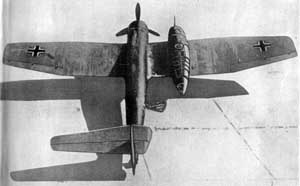
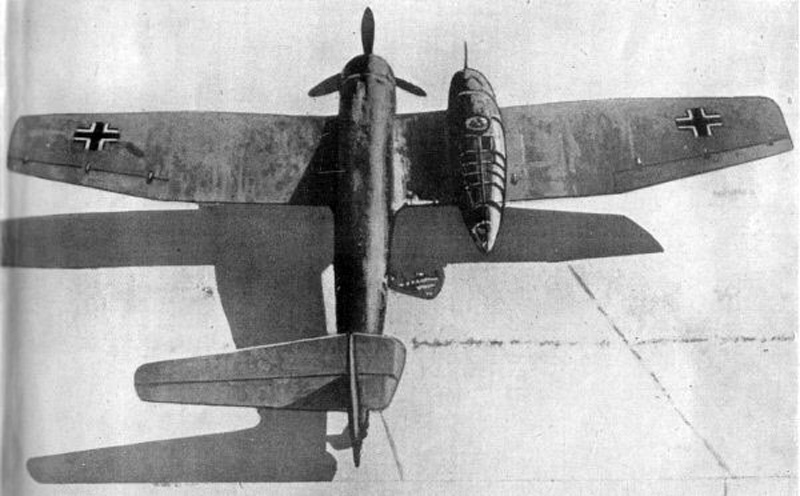
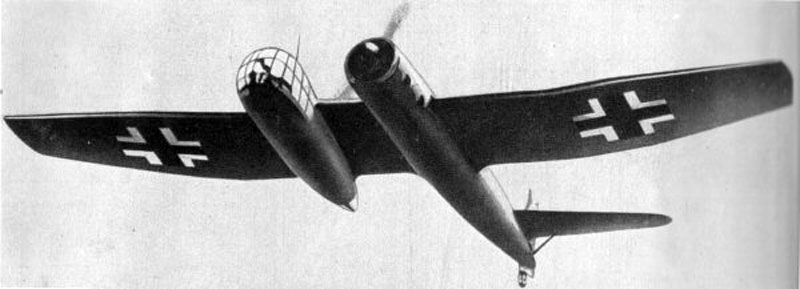
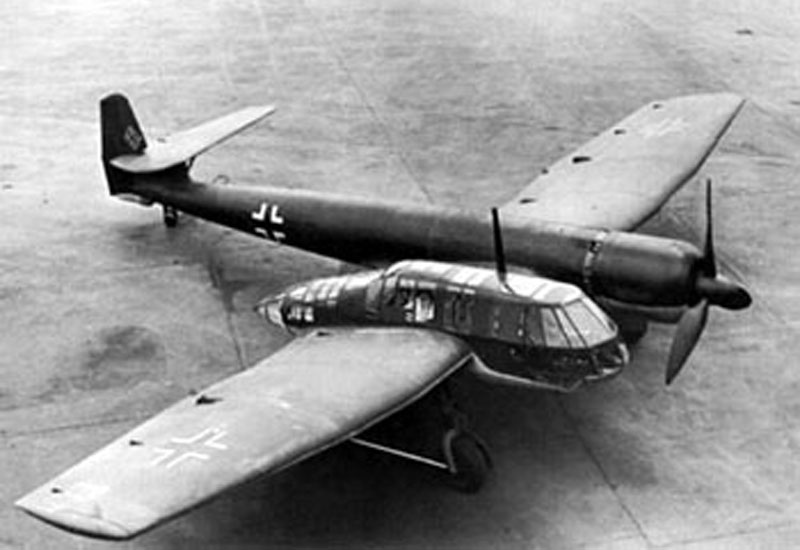
While the Blohm & Voss (or "Blohm und Voss") aircraft firm will forever be linked to their many successful floatplanes and flying boats used by the German Luftwaffe throughout World War 2, it is the Bv 141 that will forever be remembered as their most unique aircraft project. The Bv 141 made use of an wholly unorthodox asymmetrical design layout in which the crew was set within a nacelle offset to the starboard side of the aircraft while a portside boom held the powerplant and tail unit. Both sides were joined together at the forward portion of the boom by the wing element making for a truly unique and identifiable plane. Despite proving to have excellent handling, the aircraft saw much working against it and was only produced in prototype and pre-series forms by the end of her run.

Walter Blohm maintained a long-held belief in the idea of an intersecting commercial business where "flying boats" would soon take over the poor performing passenger boat lines, ferrying persons and their belongings to far off places. As such, most of the Blohm & Voss developments to this point held commercial interests at heart and limited the capacity for the aircraft firm to advance much further than that. Former World War 1 aviator and infantryman Richard Vogt joined Blohm & Voss after over a decade of designing his own aircraft, even spending some time at Dornier straight out of college. Though none of his early designs amounted to much in terms of creating a name for himself, he was undeterred and believed his time would eventually come on its own. He was ambitious and an outspoken personality to say the least and was a driven spirit. He held a vastly distinct personal vision and designed to a different standard, oft looking away from traditional aircraft forms being focused in on at the time.

By the time of the Second World War, aircraft had advanced beyond the rickety canvas-over-wood biplanes of World War One and into sleek metal-skinned monoplane creatures taking on the appearance of the everyday bird with each passing year. The conventional approach to designing aircraft - be they civilian or military in purpose - was to fit a powerplant before the cockpit, all centralized in a smoothly contoured fuselage tapering at the rear. Wings were standardized as straight-edged monoplanes fitted to the forward portion of the design and tail sections could be developed with single, double or even triple vertical fins.

While this approach was serviceable, it held with it several inherent drawbacks that aircraft engineers have always worked to perfecting. The pilot (and his crewmembers if the design called for them) were generally given a poor vantage point from behind the engine and above and behind the wing assembly. The centralized positioning of the forward-mounted engine meant that the circular air generated by the spinning propellers assaulted the rear-mounted rudder surfaces from the sides, forcing the aircraft to act contrary to pilot actions in certain circumstances. The engine placement in this arrangement also required heavy attention on the part of the pilot, he having to work the rudder constantly to counteract any undesired movements of the aircraft. A powerful engine, spinning a large propeller assembly, generated a good amount of natural torque that would have the entire aircraft favor one side (this being the primary reason that helicopters utilize a tail rotor). This force naturally had the airframe favoring the left when breaking from straight level flight at speed. Despite the symmetric approach being utilized by aircraft engineers prior to (and during) World War 2, these aircraft did anything but behave symmetrically. As such, Vogt maintained a different sort of vision in which the design of an aircraft should be developed as asymmetric to inherently maintain symmetric performance and handling. The resulting project became the Bv 141.

Wartime held a distinct benefit to all those young aircraft engineers looking to make a name for themselves. Though by this time, Vogt was far from a spring chicken - a man now in his forties. Regardless, the Reich Air Ministry came calling in 1937 with a design requirement specification for a single-engine reconnaissance aircraft with excellent vantage points for her crew. While the typical German aircraft firms jumped into the fray - including the Focke-Wulf company with their Fw 189 twin-boom "Uhu" - Blohm & Voss submitted their Vogt-inspired Bv 141 as a private venture. The Focke-Wulf Fw 189 was eventually accepted as the official winner but work on the Bv 141 continued none-the-less - the Air Ministry was at the very least intrigued.

The original Bv 141 prototype approach was more conventional than the final form - it was actually a symmetrical attempt from the beginning. The base design saw a long a pair of slender booms with one offset to the portside of centerline and fitted with the powerplant and tail unit. The other was offset to starboard and contained a heavily-glazed crew nacelle. The crew nacelle offered up excellent views for the three-man crew, particularly when looking forward, rear, above and to the right. Both cylindrical structure forms would be attached to one another by way of a long-spanning straight-edged wings with clipped tips. The wings were monoplanes and mounted well forward in the design. The empennage (tail unit) was nothing more than a rounded, highly swept vertical tail plane with a single, rounded horizontal tail plane offset to portside.

The engine was a conventional radial piston powered machine spinning a three-bladed propeller system. The engine of choice became a single BMW 801A 14-cylinder radial of 1,560 horsepower providing for a 272mph maximum speed, a 1,181 mile range and a 31,810 foot service ceiling. The later pre-series Bv 141s would make use of only a single tail system, hence its asymmetrical arrangement. Despite this appearance, the weight of the aircraft was spread out quite well when in flight, relating to the Bv 141s good handling characteristics.

In practice, Vogt's vision was solidified though not without some teething problems. Despite the unconventional arrangement, the Bv 141 handled quite well. The first of three Bv 141 prototypes was flown in 1938. Evaluation forced the strengthening of the airframe some and the tail section was redesigned to become the "Bv 141 B" preseries model (that is, the asymmetrical form). When test flown by Ernst Udet - then in charge of the Air Ministry's aircraft development - the Bv 141 was high on his list and he put in an order for 500 such planes to be used in the tactical reconnaissance role. Despite production now in full swing - some 20 examples having already been completed - the German Air Ministry decided sometime in early 1941 to discontinue the prospect of fielding the Bv 141 in an operational reconnaissance squadron (though some were delivered to Aufklarungsschule I at Grossenhain, Saxony for evaluation). This decision played out on multiple levels - each in their own way against the Bv 141- though no one issue was decidedly and directly attributed to the Bv 141 as an aircraft design.

It seemed that the Focke-Wulf Fw 189 design was filling the tactical reconnaissance role quite well, negating the need for the unique Bv 141 to be produced in any number. Additionally, an Allied bombing raid netted the destruction of a Focke-Wulf facility charged with producing the all-important Fw 200 Condor maritime bomber so some 80 percent of Blohm & Voss factory space was now relegated to handling Fw 200 production per the Air Ministry. Compared to the other high-end German aircraft firms, Blohm & Voss also held a small contingent of employees that numbered around 5,000 personnel. In contrast, Junkers employed some 147,000 workers while Heinkel another 50,000. Fate, it would seem, did not have a role for the interesting Bv 141 to play.

Vogt went on to pencil other asymmetrical designs later in the war and all fell short of achieving much notoriety for himself (at the time) or his employers. There were even highly-advanced asymmetrical designs sporting turbojet engines that were never enacted. Vogt also continued playing with other unconventional ideas including that of wingtip-joined fighters sharing fuel loads for even longer ranges (trials similar to this were also undertaken by the USAF after the war). Still another idea saw escort fighters joined at the wingtips of a "mother ship" - that is, a bomber - to which the fighters could attach/reattach at will and engage enemy fighters as necessary. Vogt also delved into nuclear-powered "Atomic Bombers" (yup, bombers complete with in-flight nuclear reactors!) for the United States in the post-war world thanks to "Operation Paperclip" - the post-war recruiting of Nazi scientists in the United States executed by the Joint Intelligence Objectives Agency (JIOA). He later found work as a consultant to The Boeing Company and also toyed with the revolutionary idea of a "swiveling wing" concept in which a pilot could adjust the entire wing assembly position in-flight - an idea that finally resurfaced again with NASA in the 1970s, though this time with no input from Vogt himself.

Some 38 Bv 141 examples were known to have been produced though none survive today. Several were recovered by the Allies and researched to a an extent but beyond that, they fell to the scrapman's torch. Much of Vogt's fantastic work was forgotten or overlooked even when published for public consumption in the after-war years. In all, there were three V-series prototypes designated as V1, V2 and V3. The preseries models numbered five examples under the Bv 141 A-0 branding and became V4 through V8. These were followed by the revised Bv 141 B-0 preseries models from V9 through V18. There were eight Bv 141 B-1 series models thereafter.

There were plans by the German Air Ministry to deliver the Bv 141 to operational squadrons along the East Front but these fell to naught.
Text ©2003-2013 www.MilitaryFactory.com • All Rights Reserved • No Reproduction Permitted
MilitaryFactory.com does NOT sell equipment/weaponry. Material presented throughout this website is for historical and entertainment value and should not to be construed as usable for hardware restoration, maintenance or general operation. Please consult manufacturers for such information. Our disclaimer. Email corrections / Comments to MilitaryFactory at Gmail dot com.
Picture of Blohm and Voss Bv 141
Pic of the Blohm and Voss Bv 141
Image of the Blohm and Voss Bv 141
View All Images (4)

Specifications for the
Blohm and Voss Bv 141
Tactical Reconnaissance Aircraft


Country of Origin: Nazi Germany
Manufacturer: Blohm and Voss - Germany
Initial Year of Service: 1938
Production: 20


Focus Model: Blohm and Voss Bv 141B
Crew: 3


Length: 45.93ft (14m)
Width: 45.93ft (14.00m)
Height: 11.81ft (3.60m)
Weight (Empty): 10,362lbs (4,700kg)
Weight (MTOW): 12,566lbs (5,700kg)


Powerplant: 1 x BMW 801 radial piston engine delivering 1,560 horsepower.


Maximum Speed: 272mph (438kmh; 237kts)
Maximum Range: 746miles (1,200km)
Service Ceiling: 32,808ft (10,000m; 6.2miles)
Rate-of-Climb: 1,860 feet per minute (567m/min)


Hardpoints: 0
Armament Suite:
REPORTED:
2 x 7.92mm MG 17 machine guns
2 x 7.92mm MG 15 machine guns


Variants:
Bv 141 V1 - Prototype; symmetrical design layout.


Bv 141 V2 - Prototype; symmetrical design layout.

Bv 141 V3 - Prototype; symmetrical design layout.

Bv 141 A-0 - Pre-Series Designation; symmetrical design layout.

Bv 141 A-01 (V4) - Pre-Series Aircraft; symmetrical design layout.

Bv 141 A-02 (V5) - Pre-Series Aircraft; symmetrical design layout.

Bv 141 A-03 (V6) - Pre-Series Aircraft; symmetrical design layout.

Bv 141 A-04 (V7) - Pre-Series Aircraft; symmetrical design layout.

Bv 141 A-05 (V8) - Pre-Series Aircraft; symmetrical design layout.

Bv 141 B-0 - Pre-Series Designation; asymmetrical design configuration; strengthened airframe; revised tail unit.

Bv 141 B-01 (V9) - Pre-Series Aircraft

Bv 141 B-02 (V10) - Pre-Series Aircraft

Bv 141 B-03 (V11) - Pre-Series Aircraft

Bv 141 B-04 (V12) - Pre-Series Aircraft

Bv 141 B-05 (V13) - Pre-Series Aircraft

Bv 141 B-06 (V14) - Pre-Series Aircraft

Bv 141 B-07 (V15) - Pre-Series Aircraft

Bv 141 B-08 (V16) - Pre-Series Aircraft

Bv 141 B-09 (V17) - Pre-Series Aircraft

Bv 141 B-10 (V18) - Pre-Series Aircraft

Bv 141 B-1 - Production Aircraft Designation of which eight were produced from S/N WNr 0210011 to WNr 0210018.


Operators: Nazi Germany

ALL AIRCRAFT CATEGORIES

BY DECADE:


1900 to 1909
1910 to 1919
1920 to 1929
1930 to 1939
1940 to 1949
1950 to 1959
1960 to 1969
1970 to 1979
1980 to 1989
1990 to 1999
2000 to 2009
2010 to 2019
2020 to 2029
VIEW ALL
Compare Aircraft


BY TYPE:


Anti-Submarine Warfare (ASW)
Attack Helicopters
Bomber Aircraft
Medium Bombers
Heavy Bombers
Close-Air Support (CAS)
Commercial Aircraft
Dive Bombers
Electronic Warfare Aircraft (EWA)
Experimental / X-Planes
Fighter Aircraft
Floatplane Aircraft
Flying Boat Aircraft
Aerial Refueling Tankers
Helicopters (ALL)
Interceptor Aircraft
Multi-Role Aircraft
Navy Carrier Aircraft
Night Fighters
Reconnaissance / Scout
Search & Rescue (SAR)
Scout Helicopters
Special Purpose
Torpedo Bombers
Trainer Aircraft
Transport Aircraft
Transport Helicopters
Unmanned Aerial Vehicles (UAVs)
Unmanned Combat Air Vehicles (UCAVs)


COLLECTIONS:


4th Generation Fighter Aircraft
5th Generation Fighter Aircraft
US X-Planes
Classic US Warbirds
French Military Helicopters
Grumman "Cats"
Howard Hughes Aircraft
Indian Air Force
Israeli Air Force
Libyan Aircraft
Modern Chinese Aircraft
Modern Chinese Fighters
Modern Military Aircraft
Modern North Korean Aircraft
Modern Trainer Aircraft
Modern US Aircraft
Mikoyan Aircraft
Sukhoi Aircraft
Syrian Aircraft
Top 10 Fighter Aircraft of All Time


AIRCRAFT BY CONFLICT:


Arab-Israeli War (1948)
Cuban Missile Crisis (1959-1962)
Falklands War (1982)
Indo-Pak War (1965, 1971)
Iran-Iraq War (1980-1988)
Lebanon War (1982)
Operation Allied Force (1999)
Operation Desert Storm (1991)
Six Day War (1967)
Spanish Civil War (1936)
Soviet-Afghan War (1979-1989)
Yom Kippur War (1973)


MISCELLANEOUS:


Aircraft Cockpits
Aircraft Manufacturers List
Aircraft Timeline

WORLD WAR 2:


1939 Aircraft
1940 Aircraft
1941 Aircraft
1942 Aircraft
1943 Aircraft
1944 Aircraft
1945 Aircraft
1946 Aircraft
Australian Aircraft
Battle of Britain Aircraft
Bombers
Four-Engine Bombers
British Aircraft
British Bombers
British Transports
Dive Bombers
Canadian Aircraft
Fighters
Chinese Aircraft
French Aircraft
German Aircraft
German Fighters
German Flying Boats
German Jets
Secret Weapons of the Luftwaffe
Italian Aircraft
Imperial Japanese Aircraft
Imperial Japanese Fighters
Mitsubishi Bombers
Navy Aircraft
Pearl Harbor
Polish Aircraft
Romanian Aircraft
US Aircraft
US Bombers
US Navy Aircraft
Soviet Aircraft
Torpedo Bombers
Transport Aircraft
Tuskegee Airmen Aircraft
W.A.S.P. Aircraft
WW2 Aircraft Ranked by Speed
VIEW ALL


WORLD WAR 1:


1914 Aircraft
1915 Aircraft
1916 Aircraft
1917 Aircraft
1918 Aircraft
Aircraft Timeline
Austro-Hungarian Aircraft
Bomber Aircraft
British Aircraft
Fighters
Flying Boats
French Aircraft
Imperial German Aircraft
Italian Aircraft
Scout Aircraft
Russian Empire Aircraft
US Aircraft
WW1 Aircraft Ranked by Speed
VIEW ALL


KOREAN WAR:


Australian Aircraft
Korean War Aces
Korean War Jets
North Korean Aircraft
US Military Aircraft
VIEW ALL


VIETNAM WAR:


Helicopters
North Vietnam Air Force
US Airpower
VIEW ALL


COLD WAR:


1950s French Aircraft
British V-Bombers
Cold War Bombers
Soviet Aircraft
Soviet Bombers
Soviet Interceptors
Soviet Helicopters
Strategic Air Command
US Aircraft
US Bombers
US Interceptors
VIEW ALL

Site Disclaimer | Privacy Policy | Site Map | MF Origins


©2013 www.MilitaryFactory.com • Content ©2003-2013 MilitaryFactory.com • All Rights Reserved • Site Contact Email: militaryfactory at gmail dot com. The "Military Factory" name and MilitaryFactory.com logo are registered ® trademarks and protected by all applicable domestic and international intellectual property laws.


Top MF Stuff: 2013 Military Pay Scale | Military Ranks | WW2 Weapons | Sniper Rifles | Kts to Mph | WW1 Aircraft | Automatic Rifles | Aircraft Cockpits | Vietnam War Weapons | Main Battle Tanks | Submachine Guns | Shotguns | French Military Victories


Most photographic images appearing on this site are courtesy of the United States Department of Defense and are approved for public use. Other images acquired through the public domain. Digital art work courtesy of Dan Alex. Business Consulting by Kyle Williams. Material presented throughout this website is for historical and entertainment value and should not to be construed as usable for hardware restoration, maintenance or general operation. Please consult manufacturers for such information.


eXTReMe Tracker